


HVAC Replacement vs Repair Conversation — 60-Min Training
Quality
Certified

Run repair-versus-replace as a structured 60-minute team training: teach a five-stage in-truck consult (diagnose, demonstrate, decide-criteria, design, dollars) where price comes last, plus three cost conversations — repair with honest next-failure odds, replacement net of tax credits and rebates, and 10-15 year operating cost — then drill both with role-plays.
Why a price-first pitch loses the replacement
The single most common way a replacement opportunity dies is a technician who diagnoses the failure, states two numbers, and leaves. A homeowner handed "$2,400 to repair or roughly $11,000 for new" with no decision context has nothing to compare except price, so she shops the number and the cheapest bid wins — usually one that is oversized, mismatched, and carries a parts-only warranty. The quote-and-leave motion is the slowest, lowest-margin path in the trades precisely because the highest bidder always loses a price-only comparison.
The training reframes the diagnostic visit itself as the highest-leverage selling moment in the business. Roughly half of replacement contracts originate from a diagnostic call, so the modest diagnostic fee buys the technician a seat at the kitchen table that no cold outreach could. Crews that treat that visit as a consult rather than a quote convert a far larger share of aging-system diagnostics into bids and close a much higher fraction of those bids at meaningfully higher average tickets. The differentiator is consult discipline, not wrench skill — every one-truck shop owns trucks, but few pair NATE certification, factory-authorized dealer status, an AHRI matched-system certificate, and a live Manual J load calculation into one repeatable conversation.

The credibility that closes the sale comes from the technician's credential and tooling stack, not from pressure. A homeowner deciding on a system she will live with for a decade responds to visible competence: a meter reading she can see, a load calculation run in front of her, and a transparent rebate math sheet. Teach reps to lead with that moat, and the price stops being the whole conversation.
The five-stage in-truck comfort consult
The consult is a fixed sequence of five stages, roughly three minutes each, and the price is deliberately last — after the homeowner's decision criteria are explicit. Most lost sales collapse at stage one, where the technician opens with a recommendation or a number, or at the final stage, where a single top-tier quote arrives before anyone asked what the homeowner is trying to solve.
Diagnose names what failed, in plain English, what caused it, and whether the system is genuinely repairable — no price, no replacement push yet, just "here's what I found, two paths, repair or replace, and before I price either I want to solve the right problem." Demonstrate takes the homeowner outside for thirty seconds to see the frosted suction line, hear the leak detector, or read the meter, which collapses the "are you upselling me?" reflex better than any photo. Decide-criteria asks four questions that determine which system is correct rather than interrogating for a sale: how long are you staying, does anyone have asthma or allergies, which rooms run hot or cold, and what is a typical utility bill — plus a gently framed gas-versus-electric and income-range question, since federal rebate eligibility is income-tiered and the homeowner can always decline to answer.

Design runs an ACCA Manual J load calculation on a tablet in front of the homeowner, producing an actual tonnage instead of a rule-of-thumb guess. Rule-of-thumb sizing routinely oversizes a system, which causes short-cycling, poor humidity control, and efficiency loss, and it undercuts the matched-system certificate that keeps both the manufacturer warranty and the tax credit valid. Dollars finally presents three options — good, better, best — each shown with a full stack: gross price, the applicable tax credit, any income-tiered rebate, the utility rebate, the manufacturer promotion, the resulting net, and a financing line. Three transparent options let the homeowner make an informed choice; a single top-tier quote reads as an upsell, and a single baseline quote leaves money on the table and loses to a wrong-sized cheap bid.
The three cost conversations
Stages build trust; the three cost conversations supply the math a homeowner needs to actually choose. Most technicians present only the repair cost. The disciplined motion runs all three on any diagnostic where the system is roughly twelve years or older.
Repair cost is today's invoice paired with an honest probability of another major failure within the next twelve to eighteen months. On an older system that has already lost a compressor and a coil, that probability is substantial, and framing it statistically — not as "you'll be back in six weeks" — keeps the conversation honest. It is genuinely the right call when the homeowner is moving soon or cash is the binding constraint, and saying so out loud earns future referral business. Replacement cost, stated net rather than gross, subtracts every stacked incentive: the federal efficiency tax credit, the income-tiered point-of-sale rebate, the local utility rebate, and the manufacturer promotion. Presenting only a gross sticker loses to a competitor who shows net; presenting only a best case leaves the homeowner feeling misled at install, so the honest frame is best, likely, and worst case side by side.
Operating cost over ten to fifteen years compares the current system's efficiency against a new SEER2-rated system across the system's life. This is the math that justifies a mid-tier system over the baseline for a homeowner planning to stay put — without it, most homeowners default to the cheapest option. Two cautions matter here: SEER2 is a newer test method that reads a few percent lower than the old SEER rating for identical equipment, so reps must compare like to like, and overstating savings invites refund requests later. Tie the operating math back to the tenure answer from decide-criteria: a long stay makes the better tier pencil, a short stay favors good.
The combination is what wins. Stages without the cost conversations produce an honest technician who still loses to a competitor showing the rebate stack. Cost conversations without the stages produce numbers with no earned trust behind them.
Reading age, refrigerant, and safety to decide
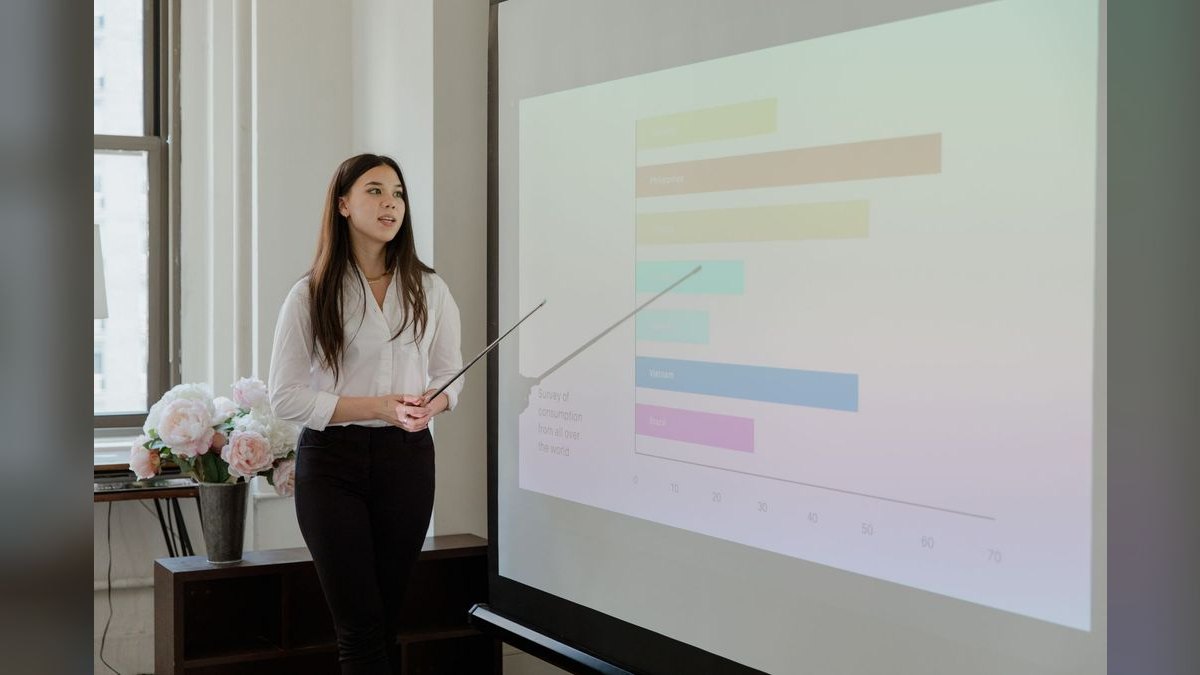
The training gives crews a clear decision spine so "repair or replace" stops being a gut call. Under roughly ten years with a single failed component — a capacitor, contactor, blower motor, or control board — repair is almost always right. Between ten and fifteen years with a single major failure, the answer turns on tenure and the homeowner's ability to use the tax credit: a household moving inside two years usually repairs, while one staying five-plus years that can use the credit leans toward the full consult. Past fifteen years, especially on older refrigerants, the consult should lean toward replacement.
Three situations mean declining repair outright. R-22 systems can no longer be manufactured, service refrigerant is scarce and expensive, and pouring vanishing refrigerant into a two-decade-old system rarely serves the customer. A third major-component failure inside eighteen months signals the system is done. And any safety condition — a cracked heat exchanger with carbon-monoxide risk, a refrigerant leak in occupied space, or an electrical hazard — overrides everything and warrants a red-tag. Framing a decline as a trust-builder, not a lost job, is a core coaching point.
Heat pump versus straight-cool replacement is its own branch. A heat pump is the default when the home is all-electric or could go all-electric, when the climate suits it, when the homeowner wants the larger heat-pump tax credit or income-tiered rebate, or when electricity is cheap relative to gas. Keeping the furnace and replacing only the air conditioner makes sense in colder regions with inexpensive gas, a furnace with years of life left, and a homeowner unwilling to switch fuels. In mixed cases a dual-fuel setup — a heat pump doing cooling and most heating with the gas furnace covering the coldest mornings — often wins the operating-cost math for a long-tenure household.
Running the 60-minute training meeting
The meeting is built to run inside a single Monday service huddle with a hard stop. The opening ten minutes are the numbers and one story — the market reality, the top-versus-bottom conversion gap, and a same-neighborhood tale of two technicians on identical failed systems where the one who asked four questions and showed the credit math closed in the truck while the one who quoted and left lost the job to a cheaper, worse bid. Lead with the numbers and the story, not a manufacturer flip-chart.

The next twenty-five minutes are the teach: fifteen minutes on the five stages at roughly three minutes each, then ten minutes on the three cost conversations. Pause for one clarifying question per stage. The end-of-section test is that every technician can recite all five stages and all three cost conversations, plus the credit cap, the rebate income tiers, and the matched-system requirement, without notes. A ten-minute discussion follows on a whiteboard with the five stages across the top, where each technician audits his last ten diagnostic calls out loud and names which stage he skipped and which cost conversation he left out.
Twenty minutes go to two role-plays, ten minutes each with a sixty-second reset between. One should be a panicked emergency — a hot afternoon, a dead system, kids coming home, a tight emergency fund, and a price-anchored homeowner — forcing the rep to run all five stages and all three cost conversations under deflection and either close in the truck or schedule a kitchen-table follow-up that evening. The other should be a cautious, trust-first scenario — an older couple, an obsolete-refrigerant system, an accountant relative who wants to review everything — where the correct move is explicitly not to close: schedule the family review, refuse a deposit, present both the air-conditioner-only and dual-fuel paths honestly, answer the commission question straight, and leave the most rigorous proposal binder of the technician's career. The final ten minutes are a debrief and a written commitment logged in the field-service system: one recent quote-and-leave call to follow up, one verbatim line to change tomorrow, and one missing pre-consult-kit item to fix by Friday. The manager brings real lost calls, a stocked pre-consult kit, and a whiteboard to score each technician's recent diagnostics by stage completeness.
Compliance guardrails that keep techs out of trouble
Because this conversation touches tax credits, financing, and refrigerant law, the training bakes in hard guardrails. Reps never promise a tax-credit outcome — the efficiency credit is non-refundable and depends on the homeowner's tax liability, so the only safe language is "here is the form, talk to your CPA." They never claim an existing system is "illegal" because of a refrigerant phase-out; the new-equipment manufacturing ban does not outlaw servicing systems already installed. They never top off a chronically leaking system without a verified repair, which is a refrigerant-handling violation carrying steep civil penalties, and they disclose the cost and manufacturing ban before recharging an obsolete-refrigerant unit.

On financing, reps lead with the cheapest legitimate option and disclose that deferred-interest promotions accrue interest from day one if not paid within the window — a practice regulators have scrutinized. Financing is presented as a service, not a profit center, and reps never steer a homeowner toward a higher-fee product to bury their own margin. On the paperwork, a federal three-day right of rescission notice accompanies any signed contract, and no deposit is taken at the truck before a scheduled family review when the homeowner has asked for one.
The honesty extends to the commission question itself. When a homeowner asks whether the technician earns more on the recommended tier, the trust-winning answer is a straight "yes, and here is how to test me" — call the service manager, or have your CPA relative challenge every number Saturday. Coaching reps to welcome that scrutiny, rather than deflect it, is what separates a consultative close from an upsell. Pair every one of these guardrails with the matched-system discipline — a correctly sized, AHRI-certified system keeps the warranty and the credit valid — and the crew ends up both more compliant and more competitive than the cheap-quote shop down the road.
Related questions
How long should the training run, and how often?
Sixty minutes is the working default, extendable to ninety for a quarter kickoff with more role-play. Run it weekly while rolling the playbook out, then move to bi-weekly once most reps can run the five stages and three cost conversations under deflection without notes.
Should the manager or a top rep facilitate?
The manager or service manager facilitates and reps participate. Manager-led sessions tend to drive more durable behavior change because the manager is the one running the weekly ride-along audits and holding reps to running the process regardless of whether any single call closed.
How do you measure whether it's working?
Track process before outcome: the share of aging-system diagnostics where the rep actually ran all five stages and all three cost conversations, then bid rate, then close rate and average ticket. Watch refund-request and review-rating trends too — quote-and-leave motions generate more post-install complaints.
Where does a formal LMS fit alongside this?

Use a self-paced learning platform for the theory — refrigerant rules, credit mechanics, load-calc basics — and reserve this live 60-minute session for the working reps-and-role-play drill. Teams that run both typically ramp new comfort advisors faster than either alone.
FAQ
When is repair genuinely the right recommendation? Often. A system under about ten years old with a single failed component, or a ten-to-fifteen-year system with one major failure where the homeowner is moving within two years, usually should be repaired. Making that honest call builds the reputation that wins future replacement jobs.
How should a tech handle the "my neighbor got it for half that" objection? Never trash the competitor — walk three line items: the load calculation and correct sizing, the matched-system certificate that keeps the warranty and credit valid, and parts-and-labor coverage versus parts-only. Offer a side-by-side line-item comparison rather than a defensive reaction.
What's the safe way to discuss the federal tax credit? State that it is non-refundable, capped by system type, and dependent on the homeowner's tax liability, then hand over the IRS form and say "talk to your CPA." Never promise a guaranteed dollar outcome — that invites complaints and refund demands.
How do you decide heat pump versus straight-cool? Favor a heat pump when the home is or could be all-electric, the climate suits it, and the homeowner wants the larger credit or rebate. Keep the furnace and replace only the AC in colder regions with cheap gas and a furnace with life left; consider dual-fuel for long-tenure mixed cases.
What's the biggest facilitation mistake to avoid? Letting the meeting drift into a status update. Anchor on a written agenda, require pre-reads, drill the role-plays under real deflection, and end with a written commitment logged in the field-service system — otherwise nothing changes on Monday's trucks.
How do you keep financing ethical? Lead with the cheapest legitimate option, disclose that deferred-interest promos accrue interest from day one if unpaid in the window, and never push a higher-fee product to hide margin. Treat financing as a service that widens access, not a profit lever.
Sources
- https://www.energystar.gov/about/federal-tax-credits
- https://www.irs.gov/forms-pubs/about-form-5695
- https://www.epa.gov/climate-hfcs-reduction/final-rule-phasedown-hydrofluorocarbons-establishing-allowance-allocation
- https://www.epa.gov/section608
- https://www.energy.gov/save/rebates
- https://www.acca.org/standards/technical-manuals
- https://www.ahridirectory.org/
- https://programs.dsireusa.org/
- https://www.bls.gov/ooh/installation-maintenance-and-repair/heating-air-conditioning-and-refrigeration-mechanics-and-installers.htm
- https://www.ftc.gov/legal-library/browse/rules/cooling-role
Related on PULSE
This page will be disappearing soon. Save it to your device for $1 — or read it free while it is here.
@Kory-White- · if Venmo asks, the last 4 of my number are 2012
This page is gone.
This one is off the shelf now. $1 keeps it on your phone for good — the whole page, pictures and diagrams included.
 sales-trainingSelling to a CISO Without the FUD — 60-Min Training
 sales-trainingConstruction Equipment — 60-Min Training
 sales-trainingMedical Device Sales — 60-Min Training
 sales-trainingRoofing Storm Door-Knock After Hail — 60-Min Training
 sales-trainingPharma HCP Detailing — 60-Min Training
 sales-trainingWedding Venue Tour — 60-Min Training
 sales-trainingReal Estate Listing Presentation — 60-Min Training
 sales-trainingMed Spa Consult-to-Package Conversion — 60-Min Training
 sales-trainingCommercial Real Estate Tenant Rep Pitch — 60-Min Training
 sales-trainingMortgage Originator — 60-Min Training