


The Trade Show Lead-Capture and Follow-Up Sprint — 60-Min Training
Quality
Certified
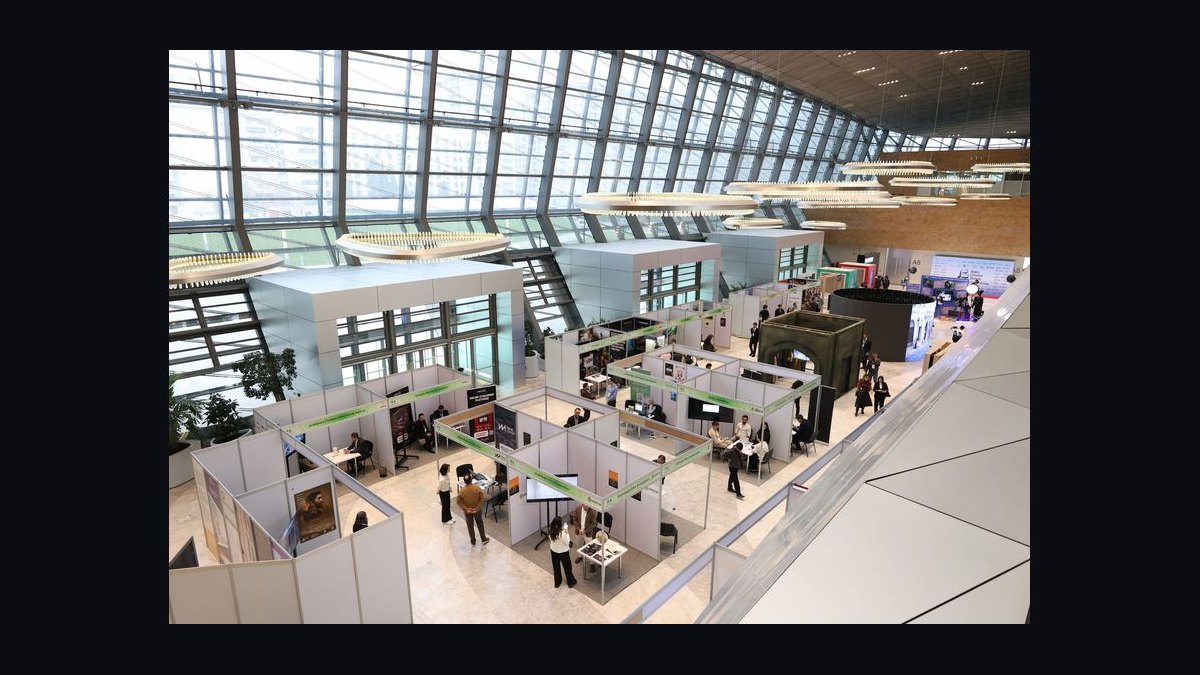
The Trade Show Lead-Capture and Follow-Up Sprint is a 60-minute, manager-led working session that equips a B2B SaaS sales team to convert booth conversations into qualified pipeline. It installs four operating assets: a one-page booth qualification sheet, a badge-scan-to-CRM Capture workflow, a tiered 24-hour and 7-day Follow-up cadence, and a signed shift plan with named AE coverage. Reps leave with printed templates, assigned shifts, and calendar blocks reserved for follow-up.
The Monday-morning badge graveyard
Consider a ten-person B2B SaaS sales team returning from a three-day industry conference. The booth was busy. The team scanned 412 badges across the event, handed out 300 swag items, and ran roughly 90 demo loops on the big screen. Morale is high on the flight home.
Then Tuesday hits. The badge export arrives as a CSV from the show's native app. It contains name, title, company, and email — nothing else. No rep wrote down what the prospect said, what problem they described, or whether they wanted a meeting. Two reps were sick on day two, so coverage thinned and several conversations went undocumented. The AE who owns the mid-market territory is on vacation. Nobody knows which rep spoke to which account.
By Wednesday, the team has recognized maybe 50 of the 412 companies as real ICP fits. Three AEs split the list by alphabetical order because there is no better rule. The first-touch emails go out Thursday — six days after the show closed. The reply rate is under 4%. By the following Monday, the CSV is buried under newer imports, and the event is written off as "brand awareness."
That outcome is not a booth problem. It is a process problem, and it is almost entirely preventable inside a single 60-minute working session held before the show opens. The Trade Show Lead-Capture and Follow-Up Sprint exists to make the Monday-morning graveyard impossible by installing capture discipline, ownership rules, and a time-bound cadence before anyone steps on the floor.
The sprint is not a motivational kickoff. It is an operating-gear installation. Every rep walks out with four physical or digital artifacts: a printed qualification sheet they have rehearsed with, a CRM capture workflow they have tested on a live scan, a tier-assigned follow-up sequence loaded into their sending tool, and a signed shift plan that names their primary and backup coverage windows.
How the Capture-to-Follow mechanism actually works
The mechanism has four moving parts that fire in sequence: capture on the floor, enrichment within the hour, tier-based routing, and time-boxed outreach. Each part has a failure mode that the sprint is designed to close.
The Capture step is the bottleneck in most teams, because reps default to badge scanning as the primary act and treat note-taking as optional. The sprint inverts that: the qualification sheet is primary, and the badge scan is the receipt. A rep who scans a badge without writing four fields has produced a name, not a lead.
The enrichment step is where speed matters most. Writing the four fields into the app's notes section within 15 minutes of the conversation preserves recall accuracy that decays sharply after the first hour. Reps who batch-enter notes at the hotel at 9 PM are reconstructing conversations from fragments, and the quality of the Pain phrase — the single most valuable field for personalizing the follow-up — degrades fastest.
Tier routing is the decision layer. Every lead must receive a tier tag before the rep leaves the booth area: A means book a meeting now or within 24 hours, B means enter a multi-touch sequence, C means marketing nurture, D means delete. The tier is not a judgment of the person's seniority. It is a judgment of whether a defined problem and a timeline exist. A VP of Engineering with no stated pain is a C. A manager with a quantified metric and a Q3 evaluation window is an A.
The outreach step is where the cadence fires. A-tier leads receive a personal email referencing the exact Pain phrase written on the sheet, plus a scheduling link, within 24 hours of the conversation. B-tier leads enter a four-touch sequence spread across 14 days. C-tier leads go to marketing. The whole mechanism depends on the tier being written at the booth, because tier assignment done from memory three days later is guesswork.
Real numbers, ranges, and benchmarks
The sprint leans on published benchmarks from sales-engagement and event-marketing research, and the numbers are consistent enough across sources to plan against. Treat these as planning ranges rather than precise predictions for your team.
First-touch timing is the single largest conversion lever. A-tier leads contacted within 24 hours of the booth conversation convert to a booked meeting at roughly 30% or better in most published engagement benchmarks. Push that first touch to 72 hours and the rate typically halves. Push it to a full week and it drops into the low single digits. The practical implication: the difference between a Monday 8 AM send and a Thursday afternoon send is not a marginal improvement, it is a different outcome class.
Multi-touch sequences beat single touches by a wide margin for B-tier leads. Four touches across 14 days commonly book meetings at two to three times the rate of a single follow-up email. The final touch in the sequence — the polite breakup — often accounts for a meaningful share of the total meetings booked, which is why cutting the sequence short at touch two leaves meetings on the table.
Recall accuracy decays fast. Sales-data-hygiene research consistently shows that CRM note quality degrades materially within the first few hours after a conversation. Reps who enter notes within 15 minutes produce records that are usable for personalization. Reps who wait until the end of the day produce records that read like summaries of summaries.

Pre-show preparation changes the mix. A healthy show typically produces roughly 40% of its A-tier outcomes from meetings pre-booked two to three weeks before the event, and 60% from on-floor walk-ups. A team with zero pre-booked meetings usually has a broken pre-show outbound motion, not a booth problem. A team with 100% pre-booked meetings is wasting its booth presence, because walk-up traffic is the whole point of being on the floor.
Target account lists per rep should sit between 10 and 25 named companies for a two-day show. Under 10 and the rep is not hunting with intent. Over 25 and the rep cannot hold the list in working memory well enough to recognize a target when they walk past the booth. The list comes from open-opportunity reports plus an ICP filter applied to the registered-attendee list.
Shift coverage has a measurable effect. Shows with written shift plans and named backups typically produce meaningfully more qualified meetings per AE than shows where coverage is ad hoc, because walk-up traffic does not wait for a rep to return from a coffee run. Peak floor hours — usually mid-morning through early afternoon on the two busiest days — justify double coverage with two AEs and one solutions engineer, with the SE absorbing demo requests so the AEs can keep qualifying.
C-tier leads convert at roughly 1% to 2% per touch. That is meaningful only at scale, and scale comes from automation, not from AE time. Pushing C-tier leads into a marketing-owned nurture sequence on a quarterly cadence is the correct allocation, and any AE hours spent on C-tier leads are hours taken from A-tier follow-up.
Trade-offs and alternatives
No single capture architecture fits every team, and the sprint should be adapted rather than copied. The main trade-offs sit between capture speed and capture depth, between native show tooling and third-party event platforms, and between rep-owned and marketing-owned follow-up.

Capture speed versus depth is the first trade-off. A four-field sheet takes 30 to 45 seconds to complete, which is real time on a busy floor. A two-field sheet is faster but produces leads that cannot be personalized beyond "great meeting you." The sprint defaults to four fields because the Pain phrase and the Metric are what make the follow-up email land, but a team running a high-volume, low-ACV motion may reasonably drop to two.
Native show tooling versus a third-party event platform is the second trade-off. Many shows offer a native lead-retrieval app that exports a CSV after the event closes. That is too slow for a 24-hour cadence. Third-party event platforms typically support custom fields and direct CRM sync within minutes, which is the right architecture, but they add per-show cost and a second system to configure. If the show only offers native retrieval, layering a third-party capture front-end on top is usually worth the cost for any show where you expect more than roughly 150 qualified conversations.
Rep-owned versus marketing-owned follow-up is the third trade-off. A-tier and B-tier leads must stay with the AE, because personalization depends on the rep's memory of the conversation. C-tier leads should move to marketing immediately, because AE time is the scarcest resource in the system and C-tier conversion rates do not justify it. The failure mode is the middle: teams that route everything to AEs, or everything to marketing, lose either capacity or conversion.
A final trade-off concerns the pre-booked versus walk-up mix. Heavy pre-booking produces predictable meetings but can turn the booth into a private appointment room, which suppresses walk-up traffic and reduces net new logo exposure. The 40/60 split is a reasonable default because it keeps the booth open to the floor while still guaranteeing a base of qualified conversations.
Common pitfalls and how to avoid them
The pitfalls below account for most of the pipeline leakage between a show's close and the two-week mark. Each has a specific countermeasure that belongs in the sprint agenda.
Pitfall one: the qualification sheet is printed but never rehearsed. Reps who receive a sheet without practicing the 90-second conversation fill it out inconsistently, and field quality varies wildly across the team. Countermeasure: run a timed drill during the sprint where the manager plays the prospect and gives three different response types — a quantified pain, a vague "just browsing," and a hostile deflection. Reps practice the open, the write, and the exit until the sequence is automatic.
Pitfall two: notes are batched to end of day. By the time the floor closes, reps remember the shape of a conversation but not the numbers. Countermeasure: require field entry within 15 minutes and give reps a physical notes station at the booth where they can step aside for 45 seconds after each conversation. The station removes the excuse that there is nowhere to write.
Pitfall three: tier assignment is deferred. When tiers are assigned after the show, they reflect the rep's mood and the account's brand recognition rather than the conversation. Countermeasure: no rep leaves the booth area without a tier tag on every lead. A lead without a tier is treated as an incomplete Capture and gets flagged in the daily standup.
Pitfall four: ownership is ambiguous. Leads fall through when two reps both spoke to the same prospect or when a backup captured a lead on someone else's shift. Countermeasure: every lead scanned during a shift belongs to the primary AE for that shift, regardless of who was standing at the booth. The backup tags the primary in the event channel so ownership is recorded before the cadence fires.
Pitfall five: the 24-hour window gets cannibalized. AEs intend to send Monday morning but internal meetings and client calls consume the block. Countermeasure: every AE blocks Monday 8 AM to 11 AM on their calendar before the show opens, and the manager verifies each block during the sprint. No meetings may be scheduled into that window.
Pitfall six: the CRM integration fails mid-show. iPads freeze, Wi-Fi drops, and the app logs out. Countermeasure: every rep carries paper backup sheets in their badge holder. If the digital tool fails, the rep writes the four fields by hand, photographs the sheet, and posts it to the event channel immediately. No scan is lost to a software glitch.
Pitfall seven: the follow-up email is generic. A first-touch email that says "great meeting you at the show" and nothing else wastes the Pain phrase the rep worked to capture. Countermeasure: the sprint includes a template where the first sentence quotes the prospect's own words from the Pain field, and reps write three personalized first lines during the session using real examples from past shows.
Pitfall eight: C-tier leads get AE attention anyway. Reps feel guilty ignoring a stack of names. Countermeasure: the sprint explicitly assigns C-tier ownership to marketing and shows the per-touch conversion math so the trade-off is visible rather than abstract.
Related questions
How long should the booth qualification conversation take?
Target 90 seconds from opening question to tier disposition. A booth conversation is a rapid qualification decision, not a discovery call. Practice the sequence — open, listen, write, tag, close or exit — until it runs without conscious effort.
What are the four fields on the qualification sheet?
Pain (one sentence in the prospect's words), Metric (a specific number they shared), Champion-or-Buyer flag (their role in the decision), and Decision Timeline (the quarter they plan to evaluate). These map directly to MEDDIC and feed the follow-up email.
Why does the 24-hour window matter so much?
First-touch conversion drops sharply between 24 and 72 hours, and again by the one-week mark. The 24-hour window is not a preference, it is the difference between a roughly 30% meeting rate and a low-single-digit one.
Who owns the follow-up for a lead captured on someone else's shift?
The primary AE for that shift owns it, even if the backup captured the conversation. The backup tags the primary in the event channel at the moment of capture so ownership is unambiguous before the cadence fires.
What happens to leads that are not ICP?
They get a D tier and are deleted from the working list. Keeping non-ICP leads in the follow-up queue dilutes AE attention and inflates the apparent pipeline without producing meetings.
FAQ
What if the prospect refuses to have their badge scanned? Respect the refusal and write their name, company, and Pain phrase on the manual sheet, then enrich in your data provider after the show. This happens with a small share of senior buyers who object to being marketed to. Treat them as A-tier and route the first touch to a senior leader rather than the AE.
How many named target accounts should each rep carry into a two-day show? Between 10 and 25. Under 10 and the rep is not hunting with enough intent. Over 25 and the list exceeds what anyone can hold in working memory well enough to spot a target walking past the booth. Build the list from open opportunities plus an ICP filter on the registered-attendee list.
Should we use the show's native lead-retrieval app or a third-party event platform? If the native app supports custom fields and direct CRM sync within minutes, use it. If it only exports a CSV after the show closes, layer a third-party event platform on top as your capture front-end. The extra cost is usually justified for any show where you expect more than roughly 150 qualified conversations.
Is it worth any AE time to work C-tier leads?
No. C-tier leads convert at roughly 1% to 2% per touch, which is meaningful only at scale. Push them into a marketing-owned nurture sequence on a quarterly cadence. Every AE hour spent on C-tier is an hour taken from A-tier follow-up, where the conversion rates are an order of magnitude higher.
How do we keep the booth covered when a rep has a scheduled call? Write it into the shift plan. Every two-hour shift names a primary AE on the badge and a backup AE within 50 feet of the booth. If the primary steps off, the backup steps on immediately. No booth goes uncovered during floor-open hours, and the plan is signed by both reps before the show opens.
What is a healthy ratio of pre-booked meetings to walk-up qualifications? Roughly 40% pre-booked and 60% walk-up is a reasonable default for a healthy show. Zero pre-booked usually signals a broken pre-show outbound motion. Fully pre-booked suggests the booth is functioning as a private appointment room and walk-up traffic is being missed.
How should a repeat visitor be handled? Each interaction gets a fresh scan with updated notes. A second visit is a second touch and should be recorded as such. Track engagement velocity: a repeat visitor who still describes an unresolved Pain is a strong A-tier candidate and should have a meeting booked on the spot if possible.
What is the fallback if the CRM integration fails mid-show? Every rep carries paper backup sheets with the four fields pre-printed. If the digital tool freezes, write the fields by hand, photograph the sheet with a phone, and post it to the event channel immediately. Transcription happens later; capture happens now.
Sources
- Pavilion — event marketing and GTM community resources
- Outreach — sales engagement platform and benchmark resources
- Salesloft — sales engagement research and cadence benchmarks
- Apollo — sales data and prospecting platform
- Bridge Group — SaaS sales productivity and compensation research
- Goldcast — B2B event marketing platform and field marketing research
- Splash — event marketing platform and event operations resources
- HubSpot — sales enablement and CRM best-practice guides
- Salesforce — CRM implementation and lead management documentation
Related on PULSE
- The Proposal Follow-Up Sprint — 60-Min Training
- The No-Show and No-Decision Demo Recovery Sprint — 60-Min Training
- The New-Hire Onboarding Sprint — 120-Min Training
- The Cold Outreach Sprint — 60-Min Training
- The Pipeline Generation Sprint Reboot — 60-Min Training
- The Inbound Lead Handoff Reboot — 60-Min Training
This page will be disappearing soon. Save it to your device for $1 — or read it free while it is here.
@Kory-White- · if Venmo asks, the last 4 of my number are 2012
This page is gone.
This one is off the shelf now. $1 keeps it on your phone for good — the whole page, pictures and diagrams included.
 sales-trainingThe SDR Daily Structure Reboot — 60-Min Training
 sales-trainingCloud Security Posture Management (CSPM) Selling to the Cloud Architect — 60-Min Training
 sales-trainingData Center and Colocation Selling — 60-Min Training
 sales-trainingAI Sales Coaching Selling to the CRO — 60-Min Training
 sales-trainingDevSecOps Tooling Selling to the Head of Platform Engineering — 60-Min Training
 sales-trainingReal Estate Buyer Consultation Close — 60-Min Training
 sales-trainingAI Observability Platform Selling to the VP of AI Engineering — 60-Min Training
 sales-trainingSIEM Software Selling to the Enterprise CISO — 60-Min Training
 sales-trainingAI Image Generation Selling to the Creative Director — 60-Min Training
 sales-trainingCommercial Painting Bid Selling — 60-Min Training