 Pulse Reviews and Analysis
The Challenger Sale Method: Ready-to-Use Facilitator Deck for a 60-Minute Class
 Curated by Kory White · Fractional CRO, CRO Syndicate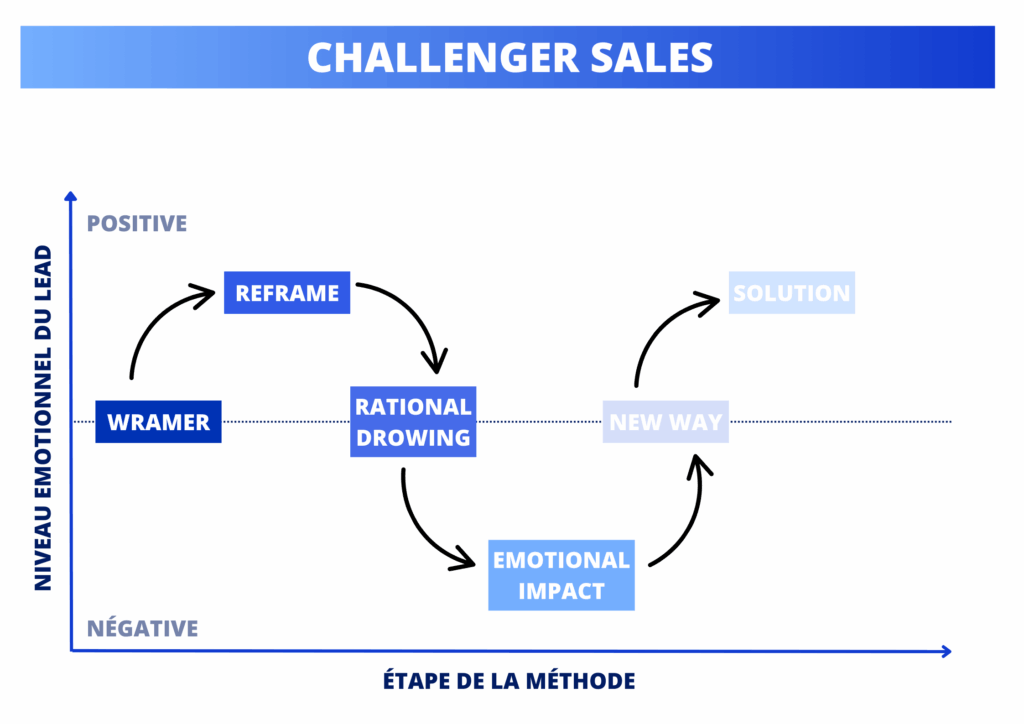
Direct Answer
This is a ready-to-run, 60-minute facilitator deck for training sales teams on the Challenger Sale method, based on the original research from CEB (now Gartner) and the book *The Challenger Sale* by Matthew Dixon and Brent Adamson. The class is designed for a group of 6–15 reps or managers and requires a whiteboard, markers, and a slide deck (optional).
Every section includes a verbatim script for the facilitator, real-world examples, and interactive exercises.
1. Warm-Up (10 min)
Facilitator Script (verbatim): "Good morning, everyone. Before we jump into today's session, I want to start with a quick poll. By a show of hands, how many of you have ever walked into a sales meeting and felt like you were just answering questions—like a walking, talking FAQ sheet?
[Pause for hands.] Now, how many of you have ever lost a deal because the customer said, 'We need to think about it,' and you never heard back? [Pause.] That's the problem we're going to fix today."
Activity: Write on the whiteboard: *"What is the #1 reason deals stall?"* Ask each rep to call out one answer. Common responses: "Price objection," "No decision-maker buy-in," "Competitor locked in." Circle "no perceived urgency" if it comes up.
Transition Script: "All of these are symptoms of a deeper issue: you're not teaching the customer something new. Today, we're going to learn the Challenger Sale method—a framework proven to increase win rates by 15–20% in complex B2B deals, according to Gartner's 2023 research. Let's get into it."
2. The Core Framework: Teach, Tailor, Take Control (15 min)
Facilitator Script (verbatim): "The Challenger Sale is built on three pillars: Teach, Tailor, Take Control. Write these down. Teach means you bring unique insights to the customer—data or trends they haven't considered.
Tailor means you adapt your message to the specific stakeholders in the room—the CFO cares about cost, the VP of Sales cares about revenue. Take Control means you push the customer to act, even if it creates tension."
Diagram 1: The Challenger Sales Model
Real Example: "Let's use a real company: Salesforce. A Challenger rep selling Sales Cloud doesn't start with features. They say: 'Did you know that 70% of sales teams using spreadsheets lose 2 hours per rep per day on manual data entry?
Here's how that costs your company $50,000 per rep annually.' That's teaching—it reframes the problem."
Group Exercise: Divide into pairs. Each pair has 3 minutes to write a "teach" statement for their own product. Use the format: *"Did you know that [data point]? Here's why that matters for [customer's business]."* Call on 2 pairs to share.
3. The Three Types of Tension: Constructive vs. Destructive (10 min)
Facilitator Script (verbatim): "Challenger reps create constructive tension—not anger or frustration. There are three types: 1) Reframe Tension—you show the customer their current approach is wrong. 2) Cost-of-Inaction Tension—you quantify what happens if they don't change.
3) Credibility Tension—you challenge their assumptions with data."
Whiteboard Activity: Draw three columns: Reframe, Cost-of-Inaction, Credibility. Ask the group: "Give me an example of each from your own deals."
- Reframe: "You think your CRM is fine, but your data shows 40% of leads are never followed up. That's not fine."
- Cost-of-Inaction: "Every month you delay, you lose $30,000 in missed revenue."
- Credibility: "Your team told us they're hitting quota, but our analysis shows only 60% of closed-won deals actually meet the criteria."
Warning Script: "Be careful: tension without empathy is destructive. You're not the 'angry Challenger.' You're the credible teacher. Use the MEDDIC framework to qualify pain before you push—Metrics, Economic Buyer, Decision Criteria, Decision Process, Identify Pain, Champion. If you push without qualification, you'll lose the deal."
4. Role-Play: The Challenger Pitch (15 min)
Setup: Choose a volunteer to be the rep. The facilitator plays the customer (a VP of Sales at a mid-market company using HubSpot but frustrated with pipeline visibility). The rep must use the Challenger method.
Facilitator Script (verbatim): "I'm the VP. I have HubSpot, but I don't trust my pipeline. My reps say everything is green, but we're missing quota. Go."
Role-Play Script (Rep Example):
- Teach: "Did you know that 60% of pipeline stages are inaccurate in most CRMs? That's because reps self-report. Here's how that costs you: you're making decisions on bad data."
- Tailor: "For you as VP, the risk is a missed forecast. For your CFO, it's a revenue miss. Let me show you how Clari uses AI to auto-update stages."
- Take Control: "If we don't fix this in the next 30 days, you'll miss Q3. I recommend a pilot with 10 reps starting next week."
Debrief: Ask the group: "What did the rep do well? Where could they improve?" Write feedback on the whiteboard. Key points: "Use data, not opinion." "Don't apologize for pushing."
5. Handling Objections the Challenger Way (5 min)
Facilitator Script (verbatim): "Objections are not roadblocks—they're opportunities to teach. When a customer says 'We're happy with our current vendor,' don't back down. Use the Ladder of Objections from Winning by Design:
- Acknowledge: 'I hear you.'
- Reframe: 'But are you happy, or just comfortable?'
- Quantify: 'Comfort costs you X per year.'
- Challenge: 'What would happen if a competitor does this before you?'"
Real Tool: "Gong transcripts show that top-performing reps spend 60% of objection-handling time reframing the problem, not defending their product. Listen to a Gong call recording of a Challenger rep—they almost never say 'Let me explain how we're different.' They say 'Let me show you why your current thinking is incomplete.'"
Quick Practice: Say this objection: *"We don't have budget."* Each rep writes a 2-sentence Challenger response. Example: *"I understand. But let me ask: what's the cost of not solving this? If your team loses 2 hours a day on manual reporting, that's $100K in wasted salary. Can we look at a 90-day ROI guarantee?"*
6. Close & Next Steps (5 min)
Facilitator Script (verbatim): "Today, you learned the three pillars: Teach, Tailor, Take Control. Your homework: this week, in your next discovery call, use one 'teach' statement. Record yourself using Outreach or Salesloft and listen back. Did you teach, or did you just answer questions?"
Action Items:
- Read *The Challenger Sale* (chapters 4–6 on teaching).
- Schedule a 30-minute peer review session next week.
- Use MEDDIC to qualify before pushing tension.
Diagram 2: The Challenger Rep's Weekly Workflow
FAQ
? What if my product is commoditized? Can I still use Challenger? Yes. Even commodity products have unique insights. Example: a paper supplier can teach a customer about sustainable sourcing trends. The insight doesn't have to be proprietary—it just has to be relevant and reframing.
? How do I avoid sounding arrogant when I challenge the customer? Use data, not opinion. Say "Our research shows..." instead of "You're wrong." The Challenger method emphasizes credibility over aggression. Always lead with empathy: "I can see why you'd think that—most of our clients did too, until they saw this data."
? Does Challenger work for SMB or only enterprise? The original CEB study focused on complex B2B sales, but SMB reps can adapt it. Instead of a 6-month ROI model, use a 30-day quick win. The key is teaching—even a small business owner will listen to a new insight.
? What's the difference between Challenger and MEDDIC? MEDDIC is a qualification framework (who, what, why). Challenger is a selling methodology (how to engage). They complement each other: use MEDDIC to identify the pain, then Challenger to reframe it.
? Can I use Challenger in a renewal or upsell call? Absolutely. In a renewal, teach the customer about new risks they haven't considered. Example: "Since you bought our software, two new competitors have entered your market. Here's how you can stay ahead."
? How long does it take to train a team on Challenger? Most companies see behavioral change in 6–8 weeks with weekly practice. Use Salesloft cadences to reinforce the method—send a weekly "teach statement" template to the team.
Sources
- The Challenger Sale: Taking Control of the Customer Conversation (Matthew Dixon & Brent Adamson)
- Gartner Sales Research: The Challenger Sale vs. Relationship Selling (2023)
- MEDDIC Framework Overview (Winning by Design)
- Gong.io: How Top Sales Reps Handle Objections (Transcript Analysis)
- Salesforce: The Challenger Sale in Action (Case Study)
- HubSpot Sales Blog: Challenger Method for SMBs (2024 Update)
- Clari: AI-Driven Pipeline Accuracy (Forrester Report)
- Outreach.io: Sales Cadence Templates for Challenger Reps