


The Sales Team Huddle Reboot — 60-Min Training
Quality
Certified
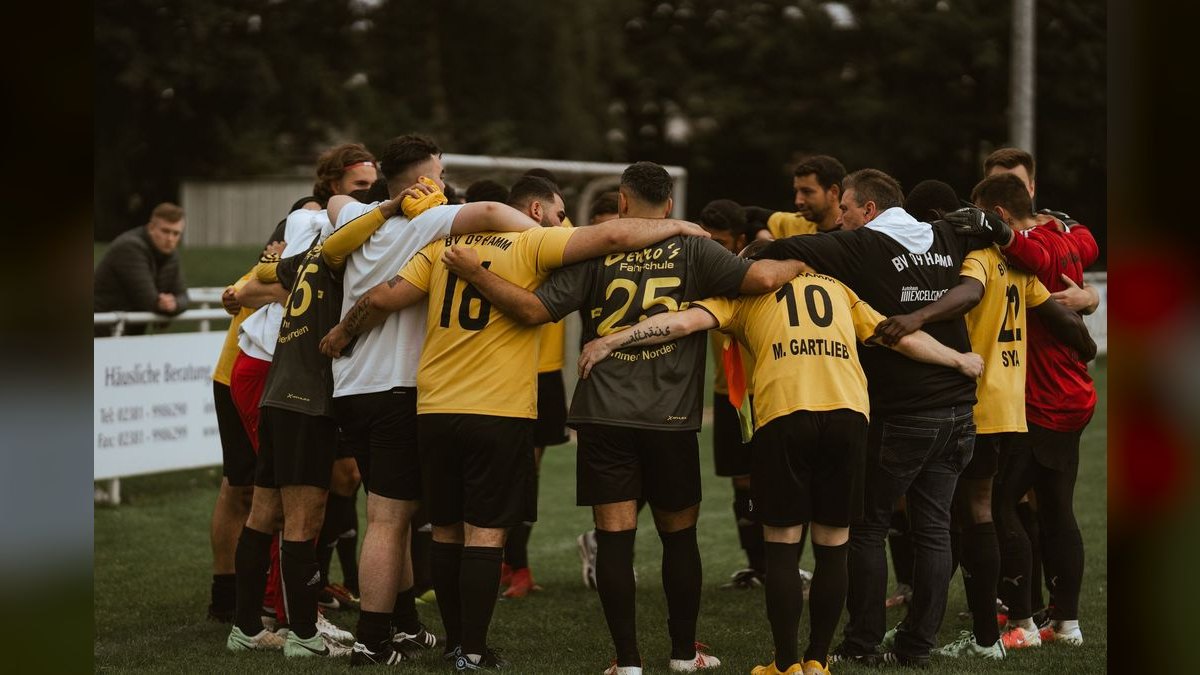
The Sales Team Huddle Reboot is a 60-minute live Training that teaches B2B SaaS managers to run huddles reps actually attend. You install a 15-minute daily standup (yesterday/today/blocker), a Monday-kickoff/Friday-wrap weekly cadence, and a "rep brings a deal" rotation that replaces manager monologues with peer coaching. Everyone leaves with a printed agenda and a named owner.
The Monday-morning huddle nobody wants to attend
Picture a nine-person B2B SaaS Sales team, $25K–$500K ACV, gathered at 9:15 on a Monday. The manager talks for eleven of the fifteen minutes. Two reps scroll Slack under the table. One AE reads last week's numbers off a spreadsheet she opened thirty seconds ago. Nobody names a blocker, because the last three blockers raised went nowhere. By 9:30 the meeting has stretched to 9:34, and the only decision made was "let's circle back." Nobody left with a changed plan, so nobody's Tuesday looks different from their Monday.
This is the room the Reboot Training is built for. Survey data backs the dread: in Gartner's 2025 sales enablement research, a majority of frontline reps said their daily standup could be replaced by a Slack message with zero loss. The problem is almost never the *idea* of a huddle — it is the execution. Managers mix tactical, strategic, and administrative content into one beige hour, what Patrick Lencioni calls "meeting stew" in *Death by Meeting*. Reps get a status recital instead of a decision-making ceremony, so attendance becomes compliance rather than value, and the smartest people in the room quietly optimize for looking present while doing real work in their heads.

The Reboot reframes the entire hour around a single premise: a Huddle is not a status report, it is a fifteen-minute commitment-making ceremony. Reps state what they will close, name exactly what is blocking them, and walk out with one decision changed. Andy Grove's line from *High Output Management* anchors the frame — a meeting is a manager's highest-leverage tool, but only when it changes a decision. If yesterday's huddle did not alter one rep's plan for today, you ran a status update, not a huddle. The Training's job over sixty minutes is to make that distinction muscle memory before managers walk back to their floor, and to hand them a format rigid enough to survive contact with a busy Monday.
How the daily standup mechanism actually works
The core module of the Reboot is the fifteen-minute daily standup, adapted from Jeff Sutherland's Scrum daily and ported to AEs and SDRs the way Mike Weinberg describes in *Sales Management. Simplified.* The Training runs it as a live mock: three volunteer "reps," a real clock, and a scripted cadence managers rehearse until it feels natural rather than robotic. Managers practice the transitions — the handoff from one rep to the next, the ten-second decision, the parking-lot deflection — because those seams are where a huddle silently bleeds minutes.
The 9:00 AM script is deliberately rigid. The manager opens in sixty seconds with one number — for example, "We are at $487K of $620K for the month, 78%, seven selling days left. Yesterday, today, blocker. Thirty seconds each. Go." Each rep answers in the same three beats: what closed or advanced yesterday, the top committed actions for today, and one specific blocker phrased as an ask. A rep might say, "Yesterday: demo with Acme, sent recap and pricing. Today: mutual close-plan call at 2 PM, prospecting block 3–5. Blocker: procurement wants a SOC 2 bridge letter by Thursday." The manager responds in ten seconds with a decision and an owner — "Slack me the procurement contact, I'll have the bridge letter to you by EOD" — then moves to the next rep without commentary.
Three rules make the timebox hold. First, reps literally stand up; chairs invite sprawl and add minutes. Second, no problem-solving happens inside the huddle — when a blocker needs more than sixty seconds, the manager says "parking lot, you and me at 10:15," protecting Sutherland's timebox and sparing the other seven reps a conversation they cannot act on. Third, numbers replace adjectives; "going well" is banned, "$47K committed, 62% to quota, two demos today" is the floor. The Training makes managers rewrite three vague rep updates into numeric ones on the spot, because the reflex to accept "good, busy, close-ish" is what erodes the whole exercise.

The Training also teaches the size rule: above eight reps, the round-robin stretches past fifteen minutes and the back half of the room mentally checks out. Beyond eight, split into two huddles, ideally by segment or pod so the deal talk stays relevant. This is Lencioni's "meeting size cliff," and it is the most common reason a technically correct agenda still fails in practice — the format is fine, but the room is simply too big for anyone past seat six to stay engaged.
Real numbers, ranges, and benchmarks to aim for
The Reboot is specific about targets so managers can measure whether the Training took. The daily standup runs fifteen minutes for a team of five to eight reps — roughly ninety seconds of manager framing plus thirty seconds per rep plus a small buffer. Cross eight reps and you either split the room or accept a twenty-minute drift; the math does not bend, and pretending it will is how a disciplined huddle quietly becomes a half-hour meeting again inside a month.
The weekly bookends carry their own time budgets. The Monday kickoff runs thirty minutes at 9:00 AM: five minutes on the number, fifteen minutes on each rep's "Big 3" deals (dollar amount, next step, and confidence tier of committed/best-case/pipeline), seven minutes on a single theme of the week, and three minutes of out-loud commitments. The Friday wrap runs twenty minutes at 3:00 PM — never 4:30, because half the floor is mentally at the bar and you get performative answers. Each winner walks through the actual sequence in two minutes, slipped deals get named blame-free, and every rep including the manager gives one win and one lesson. The bookends exist so the daily huddle can stay narrow: direction lives on Monday and Friday, execution lives in the fifteen-minute dailies.
The "rep brings a deal" rotation is a seven-minute timebox: two minutes for the rep to present a real stuck deal, four minutes of peer questions (questions only, no statements), and one minute for the rep to state a next step. A six-person team runs a six-week cycle; nobody volunteers and nobody gets skipped. The questions-only rule is the load-bearing constraint — the moment peers start giving advice instead of asking questions, the exercise collapses back into a manager monologue wearing a different hat, so the Training drills the reframe of "you should" into "have you considered."

For the thirty-day check, the Training installs three measurable outcomes. Average huddle length should hold at or under fifteen minutes. Blockers cleared within twenty-four hours should climb toward a strong majority — the manager's four-hour unblock target from the daily flow drives this. And rep sentiment gets one anonymous question: "Worth my fifteen minutes? 1–10." Managers who run the cadence honestly typically report a visible attendance and energy shift inside two weeks, with the rotation quality compounding by roughly the fourth cycle once reps start preparing for peers instead of the manager. These are directional benchmarks the Training hands managers as a scorecard, not guarantees — the point is that "better huddles" becomes a number you can watch move rather than a vibe you argue about.
Trade-offs, alternatives, and when to bend the format
No single cadence fits every team, and the Reboot Training is explicit about the trade-offs so managers adapt intelligently instead of copying blindly. The daily-standup-plus-weekly-bookends model is tuned for the $25K–$500K ACV mid-market, where deals move fast enough that a daily touch changes behavior. Above $500K ACV, deals move on a slower clock; a daily standup can feel like theater, so the alternative is a three-times-a-week rotation with a heavier Monday deal review. Below $25K ACV and high-velocity SDR floors, the opposite pressure applies — the agenda can be simplified to activity numbers and a single blocker, since the coaching value per deal is lower and volume is the game.
The rotation itself carries a trade-off. Handing the floor to reps raises engagement but costs raw information density — a manager monologue can technically cover more deals in fifteen minutes than a single rep-led review. The Reboot's stance is that engagement wins, because a monologue reps ignore transmits nothing regardless of how much it "covers." Managers who need broad pipeline coverage move that work into the Monday kickoff's Big 3 pass and keep the daily huddle narrow, so they never have to choose between coverage and attention inside the same fifteen minutes.

The last major trade-off is virtual versus in-person. Remote huddles lose the standing-up discipline and the ambient accountability of a shared room, so they need compensating structure: cameras on, mics hot, no Slack in the background, and a visible countdown timer on screen-share. For hybrid teams the rule is everyone joins from their own laptop, even people physically in the office — five reps around one conference-room camera plus three remote reps creates two-tier participation, and the remote reps go quiet within three huddles. The alternative of "just gather whoever's in the office" feels convenient but silently kills half the team's voice, and it is nearly impossible to reverse once the remote contingent has learned that speaking up costs more than staying muted.
Common pitfalls and how to avoid them
Managers rarely fail at huddles because they do not know the agenda. They fail at four predictable patterns, and the Reboot Training spends its longest block drilling each as a three-minute diagnose-and-fix so the fix is rehearsed, not just described. The premise is that a manager who has physically practiced handing off the talking stick will do it under pressure; a manager who has only heard it recommended will revert to the monologue the first hectic Monday.
The first pitfall is the manager monologue — the manager talks for eleven of fifteen minutes and reps go passive. The fix is mechanical: hand the talking stick to the rotation owner, and cap the manager at the first sixty seconds and the last sixty seconds. Time it on your phone for two weeks until the restraint is automatic. The second pitfall is no-prep reps who show up cold, fumble for numbers, and eat the clock. The fix is a Slack-bot that posts the agenda at 8:45 AM with each rep's name and the three prompts; a rep who arrives unprepared twice presents first the next day — a natural consequence, not a punishment.
The third pitfall is the quiet killer: no follow-through on blockers. A rep names a blocker, the manager nods, and nothing happens by Friday. After that, reps stop raising blockers at all, and the huddle's diagnostic value collapses. The fix is "decision and owner in writing within sixty seconds" — the blocker, the named owner, and the deadline get posted into a dedicated #huddle-blockers channel and reviewed at every Friday wrap. This single habit is what turns the huddle from a ritual into a system reps trust, because trust here is nothing more than a track record of raised blockers that actually got cleared. The fourth pitfall is calendar creep, where fifteen minutes becomes twenty-two becomes thirty. The fix is a hard stop: the manager stands up and physically walks out at 9:15:00 for one week. As Weinberg puts it, the clock teaches faster than the lecture.

A fifth, subtler pitfall the Training flags is over-installing everything at once. Managers leave energized and try to launch the daily standup, both bookends, the rotation, and the blocker channel on the same Monday, then abandon all of it by week two when the load overwhelms. The Reboot's guidance is to sequence: install the daily standup first, add the Monday kickoff and Friday wrap in week two, and only introduce the rep rotation once the daily cadence holds without the manager policing it. Each layer earns the next. Managers who stage the rollout keep far more of it ninety days later than managers who big-bang the whole system on day one, because a habit that survives on its own can carry the weight of the next one.
Related questions
How long should a daily sales huddle actually run?
Fifteen minutes for a team of five to eight reps — roughly ninety seconds of manager framing plus thirty seconds per rep plus a small buffer. Above eight reps, split into two huddles rather than extending, because the back half of the round-robin disengages once you cross that size cliff.
Should the manager or the reps lead the huddle?
Reps lead the deal review through a named rotation; the manager facilitates and speaks only in the first and last sixty seconds. This eliminates the monologue failure mode and shifts preparation from "impress the boss" to "help my peers," which is where coaching quality compounds after about four cycles.
What's the difference between a daily standup and the weekly kickoff?
The daily standup handles execution — yesterday, today, blocker — in fifteen minutes. The Monday kickoff handles direction in thirty minutes: last week's results, each rep's Big 3 deals, one theme, and out-loud commitments. Dailies keep the team moving; the weekly bookends decide where it moves toward.
Does this format work for remote or hybrid sales teams?
Yes, with adjustments: cameras on, mics hot, no background Slack, and a visible on-screen countdown timer. For hybrid teams, everyone joins from their own laptop even when in the office, so remote reps don't get relegated to second-tier participation and go silent within a few huddles.
How do you know if the huddle Reboot is working?
Measure three things at thirty days: average huddle length (should hold at or under fifteen minutes), share of blockers cleared within twenty-four hours (should climb), and an anonymous one-question rep score — "Worth my fifteen minutes? 1–10." Movement on all three signals the Training took hold.
FAQ
What exactly happens during the 60-minute Training? You work through three modules: the daily standup format (yesterday/today/blocker), the weekly kickoff-and-wrap cadence, and the "rep brings a deal" rotation. Each module includes live practice with volunteer reps and a real clock, and you leave with a printed agenda template ready for the next morning.
Do I need prior experience with Scrum or Lencioni's frameworks? No. The Training assumes you know nothing about Scrum standups or *Death by Meeting*. Everything is taught from scratch using B2B SaaS examples. The only prerequisite is that you currently run or attend a Sales Huddle you'd like to fix.
Will this work for teams with ACV above $500K or below $25K? The core structure works at any ACV, but the examples and failure modes are tuned for the $25K–$500K range. Enterprise teams above $500K usually shift to a three-times-a-week rhythm; sub-$25K high-velocity floors simplify the agenda to activity numbers and a single blocker.
How do you prevent the huddle from becoming a manager monologue? The rep rotation forces one rep to present a live deal while the manager is capped at the first and last sixty seconds. Combined with a strict fifteen-minute timer and a physical hard stop, this structurally removes the monologue rather than relying on the manager's self-restraint.
What happens if a rep doesn't prepare for their rotation slot? The Reboot uses a no-prep protocol: the rep still stands, states "I'm not ready," and the team spends two minutes helping them frame the deal. Show up unprepared twice and you present first the next day — a natural consequence that turns unpreparedness into a coaching moment.
How fast should I expect attendance and energy to improve? Most managers report a visible shift within the first two weeks, as reps start arriving on time knowing they'll present or coach. The Monday kickoff and Friday wrap create bookends that sustain momentum, and rotation quality compounds noticeably by around the fourth cycle.
Sources
- https://www.gartner.com/en/sales/insights/sales-enablement
- https://www.scruminc.com/what-is-scrum/
- https://www.tablegroup.com/product/dbm/
- https://hbr.org/1972/07/managing-your-time
- https://www.scrum.org/resources/what-is-a-daily-scrum
- https://www.atlassian.com/agile/scrum/standups
- https://www.salesforce.com/resources/articles/sales-meetings/
- https://www.mikeweinberg.com/blog
Related on PULSE
- Closing Techniques Deep Dive: Structured Agenda for a Sales Team Huddle
- Overcoming Call Reluctance: Coaching Template for a Weekly Morning Huddle
- Time Management Huddle: Eisenhower Matrix Application for Reps
- The Pre-Call Plan Huddle — 60-Min Training
- Sales Forecasting Accuracy: Template for a Team Meeting Focused on Data Hygiene
- Emotional Intelligence in Sales: Guided Discussion Template for Team Meetings
This page will be disappearing soon. Save it to your device for $1 — or read it free while it is here.
@Kory-White- · if Venmo asks, the last 4 of my number are 2012
This page is gone.
This one is off the shelf now. $1 keeps it on your phone for good — the whole page, pictures and diagrams included.
 sales-trainingThe Sales Manager 1:1 Reboot — 60-Min Training
 sales-trainingThe Year-End Closing Sprint Reboot — 60-Min Training
 sales-trainingThe Territory Plan Reboot — 60-Min Training
 sales-trainingThe Pipeline-Building Day Reboot — 60-Min Training
 sales-trainingThe CRM Hygiene and Adoption Reboot — 60-Min Training
 sales-trainingThe Win-Loss Analysis Reboot — 60-Min Training
 sales-trainingThe Pipeline Generation Sprint Reboot — 60-Min Training
 sales-trainingThe SDR-to-AE Handoff Reboot — 60-Min Training
 sales-trainingThe Sales Forecasting Reboot — 60-Min Training
 sales-trainingThe New-Hire Sales Ramp Plan Reboot — 60-Min Training