


The Mock-Call Role-Play Workshop Reboot — 60-Min Training
Quality
Certified
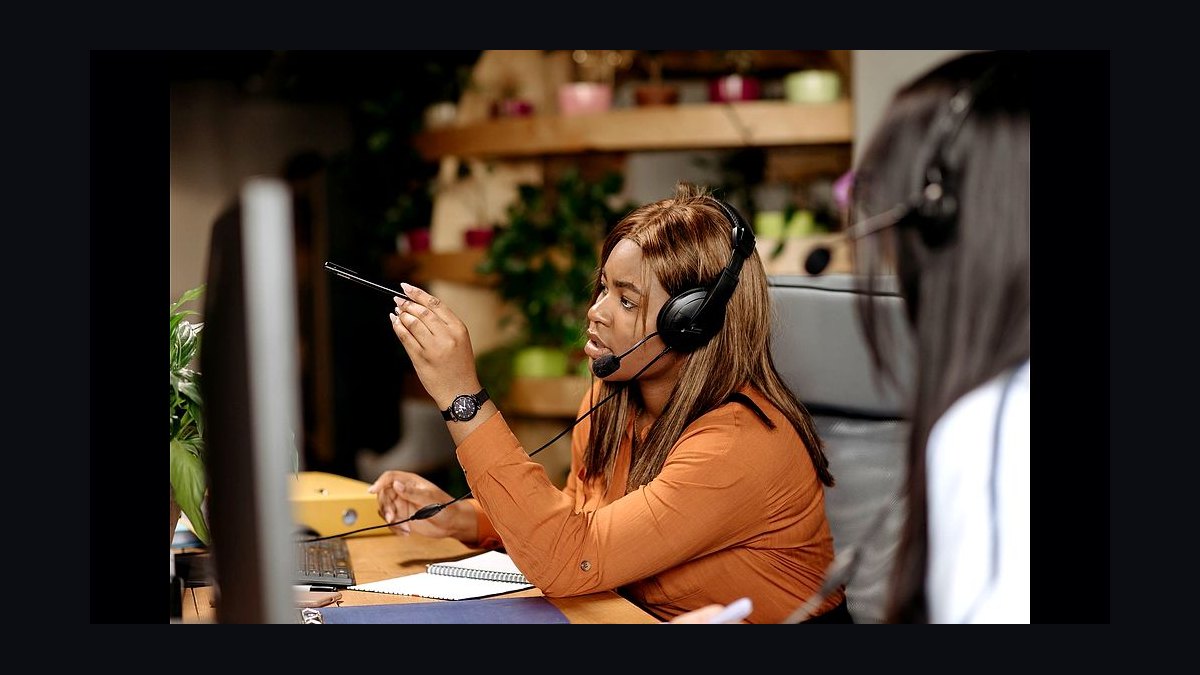
Most Mock-call role-plays fail as low-stakes theater: the manager plays a soft buyer, no rubric exists, and nobody watches the tape. The Reboot fixes all three with a production-grade persona brief, a 4-axis 40-point rubric (Discovery, Objection Handling, Value Framing, Next-Step Commitment), and recorded playback. The manager coaches and scores, never buys.
The two Reboot models you are choosing between
Before you build the 60-minute agenda, decide which of two structural models your sales Training will run on, because they demand different prep, different staffing, and produce different quality of data. Getting this choice wrong is the most common reason a well-intentioned Workshop slides back into the theater it was meant to replace.
Model A — manager-as-facilitator, peer-as-buyer. The manager distributes the persona brief and the rubric, hits record, and then goes silent while a *peer AE* plays the buyer verbatim from the card. The manager's only job for the next eight minutes is to observe and score against the four axes. This is the model most Reboot Workshops should default to, because it removes the single biggest failure mode named in coaching literature — the manager softening objections and unconsciously tipping the rep toward the "right" answer. When a peer plays the buyer, the objections stay hard, the discovery gets tested honestly, and the manager's full attention lands on the scoring sheet rather than on acting. The trade-off is real preparation cost: your peer buyers need the persona card in hand and at least a minute to internalize the hidden objection, or they drift into a caricature — the cartoon "no-budget" prospect who teaches the rep nothing.

Model B — manager-as-buyer, structured brief. Here the manager stays in character as the buyer, answers a few clarifying questions before the call, and runs the role-play as the prospect. This is faster to set up because you need no second AE to brief, and it works for very small teams of two to four reps where you genuinely cannot spare a peer to play buyer. The cost, again, is real: the manager cannot score and act at the same time, and the rescue instinct kicks in — the manager hears the rep struggle and softens the very objection that should have stayed sharp. If you run Model B, you must record and score from the tape afterward, never live, and you should accept that your data is one notch noisier than Model A's.
The Reboot is structural, not motivational — no pep talk, no "just be more confident." Both models share the same non-negotiables: persona on paper, rubric on the table, camera on, and a mandatory 7-day re-run for any rep who scores below the bar. The choice between them is really a single operational question: can you free a peer to play buyer for the duration of the block? For a 6–10 person B2B SaaS team selling $25K–$500K ACV, you almost always can, so Model A wins in the overwhelming majority of cases. Reserve Model B for the genuinely tiny team, and treat it as a temporary constraint you engineer your way out of as you hire.
How to decide which Reboot model fits your team

Route the decision on three variables — team size, ACV complexity, and whether you can spare a peer buyer. A single high-ACV deal with a five-person buying committee needs a fundamentally different rehearsal shape than a transactional $25K sale, and the persona brief and rubric scale accordingly. Do not pick a model by preference; let the deal shape and the roster pick it for you.
The decision tree keeps the Reboot honest. If you cannot answer "who plays the buyer" with an actual name, you are back in improvisation — and improvisation is precisely the failure the Reboot exists to kill. Rotate the persona cards each round so reps face different buyer contexts — a skeptical RevOps director one week, a founder-CEO the next — mirroring the variety they hit across a real quarter and preventing them from memorizing a single script. A rep who has only ever rehearsed against the same soft buyer has not practiced selling; they have practiced reciting. Rotation is what converts the Workshop from a performance into a genuine skill test, and it is the cheapest reliability upgrade you can make to the whole system.
One more routing rule: if your team spans multiple segments — SMB velocity deals alongside enterprise committee deals — split the room by segment rather than forcing one rubric on both. The SMB rep who books a two-week close and the enterprise rep managing a six-month committee cycle are being measured on different behaviors, and a shared bar flatters one while punishing the other.
The numbers behind the persona brief and the 40-point rubric

The Reboot lives or dies on concrete numbers, so here is exactly what each component contains and how it scores. Vagueness here is fatal — a "sort of skeptical CFO" produces a sort-of-useful rehearsal.
The persona brief. Each brief is a one-page document with five fixed fields: company context (industry, headcount, funding stage, recent news), role and authority (title, reporting line, what they get fired for missing), pain market (three to four specific problems), stakeholder map, and hard constraints (budget range, timeline, deal-breakers). Two worked examples anchor the Workshop and set the standard for every card you write afterward:
- Persona A — skeptical RevOps director. Dana Okafor, Director of Revenue Operations at a 480-person Series C HR-tech company, reports to the CRO, runs a Salesforce / Outreach / Gong / ZoomInfo stack, and is already 12% over tool budget. Trigger: the CRO wants forecast accuracy fixed — it currently swings ±18% per quarter. Hidden objection: she believes the real problem is rep discipline, not tooling, and will say "we already have Gong" inside the first five minutes. She will not move without a peer reference and a written ROI model.
- Persona B — founder-CEO. Marcus Liang, CEO of a 35-person developer-tools startup at $4M ARR, owns the deal personally and took the call because a board member made the intro. Trigger: just raised an $18M Series A, and the board wants 4x pipeline coverage by Q4. Hidden objection: worried any spend "looks bloated" to the board, so he pushes for a six-month pilot at 50% off. He loops in two co-founders before signing anything over $40K.
The test for a usable persona is simple: a persona without a budget, a trigger, and a hidden objection is a fantasy, not a prospect. Those three fields are what make the brief production-grade, and they are the first things to check when a card feels thin. If a rep can breeze through the call, your card is missing one of the three — usually the hidden objection.

The 4-axis rubric — 40 points. Every observer scores every rep on all four axes; the manager publishes the average so no single hawk or dove skews the number. Each axis runs 0–10 with explicit anchors so scoring is teachable rather than a matter of taste:
- Discovery (0–10). 0–3: feature questions, no business problem uncovered. 4–6: found surface pain but did not quantify it. 7–8: quantified the pain in dollars or hours and tied it to the trigger. 9–10: got the prospect to articulate the cost of inaction in their own words.
- Objection Handling (0–10). 0–3: argued or oversold past the objection. 4–6: acknowledged but pivoted back to the pitch too fast. 7–8: used a clarifying question to isolate the real concern first. 9–10: reframed the objection as a shared problem and secured verbal agreement on the reframe.
- Value Framing (0–10). 0–3: listed features and said "AI-powered" more than twice. 4–6: connected one feature to one outcome. 7–8: tied value to the persona's specific trigger and metric. 9–10: used a named peer-customer story with a specific result.
- Next-Step Commitment (0–10). 0–3: "I'll send some info." 4–6: vague follow-up, no calendar hold. 7–8: booked a specific next meeting with a stated agenda. 9–10: booked it, named the required attendees on the prospect side, and got a verbal yes to bring them.
The bar: 28 of 40. Anything under 28 means the rep re-runs the same persona next week — same card, same hidden objection, so improvement is measured against a fixed target rather than a moving one. For committee deals above $100K ACV, add a fifth stakeholder-mapping axis and raise the total to 50 points, keeping the pass bar at 70% (35 of 50). For sub-$25K transactional deals, shorten the discovery window and weight Next-Step Commitment higher — speed to a booked next step matters more than deep pain quantification when the sales cycle is two weeks. The rubric is deliberately weighted to the deal, not the ego: publish it before the call so reps rehearse to the standard rather than to whatever they think the manager wants to hear.
Running the 60-minute agenda in sequence

The Reboot fits inside one hour for a 6–10 person team, and the sequencing is the whole game — skip the recording loop and you are back to theater. Here is the block-by-block agenda with hard stops, designed so the clock, not anyone's patience, ends each phase.

- Name the failure mode (5 min). Open by stating the three reasons role-plays fail — low stakes, manager-as-buyer, no rubric — and declare out loud that today fixes all three. Naming it sets the contract for the hour.
- Distribute the persona brief (15 min). Hand each AE a card, give five minutes to read and annotate, and two minutes to ask the buyer clarifying questions. This turns the exercise into a diagnostic test of preparation habits — you immediately see who maps objections to specific pains and who wings it.
- Publish the rubric (10 min). Print and distribute the 4-axis sheet so every observer scores against the same standard. "That was good, work on your discovery" is vibes, not coaching; the rubric is what makes the feedback teachable and comparable across reps and weeks.
- The role-play block (10 min). Two reps go, eight minutes each, hard stop. The manager records via Zoom or Gong while a peer AE plays the buyer verbatim. No coaching mid-call and no rescue — if the rep flounders, they flounder, and that silence is itself the data you came for.
- The "video it back" loop (15 min). Play five minutes of each recording and the whole team watches together. The rep under review self-critiques against the rubric first, then peers score each axis with a one-to-two-sentence why, then the manager adds exactly one thing to keep and one thing to change. The rep writes that commitment into the CRM coaching field or a shared doc before the next block begins.
- Close, commit, calendar (5 min). Publish the scoreboard, book next week's slot before anyone leaves, and have the manager state the discipline out loud: "I will not play buyer, I will not coach during the call, I will score against the rubric."
Three rules from the deliberate-practice tradition govern the playback and are worth stating explicitly. First, the rep speaks first, because self-coaching is the highest-retention input a person can get — hearing yourself name your own miss sticks harder than being told. Second, one keep and one change only, because cognitive load past two items reliably kills behavior change; a rep handed six corrections improves on none of them. Third, the commitment must be logged, because unlogged commitments are forgotten by Friday and the next Workshop starts from zero. A record-score-re-run cadence inside seven days is exactly what turns a one-off Mock performance into a durable, compounding skill rather than a feel-good afternoon.
Related questions
How many reps should be in the hot seat per 60-minute session?
Two reps, eight minutes each, is the ceiling for a single hour if you want real playback. Watching five minutes of each recording plus the debrief consumes 15 minutes; more than two reps means someone's tape never gets watched, which recreates the low-stakes failure you are fixing.
What score should trigger a re-run of the same persona?

Below 28 of 40. A rep who clears 28 advances to a next-stage or new-persona role-play; anyone under repeats the identical persona in seven days so you measure genuine improvement against a fixed standard rather than a moving target.
Can the manager ever play the buyer in the Reboot?
Only in teams too small to spare a peer, and even then the manager must score from the recording afterward, never live. Scoring and acting simultaneously is where managers unconsciously soften objections and rescue reps — the core defect the Reboot removes.
How often should the Workshop recur?
Weekly, rotating who sits in the hot seat, with any sub-28 rep re-running within seven days. After three to four cycles a 6–10 person team has watched 20–30 recorded buyer interactions and built a shared pattern library of traps — which is where compounding skill gain begins.
FAQ
How is this Reboot different from a typical role-play? Typical role-plays fail because the manager plays a soft buyer, there is no scoring rubric, and nobody watches the tape. The Reboot uses a production-grade persona brief, a 4-axis rubric (Discovery, Objection Handling, Value Framing, Next-Step Commitment) worth 40 points, and requires recording every rep for group playback so feedback is evidence-based rather than impressionistic.
What team size works best for the 60-minute format?
The agenda is built for 6–10 AEs or SDRs. With fewer than six you lose group dynamics and peer buyers; with more than ten you cannot watch every recording and give meaningful feedback inside the hour, and the Workshop overruns.
Do I need special software to record and play back the calls? No. Any basic conferencing tool with recording — Zoom, Google Meet, or even a phone camera — works. The requirement is simply that everyone can watch the playback together on a shared screen; no expensive enablement platform is needed to run the Reboot well.
What if my team sells deals under $25K or over $500K ACV? The structure scales, but tune the brief and rubric to deal size. For lower ACV, shorten the discovery window and weight Next-Step Commitment higher. For higher ACV, add a stakeholder-mapping axis and raise the total to 50 points, keeping a 70% pass bar.
How do I handle a rep who freezes during the Mock call? That is exactly why you record. Pause at the freeze point, ask the group what they would do next, and let the rep take a second take. The score exists for growth, not punishment — no one is publicly shamed, and the recording makes the moment coachable.
Can I run this Workshop remotely with a distributed team? Yes. Use breakout rooms for the prep phase, record each rep's Mock call in the main room, and share your screen for playback. Ensure everyone has a stable connection and keeps a camera on for the full 60 minutes so the sales rehearsal stays high-stakes.
Sources
- https://www.wiley.com/en-us/Coaching+Salespeople+into+Sales+Champions-p-9780470142516
- https://www.hmhco.com/shop/books/peak/9781531865559
- https://www.harpercollins.com/products/new-sales-simplified-mike-weinberg
- https://www.forcemanagement.com/meddicc
- https://www.joinpavilion.com/
- https://www.gong.io/resources/
- https://hbr.org/2019/03/the-performance-management-revolution
- https://hbr.org/2020/11/how-to-coach-your-sales-team-through-a-crisis
Related on PULSE
- Navigating the Multi-Stakeholder Sale: Role-Play Template for Team Practice
- Top 10 sales role-play templates for objection handling practice
- Top 10 Closing Question Templates for Role-Play Training
- Top 10 Role-Play Scenarios for Handling Price Objections
- The Challenger Sale Rehearsal: A Role-Play Intensive Team Meeting Module
- Top 10 underperformer role-play scenarios for 2027
This page will be disappearing soon. Save it to your device for $1 — or read it free while it is here.
@Kory-White- · if Venmo asks, the last 4 of my number are 2012
This page is gone.
This one is off the shelf now. $1 keeps it on your phone for good — the whole page, pictures and diagrams included.
 sales-trainingThe Sales Coaching Cadence Reboot — 60-Min Training
 sales-trainingThe Skip-Level Coaching Reboot — 60-Min Training
 sales-trainingThe Ride-Along Coaching Reboot — 60-Min Training
 sales-trainingThe Cold Call Reboot — 60-Min Training
 sales-trainingThe Solution Selling Reboot — 60-Min Training
 sales-trainingThe Win-Loss Analysis Reboot — 60-Min Training
 sales-trainingThe Sales Storytelling Reboot — 60-Min Training
 sales-trainingThe Sales Activity Metrics Reboot — 60-Min Training
 sales-trainingThe Multi-Thread and Champion Build Reboot — 60-Min Training
 sales-trainingThe Closing Conversation Reboot — 60-Min Training