


The Pipeline Generation Sprint Reboot — 60-Min Training
Quality
Certified

A Pipeline Generation Sprint Reboot is a one-to-two-week, all-hands outbound push a sales manager calls when forward pipeline coverage falls below roughly 3x remaining quota. This 60-Min Training teaches when to pull the trigger, how to structure a two-week cadence, why internal meetings pause, and how to debrief so each Sprint compounds.
The outcome you should expect
The point of a Pipeline Generation Sprint Reboot is not a heroic burst of activity for its own sake — it is a measurable, defensible lift in forward coverage inside a fixed window. When you run this Training well, the room walks out understanding exactly one thing: a concentrated Sprint buys back a quarter of forecast peace on purpose rather than by luck. That framing matters, because a team that treats the reboot as noise will dial through the motions and log garbage; a team that treats it as a governed intervention will move a real number.
Set the expectation in coverage-ratio terms, because that is the metric leadership actually watches every Monday. If you enter the Sprint at 1.8x coverage against remaining quota, a realistic two-week target is a lift of roughly +0.7x to +1.2x — enough to move a red diagnostic to yellow or green. Translate that abstract ratio into two concrete units reps can feel in their bones: newly created qualified opportunities, and created-pipeline dollars. For a three-rep team you might frame the goal as 60 net-new qualified opportunities, and a created-pipeline figure that maps to your average deal size (60 opps × your ACV × a conservative early-stage weighting, so nobody books phantom revenue).
Just as important as the number is the *behavioral* outcome. A good Sprint reboot re-installs a prospecting habit the team quietly lost after quarter-close, when calendars emptied and two weeks vanished into deal admin. Jeb Blount frames the underlying reason in *Fanatical Prospecting* with the "30-Day Rule": the pipeline you build today closes 30 to 90 days from now, so the empty calendar you tolerate this week becomes the empty forecast you panic over next quarter. The outcome you are buying is therefore two-layered — near-term coverage recovery you can put on a scoreboard, and a re-anchored operating rhythm the team carries forward. If reps finish burned out and no memo gets written, the Sprint failed regardless of the raw opportunity count.

What drives that outcome: concentration, shielding, and a scoreboard
Three mechanics drive the result, and this Training should name them explicitly so the room understands *why* the format is shaped the way it is — not as arbitrary manager theater, but as a system with intent.
Concentration of attention. Ten reps dialing hard for ten days beats ten reps dialing one day a month for ten months, because focused human attention compounds while context-switching taxes every interruption. Mike Weinberg calls the concentrated version of this a "blitz" in *New Sales. Simplified.* — a deliberate outbound assault when the normal cadence has slipped. The Pipeline Generation Sprint reboot is that blitz formalized into a repeatable management system with a start, a structure, and an end, so it can be run again instead of reinvented.
Manager shielding. During the Sprint, the manager's primary job is not coaching — it is removing every internal tax on dial time. Cross-functional requests, enablement sessions, deal reviews, and forecast prep all get intercepted and pushed to the far side of the Sprint. Run the cost math on screen so the value is undeniable: a three-rep team carrying five 30-minute internal meetings a week loses about 7.5 person-hours weekly to overhead; across a two-week Sprint that is roughly 15 hours — the equivalent of one rep's entire dialing week handed straight back to the phone.
A live scoreboard. What gets scoreboarded gets dialed. A running tally of opportunities created, pipeline dollars, and percent-of-goal, posted several times a day, converts abstract effort into visible progress and lets peer pressure do work no manager memo can. The scoreboard is the room's shared heartbeat — a rep who is behind sees it, and a rep who is ahead sets the pace everyone else quietly chases.
Benchmarks and realistic ranges

Do not call a Sprint on vibes, and do not set the daily bar on vibes either. Anchor both to a diagnostic and to published-then-tuned activity floors, so the trigger and the target are defensible when someone asks why the whole team went dark for two weeks.
The coverage-gap diagnostic — four lights. Pull current numbers from the CRM on a shared screen during the Training and read four signals live:
- Coverage ratio. Forward pipeline divided by remaining quota for the quarter. Treat 3x-plus as green, 2.0x–3.0x as yellow, and below 2.0x as red. Red means Sprint.
- Stage-1 inflow. New opportunities created in the last 14 days versus the trailing-90 average. Below about 70% of that trailing average is a yellow turning red fast.
- Activity. Outbound dials, sequenced contacts, and personalized emails per seller per day versus your own published bar. Trish Bertuzzi's *The Sales Development Playbook* documents high activity floors for account-based motions; tune the exact number to your ACV rather than importing someone else's.
- Calendar density. Discovery calls booked in the next ten business days. If next week is under half of a healthy week, the wheel is already slowing and the forecast is about to follow.
The trigger rule. If two or more lights are red, you call the Sprint — and you announce duration in the same breath. One week for a tactical reboot (coverage 2.0x–2.5x, a single missed month); two weeks for a coverage crisis (under 2.0x, multiple missed months, or a team that has lost the prospecting habit entirely). Never call open-ended Sprints; fatigue compounds non-linearly past day ten and the team learns to ignore the next one you call.
Realistic daily bars (publish before the Sprint starts, then tune to your motion and ACV). For AEs, a defensible triple-touch bar is roughly 40 dials, 30 personalized emails, and 15 LinkedIn touches, plus meaningful multithreading on 3 target accounts. For SDRs in a high-volume motion, something like 80 dials, 50 sequenced contacts, and 25 personalized openers. For the manager, budget roughly nine ride-along observations a day on a three-rep team (three per rep) and zero forecast prep. These are starting ranges, not laws — the discipline is publishing *a* number and holding it, not importing a benchmark blindly and pretending it fits your deal size.
Risks, edge cases, and failure modes

The reboot fails in predictable ways, and naming them in the Training is what separates a repeatable system from a one-time stunt everyone dreads repeating.
Fatigue and diminishing returns. The single biggest failure mode is running the Sprint too long or too often. Past day ten, dial quality collapses even as dial counts hold, so you generate worse conversations and more no-shows — activity theater with a decaying conversion rate. The fix is the hard two-week ceiling and quarterly, not weekly, cadence as the default rhythm.
Load-first discipline breaks. If reps start dialing on day one with thin lists, they burn the best accounts on unresearched calls. The rule — no live calls until the account-loading phase is done — feels slow but protects your highest-value contacts. You earn the right to dial by doing the homework first, and a wasted first-touch on a tier-one account is expensive to recover.
The manager gets pulled back into meetings. The shield only works if the manager actually absorbs the cross-functional pressure. The common failure is a director "just needing five minutes" that becomes a daily interruption. This Training should rehearse the exact deflection line so the manager reflexively takes the meeting *for* the rep instead of pulling the rep off the phone.
Late-stage deals get neglected — or worse, over-protected. The pause applies to *internal* meetings and *new* opportunity-stage reviews, never to customer-facing closing motions. AEs still progress booked opportunities; a Sprint that lets a hot late-stage deal go cold to hit an opp-count number has optimized the wrong metric and traded revenue for a vanity tally.
No debrief, no compounding. A Sprint with a great opp count and no written memo is a Sprint you cannot repeat. If the winning sequences never get codified and the broken tooling never gets fixed, Sprint #4 is no more efficient than Sprint #1 and the whole point — compounding — is lost.
Quality dilution under scoreboard pressure. A visible scoreboard can tempt reps to log low-quality "opportunities" to move their number. Guard against it by defining the qualified-opportunity bar *before* the Sprint and spot-checking a sample of created opps at the debrief, disqualifying any that do not meet the bar. A scoreboard measuring garbage is worse than no scoreboard.
A practical rollout plan

Structure the two weeks as ten business days in three phases, and show the block-by-block calendar on a shared screen so nobody is surprised by what the day demands.
Days 1–3 — Account loading. Reps build target lists from ICP filters, refresh signal data (funding, hiring, leadership change), and load sequences. Hard rule: no live calls until day 4 — load first, fire second, and resist the itch to "just try a few."
Days 4–8 — Heavy touch. Triple-touch days against the published daily bar. The manager runs three live ride-along observation blocks per day — roughly mid-morning, early afternoon, and mid-afternoon — coaching in the moment rather than saving feedback for the standup where it lands cold.
Days 9–10 — Convert and close the loop. Reps stop adding net-new contacts and instead convert booked discoveries, return missed calls, and work the sequenced-but-cold list. Day ten ends with the debrief, on the calendar from day one so it never gets skipped.
The daily heartbeat. An 8:30 AM standup, 12 minutes hard cap, standing, no laptops. Each rep answers three questions in under 90 seconds: yesterday's numbers (dials, emails, opps created); one named account they are breaking into today; and one blocker in a single sentence. The manager logs blockers to the Sprint channel and clears them by noon. No coaching happens in the standup — that lives on the ride-alongs. Every standup ends with the scoreboard read-out.
The sales-Sprint launch script (read verbatim). *"Team — we're at 1.8x coverage with 11 weeks to quarter-close. That's a real gap, not a feeling. Starting Monday we run a two-week Pipeline Sprint. Goal: 60 new qualified opportunities, every seller contributing. No internal meetings, no forecast calls, no deal reviews until the Friday after next. Standup at 8:30 sharp. Questions go in the Sprint channel, not my calendar. Drink water."*

The debrief (60 minutes maximum, memo circulated by the next Monday). Ask five questions in order: What were the final numbers versus the goal? Which plays produced the most opportunities, by channel, persona, and message? Which accounts that ignored us deserve a different angle next time? What broke — tooling, data, list quality, manager support? And what do we keep, kill, or change before the next Sprint? Pin the memo, codify the winning sequences into the standard playbook, and fix the broken tooling before the next call so the next reboot starts a rung higher.
Related questions
How is a Sprint different from a normal prospecting week?
A normal week spreads outbound thin across competing priorities. A Sprint concentrates it: internal meetings pause, a single scoreboard governs the room, and every seller works the same window against a published daily bar. The difference is focus and shielding, not new work.
Who should be in the room for the 60-minute Training?
Every AE and SDR who will run the Sprint, plus the frontline manager who will shield them. Keep RevOps or enablement to a brief cameo if they own the diagnostic dashboards; the core audience is the people who will actually dial.
What if coverage is already healthy?
Run the Sprint anyway, on a quarterly cadence, as preventative maintenance rather than crisis response. Teams that treat Sprints as an operating rhythm — not an emergency — avoid ever falling into the sub-2.0x coverage hole in the first place.
Should SDRs and AEs sprint together or separately?
Together, working the same target accounts inside the same window under one scoreboard, one standup, and one debrief. Aligned Sprints keep messaging consistent across the account and prevent the duplicated or contradictory outreach that siloed motions produce.
FAQ

How often should we run Pipeline Sprints? At minimum once per quarter as preventative maintenance, plus any time the coverage-gap diagnostic shows two or more red lights. Treating Sprints as a recurring rhythm rather than a reactive fire drill is what keeps a sales team out of the sub-2.0x coverage hole to begin with.
One week or two weeks — how do I choose? One week for a tactical reboot (coverage 2.0x–2.5x, a single missed month). Two weeks for a coverage crisis (under 2.0x, multiple missed months) or when the team has lost the prospecting habit entirely. Never longer than two weeks — fatigue compounds non-linearly past day ten.
What if a rep refuses to drop their non-Sprint meetings? That is a manager-shield problem first. You take the meeting, push back on the requester, and protect the dial time. If the rep is the one clinging to the meeting, that becomes a coaching conversation about commitment — held in their 1:1 *after* the Sprint, not during it.
How do we handle late-stage deals during the Sprint? Sellers still progress booked opportunities; closing motions are never paused. The pause applies only to internal meetings and new opportunity-stage reviews. Customer-facing time stays sacred during and outside the Sprint.
What does success look like on day 10? A measurable coverage-ratio lift (target roughly +0.7x to +1.2x), a documented one-page memo, codified winning plays, and a team that wants to run the next Sprint. Opportunity count alone is not success — a burned-out team with no memo is a failed Sprint.
Doesn't pausing internal meetings cause chaos elsewhere? Rarely, because the pause is short and pre-announced. The manager absorbs the cross-functional load for two weeks and reopens the calendar immediately after the debrief. Most requests wait comfortably; the few that cannot are handled by the manager, not the reps.
Sources
- Blount, Jeb. *Fanatical Prospecting.* Wiley, 2015. — https://www.wiley.com/en-us/Fanatical+Prospecting-p-9781119144755
- Weinberg, Mike. *New Sales. Simplified.* AMACOM, 2012. — https://www.harpercollinsleadership.com/9780814431771/new-sales-simplified/
- Bertuzzi, Trish. *The Sales Development Playbook.* Moore-Lake, 2016. — https://www.trishbertuzzi.com/the-sales-development-playbook
- Iannarino, Anthony. *The Lost Art of Closing.* Portfolio, 2017. — https://www.penguinrandomhouse.com/books/537453/the-lost-art-of-closing-by-anthony-iannarino/
- The Bridge Group — Sales research and SDR/AE metrics reports. — https://blog.bridgegroupinc.com/
- Salesforce — State of Sales Report. — https://www.salesforce.com/resources/research-reports/state-of-sales/
- HubSpot Sales Blog — pipeline coverage and prospecting cadence guidance. — https://blog.hubspot.com/sales
- Harvard Business Review — sales productivity and time management. — https://hbr.org/topic/sales
Related on PULSE
- The Pipeline Generation Block — 60-Min Training
- The Referral Generation Reboot — 60-Min Training
- Pipeline Review to Revenue: Template for a Data-Driven Sales Sprint Session
- AI Video Generation Selling to the Video Production Lead — 60-Min Training
- AI Image Generation Selling to the Creative Director — 60-Min Training
Recently Added — Related
This page will be disappearing soon. Save it to your device for $1 — or read it free while it is here.
@Kory-White- · if Venmo asks, the last 4 of my number are 2012
This page is gone.
This one is off the shelf now. $1 keeps it on your phone for good — the whole page, pictures and diagrams included.
 sales-trainingThe SDR-to-AE Handoff Reboot — 60-Min Training
 sales-trainingThe New-Hire Sales Ramp Plan Reboot — 60-Min Training
 sales-trainingThe Discount Strategy and Margin Defense Reboot — 60-Min Training
 sales-trainingThe Sales Manager 1:1 Reboot — 60-Min Training
 sales-trainingThe Year-End Closing Sprint Reboot — 60-Min Training
 sales-trainingThe Win-Loss Analysis Reboot — 60-Min Training
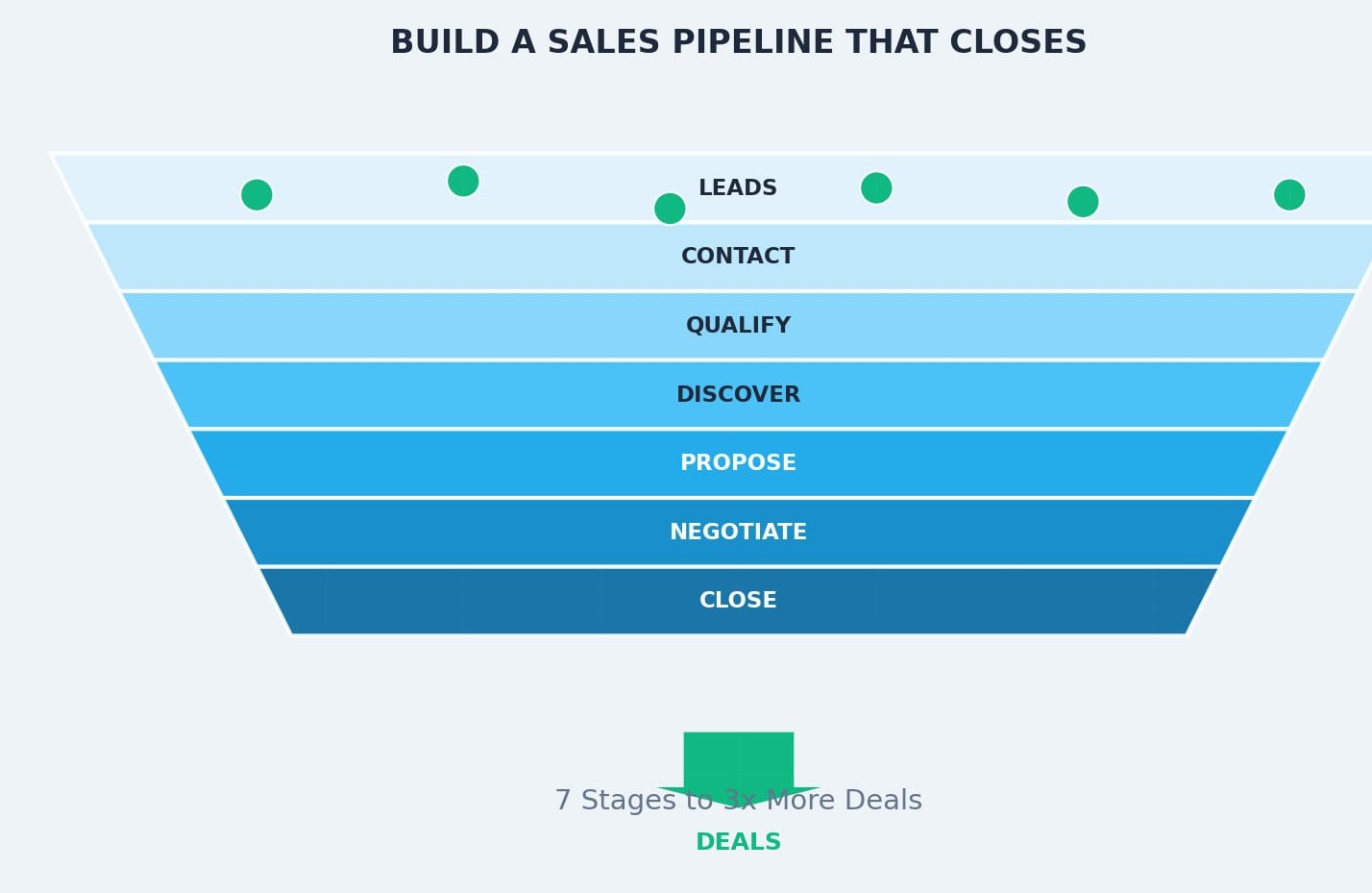 sales-trainingThe Pipeline-Building Day Reboot — 60-Min Training
 sales-trainingThe Sales Forecasting Reboot — 60-Min Training
 sales-trainingThe Sales Team Huddle Reboot — 60-Min Training
 sales-trainingThe CRM Hygiene and Adoption Reboot — 60-Min Training