


Mortgage Purchase Origination Selling — 60-Min Training
Quality
Certified

Mortgage purchase origination selling is a relationship sale, not a rate sale. A 60-minute training should drill four disciplines: a 24-hour pre-approval SLA, a weekly Realtor touch cadence, a compliant lock-versus-float conversation governed by TRID timing, and a product-fit decision tree spanning FHA, VA, conventional, and jumbo.
The branch meeting that exposes the real problem
Picture a Monday morning branch huddle with nine licensed loan officers. Volume is flat. The manager opens the pipeline report and the room immediately blames rates — the same reflex a SaaS team has when it blames pricing. But the pipeline tells a different story. Three LOs are carrying eleven of the fourteen purchase files in the branch. The other six are each sitting on one or two, and every one of those came from a paid consumer-direct lead rather than a referral partner.
That split is the whole training. The three producers are not better at quoting rates; nobody in the room controls the secondary market. They are better at two unglamorous operational habits: they return a complete pre-approval letter faster than anyone else in their market, and they talk to the same dozen real estate agents every single week whether or not a deal is live. The other six treat agent relationships as an outcome of closings. The top three treat closings as an outcome of the relationship.
Then the manager asks the diagnostic question that reframes the hour: "When a Realtor you've never met gets a buyer at an open house on Sunday afternoon, why would they text you instead of the LO they used last time?" The only honest answers are speed, reliability, and the absence of surprises. Nothing about that answer is a pitch. It is a service-level promise, and it is measurable — which is exactly why it belongs in a training session rather than a motivational speech.
The same structural insight shows up in adjacent verticals. Commercial insurance producers who work through independent agents, title reps calling on the same closing coordinators, and even medical device reps working through referring physicians all discover the same thing: when you sell through a gatekeeper who owns the customer relationship, your product is your responsiveness. The mortgage version just happens to be wrapped in federal disclosure timing, which raises the stakes on getting the operational cadence right.
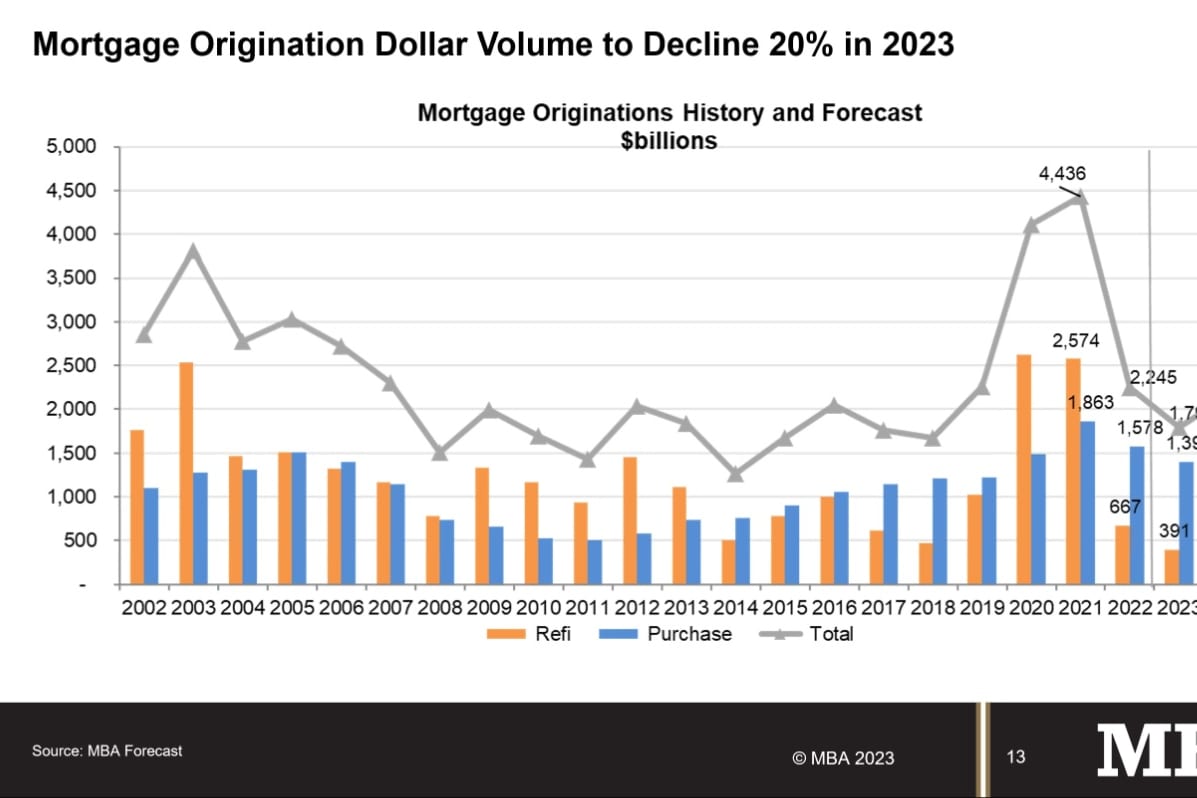
Set the frame explicitly in the first five minutes. Purchase origination differs from refinance origination in one decisive way: refi volume is a function of the rate cycle and arrives at you, while purchase volume is a function of a referral network you build deliberately and it survives the cycle. An LO whose book is 80% refi has a business that evaporates when rates move against them. An LO whose book is 80% purchase referral has an annuity that only degrades if they stop calling.
Close the framing segment with the compliance baseline, because everything downstream inherits it. Every conversation in this training is governed by TRID, Regulation Z, RESPA — particularly the Section 8 prohibition on kickbacks and referral fees — the SAFE Act, and state NMLS rules. State the rule plainly: if a tactic feels clever but skirts a required disclosure or moves value to a referral source, it is not a growth hack, it is a licensing event. Reps need to hear that before the tactical sections, not after.
How the 24-hour pre-approval SLA actually works

The pre-approval letter is the single strongest trust signal an agent uses to grade a loan officer, because it is the only artifact they can hand to a listing agent as evidence their buyer is real. Speed matters more than polish. An agent with a buyer touring homes on a Saturday needs a letter before the offer deadline, and the LO who delivers first wins the next three referrals.
Make the SLA a written, published commitment rather than an aspiration. The workflow below is what the LOs fill out live during the session, against a real file already sitting in their origination system.
The intake-to-letter sequence:
- Application received — clock starts. Log the timestamp regardless of channel: online consumer portal, inbound phone call, or an agent forwarding a buyer's contact information.
- Document request within two hours, in writing. The standard package is two recent pay stubs, two years of W-2s, two months of bank statements, photo identification, and a signed application. Sending this by text and email doubles the response rate over email alone.
- Credit pulled within four hours, with consent. A tri-merge report from the three bureaus; the middle of the three scores governs pricing for a single borrower, and the lower middle score governs for a joint application.
- Automated underwriting run within eight hours. Run the file through the agency automated underwriting system and record the finding verbatim, including every condition.
- Letter issued within twenty-four hours. The letter states loan amount, program, the rate assumption clearly labeled as an assumption and not a lock, an expiration date, and the outstanding condition list.
Step six is where compliance and sales collide, and it deserves its own paragraph in the training. The federal Loan Estimate clock starts the moment the LO possesses six pieces of information: borrower name, income, Social Security number, property address, estimated property value, and loan amount. That is it. If an agent texts you a buyer's name, the address they are writing on, an estimated price, a target loan amount, and mentions the buyer's income — you now hold an application under the rule, whether or not anyone signed anything. The Loan Estimate must be delivered or mailed no later than the third business day. Teach reps to timestamp that text message the moment it arrives.
The failure mode to demonstrate out loud is the casual deferral: "Just send me the docs and I'll get to it Monday." That sentence costs the agent a listing, costs the LO the relationship, and — if the six pieces were already in hand — may have started a disclosure clock that nobody is tracking.
The numbers that make the cadence non-negotiable
A training session that asserts "stay in touch with your agents" changes nothing. A training session that assigns a countable weekly number changes behavior, because managers can inspect it. Build the cadence as a schedule with named slots, then require reps to calendar it before they leave the room.
The weekly rhythm:

- Monday morning: a single rate-sheet snapshot texted to the top twelve agents with a two-sentence interpretation. Not a pitch, not a flyer — market intelligence they can repeat to their own clients. Two sentences is the ceiling; longer messages get ignored.
- Tuesday through Thursday: two named agent conversations per day, six per week. Content varies — open-house coverage, pipeline review on a live file, or a listing-strategy conversation where the LO contributes financing insight rather than asking for business.
- Friday afternoon: a status email to every agent with an active file, listing each milestone reached that week: appraisal ordered, conditions cleared, clear to close, closing disclosure issued. The purpose is eliminating weekend uncertainty.
- Monthly: an in-person visit with the top six partners. Bring market data specific to their farm area, not food.
- Quarterly: a co-hosted first-time-buyer seminar, structured so each party pays their own pro-rata share of venue and materials costs, with the split documented in advance.
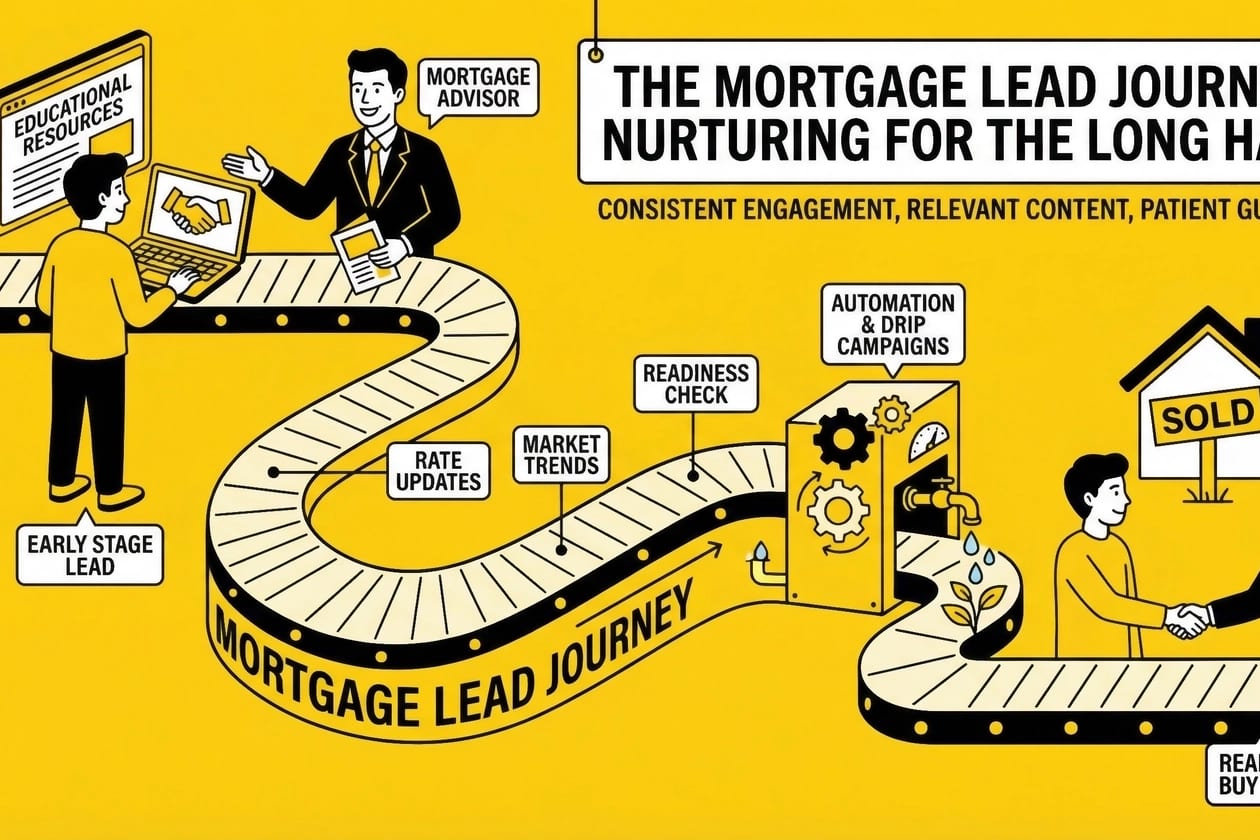
Run the arithmetic in the room, because the compounding is the persuasive part. Six named calls a week is roughly 300 conversations a year across a bench of eight to twelve active partners. If each partner sends between one and three files a month and each file carries a typical loan size for the market, the bench is the entire book. A single new productive partner added per quarter compounds faster than any lead-buying budget, and unlike purchased leads, the acquisition cost is time rather than cash.
Set the target bench size deliberately: eight to twelve active partners is the working range. Below eight, a single agent going quiet creates a volume hole. Above twelve, the weekly cadence degrades into a mailing list and the relationship quality collapses. This ceiling is not unique to mortgage — it mirrors the account-coverage limits that channel sales organizations hit for the same reason. Attention does not scale linearly.
Track three inspectable metrics rather than activity volume alone. First, letter turnaround time measured in hours from complete application to issued letter — the SLA is worthless if nobody measures it. Second, partner concentration: what percentage of closed units came from the top three partners? Above roughly two-thirds is a fragility warning. Third, pull-through: what share of issued pre-approval letters became a ratified contract and then a closing? A low pull-through rate usually means letters are being issued on incomplete files, which trains agents to distrust them.
Trade-offs: lock versus float, and the products behind it
The lock-versus-float call is the highest-stakes conversation in purchase origination and the one reps most often freeze on. The reason is structural: the LO is being asked to give advice about something they cannot predict, in a conversation where being wrong is visible and being cautious feels like weakness. The fix is to reframe it as a risk-tolerance interview rather than a forecast.
Run it as a scripted sequence. Open with the current market: pull the live pricing engine and read the actual rate for the borrower's credit tier, down payment, and property type, with the timestamp. Then explain the mechanics without editorializing: locking holds the price for a defined window — commonly 30, 45, 60, or 75 days — and the cost of a longer window is built into the price, so a longer lock prices slightly worse than a short one. Floating means accepting whatever the market does between now and lock.
Then ask the only two questions that matter. First: is the contract ratified, or is the buyer still shopping? Second: if rates rose meaningfully tomorrow, would the buyer still close on this house? The second question surfaces real risk tolerance faster than any questionnaire, because it forces the borrower to price their own commitment to the property.
The recommendation follows from the answers, not from the LO's pipeline pressure. A ratified contract with a firm closing date and a buyer whose payment is near their comfort ceiling is a lock. An unratified buyer still touring homes generally floats, because a lock on an unidentified property either is not available or prices worse. A buyer with substantial payment headroom and a long closing timeline is a legitimate judgment call — and the honest framing is that the LO is not forecasting, the borrower is choosing.
Four prohibitions belong on the wall for this conversation. Never lock without documented borrower authorization; most lenders require an electronically signed lock request. Never quote a rate without disclosing the corresponding annual percentage rate, the discount points, and the lock period in the same breath — quoting a rate stripped of its cost structure is a disclosure problem, not a sales technique. Never use rate-panic scare tactics, because nobody in the room can predict next week. Never charge a lock extension fee that was not disclosed in the estimate's cost section.
Product fit is the other trade-off surface, and getting it wrong is the fastest way to lose a partner. A borrower placed in the wrong program either pays more than necessary or fails underwriting late, and either outcome lands on the referring agent's reputation.
Teach the comparative habit rather than product loyalty. When a borrower qualifies for two programs, price both and present both. Steering a borrower toward the program that pays the branch better, or away from a government program because the file is more work, creates fair-lending exposure and destroys the referral relationship the moment the borrower compares estimates with a friend. The disclosure form exists precisely so borrowers can compare offers line by line — treat that as a selling advantage rather than a threat.
Rehearse the four objections reps hear weekly. On mortgage insurance: the real comparison is not insurance versus no insurance, it is buying now with insurance versus waiting years to accumulate a larger down payment, and that comparison should be run on paper rather than argued. On "lower the rate": the LO does not set price, the secondary market does, but points can buy the rate down and the honest response is to show the breakeven period. On locking over the phone: authorization is required, and framing it as protection for both parties defuses the friction. On a competitor's quote: ask for their estimate, then compare identical lock periods, point structures, and credit assumptions — most quote gaps disappear under that comparison.
Pitfalls that end relationships and careers

Some mistakes cost a deal. Others cost a license. The training must separate them clearly, because reps who cannot tell the difference either freeze on everything or ignore everything.
Paying for referrals in any form. Offering to cover an appraisal fee for a partner's buyer, paying per referral, or subsidizing a partner's marketing without receiving services of genuinely equal value are all prohibited compensation for referrals. Marketing services agreements exist as a narrow structure where actual services of comparable market value are exchanged, but enforcement history has made them high-risk enough that many lenders prohibit them outright. Rule for the room: no arrangement involving money or value flowing to a referral source gets signed without written compliance approval.
Guaranteeing a closing date you do not control. Appraisal capacity, title curative work, condominium document review, and borrower responsiveness all sit outside the LO's control. Worse, the closing disclosure must reach the borrower three business days before consummation, and certain changes — a meaningful APR increase, a loan product change, or the addition of a prepayment penalty — restart that waiting period. Promise process and communication, not a date.
Issuing a letter on a file you have not verified. A partner asking for a letter on a buyer the LO has never spoken to is asking for a licensing violation. Credit must be pulled with consent and information collected before a letter issues. The right response is a counteroffer: a call to the buyer within two hours and a letter same-day.
Silence during the file. Most partner attrition traces to a file that went quiet, not a file that died. A deal that falls apart with daily communication usually survives the relationship. A deal that closes on time after three weeks of silence often does not, because the agent spent those weeks unable to answer their own client.
Confusing the estimate with a commitment. Reps who let borrowers believe an estimate locks a rate create a blowup at the lock desk. State it every time: the estimate is a good-faith cost disclosure; a rate is locked only when the lock confirmation exists.
Letting the disclosure clock run in the background. The most common technical violation in purchase origination is not malice, it is a text message that met the six-piece threshold on a Friday afternoon that nobody logged. Build the alert into the workflow — a checkpoint at hour forty-eight that forces the question "has the estimate gone out?"
Close the session with three written commitments per LO, posted where they work: the published turnaround SLA, communicated to the partner bench by end of week; the weekly cadence, calendared as a recurring block twelve weeks forward; and the disclosure timing checkpoint, wired into the origination workflow as a hard gate rather than a memory exercise. A training that ends without a calendar entry and a workflow change ends without a behavior change.
Related questions
How is purchase origination selling different from refinance selling?
Refinance volume arrives with the rate cycle and is largely a marketing and speed exercise against existing borrowers. Purchase volume comes through referral partners who own the client relationship, so the sale is service reliability and responsiveness rather than rate positioning.
How many Realtor partners should a loan officer actively work?

Eight to twelve active partners is the working range. Fewer than eight creates volume fragility when one goes quiet; more than twelve degrades the weekly cadence into a broadcast list and the relationship depth that produces referrals disappears.
What starts the Loan Estimate timing clock?
Possession of six pieces of information: borrower name, income, Social Security number, property address, estimated property value, and loan amount. Receipt by text or phone counts. Timestamp it and deliver the estimate within three business days.
Should a loan officer ever refer a borrower to a competitor?
Yes, when the shop's pricing or program set is genuinely uncompetitive for that borrower's profile. Keeping a file you cannot serve well creates fair-lending exposure and damages the partner relationship. Document the referral and notify the referring agent.
How do you measure whether the training actually worked?
Track letter turnaround hours, weekly named partner conversations, partner concentration in closed units, and pre-approval-to-close pull-through. All four are inspectable in the origination system and CRM without self-reporting.
FAQ
Can a loan officer issue a pre-approval letter for a buyer they have not spoken to?
No. Licensing rules require collecting the borrower's information and pulling credit with their consent before issuing a letter. A blind letter issued as a favor to a referral partner is a licensing violation and undermines the letter's credibility with listing agents. Offer a same-day borrower call instead.
Is co-marketing with a real estate agent allowed?

Only where each party pays for services of genuinely equivalent market value and the arrangement is documented. Because enforcement history in this area has been aggressive, many lenders prohibit these arrangements entirely. Never sign one without written approval from a compliance officer.
What happens if the closing disclosure changes late in the file?
Most changes do not restart the waiting period, but a meaningful increase in the annual percentage rate, a change in loan product, or the addition of a prepayment penalty does trigger a new three-business-day period before consummation. Reps should escalate any late change rather than promising the original date holds.
How should a rep handle a borrower who wants to lock before having a contract?
Most investors require an identified property for a purchase lock. Where a to-be-determined lock is offered, it typically prices worse, and that price difference must be disclosed and acknowledged in writing. The cleaner path is usually to float until ratification and set expectations accordingly.
What is the fastest way for a new loan officer to build a referral bench?
Pick one measurable promise — turnaround time — publish it, and keep it without exception for ninety days while running the weekly cadence against a target list. Reliability compounds faster than networking volume, because agents talk to each other about who does not blow up deals.
Does this training transfer to other referral-driven sales roles?
Substantially, yes. Title, commercial insurance, and specialty lending all sell through gatekeepers who own the end-client relationship, so responsiveness and predictability outrank product pitch. The regulatory layer differs, but the cadence, service-level, and no-surprises disciplines are portable.
Sources
- Consumer Financial Protection Bureau — TILA-RESPA Integrated Disclosure rule and implementation FAQs: https://www.consumerfinance.gov/compliance/compliance-resources/mortgage-resources/tila-respa-integrated-disclosures/
- Consumer Financial Protection Bureau — Regulation X (RESPA) Section 8 guidance and FAQs: https://www.consumerfinance.gov/compliance/compliance-resources/mortgage-resources/real-estate-settlement-procedures-act/
- Mortgage Bankers Association — industry research, performance reports, and weekly applications survey: https://www.mba.org/news-and-research
- Nationwide Multistate Licensing System (NMLS) — SAFE Act licensing requirements and resources: https://mortgage.nationwidelicensingsystem.org/
- U.S. Department of Housing and Urban Development — FHA single-family housing policy handbook: https://www.hud.gov/program_offices/housing/sfh/handbook_4000-1
- U.S. Department of Veterans Affairs — VA home loan program guidance: https://www.va.gov/housing-assistance/home-loans/
- Fannie Mae — Selling Guide (eligibility, underwriting, and product requirements): https://selling-guide.fanniemae.com/
- Freddie Mac — Primary Mortgage Market Survey: https://www.freddiemac.com/pmms
- Federal Housing Finance Agency — conforming loan limit announcements: https://www.fhfa.gov/policy/conforming-loan-limits
- Electronic Code of Federal Regulations — Regulation Z, 12 CFR Part 1026: https://www.ecfr.gov/current/title-12/chapter-X/part-1026
Related on PULSE
- Reverse Mortgage Consultation Selling — 60-Min Training
- Mortgage Originator — 60-Min Training
- The Sandler Selling System: Ready-to-Run Mini-Training for New Hires
- Selling with Stories: Narrative Structure Template for a 45-Minute Sales Workshop
- Leveraging Social Selling: Hands-On Activity Template for a Remote Team Session
- The Consultative Selling Blueprint: Facilitator's Guide for a 45-Minute Workshop
This page will be disappearing soon. Save it to your device for $1 — or read it free while it is here.
@Kory-White- · if Venmo asks, the last 4 of my number are 2012
This page is gone.
This one is off the shelf now. $1 keeps it on your phone for good — the whole page, pictures and diagrams included.
 sales-trainingRefinance and HELOC Conversion Selling — 60-Min Training
 sales-trainingReverse Mortgage Consultation Selling — 60-Min Training
 sales-trainingFinancial Advisor Discovery Meeting Close — 60-Min Training
 sales-trainingAnnuity and Retirement Income Selling — 60-Min Training
 sales-trainingEquipment Financing and Leasing Selling — 60-Min Training
 sales-trainingAuto Loan Indirect Dealer Sales — 60-Min Training
 sales-trainingWealth Management HNW Prospecting — 60-Min Training
 sales-trainingCommercial Lending and SBA Loan Selling — 60-Min Training
 sales-trainingHow do you train a sales team in Security & Fire Systems in 2027?
 sales-trainingHow do you train a sales team in Dental in 2027?