


Hardware Security Module (HSM) Selling to the CISO and Cryptography Lead — 60-Min Training
Quality
Certified

Selling a Hardware Security Module means winning three buyers at once: the CISO funds the program, the Cryptography Lead vets the platform, and Compliance validates FIPS 140-3 certification. A 60-minute training should drill joint discovery, a POC run on the customer's real cryptographic workload, certification-based displacement, and renewal traps set at kickoff.
What HSM selling actually is, and why it breaks normal sales motions
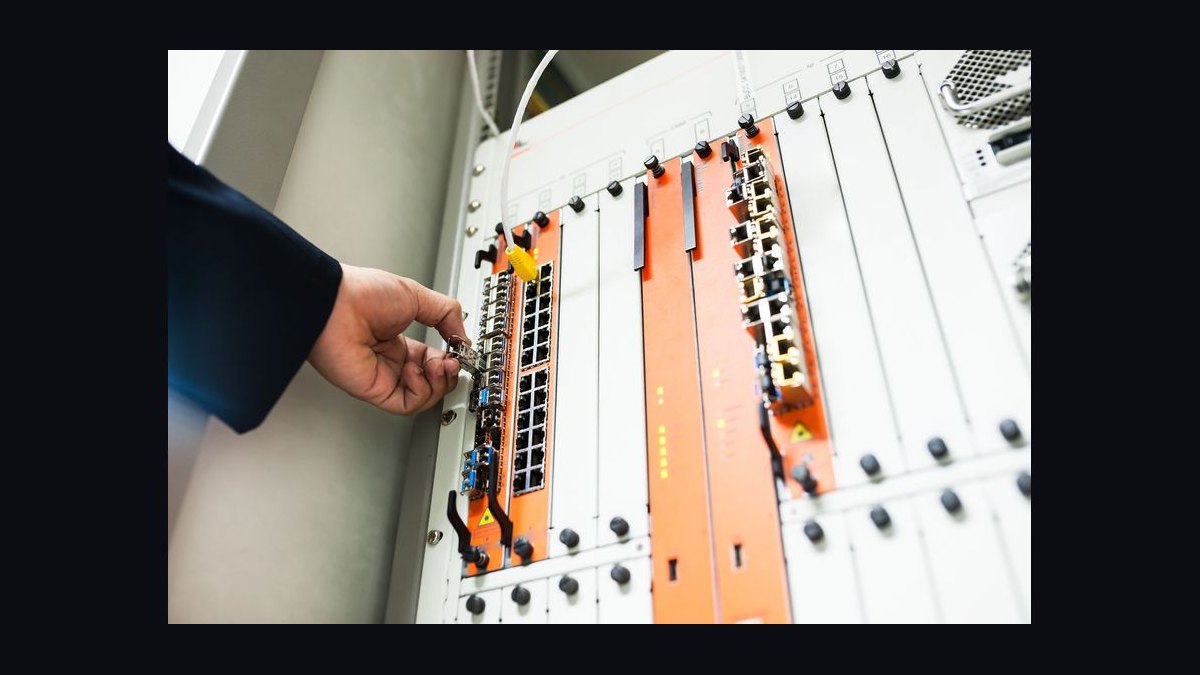
An HSM is a tamper-resistant appliance or cloud service that generates, stores, and uses cryptographic keys so the private key material never leaves the hardware boundary in plaintext. That single property is why the product exists: payment processors, certificate authorities, code-signing pipelines, and government systems need a defensible answer to "where does the key live, and who could have touched it?" The answer has to survive an auditor, not a demo.
That changes the sales conversation in four concrete ways.
The technical bar is unusually high. Your primary evaluator is frequently a working cryptographer — someone who reads the NIST Cryptographic Module Validation Program (CMVP) certificate, checks the security policy document, and notices when a rep says "military-grade encryption." Imprecise claims do not survive the first thirty seconds. A rep who does not know the difference between a FIPS 140-3 *validation* and a FIPS 140-3 *submission in the CMVP queue* will lose credibility permanently in a single sentence. Training should include a vocabulary drill: validation vs. certification, key wrapping vs. key escrow, HSM vs. KMS, partition vs. slot, quorum authentication (M of N) vs. simple role-based access.

Compliance is a gate, not a feature. For most regulated workloads the buyer starts with a required assurance level and eliminates anything below it. In payments, the PCI Security Standards Council maintains a separate PCI PTS HSM approval program on top of FIPS. In public-key infrastructure, the CA/Browser Forum Baseline Requirements dictate what protection publicly trusted CA keys need. Sellers who lead with throughput into a room whose first filter is certification are answering an unasked question.
The estate is hybrid by default. Nearly every large enterprise runs some on-premises HSM fleet — Thales Luna, Entrust nShield, Utimaco SecurityServer are the long-standing names — alongside cloud services like AWS CloudHSM, Azure Dedicated HSM / Managed HSM, and Google Cloud HSM. The realistic deal is rarely "rip out the fleet." It is far more often a new workload, a new region, a new certificate authority, or a post-quantum migration that creates a wedge.
Sales cycles run long and technical. Multi-buyer, audit-touched infrastructure deals with a physical or dedicated-tenancy component do not close in a quarter the way a seat-based SaaS tool does. Training has to set that expectation, because reps who model an HSM deal on a SaaS cadence discount early, skip the compliance stakeholder, and then watch the deal stall in security review.
The adjacent motions look similar and reward the same discipline: selling a certificate lifecycle management platform, a code-signing service, a secrets manager, a payment HSM for a processor, or a confidential-computing enclave all involve a technical gatekeeper plus a compliance validator plus an economic buyer. If your team sells across that portfolio, teach the pattern once and reuse it.
Running the 60-minute session: agenda and the joint discovery block

Structure the training as a working session, not a lecture. A defensible split: 5 minutes framing, 15 minutes discovery drill, 15 minutes POC design, 10 minutes incumbent handling, 10 minutes pricing and procurement, 5 minutes renewal traps. Every block ends with a rep saying words out loud, not a slide.
The discovery drill is the highest-leverage segment. The rule to teach: do not run three sequential single-buyer calls. Get the CISO, the Cryptography Lead, and a compliance representative in one frame, and send a one-page pre-brief ahead of time so they arrive calibrated. Sequential discovery produces three different versions of the requirement, and the version you build your proposal on is usually the wrong one.
Seven questions to rehearse, with the reason each one exists:

- "Walk me through your cryptographic estate." Key types, workloads, where keys live today, which teams own them. You are mapping, not pitching.
- "What assurance level do these workloads require, and who signs off?" FIPS 140-3 Level 3 is the common bar for regulated key material; Level 2 shows up in less sensitive tiers. Ask who *decides* — auditor, internal policy, a customer contract, or a regulator.
- "How many keys are under management, by type?" Symmetric, asymmetric, code-signing, TLS, payment keys. Key count drives partitioning and licensing far more than raw throughput does.
- "What's your peak transaction rate, and at what algorithm and key size?" Throughput numbers are meaningless without the algorithm attached. RSA-2048 signs, RSA-4096 signs, ECDSA P-256, and AES-GCM operations differ by orders of magnitude on the same box.
- "How is the workload split across cloud and on-prem?" This determines whether you are selling appliances, a cloud service, or an integration story.
- "What's your post-quantum plan?" NIST published the first PQC standards in 2024 — FIPS 203 (ML-KEM), FIPS 204 (ML-DSA), and FIPS 205 (SLH-DSA). Ask whether they have inventoried where classical asymmetric crypto is used. Most have not, and that inventory gap is a genuine reason to talk.
- "When does the incumbent contract renew, and what's the extraction friction?" Key migration, application integration, and HA cluster rebuilds are the real switching costs. Know them before you propose.
Close the drill by having each rep restate a discovered requirement in the Cryptography Lead's own vocabulary. If they cannot, they were pitching.
Costs, timelines, and the shapes deals actually take
Do not teach fabricated price lists. Teach the *cost model*, because that is what survives contact with a real quote and lets a rep reason on the spot.

On-premises HSMs are capital purchases with recurring layers. The buyer pays for the appliance, then for support and maintenance, then often for capacity or feature licensing — additional partitions, higher performance tiers, specific algorithm sets. Then the costs nobody budgets: high availability requires at least two units, and a serious deployment usually means a pair per site across two sites, so the unit count multiplies by four before anyone has processed a transaction. Add rack space, power, and the operational burden of key ceremonies and smart-card custody.
Cloud HSM is operational expense with a different failure mode. Dedicated and managed HSM services typically bill on an hourly or per-instance basis with additional charges tied to operations or key counts, and current figures are published on each provider's pricing page — quote from the page, never from memory. The cost trap is that an always-on dedicated cluster billed hourly across two availability zones for a full year can quietly exceed the amortized cost of appliances the customer would have owned outright. Bring the three-year comparison to the table before procurement builds it without you.
Timelines to plan against. Discovery through signature on a serious enterprise HSM deal commonly runs one to two quarters, longer when a new compliance regime is involved. A POC that requires shipping physical appliances needs lead time for hardware, network access, and a security review before it even begins — cloud POCs can start in days, which is a legitimate reason to sequence a cloud pilot first. Production migration of an existing key estate is measured in months, because every consuming application has to be re-pointed and re-tested.

What actually moves the number. Unit count and HA topology, partition count, performance tier, support level and response SLA, contract length, and whether professional services are attached for integration and key ceremony work. Multi-year commitments usually earn discount, and the honest framing for a rep is: longer terms buy price protection and roadmap commitment, and the customer should ask for both.
The economics conversation the CFO wants is not per-unit price. It is: what does an unprotected or software-only key cost us if it's compromised, and what does a failed audit cost in remediation and delayed revenue? A CA that loses control of a signing key faces distrust from browser root programs. A processor that fails a PCI assessment faces remediation and potential fines. That is the frame that makes an appliance line-item look small.
Where teams get it wrong
Selling throughput to a compliance-gated room. The most common failure. Benchmarks are a tiebreaker after certification, integration, and operational fit have been cleared — not an opener. Reps default to throughput because it is a number they can memorize.
Quoting a certification the product does not hold. If a module is in the CMVP queue rather than validated, say so, with the expected timeline and the specific configuration under review. Certificates cover *specific firmware versions in specific configurations*, and a Cryptography Lead will look yours up. Overstating this is unrecoverable.
Skipping the compliance stakeholder until the end. Deals die in security and audit review after the technical champion is already sold. Bring compliance in at discovery, hand them the CMVP certificate number and the security policy document early, and let them raise objections while you still have time to answer.

Designing a POC on synthetic data. A demo of signing operations against a lab load proves nothing to a team that has to migrate a live payments or PKI workload. Design the POC around one real, bounded workload — a single application's TLS keys, or a code-signing pipeline — with written success criteria agreed before day one.
Ignoring integration surface. The HSM has to speak to what the customer already runs: PKCS#11, KMIP, JCE, CNG/KSP, and integrations with certificate authorities, secrets managers, databases, and cloud KMS. An unsupported integration discovered in week six kills a deal that discovery should have caught in minute ten.
Underestimating operational burden. Key ceremonies, quorum cards, firmware updates, backup and restore of key material, and disaster recovery across sites are real work. Teams that are honest about this in the sales cycle get fewer year-one escalations. Teams that hide it get a renewal fight.
Single-threading to the Cryptography Lead. They can choose the platform and still lack the budget authority to fund it. Champion coaching means arming that person to sell internally — a one-page justification in the CISO's language of risk and audit exposure, not a feature list.
Treating post-quantum as a future problem. "Harvest now, decrypt later" is the argument that makes PQC urgent for long-lived data, and crypto-agility — the ability to swap algorithms without re-architecting — is a legitimate evaluation criterion today. Reps who can discuss the NIST standards accurately and without hype earn credibility fast.
A decision framework: cloud, on-prem, or both

Teach a repeatable branch rather than a vendor preference. The honest answer in most enterprises is *both*, and the seller who says so first is trusted.
Work through the questions in this order:
Is there a hard data-residency or physical-custody requirement? Some regulators and some internal policies require key material to remain in a facility the organization controls, with documented physical access. That forecloses cloud immediately for those workloads and points to on-premises appliances with a documented key ceremony.
Is the consuming workload already in the cloud? If the applications live in one cloud and latency to the HSM matters, a native cloud HSM in the same region is usually the right answer, and fighting it wastes the cycle. Cross-cloud or on-prem-to-cloud key operations add latency that shows up under load.
What assurance level is required? Confirm the specific level and the specific validated configuration, not just the family. Then confirm the vendor's certificate actually covers the deployment mode being proposed.
How many keys, and how are they isolated? Multi-tenant internal customers, separate business units, or per-customer key isolation push toward partition-rich on-prem deployments or managed services with strong tenancy boundaries.
What's the operational maturity of the team? A team with no HSM operations experience will struggle with quorum ceremonies and firmware lifecycle on an owned fleet. A managed cloud service trades control for a smaller operational surface — that trade is a legitimate recommendation, even when it points away from the bigger contract.

Finish the training block by having each rep run one live account through the branch out loud. The goal is not a scripted answer — it is a seller who can reason to a defensible recommendation while a cryptographer listens.
Set renewal traps at kickoff, not at month twelve: written success criteria carried from the POC into the contract, a named integration milestone with a date, a quarterly review that puts the same three people from discovery back in a room, and a documented post-quantum migration checkpoint. Renewals in this category are won by the operational relationship, not by the original benchmark.
Related questions
Who is the real decision maker in an HSM deal?
Usually a split: the Cryptography Lead or security architect decides technical fit, compliance holds a veto on certification, and the CISO or an infrastructure VP controls budget. Treat any of the three going quiet as a risk signal, not as consensus.
How long should an HSM proof of concept run?
Long enough to exercise one real workload end to end — commonly four to eight weeks for on-premises, faster for cloud where provisioning is immediate. Agree written success criteria before day one, and set a hard end date so it does not become a free pilot.
Does FIPS 140-3 Level 3 apply to every deal?
No. Level 3 is the common bar for regulated key material such as payments, PKI, and government workloads. Less sensitive internal use may accept Level 2 or a managed service. Ask what policy or regulator sets the requirement.
How should reps talk about post-quantum cryptography without overselling?

Stick to facts: NIST published FIPS 203, 204, and 205 in 2024. Ask whether the customer has inventoried classical asymmetric usage. Position crypto-agility as the requirement, and avoid claiming any timeline for cryptographically relevant quantum computers.
What's the difference between an HSM and a key management system?
An HSM is hardware that protects and uses keys; a KMS is software that governs key lifecycle, policy, and distribution, often backed by an HSM. Many deals need both, and confusing them in discovery signals inexperience.
FAQ
Should we lead with cloud HSM or on-premises?
Lead with whichever matches the workload you discovered. If the consuming applications are cloud-native and there is no custody mandate, a cloud HSM in-region is the low-friction path. If a regulator or internal policy requires physical control, that decision is already made and arguing wastes the meeting. Most enterprises end up hybrid, so a seller who can speak to both is more useful than one defending a single deployment model.
How do we approach an account mid-contract with an incumbent?
Do not attempt a rip-and-replace against a live contract. Find a non-overlapping workload — a new certificate authority, a code-signing pipeline, a new region, or a post-quantum pilot — and win that. You build operational proof and internal relationships before the renewal conversation, and you arrive at the renewal with the customer's own data rather than a benchmark deck.
What should a rep never say in front of a Cryptography Lead?
Anything imprecise about certification status, anything that implies a certificate covers a configuration it does not, "military-grade encryption," and any claim about quantum timelines. Also avoid promising an integration you have not confirmed. One unverifiable claim resets the credibility of everything else in the meeting.
How do we handle a procurement-only negotiation?
Ask for the technical and economic stakeholders back on the call before repricing. Procurement's job is to compress price on a specification they did not write; if the specification came from the Cryptography Lead, they should be present to defend the requirement. If procurement genuinely owns the process, at minimum secure a written confirmation of scope so you are not discounting against a spec that has silently changed.
What integrations should we always confirm in discovery?
PKCS#11, KMIP, JCE, and CNG/KSP support at minimum, plus the specific consuming systems: certificate authorities, secrets managers, database TDE, code-signing tooling, and any cloud KMS the customer uses for external key material. Confirm the exact versions. Integration surprises found late are the most common preventable deal killer in this category.
How do we justify the price to a CFO?
Frame it as the cost of a defensible key custody position against the cost of the alternative: audit remediation, contractual exposure, distrust from a root program or payment network, and the engineering time to rebuild a compromised key hierarchy. Bring the three-year total cost comparison including HA units, support, and operational labor rather than a single unit price.
Sources
- https://csrc.nist.gov/projects/cryptographic-module-validation-program
- https://csrc.nist.gov/pubs/fips/140-3/final
- https://csrc.nist.gov/projects/post-quantum-cryptography
- https://www.pcisecuritystandards.org/document_library/
- https://cabforum.org/baseline-requirements-documents/
- https://docs.aws.amazon.com/cloudhsm/latest/userguide/introduction.html
- https://learn.microsoft.com/en-us/azure/dedicated-hsm/overview
- https://cloud.google.com/kms/docs/hsm
- https://docs.oasis-open.org/kmip/
- https://www.oasis-open.org/standard/pkcs11/
Related on PULSE
- Post-Quantum Cryptography (PQC) Crypto-Agility Selling to the CISO and Chief Cryptographer — 60-Min Training
- OT/ICS Security Selling to the Plant Manager and CISO — 60-Min Training
- Mobile Threat Defense (MTD) Selling to the CISO and Endpoint Management Lead — 60-Min Training
- CNAPP Selling to the Cloud Security Architect — 60-Min Training
- API Security Selling to the Head of Platform Engineering — 60-Min Training
- The Challenger Sale Rehearsal: A Role-Play Intensive Team Meeting Module
This page will be disappearing soon. Save it to your device for $1 — or read it free while it is here.
@Kory-White- · if Venmo asks, the last 4 of my number are 2012
This page is gone.
This one is off the shelf now. $1 keeps it on your phone for good — the whole page, pictures and diagrams included.
 sales-trainingHow do you train a sales team in Distribution & Wholesale in 2027?
 sales-training60-Min Sales Training: How to Run a Pipeline Generation Blitz
 sales-trainingHow many closed deals should you review before a win-loss analysis produces a reliable pattern in 2027?
 sales-trainingTop 10 sales training budget planning templates in 2027
 sales-trainingHow do you train a sales team in Solar & Renewables in 2027?
 sales-trainingHow do you calculate the ROI of a sales training program in 2027?
 sales-trainingHow do you train a sales team in AI & Data in 2027?
 sales-trainingThe Role-Play Reset: Switching from Scripted to Situational — 60-Min Training in 2027
 sales-trainingHow do you choose which sales methodology to train your team on in 2027?
 sales-trainingHow do you train a sales team in Senior Care & Home Health in 2027?