


AI Legal Tools Selling to the General Counsel — 60-Min Training
Quality
Certified
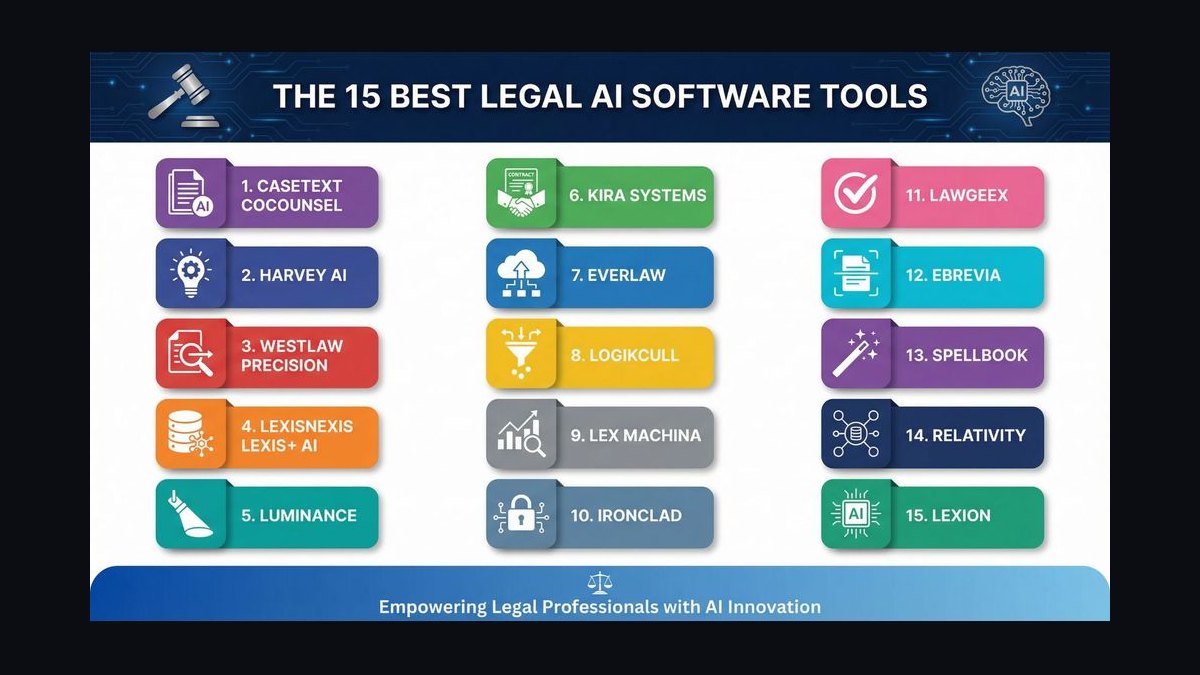
Selling AI legal tools to the General Counsel means proving three numbers before pricing: hallucination rate under 1%, citation accuracy above 99%, and 15–40% lawyer hours recovered. Run a seven-day proof on the customer's own contracts with the GC, knowledge lead, and IT in one room, then price jointly with finance.
The two buying paths a GC will put you on
Every AI legal deal resolves into one of two purchase paths, and the path is chosen in the first thirty minutes of discovery — usually before you have said anything about your product. Path one is the efficiency purchase: the General Counsel is buying recovered hours. Associates and paralegals are burning nights on first-draft memos, NDA triage, clause extraction across a signed-contract archive, and second-pass citation checking. The budget argument writes itself as outside-counsel deflection or headcount avoidance, and the metric is hours per matter. Path two is the risk purchase: the GC is buying a defensible control. The trigger is usually a near-miss — a brief that went out with a citation nobody re-verified, a renewal that auto-extended because no one read the notice window, a regulatory response assembled by hand under deadline. Here the metric is error rate and auditability, and hours saved is a footnote.
The distinction matters because the two paths have different economic buyers, different proof requirements, and different failure modes. Efficiency deals get benchmarked against a fully loaded associate hour and against the outside-counsel line item; they survive procurement when the math is legible and die when the GC cannot show a before-number. Risk deals get benchmarked against the cost of a single bad filing and against the indemnification language in your contract; they survive when your accuracy claims hold up on the customer's own documents and die when a pilot user finds one material miss.

Most reps try to sell both at once and land neither. The stronger move is to pick the path in discovery, build the entire trial around that path's metric, and mention the second path only as upside in the pricing conversation. A contract-lifecycle deal sold on hours recovered, with risk reduction as the free bonus, closes faster than the same deal pitched as a two-headed value story. The same asymmetry shows up in adjacent categories — AI code review, AI support deflection, AI recruiting screens — where the buyer also has an efficiency frame and a risk frame available and the vendor that picks one wins.
There is a third path worth naming even though it is rarer: the capability purchase, where the legal department wants to bring a workflow in-house that it currently cannot staff at all. Privilege review at scale, multilingual contract review, or continuous regulatory monitoring fall here. This path has no incumbent to displace and no before-number to beat, which sounds easy and is not — with no baseline, the GC has no way to justify the spend to finance, so you have to build the baseline for them out of outside-counsel invoices or the cost of not doing the work today.
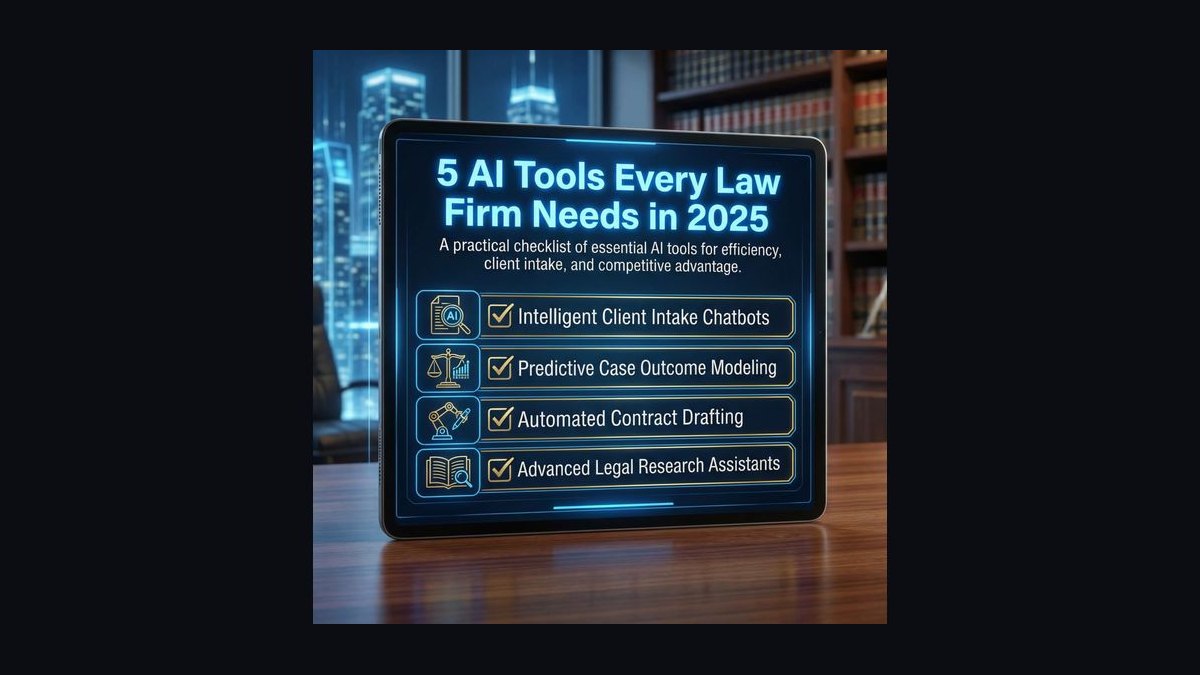
How to decide which path you are on
The decision is made from evidence in discovery, not from what the GC says when asked "what are you trying to accomplish." Ask instead what percentage of associate time goes to first-draft work versus final review. A department that answers 60/40 toward drafting is an efficiency buyer. A department that answers 30/70 toward review, or that describes a manual cite-check ritual before every federal filing, is a risk buyer. Ask how they validate citations today. "We manually check every cite" is an efficiency answer wearing a risk costume — that manual check is a quantifiable line of associate hours, and it is the cleanest before-number you will get in the whole cycle.
The other decisive signal is who is already in the room. If the GC brings the head of legal operations, you are on the efficiency path and legal ops will own the metric. If the GC brings the deputy GC for litigation or the compliance lead, you are on the risk path. If IT arrives early rather than at security review, you are on a data-residency-first cycle regardless of path, and integration into iManage, NetDocuments, or the existing document management system moves to the front of your proof plan.
One more decision rule: if you cannot name the metric and the person who owns it by the end of the first call, do not advance the deal to a trial. A trial without an owned metric is a demo with extra steps, and it will consume three weeks of your quarter before dying at procurement. Reps who disqualify at this gate carry cleaner pipeline and higher close rates than reps who trial everything.
The numbers behind each path

Accuracy thresholds. Best-in-class legal AI targets a sub-1% hallucination rate on retrieval-grounded tasks and 99%+ citation accuracy on anything destined for a filing. These are the bars the GC will hold you to, and they are not arbitrary — the sanctions cases arising from fabricated citations, starting with *Mata v. Avianca*, turned hallucination from a quality issue into a professional-responsibility issue. When a GC says "one bad cite ends the pilot," believe them. Design the trial so a miss is caught by your own audit before the customer finds it.
Productivity lift. The credible range legal departments report from deployed AI tooling is 15–40% time saved on the specific tasks the tool covers, not across the whole department. Be precise about the denominator. A tool that cuts NDA turnaround from ninety minutes to twenty has saved 78% of NDA time, which might be 6% of the department's total hours. Selling the 78% and letting the GC discover the 6% is how deals die at renewal.
Evaluation timeline. Plan for a three-phase cycle. Weeks one and two are technical validation, where your tool runs against ten to twenty of the customer's actual contracts or briefs and gets scored on a side-by-side spreadsheet with five to ten criteria. Weeks three and four are user acceptance, where three to five associates or paralegals use the tool and the GC asks two questions: did it save two or more hours per user per week, and did anyone find an error that would have reached a client. Weeks five through eight are procurement and security — SOC 2 Type II, encryption at rest and in transit, model training data policy, and a contractual indemnification clause for AI-generated errors. That last item is effectively non-negotiable on larger deals; if your legal team will not sign it, know that before you build the business case.

Approval mechanics. A six-figure legal AI purchase rarely comes from discretionary budget. The realistic sources are an IT or innovation fund, reallocated outside-counsel spend, and compliance or e-discovery reserves. Outside-counsel deflection is the strongest of the three because the ratio is favorable — legal departments routinely weigh a tooling spend against a multiple of that number in external fees. Expect six to twelve weeks from business case to signature on a mid-six-figure deal, with at least one demo for finance or procurement, and expect a GC who has already piloted a competitor to demand a side-by-side accuracy benchmark on their own documents before advancing.
Pricing shapes. The category runs on two models. Seat-based pricing suits contract drafting and review tools where a defined set of lawyers uses the product daily; the math is legible and expansion is natural as headcount grows. Platform or enterprise pricing suits research and litigation tools where usage is bursty and value concentrates in a few high-stakes matters; here the GC is buying capacity, not seats, and per-seat framing will make the deal look expensive relative to actual daily users. Match the model to the usage pattern you observed in the trial. If eight of thirty licensed lawyers generated 80% of the usage, a seat model priced across all thirty will get cut at renewal.
Multi-year structure. Three-year agreements with escalating discount tiers are standard and worth pushing for, because they move the renewal conversation from a re-decision to an adjustment. Trade discount for something you actually want: reference rights, a case study at month nine, or an executive-sponsor introduction into a sibling business unit. Do not trade discount for a signature date alone — that teaches procurement that waiting produces price movement, which is the exact behavior you will fight at renewal.
Implementation and sequencing that survives month twelve

The seven-day proof is the highest-leverage artifact in this sale, and its structure is fixed. Day zero, the customer's own platform team installs the integration and maps configuration to their environment — not you, because a deployment the customer cannot reproduce is a deployment that fails when you leave. Days one through three, the tool runs against real workloads while you collect metrics from the native dashboard rather than from anecdote. Day four, walk the GC through the three numbers on their scorecard; if any are off-target, tune the configuration proactively instead of waiting to be told. Days five and six, spend fifteen minutes with one individual contributor the GC selects, because that person's experience is the deal and their objection is the one that surfaces in the renewal committee. Day seven, run the joint scorecard call with the GC, the economic buyer, and finance, and land the pricing proposal the same day.
Then sequence the first year so renewal is decided in month one rather than month twelve. Write a performance commitment into the agreement — if the agreed metric slips outside the target band on a rolling thirty-day average, the customer earns a service credit. It signals confidence and it pre-empts the year-one churn motion. Instrument adoption from day one and agree on the threshold in writing; a department that licenses forty seats and activates twelve will not renew forty. Define a footprint-expansion clause so adjacent workloads can be added mid-year up to a ceiling without a new procurement cycle, which converts the natural expansion motion from a negotiation into a phone call. And schedule a standing fifteen-minute scorecard review with the GC and the economic buyer together, monthly at first and quarterly once the numbers stabilize.

Two sequencing mistakes recur. The first is running security review after pricing agreement, which stalls signed deals for weeks while IT works through SOC 2 evidence and data-residency questions that could have been answered in parallel from week three. Start the security packet moving the moment the trial begins. The second is letting procurement negotiate alone. Once the conversation leaves the GC and finance and lands with a procurement analyst optimizing for unit price, every value argument you built evaporates, because the analyst is not measured on hours recovered or error rate. Hold the line: further movement requires the GC and finance back on the call.
Where this playbook transfers
The structure here is not specific to legal. Any AI tool sold into a function with professional liability — clinical documentation, audit and assurance, regulatory filings, engineering sign-off — follows the same shape: an accuracy floor that functions as a gate rather than a feature, a named individual whose career is exposed if the number slips, a proof-on-real-data requirement, and an indemnification clause that arrives late and kills deals that were not built for it.
The transferable rules are three. First, find the metric that gets someone fired if it slips, and anchor every demo, trial, and pricing conversation to that number. Second, prove on the customer's own data, never on synthetic examples — production-data trials convert at a materially higher rate because they eliminate the "yes, but our documents are different" objection before it is raised. Third, set renewal conditions during implementation, when goodwill is highest and the customer is still motivated to define success, rather than at month eleven when the conversation has become adversarial.

What does not transfer cleanly is the buying committee. Legal departments are unusually flat and unusually conservative; the General Counsel often holds both the technical veto and the budget authority, which compresses the committee but raises the bar on any single objection. In engineering or support organizations, a skeptical individual contributor can be routed around. In a legal department, a skeptical deputy GC is the deal. Plan discovery accordingly, and treat the IC interview in days five and six of the trial as a gate rather than a courtesy.
Related questions
How long is a typical AI legal tool sales cycle?
Six to twelve weeks from business case to signature on a mid-six-figure deal, longer if security review starts late. The three phases — technical validation, user acceptance, then procurement and security — run roughly two, two, and four weeks respectively when sequenced in parallel rather than serially.
What accuracy bar do General Counsels actually enforce?
Sub-1% hallucination on grounded tasks and 99%+ citation accuracy for anything filed. The enforcement mechanism is usually a single pilot user finding one material error, which ends the evaluation regardless of aggregate statistics. Design your trial audit to catch misses before the customer does.
Should I price per seat or per platform?
Match the pricing model to the usage pattern from the trial. Daily-use drafting and review tools fit seats; bursty research and litigation workloads fit platform pricing. If a minority of licensed users generated most of the usage, seat pricing across the full department will be cut at renewal.
Who is the real economic buyer besides the GC?
Usually finance, sometimes a peer C-suite sponsor who holds renewal veto even without budget authority. Treat the GC as the technical and budget owner but confirm who signs off above them, because a deal won without that sponsor tends to fail at year-two renewal.
What kills these deals at the last minute?
Indemnification language for AI-generated errors, data residency and model-training-data policy, and procurement-only negotiation. All three are knowable in week one. Get the security packet moving when the trial starts and confirm your legal team's indemnification position before you build the business case.
FAQ
How do I build a business case when the department has no baseline?
Construct one from outside-counsel invoices and the cost of work not being done today. Pull three months of external legal spend by matter type, isolate the categories your tool addresses, and present deflection potential as a range rather than a point estimate. A defensible range beats a precise number the GC cannot verify.
What if the GC has already piloted a competitor?
Expect to run a side-by-side accuracy benchmark on their own contracts or briefs — that is the standard ask, and refusing it reads as a lack of confidence. Pick the dimension where you are genuinely stronger, propose the benchmark yourself with clear criteria, and accept the result. A clean loss on a well-scoped bake-off preserves the relationship for the next cycle.

How do I handle an incumbent that is already deployed?
Lead with the metric the customer measures weekly, not with a feature comparison. Propose proving the delta on their data inside a week. Time-to-value, per-seat economics against actual deployed footprint, and a dashboard both the General Counsel and finance can read are the three wedges that consistently move entrenched accounts.
What integration questions should I be ready for?
Document management system fit — iManage, NetDocuments, or whatever they run — plus API access, data residency, whether models are fine-tuned on their documents, and whether their data is used for training. Bring integration specs to the first technical call rather than promising to follow up.
How much of the Training should go to objection handling?
In a 60-minute session, spend roughly fifteen minutes on discovery mechanics, fifteen on trial design, ten on incumbent displacement, ten on pricing and procurement, and ten on renewal sequencing. Objection handling is not a separate block; it belongs inside each section, tied to the specific stage where the objection surfaces.
Does this approach work for smaller legal departments?
Yes, with compression. A ten-lawyer department runs the same three phases in three to four weeks instead of eight, buys seats rather than platform, and often has the GC acting as their own economic buyer. The accuracy bar does not relax with department size — if anything, a smaller team feels a single bad output more acutely.
Sources
- https://www.americanbar.org/groups/law_practice/resources/law-technology-today/
- https://www.law.cornell.edu/rules/frcp/rule_11
- https://legal.thomsonreuters.com/en/products/cocounsel
- https://www.lexisnexis.com/en-us/products/lexis-plus-ai.page
- https://www.iltanet.org/
- https://cloudsecurityalliance.org/star/
- https://www.aicpa-cima.com/topic/audit-assurance/audit-and-assurance-greater-than-soc-2
- https://www.nist.gov/itl/ai-risk-management-framework
- https://www.acc.com/
Related on PULSE
- Incident Response (IR) Retainer Selling to the CISO and General Counsel — 60-Min Training
- AI Coding Tools Selling to the VP of Engineering — 60-Min Training
- AI Code Review Selling to the Director of Platform Engineering — 60-Min Training
- AI Recruiting Selling to the CHRO — 60-Min Training
- AI Customer Support Selling to the VP of Customer Experience — 60-Min Training
- AI Sales Coaching Selling to the CRO — 60-Min Training
This page will be disappearing soon. Save it to your device for $1 — or read it free while it is here.
@Kory-White- · if Venmo asks, the last 4 of my number are 2012
This page is gone.
This one is off the shelf now. $1 keeps it on your phone for good — the whole page, pictures and diagrams included.
 sales-trainingThe Role-Play Reset: Switching from Scripted to Situational — 60-Min Training in 2027
 sales-trainingHow do you train a sales team in IT Services / MSP in 2027?
 sales-trainingTop 10 ways to calculate ROI on sales training spend in 2027
 sales-trainingTop 10 sales training budget planning templates in 2027
 sales-trainingHow do you train a sales team in Veterinary in 2027?
 sales-trainingHow do you train a sales team in Cleaning & Facilities in 2027?
 sales-trainingTop 10 mid-market AE deal review drills in 2027
 sales-trainingHow many closed deals do you need to interview before a win-loss program produces statistically reliable patterns in 2027?
 sales-trainingHow do you train a sales team in Hardware & Devices in 2027?
 sales-trainingHow do you train a sales team in Solar & Renewables in 2027?