
How do you structure a math block to include direct instruction, guided practice, and independent work
 Curated byKory White · Fractional CRO · Maryland
 PULSEKNOWLEDGE LIBRARY
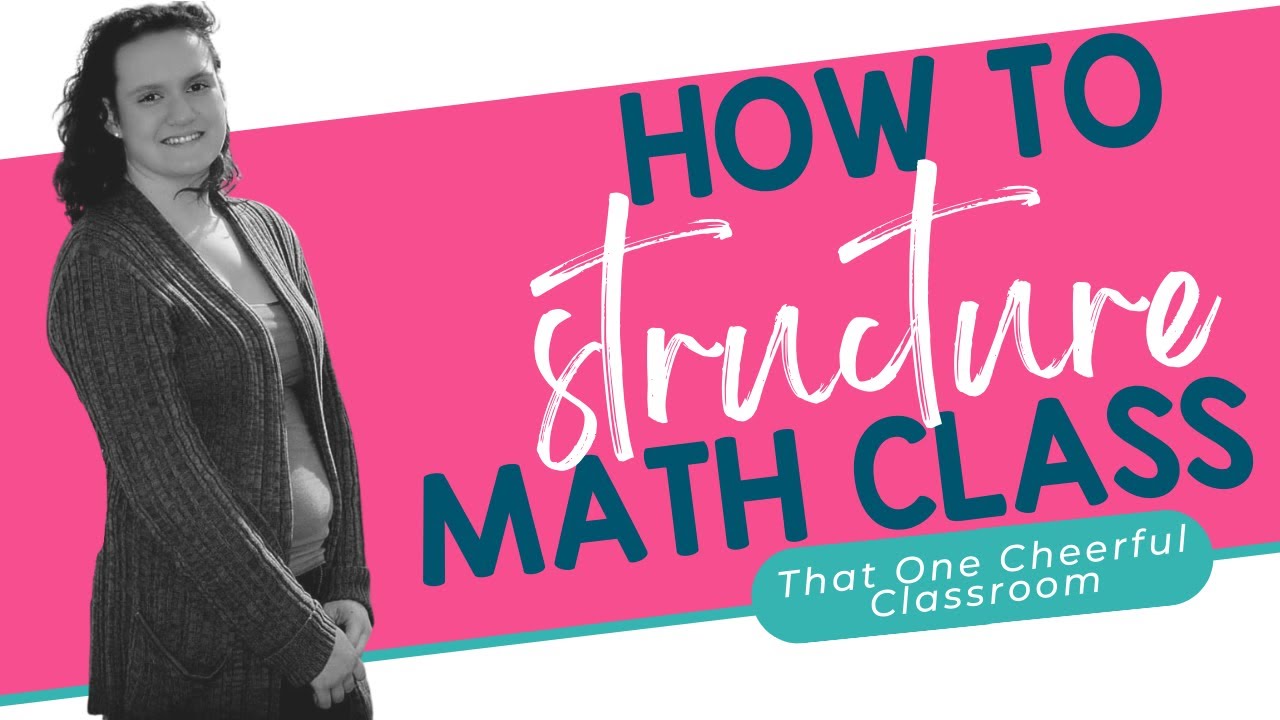
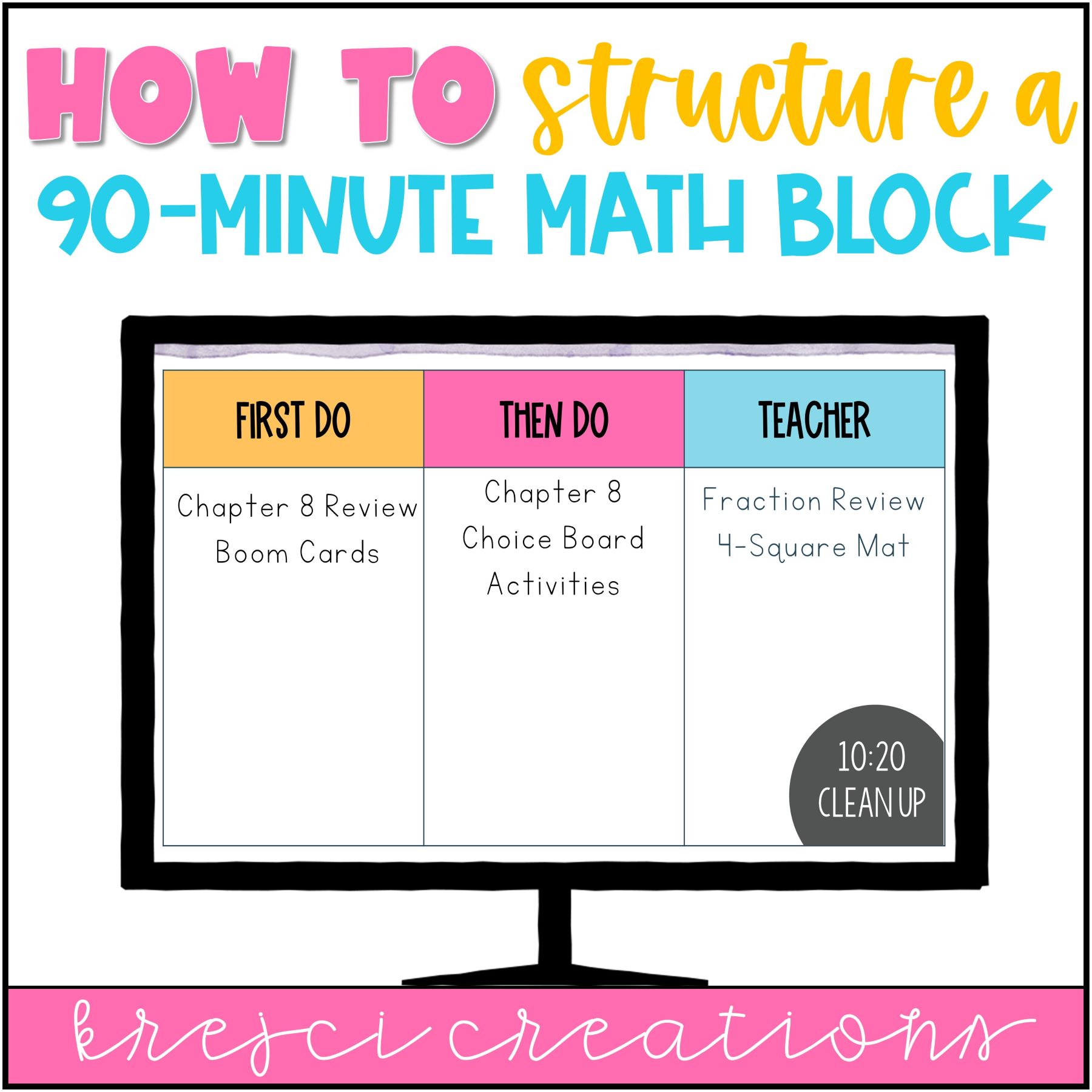
Split the block into three timed phases: 10–15 minutes of direct instruction with three to five worked examples, 20–25 minutes of guided practice where support is systematically withdrawn, and 15–20 minutes of independent work while you circulate. Close with a five-minute exit ticket that tells you tomorrow's grouping.
The outcome you should expect
The payoff from a three-phase math block is not mysterious, and it is not primarily about test scores in the first month. What you should expect first is a change in the *shape* of the room. Within two to three weeks of consistent implementation, the number of hands raised in the first ninety seconds of independent work drops noticeably, because students have already attempted the problem type twice under supervision. Teachers who track this informally often start by counting: if eleven hands go up the instant independent work begins, guided practice ended too early or the transfer from the modeled example to the assigned problem was too large a leap.
The second expected outcome is a shift in the kind of question students ask. During week one, questions sound like "what do I do?" By week four, in a well-run block, they sound like "I got a different answer than my partner — which step is wrong?" That shift is the observable signature of the gradual release of responsibility model working as designed. Students are moving from declarative knowledge (what the concept is), through procedural knowledge (how to run the steps), toward conditional knowledge (when and why this method applies rather than another one). Conditional knowledge is the expensive one, and it is almost never built during direct instruction alone — it is built in the friction of guided practice, where a student picks a wrong method and gets corrected in under a minute.
The third outcome is reduced grading load, which surprises people. When independent work is genuinely independent — attempted after two supervised reps — the error patterns collapse into three or four recognizable families instead of twenty-eight individual mysteries. A stack of thirty papers becomes a five-minute sort into "got it," "arithmetic slip," "conceptual gap on step two," and "did not start." That sort is the entire input you need for tomorrow's small-group reteach.
The fourth outcome is metacognitive. Students who experience the same structure daily begin to self-assess. They will say things like "can you do one more with us?" — which is a student explicitly requesting an extension of guided practice. Honor that request when three or more students make it; it is better formative data than most quizzes.

What you should *not* expect is instant fluency on hard concepts. A block that introduces a genuinely new idea — dividing fractions, systems of equations, function notation — will often end with a mediocre exit ticket, and that is fine. The structure is designed so that the mediocre exit ticket surfaces on day one instead of on the unit test three weeks later. Adjacent classrooms run the same architecture under different names: a writing workshop uses mini-lesson, conferencing, and independent drafting; a science lab uses demonstration, partner protocol, and solo data collection. The vocabulary changes; the release of responsibility does not.
What drives that outcome
Five drivers do most of the work, and they interact — weakening one usually shows up as damage somewhere else.
Timing and pacing. The proportions matter more than the absolute minutes. Direct instruction should occupy no more than a quarter of the block, guided practice roughly forty percent, and independent work the remaining third. The reason is cognitive load: a learner holding a new procedure in working memory can absorb roughly three to five worked examples before returns flatten. A sixth example does not add knowledge, it displaces attention. If you find yourself on example seven, the honest diagnosis is that the concept is two lessons, not one.
Scaffolding withdrawal. Guided practice is not a second lecture. It is a controlled taper. Problem one: you narrate every step while students copy. Problem two: you name the steps but students execute the arithmetic. Problem three: you supply only the first move. Problems four through six: students attempt cold, you circulate. If your prompting on problem five looks like your prompting on problem one, you have run direct instruction for thirty-five minutes and called it something else. A useful self-check is to count your own sentences per problem — if that number is not falling, the taper is not happening.
Error analysis integration. The highest-leverage minute in the block is the one where you put a *wrong* solution on the board and ask students to find the break. This does two things a correct example cannot: it forces attention to the specific step where the misconception lives, and it removes the social cost of being wrong, because the error belongs to the anonymous board, not a child. Rotate the source — yesterday's exit tickets are a free supply of authentic, grade-appropriate mistakes with names stripped.
Formative check density. Three to five quick checks per block, each under sixty seconds: thumbs, whiteboards, a single problem on a sticky note, a four-corner vote on which answer is right. The point is not the data collection ritual — it is the pacing decision you make in the next ten seconds. If fewer than roughly two-thirds of the room is with you, another modeled example beats moving on. More than five checks and the block fragments; students spend more energy on the check routine than the mathematics.
Procedural routines. Everything above assumes transitions are cheap. They are not, unless they are trained. Materials pre-placed, a posted agenda with minute counts, a nonverbal signal for "pens down, eyes up," a visible countdown. Elementary rooms typically need two to three weeks of explicit rehearsal before transitions land under ninety seconds; secondary rooms get there faster but backslide after long breaks.
There is a sixth driver worth naming for anyone in a district with instructional coaching: fidelity feedback. A coach with a clipboard timing your phases for three consecutive observations will find phase creep faster than any amount of self-reflection, because phase creep feels like generosity while it is happening.
Benchmarks and realistic ranges
Benchmarks turn an abstract structure into something you can calibrate against, and they should be treated as ranges, not targets to hit exactly.
Direct instruction. Three to five worked examples for a genuinely new concept; two to three for a review or extension of something taught within the last two weeks. By the end of this phase, students should be able to restate the objective in their own words — not read it off the board — and complete one exemplar with high accuracy. If a spot check after the model shows half the room lost, do not proceed to guided practice on schedule; spend three more minutes and eat the time out of independent work rather than out of guided practice.
Guided practice. Four to six problems with visibly decreasing support. A reasonable readiness bar is that the large majority of students complete the *final* guided problem without teacher prompting. If only half get there, the class is not ready for independent work and you should convert the first five minutes of independent time into a fourth guided problem for the whole room, or split — ready students start solo, the rest join you at a back table.
Independent work. Six to ten problems in the allotted window, ordered easy to hard, with at least two that require the student to decide *which* method applies rather than execute a named one. Accuracy in the seventy-percent range is healthy for new material; ninety-five percent means the work was too easy and you learned nothing from it. Below about half correct means the release happened too early.
Time allocation by grade band. Primary blocks (K–2) commonly run 45–50 minutes total: roughly 8–10 minutes direct, 15–20 guided, 15–20 independent, and those independent minutes often get split into two shorter bursts because sustained solo attention is genuinely limited at that age. Upper elementary (3–5) blocks run 55–65 minutes: 10–12 direct, 20–25 guided, 20–25 independent. Middle and high school blocks run 60–75 minutes: 12–15 direct, 25–30 guided, 20–30 independent. On a 90-minute block schedule, do not stretch the phases proportionally — run two complete cycles with a short break, because a thirty-minute direct instruction segment fails regardless of the age of the audience.
Transitions. Under ninety seconds between phases, which sounds trivially easy and almost never is on day one. Two transitions per block at three minutes each costs six minutes daily — roughly nineteen hours across a school year, or about three weeks of independent work time.
Exit ticket. One to three problems, five minutes, graded on a three-bucket sort rather than a score. Anything longer starts eating the closure that makes the next day's opening coherent.
Ramp-up expectations. Do not benchmark yourself against these numbers in week one. Most teachers report the structure feeling mechanical for two to three weeks, workable by week four, and automatic somewhere around week six — at which point the timer becomes advisory rather than load-bearing.
Risks, edge cases, and failure modes
Phase creep is the dominant failure. Direct instruction swells to twenty-five minutes because a good question came up, then another, and the day's independent work becomes homework. It never feels like a mistake in the moment — it feels like responsiveness. Countermeasures: a visible countdown, a parking-lot board for off-path questions, and a hard personal rule that examples beyond the fifth get deferred to tomorrow.
False independence. Students look busy and are copying, or are running a calculator through steps they cannot reproduce. The tell is a paper with correct answers and no visible work. The fix is proximity — walk every row at least twice per independent block — plus at least two problems that require a written justification, which is far harder to copy convincingly than a numeric answer.
Guided practice drift. The teacher narrates every step of all six problems. Students are agreeable and quiet, so it feels successful, and then independent work collapses. This is the most common failure among strong content experts, because explaining well is their competitive advantage and the phase asks them to stop doing it.
Differentiation gaps. Students with IEPs or 504 plans may need direct instruction extended toward twenty minutes with more frequent comprehension checks, and independent work shortened to ten or twelve minutes with three to five problems plus self-checking answers on the back. Multilingual learners benefit from vocabulary pre-teaching *before* the block opens — five minutes on "quotient," "coefficient," "per," or "of" prevents a language failure from being scored as a mathematics failure. Students working two or more grade levels below the standard need a parallel entry point into the same problem, not a different worksheet at a different table, which isolates them socially and academically.
Assessment fatigue. More than five checks per block and the mathematics gets buried under the routine. Students start performing the check — thumbs up because everyone else's thumb is up — which corrupts the data you are collecting.
Transition meltdowns. Particularly in lower elementary, the move from carpet to partner work is a behavioral cliff. Rehearse the transition itself as a skill, on a neutral day, with no mathematics attached.
Early finishers. Without a plan, the fastest students become a management problem inside four minutes. Prepare same-skill, higher-depth extensions — a problem run backward, an error to diagnose, a "make one that's impossible and explain why" — that are self-checking so they do not pull you off the students who need you.
Absence and re-entry. A returning student missed the "I do" and "we do." Dropping them straight into independent work guarantees a bad experience. A recorded two-minute model, a peer's annotated notes, or a five-minute catch-up during the extension window all work; nothing is the only option that does not.
Interruptions. Assemblies, fire drills, and shortened schedules will wreck the block several times a term. The correct triage is to protect guided practice and cut independent work, because supervised attempts prevent misconceptions from hardening, while unsupervised practice on a shaky concept actively rehearses the error.
Substitute days. Never leave a plan that requires a substitute to run direct instruction on new material. Leave a review-concept block with two guided problems and a longer independent set.
A practical rollout plan
Do not install all three phases at full fidelity on Monday. Sequence it.
Week zero — measure. Before changing anything, time your existing block for three days. Write down actual minutes for opening, practice, and solo work. Most teachers discover direct instruction is running roughly double what they believed, and that independent work is the phase that silently absorbs every overrun.

Week one — install the container. Post the agenda with minute counts. Put a visible timer where students can see it, not just you — this converts pacing from your private burden into a shared expectation, and students will start policing it for you. Change nothing else.
Weeks one and two — buy the transitions. Rehearse them explicitly. Time them. Celebrate publicly when the class beats ninety seconds. Every minute recovered here funds the phase you actually care about.
Week three — taper the guiding. Now attack guided practice drift. Plan your prompts in advance and write them on your own copy: problem one full narration, problem two partial, problem three first step only, problems four through six silent circulation. Planning the fade in writing is the difference between doing it and intending to.
Week four — close the loop. Add the exit ticket and the four-bucket sort. This is where the structure becomes a system rather than a schedule, because the sort produces tomorrow's small-group roster automatically.
Week five — reteach from data. Pull the "conceptual gap" bucket during the next day's independent work. Five to eight minutes with four students at a back table, on the exact step that broke, is worth more than a week of whole-class review.
Week six and beyond — audit. Invite a coach or a colleague to time three blocks. Ask them for two numbers only: minutes per phase, and your sentences per guided problem. Both drift back toward old habits without external measurement, and both are cheap to correct once seen.
Adjacent rollouts. If your team is installing this across a grade level, sequence by phase rather than by teacher — everyone does week one together, everyone does the taper together. Common language across classrooms means students carry the routine between rooms, and a fourth-grade team running the same signals gets transitions under ninety seconds roughly twice as fast as teachers doing it alone.
Related questions
How does this differ from a workshop model?
Workshop models front-load a shorter mini-lesson (roughly ten minutes) and spend most of the block in independent or small-group work with teacher conferencing. The three-phase block gives more time to supervised guided practice. Workshop suits application and fluency days; three-phase suits new-concept days.
Can you run this in a 45-minute period?
Yes, compressed: eight minutes direct, seventeen guided, fifteen independent, five closing. Cut the number of worked examples rather than shortening guided practice, and accept that genuinely new concepts may need to span two periods.
What if students finish independent work early?
Have same-skill, higher-depth extensions ready that are self-checking — a problem run backward, an error to diagnose, or a "build an impossible version and explain why" task. Five to ten minutes each. Never let early finishers advance to tomorrow's lesson.
Does the structure work for problem-based or inquiry lessons?
Partially. Inquiry lessons invert the order — students explore first, formal instruction consolidates afterward. Use the three-phase block for procedural and skill-building days, and inquiry structures for concept-development days. Most units need both.
How do you fit small-group instruction into this?
Run it during independent work. Pull four to six students identified by yesterday's exit ticket sort for five to eight focused minutes, while the rest of the class works on problems they have already attempted twice under supervision.
FAQ
What is the ideal total time for a structured math block? Roughly 55–65 minutes for elementary and 60–75 for secondary. Under about 45 minutes there is not enough room for all three phases at meaningful depth, and past about 80 minutes attention degrades badly in the final phase. On a 90-minute block, run two shorter complete cycles rather than one stretched one.
What should a teacher actually do during independent work? Circulate continuously, roughly fifteen to thirty seconds per student, reading written work rather than asking "are you okay?" Give brief interventions, note recurring errors for tomorrow's opening, and pull a small group. Do not sit and grade — that phase is your richest live data source and it is only available while students are working.
How do you train students to work independently without constant help? Teach and post a "three before me" routine: check your notes, ask a partner, try a different approach. Praise the strategy explicitly for the first few weeks, and stretch the interval between your check-ins deliberately. Expect this to take three to four weeks to hold.
What if a lesson genuinely needs more than 15 minutes of direct instruction? Split it across two blocks — foundation first, application second. Compressing a complex concept into one opening always comes out of guided practice and independent work, which are the phases where retention is actually built. Two clean blocks beat one crowded one.
Can this structure work for special education settings? Yes, with modifications. Extend direct instruction toward twenty minutes with more frequent comprehension checks, use manipulatives and visual supports throughout guided practice, and shorten independent work to ten to twelve minutes with three to five problems plus built-in self-checking. The sequence stays; the proportions move.
How does this relate to the gradual release of responsibility model? It is a direct implementation of it. Direct instruction is the "I do" phase, guided practice the "we do," independent work the "you do." The framework, associated with Pearson and Gallagher's work on reading comprehension instruction, transfers cleanly to mathematics because the underlying claim — that responsibility must shift deliberately rather than abruptly — is not subject-specific.
Sources
https://www.readingrockets.org/topics/comprehension/articles/gradual-release-responsibility https://www.edutopia.org/article/gradual-release-responsibility-instructional-framework/ https://www.ascd.org/el/articles/gradual-release-of-responsibility-i-do-we-do-you-do https://iris.peabody.vanderbilt.edu/module/sca/ https://ies.ed.gov/ncee/wwc/PracticeGuide/2 https://www.nctm.org/standards-and-positions/Principles-to-Actions/ https://www.cultofpedagogy.com/gradual-release-responsibility/ https://www.understood.org/en/articles/gradual-release-of-responsibility-model https://www.weareteachers.com/i-do-we-do-you-do/ https://www.mathematicshub.edu.au/
Related on PULSE
- [How do you structure a writing workshop to include conferencing and peer review](/knowledge/tr24)
- [What are the best methods for providing accommodations during a whole-class assessment](/knowledge/tr20)
- [What are the best tools for tracking student behavior data without a complicated system](/knowledge/tr18)
- [How do you design a unit plan that naturally incorporates spiral review](/knowledge/tr17)
@Kory-White- · if Venmo asks, the last 4 of my number are 2012
 pulse-teacher-resourcesWhat are the top 10 concrete steps to create a parent-teacher communication calendar that stays on track in 2027
 pulse-teacher-resourcesWhat are the top 10 concrete steps to create a grading scale that is fair across all assignment types in 2027
 pulse-teacher-resourcesWhat are the top 10 ways to make your lesson plans more engaging for reluctant learners in 2027
 pulse-teacher-resourcesWhat are the top 10 ways to create a differentiated homework policy that respects all learners in 2027
 pulse-teacher-resourcesWhat are the top 10 ways to create a weekly parent communication log that is easy to maintain in 2027
 pulse-teacher-resourcesWhat are the top 10 ways to create a lesson plan that meets 504 plan requirements in 2027
 pulse-teacher-resourcesWhat are the top 10 ways to use formative assessment data to adjust your lesson plan mid-class in 2027
 pulse-teacher-resourcesWhat are the top 10 ways to create a classroom management plan that works for a new teacher in 2027
 pulse-teacher-resourcesWhat are the top 10 concrete steps to create a differentiated lesson plan for mixed-ability classrooms in 2027
 pulse-teacher-resourcesHow do you design a unit plan that naturally incorporates spiral review