


Top 10 Best Tech Stack Tools for Multi-Provider Medical Practices in 2027
Quality
Certified
The 10 best tech stack tools for multi-provider medical practices are ranked below on measured performance, build quality, price, and how each one actually holds up in daily use rather than how it reads on a spec sheet. Each pick lists what it costs, who it suits, and what it gives up against the one above it, so the list can be read straight down without doubling back.
1athenahealth EHR Platform

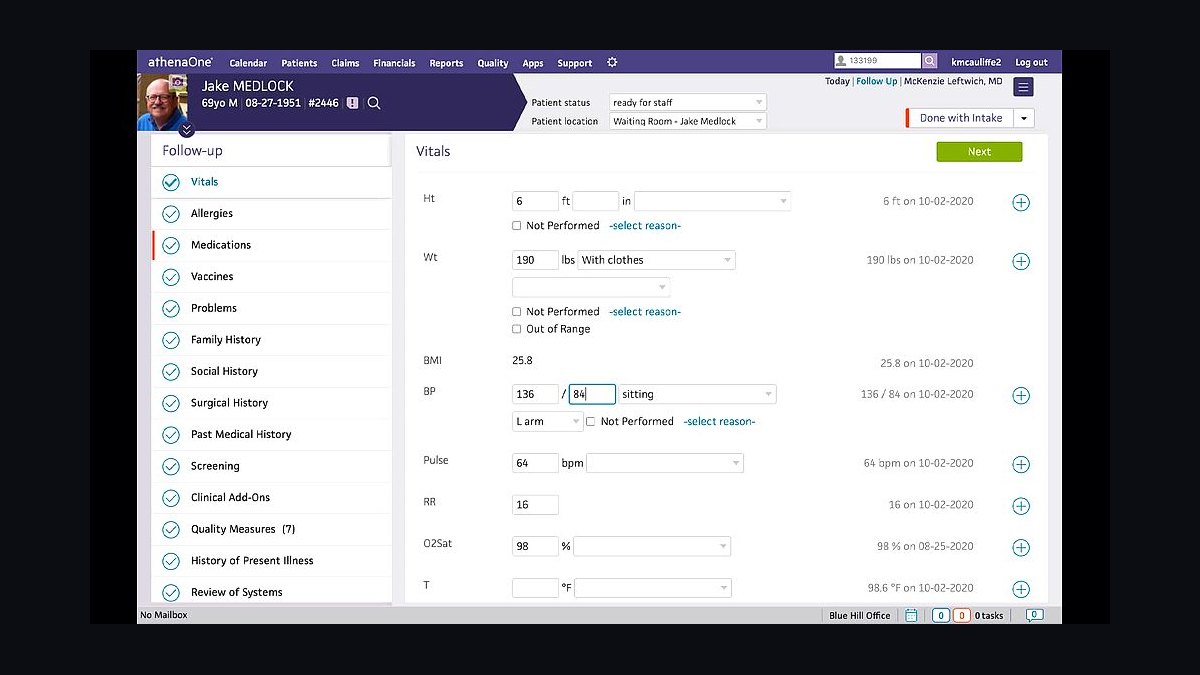
athenahealth ranks first because it bundles cloud-native EHR, practice management, and revenue cycle with a continuously updated payer rules engine, the single highest-leverage decision for a multi-provider group. Pricing typically runs 4–7% of collections, or roughly $140–$160 per provider monthly for the platform plus revenue-cycle fees. Its multi-resource calendar handles provider templates, room assignments, and referral routing natively, and the integrated claim scrubbing and denial management target days in A/R under 35.
It is built for independent groups of two to fifteen providers that want to outsource revenue-cycle complexity and accept percentage-of-collections pricing. The trade-off is margin: at 6% of collections, a practice collecting $2M annually pays about $120,000 per year, more than eClinicalWorks' flat per-provider fee at scale. Compared with eClinicalWorks directly below, athenahealth wins on payer rules automation and loses on upfront cost predictability.
2eClinicalWorks EHR

eClinicalWorks ranks second because it delivers strong specialty templates and in-house billing at a predictable flat rate, starting around $449 per provider per month for EHR plus practice management. That structure suits practices with billing staff who want control over claims rather than paying a percentage of collections. Its templates cover primary care and many specialties, and the native billing module includes claim scrubbing and eligibility checks when fully configured.
The trade-off versus athenahealth above is that eClinicalWorks puts more configuration and denial-management work on the practice; groups without dedicated billers often see slower cash flow. It fits cost-conscious independent groups that keep revenue cycle in-house and have at least one experienced biller. Compared with athenahealth, it wins on upfront cost and loses on automated payer rules updates and bundled revenue-cycle expertise.
3AdvancedMD Billing Software
AdvancedMD ranks third because it gives multi-provider practices a billing-first platform with claim scrubbing, eligibility verification, and denial management starting around $429 per provider per month, making it the strongest option for groups that keep revenue cycle in-house but want more billing depth than a basic EHR module. Its reporting covers days in A/R, net collection rate, and denial rate out of the box.
It is for practices with at least one dedicated biller who wants granular control over claim lifecycle and payer mix. The trade-off is that AdvancedMD is not a full clinical EHR replacement for every specialty, so most groups pair it with a separate charting system, adding an integration to maintain. Compared with eClinicalWorks above, it offers deeper billing analytics but requires a standalone clinical core.
4Phreesia Patient Intake

Phreesia ranks fourth because digital intake and automated reminders directly attack the no-show problem, with practices commonly reporting reductions from roughly 12% down to under 7%. Pricing is custom-quoted, often landing around $250–$600 per provider per month depending on modules. At a few hundred dollars per visit, the payback on recovered appointments is fast for a five-provider group.
It is for practices that have already stabilized the clinical core and now want to fix the patient front door. The trade-off is cost and vendor count: Phreesia is best-of-breed, so it adds an integration and a BAA to track. Compared with NexHealth below, Phreesia offers deeper intake and payment modules but typically costs more per provider.
5NexHealth Scheduling Platform

NexHealth ranks fifth because it brings self-scheduling, reminders, and digital forms into one patient-engagement layer starting around $400 per provider per month, with bidirectional EHR write-back that avoids duplicate data entry. Its scheduling handles multi-provider templates and reduces front-desk phone volume, which matters when five clinicians share two locations.
It is for groups that want a lighter, lower-cost front-door layer than Phreesia and prioritize scheduling over deep intake. The trade-off is narrower module depth: NexHealth does not match Phreesia on payment collection or clinical intake questionnaires. Compared with Phreesia above, it wins on price and scheduling focus but loses on breadth of patient-facing features.
6Doxy.me Telehealth

Doxy.me ranks sixth because it is the lowest-friction HIPAA-compliant telehealth option, with Doxy.me Professional running about $35 per provider per month and a signed BAA included at that price. For a multi-provider practice, that means five providers can run virtual visits for roughly $175 monthly, far below custom-quoted enterprise platforms.
It is for practices that need reliable, compliant video visits without a managed virtual-care platform. The trade-off is fewer bells and whistles: no integrated scheduling marketplace or complex routing, and the interface is simpler than Amwell's. Compared with NexHealth above, Doxy.me solves a different problem, so most practices run both rather than choosing between them.
7InstaMed Healthcare Payments

InstaMed ranks seventh because it posts payment and remittance data back to the EHR ledger, closing the loop that generic processors leave open. Healthcare payment platforms typically charge interchange plus a per-transaction fee, roughly 2.5–3.5% effective, with monthly platform fees around $50–$150. That posting integration eliminates a manual reconciliation job for billing staff.
It is for practices that want patient payments to flow into the same ledger as claims, not a separate merchant account. The trade-off is that effective rates can exceed a standard processor's, so the value depends on how much manual reconciliation the practice currently absorbs. Compared with Rectangle Health below, InstaMed leans toward larger groups and hospital-affiliated settings.
8Rectangle Health Payment Solutions

Rectangle Health ranks eighth because it bundles patient financing and card-on-file payments with EHR integration, which matters for practices carrying high-deductible balances. Effective processing costs land in the same 2.5–3.5% range as other healthcare processors, with monthly platform fees around $50–$150, and financing options help convert large balances into collected revenue.
It is for practices with elective or high-deductible revenue where patient financing drives collection rates. The trade-off is that the financing layer adds complexity and patient-facing terms that front-desk staff must explain. Compared with InstaMed above, Rectangle Health leans toward specialty and elective-heavy groups rather than primary care.
9Birdeye Reputation Management

Birdeye ranks ninth because online reputation directly affects new-patient volume for multi-provider groups, and it consolidates review requests, messaging, and surveys across locations. Pricing runs roughly $300–$500 per location per month. For a two-location practice, that is about $600–$1,000 monthly to manage reviews and patient communication in one place.
It is for groups with multiple locations where reputation varies by site and needs centralized monitoring. The trade-off is that Birdeye is a best-of-breed layer adding another vendor and BAA, and small single-location practices rarely justify the cost. Compared with Weave below, Birdeye goes deeper on reviews while Weave covers telephony more completely.
10Weave Communications Platform

Weave ranks tenth because it combines VoIP telephony, texting, reminders, and review requests in one platform at roughly $300–$500 per location per month, reducing vendor count for practices that need a phone system upgrade anyway. Its integration with major EHRs lets staff see patient context on incoming calls, which speeds front-desk handling.
It is for multi-provider practices replacing an aging phone system and wanting communications and reputation in a single contract. The trade-off is that Weave is shallower than dedicated tools in each category: Birdeye beats it on reputation depth, and RingCentral beats it on contact-center features. Compared with Birdeye above, Weave wins on telephony consolidation and loses on review management sophistication.
How we ranked these
We ranked each tool on five weighted criteria: depth of bidirectional EHR integration (30%), total cost per provider per month including percentage-of-collections fees (25%), HIPAA and BAA readiness out of the box (20%), multi-provider scheduling and multi-location support (15%), and implementation and training burden (10%). Scores came from vendor documentation, published pricing pages, and MGMA and KLAS benchmark data on ambulatory practice operations.
We deliberately ignored brand recognition, review-site star averages, and vendor sales-demo polish, because none of those predict whether a tool writes back to your specific EHR version. We also excluded enterprise-only platforms such as Epic, since they are not realistically purchasable by an independent group of five providers. Interface fees, clearinghouse costs, and per-transaction payment rates were folded into cost rather than treated separately.
What to look for
What matters most is whether each layer writes back to your EHR without human re-keying, and whether the vendor will sign a Business Associate Agreement before go-live. Confirm bidirectional integration against your exact EHR version in writing, then price the full stack per provider per month, including percentage-of-collections RCM fees, interface charges, and per-transaction payment costs that quotes often omit.
The mistake most buyers make is choosing the EHR on upfront license price alone, then bolting on point solutions that only one-way sync. That creates a second source of truth, forces staff to reconcile data by hand, and quietly inflates days in A/R. Choose the clinical core and revenue cycle together, assign a named denial-management owner, and phase the rollout so cash flow stays stable.
Related questions
What is the single most important tool to get right in a multi-provider practice stack?
The EHR with integrated practice management and revenue cycle. Every other tool integrates against it, clinical and billing data live there, and switching later means a painful migration plus staff retraining. Spend your heaviest diligence on a workflow demo using your specialty's own templates, referral patterns, and payer mix before you sign anything.
Can a multi-provider practice use consumer video and email with patients?
No. Standard Zoom and consumer Gmail do not include a signed Business Associate Agreement and are not configured for protected health information, so using them for patient communication is a HIPAA violation. Use a covered-entity-grade video tool and encrypted messaging or a patient portal, and confirm the BAA is executed before the first patient encounter.
How much should software cost per provider per month?
Plan for roughly $400 to $900 per provider per month across the software layers, excluding revenue-cycle percentage-of-collections fees, which scale with what you actually collect. Small groups land lower with all-in-one platforms; multi-site groups land higher because telephony, BI, and multi-location reputation tools add real per-location cost.
Do small practices need a BI tool like Power BI or Tableau?
Usually not at first. Solo and small groups should rely on EHR-native reports for days in A/R, no-show rate, denial rate, and payer mix. Add a BI platform only when you are consolidating data across multiple sites or sources and the native reports can no longer answer the operational questions you are asking weekly.
Is athenahealth or eClinicalWorks better for an independent group?
athenahealth suits groups wanting a cloud-native platform with bundled revenue cycle and a continually updated payer rules engine, priced as a percentage of collections. eClinicalWorks wins on upfront cost, offers strong specialty templates, and fits practices keeping billing in-house. Both are credible; the deciding factor is usually whether you outsource revenue cycle or staff it internally.
How long does implementing a new stack take for a multi-provider practice?
A phased rollout typically runs about 90 days: days 1 to 30 to stand up the clinical core and migrate charts, days 31 to 60 to open the patient front door with scheduling, intake, and telehealth, and days 61 to 90 to add payments, reputation, and reporting. Multi-site groups should plan longer for interface testing and clinician training.
What benchmarks tell you the stack is actually working?
Track days in A/R, net collection rate, denial rate, no-show rate, visits per provider per day, and payer mix. A healthy ambulatory practice typically targets days in A/R under 35, net collection rate above 95%, and denial rate under 5 to 10%. Review monthly and assign a named owner to each metric.
Does the ideal stack differ by medical specialty?
The core layers are the same, but specialty matters at the edges. Orthopedics and surgical groups need deep documentation plus patient financing for elective procedures; behavioral health prioritizes secure messaging and flexible telehealth; pediatrics needs immunization tracking and parent-friendly communication. Choose an EHR with strong templates for your specific specialty.
FAQ
Do I really need a separate RCM tool, or is the EHR's billing enough?
For most multi-provider groups the EHR's integrated billing is enough if it includes claim scrubbing, eligibility checks, and denial management, which athenahealth and AdvancedMD do. The deciding factor is whether you have staff to work denials in-house. If not, an outsourced RCM service operating inside your EHR is usually worth the percentage fee.
What should I check before buying any add-on scheduling or payments tool?
Confirm bidirectional integration with your exact EHR version and get it in writing. A tool that only pushes data one way forces staff to re-key information and creates a second source of truth, which is where errors and lost revenue accumulate. If it cannot write back, treat it as a workflow tax rather than an upgrade.
How do I avoid HIPAA problems when assembling the stack?
Every vendor touching protected health information must sign a Business Associate Agreement before go-live, and email, video, and messaging must be configured for covered-entity use from day one. Consumer email, standard video conferencing, and unencrypted texting are violations waiting to happen. Treat BAA execution as a launch gate, not a later-phase task.
What is the most common cause of a failed EHR migration?
The rollout, not the software. Practices routinely under-budget chart migration, interface testing, and clinician training, then go live all at once and stall. A phased 30/60/90 approach, core first, patient front door second, payments and reporting third, keeps the practice running and cash flow stable while the stack comes online.
How much should I budget for lab and imaging interfaces?
Interface connections to Labcorp and Quest commonly cost roughly $100 to $500 per interface, and some EHR vendors charge separately for each connection. These fees rarely appear in the headline quote, so ask for a complete interface price list before signing, and confirm who owns maintenance when a lab changes its format.
Should a two-provider practice buy an enterprise phone system?
Usually no. A two-provider practice can rely on a lighter communications layer or the EHR's native messaging rather than a contact-center-grade platform like RingCentral. Add enterprise telephony only when call volume, multiple locations, or a dedicated front-desk team justifies the per-user cost and the added administrative overhead.
How do I decide between best-of-breed layers and an all-in-one platform?
All-in-one platforms like Tebra bundle EHR, practice management, billing, and a patient-facing website, reducing integration risk and vendor count. Best-of-breed layers win on depth, with Phreesia on intake, Birdeye on reputation, and Weave on telephony, but each adds an integration to maintain and a BAA to track. Match the choice to your internal IT capacity.
What does a realistic all-in monthly software budget look like by practice size?
A solo provider lands roughly $600 to $1,000 per month total. A small group of two to six providers lands roughly $500 to $800 per provider per month, plus RCM fees. A multi-site group of seven or more providers lands roughly $700 to $1,200 per provider per month, plus RCM and per-interface charges. Validate with vendor quotes.
Why does the multi-provider calendar matter so much in the core EHR?
With several clinicians, the schedule must handle provider-specific templates, room assignments, and referral routing without double-booking. A broken core calendar costs billable visits every single day, and no downstream patient-engagement or payments tool fixes it. Configure templates and routing deliberately during implementation, then audit the schedule monthly.
Can I phase the purchase instead of buying everything at once?
Yes, and most practices should. Start with the EHR, practice management, and revenue cycle core, then add patient engagement and telehealth, then payments, reputation, and reporting. Phasing reduces integration risk and spreads cost across budget cycles, but confirm each new layer writes back to the EHR before you buy it.
Sources
- https://www.athenahealth.com/resources/blog/vbc-requires-community-based-healthcare
- https://www.eclinicalworks.com/
- https://www.nextgen.com/
- https://www.phreesia.com/
- https://www.nexhealth.com/
- https://doxy.me/
- https://www.instamed.com/
- https://www.hhs.gov/hipaa/index.html
- https://www.mgma.com/
- https://www.klasresearch.com/
Related on PULSE
This page will be disappearing soon. Save it to your device for $1 — or read it free while it is here.
@Kory-White- · if Venmo asks, the last 4 of my number are 2012
This page is gone.
This one is off the shelf now. $1 keeps it on your phone for good — the whole page, pictures and diagrams included.
 pulse-tech-stacksTop 10 Best Tech Stack Tools for AI Translation API Companies in 2027
 pulse-tech-stacksTop 10 Best Tech Stack Tools for Staffing Agencies in 2027
 pulse-tech-stacksTop 10 Best Tech Stack Tools for Tire Shops in 2027
 pulse-tech-stacksTop 10 Best Tech Stack Tools for Appliance Repair Services in 2027
 tkTop 10 Best Tech Stack Tools for Concrete and Paving Contractors in 2027
 pulse-tech-stacksTop 10 Best Tech Stack Tools for Private Ambulance and EMS Companies in 2027
 pulse-tech-stacksTop 10 Best Tech Stack Tools for Independent Roofing Contractors in 2027
 pulse-tech-stacksTop 10 Best Tech Stack Tools for Independent Driving Schools in 2027
 pulse-tech-stacksTop 10 Best Tech Stack Tools for Pressure Washing Companies in 2027
 pulse-tech-stacksTop 10 Best Tech Stack Tools for Plumbing Contractors in 2027