


Top 10 Best Tech Stack Tools for Commercial Cleaning and Janitorial Companies in 2027
Quality
Certified
The 10 best tech stack tools for commercial cleaning and janitorial companies are ranked below on measured performance, build quality, price, and how each one actually holds up in daily use rather than how it reads on a spec sheet. Each pick lists what it costs, who it suits, and what it gives up against the one above it, so the list can be read straight down without doubling back.
1TEAM Software WinTeam
WinTeam ranks first because it is the only janitorial-purpose-built ERP that ties employees, jobs, schedules, payroll, billing, and the general ledger into one reconciled system for building service contractors. Labor runs 50 to 70 percent of janitorial cost, spread across hundreds of hourly cleaners at client sites, so the system of record must connect a person to a building to a shift to a pay rate to an invoice line every cycle.
It is built for contractors running roughly 50 to 500 or more cleaners across many buildings, and it trades away simplicity and speed of setup for depth. A 20-cleaner owner-operator should not buy it; Swept or Janitorial Manager, ranked below, cover scheduling and time without ERP weight. WinTeam earns its cost once manual reconciliation and route gaps start breaking the business.
2TEAM eHub
eHub ranks second because mobile time and attendance is the single highest-ROI layer in a janitorial stack, and eHub is the natural pick when WinTeam is the ERP since verified hours flow straight to payroll and billing with no re-keying. Cleaners clock in by phone, QR code, or geofence at the building, closing the gap between scheduled and actually-worked hours. Standalone time tools run roughly $3 to $8 per employee per month; eHub is bundled into WinTeam.
It suits any contractor whose cleaners punch at client sites rather than an office, which is essentially all of them. The trade-off is lock-in: eHub is strongest inside the TEAM ecosystem, while Chronotek and Swept work standalone. Contractors not on WinTeam should compare eHub against Chronotek, ranked below, for telephone and GPS punch without a full ERP.
3CleanTelligent
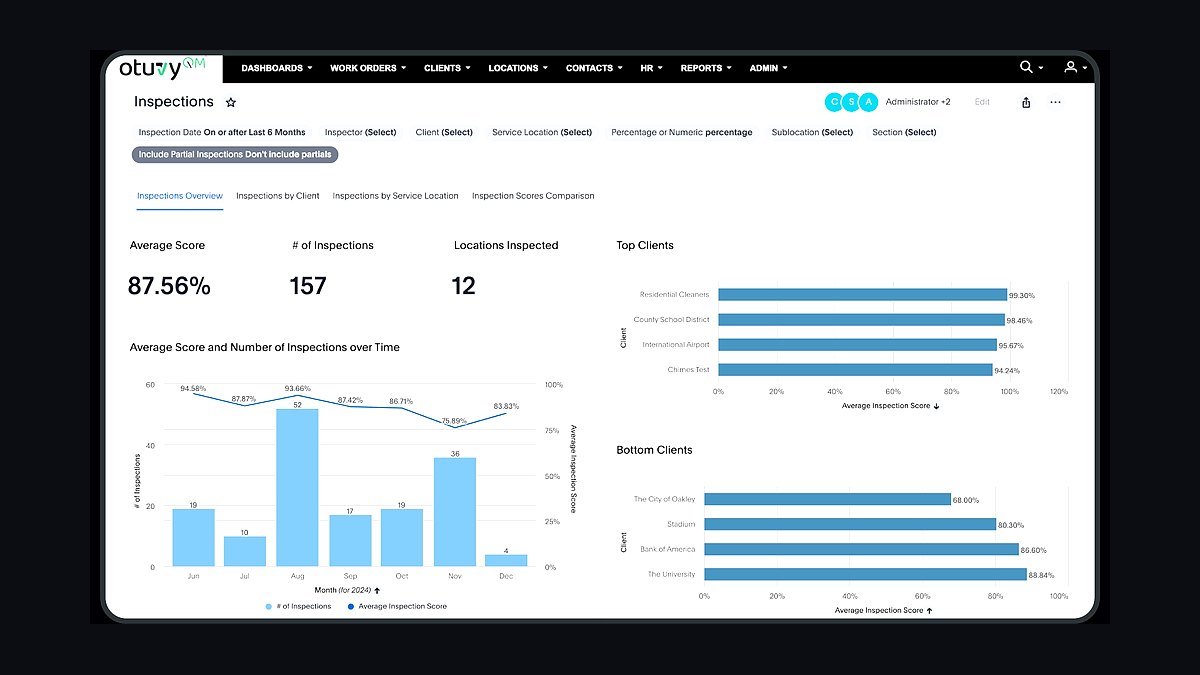
CleanTelligent ranks third because documented inspection scores are what defend a renewal, and it is janitorial-specific software that turns a supervisor's walk-through into timestamped, photo-backed audits tied to the same jobs as the workforce data. When a facilities manager claims quality slipped, those audits are the contractor's only objective evidence. CleanTelligent commonly runs a few hundred dollars per month by user count.
It fits mid-size and large BSCs with enough accounts to justify structured inspections and a client portal. Smaller contractors often choose OrangeQC instead, ranked below, because it is lighter and lower-cost for inspection-only needs. CleanTelligent trades away general-purpose flexibility for janitorial depth, so it wins on retention proof rather than audit form customization.
4Swept
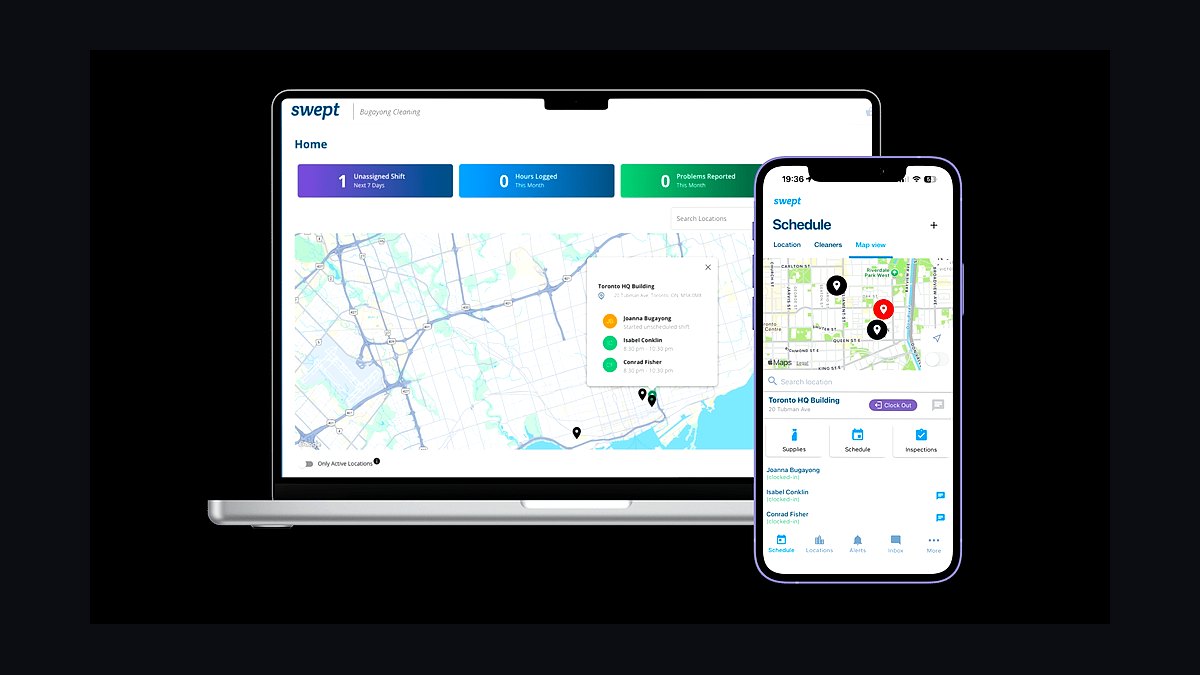
Swept ranks fourth because it bundles scheduling, mobile time tracking, and translated team messaging for smaller janitorial contractors at roughly $5 to $10 per cleaner per month, avoiding ERP weight entirely. For a contractor under about 50 cleaners, that combination covers the operational core without the cost or setup burden of WinTeam. Its messaging is built for a multilingual cleaning workforce that does not sit at desks.
It is aimed at owner-operated and small BSCs that have not yet crossed into the mid-market. The trade-off is depth: Swept does not reconcile payroll, billing, and the general ledger the way WinTeam does, so a 300-cleaner contractor on Swept drowns in manual reconciliation. Compare it against Janitorial Manager, ranked below, which adds estimating inside the same platform.
5Janitorial Manager
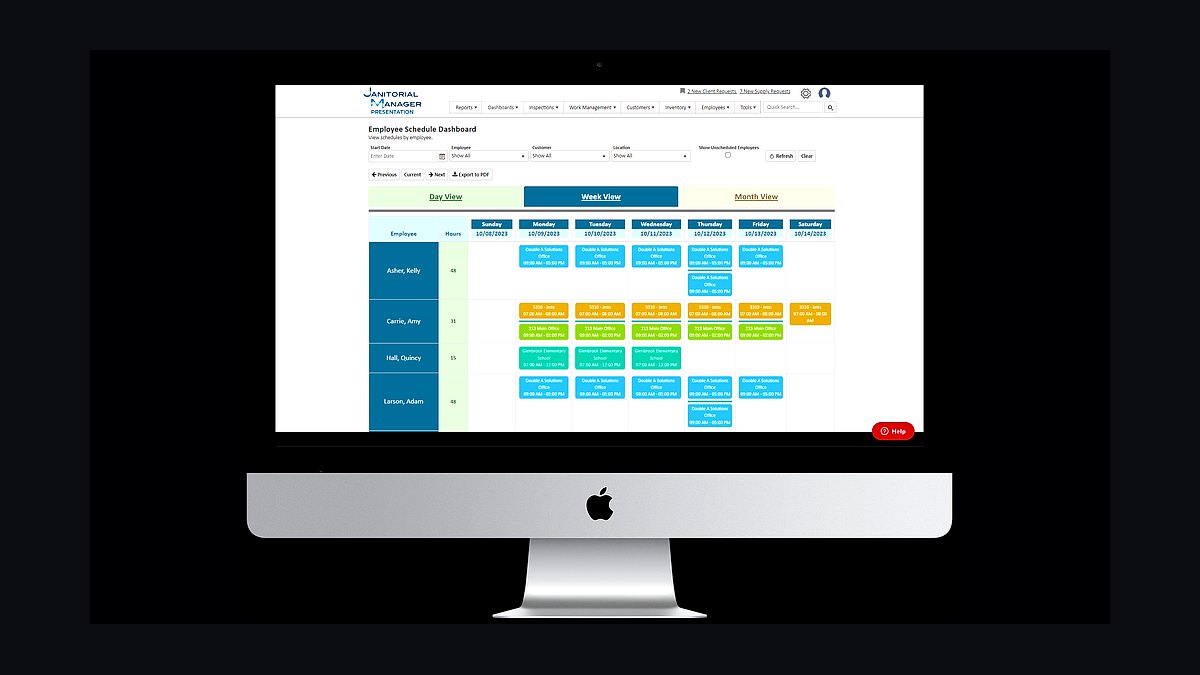
Janitorial Manager ranks fifth because it combines scheduling, time, and an estimating module inside one platform, letting smaller contractors price bids and run operations without buying two separate tools. Janitorial margins commonly run in the single digits, so estimating off cleanable square footage and task frequency before signature protects the contract term. It runs roughly $5 to $10 per cleaner per month.
It fits contractors who want bidding and operations together but are not ready for a full ERP. The trade-off is that its estimating is less specialized than CleanBid, ranked below, and its operations depth trails WinTeam. Contractors whose primary pain is winning profitable bids should pick CleanBid and pair it with Swept; those who want one platform for scheduling and proposals should start here.
6CleanBid

CleanBid ranks sixth because it is a dedicated janitorial bidding tool that prices contracts off cleanable-area and frequency inputs rather than gut feel, and because a bad bid on a recurring multi-year contract compounds for its entire term. It builds professional proposals that show the production-rate math behind the number. CleanBid runs roughly $40 to $80 per month per estimator.
It is for any contractor whose growth depends on winning profitable contracts, from small owner-operators to mid-size BSCs that want sharper bids than a spreadsheet allows. The trade-off is that it does estimating only, so it must be paired with a scheduling and time platform like Swept or Janitorial Manager, ranked above. Contractors wanting bidding bundled into operations should use the Janitorial Manager estimating module instead.
7HubSpot
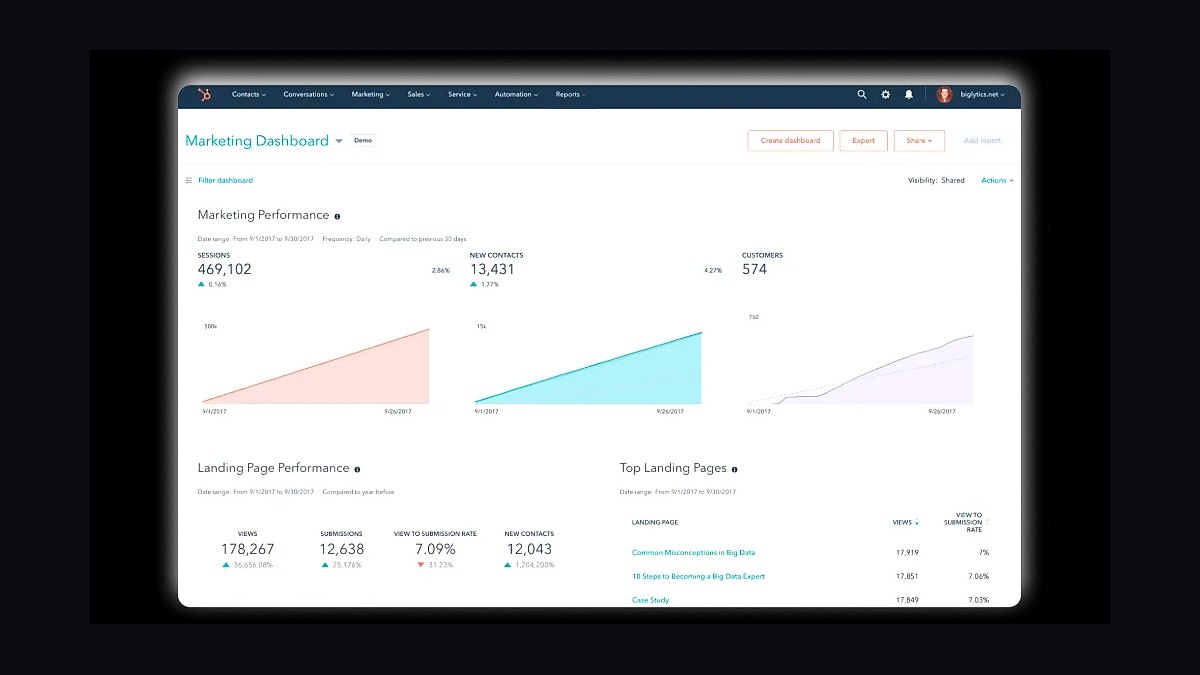
HubSpot ranks seventh because commercial janitorial sales is a long, relationship-driven B2B contract cycle where a single account can be worth six or seven figures over its life, and HubSpot delivers pipeline management with the fastest time-to-value. Its free tier carries small contractors a long way, and Sales Hub Professional runs about $100 per user per month. It also includes built-in marketing most BSCs otherwise buy separately.
It fits small and mid-size contractors with a handful of salespeople working renewals and prospects. The trade-off is that it is a spoke, not the hub, in this industry; the ERP remains the system of record. Larger national contractors with complex territories and many salespeople often choose Salesforce instead, while Aspire users get a native CRM tied directly to operations.
8ADP
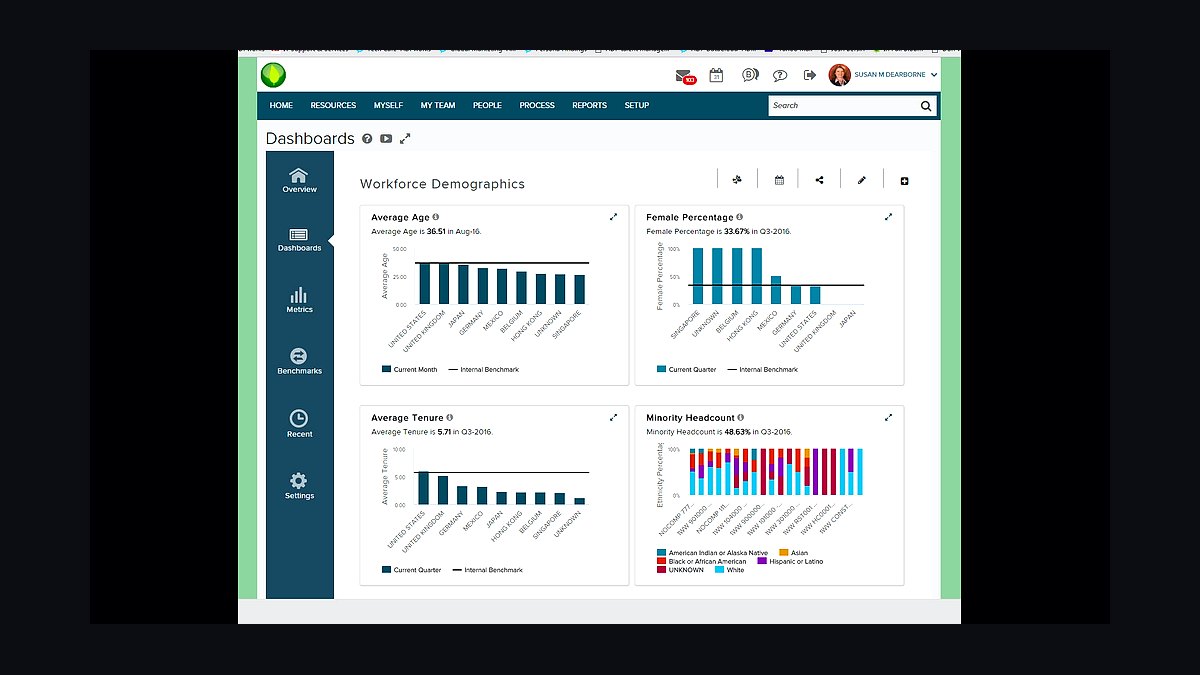
ADP ranks eighth because multi-state, multi-rate payroll for a large distributed hourly workforce involves overtime rules, shift differentials, prevailing-wage and union jobs, and high turnover that generic payroll cannot handle. It is a standard for commercial cleaning workforces and manages compliance at scale. ADP prices by headcount and run frequency, roughly $5 to $12 per employee per pay run plus a base fee.
It is for contractors whose payroll complexity has outgrown QuickBooks or a bookkeeper, typically past a few hundred employees across multiple states. The trade-off is cost and separation from operations data, since hours must be imported rather than flowing natively. WinTeam shops often run payroll inside the ERP instead, ranked above, so verified hours drive pay with no re-keying.
9QuickBooks Online
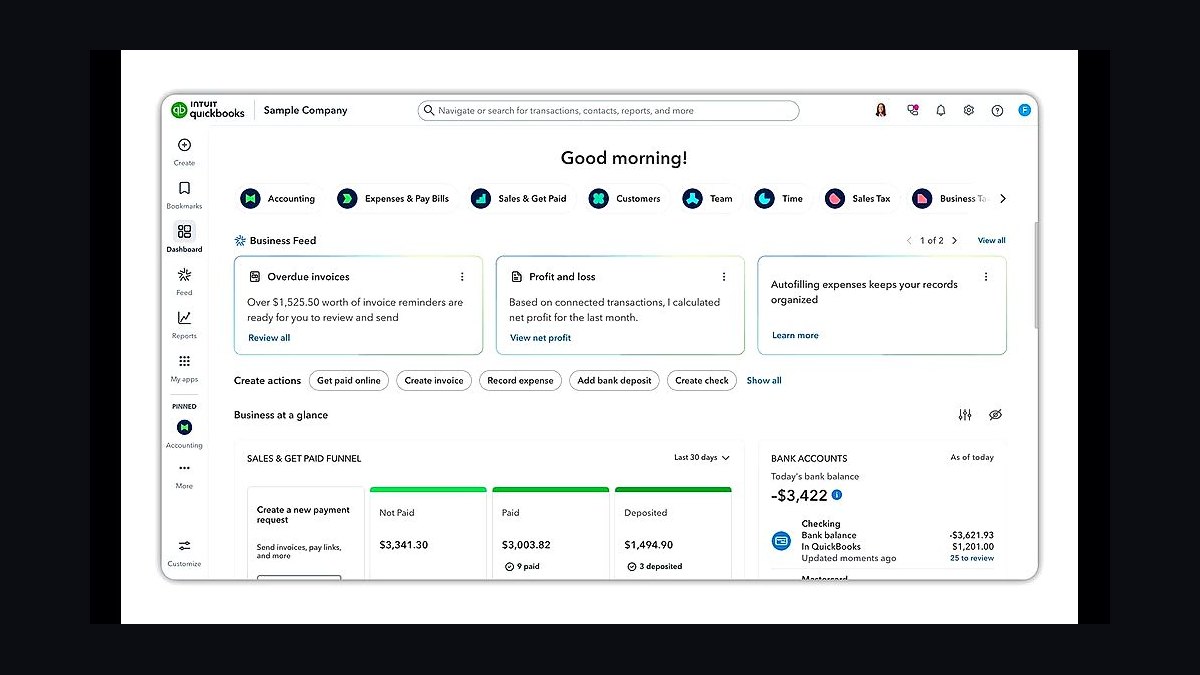
QuickBooks Online ranks ninth because it carries small and mid-size contractors' books at roughly $90 to $200 per month without the cost or implementation burden of an enterprise accounting platform. It handles invoicing, expense tracking, and basic job costing well enough for a contractor under a few hundred cleaners. Most accountants already know it, which shortens onboarding.
It is for owner-operators and smaller BSCs that need clean books, not dimensional reporting. The trade-off is multi-entity and project-level reporting, which QuickBooks handles poorly once a contractor operates across regions. Sage Intacct becomes worth its five-figure annual cost at that scale, and large WinTeam shops use the ERP's native general ledger so job costing and invoicing stay in one system.
10Power BI
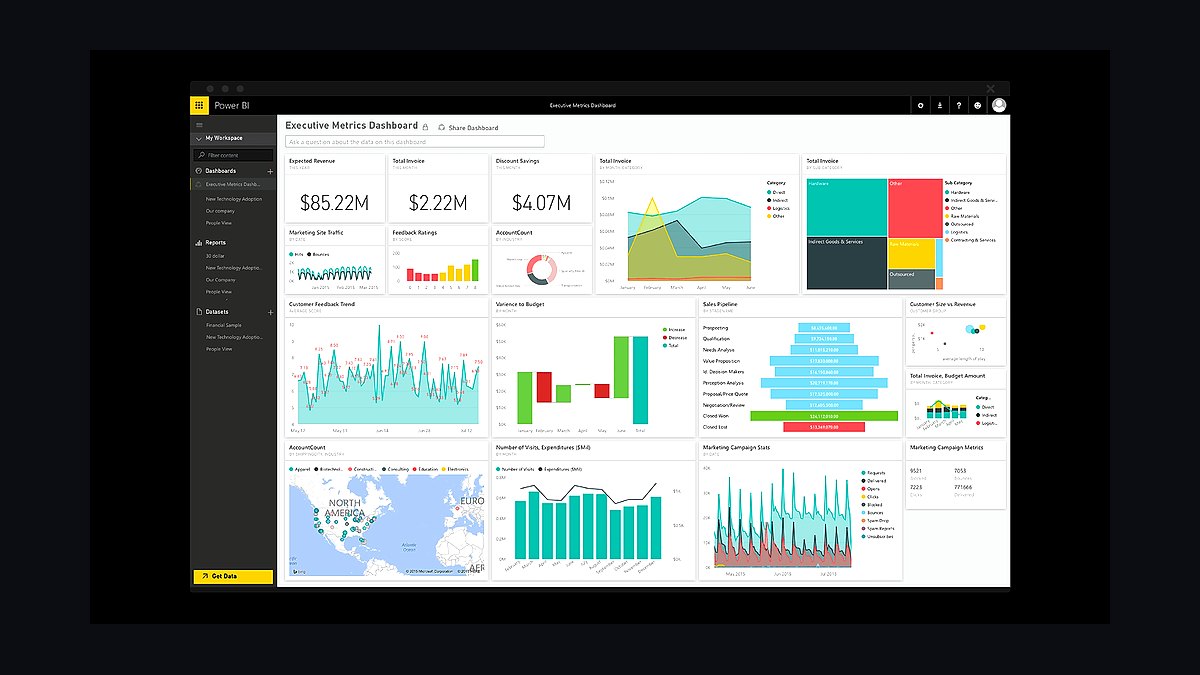
Power BI ranks tenth because it turns ERP, inspection, and payroll data into margin-by-account, labor-as-percent-of-revenue, and inspection-trend dashboards so the office runs on numbers instead of anecdotes. It is the practical default because most mid and large BSCs already live in Microsoft 365, and Power BI Pro costs $14 per user per month. It reads from the systems already in the stack.
It is for mid-size and large contractors with enough data volume to justify dashboards, not for a 30-cleaner operation. The trade-off is that it requires someone to build and maintain the reports, and it delivers nothing until the underlying ERP and inspection data are clean. Small contractors should rely on WinTeam or Swept built-in reports, ranked above, and skip BI entirely until scale demands it.
How we ranked these
We ranked tools by four weighted criteria: workforce-management depth for distributed hourly labor (30%), mobile time and attendance with location and photo verification (25%), quality-inspection and SLA documentation capability (25%), and bidding/estimating accuracy that protects single-digit margins (20%). Each vendor was scored on fit for commercial janitorial operations, integration with the ERP spine, and total cost relative to cleaner headcount.
We deliberately ignored residential maid-service features, generic field-service tools built for trades, and CRM-led platforms that treat labor scheduling as an afterthought. We also excluded feature-count comparisons and analyst quadrant placement as standalone signals, because a tool can rank highly on breadth yet fail at reconciling scheduled hours to billed hours. Pricing was considered only as a sizing signal, not a quality signal.
What to look for
What matters most is whether the platform ties a person to a building to a shift to a pay rate to an invoice line, because that reconciliation is where janitorial margin lives. Prioritize mobile clock-in that works at the client site, inspection reporting a facilities manager can actually read, and estimating math based on production rates rather than gut feel. Integration depth beats feature breadth.
The mistake most buyers make is shopping CRM first because that is the familiar pattern from other industries, then bolting on scheduling and time tools that never reconcile. The second common error is buying a full ERP at 20 cleaners or refusing to graduate from spreadsheets at 300. Match the workforce platform to headcount, and let inspection and bidding layers earn their place before the ERP does.
Related questions
Why is a workforce-management ERP the spine of a janitorial stack instead of a CRM?
Labor runs 50 to 70 percent of a building service contractor's cost, spread across hourly cleaners at client sites the office never sees. The system of record must tie a person to a building to a shift to a pay rate to an invoice line every cycle. WinTeam was built for that; a CRM cannot reconcile payroll and billing.
What does mobile time and attendance actually fix for a commercial cleaner?
Cleaners clock in at buildings, not offices, so the company needs proof of who showed up, when, and where. Phone, QR-code, or geofenced punch closes the gap between scheduled and paid hours, which is the largest controllable cost. It also stops buddy-punching and surfaces unfilled routes before a client complains.
How do quality inspections protect a janitorial contract renewal?
A contract lives on documented quality. Facilities managers want inspection scores, photo evidence, and trend lines, not a cleaner's word. A digital inspection platform turns a supervisor walk-through into a timestamped, photo-backed audit proving the SLA was met, which is the difference between automatic renewal and a competitive rebid.
Why does bidding and estimating software matter when margins are thin?
Janitorial margins commonly run single digits, so a bid that misjudges production rates, frequency, or labor loading turns a won contract into a multi-year loss. Estimating tools price work off cleanable square footage and realistic production rates instead of gut feel. Because contracts recur, a bad bid compounds for its entire term.
When should a small contractor skip the full ERP and run Swept or Janitorial Manager?
Under roughly 50 cleaners, an owner-operated contractor does not need enterprise capacity. Swept or Janitorial Manager cover scheduling, time tracking, and basic operations at about $5 to $10 per cleaner per month. Add CleanBid, OrangeQC, QuickBooks, and HubSpot free, and defer the ERP until headcount forces the upgrade.
What is the canonical mid-market janitorial tech stack in 2027?
The typical $5M to $50M building service contractor runs TEAM Software WinTeam as the ERP, eHub for mobile attendance, and CleanTelligent or OrangeQC for inspections. Around that core sit CleanBid for estimating, HubSpot or Salesforce for contract sales, QuickBooks or Sage Intacct for accounting, and Power BI for margin reporting.
How does inspection data become an early-warning system for churn?
Inspection scores and photo trends show a supervisor where quality is slipping before a facilities manager picks up the phone. Declining scores on a specific building usually precede a rebid threat by weeks. Contractors who watch that trend can retrain, re-route, or add hours before the account is genuinely at risk.
Should payroll run inside the ERP or through ADP or Paychex?
Many WinTeam shops run payroll natively so verified hours flow straight through with no re-keying, which removes a reconciliation step and a class of errors. ADP and Paychex become worth it for multi-state, multi-rate, prevailing-wage, or union complexity at scale. Budget roughly $5 to $12 per employee per pay run plus a base fee.
FAQ
What is the best tech stack for a commercial cleaning company in 2027?
A workforce-management ERP as the spine, wired to mobile time and attendance with location verification, a quality-inspection platform producing SLA proof, a bidding and estimating tool, and a CRM for the long B2B contract sale. TEAM Software WinTeam anchors mid-size and large contractors; Swept and Janitorial Manager serve smaller ones.
How is this stack different from a residential maid service stack?
Commercial cleaning runs on distributed hourly labor across many buildings, recurring B2B contracts, and inspection scores that must hold up when a facilities manager threatens to rebid. Residential maid services optimize for one-time or recurring consumer bookings. The commercial stack centers on a workforce ERP; the residential stack centers on booking and dispatch.
How much should a mid-size building service contractor budget for software?
A contractor running roughly 50 to 500 cleaners across multiple buildings should expect about $3,000 to $12,000 per month for the operations-and-revenue stack. That covers WinTeam with eHub, CleanTelligent, CleanBid, a CRM, accounting, and Power BI. Headcount and module count drive the range more than office staff.
Do I need a client portal, or is inspection reporting enough?
Inspection reporting is the minimum; a client portal is the retention upgrade. A portal lets facilities managers submit work orders, see inspection scores, and track service requests in one place, making the contractor's quality visible between visits. Smaller contractors can defer it until accounts are large enough to demand it.
Which quality-inspection tool fits a small janitorial contractor best?
OrangeQC is the lighter, lower-cost inspection-only option smaller contractors tend to prefer, running a few hundred dollars per month by user count. CleanTelligent is janitorial-specific and integrates tightly with workforce data for mid-size firms. SafetyCulture iAuditor is the flexible general-purpose alternate, starting near $24 per user monthly.
Is HubSpot or Salesforce the better CRM for a janitorial contractor?
HubSpot wins for most building service contractors on speed-to-value and built-in marketing, and its free tier carries small contractors a long way. Salesforce fits larger national contractors with complex territories and many salespeople. Aspire users get a native CRM tied directly to operations, which removes a data handoff.
What is the biggest mistake buyers make when choosing janitorial software?
Shopping CRM first because that is the familiar pattern from other industries, then bolting on scheduling and time tools that never reconcile with billing. The second mistake is buying a full ERP at 20 cleaners or refusing to graduate from spreadsheets at 300. Match the workforce platform to headcount and let other layers earn their place.
How long does implementation take, and what should come first?
Land mobile time and attendance in the first 30 days because it protects margin immediately. Days 31 to 60 bring inspection and bidding online. Days 61 to 90 connect reporting so margin-by-account and inspection trends are visible. The time-and-attendance step usually pays for the whole project within a month or two.
Can a contractor run the business on spreadsheets and paper timesheets?
Technically yes, but nobody then knows whether scheduled hours match paid hours, and the largest cost in the business goes unmonitored. Buddy-punching, missed shifts, and unbilled hours quietly erode margin. Even a 30-cleaner contractor typically recovers the cost of a mobile time tool within a month or two.
What reporting layer should a growing BSC add last?
Business intelligence, usually Power BI, because most mid and large contractors already live in Microsoft 365 and Power BI Pro runs about $14 per user per month. It turns ERP, inspection, and payroll data into margin-by-account and labor-as-percent-of-revenue dashboards. Small contractors can rely on built-in ERP reports and skip BI entirely.
Sources
- https://www.teamssoftware.com/
- https://www.sweptworks.com/
- https://www.janitorialmanager.com/
- https://www.cleantelligent.com/
- https://www.orangeqc.com/
- https://safetyculture.com/iauditor/
- https://www.cleanbid.com/
- https://www.hubspot.com/products/sales
- https://www.adp.com/
- https://quickbooks.intuit.com/
Related on PULSE
This page will be disappearing soon. Save it to your device for $1 — or read it free while it is here.
@Kory-White- · if Venmo asks, the last 4 of my number are 2012
This page is gone.
This one is off the shelf now. $1 keeps it on your phone for good — the whole page, pictures and diagrams included.
 pulse-tech-stacksTop 10 Best Tech Stack Tools for Home Inspection Companies in 2027
 pulse-tech-stacksTop 10 Best Tech Stack Tools for Online Travel Agencies (OTAs) in 2027
 pulse-tech-stacksTop 10 Best Tech Stack Tools for AI Document Intelligence Companies in 2027
 pulse-tech-stacksTop 10 Best Tech Stack Tools for Embeddings API Companies in 2027
 pulse-tech-stacksTop 10 Best Tech Stack Tools for Independent Roofing Contractors in 2027
 pulse-tech-stacksTop 10 Best Tech Stack Tools for RV Dealerships in 2027
 pulse-tech-stacksTop 10 Best Tech Stack Tools for Septic and Portable Sanitation Services in 2027
 pulse-tech-stacksTop 10 Best Tech Stack Tools for Staffing Agencies in 2027
 pulse-tech-stacksTop 10 Best Tech Stack Tools for Fine-Tuning Platform Companies in 2027
 pulse-tech-stacksTop 10 Best Tech Stack Tools for Window Cleaning Services in 2027