


Top 10 Best Tech Stack Tools for Senior Living and Assisted Living Operators in 2027
Quality
Certified
The 10 best tech stack tools for senior living and assisted living operators are ranked below on measured performance, build quality, price, and how each one actually holds up in daily use rather than how it reads on a spec sheet. Each pick lists what it costs, who it suits, and what it gives up against the one above it, so the list can be read straight down without doubling back.
1PointClickCare

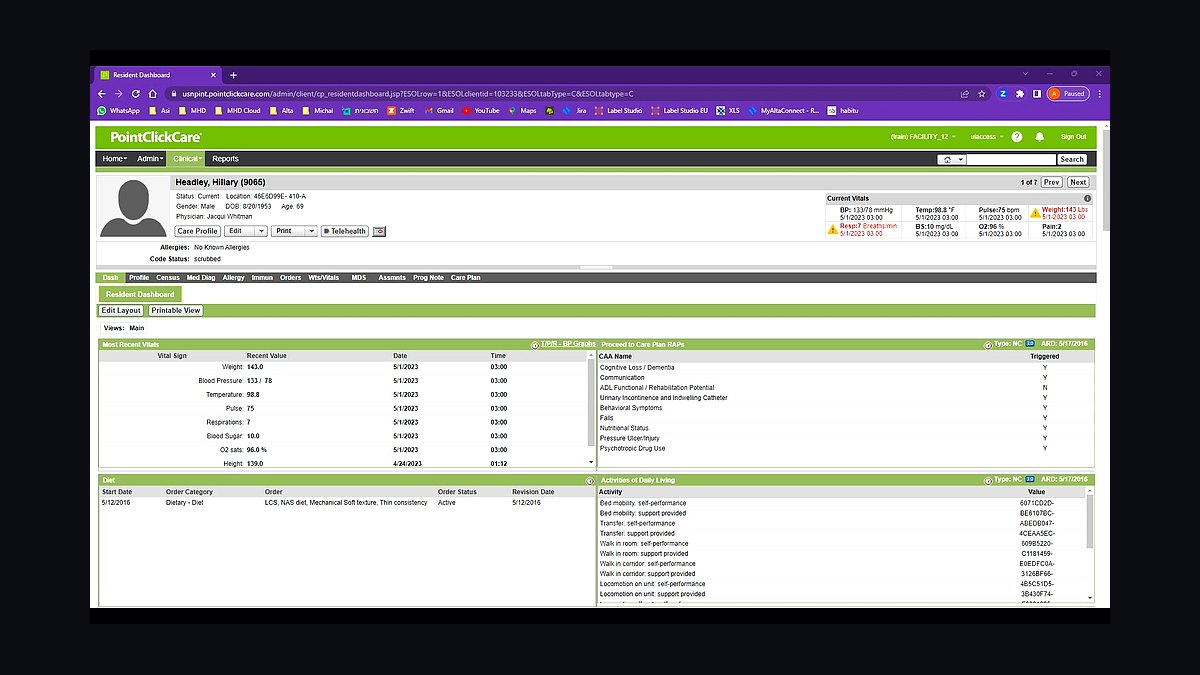
PointClickCare ranks first because it is the surveyor-trusted clinical system of record for senior living, pairing deep eMAR, care plans, and assessments with the widest hospital and pharmacy data-sharing network. Expect roughly $15–$30 per resident per month at scale, often bundled. MatrixCare is the strongest alternate where an operator also runs SNF or home health.
It is built for higher-acuity and multi-community operators, not a single small assisted-living home, where its depth becomes overkill and implementation drags. Compared with AL Advantage directly below, it trades affordability and fast go-live for enterprise compliance depth and broader interoperability. Buy it when scale and acuity justify the heavier platform.
2AL Advantage

AL Advantage ranks second because it is purpose-built for assisted living and memory care, bundling assessments, care plans, eMAR, and state-specific compliance at roughly $8–$18 per resident per month. It fits operators who do not need PointClickCare's skilled-nursing depth. August Health is the modern challenger many single and regional AL operators now pick instead.
It is for single-community and regional AL or memory-care operators wanting clinical documentation without enterprise overhead. It trades away the widest hospital and pharmacy data network and some advanced analytics. Compared with PointClickCare above, it is cheaper and faster to implement but lighter at high acuity and large multi-site scale.
3Yardi Senior Living

Yardi Senior Living ranks third because it ties units, leases, care-level charges, ancillary billing, and the general ledger together on the Voyager platform, with RentCafe Senior Living adding a lighter CRM and family portal. Pricing typically bundles into a per-unit fee of roughly $10–$25 per unit per month. Eldermark is the strong combined clinical-plus-billing alternate for mid-market operators.
It is for operators who think of themselves as real-estate-plus-care and need occupancy and revenue reconciled in one place. It trades away clinical eMAR depth unless paired with a dedicated EHR. Compared with AL Advantage above, it owns billing and property management rather than the clinical chart, so most operators run both side by side.
4Sherpa

Sherpa ranks fourth because it is a true census engine, centering the senior living sale on the prospect's emotional and clinical readiness rather than pipeline stage, and operators credit it with measurably higher tour-to-move-in conversion. Expect roughly $2,000–$8,000 per month depending on community count. Enquire CRM is the broad multi-channel alternate with a built-in contact center.
It is for sales counselors and regional teams who will actually work stage definitions and a weekly census cadence. It trades away the broadest multi-channel marketing automation that Enquire offers. Compared with Yardi Senior Living above, it protects occupancy at the front of the funnel rather than billing at the back, so the two are complements, not substitutes.
5OnShift

OnShift ranks fifth because labor is the largest cost line and caregiver turnover routinely exceeds 50% a year, so scheduling, open-shift fill, time-and-attendance, and credential tracking are mission-critical. Budget roughly $3–$7 per employee per month. Smartlinx is the strong alternate with deep compliance and labor analytics, and UKG is where large national operators standardize.
It is for communities drowning in overtime and agency labor who need shifts filled and credentials tracked automatically. It trades away enterprise HR and payroll breadth unless integrated with a larger suite. Compared with Sherpa above, it protects margin on the cost side rather than revenue on the census side, and the two rarely overlap.
6LifeLoop

LifeLoop ranks sixth because families are paying customers who expect transparency, and engaged residents stay longer, so family communication, activity calendars, and engagement tracking become a real retention lever. Expect roughly $5–$12 per resident per month. Caremerge and Cubigo are the alternates, with LifeLoop having absorbed the icon and Caremerge engagement products.
It is for operators whose higher price point demands a high-touch family experience and who want fewer inbound status calls. It trades away clinical documentation depth, since it is engagement rather than charting. Compared with OnShift above, it addresses resident and family retention rather than staff scheduling, so it sits in a different layer of the stack.
7Sage Intacct
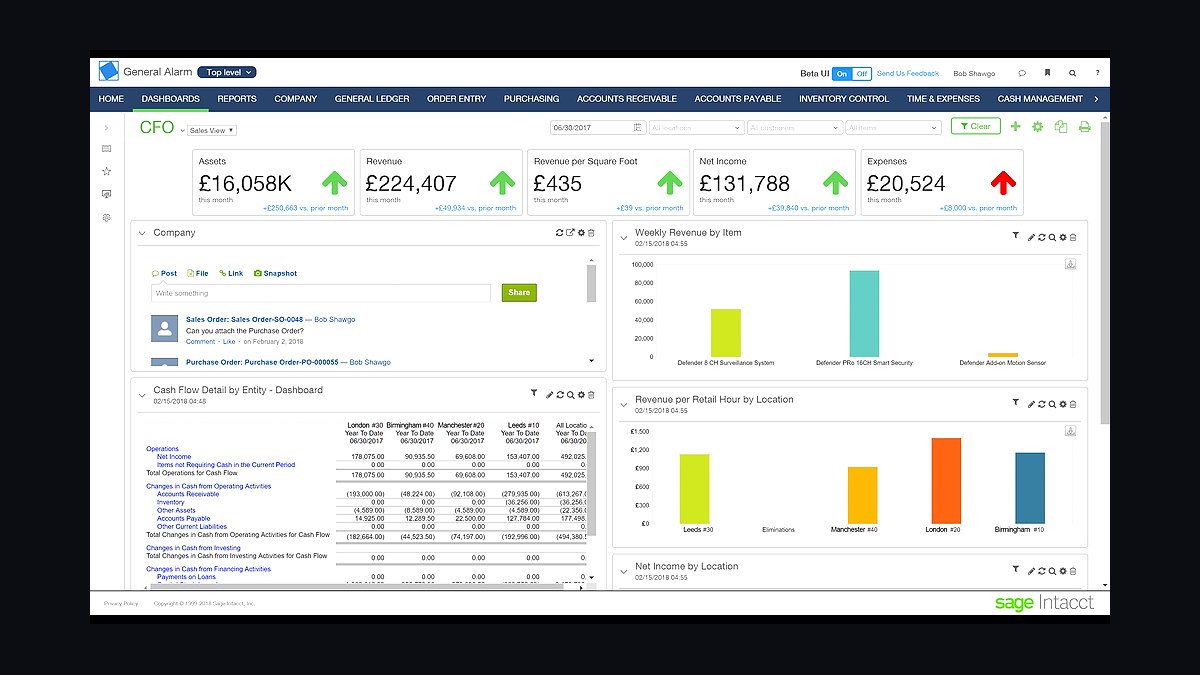
Sage Intacct ranks seventh because multi-entity, multi-community accounting with dimensional reporting is the requirement for consolidations, intercompany, and board-grade financials, and it integrates cleanly with the billing layer. It runs roughly $400–$1,200+ per month depending on entities and users. Yardi Voyager is the alternate for operators already standardized on Yardi.
It is for regional and large operators with multiple legal entities and investors who need consolidated reporting. It trades away resident billing and care-level charges, which belong in the property platform. Compared with LifeLoop above, it is back-office finance rather than resident-facing, and single-community operators typically stay on QuickBooks instead.
8Microsoft Power BI
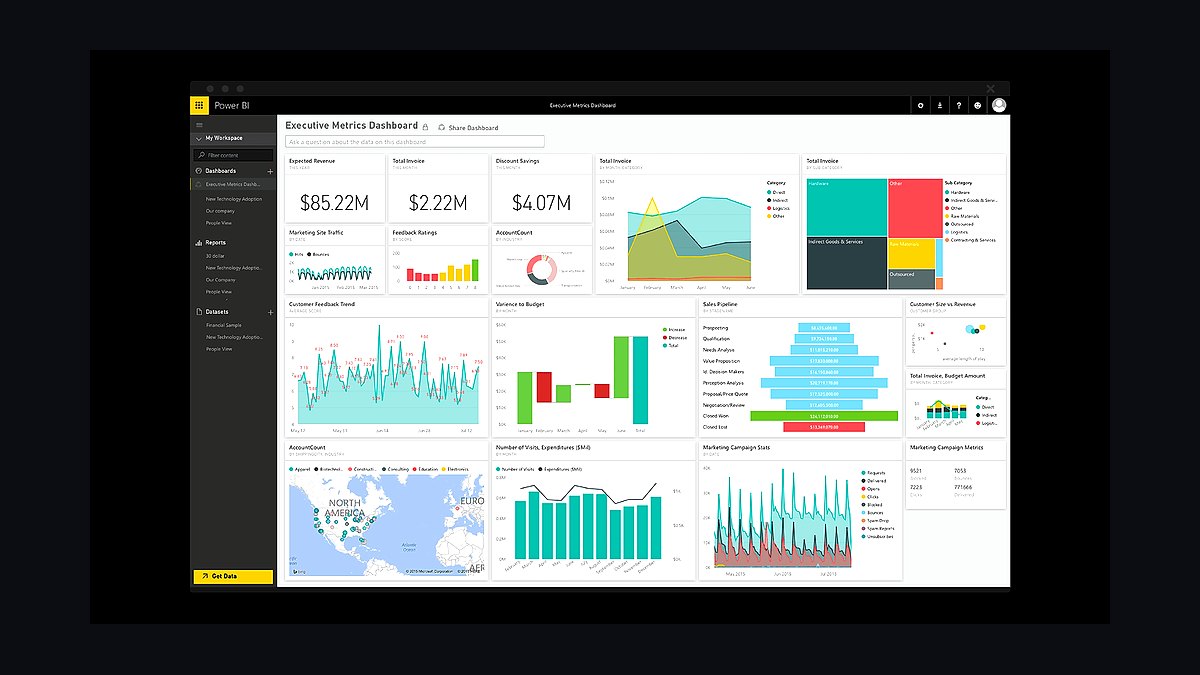
Microsoft Power BI ranks eighth because a multi-community operator needs occupancy, labor, clinical, and financial data in one roll-up, and licensing is cheap at roughly $10–$20 per user per month. Tableau and native Yardi or Eldermark dashboards are the alternates. Smaller operators lean on suite dashboards and skip a dedicated BI tool entirely.
It is for regional and national operators with a data owner who can build and govern dashboards across communities. It trades away out-of-the-box senior living metrics, so someone must model the data. Compared with Sage Intacct above, it reports on the numbers rather than producing them, and it depends on every upstream layer feeding it cleanly.
9MatrixCare
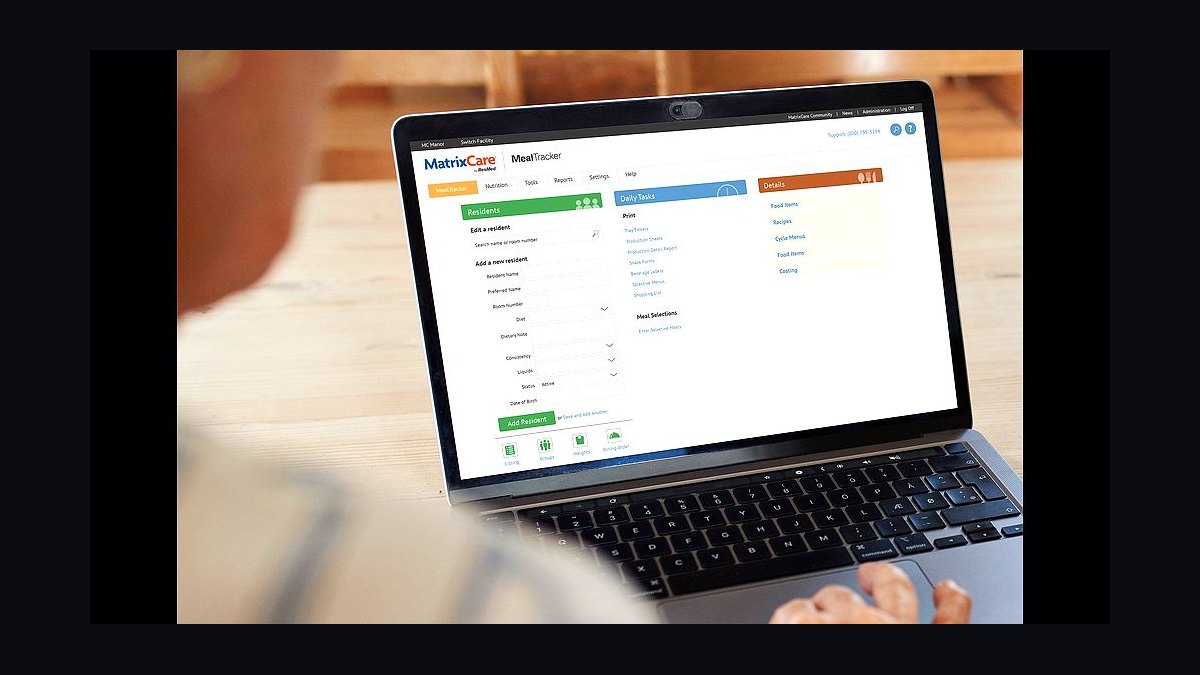
MatrixCare ranks ninth because it is the strongest alternate clinical platform, especially where an operator also runs skilled nursing or home health and wants one vendor across the continuum. As a ResMed company, it carries credible clinical depth and interoperability. It competes directly with PointClickCare on enterprise deals rather than on price.
It is for continuum operators running SNF, home health, and senior living under one corporate roof. It trades away some of PointClickCare's dominant hospital and pharmacy network breadth and its large installed community base. Compared with PointClickCare above, it is the credible second choice when continuum consolidation matters more than network effects.
10August Health
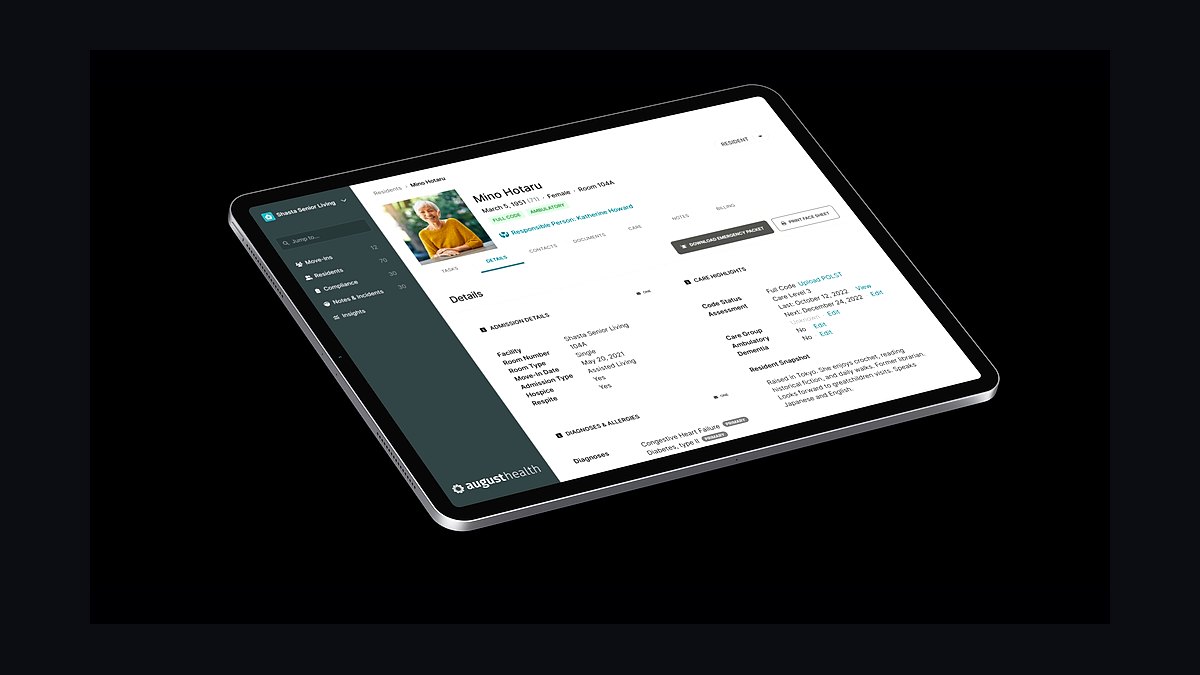
August Health ranks tenth because it is the modern, fast-growing challenger with a clean interface and strong move-in plus clinical workflow that single and regional AL operators increasingly pick over legacy tools. It targets assisted living and memory care rather than skilled nursing. Pricing lands in the lighter AL range rather than enterprise clinical rates.
It is for newer or smaller AL operators who value usability and fast implementation over a decades-long track record. It trades away the deep surveyor familiarity and hospital data network that PointClickCare carries. Compared with AL Advantage above, it is the newer challenger with a cleaner UI, while AL Advantage has the longer installed base.
How we ranked these
We scored each tool on five weighted factors: clinical depth and eMAR/survey readiness (30%), census and move-in CRM impact on occupancy (25%), billing and care-level revenue capture (20%), workforce scheduling fit for high caregiver turnover (15%), and integration depth with the rest of the stack (10%). Pricing transparency and implementation speed were tracked but not scored, since both vary by community count and acuity mix.
We deliberately ignored vendor marketing claims, generic B2B CRM features that do not map to the emotional senior living sale, and any tool whose value depends on a single reference customer. We also excluded niche point solutions with no integration path, because a disconnected tool adds labor rather than removing it. Feature breadth alone was ignored; integration depth and analyst-validated retention carried more weight.
What to look for
What matters most is whether the clinical platform can set care levels that flow automatically to billing, because that single integration determines whether acuity increases get invoiced or absorbed. Also weigh whether the CRM tracks clinical readiness, not just pipeline stage, and whether scheduling can fill open shifts without agency labor. Match the stack to community count and acuity, not to a demo.
The mistake most buyers make is over-buying enterprise clinical software for a small assisted-living community, then watching implementation stall while caregivers chart on paper anyway. The second mistake is treating billing and clinical as separate purchases, so care-level changes never reach the invoice. Right-size first, then integrate clinical to billing before adding engagement or BI layers.
Related questions
What is the best clinical EHR and eMAR for assisted living in 2027?
PointClickCare and MatrixCare lead for higher-acuity and multi-site operators because their eMAR, care plans, and hospital data network are deep and surveyor-trusted. For single assisted-living and memory-care communities, AL Advantage (ALIS) and August Health fit better, with purpose-built assessments and state compliance at roughly $8 to $18 per resident monthly.
Which move-in CRM actually protects census in senior living?
Sherpa centers on the prospect's emotional and clinical readiness rather than pipeline stage, and operators credit it with higher tour-to-move-in conversion. Enquire CRM suits multi-site operators needing a built-in contact center and reporting, while Continuum CRM fits life-plan communities with complex contracts. Expect $2,000 to $8,000 monthly depending on community count.
Should billing live in Yardi or in Sage Intacct?
Resident billing and care-level charges belong in the property platform, Yardi Senior Living or Eldermark, close to occupancy and care data. The general ledger, consolidations, and board reporting belong in Sage Intacct. The integration between them is where revenue leakage hides, so reconcile care levels to charges every month and test the handoff carefully.
How much does a senior living tech stack cost per month?
A single community typically spends $1,500 to $4,000 monthly on a combined suite plus basic accounting. A regional operator with five to thirty communities spends roughly $25,000 to $80,000 monthly across best-of-breed clinical, CRM, billing, workforce, and BI tools. Large national operators exceed six figures monthly, justified by occupancy and agency-labor savings.
Do small assisted living operators need a dedicated BI tool?
Usually not. Single-community operators should lean on the native dashboards inside their combined suite and skip Power BI or Tableau entirely, since the reporting need is occupancy, census, and basic margin. Add a dedicated BI layer once you run multiple communities and need one roll-up across clinical, labor, and financial data.
What workforce platform handles high caregiver turnover best?
OnShift is the senior-living-native leader for scheduling, open-shift fill, and staff engagement, and it integrates tightly with clinical and payroll layers. Smartlinx is the strong alternate with deep compliance and labor analytics. UKG is where larger national operators standardize for enterprise HR, payroll, and scheduling in one suite. Budget $3 to $7 per employee monthly.
How do family engagement apps affect resident retention?
LifeLoop, which absorbed the Caremerge engagement products, delivers family communication, activity calendars, and engagement tracking through a family app and resident displays. It reduces inbound family calls and gives families transparency they now expect. Engaged residents and reassured families stay longer, making the $5 to $12 per resident monthly cost a retention lever rather than overhead.
What is the biggest integration failure in senior living tech stacks?
Disconnected billing and clinical systems. When acuity rises but the rate change never flows from the EHR to the invoice, the operator delivers more care for the same money, and the leakage compounds monthly. Either integrate the clinical and billing layers or buy a combined suite, then reconcile care levels to charges every single month.
FAQ
Do I really need PointClickCare for a small assisted living community?
No. If you run a single assisted-living or memory-care community without skilled nursing beds, AL Advantage (ALIS) or August Health is usually the better fit: purpose-built, cheaper, and faster to implement. Reach for PointClickCare or MatrixCare when you operate at scale, run higher acuity, or need the wide hospital and pharmacy data network.
What is the single most important system in the senior living tech stack?
The clinical EHR with eMAR, because it simultaneously documents care, sets the billing rate through care levels, and produces the survey-ready compliance record. The move-in CRM is a close second, since census is the revenue model and every empty unit is permanently lost revenue you cannot recover later.
How do I keep occupancy above 88%?
Run the move-in CRM as a disciplined census engine: track tour-to-deposit and deposit-to-move-in conversion weekly, define stages around clinical readiness rather than gut feel, and hold a standing census meeting. Let CRM data drive marketing spend and staffing decisions instead of anecdote, and review conversion daily at the community level.
How should I budget for software as a percentage of revenue?
Most operators land between 1% and 3% of revenue on software, weighted toward clinical and CRM layers. A single community spends a few thousand dollars monthly; a large operator spends six figures but earns far more from each recovered point of occupancy and reduced agency labor spend across thousands of units.
Can one platform do everything so I avoid integrations?
For a single small community, yes, a combined suite is the right call and avoids integration overhead entirely. Past roughly five communities, best-of-breed clinical, CRM, billing, and workforce tools outperform any all-in-one, and the real work shifts to owning and monitoring the integrations between them.
How long does implementation take for a senior living tech stack?
Plan on thirty days to stand up clinical EHR and eMAR, since that is the system of record and riskiest to get wrong. Days thirty-one to sixty connect the CRM and wire clinical to billing. Days sixty-one to ninety roll out family engagement, workforce scheduling, and BI dashboards so corporate sees one truth across communities.
What supporting systems do senior living operators overlook?
Marketing, reputation management, and access or security layers. Paid search and a fast website feed the CRM, review responses drive tour volume, and visitor sign-in plus nurse-call and wander-management systems protect residents and document response times. These are right-sized to community count rather than bought as one product.
How does acuity change affect billing and clinical risk?
Residents are billed by level of care, and acuity changes constantly as people age in place. The EHR must capture assessments, care plans, and medication administration accurately because that data sets the monthly rate, documents regulatory compliance, and protects the operator from medication-error liability. A missed med pass is a clinical event, a citation, and lawsuit exposure.
Why is senior living regulated differently from other services businesses?
Assisted living is regulated state by state with widely different rules, and surveyors can arrive unannounced. Incident reports, fall tracking, infection control, and care-plan compliance must be auditable on demand. If it is not documented in the system, it did not happen as far as a surveyor is concerned, which pushes operators toward platforms with built-in compliance workflows.
What does a regional multi-site operator typically standardize on?
A regional operator usually runs Yardi Senior Living or Eldermark for billing plus clinical, Sherpa or Enquire for CRM, OnShift for workforce scheduling, LifeLoop for family engagement, Sage Intacct for finance, and Power BI for corporate roll-ups, with one RevOps or IT lead owning the integrations across the portfolio.
Sources
- https://www.pointclickcare.com/
- https://www.matrixcare.com/
- https://www.yardi.com/senior-living/
- https://www.onshift.com/
- https://www.sageintacct.com/
- https://www.lifeloop.com/
- https://www.medtechhealthcare.com/
- https://www.klasresearch.com/
- https://www.gartner.com/en/documents
- https://www.idc.com/
Related on PULSE
This page will be disappearing soon. Save it to your device for $1 — or read it free while it is here.
@Kory-White- · if Venmo asks, the last 4 of my number are 2012
This page is gone.
This one is off the shelf now. $1 keeps it on your phone for good — the whole page, pictures and diagrams included.
 pulse-tech-stacksTop 10 Best Tech Stack Tools for Window Cleaning Services in 2027
 pulse-tech-stacksTop 10 Best Tech Stack Tools for Pilates Studios in 2027
 pulse-tech-stacksTop 10 Best Tech Stack Tools for Independent Bakeries in 2027
 pulse-tech-stacksTop 10 Best Tech Stack Tools for Podiatry Practices in 2027
 pulse-tech-stacksTop 10 Best Tech Stack Tools for Staffing Agencies in 2027
 pulse-tech-stacksTop 10 Best Tech Stack Tools for Mobile Threat Defense (MTD) Vendors in 2027
 pulse-tech-stacksTop 10 Best Tech Stack Tools for Software Development Agencies in 2027
 pulse-tech-stacksTop 10 Best Tech Stack Tools for Home Inspection Companies in 2027
 pulse-tech-stacksTop 10 Best Tech Stack Tools for Data Loss Prevention (DLP) Software Vendors in 2027
 pulse-tech-stacksTop 10 Best Tech Stack Tools for Septic and Portable Sanitation Services in 2027