


Top 10 Best Tech Stack Tools for Med Spas and Aesthetics Clinics in 2027
Quality
Certified
The 10 best tech stack tools for med spas and aesthetics clinics are ranked below on measured performance, build quality, price, and how each one actually holds up in daily use rather than how it reads on a spec sheet. Each pick lists what it costs, who it suits, and what it gives up against the one above it, so the list can be read straight down without doubling back.
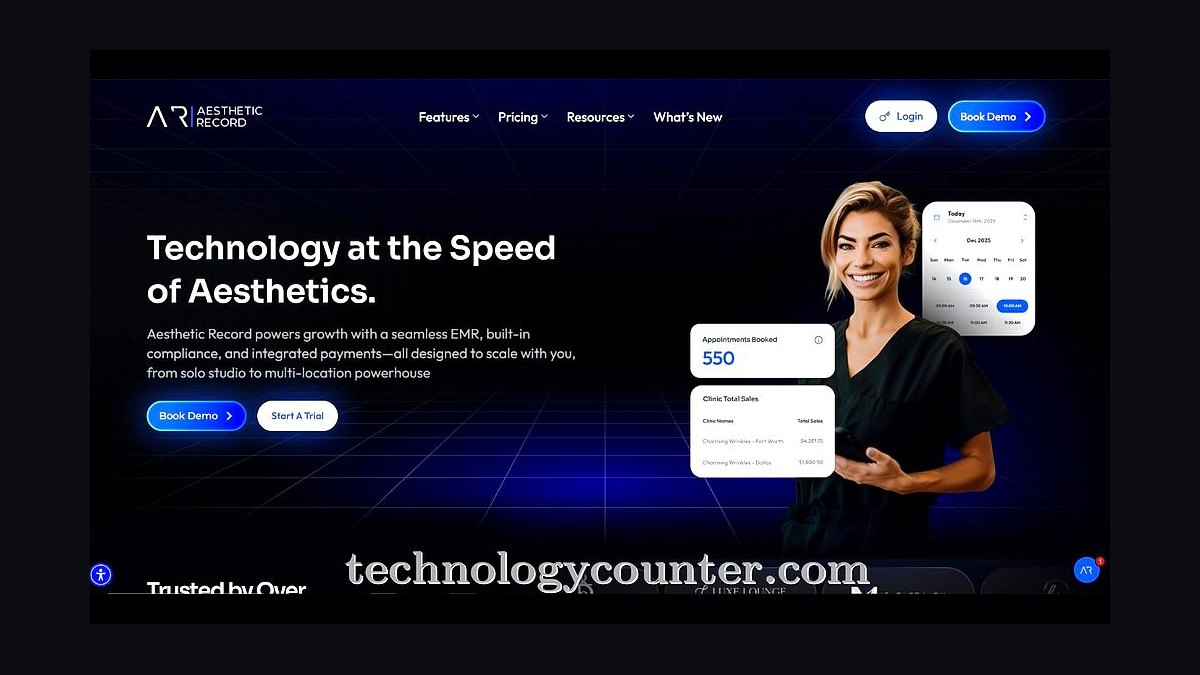
1Aesthetic Record

Aesthetic Record ranks first because it is the only aesthetics-specific hub that fuses a HIPAA-grade medical chart with a cash-pay retail register in one record. It ships injectable mapping, photo documentation, signed consents, e-prescribing, memberships, packages, gift cards, and a built-in consumer marketplace. Pricing runs roughly $200-$400 per month per location plus payment processing, well under a split EHR-plus-POS stack.
It is built for single-location and small-group med spas that need clinical charting and retail selling in one login. It trades away the front-desk polish of Boulevard and the multi-site centralization of Zenoti, so a three-plus-location group outgrows it. Against Boulevard below, it wins on clinical depth and injectable workflow at a lower price.
2Boulevard

Boulevard ranks second for clinics where the booking-to-checkout client experience is the brand differentiator. It delivers premium self-scheduling, card-on-file deposits, automated no-show fees, integrated payments, memberships, and a polished front-desk interface, priced around $200-$500+ per month depending on tier and provider count. Its charting covers consents and photos but is less injectable-specific than Aesthetic Record.
It suits higher-end aesthetics and beauty-forward med spas with strong front-desk staff. It trades away some clinical depth and costs more than Aesthetic Record at equivalent provider counts. Compared with Zenoti below, it lacks true multi-location centralized membership ledgers, so a growing group eventually migrates.
3Zenoti

Zenoti ranks third because it is the enterprise standard once a med spa crosses into three or more locations. It centralizes booking, POS, memberships, marketing, inventory, and reporting across sites with role-based access, typically custom enterprise pricing in the $300-$500+ per location per month range. One membership ledger and cross-location booking solve the deferred-revenue chaos that fragments multi-site groups.
It is built for regional multi-location groups and national chains, not single sites that would overpay for unused enterprise depth. It trades away the simplicity and lower entry price of Aesthetic Record and Boulevard. Against Nextech below, it is stronger on retail memberships and spa operations but weaker on surgical-grade medical compliance.
4Nextech

Nextech ranks fourth as the aesthetics EHR of record when a clinic is attached to a plastic surgeon or dermatologist and needs true medical-grade charting. It delivers e-prescribing, surgical workflow, photo documentation, and tighter compliance controls, priced as a custom medical-EHR contract in the four-figures-per-month range. It is the pick when clinical rigor outranks retail convenience.
It is built for plastic-surgery-adjacent and derm-grade groups, not cash-pay med spas that mostly sell injectables and memberships. It trades away the retail POS and membership flexibility that Zenoti and Aesthetic Record handle natively. Against Zenoti above, it wins on medical compliance but loses on multi-location spa operations.
5Mangomint

Mangomint ranks fifth as a clean, modern option for small med spas and salons that want booking, POS, and client management without enterprise complexity. It runs roughly $165-$375 per month, covering self-scheduling, card-on-file, memberships, and reporting in an interface staff learn quickly. It is the value pick below Boulevard on price.
It suits single-location med spas and wellness-leaning clinics with modest clinical charting needs. It trades away injectable-specific charting depth and multi-location centralization, so it caps out as the clinic grows. Against Aesthetic Record above, it is cheaper and simpler but weaker on consents, lot tracking, and photo-documented injectable mapping.
6Allē by Allergan

Allē by Allergan ranks sixth because injectable loyalty is non-negotiable and free to the clinic, covering Botox, Juvéderm, and the Allergan portfolio. Clients accrue and redeem points, and many choose clinics based on where their points stack, so the POS must apply loyalty at checkout. Skipping it sends repeat injectable clients to the competitor down the street.
It is built for any clinic selling Allergan injectables, from single sites to national chains. It trades away nothing financially but demands POS integration so points apply at the register rather than manually. Paired with Aspire below, it covers the two dominant injectable portfolios and should run alongside whichever hub sits above it.
7Aspire by Galderma

Aspire by Galderma ranks seventh as the second mandatory injectable loyalty program, covering Dysport, Restylane, and Galderma's line at no cost to the clinic. It mirrors Allē's accrual-and-redemption model, and clients who use Dysport or Restylane expect their points honored at checkout. Running only one program leaves half the injectable market unserved.
It is built for any clinic selling Galderma injectables, and it pairs with Allē above to cover both dominant portfolios. It trades away nothing in cost but requires the same POS loyalty integration. Clinics that run both programs capture price-sensitive repeat clients that a single-program competitor loses.
8Birdeye

Birdeye ranks eighth because reviews and two-way texting drive the rebooking loop that med spas live on. It automates post-visit review requests, monitors reputation, and handles two-way SMS, priced around $300-$450 per month. Google reviews are the top acquisition channel for aesthetics clinics, so automated review generation pays for itself quickly.
It is built for clinics that want reputation and messaging in one platform, from single sites to multi-location groups. It trades away the phone-system bundling that Weave offers and costs more than Podium at some tiers. Against Klaviyo below, it owns reviews and texting while Klaviyo owns segmented email and SMS reactivation campaigns.
9Klaviyo
Klaviyo ranks ninth because med spa growth depends on getting clients rebooked before injectable results fade. It runs segmented, behavior-triggered email and SMS from about $45 per month scaling with list size, powering due-for-a-touch-up nudges, lapsed-client win-backs, and package-expiring reminders. Native hub marketing often cannot match that segmentation.
It is built for clinics with enough list volume to justify real segmentation, typically multi-provider or multi-location operations. It trades away simplicity, since single sites can often live on Zenoti or Aesthetic Record native campaigns. Against Birdeye above, it handles deeper lifecycle marketing while Birdeye handles reviews and two-way texting.
10QuickBooks Online

QuickBooks Online ranks tenth as the accounting ledger that turns hub exports into real financial truth, priced about $35-$235 per month. Its critical job is mapping deferred revenue, membership liability, unredeemed gift cards, and package balances so cash collected is not mistaken for earned revenue. Without it, clinics cannot tell profit from float.
It is built for every med spa regardless of size, from single owner-operators to national chains. It trades away aesthetics-specific reporting, so it depends on clean hub exports to be useful. Against Power BI, QuickBooks owns the books while BI owns provider productivity, retention, and revenue-per-room dashboards.
How we ranked these
We ranked each tool on five weighted criteria: clinical documentation depth (25%) covering good-faith exams, photo consent, injection mapping, and lot tracking; retail POS and deferred-revenue handling (25%) for memberships, packages, and gift cards; resource-aware booking with deposits and no-show protection (20%); manufacturer loyalty integration with Allē and Aspire at checkout (15%); and reporting, integration, and total 2027 cost of ownership (15%).
We deliberately ignored feature-count marketing pages, generic salon or hospital EHR tools that cannot do both jobs, and vendor awards or review-site volume, since those reward sales spend over clinic fit. We also excluded insurance-billing strength, telehealth breadth, and enterprise HR modules, because cash-pay aesthetics clinics rarely bill insurance and those capabilities inflate price without improving rebooking, retention, or chart compliance.
What to look for
What matters most is whether one system is simultaneously the medical chart and the retail register. Confirm the hub stores consents, before/after photos, injection maps, and lot numbers on the same record that sells the membership, package, or gift card, and that deferred-revenue reports export cleanly to QuickBooks. Then verify resource scheduling handles provider credential, room, and shared device together.
The mistake most buyers make is shopping on monthly price and feature lists, then bolting a salon POS onto a separate charting tool. That creates double entry, unreconciled lot numbers, and a membership ledger nobody trusts. A close second mistake: skipping card-on-file deposits on high-value injectable and laser slots, which quietly bleeds five figures a month in no-shows.
Related questions
What is an aesthetics-specific EHR and why does a med spa need one?
It is software that stores a HIPAA-grade clinical chart and runs a retail point of sale in the same record. A med spa needs it because the same Botox appointment requires a good-faith exam, signed photo consent, and logged lot number while also selling a $1,200 membership or gift card. Generic salon tools and hospital EHRs each do only half.
How do Allē and Aspire loyalty programs fit into a med spa tech stack?
Both are free manufacturer programs that clients redeem at checkout, so your POS must apply points at the register. Allē covers the Allergan portfolio (Botox, Juvéderm); Aspire covers Galderma's line (Dysport, Restylane). Run both, because clients often pick clinics based on where their injectable points accrue.
What is deferred revenue and why does it matter for med spa software?
Memberships, prepaid packages, and gift cards collect cash today for services owed later, creating a liability until redeemed. Your hub must track membership credit balances, remaining package units, and outstanding gift-card liability per client. Without that, you mistake cash collected for earned revenue and cannot tell profit from float.
How should online booking handle rooms, devices, and provider credentials?
Aesthetics scheduling is three-dimensional: the right credentialed provider, a specific room, and sometimes a shared laser platform. Double-book any one and the day collapses. Your booking layer must enforce all three constraints while taking a card on file, charging a deposit, and automatically applying a cancellation-window fee.
When does a med spa need to move from Aesthetic Record to Zenoti?
Usually around three or more locations. Single sites and small groups get everything from Aesthetic Record or Boulevard at a fair price. Once you need one membership ledger, cross-location booking, centralized inventory, and combined reporting across sites, Zenoti's enterprise platform becomes worth the higher per-location cost.
Do med spas need patient financing like Cherry or PatientFi?
For high-ticket treatments such as laser packages and injectable series, yes. Cherry and PatientFi let clients pay over time while the clinic gets paid up front, which lifts average ticket and conversion. Both run on revenue share with no meaningful monthly fee, so the main work is enabling them at checkout.
What should a med spa run for reviews and SMS reactivation?
Birdeye, Podium, or Weave automate post-visit review requests and two-way texting, typically $250-$500 monthly. Pair that with Klaviyo or your hub's native campaigns to send timed 'you're due for a touch-up' messages keyed to each treatment's cadence, since faded results are the main reason clients drift.
How do you reconcile med spa software data with QuickBooks?
Map the hub's deferred-revenue exports, including membership liability, unredeemed gift cards, and package balances, into QuickBooks monthly. Then read earned revenue rather than cash collected. This is the single most important finance integration in a cash-pay aesthetics clinic, and skipping it hides real profitability behind apparent cash flow.
FAQ
Do I need a medical EHR, or is salon software enough for a med spa?
You need aesthetics-specific software that is both a medical chart and a retail POS. Basic salon tools cannot store HIPAA-grade charts, consents, photos, and lot tracking, while a hospital EHR cannot sell a membership or gift card. Aesthetic Record, Boulevard, Zenoti, Mangomint, and Nextech exist to do both at once.
Aesthetic Record, Boulevard, or Zenoti — how do I choose?
Single location or small group wanting purpose-built clinical plus POS at a fair price: Aesthetic Record. Premium brand where front-desk and client experience are the differentiator: Boulevard. Three-plus locations needing one membership ledger, cross-site booking, and combined reporting: Zenoti. Plastic-surgery or derm-grade compliance: Nextech.
Why do Allē and Aspire loyalty programs matter so much?
They are free, and clients choose clinics based on where their Botox and Dysport points accrue. Allē covers the Allergan portfolio and Aspire covers Galderma's line, together the two dominant injectable families. Not honoring them sends price-conscious repeat clients to the competitor down the street who does.
How should the stack handle memberships, packages, and gift cards?
Treat them as deferred revenue. Cash collected for a future service or product is a liability until redeemed, not profit. Your hub must track membership credit balances, remaining package units, and outstanding gift-card liability per client, and you must map those reports into QuickBooks so you read earned revenue, not float.
What is the best way to reduce no-shows on injectables and laser?
Require a card on file and charge a deposit at booking, enforce an automated cancellation-window fee, and send confirmation and reminder texts. Because injectable and laser slots carry the highest revenue per hour, chronic no-shows there quietly cost five figures monthly. Deposit enforcement inside the booking layer is the single highest-ROI setting.
Can a single-location med spa get by without a BI tool?
Yes. Aesthetic Record, Boulevard, and Zenoti all ship dashboards covering provider productivity, rebooking rate, and revenue per room. Add Power BI only when you run multiple locations and need one combined view across hubs, payments, and QuickBooks. Single sites can also use free Google Looker Studio for light custom reporting.
What does a realistic med spa software budget look like in 2027?
A single location runs roughly $700-$1,800 monthly in software: hub around $200-$500, reviews and texting $300-$500, Klaviyo from $45, QuickBooks $35-$80, plus payment processing near 2.6-2.9%. A regional group of three to eight sites runs roughly $4,000-$15,000 monthly once Zenoti, BI, and higher list tiers are added.
How long does implementation usually take?
Plan on 90 days. Days 0-30 configure the hub, scheduler resources, consents, and deposit rules. Days 31-60 turn on payments, memberships, packages, loyalty, financing, and reviews. Days 61-90 wire QuickBooks reconciliation, build dashboards, and launch reactivation campaigns. Rushing the first 30 days is the most common cause of a failed rollout.
Is Nextech necessary if we are not attached to a surgeon?
Usually not. Nextech is the aesthetics EHR of record for plastic-surgery and dermatology-adjacent groups needing surgical workflow, e-prescribing, and tighter medical-grade compliance. A standard med spa doing injectables, lasers, and skincare gets everything it needs from Aesthetic Record, Boulevard, or Zenoti at a fraction of the cost.
What is the biggest tech mistake med spas make?
Bolting a salon POS onto a separate medical chart. That creates double data entry, lot numbers and consents that never reconcile with what was sold, and a membership ledger nobody trusts. The fix is one aesthetics-specific hub where the clinical chart and the retail register are literally the same record.
Sources
- https://www.aestheticrecord.com/
- https://www.joinblvd.com/
- https://www.zenoti.com/
- https://www.mangomint.com/
- https://www.nextech.com/
- https://www.alle.com/
- https://www.aspiregalderma.com/
- https://www.birdeye.com/
- https://www.klaviyo.com/
- https://quickbooks.intuit.com/
Related on PULSE
This page will be disappearing soon. Save it to your device for $1 — or read it free while it is here.
@Kory-White- · if Venmo asks, the last 4 of my number are 2012
This page is gone.
This one is off the shelf now. $1 keeps it on your phone for good — the whole page, pictures and diagrams included.
 pulse-tech-stacksTop 10 Best Tech Stack Tools for Land Surveying Firms in 2027
 pulse-tech-stacksTop 10 Best Tech Stack Tools for HVAC Equipment Distributors in 2027
 pulse-tech-stacksTop 10 Best Tech Stack Tools for Hair Salons in 2027
 pulse-tech-stacksTop 10 Best Tech Stack Tools for Bot Mitigation Vendors in 2027
 pulse-tech-stacksTop 10 Best Tech Stack Tools for B2B SaaS Companies in 2027
 pulse-tech-stacksTop 10 Best Tech Stack Tools for Independent Driving Schools in 2027
 pulse-tech-stacksTop 10 Best Tech Stack Tools for Staffing Agencies in 2027
 pulse-tech-stacksTop 10 Best Tech Stack Tools for Pressure Washing Companies in 2027
 pulse-tech-stacksTop 10 Best Tech Stack Tools for Private Ambulance and EMS Companies in 2027
 pulse-tech-stacksTop 10 Best Tech Stack Tools for MSP and IT Services Companies in 2027