


Top 10 Best Tech Stack Tools for Salons and Spas in 2027
Quality
Certified
The 10 best tech stack tools for salons and spas are ranked below on measured performance, build quality, price, and how each one actually holds up in daily use rather than how it reads on a spec sheet. Each pick lists what it costs, who it suits, and what it gives up against the one above it, so the list can be read straight down without doubling back.
1Boulevard

Boulevard ranks first because it handles graduated commission ladders and flat booth rent in the same location, the exact split that breaks generic schedulers. Pricing runs roughly $195-$455 per month, and its booking widget is built around service duration, processing time, and provider skill level rather than fixed 30-minute slots. Card-on-file deposits are enforced by the platform, not chased by the front desk.
It suits premium full-service salons and day spas with four to twenty-five providers who need polished online booking and accurate per-provider pay. It trades away cheap entry pricing and some simplicity for that depth. Against Vagaro directly below, Boulevard costs more but handles complex compensation and multi-location reporting with less manual reconciliation.
2Vagaro

Vagaro ranks second on value: roughly $30 per month base plus about $10 per added provider, which undercuts Boulevard by a wide margin at similar headcount. It runs commission employees alongside flat booth renters in one location and exports clean per-provider totals to payroll. Online self-booking, memberships, and retail inventory are all native rather than add-ons.
It is for single-location salons that want full functionality without premium pricing, including mixed-model shops with renters and commission staff. It trades away some of Boulevard's booking polish and enterprise reporting depth. Compared with Phorest below, Vagaro is cheaper and broader, while Phorest leans harder into retention and rebooking analytics.
3Phorest

Phorest ranks third because its reporting is built around retention rather than just the calendar. Pricing runs roughly $150-$350 or more per month, and its dashboards surface rebooking rate and client retention by provider, the number most salons never track. It handles commission and booth-rent splits and connects to payroll exports cleanly.
It fits established salons whose growth problem is client retention rather than raw booking volume. It trades away the lowest entry price and some booking-widget flexibility that Boulevard offers. Against Mangomint below, Phorest is stronger on retention analytics while Mangomint is stronger on spa treatment-room scheduling and intake forms.
4Mangomint

Mangomint ranks fourth for day spas specifically, priced roughly $165-$375 per month. It handles treatment-room scheduling, intake forms, and membership billing for recurring services like facials and massage better than hair-focused platforms. Commission and hourly provider pay both calculate natively and export to payroll without manual reconciliation.
It is for day spas and mixed spas running recurring treatment memberships rather than high-volume walk-in hair traffic. It trades away some of the retail-attachment depth and brand recognition that Boulevard and Vagaro carry. Compared with Phorest above, Mangomint fits spas better, while Phorest fits commission-heavy hair salons better.
5Zenoti

Zenoti ranks fifth as the enterprise choice for groups of five or more sites, with custom pricing frequently reaching several thousand dollars per month across a group. It centralizes memberships, cross-location inventory, and consolidated reporting, and handles commission, hourly, and booth-rent pay models across every site. Multi-location owners get one view of revenue per chair.
It is for multi-location salon and spa groups that have outgrown separate single-site accounts and need centralized control. It trades away affordability and fast setup for enterprise depth that a single shop will never use. Against Boulevard at the top, Zenoti scales across sites while Boulevard is stronger for one premium location.
6GlossGenius

GlossGenius ranks sixth for solo stylists and independent estheticians at roughly $24-$72 per month. It bundles booking, payments, and a simple client database in one app, and card processing runs around 2.6% plus 10 cents per transaction. There is no payroll engine, no dedicated reviews platform, and no BI layer at this scale.
It is for one-chair renters and suite stylists who need booking and payment in a single app without payroll complexity. It trades away multi-provider commission logic and back-bar tracking entirely. Compared with Square Appointments below, GlossGenius is more salon-specific in its booking flow, while Square is cheaper for a single provider.
7Square Appointments

Square Appointments ranks seventh because it is free for a single provider, with card processing around 2.6% plus 10 cents per transaction. Booking, payments, and a basic client list live in one account, and the free tier covers a solo operator without monthly software cost. It connects directly to Square's retail and inventory tools if product sales grow.
It is for solo providers who want zero monthly software spend and already use Square for payments. It trades away salon-specific commission handling, booth-rent tracking, and back-bar cost logic. Against GlossGenius above, Square is cheaper at one chair but less tailored to salon booking flows and service menus.
8Gusto

Gusto ranks eighth as the payroll layer that sits on top of the booking platform, priced roughly $40 per month plus $6 per person. It ingests per-provider commission, tip, and hourly totals exported from Boulevard, Vagaro, Phorest, or Mangomint and runs payroll without spreadsheet reconciliation. It handles both commission employees and hourly staff in one run.
It is for any salon with employees on payroll, not for solo booth renters who pay themselves. It trades away scheduling and client-facing features entirely, since it is payroll only. Compared with QuickBooks below, Gusto runs payroll while QuickBooks closes the books, and most shops need both rather than one.
9SalonScale

SalonScale ranks ninth as the back-bar cost layer, priced roughly $99-$159 per month. It meters color, developer, and treatment product by weight at the mixing bowl, turning back-bar consumption into a real cost-per-service number instead of a guess. Professional product cost commonly runs high single digits to mid-teens as a percentage of service revenue, and it stays invisible without metering.
It is for color-heavy salons and spas where back-bar product quietly erodes service margin. It trades away being a booking or POS system, since it only measures product consumption. Against Gusto above, SalonScale addresses cost of goods while Gusto addresses labor cost, and color salons need both.
10QuickBooks Online
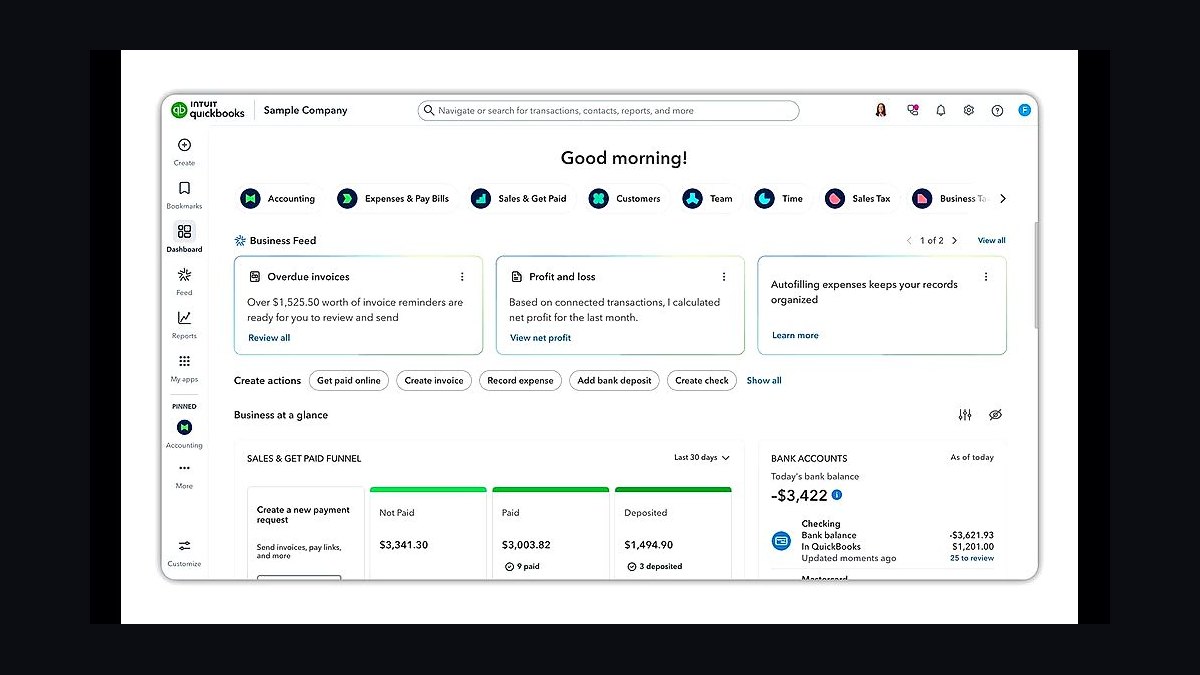
QuickBooks Online ranks tenth as the accounting layer, priced roughly $35-$90 per month for a single salon and about $235 per month for the Advanced tier at multi-location scale. It reconciles daily sales, tracks retail inventory value, and produces the financial statements a booking platform does not generate. It connects to Gusto for payroll journal entries and to the core platform for revenue imports.
It is for any salon owner who needs clean books, tax filing, and margin reporting beyond the platform's own dashboards. It trades away scheduling and client features entirely, since it is accounting only. Compared with SalonScale above, QuickBooks closes the books while SalonScale measures product cost, and both feed the same margin picture.
How we ranked these
We ranked each tool on five weighted criteria: native handling of mixed compensation models (commission, booth rent, hourly) at 30%, booking and calendar protection features like deposits and waitlists at 25%, retention mechanics such as rebooking prompts and membership billing at 20%, back-bar and retail inventory depth at 15%, and total cost at realistic headcount at 10%. Scores came from published pricing pages, feature documentation, and hands-on trial accounts.
We deliberately ignored brand popularity, app store star ratings, and marketing spend, because none of those predict whether a platform can split a graduated commission ladder from a flat chair rental in the same pay period. We also excluded contract length and onboarding fees from scoring, since those are negotiable and vary wildly by location count. Integration counts were ignored too; a long marketplace list rarely reflects real workflow value.
Related questions
What is the difference between a salon platform and a med spa platform?
A salon or day spa stack solves for commission-versus-booth-rent pay splits, chair utilization, and retail attachment. A med spa platform centers on clinical charting, consent forms, and compliance workflows a hair or nail salon never needs. Pick the one matching your actual service model, since buying the wrong category means paying for features you will never use.
Can one platform handle both commission stylists and booth renters?
Yes. Boulevard, Vagaro, Phorest, and Mangomint all run graduated commission for employees alongside flat booth-rent tracking for independents in the same location, then export clean per-provider totals to payroll. A platform that cannot do both is the wrong fit for a mixed-model shop, and retrofitting the logic later is far harder than choosing correctly upfront.
Do I need separate software for back-bar inventory?
Usually yes for color and chemical cost specifically. Retail stock is tracked natively by every all-in-one platform, but back-bar consumption needs a dedicated metering tool to turn color, developer, and wax into a real cost-per-service number rather than a guess. Without it, a fully booked color book can quietly lose money for months.
How much should a solo stylist expect to spend on software?
Roughly $40 to $130 a month all-in: an all-in-one solo platform like GlossGenius or Square Appointments plus a basic accounting app. No payroll or BI tools are needed at one-chair scale, and adding them earlier than necessary rarely pays for itself. The app and a tax tool are the whole stack.
When does a salon need a multi-location enterprise platform?
Generally once a group reaches five or more sites and needs centralized memberships, cross-location inventory, and consolidated reporting. That is the point at which Zenoti or a scaled Boulevard deployment starts paying for itself over running separate single-location accounts, each with its own client list and reporting silo.
Does a booth-rental salon need a commission engine at all?
No. If every provider is an independent renter paying flat rent and keeping their own service revenue, the owner never touches a split calculation and can run a simpler solo-style platform at the salon level. Renters can optionally keep their own booking accounts for their personal client books, which keeps their data portable.
How does card-on-file actually reduce no-shows?
It shifts the deposit or late-cancel fee from something the front desk argues about after the fact to something the software enforces automatically at booking. Clients who have a card on file and know a fee applies show up at a meaningfully higher rate than those who only received a text reminder the day before.
Should a new salon start with the cheapest platform and upgrade later?
Generally no for the core system of record. Migrating client history, commission rules, and booking data between platforms is disruptive and costly in stylist time, and it usually happens during a busy season. Right-size the core platform to your actual compensation model from day one, then add ancillary tools later.
FAQ
What is the single best all-in-one platform for a salon or spa in 2027?
There is no universal winner because the right choice depends on size and priorities. Boulevard suits premium full-service salons wanting polished booking and strong commission handling; Vagaro wins on value; Phorest is built around rebooking and retention reporting; GlossGenius and Square Appointments serve solos; Zenoti is the enterprise choice for large multi-location groups.
Is the best tech stack the same for a hair salon and a day spa?
The core logic is identical: split provider pay, protect calendar time with deposits, track rebooking. But a day spa leans harder on treatment-room scheduling, intake forms, and membership billing for recurring services like facials and massage, so platforms such as Mangomint that handle those well tend to fit spas slightly better than pure hair-focused shops.
How does card-on-file actually reduce no-shows?
It shifts the deposit or late-cancel fee from something the front desk argues about after the fact to something the software enforces automatically at booking. Clients who have a card on file and know a fee applies show up at a meaningfully higher rate than those who only received a text reminder the day before.
What is the biggest hidden cost in a salon tech stack?
Untracked back-bar and professional product consumption. Color, developer, and wax quietly eat into service margin at a rate that stays completely invisible without a metering tool, which is why color-heavy salons in particular should not skip that layer even though it is an added subscription on top of the core platform.
Should a new salon start with the cheapest platform and upgrade later?
Generally no for the core system of record. Migrating client history, commission rules, and booking data between platforms is disruptive and costly in stylist time, and it usually lands during a busy season. Right-size the core platform to your compensation model from day one, then add tools later.
Does a booth-rental salon need a commission engine at all?
No. If every provider is an independent renter paying flat rent and keeping their own service revenue, the owner never touches a split calculation and can run a simpler solo-style platform at the salon level. Renters can optionally keep their own booking accounts for their personal client books.
How long does it take to see results after switching platforms?
Most shops see online self-booking absorb a much larger share of new appointments within 60 to 90 days, and no-show losses shrink as soon as card-on-file deposits are enforced. Rebooking rate and retail attachment typically take one full quarter to move, because they depend on staff habit, not just software configuration.
Do I need a separate payroll provider if my platform calculates commission?
Usually yes. Booking platforms calculate and export per-provider commission, tips, and hourly totals, but they rarely run tax filings, direct deposit, and multi-state compliance. Gusto at roughly $40 plus $6 per person handles that layer cleanly and imports the platform's export without manual re-keying each pay period.
Is a dedicated reviews platform worth it for a single-location salon?
Only once the built-in review and texting tools inside your core platform stop being enough at your volume. Podium and Birdeye run $249 to $599 a month, which is hard to justify for one location. Most single-site shops should exhaust native messaging and review requests first, then upgrade when response volume genuinely outgrows them.
What should I check before signing a salon software contract?
Confirm native commission and booth-rent logic, per-provider rebooking reporting, card-on-file deposit enforcement, and a clean payroll export. Ask about data ownership and export format if you ever leave. Then run one full payroll cycle in parallel before trusting the numbers, because pay errors are the fastest way to lose stylists.
Sources
- https://www.blvd.co/
- https://www.vagaro.com/
- https://www.phorest.com/
- https://www.mangomint.com/
- https://glossgenius.com/
- https://squareup.com/us/en/appointments
- https://www.zenoti.com/
- https://gusto.com/
- https://www.quickbooks.intuit.com/
- https://www.podium.com/
Related on PULSE
This page will be disappearing soon. Save it to your device for $1 — or read it free while it is here.
@Kory-White- · if Venmo asks, the last 4 of my number are 2012
This page is gone.
This one is off the shelf now. $1 keeps it on your phone for good — the whole page, pictures and diagrams included.
 pulse-tech-stacksTop 10 Best Tech Stack Tools for Software Development Agencies in 2027
 pulse-tech-stacksTop 10 Best Tech Stack Tools for AI Customer Support Companies in 2027
 pulse-tech-stacksTop 10 Best Tech Stack Tools for AI Music Generation Companies in 2027
 pulse-tech-stacksTop 10 Best Tech Stack Tools for Hair Salons in 2027
 pulse-tech-stacksTop 10 Best Tech Stack Tools for Tire Shops in 2027
 pulse-tech-stacksTop 10 Best Tech Stack Tools for Land Surveying Firms in 2027
 pulse-tech-stacksTop 10 Best Tech Stack Tools for CrossFit Boxes in 2027
 pulse-tech-stacksTop 10 Best Tech Stack Tools for Independent Dance Studios in 2027
 pulse-tech-stacksTop 10 Best Tech Stack Tools for Pressure Washing Companies in 2027
 pulse-tech-stacksTop 10 Best Tech Stack Tools for Independent Bakeries in 2027