


Top 10 Best Tech Stack Tools for Elevator Service and Modernization Companies in 2027
Quality
Certified
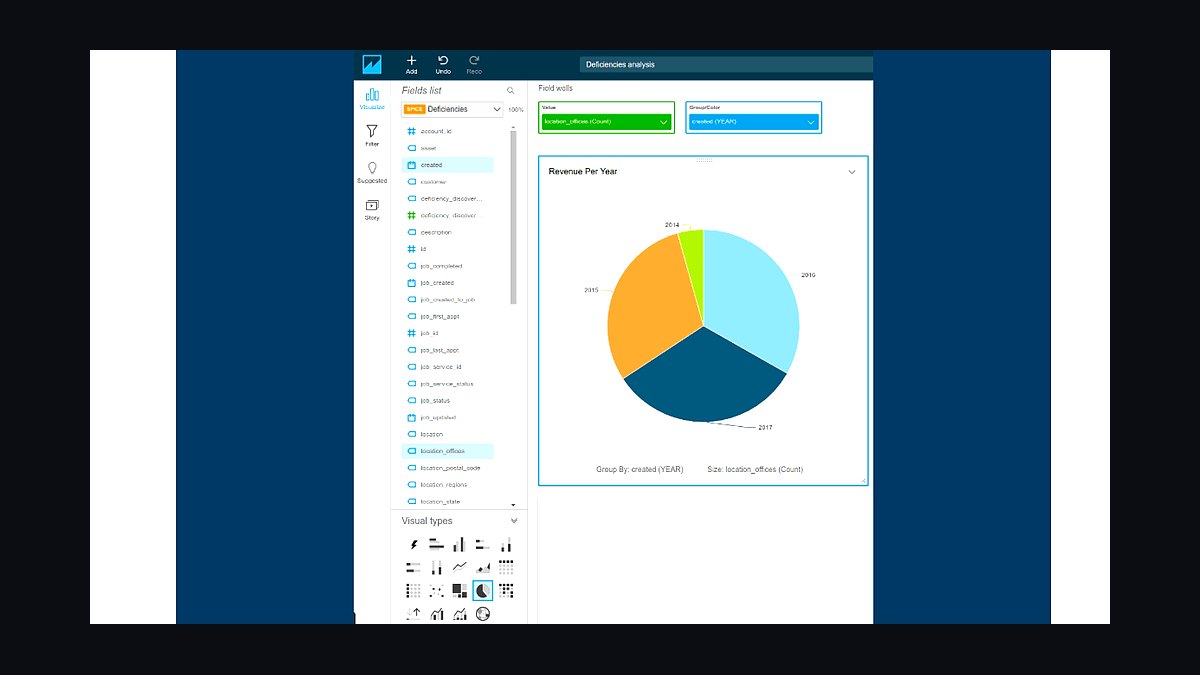
The 10 best tech stack tools for elevator service and modernization companies are ranked below on measured performance, build quality, price, and how each one actually holds up in daily use rather than how it reads on a spec sheet. Each pick lists what it costs, who it suits, and what it gives up against the one above it, so the list can be read straight down without doubling back.
1ServiceTrade

ServiceTrade ranks first because elevator profit lives in the inspection-to-quote loop, and its contract-to-location-to-asset hierarchy models that natively. Category 1 annual and category 5 five-year ASME A17.1 tests attach to the unit record, and each logged deficiency converts straight into a quoted repair. Pricing runs roughly $100–$160 per technician per month.
It suits maintenance-heavy independents earning most gross profit from agreements rather than one-off work. It trades away the fast emergency dispatch board BuildOps offers, so high-volume entrapment operations may find the board slow. Shops that pick it while running dozens of nightly callbacks often end up dispatching off a whiteboard.
2BuildOps

BuildOps ranks second because entrapment response is the other half of elevator operations, and its dispatch board and technician utilization views are stronger than ServiceTrade's. It was built for commercial mechanical contractors running heavy after-hours work, where 30-minute inside-radius and 60-minute outside response targets are contractual. Pricing lands in the same $100–$160 per technician per month band.
It fits metro operators with hundreds of units and dedicated dispatchers triaging a dozen nightly callbacks. It trades away the native deficiency-to-quote workflow, so inspection-driven repair conversion must be built in custom fields. Against ServiceTrade directly above, it wins on dispatch speed and loses on inspection monetization.
3Otis ONE
Otis ONE ranks third because OEM connected services deliver the cleanest fault data on equipment the manufacturer still supports, streaming door-cycle counts and fault codes without third-party instrumentation. Per-unit monitoring commonly prices in the $15–$60 per unit per month range. It only works on Otis equipment under an Otis service program.
It suits portfolios heavily weighted toward one OEM, where the connected feed integrates directly with that manufacturer's service organization. It trades away mixed-fleet coverage, so orphaned controllers from defunct manufacturers get nothing. Against third-party monitoring below, it is deeper on its own iron and useless on everything else.
4KONE 24/7 Connected Services

KONE 24/7 Connected Services ranks fourth for the same OEM logic applied to KONE equipment, feeding fault codes and predictive signals from connected units into KONE's service operation. Pricing follows the industry's per-connected-unit convention, typically $15–$60 per unit per month depending on contract depth. Coverage is limited to KONE-installed equipment.
It suits building owners and independents already maintaining KONE portfolios under a KONE program. It trades away cross-brand visibility, so a mixed fleet needs separate portals per OEM. Against Otis ONE directly above, capability is comparable; the choice is which OEM dominates your book, not which product is better.
5Schindler Ahead

Schindler Ahead ranks fifth among OEM connected platforms, streaming equipment data and predictive maintenance signals off Schindler-installed units. Like its peers it prices per connected unit, commonly in the $15–$60 per unit per month range, and requires Schindler equipment under a Schindler service agreement. It is unavailable for third-party maintenance of the same iron.
It suits Schindler-heavy portfolios and building owners buying uptime guarantees at renewal. It trades away independence, since the data lives in Schindler's portal rather than your hub. Against KONE 24/7 Connected Services above, the difference is brand alignment, not measurable capability.
6TK Elevator MAX

TK Elevator MAX ranks sixth in the OEM monitoring tier, connecting TK Elevator equipment to stream fault codes, door-cycle counts, and predictive signals. Pricing follows the same per-unit convention as the other majors, roughly $15–$60 per connected unit per month. It covers TK equipment only and requires participation in TK's service program.
It suits operators whose portfolios skew toward TK Elevator installations. It trades away the mixed-fleet coverage a third-party monitor provides, and the fault data stays in TK's portal unless you wire it out. Against Schindler Ahead above, it is functionally parallel; pick by installed base.
7Procore
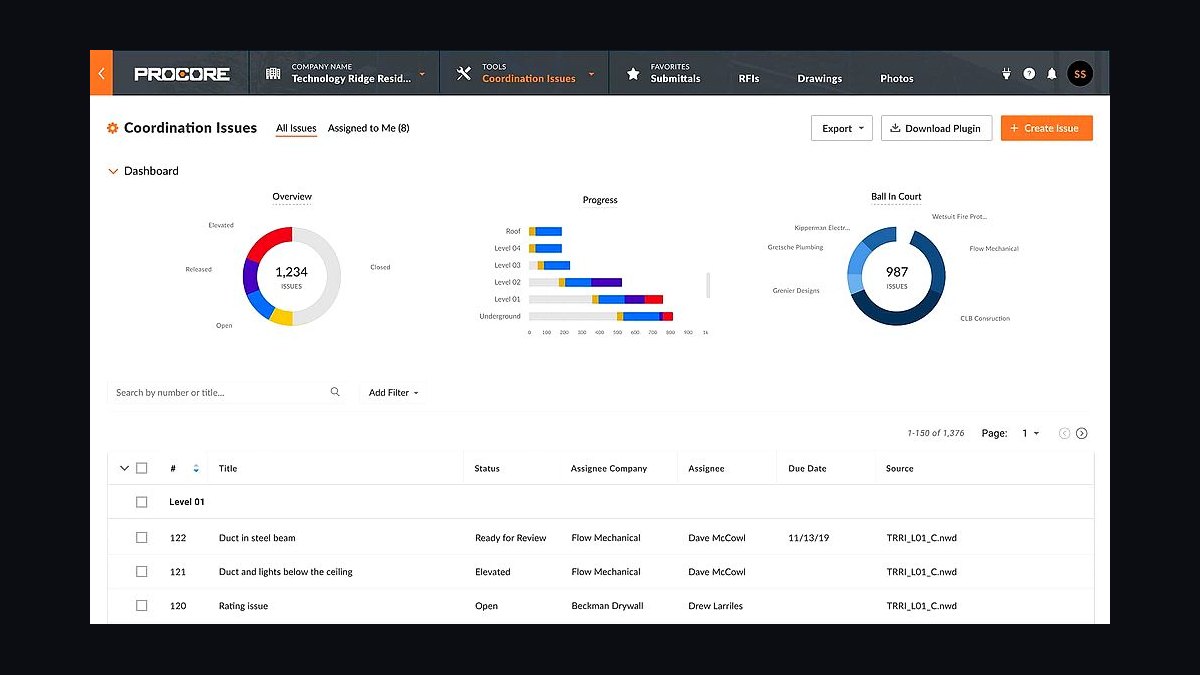
Procore ranks seventh because modernization work above roughly $50K with multiple change orders needs real project management, and Procore runs submittals, change orders, and progress billing against retainage. Pricing runs approximately $15K–$50K+ per year, scaled to annual construction volume rather than seats. It is heavy for occasional mod work.
It suits mid-size companies where modernization exceeds roughly 30% of revenue and long-lead parts drive schedule risk. It trades away simplicity, since implementation and configuration consume real staff time. Against Knowify below, it is more capable and far more expensive; the threshold is job size and change-order frequency.
8Knowify
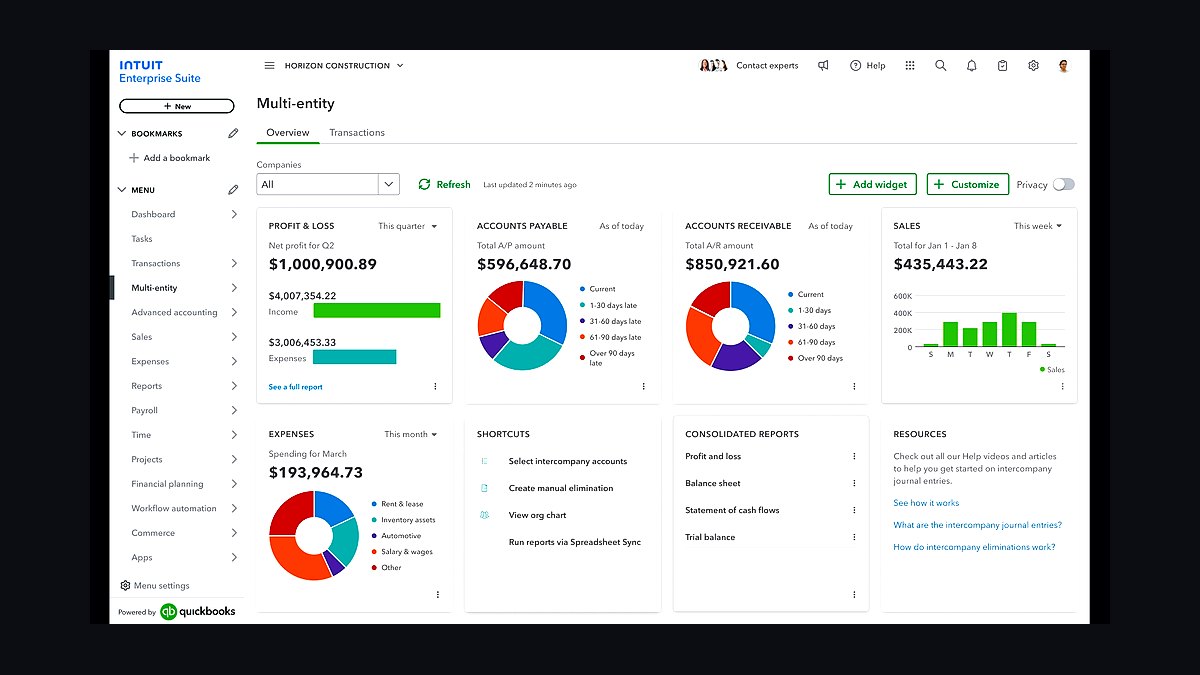
Knowify ranks eighth as the lighter modernization alternative, covering job costing and progress billing without Procore's weight or volume-based pricing. It runs roughly $200–$700 per month, which makes it viable for shops whose mod jobs sit below the $50K threshold and carry few change orders. It handles the core money mechanics competently.
It suits small and mid-size shops moving mods out of service tickets for the first time. It trades away deep submittal management and enterprise integration depth. Against Procore directly above, it is the right call until jobs routinely exceed $50K with multiple change orders.
9Foundation Software
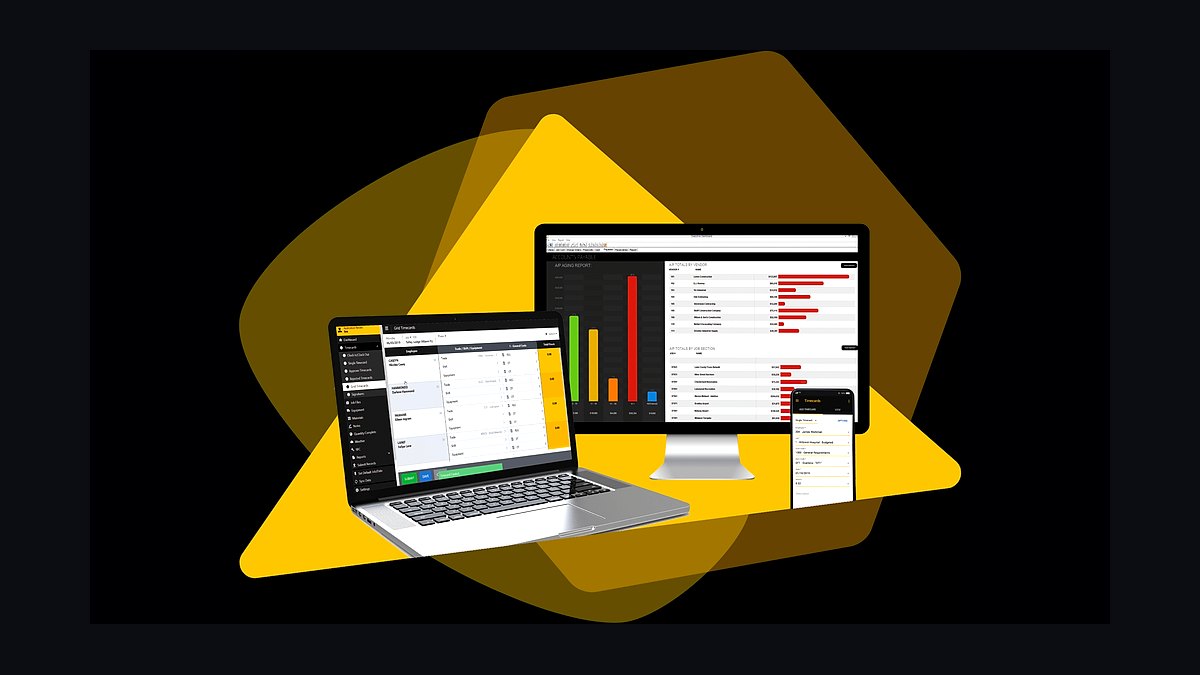
Foundation Software ranks ninth because construction accounting with WIP, retainage, and certified payroll is where modernization margin actually gets measured, and it serves mid-market contractors at roughly $10K–$40K per year. It handles percentage-of-completion revenue recognition that QuickBooks cannot, which matters once six-figure projects become steady. Implementation carries real weight.
It suits contractors whose modernization volume has outgrown a job-cost add-on. It trades away the low cost and familiarity of QuickBooks, and it demands accounting discipline to configure correctly. Against Sage 300 CRE below, it is lighter to implement and aimed at smaller operations.
10Power BI
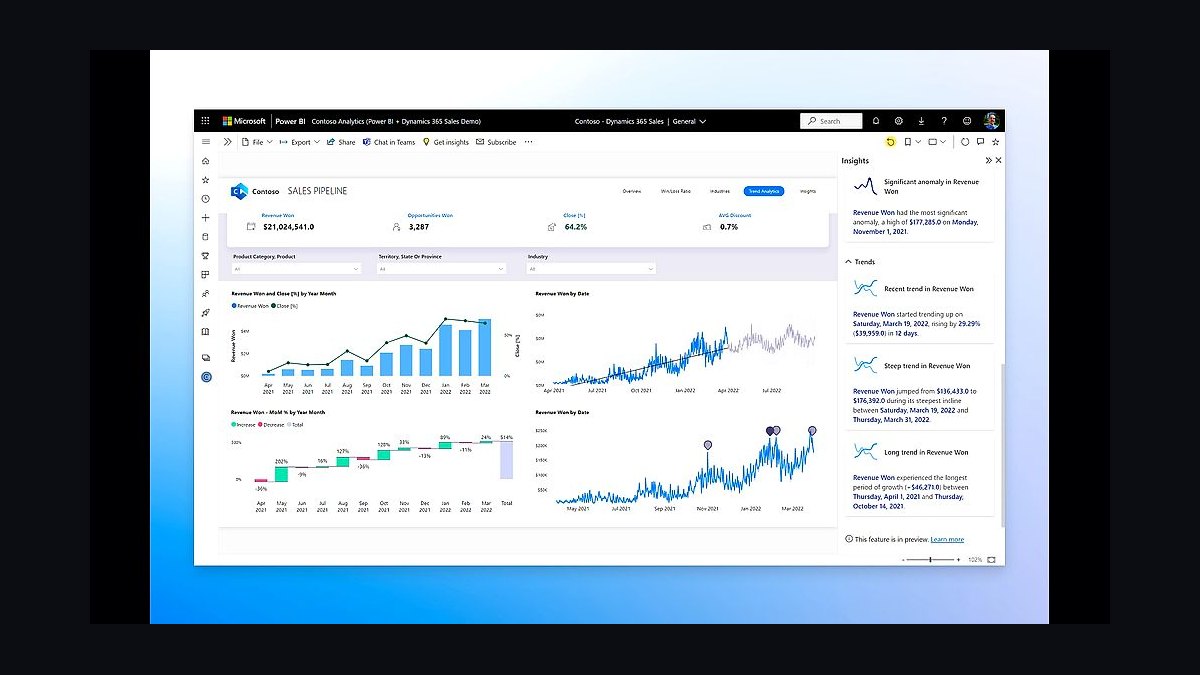
Power BI ranks tenth despite being the cheapest layer, at roughly $10–$20 per user per month, because it is where callback frequency per unit meets contract margin per unit. Ten seats cost $100–$200 monthly, trivial against the rest of the stack. It reads across the hub, project tool, and accounting without writing back.
It suits any operator with clean per-unit data, which is why it sits last in implementation sequence. It trades away nothing except the requirement that underlying records be correct first. Against Foundation Software above, it answers the profitability question rather than recording the transactions.
How we ranked these
We ranked each tool on five weighted criteria: native modeling of a contract-to-location-to-asset hierarchy (30%), inspection and deficiency-to-quote workflow depth (25%), dispatch and entrapment-response capability (20%), service-to-project handoff for modernization (15%), and integration ecosystem plus total cost of ownership (10%). Scores came from vendor documentation, published pricing tiers, and operator-reported implementation timelines.
We deliberately ignored brand recognition, homepage vertical labeling, and demo polish. A product marketing itself as elevator-specific was not credited unless its data model actually stored per-unit controller type, contract escalation clauses, and regulatory test clocks. We also excluded residential-trade pricing comparisons, since Jobber-class tools cannot represent a contracted asset portfolio and including them would distort the ranking.
What to look for
What matters most is whether the platform's primary record is the physical unit or the customer. Elevator margin lives in per-unit callback frequency against contract price, and only a unit-native data model can compute it. Match the anchor to your profit engine: inspection-driven repair conversion points to ServiceTrade, high-volume emergency dispatch points to BuildOps.
The mistake most buyers make is choosing on dispatch board aesthetics or per-seat price, then discovering the deficiency-to-quote loop must be rebuilt in custom fields. The second mistake is buying a standalone dispatch tool, which splits callback history from inspection history and makes the one report that matters uncomputable without a reconciliation project.
Related questions
Should an independent buy OEM connected services or third-party monitoring?
You generally cannot buy OEM connected services for equipment you do not maintain under that OEM's program. Independents servicing mixed fleets use third-party monitoring to instrument older and orphaned controllers, and rely on building owners' existing OEM subscriptions where those exist. The practical rule is to monitor the chronic-callback tail first, not the whole portfolio.
How long does migrating to a service hub actually take?
Plan sixty to ninety days for a portfolio under a thousand units, dominated by asset-record data entry rather than software configuration. Pilot one route for sixty days first. Rushing the per-unit data model is the single most expensive shortcut available, because every downstream report reads from records you failed to populate.
Do I need Procore if modernization is only occasional?
No. Below roughly $50K jobs with few change orders, tracking mods as jobs in the service hub is fine. Move to Knowify or Procore when WIP, retainage, submittals, and long-lead parts start driving margin outcomes rather than just paperwork. The threshold is project complexity, not revenue alone.
What single report should I build first?
Callbacks per unit per year, joined to contract price. It ranks your entire portfolio by profitability and exposes the chronic tail that silently erases maintenance margin. Three callbacks in a month against a $400 contract can wipe out that unit's margin entirely, and the number is invisible if service history is filed by customer.
Can a generic CRM or residential field-service tool work?
No. Jobber, Housecall Pro, and generic CRMs model a customer and a job. They do not model a portfolio of physical assets under contract, each with a controller type, escalation clause, renewal date, and regulatory testing clock. Bolting that on later is a migration, not a configuration change.
How much should a small independent budget for software?
Roughly $1,500 to $4,000 per month all-in for a two-to-eight technician, maintenance-heavy shop: hub, QuickBooks, Power BI, and monitoring on problem units only. Keep the stack deliberately thin. The one thing this shop refuses to leave in spreadsheets is the per-unit asset and inspection record.
Does IoT monitoring pay for itself?
Only if faults create work orders in the hub. A fault that dies in a vendor portal nobody opens is a subscription with no return. Connect the worst fifteen to twenty percent of units by callback count, configure narrow fault-to-work-order rules, and let clean units stay dark until they earn monitoring.
When should modernization move out of the service hub?
When jobs routinely exceed roughly $50K, carry multiple change orders, and depend on long-lead parts. At that point schedule control, percentage-of-completion accounting, and retainage tracking matter more than keeping everything in one system. Running a $200K modernization as service tickets destroys WIP accuracy.
FAQ
What is the best tech stack for an elevator service company in 2027?
Anchor on a commercial service platform where the maintenance contract, physical unit, inspection dossier, and every callback share one asset record: ServiceTrade or BuildOps. Layer IoT monitoring on the chronic-callback tail, a real project tool for modernization, construction accounting with WIP, and Power BI reading across all three.
ServiceTrade or BuildOps for an elevator company?
ServiceTrade leans contract-and-inspection first, with a native deficiency-to-quote loop that maps onto ASME A17.1 annual and five-year testing cycles. BuildOps leans dispatch-and-operations first, better for high-volume entrapment response. Decide from your own data: inspection-driven repair conversion share versus after-hours callbacks per hundred units.
How much does the full stack cost?
A small independent runs roughly $1,500 to $4,000 per month. A mid-size maintenance-plus-modernization shop runs $6,000 to $20,000 per month, driven by project volume and connected-unit count. Large enterprise or OEM-scale operations exceed $50,000 per month, much of it custom integration rather than license fees.
What does IoT monitoring cost per unit?
Per connected unit, commonly $15 to $60 per month. On a 400-unit portfolio, monitoring everything is $6,000 to $24,000 monthly, which is why nobody monitors everything. Rank units by callbacks per year, connect the worst fifteen to twenty percent, and let clean units stay dark.
Why is per-unit callback tracking so important?
A full-maintenance contract is fixed revenue against variable cost, so every callback is a cost with no offsetting invoice. Three callbacks in a month against a $400 contract can erase that unit's margin. Across 400 units, a chronic tail of thirty units is a materially negative drag on the whole book.
What happens if a category 5 five-year test slips?
The unit can be red-tagged out of service, which is a building-owner emergency, a liability exposure, and frequently a contract-canceling event. The fix is per-unit inspection scheduling inside the hub, certificates and deficiency lists attached to the unit record, and compliance rate reported as a standing KPI.
Do I need Salesforce or HubSpot in this stack?
Most small shops do not. The service hub already tracks renewals and escalations. Add CRM only when a dedicated sales team is selling new agreements and modernization bids at volume. HubSpot tiers commonly run $50 to $150 per seat monthly; Salesforce Field Service serves enterprises unifying CRM and service.
How should modernization projects be managed?
As projects with real job costing and percentage-of-completion accounting, not as stacks of work orders. Procore runs roughly $15K to $50K+ per year priced against construction volume; Knowify is the lighter alternate at $200 to $700 monthly. Booking a $200K modernization as service tickets buries change orders and destroys WIP accuracy.
What is the biggest implementation mistake?
Rushing the per-unit asset model. Each unit record needs make, model, controller type, drive type, contract type, monthly price, escalation clause, and renewal date. A record without controller type cannot tell a technician what parts to bring; a contract without an escalation clause silently costs you every year.
Should I buy a separate dispatch product?
No. A standalone dispatch tool fragments the per-unit record: callback history lands in one system, inspection history in another, and callback-frequency-per-unit becomes uncomputable without a reconciliation project. Dispatch belongs inside the service hub, live from day one, with no parallel systems.
Sources
- https://www.servicetrade.com/
- https://www.buildops.com/
- https://www.procore.com/
- https://www.knowify.com/
- https://www.foundationsoft.com/
- https://www.sage.com/en-us/products/sage-300-cre/
- https://www.viewpoint.com/
- https://powerbi.microsoft.com/
- https://www.osha.gov/
Related on PULSE
This page will be disappearing soon. Save it to your device for $1 — or read it free while it is here.
@Kory-White- · if Venmo asks, the last 4 of my number are 2012
This page is gone.
This one is off the shelf now. $1 keeps it on your phone for good — the whole page, pictures and diagrams included.
 pulse-tech-stacksTop 10 Best Tech Stack Tools for Hardware Security Module (HSM) Vendors in 2027
 pulse-tech-stacksTop 10 Best Tech Stack Tools for Hair Salons in 2027
 pulse-tech-stacksTop 10 Best Tech Stack Tools for Tire Shops in 2027
 pulse-tech-stacksTop 10 Best Tech Stack Tools for Vulnerability Management Software Vendors in 2027
 pulse-tech-stacksTop 10 Best Tech Stack Tools for Land Surveying Firms in 2027
 pulse-tech-stacksTop 10 Best Tech Stack Tools for Tree Services in 2027
 pulse-tech-stacksTop 10 Best Tech Stack Tools for Email Security Vendors in 2027
 pulse-tech-stacksTop 10 Best Tech Stack Tools for Appliance Repair Services in 2027
 pulse-tech-stacksTop 10 Best Tech Stack Tools for Bot Mitigation Vendors in 2027
 pulse-tech-stacksTop 10 Best Tech Stack Tools for HOA and Community Association Management Companies in 2027