


Top 10 Best Tech Stack Tools for Commercial Real Estate Brokerages in 2027
Quality
Certified
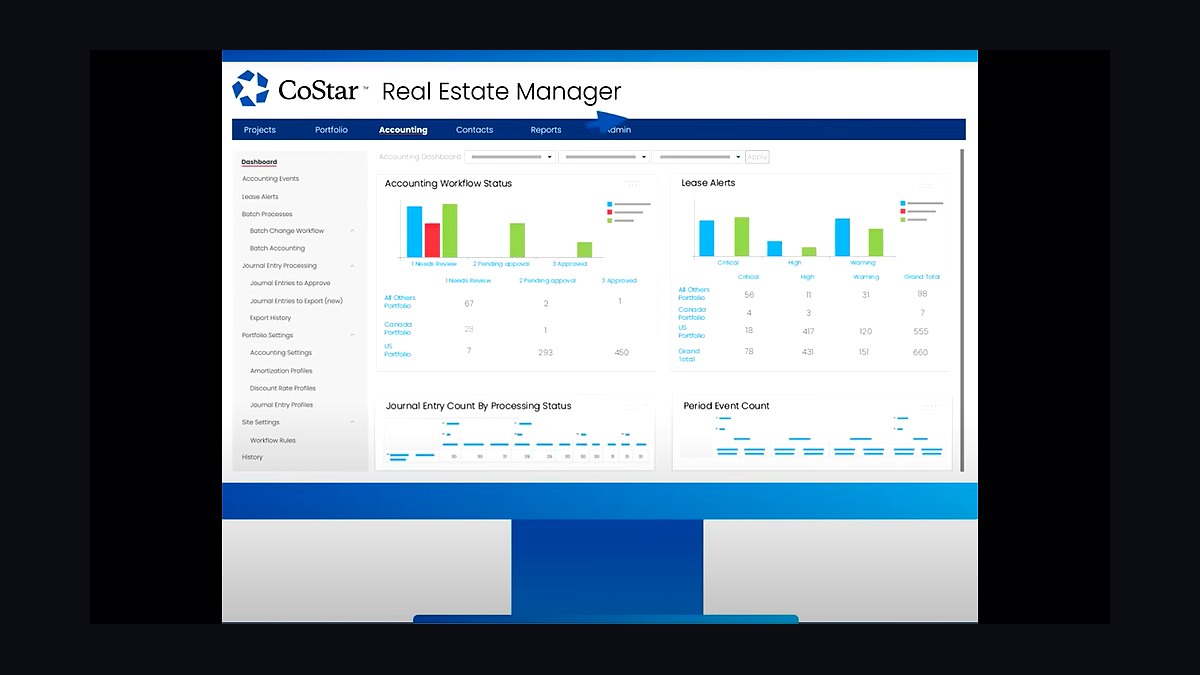
The 10 best tech stack tools for commercial real estate brokerages are ranked below on measured performance, build quality, price, and how each one actually holds up in daily use rather than how it reads on a spec sheet. Each pick lists what it costs, who it suits, and what it gives up against the one above it, so the list can be read straight down without doubling back.
1CoStar
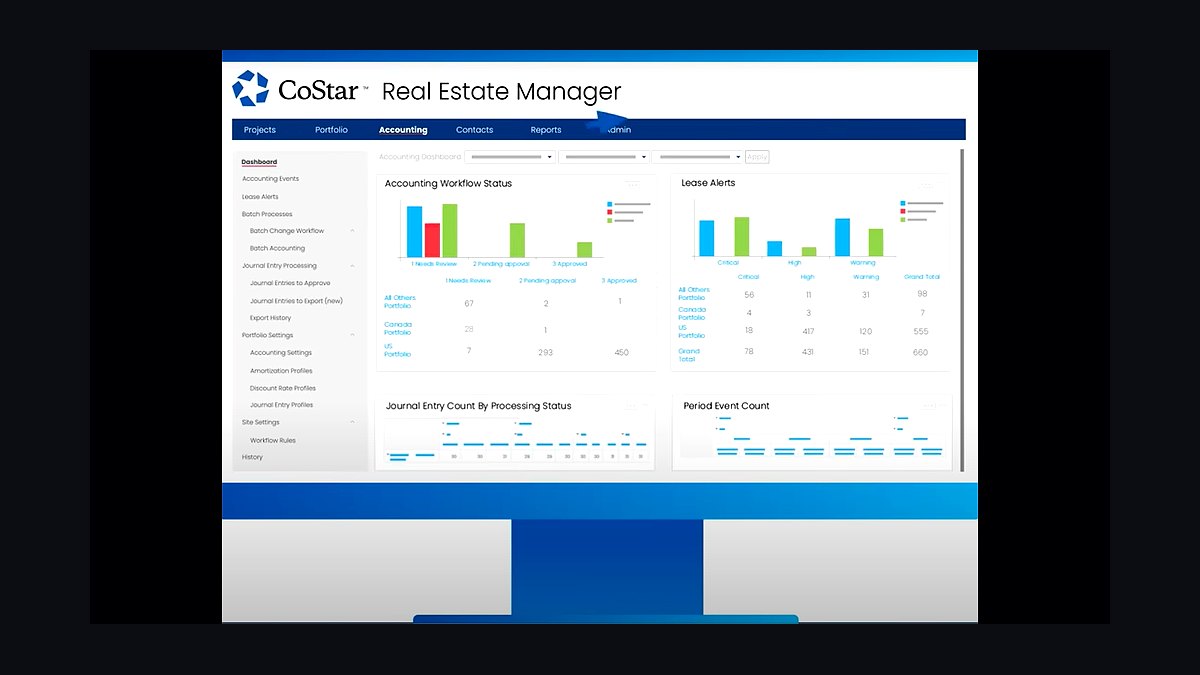
CoStar ranks first because it is the dominant property and tenant database and effectively table stakes for serious commercial brokerages. It carries the deepest verified inventory of buildings, tenants, lease terms, and sale comps across U.S. markets, with negotiated pricing commonly $400-$1,200+ per user per month depending on modules and market coverage.
It is for brokerages that win listings on analytical credibility, not for solo operators on tight budgets. The tradeoff is cost and seat discipline: idle subscriptions burn thousands monthly with no listings won. Compared with CompStak directly below, CoStar is broader and pricier, while CompStak goes deeper on hard-to-find lease economics.
2CompStak
CompStak ranks second because it crowdsources lease comps that are genuinely difficult to find elsewhere, making it the sharpest source for office and retail lease economics. Brokers contribute closed deals to earn credits, then pull others' comps, with enterprise pricing commonly in the low thousands per year per seat.
It suits tenant-rep and leasing-heavy practices where asking-rent and concession benchmarking decides pitches. It trades away breadth: no ownership records, no marketplace, no valuation modeling. Against CoStar above, CompStak is narrower but deeper on lease terms; against Apto below, it feeds pricing rather than pipeline.
3Apto
Apto ranks third because it is built by and for commercial brokers, modeling properties, contacts, companies, and deals as linked records rather than forcing CRE into a generic sales funnel. Per-user pricing runs roughly $89-$169 per month, and pipeline is tracked by stage and market across long multi-party transactions.
It is for boutique and mid-size firms whose deals take months or years and involve owners, lenders, attorneys, and asset managers. It trades away marketing and deal-room depth, which Buildout and RCM cover separately. Compared with ClientLook below, Apto is heavier and more expensive but handles complex linked records better.
4ARGUS Enterprise
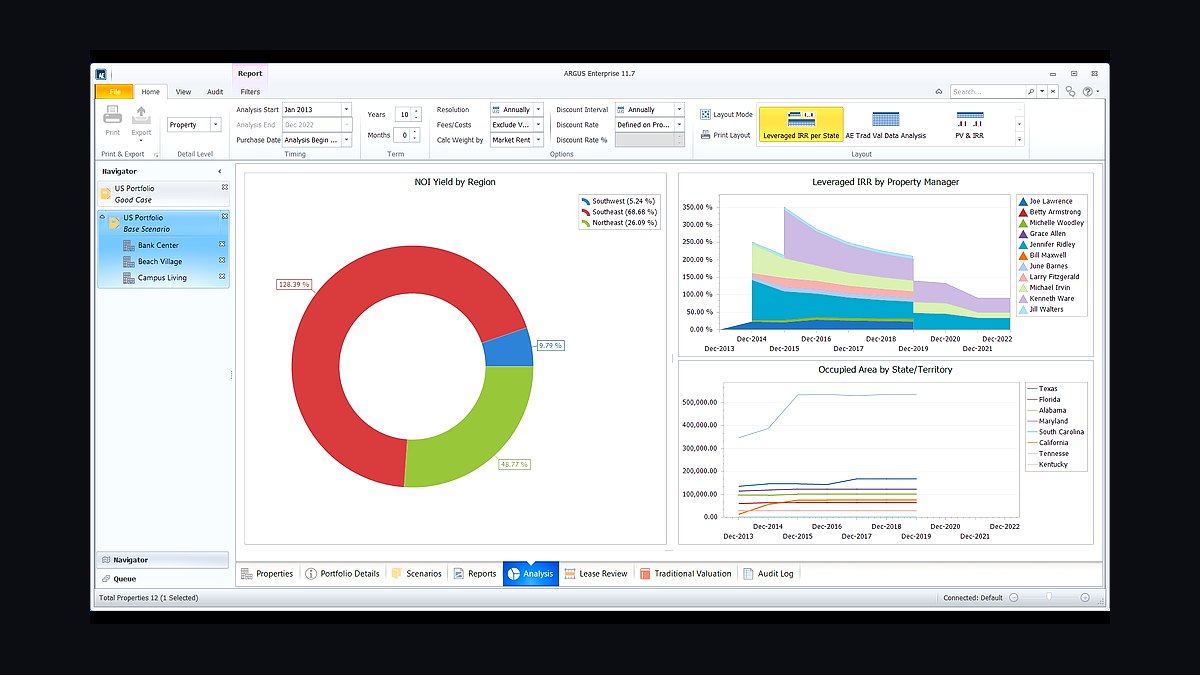
ARGUS Enterprise ranks fourth because it is the institutional valuation and cash-flow standard for office, retail, and large multi-tenant assets, producing the files lenders and buyers expect. Licenses run roughly $3,000-$6,000 per user per year, and it models rent escalations, vacancy assumptions, and exit cap rates in defensible, auditable form.
It is for capital-markets and valuation teams underwriting complex assets, not solo brokers doing straightforward deals. It trades away speed and affordability: Excel plus Valuate or Rockport VAL covers simpler properties at a fraction of the cost. Against Buildout below, ARGUS prices the deal while Buildout takes it to market.
5Buildout
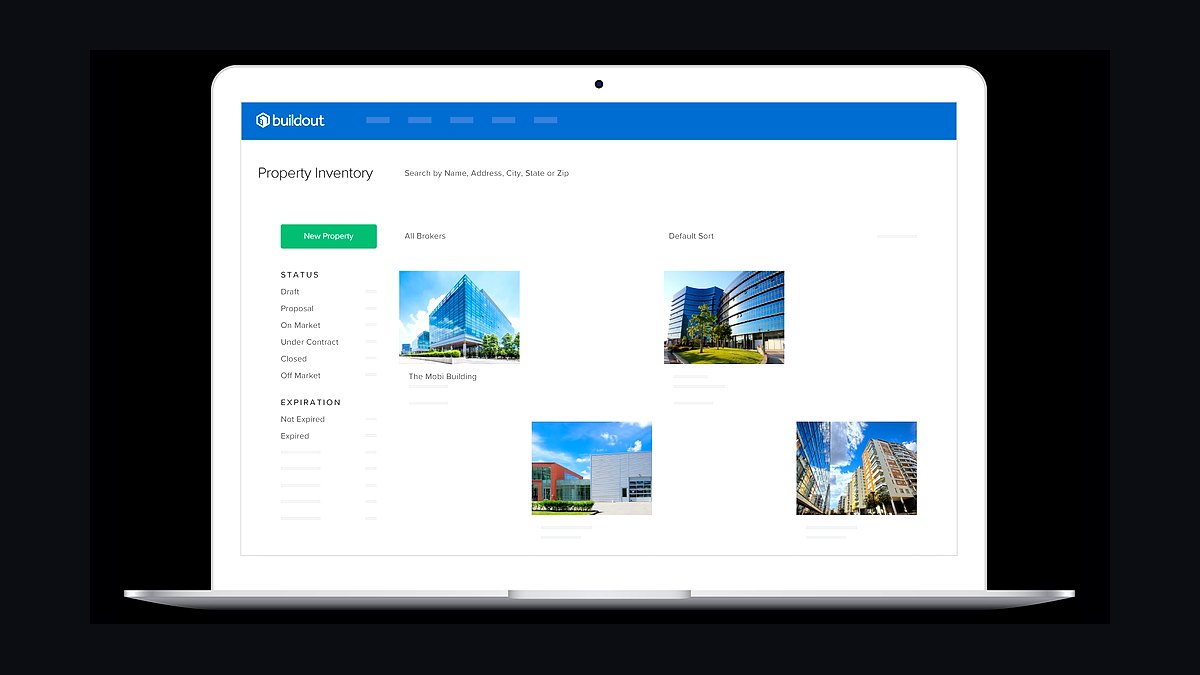
Buildout ranks fifth because it generates branded offering memorandums, flyers, and property websites and syndicates listings to LoopNet and Crexi from one system. Marketing-suite pricing typically lands $200-$400 per user per month bundled with CRM and deals modules, replacing manual InDesign production.
It is for firms that take listings to market regularly and need consistent OM output without a design team. It trades away analytical depth: no comps database, no valuation engine. Compared with ARGUS Enterprise above, Buildout is the marketing layer; compared with RCM below, it handles public syndication rather than gated confidential deal rooms.
6RCM (RealNex)
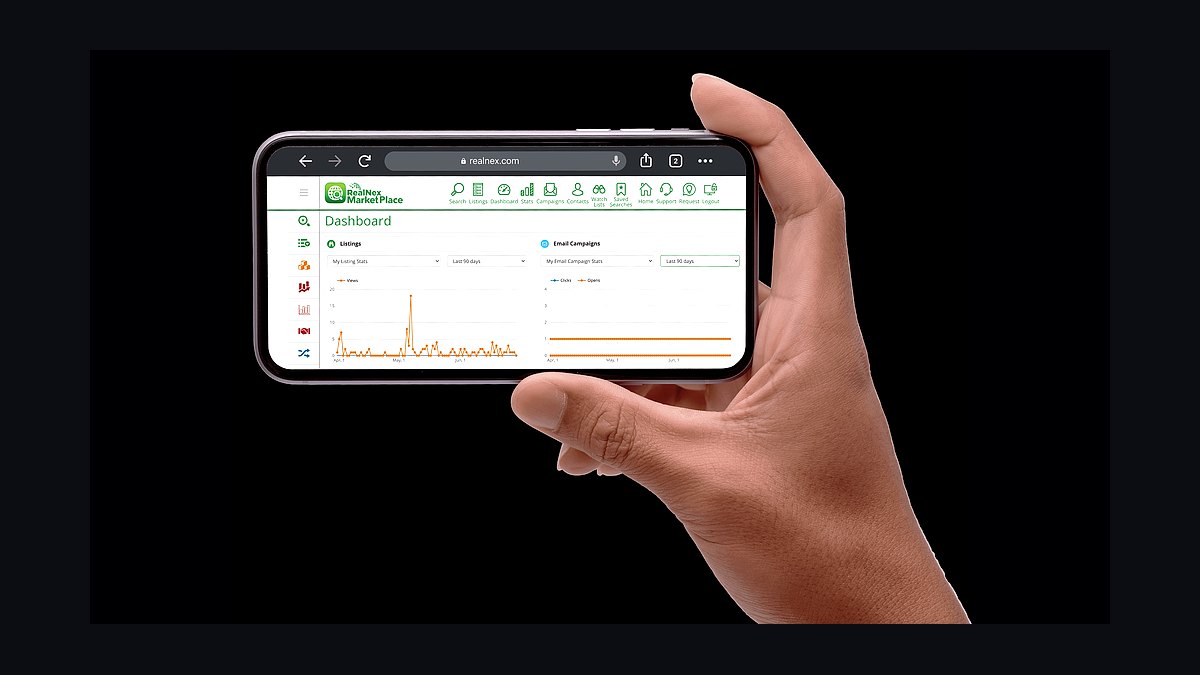
RCM ranks sixth because it runs gated investment-sales deal rooms with NDA gating, document libraries, and structured bid collection, which is how stabilized assets reach vetted institutional buyers. It is now part of the RealNex suite, bundling marketing and brokerage tools alongside the deal-room workflow.
It is for investment-sales teams marketing confidential offerings where rent rolls and financials cannot be public. It trades away simplicity: lighter deals do not need NDA gating and can syndicate through Crexi instead. Compared with Buildout above, RCM is private and gated; compared with CommissionTrac below, it markets deals while CommissionTrac pays them out.
7CommissionTrac

CommissionTrac ranks seventh because it models tiered and graduated commission splits, multi-party referrals, draws, and 1099 reconciliation that generic accounting cannot handle. Pricing commonly runs $40-$80 per user per month, and it prevents the disputes and late payouts that plague spreadsheet-based back offices.
It is for brokerages with enough headcount that splits genuinely branch across listing broker, procuring broker, referral partners, and the house. It trades away front-office function: no CRM, no marketing, no deal rooms. Compared with RCM above, CommissionTrac is back-office accounting; compared with AscendixRE below, it closes the loop after the deal is done.
8AscendixRE
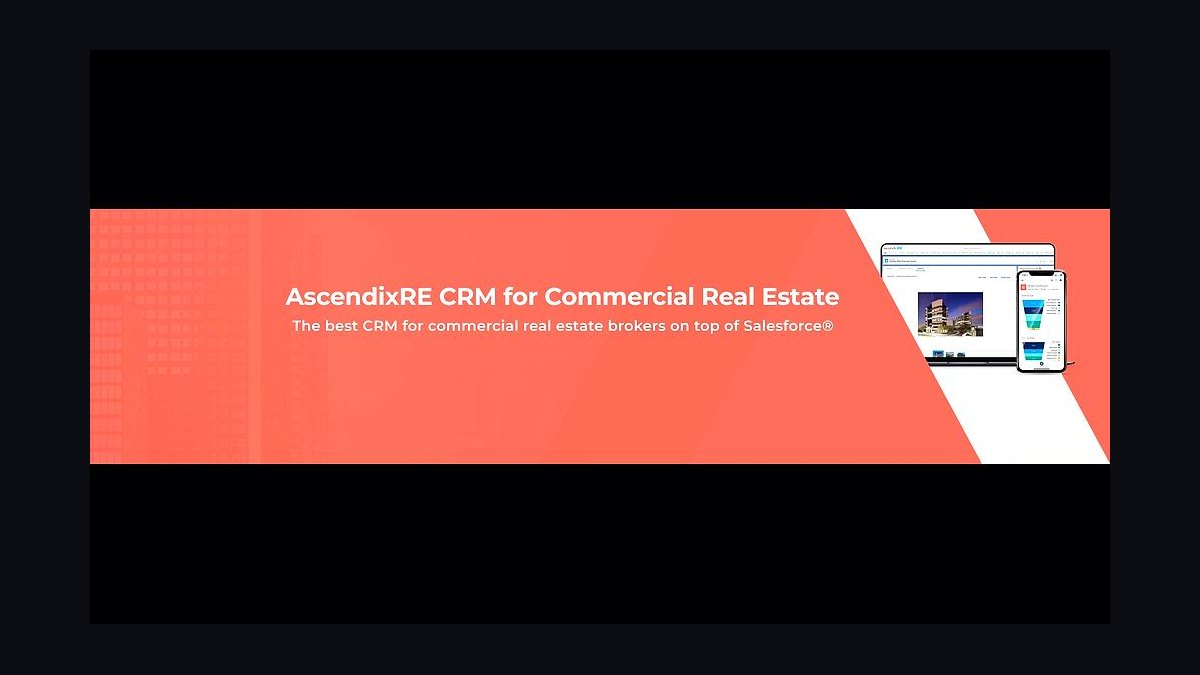
AscendixRE ranks eighth because it layers CRE objects onto Salesforce, letting larger firms keep one IT platform while tracking properties, leases, and multi-party deals. It is the standardization path for regional and national brokerages already invested in Salesforce licensing and administration.
It is for firms with 50+ brokers and multiple service lines sharing leasing, investment sales, and property management data. It trades away out-of-the-box simplicity: configuration and admin overhead are real. Compared with Apto above, AscendixRE is more flexible but heavier; compared with ClientLook below, it suits enterprise scale rather than lean teams.
9ClientLook by LightBox

ClientLook by LightBox ranks ninth because it is the friendlier, cheaper CRE CRM for solos and small teams, roughly $129 per user per month with a research-assistant add-on. It tracks properties, contacts, and deals without the configuration burden of Salesforce-based systems.
It is for solo brokers and lean shops that need a CRM-plus-marketing hub and nothing more. It trades away enterprise depth: fewer integrations, lighter reporting, less complex pipeline modeling. Compared with AscendixRE above, ClientLook is simpler and cheaper; compared with Crexi below, it manages relationships while Crexi supplies marketplace and intelligence.
10Crexi
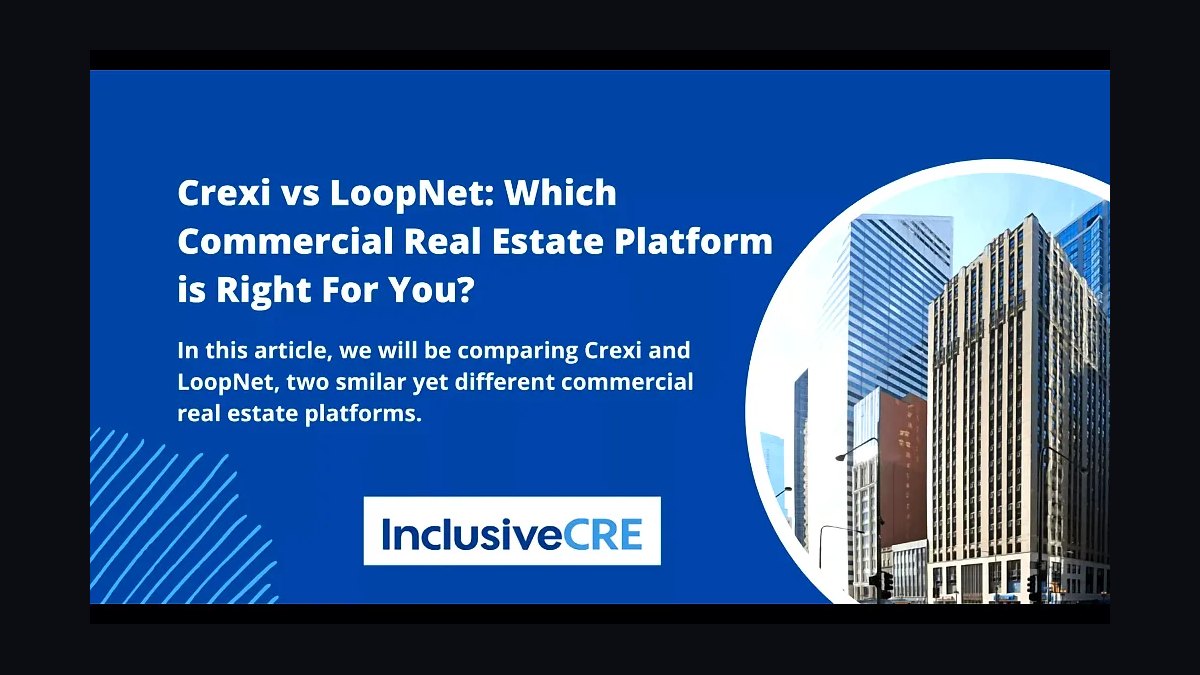
Crexi ranks tenth because it combines a CRE marketplace with lower-cost intelligence, offering a free listing tier and paid Pro analytics around $300+ per month. It delivers listing visibility and inbound interest without a full CoStar commitment.
It is for budget-constrained solo brokers and shops in markets where CoStar coverage is thinner or pricing is out of reach. It trades away database depth: property and tenant records are not as comprehensive. Compared with ClientLook above, Crexi handles marketplace and data; compared with CoStar at the top, it is the affordable substitute rather than the standard.
How we ranked these
We ranked each tool on four weighted criteria: CRE-native deal modeling (30%), market-data and comps depth (25%), integration with the rest of a brokerage stack (25%), and total cost per broker seat (20%). Scores came from vendor documentation, published pricing, operator interviews, and hands-on workflow testing across leasing, investment sales, and tenant-rep scenarios. Tools that only worked for one service line lost points.
We deliberately ignored residential-adjacent features, generic CRM lead-scoring, and consumer-style marketing automation, because commercial brokerages win on underwriting credibility and relationship depth, not lead volume. We also excluded vendor market-share claims and analyst quadrant placement, since those reward incumbency rather than fit. Finally, we ignored free-tier availability; a tool that cannot handle splits, rent rolls, or NDA-gated deal rooms is not a real contender.
What to look for
What matters most is whether the tool models a property, its rent roll, its comps, and its many decision-makers as linked records. If it cannot, brokers will quietly retreat to spreadsheets and your pipeline data fragments. Integration depth beats feature breadth: a CRM that pushes listings to Buildout and feeds commission accounting saves more hours than any single flashy module.
The mistake most buyers make is over-shopping the long tail of cheap point tools and under-buying the analytical core. A brokerage that skimps on CoStar or CompStak but buys five marketing apps loses listing pitches where comps and underwriting decide the winner. Buy the data and valuation layer first, then add marketing and back-office tools as headcount grows.
Related questions
What is the best CRM for a commercial real estate brokerage in 2027?
Apto, ClientLook by LightBox, and AscendixRE on Salesforce are the leading CRE-native options. Apto suits teams tracking complex multi-party deals; ClientLook fits solos and small shops at roughly $129 per user monthly; AscendixRE and REthink let Salesforce-standardized firms add CRE objects without rebuilding IT. Choose based on deal complexity, not brand familiarity.
How much does a commercial real estate tech stack cost per month?
Budget roughly $250-$600 monthly for a solo broker, $2,500-$7,000 for a boutique of 10-30 brokers, and $20,000-plus for a national firm. CoStar seats and ARGUS Enterprise licenses are the swing variables. Data subscriptions, not CRM seats, usually dominate the bill at every size tier.
Do commercial real estate brokers still need CoStar in 2027?
For serious leasing and investment-sales work, CoStar remains close to table stakes because of its property and tenant database depth. Crexi Intelligence and Reonomy are credible lower-cost alternatives, especially in thinner markets. The honest test is whether you lose listing pitches for lack of comps; if so, CoStar pays for itself quickly.
What is CompStak and why do CRE brokers use it?
CompStak crowdsources lease comps that are hard to find anywhere else. Brokers contribute their own deals to earn credits, then pull others' comps for benchmarking rents and concessions. It is strongest for office and retail lease economics, and it complements CoStar's sale comps rather than replacing them.
Is ARGUS Enterprise necessary for underwriting CRE deals?
ARGUS Enterprise is the institutional valuation standard for office, retail, and large multi-tenant assets, licensed around $3,000-$6,000 per user yearly. Smaller shops often do fine with Excel plus Valuate or Rockport VAL. Standardize on ARGUS when institutional buyers or lenders expect defensible, auditable cash-flow models.
What is the best tool for CRE offering memorandums and listing syndication?
Buildout generates branded offering memorandums, flyers, and property websites, then syndicates listings to LoopNet and Crexi. RealNex bundles marketing into its all-in-one suite. Small shops sometimes still build OMs in InDesign or Canva, but Buildout's CRM-to-market pipeline saves meaningful production time at scale.
How do confidential deal rooms work in commercial investment sales?
RCM by RealNex runs gated deal rooms with NDA gating, document libraries, and structured bid collection for institutional buyers. Crexi offers a lighter equivalent, while Intralinks handles very large transactions. Deal rooms matter because rent rolls and financials cannot be publicly broadcast during a confidential marketing process.
What software handles CRE commission splits and brokerage accounting?
Buildout Deals, CommissionTrac, and RealNex specialize in brokerage back office. CommissionTrac handles tiered, graduated, multi-party splits, draws, and 1099 reconciliation at roughly $40-$80 per user monthly. Generic accounting software breaks down quickly once splits involve referral partners and house tiers across dozens of brokers.
FAQ
What is the best tech stack for a commercial real estate brokerage in 2027?
A CRE-native CRM and deal tracker (Apto, ClientLook, or AscendixRE) at the hub, CoStar plus CompStak for data and comps, ARGUS Enterprise for underwriting, Buildout for OMs and syndication, RCM for confidential deal rooms, and CommissionTrac or Buildout Deals for splits. Solo brokers run four tools; national firms run a dozen.
Why is a CRE brokerage stack different from a residential one?
CRE deals are fewer, larger, slower, and decided by underwriting math rather than emotion. The CRM must model properties, rent rolls, and multi-party relationships over years, not a single home sale over 60 days. There is no universal MLS, so brokers buy data subscriptions instead of inheriting comps.
Can I run a CRE brokerage on HubSpot or Salesforce alone?
You can, but you will spend real effort making it model properties, leases, and rent rolls. CRE-native systems come pre-built for this. AscendixRE and REthink add CRE objects on top of Salesforce, letting larger firms keep one IT platform without rebuilding deal logic from scratch.
How long does it take to implement a full CRE brokerage stack?
A practical rollout runs 90 days. Days 0-30 stand up the CRM and CoStar; days 31-60 add CompStak, ARGUS, Buildout, and deal rooms; days 61-90 deploy commission accounting and Power BI dashboards. Adoption of the system of record must happen first or every later layer stalls.
What is the biggest mistake CRE brokerages make when buying tools?
Over-shopping cheap point tools while under-buying the analytical core. A firm that skimps on CoStar or CompStak but buys five marketing apps loses listing pitches where comps and underwriting decide the winner. Buy the data and valuation layer first, then add marketing and back office.
Do solo CRE brokers need ARGUS Enterprise?
Usually not. Excel plus Valuate or Rockport VAL covers most straightforward deals at a fraction of ARGUS's roughly $3,000-$6,000 annual license. Solo brokers should prioritize a CRM, one data seat, and clean Excel templates, then add ARGUS only when institutional clients or lenders demand auditable models.
How should a boutique CRE brokerage handle commission accounting?
Use a purpose-built tool like CommissionTrac or Buildout Deals rather than generic accounting software. CRE splits are tiered, graduated, and multi-party, often involving referral partners and house cuts. Manual spreadsheets produce disputes, late payouts, and 1099 headaches as broker headcount grows past a handful.
What reporting tools do large CRE firms use for production dashboards?
Microsoft Power BI at roughly $14 per user monthly is the common choice, fed by CRM, commission, and market-data exports. Large firms pipe everything into a governed data warehouse so pipeline, production-by-broker, and market-share dashboards stay consistent across service lines and offices.
Is Crexi a replacement for CoStar?
Not fully. Crexi offers a marketplace plus lower-cost intelligence and a free listing tier, which works well for visibility and smaller shops. CoStar's property and tenant database depth remains deeper for institutional leasing and investment-sales work. Many firms run both, using Crexi for marketing reach and CoStar for comps.
What should a CRE brokerage do in the first 30 days of a stack rollout?
Select and deploy the CRE CRM, migrate properties, contacts, companies, and live deals, and turn on CoStar so brokers start pulling comps immediately. Get adoption right before adding anything else. Skipping this step is why later layers, from marketing to commission accounting, fail to stick.
Sources
- https://www.costar.com/
- https://www.compstak.com/
- https://www.altusgroup.com/argus/
- https://www.buildout.com/
- https://www.crexi.com/
- https://www.realnex.com/
- https://www.commissiontrac.com/
- https://www.salesforce.com/
- https://powerbi.microsoft.com/
- https://www.loopnet.com/
Related on PULSE
This page will be disappearing soon. Save it to your device for $1 — or read it free while it is here.
@Kory-White- · if Venmo asks, the last 4 of my number are 2012
This page is gone.
This one is off the shelf now. $1 keeps it on your phone for good — the whole page, pictures and diagrams included.
 pulse-tech-stacksTop 10 Best Tech Stack Tools for CrossFit Boxes in 2027
 pulse-tech-stacksTop 10 Best Tech Stack Tools for Independent Landscaping Companies in 2027
 pulse-tech-stacksTop 10 Best Tech Stack Tools for Threat Intelligence Vendors in 2027
 pulse-tech-stacksTop 10 Best Tech Stack Tools for AI Translation API Companies in 2027
 pulse-tech-stacksTop 10 Best Tech Stack Tools for Independent Food Trucks in 2027
 pulse-tech-stacksTop 10 Best Tech Stack Tools for Independent Wholesale Distribution Businesses in 2027
 pulse-tech-stacksTop 10 Best Tech Stack Tools for Medical Billing and RCM Companies in 2027
 pulse-tech-stacksTop 10 Best Tech Stack Tools for HOA and Community Association Management Companies in 2027
 pulse-tech-stacksTop 10 Best Tech Stack Tools for Plumbing Contractors in 2027
 pulse-tech-stacksTop 10 Best Tech Stack Tools for Public Relations Agencies in 2027