


Top 10 Best Tech Stack Tools for Commercial Landscaping and Grounds Maintenance Companies in 2027
Quality
Certified
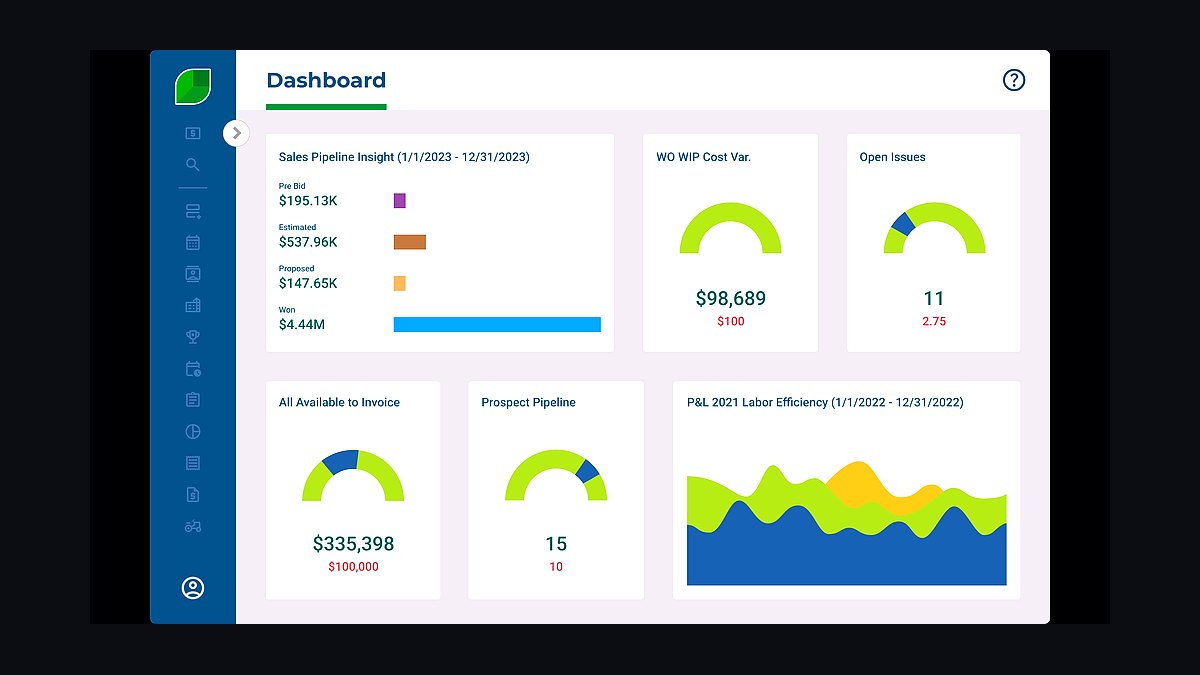
The 10 best tech stack tools for commercial landscaping and grounds maintenance companies are ranked below on measured performance, build quality, price, and how each one actually holds up in daily use rather than how it reads on a spec sheet. Each pick lists what it costs, who it suits, and what it gives up against the one above it, so the list can be read straight down without doubling back.
1Aspire Software

Aspire ranks first because it is the only grounds-focused ERP that owns the entire contract-to-margin loop in one system: estimating, scheduling, mobile time, purchasing, and per-property job costing. ServiceTitan acquired Aspire in 2024, and the platform is the category default for commercial grounds operations above roughly $2–3M in revenue. Implementation commonly lands in the five-figure range, with per-seat monthly fees pushing mid-size companies into the low thousands monthly all-in.
Aspire is built for multi-crew, multi-branch commercial contractors who need budgeted hours per property compared against GPS-verified actual hours while the season is still running. It trades away cheapness and fast setup — data cleanup and configuration take real months. Compared with LMN directly below, Aspire costs meaningfully more but is the only one of the two that closes the estimate-to-timecard join natively.
2LMN Software

LMN ranks second as the strongest lower-cost alternative to Aspire, with estimating and budgeting tools that convert measured quantities into labor-hour budgets and carry them into the contract record. It is the common choice for operators under roughly $2–3M in revenue or about three crews, where a full ERP implementation cannot yet be justified. Pricing is quote-based and typically well below the five-figure implementation range of enterprise grounds ERPs.
LMN suits small commercial crews that need accurate estimates and basic job costing without enterprise overhead. It trades away deep multi-branch dimensional reporting and some of the purchasing and fleet depth Aspire carries. Against Aspire above, LMN wins on cost and speed to live but loses on the contract-to-labor-to-margin integration at scale.
3SiteRecon

SiteRecon ranks third because verified aerial measurement is the layer that makes every downstream hour budget defensible, and SiteRecon is one of the two names commercial operators actually use. It produces turf square footage, bed linear footage, hardscape area, and snow-zone measurements, and doubles as a site-audit map layer with photos attached. Pricing scales from the low hundreds monthly for basic volume into four figures for verified-measurement tiers and high site counts.
SiteRecon is for operators bidding large commercial portfolios where a drive-by estimate produces inconsistent numbers. It trades away nothing operationally — it feeds clean quantities into the ERP rather than replacing it. Against Go iLawn below, SiteRecon adds verified measurements and audit mapping at a higher price point; Go iLawn is the established lower-cost alternative.
4Go iLawn

Go iLawn ranks fourth as the established lower-cost aerial measurement and takeoff tool that commercial grounds operators have used for years. It delivers property measurements for turf, beds, and hardscape that convert into production-rate-based hour budgets, and it is the common entry point for companies not yet ready to pay verified-measurement tier pricing. Basic measurement volume typically runs in the low hundreds per month.
Go iLawn is for small and mid-size operators who need defensible square footage without the audit-map depth of a verified platform. It trades away the verification rigor and site-audit layering that SiteRecon above provides. Against SiteRecon, Go iLawn wins on price and familiarity but gives up measurement verification, which matters most on large multi-site bids where a mis-bid costs a season of margin.
5Samsara

Samsara ranks fifth because fleet telematics is the layer that enriches job costing with drive-time and proof-of-arrival data, and Samsara leads for mixed truck-and-equipment fleets. Typical pricing runs roughly $25–45 per vehicle per month plus hardware, usually on multi-year terms. Value shows up in three places: drive-time reduction from route analysis, fuel and idle management, and GPS proof-of-arrival documentation.
Samsara is for operators running enough trucks and equipment that route density and arrival proof move margin measurably, especially during snow season when liability defense depends on time-stamped arrival records. It trades away simplicity and adds multi-year hardware commitments. Against Azuga and Verizon Connect as common alternates, Samsara wins on mixed-fleet depth but costs more and locks operators into longer terms.
6Aspire Snow

Aspire Snow ranks sixth because it keeps the snow and ice workflow inside the same ERP that owns contracts and billing, so snow profitability stays comparable to grounds profitability. It handles weather-triggered dispatch, per-push and per-event billing models, and event booking back into the contract record. It is the right answer when snow is under roughly a quarter of revenue and integration matters more than dispatch sophistication.
Aspire Snow is for existing Aspire customers in northern markets who want one financial spine across both service lines. It trades away the dispatch depth of dedicated snow platforms with subcontractor networks and multiple simultaneous billing models. Against HindSite below, Aspire Snow wins on billing integration but loses on standalone snow-operations sophistication for shops where snow is a genuine second business.
7HindSite Software

HindSite ranks seventh as the dedicated snow and ice dispatch platform for operators where snow is a real second business, not a bolt-on to the mowing schedule. It supports subcontractor networks, multiple billing models running simultaneously — per-push, per-event, per-inch tier, and seasonal — and heavy liability documentation. Budget runs from a few hundred to well over a thousand per month depending on event volume and dispatch zones.
HindSite is for snow-heavy operators who accept the integration work of booking events back into the ERP for billing in exchange for dispatch depth the ERP cannot match. It trades away the single-system simplicity Aspire Snow above provides. Against Aspire Snow, HindSite wins on subcontractor and multi-model billing sophistication but requires a parallel system of record for snow events.
8busybusy

busybusy ranks eighth as the standalone mobile time-tracking option for operators not yet on a grounds ERP, commonly priced around $8–12 per user per month. The non-negotiable requirement it meets is clock-in against a work ticket tied to a property rather than a generic shift-start button, which is what makes hours attributable to a contract. GPS stamps confirm crew location at clock-in.
busybusy is for small and mid-size crews running LMN or spreadsheets who need property-tied time before committing to an ERP. It trades away the native integration that makes an ERP's own mobile app worth more than any standalone feature advantage. Against ClockShark as the other common alternate, busybusy is comparable in price and function; both lose to an ERP-native app once the operator is on Aspire.
9HubSpot

HubSpot ranks ninth as the B2B CRM layer for operators running a genuine outbound motion — chasing office-park portfolios, retail chains, and municipal bids — rather than relying solely on the ERP's native CRM. It manages renewal dates, escalation clauses, and enhancement pipeline so recurring revenue decay is visible instead of silent. Cost is a meaningful monthly step up and only pays for itself with salespeople whose pipeline needs managing.
HubSpot is for commercial grounds companies with dedicated business development staff and a multi-year contract book to defend. It trades away the tight contract-record integration that an ERP-native CRM provides, creating a second system of record for pipeline. Against Salesforce as the enterprise alternate, HubSpot wins on speed to implement and lower administrative overhead.
10Sage Intacct

Sage Intacct ranks tenth as the multi-entity accounting layer for commercial grounds companies needing dimensional reporting by branch, service line, and property — the reporting QuickBooks cannot produce. It is the accounting choice for operators above roughly $30M or running multiple legal entities across branches, where branch margin comparability is the point of centralizing. The hard requirement is that the grounds ERP syncs cleanly, or the operator buys a monthly reconciliation job.
Sage Intacct is for multi-branch operators who need to compare branch profitability on identical books. It trades away the low cost and familiarity of QuickBooks, which remains the right answer for smaller operators. Against QuickBooks below it in scale, Sage Intacct wins on dimensional reporting but costs more and demands real accounting configuration before go-live.
How we ranked these
We ranked tools by how directly each one closes the contract-to-margin loop: whether measurement feeds estimating, estimates become contracts, contracts schedule crews, and actual field hours post back to the same property record. Weighting favored per-property job costing, mobile clock-in tied to work tickets, snow and ice billing flexibility, and clean accounting sync. Pricing transparency, implementation burden, and field adoption difficulty were scored as secondary factors.
We deliberately ignored feature-list length, brand recognition, and vendor size. A tool with forty features that never joins estimate hours to actual hours is worth less than a narrow tool that does. We also excluded generic field-service platforms with no grounds-specific production rates, and we discounted standalone GPS products that cannot feed job costing. Marketing claims about AI and automation were ignored unless they map to a measurable margin lever.
What to look for
What matters most is whether the estimate's labor-hour budget survives into the contract and gets compared against GPS-verified field hours weekly. Second is snow handling: per-push, per-event, per-inch, and seasonal billing models must coexist inside the same financial spine as mowing contracts. Third is implementation timing, because going live mid-season produces dirty data in the system you bought for clean data.
The mistake most buyers make is shopping by feature checklist instead of testing the joins. They compare scheduling screens and mobile apps while never asking the vendor to demonstrate, live, that a bid's production rates become a contract's hour budget and then a variance report. The second common mistake is buying integration promises rather than verified syncs, then discovering someone reconciles QuickBooks by hand every month.
Related questions
Why does per-property job costing matter more than scheduling features?
Scheduling keeps crews moving; job costing tells you whether those crews are making money on each contract. Without hours posting to a specific property and contract, unprofitable accounts renew silently for years. A flat monthly invoice hides overruns until year-end, when the account is already re-signed. Costing every hour to a job surfaces variance by week six instead.
Do I need a separate snow and ice platform if I already run a grounds ERP?
Only if snow is a genuine second business. Under roughly a quarter of revenue, keep snow inside the ERP so events book straight into billing and job costing. Above that, with subcontractor networks and multiple billing models running at once, a dedicated dispatch tool earns its cost and you accept integration work to push events back for invoicing.
How accurate is aerial measurement for commercial property takeoffs?
Verified aerial measurement is accurate enough to build defensible hour budgets for turf, beds, hardscape, and snow zones. The value is not precision for its own sake; it is having a quantity baseline that job costing can measure actual hours against. Without it, variance analysis has nothing trustworthy to compare, and bids stay inconsistent from estimator to estimator.
What is the minimum viable stack for a company under $2M in revenue?
A grounds management platform for estimating and scheduling, an aerial measurement tool, mobile time tracking tied to properties, QuickBooks, and basic vehicle GPS. Spend lands in the high hundreds to low thousands monthly. The goal at this size is accurate estimates and basic per-property costing, not integration elegance or enterprise reporting.
When should we migrate to a new ERP without wrecking the season?
Pick the trough in your own revenue curve, not the calendar. Northern operators prefer winter, except snow-heavy shops where winter is the busy season, pushing them to late spring or midsummer. Never go live mid-season while crew leaders work twelve-hour days; training during peak produces adoption failure and dirty data in the exact system you bought for clean data.
How do we prove snow service happened if a slip-and-fall claim arrives?
You need three artifacts joined: a professional third-party weather record showing the event and timing, GPS proof the truck arrived on the property, and time-stamped service documentation tied to that site. Retain all of it for your state's full statute-of-limitations window. A recurring mowing schedule cannot produce this, which is why snow needs its own operational workflow.
Should we run HubSpot or Salesforce alongside the ERP's native CRM?
Only if you have salespeople whose pipeline genuinely needs managing. The ERP's native CRM handles renewals, escalation clauses, and existing-account proposals fine. A dedicated B2B CRM pays off when you are chasing office-park portfolios, retail chains, and municipal bids with real outbound motion. Otherwise it is a meaningful monthly cost with no attached revenue.
What integration test should we run before signing any contract?
Ask for a live demo of the exact sync you need, using your chart of accounts structure, not a canned dataset. Then ask reference customers what reconciles automatically and what someone touches by hand monthly. The phrase integrates with QuickBooks spans real bidirectional sync to a CSV export, and the difference shows up as a recurring reconciliation job you did not budget for.
FAQ
What is the best tech stack for a commercial landscaping company in 2027?
A grounds-focused ERP owns contracts, estimating, scheduling, mobile time, and per-property job costing. Around it: aerial measurement for takeoffs, GPS fleet telematics, a separate weather-triggered snow workflow, and a B2B CRM for property managers. Accounting sits underneath with a verified sync. The defining requirement is that estimate hours and field hours land in the same table.
How much should a mid-size grounds company budget for software monthly?
A $5M to $30M multi-crew operator commonly spends low-to-mid thousands per month all-in, occasionally higher with a large fleet. That covers ERP seats, aerial measurement, mobile time, telematics across the fleet, snow tooling with a weather feed, and accounting. Implementation is separate and typically five figures, which is cheap next to the labor of cleaning property and contract data.
Can we run the business on QuickBooks alone?
No. Accounting tracks money in and out; it cannot tie labor hours to a specific property and contract. Operators who run this way learn which accounts are unprofitable only at year-end, after re-signing them. Adopting per-property job costing routinely surfaces a meaningful slice of the contract book running at or below break-even, quietly renewing for years.
Why is bidding by windshield so expensive?
Estimating large commercial properties from a drive-by produces wildly inconsistent bids. Some lose money, some are priced too high to win, and neither outcome is visible until much later. Worse, without a measurement-derived hour baseline, job costing has nothing trustworthy to measure against. You cannot have variance analysis without a defensible budget.
How do we get crew leaders to actually clock in against the right ticket?
Treat it as a field-behavior problem, not a software problem. Name a crew-leader champion per branch, make clock-in accuracy visible on a weekly report, and do not turn on job-costing dashboards until adoption is genuinely above 90%. Reporting on bad data destroys executive trust in the entire system, which is harder to recover than a delayed rollout.
Is fleet telematics worth it if we already track time on phones?
Yes, because they answer different questions. Clock-in tells you which crew member worked which service line. Telematics tells you drive time between stops, idle behavior, and proof of arrival, which matters disproportionately during snow events and liability claims. Route density, measured as properties serviced per crew drive-day, is the shortest path to margin.
What does enhancement attach rate have to do with software?
Enhancement work, meaning mulch, seasonal color, irrigation repair, and tree work, is the highest-margin revenue in the business, and it goes untracked unless someone owns attach rate as a number. Report it per account manager, per branch, monthly. Renewal dates and escalation clauses belong in the CRM so recurring revenue does not silently decay while wages rise.
How long does an ERP implementation realistically take?
A workable sequence runs about two months to first value: stand up the ERP, import active contracts, properties, and visit schedules, connect accounting, and establish production rates so estimating has a real hour baseline. Then roll mobile time to crew leaders and add measurement. Full standardization across branches takes longer and should be treated as an ongoing discipline.
Do we need custom BI dashboards on top of the ERP?
Not initially. ERP-native dashboards handle contract profitability, route efficiency, and enhancement attach rate well for most operators. Custom BI becomes worthwhile at multi-branch scale, or when you must blend ERP data with fleet telematics detail, weather-event records, or payroll burden by branch. The trap is building custom BI early as a substitute for cleaning up your data.
What is the single biggest cause of stack failure?
Field adoption, not product selection. The most expensive failure is choosing correctly and having crew leaders clock in against the wrong ticket, or not at all. Data quality in this business is a field-behavior problem. Name a champion per branch, make accuracy visible weekly, and delay job-costing dashboards until adoption is genuinely above 90%.
Sources
- https://www.servicetitan.com/
- https://www.samsara.com/
- https://www.siteone.com/
- https://www.hubspot.com/
- https://quickbooks.intuit.com/
- https://www.sage.com/en-us/products/sage-intacct/
- https://www.dtn.com/
- https://www.weatherworksinc.com/
- https://www.golawn.com/
- https://www.busybusy.com/
Related on PULSE
This page will be disappearing soon. Save it to your device for $1 — or read it free while it is here.
@Kory-White- · if Venmo asks, the last 4 of my number are 2012
This page is gone.
This one is off the shelf now. $1 keeps it on your phone for good — the whole page, pictures and diagrams included.
 pulse-tech-stacksTop 10 Best Tech Stack Tools for Fine-Tuning Platform Companies in 2027
 pulse-tech-stacksTop 10 Best Tech Stack Tools for CrossFit Boxes in 2027
 pulse-tech-stacksTop 10 Best Tech Stack Tools for Commercial HVAC Contractors in 2027
 pulse-tech-stacksTop 10 Best Tech Stack Tools for HVAC Equipment Distributors in 2027
 pulse-tech-stacksTop 10 Best Tech Stack Tools for Independent Food Trucks in 2027
 pulse-tech-stacksTop 10 Best Tech Stack Tools for B2B SaaS Companies in 2027
 pulse-tech-stacksTop 10 Best Tech Stack Tools for AI Translation API Companies in 2027
 pulse-tech-stacksTop 10 Best Tech Stack Tools for Staffing Agencies in 2027
 pulse-tech-stacksTop 10 Best Tech Stack Tools for Tire Shops in 2027
 pulse-tech-stacksTop 10 Best Tech Stack Tools for Appliance Repair Services in 2027