


Top 10 Best Tech Stack Tools for Independent Hardware Stores in 2027
Quality
Certified
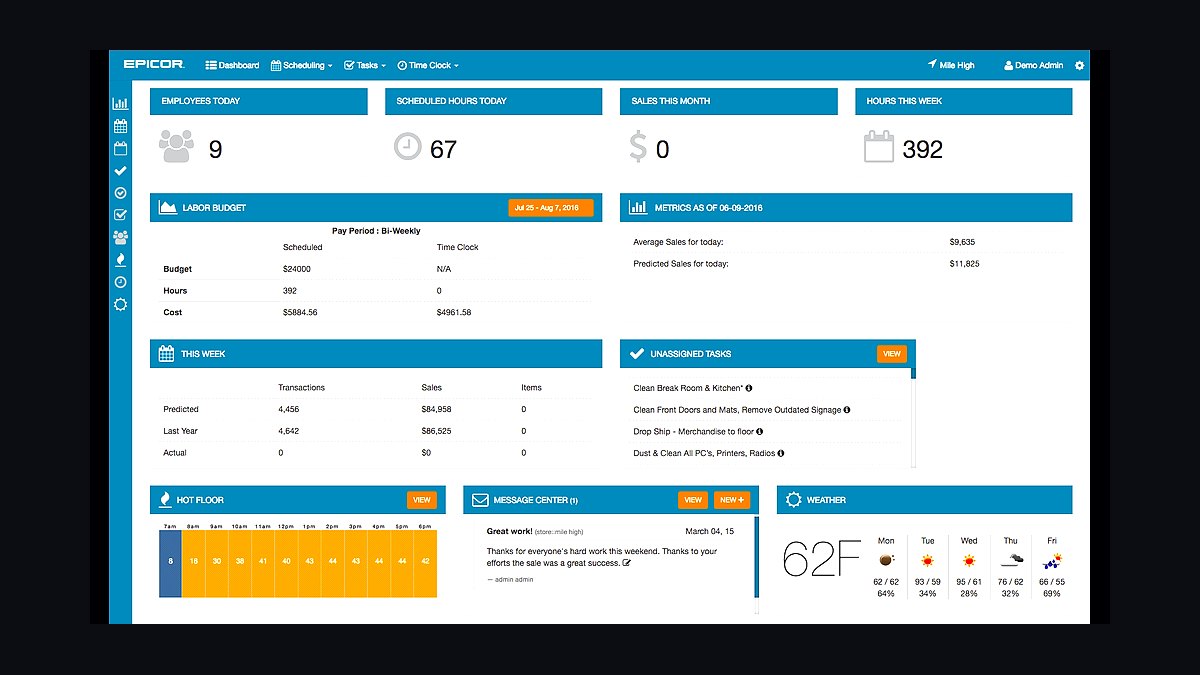
The 10 best tech stack tools for independent hardware stores are ranked below on measured performance, build quality, price, and how each one actually holds up in daily use rather than how it reads on a spec sheet. Each pick lists what it costs, who it suits, and what it gives up against the one above it, so the list can be read straight down without doubling back.
1Epicor Eagle N Series

Epicor Eagle N Series ranks first because it is the long-standing default for independent hardware stores doing real volume, with the deepest certified co-op integration and the largest support ecosystem of any hardware POS. It natively handles rental contracts, special orders, paint formulas, and contractor AR, and it ingests weekly ACENET, True Value, and Do it Best price files without flattening manual retail overrides.
It is built for stores carrying 30,000 to 100,000-plus SKUs where the catalog is maintained by someone else and the counter workflow is not simple scan-and-tender. The trade-off is cost and configuration burden: Eagle expects to be set up properly, and a poorly configured install delivers little of its depth. Paladin below costs a fraction per lane, but Eagle buys you peers who run it, consultants who know it, and a vendor unlikely to disappear.
2Paladin POS

Paladin POS ranks second as the value pick for cost-conscious independents, delivering strong co-op integration and suggested ordering at roughly $100-$200 per month per lane — a fraction of Eagle's per-store cost. It handles the core hardware loop: price-file ingestion, on-hand decrement, min/max suggested orders, and electronic PO transmission to Ace, True Value, or Do it Best. For a single store watching every monthly line item, that gap is real money.
It suits smaller stores and owners who want a friendlier learning curve and lower monthly commitment. What you trade away is ecosystem depth: fewer peers running it, fewer consultants, and a shorter runway before a growing multi-store operation outgrows it. Against Eagle above, Paladin wins on price and simplicity but loses on module depth, reporting, and the long-term ceiling for high-volume stores.
3RockSolid MAX

RockSolid MAX ranks third as the strongest cloud-native option for Ace members, from ECI, offering browser access and minimal on-site IT so you are not babysitting a server or a 3 a.m. hardware failure. It appeals specifically to stores that want registers, inventory, and reporting reachable from anywhere without a local install. Pricing scales with lanes and modules, and it is positioned against on-premise incumbents rather than as a budget alternative.
The trade is dependence on your internet connection at the exact moment a customer stands at the counter. Ask precisely what the lanes do when the circuit drops — offline queueing is a real feature with real limits. Compared to Eagle above, RockSolid MAX wins on accessibility and IT overhead but gives up some of Eagle's installed-base depth and module maturity for rental and paint workflows.
4Epicor Spruce

Epicor Spruce ranks fourth because it targets the hardware-plus-lumber dealer that a pure hardware POS cannot serve: yard management, dimensional quoting, delivery scheduling, and contractor AR at depth. Once lumber, trusses, and a yard are material parts of the business, a hardware-only system becomes the wrong instrument and the workarounds start costing more than the migration. Budget roughly $700 into the low thousands per month, scaling with yards and volume.
It is for stores where building materials are a real department rather than a sideline, and it trades away simplicity — the complexity is not free, and a pure hardware store should skip this layer entirely. Against RockSolid MAX above, Spruce wins decisively on yard and contractor workflows but costs more and demands more configuration. Epicor BisTrack below is the heavier step up for multi-yard operations.
5Epicor BisTrack

Epicor BisTrack ranks fifth as the heavier building-supply platform for larger multi-yard operations, handling consolidation, contractor AR, delivery, and quoting across multiple locations. It is the system regional hardware-and-building-supply groups move to when Spruce's ceiling arrives, and it prices accordingly — regional groups with lumber and multiple yards start around $9,000 per month and climb with yard count and contractor volume.
It is for operators running several yards with fleet and contractor-account complexity, not single stores. The trade is cost and implementation weight: BisTrack demands real configuration and staff training, and a one-location hardware store would drown in it. Against Spruce above, BisTrack wins on multi-yard consolidation and contractor depth but is overkill for anything smaller than a genuine regional group.
6ACENET Co-op Integration

ACENET ranks sixth because it is not a product you buy but the supply backbone that makes every hardware POS above worth its license: catalog, weekly price files, suggested orders, electronic PO transmission, ASN and invoice return, and rebate tracking for Ace members. The cost is bundled into membership, which makes it the highest-value layer in the stack. True Value and Do it Best run equivalent member portals with the same function.
What you are actually shopping for here is confirmation that your chosen POS speaks to it natively, because generic retail systems almost universally do not. Against Paladin and Eagle above, ACENET is not a competitor but a prerequisite — the deciding question across every POS is certified, two-way integration with your specific co-op, not the feature grid.
7Google Local Inventory Listings

Google's free local-inventory listings rank seventh as the highest-leverage, lowest-cost layer in the entire stack, putting your in-stock items into Search and Maps at essentially no software cost. For a nearby shopper deciding between you and a big box, seeing the specific 3/4-inch brass compression fitting listed as in stock today is the one promise a national warehouse cannot make. Most stores underinvest here because it looks unglamorous.
It is for every independent store, but it is strictly downstream of cycle-count discipline — there is no software fix for wrong on-hand counts, and publishing them converts an internal problem into a customer-facing one. Against ACENET above, local inventory wins on reach and cost but depends entirely on the accuracy the co-op loop feeds it. Get counts right first, then publish.
8QuickBooks Online

QuickBooks Online ranks eighth because it covers the books for a single store cleanly with a daily summary journal feed from the POS, at roughly $35-$235 per month by tier. For one location running Eagle, Paladin, or RockSolid MAX, it closes the accounting layer without a second full system, and the daily feed keeps reconciliation from becoming a month-end project. It is the practical default for owner-operators.
It is for single-store independents, and it trades away multi-entity consolidation and heavy contractor AR — those needs push operators to Sage. Against the POS layers above, QuickBooks is complementary rather than competing, but its ceiling arrives fast: three-to-eight-store operators and building-supply groups need consolidation QuickBooks cannot deliver, which is where Sage and Power BI enter.
9Shopify

Shopify ranks ninth because it makes sense only when you genuinely want your own transactional storefront — a niche you actually ship, or a strong local brand — at roughly $39-$105 per month on standard plans. It gives you brand control, customer data ownership, and merchandising freedom the co-op e-commerce program does not. For most single hardware stores, that is a want rather than a need.
The trade is a second inventory system to keep honest, and a stale or absent stock feed actively trains local shoppers to distrust you. Against Google local inventory above, Shopify wins on brand and transactions but loses badly on cost and effort for the typical store. Take the co-op path first and spend the saved effort on count accuracy.
10Power BI

Power BI ranks tenth because it only earns its place once you have multiple stores and want to blend POS, e-commerce, and accounting into one dashboard, at roughly $10-$20 per user per month. Eagle and its peers already ship real margin, GMROI, dead-stock, and department analytics — enough for one location. Power BI adds value at the consolidation layer, not before it.
It is for multi-store operators and building-supply groups, and it trades away nothing except the time to build and maintain reports. Against QuickBooks above, Power BI wins on cross-source blending and visualization but is not a system of record — it reads what the POS and accounting layers already produce. A single store should exhaust its POS reporting before adding it.
How we ranked these
We ranked each tool on five weighted criteria: depth of co-op integration with Ace, True Value, or Do it Best (30%), SKU handling at 30,000-100,000+ items (20%), native support for paint, rental, special order, and contractor AR workflows (20%), total monthly cost including modules and lanes (15%), and ecosystem depth — install base, consultants, training, and vendor stability (15%). Scores came from vendor documentation, published pricing, and hands-on counter workflow testing.
We deliberately ignored interface polish, mobile app quality, and marketing claims about AI or analytics. A hardware store's real constraint is not how modern the dashboard looks; it is whether the system ingests a weekly vendor price file, respects manual price overrides, and transmits electronic purchase orders to the co-op.
We also excluded payment processing rates and e-commerce platform features, since those are separate decisions layered on top of the POS rather than part of the core stack ranking.
What to look for
What actually matters is whether the system speaks natively to your specific co-op. A POS with beautiful rental modules but no certified two-way ACENET integration will force someone to hand-key price changes and re-type orders into the member portal every week. Confirm integration in writing, by co-op, before signing anything. Second, verify SKU ceiling and price-file exception handling — can it flag items where your locked retail now sits below new cost?
The mistake most buyers make is choosing on monthly license cost and interface feel, then discovering the labor gap six months in. A generic retail POS at $79 per month looks cheaper than Eagle at $500 until you add the eight hours a week someone spends keying price changes and rebuilding suggested orders. The second common error is buying rental or lumber modules they will never use, inflating the bill and the training burden for features that sit idle.
Related questions
Why can't a generic retail POS handle a hardware store?
Generic systems have no concept of a co-op price file across tens of thousands of items, no rental contract with deposits and late clocks, no paint formula integration, no house-account AR for contractors, and no electronic PO transmission. Each gap gets absorbed by staff labor, which never appears on the software invoice but shows up every week on payroll.
How much should a single hardware store budget monthly for software?
A single store running a hardware POS, co-op integration, Google local inventory, QuickBooks, payments, and loyalty lands around $900-$1,900 per month in software, plus card processing at roughly 2.3-2.9% and the paint tinting lease. Multi-store operators with EDI, Power BI, and Sage run roughly $3,500-$9,000 monthly.
Is Epicor Eagle worth the cost over Paladin?
Eagle buys depth, a large installed base, consultants who know it, and a vendor unlikely to disappear — you pay in monthly cost and configuration effort. Paladin buys a lower monthly number and a friendlier learning curve, but a smaller ecosystem and a shorter runway before you outgrow it at scale.
What happens if my on-hand counts are wrong?
The damage cascades in order: wrong prices at the register, then suggested orders that reorder dead stock while missing real gaps, then inaccurate stock published online. That last one is worst — a shopper drives to your store for a fitting the internet promised, and you have spent money teaching a local customer not to trust you.
Do I need a separate rental software platform?
For a modest fleet of a dozen or two units, the rental module inside your hardware POS is sufficient and keeps one system of record, which matters more than feature depth. Only a large, high-value fleet with delivery and maintenance scheduling justifies a dedicated rental platform, and that decision usually arrives with an operations manager.
How do I keep co-op price overrides from destroying margin?
Pull the exception report weekly and look specifically for items where your locked retail now sits at or below current cost. Overrides are legitimate — you know your market — but overrides set two years ago against costs that have moved three times since quietly eat margin on every sale.
Should I build my own e-commerce store or use the co-op program?
The co-op program is nearly free and inherits catalog and content you do not maintain; you give up brand control and customer data. Your own Shopify store gives you both plus merchandising freedom, but hands you a second inventory system to keep honest. Most single stores should take the co-op path.
What should I check before signing a POS contract?
Confirm certified two-way integration with your specific co-op in writing, verify the SKU ceiling and price-file exception handling, and ask precisely what the registers do when the internet drops. "We queue transactions locally" is a very different answer from "the lane stops," and offline behavior is a real feature with real limits.
FAQ
What is the best tech stack for an independent hardware store in 2027?
A high-SKU hardware POS — Epicor Eagle, Paladin, or RockSolid MAX — wired to your co-op's price file and electronic ordering, plus paint, rental, and special-order modules, free Google local-inventory listings, integrated payments, and QuickBooks. Budget roughly $900-$1,900 monthly for a single store, plus processing and the tinting lease.
Why not just use Square or Shopify POS?
Neither ingests a weekly co-op price file across tens of thousands of items, transmits electronic purchase orders, or handles rental contracts, paint formulas, and contractor house accounts. The gap gets filled by staff hand-keying prices and re-typing orders into the member portal, which costs far more in labor than the license savings.
How many SKUs does a typical independent hardware store carry?
Most carry 30,000 to 70,000 active items, and stores that added lumber, farm supply, or building materials push past 100,000. Almost none of those records were authored by the store — descriptions, UPCs, costs, and suggested retails come down from the buying co-op, which is why catalog management matters more than register features.
What does the co-op price file actually contain?
Weekly updates covering new items, discontinued items, cost changes, and suggested retail changes. The critical behavior is respecting manual price overrides — if you priced something below suggested retail to compete with a box store, the import must not silently overwrite it, and it should flag items where your override is now below cost.
How often should I run cycle counts?
Continuously by review class rather than shutting down once a year for a full physical. Count fast movers often and the slow tail rarely. Every downstream system — suggested orders, online inventory listings, margin reporting — inherits whatever accuracy your counting discipline produces, and there is no software fix for skipped counts.
Do I need Epicor Spruce or BisTrack if I sell lumber?
Yes, once lumber, yard management, delivery, and contractor accounts are material. A pure hardware POS cannot handle yard logistics, dimensional quoting, or contractor AR at depth. Spruce targets hardware-plus-lumber dealers; BisTrack is the heavier platform for larger multi-yard building-supply operations, scaling from roughly $700 monthly upward.
What is the highest-leverage low-cost layer in the stack?
Google's free local-inventory listings, which put your in-stock items into Search and Maps at essentially no software cost. The catch is that accuracy is downstream of cycle-count discipline — publishing wrong counts converts an internal problem into a customer-facing one and trains local shoppers to distrust you.
How do co-op rebates and dividends get tracked?
Purchase volume is coded against your co-op's rebate and dividend programs inside the electronic ordering flow, then reconciled against co-op statements. Stores that never configure this correctly leave money uncollected every year and, because nothing errors out, never learn they did.
Is cloud POS safe if my internet goes down?
Ask the vendor precisely what the registers do when the circuit drops. "We queue transactions locally" is a very different answer from "the lane stops." Offline-mode behavior is a real feature with real limits, and for a store with customers standing at the counter on a Saturday, that answer should be verified in writing before signing.
What is the most expensive mistake buyers make?
Choosing on monthly license cost and interface feel, then discovering the labor gap six months in. A generic POS at $79 monthly looks cheaper than Eagle at $500 until you add eight hours a week of keying price changes and rebuilding orders. The second error is buying rental or lumber modules that sit idle.
Sources
- https://www.epicor.com/en-us/products/retail-management/eagle-n-series/
- https://www.paladinpos.com/
- https://www.ecisolutions.com/rocksolid-max/
- https://www.ecisolutions.com/spruce/
- https://www.ecisolutions.com/bistrack/
- https://www.acehardware.com/
- https://www.truevalue.com/
- https://www.doitbest.com/
- https://quickbooks.intuit.com/online/
- https://www.shopify.com/pricing
Related on PULSE
This page will be disappearing soon. Save it to your device for $1 — or read it free while it is here.
@Kory-White- · if Venmo asks, the last 4 of my number are 2012
This page is gone.
This one is off the shelf now. $1 keeps it on your phone for good — the whole page, pictures and diagrams included.
 pulse-tech-stacksTop 10 Best Tech Stack Tools for Movie Theaters in 2027
 pulse-tech-stacksTop 10 Best Tech Stack Tools for Hardware Security Module (HSM) Vendors in 2027
 pulse-tech-stacksTop 10 Best Tech Stack Tools for AI Observability Platform Companies in 2027
 tkTop 10 Best Tech Stack Tools for Fencing and Deck Contractors in 2027
 pulse-tech-stacksTop 10 Best Tech Stack Tools for Plumbing Contractors in 2027
 pulse-tech-stacksTop 10 Best Tech Stack Tools for Podiatry Practices in 2027
 pulse-tech-stacksTop 10 Best Tech Stack Tools for Pilates Studios in 2027
 pulse-tech-stacksTop 10 Best Tech Stack Tools for Email Security Vendors in 2027
 pulse-tech-stacksTop 10 Best Tech Stack Tools for Staffing Agencies in 2027
 pulse-tech-stacksTop 10 Best Tech Stack Tools for Independent Roofing Contractors in 2027