


Top 10 Best Tech Stack Tools for Charter Bus and Motorcoach Companies in 2027
Quality
Certified

The 10 best tech stack tools for charter bus and motorcoach companies are ranked below on measured performance, build quality, price, and how each one actually holds up in daily use rather than how it reads on a spec sheet. Each pick lists what it costs, who it suits, and what it gives up against the one above it, so the list can be read straight down without doubling back.
1Saucon Technologies Reservation Platform

Saucon Technologies ranks first because it is the only reservation platform built specifically for multi-day motorcoach trip construction with tight GPS integration bundled into the same subscription. Pricing runs roughly $300 to $900-plus per month depending on fleet size and activated modules, and it models deadhead miles, layover pay, overnight lodging, and driver duty hours as a single priced trip object.
It is built for mid-size and larger charter operators running 50 or more coaches across multiple depots, not for a five-coach shop watching every dollar. The trade-off is that bundling GPS into Saucon's own platform ties the company to Saucon's telematics roadmap rather than letting it pick Samsara or Motive independently.
2S2/DDS Motorcoach Dispatch

S2/DDS ranks second because it is the longer-standing motorcoach-specific reservation and dispatch alternate, typically landing between $250 and $700 per month, which undercuts Saucon by roughly $50 to $200 monthly at comparable fleet sizes. It handles true multi-day motorcoach trip construction with layover pay, overnight lodging rollups, and multi-driver assignments, and it has been deployed across charter fleets long enough that its quoting logic is well tested against real itineraries.
It suits mid-size and larger operators who want motorcoach-specific trip modeling without Saucon's tighter GPS bundling. The trade-off is that its driver-app and mobile trip-sheet experience is generally considered less polished than Saucon's, and driver adoption is often where these rollouts succeed or fail. Companies evaluating it should confirm the mobile experience matches Saucon before switching, and small operators below 15 coaches are better served by Busable at a fraction of the price.
3Samsara ELD Compliance Suite

Samsara ranks third because it is the compliance backbone that feeds hours-of-service data upstream into the reservation platform's quoting step, running about $27 to $45 per vehicle per month on an annual contract. It bundles ELD logging, GPS, harsh-event safety scoring, dash-cam options, and driver-qualification file tracking into one subscription, so a single device serves compliance, customer-facing tracking, and maintenance triggers simultaneously. For a 68-coach fleet that is roughly $1,700 to $3,000 monthly.
It is aimed at operators who want one vendor covering ELD, telematics, and safety scoring rather than assembling separate hardware and software. The trade-off is that per-vehicle pricing scales linearly with every coach added, unlike the reservation platform's tiered pricing, so fleet growth hits this line item hardest. Motive below it runs $25 to $40 per vehicle and is the strong alternate, while Geotab costs less per vehicle but requires separate hardware purchases.
4Motive ELD Telematics
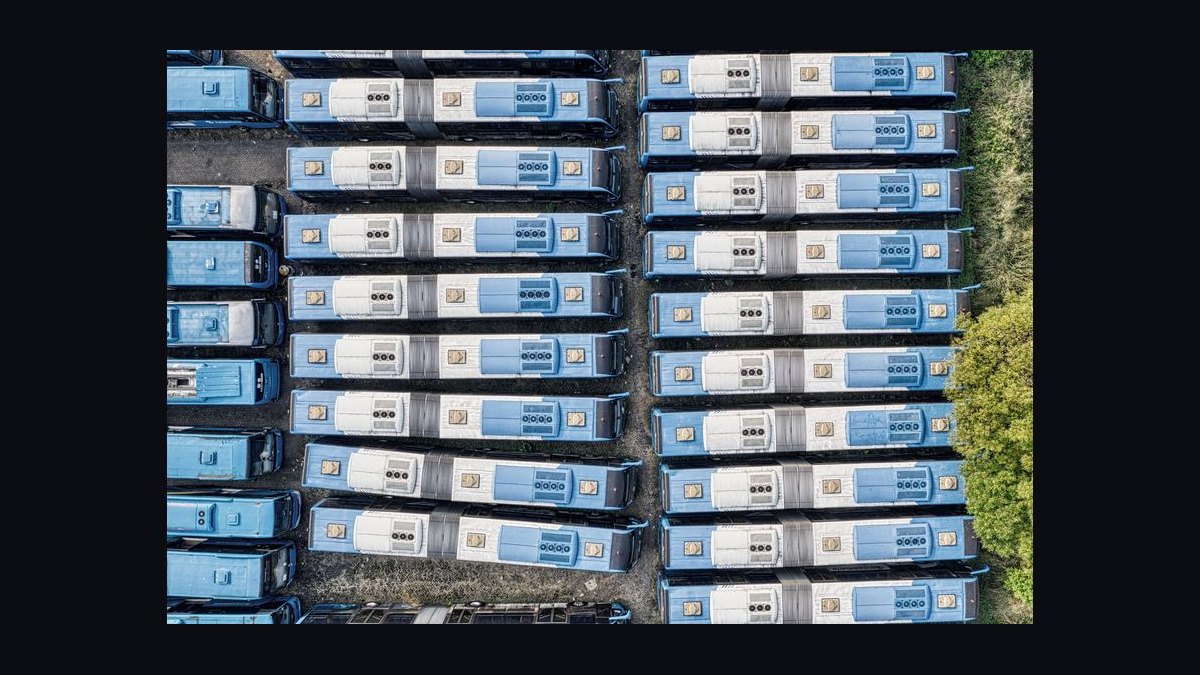
Motive ranks fourth because it delivers the same FMCSA hours-of-service logging and GPS telematics as Samsara at $25 to $40 per vehicle per month, roughly $2 to $5 cheaper per coach monthly. For a 68-coach fleet that difference compounds to roughly $1,600 to $2,700 annually, which matters for operators running thin margins on marketplace-heavy trip mixes. It logs the 10-hour driving limit and 15-hour on-duty window that govern passenger-carrying drivers specifically.
It fits operators who want proven ELD compliance without Samsara's premium safety-scoring and dash-cam bundle. The trade-off is a somewhat narrower integrated feature set than Samsara above it, particularly around driver-qualification file management and camera options. Geotab below it is the better choice for companies that want an open-API telematics platform they can build custom integrations against rather than a bundled suite with a fixed feature roadmap.
5Geotab Open Telematics Platform

Geotab ranks fifth because it runs about $25 to $35 per vehicle per month and offers an open-API telematics platform rather than a closed bundled suite, which lets a motorcoach company build custom integrations between ELD data and its reservation platform. That openness matters when the quoting-to-hours-of-service handoff needs custom logic that Samsara or Motive will not expose. It still logs the FMCSA hours-of-service data motorcoach drivers require.
It is for operators with in-house technical capability or a development partner who can wire telematics data into custom workflows. The trade-off is separate hardware costs on top of the subscription and no bundled safety-scoring or dash-cam features, so the effective cost can exceed Samsara once cameras are added. Motive above it is the simpler choice for companies that want compliance handled out of the box rather than assembled.
6CharterUP Marketplace Channel

CharterUP ranks sixth because it supplies real charter demand, particularly in slower seasons, without charging the operator a flat platform fee. Instead it takes a 10 to 20 percent commission per booked trip, so the cost is proportional to volume rather than fixed. For operators filling low-demand windows, that structure converts an idle coach into revenue at a known margin haircut, and it requires no upfront software spend.
It is for operators treating marketplace work as fill-in capacity for slow periods, not as a primary demand engine. The trade-off is that commission-discounted trips are frequently the lowest-margin ones in the mix, so letting marketplace bookings creep past roughly a third of total trip volume quietly erodes blended margin even as utilization looks healthy. Direct school, church, and corporate accounts below it protect margin but cost more in upfront sales effort.
7Fleetio Maintenance Software

Fleetio ranks seventh because it runs only about $5 to $8 per vehicle per month, a small line item protecting an asset base where a single new motorcoach costs $500,000 to $750,000 or more. It schedules preventive maintenance and DOT annual inspections driven automatically by odometer and engine-fault-code data pulled from Samsara or Motive, closing the gap that lets a missed inspection pull a coach out of service during peak season.
It is for any operator running coaches expensive enough that an unplanned out-of-service day costs more than the software does for years. The trade-off is that Fleetio only delivers its value when it is actually wired to live telematics triggers; a maintenance system running on a static calendar will eventually miss a deadline regardless of the software. It sits below CharterUP because maintenance protects existing assets while demand channels generate new revenue.
8Busable Charter Quoting Platform

Busable ranks eighth because it is purpose-built for charter and shuttle bus quoting at roughly $100 to $400 per month, making it the most accessible motorcoach-specific tool for operators running 5 to 15 coaches. It handles the core quoting workflow a small charter operation needs without the enterprise tiered pricing that Saucon and S2/DDS carry, and it fits a mixed fleet of coaches, minibuses, and vans.
It is for small operators who need real charter quoting rather than point-to-point dispatch, and who cannot justify $300-plus monthly for a mid-size platform. The trade-off is less depth in multi-day trip construction and GPS integration than Saucon or S2/DDS above it, so a company shifting toward more multi-day tour work should plan a migration before that gap causes pricing errors.
9Limo Anywhere Dispatch Software

Limo Anywhere ranks ninth because it runs $99 to $300-plus per month and is often already familiar to operators who also run black-car or sprinter-van work alongside coaches, which lowers the training cost of adoption. For simple point-to-point charter quoting it works acceptably, and a mixed-fleet operator can consolidate dispatch onto one platform rather than running separate systems for limos and coaches.
It is for small mixed-fleet operators whose charter work is mostly point-to-point rather than multi-day tour packages. The trade-off is genuine: Limo Anywhere struggles with true multi-day trip sheets, and layover pay, overnight lodging rollups, and multi-driver assignments are not its design center. Busable above it is the better fit for operators whose business is shifting toward multi-day motorcoach work, even at a slightly higher monthly cost.
10Power BI Fleet Analytics

Power BI ranks tenth because it is where reservation, telematics, and accounting data converge into revenue per coach, revenue days, deadhead percentage, and channel margin side by side. It is not a charter-specific tool, but it is the layer that makes channel-level margin visible, which is what catches marketplace commission erosion before a full quarter of financial reporting reveals it. Mid-size fleets get sufficient value connecting it directly to source systems.
It is for operators running enough volume that channel margin and coach utilization need explicit tracking rather than gut feel. The trade-off is that Power BI delivers nothing until the reservation platform, ELD, and accounting systems are already feeding it clean data, so it belongs at the end of the stack build, not the beginning. Companies running 200-plus coaches across multiple depots typically add a data warehouse beneath it to unify sources first.
How we ranked these
We ranked each tool on five weighted criteria: fit for true multi-day motorcoach trip construction (30%), hours-of-service and ELD integration depth (25%), total cost at 5, 68, and 200-coach fleet sizes (20%), driver-app and dispatch usability (15%), and breadth of native integrations with maintenance, accounting, and BI layers (10%). Scores came from published vendor pricing, documented feature sets, and operator-reported rollout experience.
We deliberately ignored brand recognition, raw user-count popularity, and any vendor's own marketing claims about AI or automation. Limousine and black-car tools were not penalized for lacking motorcoach features, but they were not credited for them either. We also excluded hardware-only telematics vendors and any platform whose pricing could not be verified from a public source in 2027.
What to look for
The decision that matters most is whether the reservation platform can model a priced trip with deadhead miles, driver duty hours, layover pay, lodging, and hours-of-service limits before a quote leaves the building. Everything downstream — compliance, maintenance, finance — only protects the business if that core trip object is accurate and legally buildable.
The mistake most buyers make is choosing on price per month or on which vendor a peer uses, then discovering the platform cannot generate a compliant multi-day trip sheet. A second common error is buying an ELD for audit compliance only, without wiring its hours data back into quoting, which reintroduces the exact illegal-trip risk the stack was meant to eliminate.
Related questions
Do small charter operators really need a motorcoach-specific reservation platform, or will a generic CRM work?
A generic CRM cannot model a priced trip with deadhead miles, driver duty hours, layover pay, and hours-of-service limits, and it cannot generate a compliant driver trip sheet. Even a 5-coach operator benefits from Busable or Limo Anywhere over a general CRM, because quoting accuracy and legal trip buildability are the core functions.
How does hours-of-service compliance differ for motorcoach drivers versus long-haul truck drivers?
Both fall under FMCSA hours-of-service rules, but passenger-carrying drivers work under a 10-hour driving limit and 15-hour on-duty window rather than the 11-hour and 14-hour truck driver limits. That difference changes how multi-day charter trips must be scheduled, staffed, and quoted before a contract is signed.
What happens if a charter company's ELD and reservation platform are not integrated?
Dispatch can commit to a trip that is legally impossible to complete with the assigned driver, discovered only when the driver runs out of legal hours mid-route. That is the single most preventable compliance failure in the industry, and it is fixed by wiring hours-of-service data upstream into the quoting step, not by policy memos.
Should a growing motorcoach company build its own data warehouse instead of relying on Power BI alone?
Only at real scale. Companies running 200-plus coaches across multiple depots typically add a data warehouse to unify telematics, reservation, and accounting data before feeding Power BI. Mid-size fleets running 50 to 120 coaches generally get sufficient value connecting Power BI directly to source systems.
Is CharterUP a replacement for a reservation platform or a channel on top of one?
It is a demand channel, not a replacement. CharterUP supplies trip volume but takes a 10 to 20 percent commission, so it sits alongside a reservation platform like Saucon or S2/DDS that handles quoting, dispatch, driver trip sheets, and hours-of-service checks. Operators need both layers, tracked separately for margin.
How much should a 68-coach motorcoach company budget monthly for its full tech stack?
Roughly $3,500 to $9,000 a month once reservation, fleet-wide telematics, maintenance, billing, and business intelligence are all active. The compliance layer alone runs $1,700 to $3,000 monthly at that fleet size, and it scales linearly with every coach added, unlike the reservation platform's tiered pricing.
Does passenger wifi belong in the core stack or is it optional?
It is increasingly expected on tour and corporate charter work, running roughly $30 to $60 per coach per month in cellular data on top of hardware like a Cradlepoint router. It is not compliance-critical, but losing a corporate account over missing wifi costs far more than the monthly data line.
What is the single biggest sign a motorcoach company has outgrown its current stack?
Dispatchers building quotes manually in spreadsheets after a reservation platform was purchased. That reintroduces forgotten layover pay, miscounted deadhead miles, and missed lodging costs on multi-day tours. If quotes are not built inside the trip model, the platform is not actually protecting margin or compliance.
FAQ
Why can't a motorcoach company just use a limo dispatch system like Limo Anywhere?
A small mixed-fleet operator can, and many do, but Limo Anywhere is built around point-to-point black-car trips. True motorcoach work needs multi-day trip quoting with mileage, driver hours, and lodging rolled together, plus hours-of-service-aware dispatch. That is why dedicated tools like Saucon, S2/DDS, and Busable exist as a separate category.
Is an ELD legally required for motorcoach operators?
Yes. FMCSA hours-of-service rules apply to motorcoach drivers, and most charter operations require electronic logging devices. The same hardware from Samsara, Motive, or Geotab typically doubles as the GPS and safety-telematics source, so one device serves compliance, tracking, and maintenance-trigger functions at once.
How much demand should come from CharterUP versus direct accounts?
There is no universal number, but because marketplaces take 10 to 20 percent commission on frequently discounted rates, many profitable operators treat marketplace work as fill-in capacity for slow periods and protect higher-margin direct school, church, sports, and corporate accounts. Track channel margin explicitly rather than accepting every lead by default.
What does a charter reservation platform need to do that a generic CRM cannot?
It must model a trip as a priced artifact with deadhead and live miles, driver duty hours, overnight pay, tolls, and fuel. It must produce a driver trip sheet with stops and times, manage quote-to-deposit-to-balance flow, and respect hours-of-service limits during dispatch. A generic CRM tracks contacts and deals, not regulated trip logistics.
How does a motorcoach company keep an expensive coach from sitting idle?
Measure revenue days and revenue miles per coach in a business-intelligence tool like Power BI, drive preventive maintenance through a system like Fleetio so coaches stay in service through peak season, and use marketplace channels deliberately to fill low-demand windows without undercutting direct contracts. Idle coaches are a utilization and maintenance-scheduling problem, not a sales problem alone.
What's the smallest viable tech stack for a new motorcoach company?
Busable or Limo Anywhere for reservation and quoting, an ELD like Samsara for hours-of-service compliance, Fleetio for maintenance, Stripe for deposits, and QuickBooks for accounting, with a marketplace like CharterUP supplying initial demand. That combination covers quoting, legal compliance, maintenance, and finance for a 5 to 15 coach operation.
How long does it typically take to roll out a motorcoach reservation platform?
Most mid-size operators should plan on 60 to 120 days for full rollout, including data migration, driver-app training, and integration testing with the ELD and accounting layers. The integration testing phase is where rollouts most often slip, because hours-of-service logic must be verified against real trip scenarios before dispatchers trust the system.
Can a motorcoach company run Samsara and Motive on the same fleet?
Technically yes, but it is rarely worth it. Running two telematics vendors splits hours-of-service data across systems, complicates FMCSA audit preparation, and doubles hardware and subscription overhead. Standardizing on one compliance layer is almost always cheaper and cleaner than mixing vendors across depots or coach types.
What reporting should a motorcoach operator review weekly in Power BI?
Revenue per coach, revenue days, deadhead percentage, channel-level margin, and any hours-of-service exception flags. Those five metrics catch the most expensive problems early: idle assets, margin erosion from marketplace overuse, and trips that were quoted or dispatched outside legal driving limits.
Do school district contracts require different software features than corporate charter work?
School district work often requires net-30 invoicing, certificate-of-insurance tracking, and per-student or per-bus pricing, while corporate charter work leans on direct billing, wifi, and premium amenity tracking. A reservation platform needs to support both billing models and both amenity sets without custom workarounds for each account type.
Sources
- https://www.fmcsa.dot.gov/regulations/hours-of-service
- https://www.fmcsa.dot.gov/hours-service/elds/electronic-logging-devices
- https://www.samsara.com/products/eld
- https://gomotive.com/products/electronic-logging-device/
- https://www.geotab.com/
- https://www.fleetio.com/
- https://quickbooks.intuit.com/
- https://powerbi.microsoft.com/
- https://charterup.com/
- https://www.saucontech.com/
Related on PULSE
This page will be disappearing soon. Save it to your device for $1 — or read it free while it is here.
@Kory-White- · if Venmo asks, the last 4 of my number are 2012
This page is gone.
This one is off the shelf now. $1 keeps it on your phone for good — the whole page, pictures and diagrams included.
 tkTop 10 Best Tech Stack Tools for Fencing and Deck Contractors in 2027
 pulse-tech-stacksTop 10 Best Tech Stack Tools for Self-Storage Operators in 2027
 pulse-tech-stacksTop 10 Best Tech Stack Tools for Appliance Repair Services in 2027
 pulse-tech-stacksTop 10 Best Tech Stack Tools for Tree Services in 2027
 pulse-tech-stacksTop 10 Best Tech Stack Tools for Hardware Security Module (HSM) Vendors in 2027
 pulse-tech-stacksTop 10 Best Tech Stack Tools for Fine-Tuning Platform Companies in 2027
 pulse-tech-stacksTop 10 Best Tech Stack Tools for RV Dealerships in 2027
 pulse-tech-stacksTop 10 Best Tech Stack Tools for Threat Intelligence Vendors in 2027
 pulse-tech-stacksTop 10 Best Tech Stack Tools for AI Translation API Companies in 2027
 pulse-tech-stacksTop 10 Best Tech Stack Tools for Independent Roofing Contractors in 2027