


Top 10 Best Tech Stack Tools for Home Inspection Companies in 2027
Quality
Certified
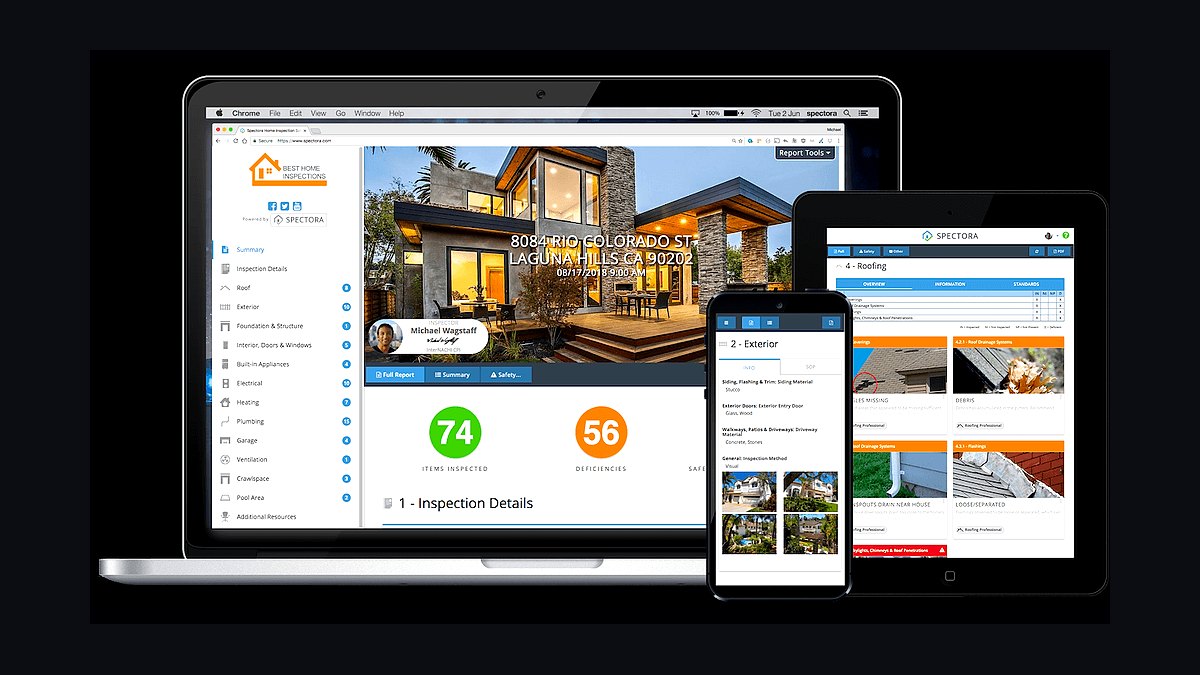
The 10 best tech stack tools for home inspection companies are ranked below on measured performance, build quality, price, and how each one actually holds up in daily use rather than how it reads on a spec sheet. Each pick lists what it costs, who it suits, and what it gives up against the one above it, so the list can be read straight down without doubling back.
1Spectora
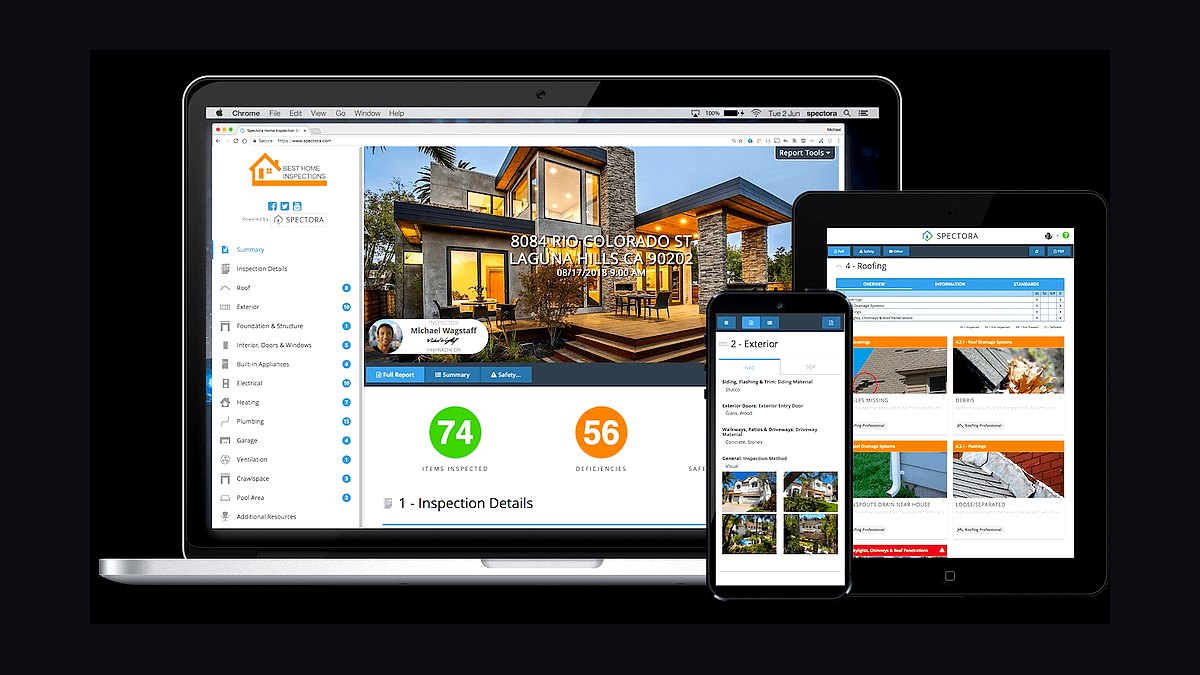
Spectora ranks first because the mobile report builder is the deliverable, and Spectora owns that job: fast photo capture, pre-loaded defect narratives, offline mode, and same-day interactive publishing. It bundles scheduling, e-signed agreements, integrated payments, and agent tools in one app, at roughly $99–$199/month. For most solo and small firms, that single subscription replaces four separate tools.
It is built for owner-operators running two to four inspections a day who need the report out before leaving the driveway. It trades away deep multi-inspector dispatch and accounting sync, which is why larger firms pair it with ISN rather than dropping it. Against ISN directly below, Spectora is the field production tool; ISN is the office back office.
2ISN (Inspection Support Network)
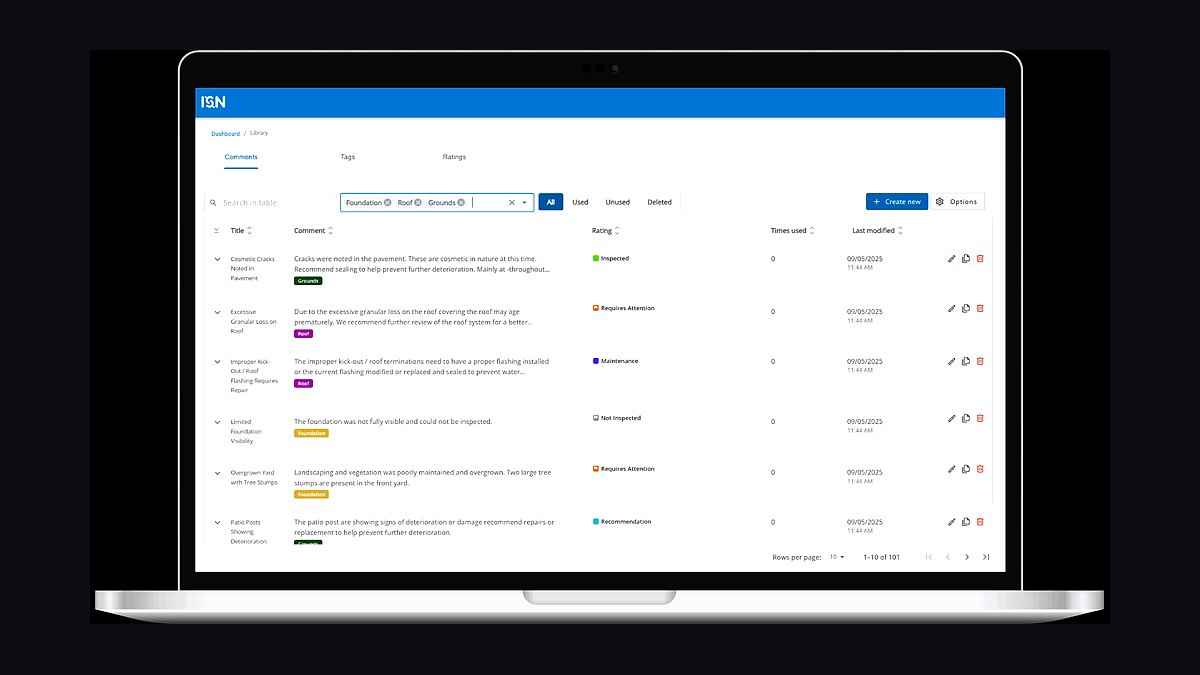
ISN ranks second because multi-inspector firms drown without back-office automation, and ISN is the standard: online scheduling, agreement delivery, automated email and SMS confirmations, fee and order management, agent and client portals, and accounting hooks. It integrates with Spectora so dispatch and field reporting stay in sync, priced around $0.30–$0.40 per inspection or a flat high-volume plan.
It is for firms dispatching three or more inspectors and syncing invoices into QuickBooks at volume. It trades away simplicity: solos and two-person shops find it redundant overhead next to Spectora's built-in scheduler. Compared with Spectora above, ISN handles the office; Spectora handles the house.
3Podium

Podium ranks third because roughly 80% of inspection volume comes from agent referrals, and Google reviews are the storefront that keeps that pipeline full. Podium automates a review-request text after every completed inspection and centralizes Google Business Profile responses, running about $249–$399/month depending on message volume and locations.
It is for firms with enough completed jobs to generate steady review flow and someone to respond to messages. It trades away budget: a solo inspector can use Spectora's native Google review request for free. Against Birdeye below, Podium is the stronger messaging platform; Birdeye is often cheaper for a single location.
4Birdeye
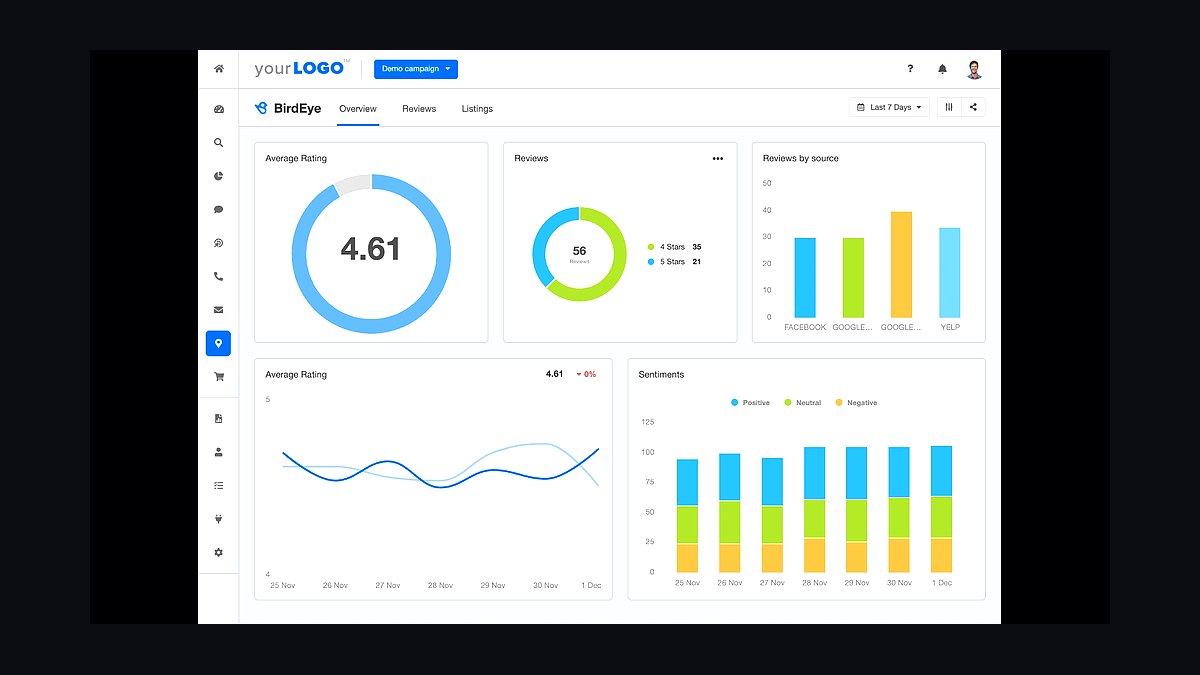
Birdeye ranks fourth as the reputation-automation alternative that often undercuts Podium on price for a single-location inspection firm, landing around $299/month. It automates review requests across Google and other platforms, centralizes responses, and adds survey and messaging features that matter once a firm tracks agent satisfaction alongside buyer reviews.
It is for inspection companies that want review automation without Podium's full messaging suite and higher tiers. It trades away some of Podium's messaging polish and integrations. Against Podium directly above, Birdeye wins on cost for one office; Podium wins on multi-channel agent communication and team-wide rollout.
5QuickBooks Online
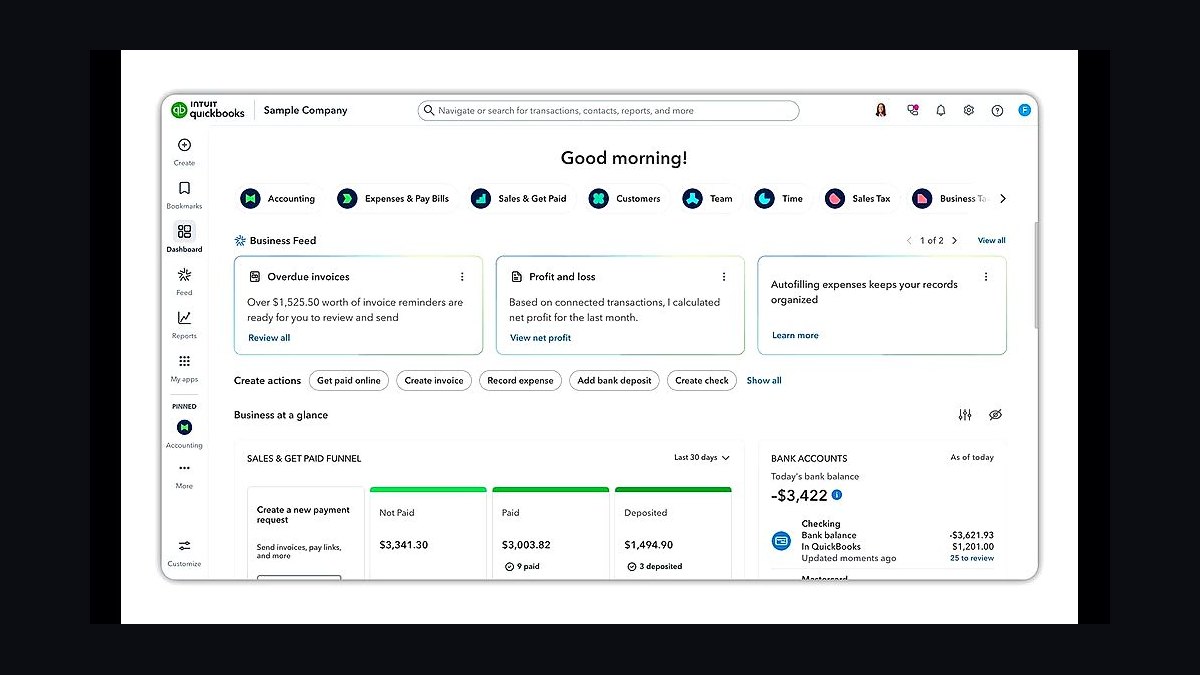
QuickBooks Online ranks fifth because inspection fees, ancillary revenue, contractor payouts, and franchise royalties all have to reconcile somewhere, and QuickBooks is the accounting layer ISN and Spectora sync into. Plans run roughly $35–$99/month, and the ISN integration pushes invoices and payments across automatically instead of re-keying each job.
It is for any inspection company past the shoebox-of-receipts stage, including solos who want clean quarterly taxes. It trades away nothing critical, though Wave is free for a true solo just starting. Against InspectorPro below, QuickBooks handles money while InspectorPro handles liability coverage — both are non-negotiable line items.
6InspectorPro Insurance

InspectorPro ranks sixth because errors and omissions coverage is mandatory in most states and required by many agents, and InspectorPro is the category leader for home inspector E&O. Coverage runs roughly $1,500–$4,000/year depending on inspection volume and whether radon, mold, sewer-scope, or thermal services are offered.
It is for every licensed inspection company, from solo to franchise fleet, since the signed agreement plus photo documentation in the report is the actual claims defense. It trades away cost savings versus group programs like OREP. Against QuickBooks above, InspectorPro protects the business from lawsuits; QuickBooks keeps the books straight.
7Home Inspector Pro (HIP)
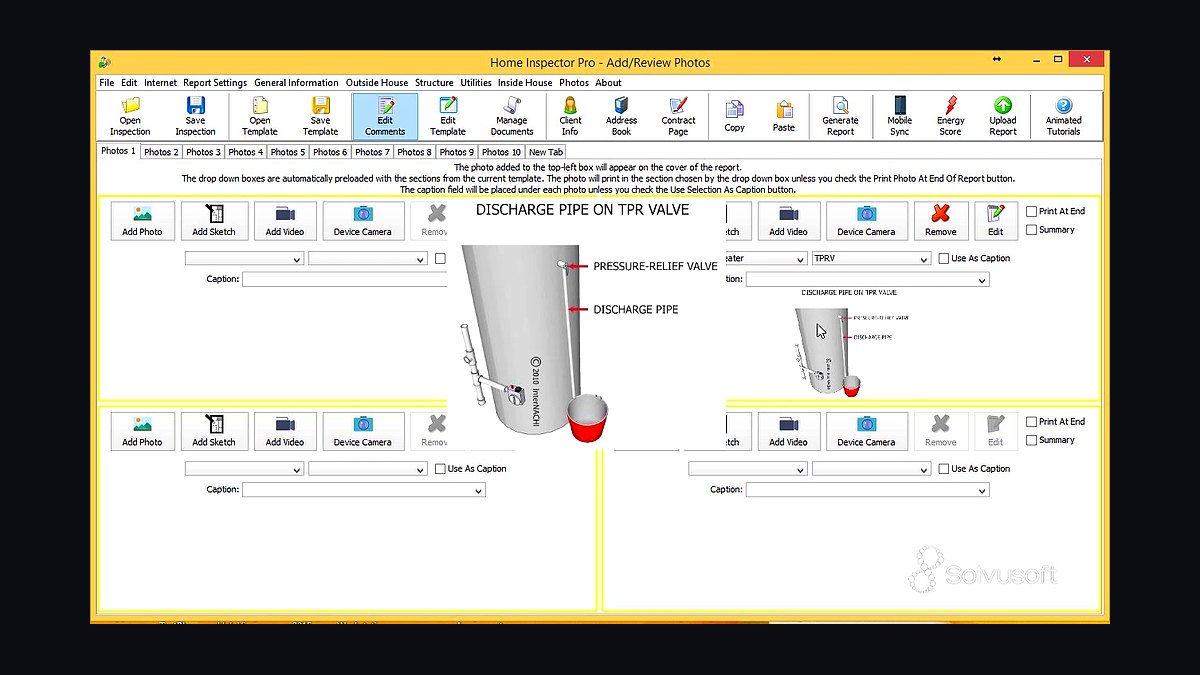
Home Inspector Pro ranks seventh for inspectors who want deep templating control rather than a subscription all-in-one. It is priced around $499 one-time plus a mobile add-on, and its report engine lets detail-oriented inspectors build custom narratives, sections, and formatting that consumer-grade apps restrict.
It is for commercial-leaning and long-form report writers doing property condition assessments where reports run dozens of pages. It trades away bundled scheduling, agreements, and payments, so those must be added separately. Against Spectora above, HIP wins on template depth; Spectora wins on same-day delivery speed and all-in-one workflow.
8HomeGauge
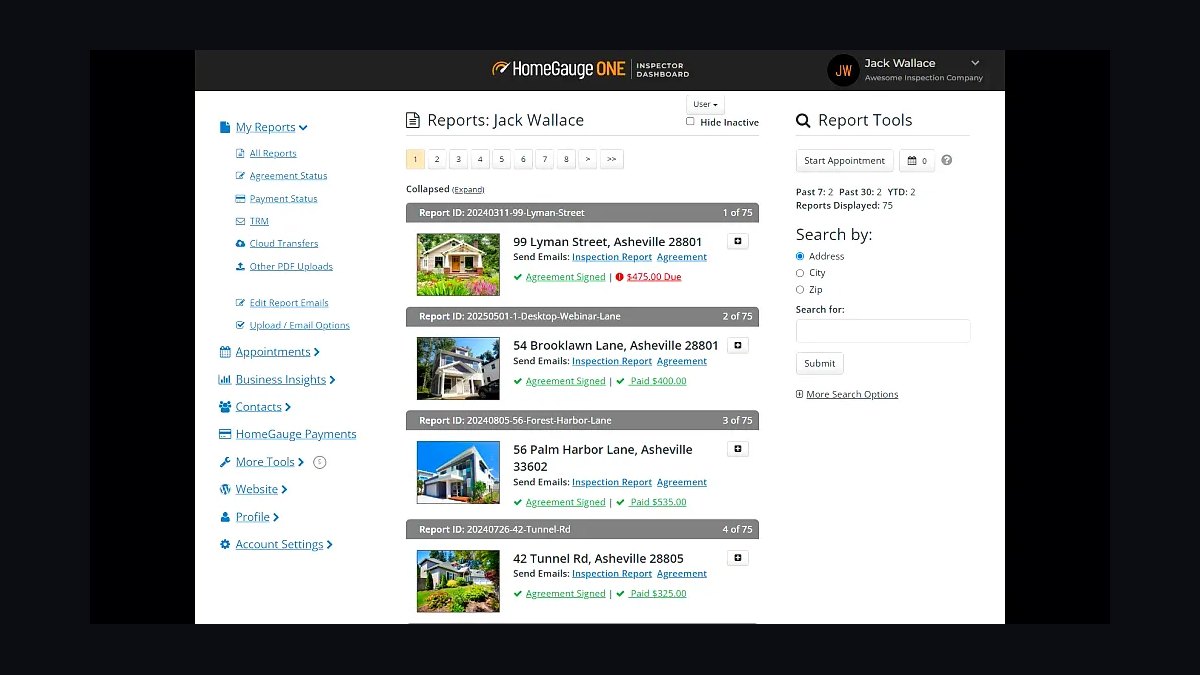
HomeGauge ranks eighth as the long-standing report platform known for its Create Request List feature, which lets a buyer's agent turn flagged items into a clean repair-request document for negotiation. Pricing runs roughly $39–$99/month, making it one of the cheaper established report builders still in wide use.
It is for inspectors whose agent relationships hinge on the repair-request workflow and who want a proven, familiar interface. It trades away the modern mobile polish and bundled payments that Spectora ships. Against Spectora above, HomeGauge's CRL is the referral driver; Spectora's all-in-one app is the faster field tool.
9Mailchimp
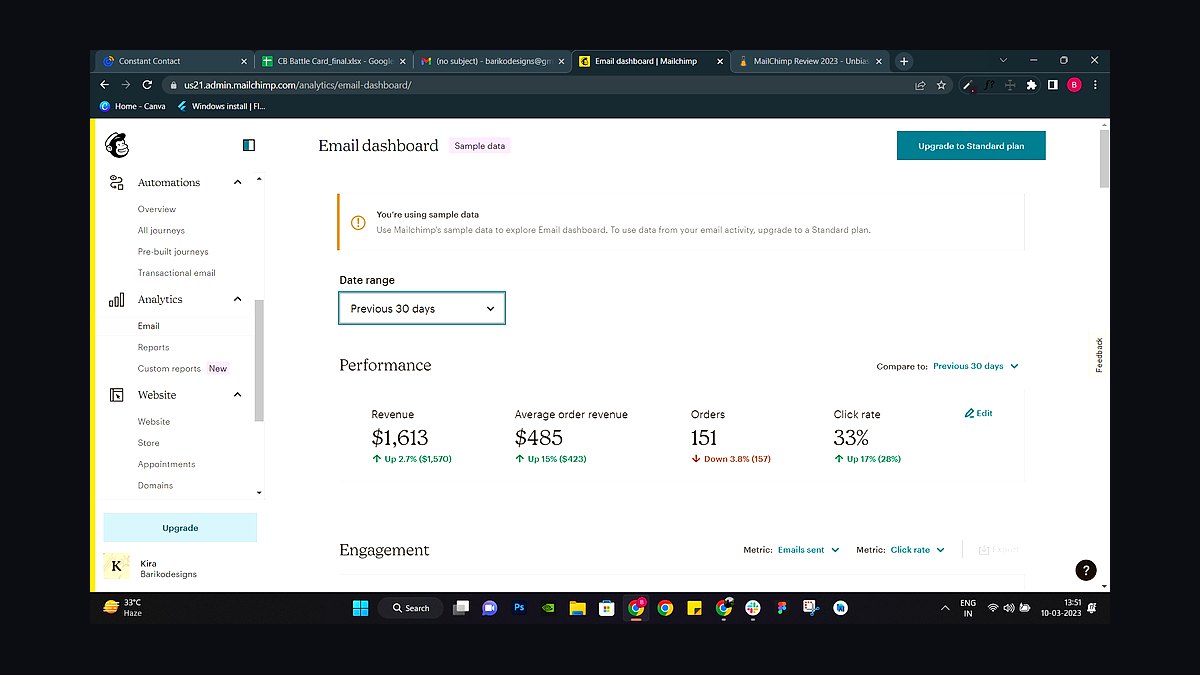
Mailchimp ranks ninth because the agent referral loop needs a recurring touch, and a monthly newsletter to referring agents is the cheapest retention marketing an inspection firm can run. Pricing runs roughly $13–$50/month depending on list size, and it pairs with the agent CRM data already sitting inside Spectora or ISN.
It is for firms with a stable agent list who want to stay top-of-mind between transactions without manual outreach. It trades away deep CRM pipeline features, which HubSpot's free tier covers better. Against Podium above, Mailchimp handles outbound agent marketing; Podium handles inbound review capture.
10Microsoft Power BI
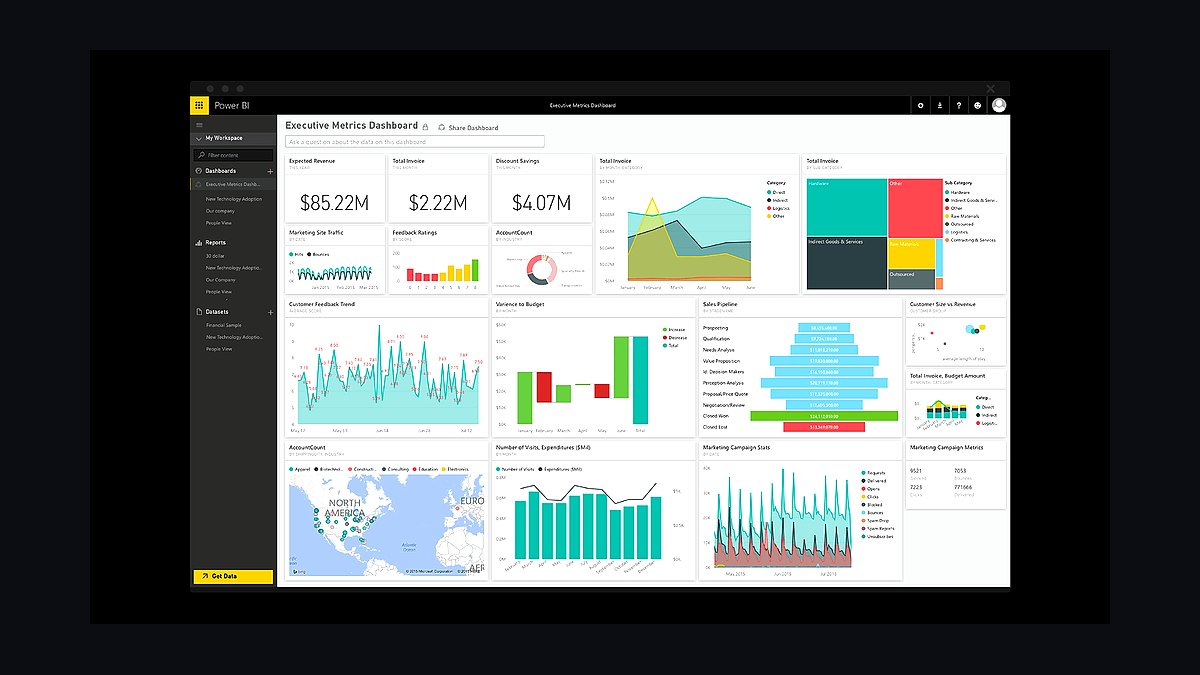
Power BI ranks tenth because regional and franchise operators eventually outgrow native dashboards and need real reporting on turn-time, inspections per inspector per day, ancillary attach rate, and referrals by agent. It runs about $14/user/month, fed by data exported from Spectora, ISN, and QuickBooks.
It is for multi-market firms with enough volume that agent-cohort and inspector-productivity analysis changes staffing decisions. It trades away simplicity: solos and small teams get everything they need from platform-native dashboards. Against QuickBooks above, Power BI interprets the numbers; QuickBooks records them.
How we ranked these
We ranked each tool on five weighted criteria: report-production speed and same-day delivery capability (30%), scheduling and back-office automation depth (20%), agent-referral and review-loop features (20%), integration breadth with accounting and ancillary services (15%), and total cost of ownership at realistic inspection volumes (15%). Scores came from vendor documentation, published pricing, G2 and Capterra reviews, and operator interviews across solo, multi-inspector, franchise, and commercial segments.
We deliberately ignored raw feature counts, AI marketing claims, and vendor awards, because inspectors do not buy feature lists — they buy minutes saved per inspection and referrals retained. We also excluded lead-generation marketplaces and consumer home-management apps, since those serve buyers and agents rather than the inspection business itself. Pricing was normalized to a 300-inspection solo and a 2,500-inspection regional firm.
What to look for
What matters most is whether the report builder produces a clean, photo-rich, same-day deliverable your inspectors can finish in the driveway, because that single output drives agent referrals more than any other tool. Second is whether scheduling, e-signed agreements, and payment collapse into one booking flow, since every manual touch around a closing deadline is a liability and a delay waiting to happen.
The mistake most buyers make is shopping the long tail of cheap point tools and stitching them together, then discovering the integration gaps cost more in admin time than the license savings. A close second mistake is buying ISN-style back-office automation before volume justifies it, or skipping it long after volume demands it. Match the stack to inspector count, not ambition.
Related questions
What is the single most important tool in a home inspection tech stack?
The mobile inspection-report builder, because the report is both the deliverable and the product. Spectora, Home Inspector Pro, and HomeGauge dominate this layer. If the report tool is slow, forces manual writing, or lacks offline mode, nothing else in the stack can compensate. Same-day delivery is the competitive bar in 2027.
Do solo home inspectors need ISN or is Spectora enough?
For most solos, Spectora alone is enough because it bundles scheduling, agreements, payments, and an agent CRM with the report builder. ISN earns its per-inspection fee once a firm runs multiple inspectors and needs dispatch, automated confirmations, and accounting sync. Adding ISN too early just adds overhead a solo will not use.
How do home inspection companies get more realtor referrals?
Roughly 80% of inspection volume comes from agent referrals, so the stack must make inspectors look good to agents and harvest social proof. That means branded agent report links, a repair-request builder agents can use in negotiation, and automated Google review requests through Podium or Birdeye after every completed job. Agent marketing touches matter too.
What should a home inspection company budget monthly for software?
A solo typically spends $99–$199 on Spectora, $35–$99 on QuickBooks, and $1,500–$4,000 annually on E&O insurance. A five-inspector firm adds ISN at roughly $0.30–$0.40 per inspection plus Podium at $249–$399 monthly. Regional operators layer Power BI at about $14 per user for real dashboards.
Is HomeGauge or Spectora better for home inspectors in 2027?
Spectora leads for modern mobile speed, clean interactive reports, and an all-in-one booking flow, which is why it dominates solo and small firms. HomeGauge remains strong for its Create Request List repair-request feature and lower entry pricing around $39–$99 monthly. Home Inspector Pro wins on deep templating for detail-oriented and commercial inspectors.
How important is same-day report delivery for home inspectors?
It is close to non-negotiable. Agents work against hard closing deadlines and refer inspectors who deliver before the driveway. Next-day reports quietly cost referrals to faster competitors. The fix is standardized templates, pre-loaded boilerplate narratives, and a report tool with offline mode so basements and crawlspaces do not stall production.
Can home inspectors sell ancillary services like radon and mold through the same platform?
Yes, and they should. Spectora and ISN both let inspectors attach radon, mold, sewer-scope, thermal, and pool services to an order with their own fees and report sections. Selling add-ons at booking, rather than through a separate system, lifts margin by $150–$400 per inspection and keeps billing clean.
What accounting software pairs best with inspection scheduling tools?
QuickBooks Online is the default because ISN syncs invoices and payments directly into it, and inspection fees, ancillary revenue, subcontractor payouts, and franchise royalties all reconcile in one place. Wave is a free alternative for a true solo just starting out, though it lacks the integration depth larger firms need.
FAQ
What is the best tech stack for a home inspection company in 2027?
Spectora as the mobile report builder and all-in-one booking flow, ISN for back-office dispatch and accounting sync once you run multiple inspectors, Podium or Birdeye for automated review capture, QuickBooks Online for books, and InspectorPro for E&O coverage. Solos can run Spectora plus QuickBooks alone and skip ISN entirely.
How much does home inspection software cost per month?
Spectora runs roughly $99–$199 monthly depending on team size and add-ons. ISN charges about $0.30–$0.40 per inspection or a flat high-volume plan. Podium sits at $249–$399 monthly, Birdeye around $299, QuickBooks $35–$99, and Power BI about $14 per user. E&O insurance adds $1,500–$4,000 annually.
Do I need a separate e-signature tool for inspection agreements?
Usually not. Spectora and ISN both deliver and capture e-signed pre-inspection agreements inside the booking flow, and both can hold report release until the signature and payment are captured. DocuSign only makes sense for commercial firms with unusual multi-party contracts or complex institutional agreements that the inspection platforms cannot model.
How do I stop reports going out without a signed agreement?
Configure Spectora or ISN to gate report release on a captured e-signature and collected payment, so the system enforces the rule instead of relying on the inspector. The pre-inspection agreement is the primary liability shield, and a report released without one exposes the firm on every job. Make it automatic, not a reminder.
When should a home inspection company move from Spectora scheduling to ISN?
Move to ISN once you consistently run more than one or two inspectors and start seeing dispatch errors, double-bookings, or missed payments. The per-inspection fee looks like overhead until you count recovered no-shows, faster collections, and fewer scheduling mistakes around closings. Below that volume, Spectora's native scheduler is sufficient.
What metrics should a home inspection dashboard track?
Track turn-time from booking to report delivery, inspections per inspector per day, ancillary attach rate, and referrals by agent. Spectora and ISN dashboards cover the basics for small firms. Regional and franchise operators exporting to Power BI or Looker Studio get real agent-cohort and inspector-productivity reporting that drives staffing and marketing decisions.
Is Podium worth it for a small inspection company?
For solos, Spectora's built-in automated Google review request is often enough, so Podium's $249–$399 monthly is hard to justify at low volume. Once a firm runs several inspectors and wants centralized review management and two-way texting, Podium or Birdeye pays for itself by protecting the Google Business Profile that agents check.
What do commercial property inspection firms run differently?
Commercial and PCA firms skew toward Home Inspector Pro or Horizon for heavy templating and long-form reports, Calendly or ISN for multi-day engagement scheduling, DocuSign for complex multi-party agreements, and QuickBooks for project-based billing. Consumer-grade all-in-one apps fit poorly because commercial reports are longer and clients are institutions.
How does the agent referral loop actually work in the stack?
An agent books online, the agreement is e-signed and payment collected, the inspector publishes a same-day interactive report, the agent uses the repair-request builder in negotiation, and Podium texts a review request to the client. Branded agent report links and monthly agent marketing keep the inspector top of mind for the next buyer.
Can I run a home inspection business on spreadsheets and email alone?
You can start that way, but it breaks quickly. Spreadsheets cannot hold report release on a signature, automate review requests, or sync invoices to QuickBooks, and every manual touch around a closing deadline is a delay risk. The stack exists to make the inspector fast in the field and unforgettable to the agent, which spreadsheets cannot do.
Sources
- https://www.spectora.com/
- https://www.homeinspectorpro.com/
- https://www.homegauge.com/
- https://www.inspectionsupport.com/
- https://www.podium.com/
- https://birdeye.com/
- https://quickbooks.intuit.com/
- https://www.inspectorproinsurance.com/
- https://www.g2.com/categories/home-inspection-software
- https://www.nachi.org/
Related on PULSE
This page will be disappearing soon. Save it to your device for $1 — or read it free while it is here.
@Kory-White- · if Venmo asks, the last 4 of my number are 2012
This page is gone.
This one is off the shelf now. $1 keeps it on your phone for good — the whole page, pictures and diagrams included.
 pulse-tech-stacksTop 10 Best Tech Stack Tools for Bars and Pubs in 2027
 pulse-tech-stacksTop 10 Best Tech Stack Tools for Medical Billing and RCM Companies in 2027
 pulse-tech-stacksTop 10 Best Tech Stack Tools for AI Document Intelligence Companies in 2027
 pulse-tech-stacksTop 10 Best Tech Stack Tools for Home Builders and Residential Developers in 2027
 pulse-tech-stacksTop 10 Best Tech Stack Tools for HVAC Equipment Distributors in 2027
 pulse-tech-stacksTop 10 Best Tech Stack Tools for Garden Centers and Nurseries in 2027
 pulse-tech-stacksTop 10 Best Tech Stack Tools for Public Relations Agencies in 2027
 pulse-tech-stacksTop 10 Best Tech Stack Tools for HOA and Community Association Management Companies in 2027
 pulse-tech-stacksTop 10 Best Tech Stack Tools for API Security Vendors in 2027
 pulse-tech-stacksTop 10 Best Tech Stack Tools for Threat Intelligence Vendors in 2027