


Top 10 Best Tech Stack Tools for Cruise Lines in 2027
Quality
Certified
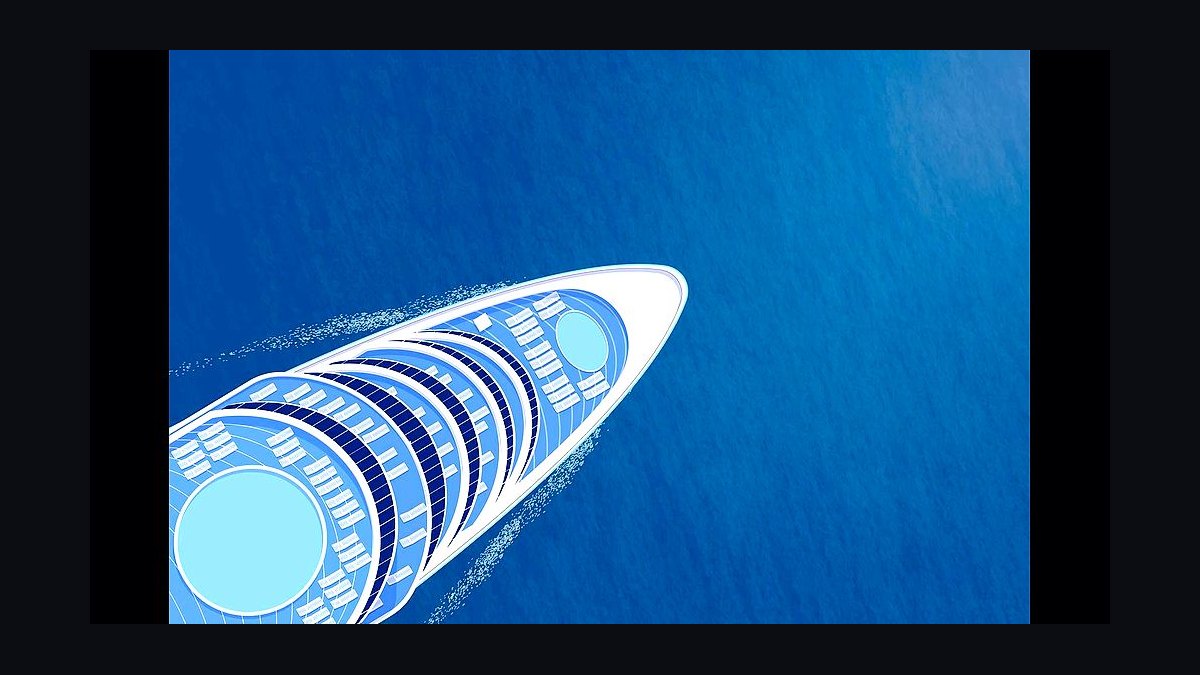
The 10 best tech stack tools for cruise lines are ranked below on measured performance, build quality, price, and how each one actually holds up in daily use rather than how it reads on a spec sheet. Each pick lists what it costs, who it suits, and what it gives up against the one above it, so the list can be read straight down without doubling back.
1Oracle Hospitality Cruise SPMS

Oracle Hospitality Cruise SPMS ranks first because it is the only onboard PMS built for ships rather than hotels, owning the cabin folio from embarkation to debarkation with muster stations and port calls as native objects. Per-hull rollouts land in the mid-six-figures to low-seven-figures including shipboard hardware, integration labor, and crew training. OPERA Cloud, its land-based sibling, has no voyage or manifest concept.
It is for lines that need real-time folio posting across bars, dining, spa, and retail, authenticated by RFID or NFC wearable taps. It trades away cheap generic-hotel licensing and forces per-hull deployment tied to dry-dock cycles. Compared with Versonix Seaware below it, SPMS owns the onboard guest account while Seaware owns the booking and manifest upstream.
2Versonix Seaware

Versonix Seaware ranks second because it is the cruise-native reservations and yield platform most non-Big-Three lines default to, chosen by newer entrants like Mitsui Ocean Cruises and StarDream Cruises. Implementations run 12-24 months from contract to full cutover with seven-figure upfront cost before ongoing fees scale with berth count and call volume. It exposes live inventory and net pricing to travel-agent portals and consortia feeds.
It is for lines under roughly 15 hulls that cannot justify proprietary reservations engineering. It trades away the customization Carnival, Royal Caribbean, and Norwegian buy with in-house teams. Compared with Oracle Hospitality Cruise SPMS above it, Seaware owns the booking and manifest while SPMS owns the onboard folio, so both must share guest and voyage identity.
3MICROS Simphony

MICROS Simphony ranks third because it runs the shipboard point-of-sale terminals where onboard revenue actually gets captured, from bars and specialty restaurants to spa, retail, and photography. A mega-ship can run 150 or more terminals simultaneously, and enterprise-contract pricing lands near $200 per terminal per month before fleet-wide multiplication. Every charge must post to the SPMS folio in real time, not overnight.
It is for operators whose onboard revenue depends on upsell offers staff can confirm will bill correctly. It trades away the simplicity of a batched POS, since a broken folio link measurably drops onboard revenue per passenger. Compared with PROS below it, Simphony records the transaction while PROS decides the fare and package price before the guest ever boards.
4PROS

PROS ranks fourth because it brings airline-grade perishable-inventory pricing science to berths on a specific sailing, ingesting booking curves, competitor fares, and demand signals to recommend moves per cabin category. Mid-size contracts typically run $500K-$3M annually on their own, and deployments above roughly three ships outperform manual revenue management. It should be wired read-only for a 30-day review window before writing fares.
It is for lines whose booking-curve complexity exceeds what a revenue team can manage in spreadsheets. It trades away cheap in-house modeling, which can still win below three ships. Compared with Salesforce Marketing Cloud below it, PROS sets the price while Marketing Cloud runs the pre-cruise nurture that sells excursions, beverage packages, and dining.
5Salesforce Marketing Cloud

Salesforce Marketing Cloud ranks fifth because it manages the 18-24 month pre-cruise nurture sequence that turns a booking into onboard spend, covering confirmation, excursion sell-up, beverage packages, and dining reservations. A major line typically budgets $500K-$2M per year for Marketing Cloud alone, sized to contact volume, with Enterprise licensing near $165 per user per month. It hands problems to Service Cloud for contact centers.
It is for lines with long booking windows and loyalty tiers that determine which offers each guest sees. It trades away cheap email tooling and requires clean guest history from SPMS and the wearable layer. Compared with Snowflake below it, Marketing Cloud acts on one guest while Snowflake sees fleet-wide occupancy and APD in a single query.
6Salesforce Loyalty Management

Salesforce Loyalty Management ranks sixth because cruise loyalty tiers like Captain's Club, Crown & Anchor, Latitudes Rewards, and MSC Voyagers Club determine which offers a guest sees, and that logic must read the same guest history SPMS and the wearable are building. Licensing runs $30K-$200K per year depending on member volume, layered under a line's proprietary tier rules. Tier changes can trigger automated offers through Marketing Cloud.
It is for lines whose repeat-guest revenue justifies programmatic tier enforcement rather than manual lists. It trades away the flexibility of fully bespoke loyalty code and depends on clean CRM data upstream. Compared with Snowflake below it, Loyalty Management personalizes offers per member while Snowflake aggregates fleet-wide profitability for the pricing team.
7Snowflake

Snowflake ranks seventh because it is the only place fleet-wide truth exists, joining reservations, SPMS folios, Simphony transactions, and loyalty history so revenue management can answer an occupancy or APD question in one query instead of one ship at a time. Compute for a major line runs $300K-$2M+ per year, and every new wearable rollout or loyalty tier adds another feed. Historical bookings and manifests must reconcile to the general ledger to the dollar.
It is for lines that have outgrown per-ship reporting and satellite-link inconsistency. It trades away the simplicity of source-system reports and demands ongoing data engineering. Compared with Tableau below it, Snowflake stores and joins the data while Tableau renders the dashboards a CRO actually trusts.
8Tableau

Tableau ranks eighth because it is the visualization layer sitting on Snowflake where fleet occupancy, APD, and itinerary profitability become dashboards rather than queries, with seats at roughly $75 per user per month on top of warehouse compute. It is the 90-day exit criterion for a rollout: not every ship live, but a fleet dashboard leadership trusts. Dashboards go live alongside loyalty-to-CRM tier automation.
It is for revenue managers, CROs, and operations leaders who need one fleet-wide view. It trades away nothing structurally but is useless if Snowflake feeds are inconsistent across ships. Compared with Workday below it, Tableau reports on commercial performance while Workday owns crew, HR, and financial records.
9Workday HCM
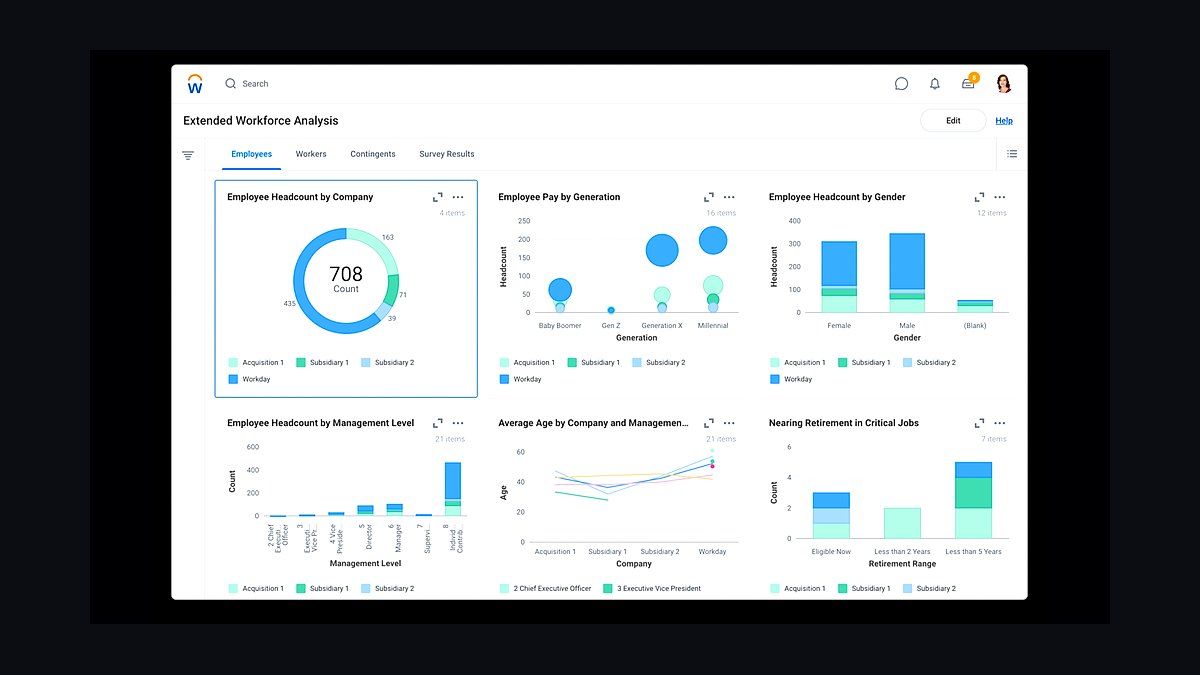
Workday HCM ranks ninth because crew rotation, STCW certification expiry, and port-clearance manifests must live in an auditable system rather than spreadsheets, especially when a port authority requests documentation on demand. Enterprise contracts run roughly $40-$100 per employee per month equivalent, covering HCM and Financials. It finalizes alongside Genesys in the 61-90 day rollout window.
It is for lines whose crew compliance and finance close depend on one record rather than parallel spreadsheets. It trades away cheap point HR tools and requires integration with the reservations and SPMS identity model. Compared with Genesys Cloud below it, Workday owns crew and finance records while Genesys owns guest and agent contact-center interactions.
10Genesys Cloud
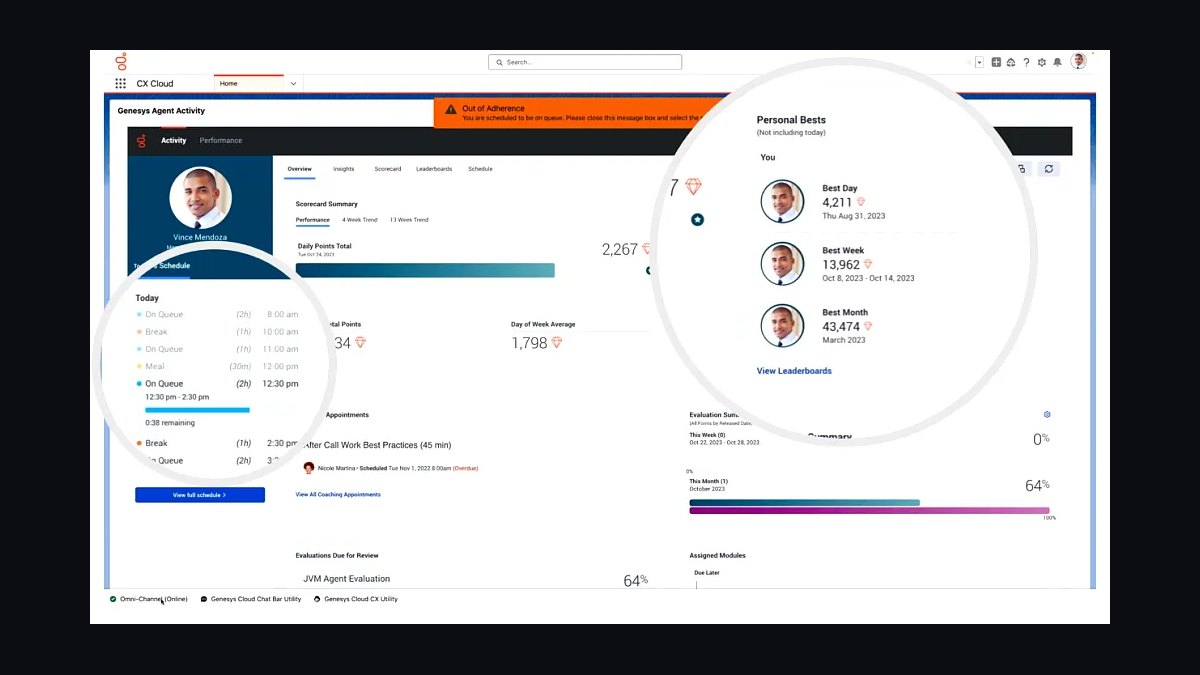
Genesys Cloud ranks tenth because it runs the contact centers handling booking changes and problems, licensed at roughly $75-$150 per agent per month, and includes maritime crew-compliance modules finalized in the 61-90 day rollout phase. It pairs with Service Cloud so agents see the same guest history SPMS and loyalty are building. Volume scales with call demand around schedule changes and weather disruptions.
It is for lines whose direct-to-consumer contact centers handle changes, refunds, and escalations at scale. It trades away simple phone tooling and depends on CRM and reservations data being current. Compared with Workday HCM above it, Genesys handles guest-facing interactions while Workday handles the crew and financial back office.
How we ranked these
We scored each tool on five weighted criteria: cruise-native fit (30%), real-time integration depth with shipboard PMS and POS (25%), fleet-scale proof at 10+ hulls (20%), total cost of ownership across berth-based licensing (15%), and implementation risk measured by typical time-to-cutover (10%). Scores came from vendor documentation, public case studies, and operator-reported benchmarks.
We deliberately ignored analyst quadrant placement, brand familiarity among land-based hospitality buyers, and demo polish. None of those predict whether a bar charge posts to a cabin folio in real time at 3am mid-Atlantic. We also excluded wearable hardware capex and private-island resort systems, since both distort per-berth software comparisons and belong in a separate budget line.
What to look for
Match the reservations platform to your hull count first, not your ambition. Under roughly 15 ships, Versonix Seaware beats a proprietary build on every axis that matters. Above that, the engineering investment starts paying back. Then verify one thing in writing: that the vendor's reference customers post POS charges to the folio in under 60 seconds, not overnight batch.
The mistake most buyers make is piloting on a brand-new ship during inaugural season, when everything is chaotic and nothing is representative. Pilot on a mid-life vessel during shoulder season instead. Second mistake: letting the wearable vendor set the roadmap. RFID tap events are worthless until reservations, SPMS, and loyalty already agree on one guest ID and one voyage ID.
Related questions
Does a new cruise line need a proprietary reservations system?
No. Buy Versonix Seaware. Carnival, Royal Caribbean, and Norwegian run proprietary platforms because decades of engineering investment justify it at 25+ hulls. Newer entrants like Mitsui Ocean Cruises and StarDream Cruises chose Seaware, which is the rational default under roughly 15 hulls. Above that threshold, the calculus shifts toward building.
How does onboard POS connect to the cabin folio?
MICROS Simphony terminals post every bar, dining, spa, and retail charge to the Oracle SPMS folio in real time, authenticated by an RFID or NFC tap from the guest's wearable. That real-time posting is what keeps the cabin account accurate through debarkation and eliminates the folio disputes that plague batched overnight reconciliation runs.
When should a line add PROS pricing science?
Above roughly three ships. Below that, a strong revenue management team working from a clean Snowflake feed can outperform a half-implemented PROS deployment, because booking-curve complexity has not yet exceeded what humans can manage in spreadsheets. Above three ships, the fare-class permutations multiply faster than any team can track manually.
Is the wearable layer worth building first?
No. OceanMedallion and WOW Bands only add value once reservations, SPMS, POS, and loyalty already share clean guest and voyage identities. It is a visibility layer, not a fix for a disconnected stack. Lines that bolt RFID onto broken systems get a press release and no measurable lift in onboard spend per passenger per day.
What does Snowflake actually replace in this stack?
Nothing. It sits alongside reservations, SPMS, Simphony, and loyalty rather than replacing any of them. Its job is joining all four into one queryable fleet-wide view, so revenue management can answer an occupancy or APD question across 20 ships without exporting four separate reports and reconciling them by hand.
How long does a full stack rollout realistically take?
Twelve to twenty-four months for reservations, with SPMS and Simphony staged per hull against each ship's dry-dock window. The 90-day plan in this guide covers pilot and decision work, not fleet completion. Budget the full timeline before signing, because compressing it is what causes cutover failures.
Can a line run Salesforce and HubSpot side by side?
Technically yes, practically no. Splitting guest CRM across two platforms fragments the pre-cruise nurture sequence and the loyalty tier logic that reads from guest history. Pick one system of record for guest marketing and let the other handle a narrow function, such as B2B partner pipeline, if you must run both.
What breaks first when satellite connectivity drops mid-voyage?
The warehouse feed, not the shipboard systems. SPMS and Simphony keep running locally and posting folios correctly. What stalls is the near-real-time sync to Snowflake, which means shore-side pricing and marketing operate on stale data until the link restores. Design for store-and-forward, not live streaming.
FAQ
Why not run cruise operations on Oracle OPERA Cloud like a hotel chain?
OPERA Cloud is built for land-based hotels, including a line's private islands and pre-cruise properties, but it has no concept of a voyage, a manifest, or a muster station. Oracle's separate Hospitality Cruise SPMS is the product actually built to run on the ship itself, which is why cruise operators run both.
What is the realistic monthly software spend for a mid-size line?
A line with four to fifteen ships and 10,000-40,000 berths typically spends $600K-$2M per month across reservations, SPMS, POS, CRM, pricing, and analytics. That range excludes internal engineering headcount and shipboard hardware integration costs, which often exceed the licensing line in year one.
How important is the travel-agent channel to this stack?
Very. Roughly 70% of cruise volume moves through travel advisors, so the reservations platform has to expose live inventory and net pricing to agent portals and consortia like Virtuoso and Signature Travel Network. A stale agent portal quietly shifts bookings to competitors with faster quote-to-book tools.
What does Snowflake do that the source systems cannot?
It is the only place fleet-wide truth exists. Reservations sees bookings, SPMS sees one ship's folios, Simphony sees one POS terminal, loyalty sees one guest history. Snowflake joins all of it so revenue management can answer a fleet-wide occupancy or APD question in a single query.
Salesforce Marketing Cloud or Adobe Experience Cloud for guest marketing?
Marketing Cloud is the cruise-industry default because its loyalty and Service Cloud integrations are tighter and its partner ecosystem knows cruise data models. Adobe Experience Cloud fits lines with a heavy in-house creative production organization, such as Disney Cruise Line's ecosystem, where content velocity matters more than CRM depth.
What is the biggest risk during a stack rollout?
Cutting the whole fleet over to a new SPMS and POS at once instead of piloting on a single ship first. A staged rollout tied to each ship's dry-dock cycle is what keeps a booking curve already 18-24 months deep from being disrupted mid-season, when rebooking revenue is highest.
Do we need PROS if our revenue team is already strong?
Below three ships, probably not. A capable revenue team with clean Snowflake data can beat a half-configured PROS deployment. Above three ships, the fare-class and itinerary permutations exceed manual capacity, and PROS earns its contract by moving fares two to four times weekly instead of monthly.
How do we handle crew certification and STCW compliance?
Workday HCM plus maritime crew-compliance modules, wired to the same guest and voyage identity layer. Certification expiry, rotation schedules, and port-clearance manifests stop living in spreadsheets and become auditable on demand by a port authority, which is a regulatory requirement, not a nice-to-have.
What is the exit criterion for a 90-day pilot?
Not 'every ship is live.' It is a fleet dashboard the CRO actually trusts, plus a documented, repeatable sequence for rolling SPMS and Simphony onto the next hull. If finance cannot reconcile the new warehouse to the general ledger to the dollar, the pilot has failed regardless of shipboard uptime.
Should we build our own reservations platform?
Only above roughly 15 hulls with a permanent engineering organization already in place. Below that, Versonix Seaware delivers cruise-native functionality faster and cheaper than any internal build, and the engineering talent you would need is the same talent every cruise line and airline is already competing to hire.
Sources
- https://www.oracle.com/hospitality/cruise/
- https://www.oracle.com/food-beverage/restaurant-pos-systems/simphony-pos/
- https://www.pros.com/
- https://www.salesforce.com/marketing/
- https://www.salesforce.com/products/loyalty-management/
- https://www.snowflake.com/
- https://www.tableau.com/
- https://www.workday.com/
- https://www.genesys.com/
- https://www.cruisecritic.com/
Related on PULSE
This page will be disappearing soon. Save it to your device for $1 — or read it free while it is here.
@Kory-White- · if Venmo asks, the last 4 of my number are 2012
This page is gone.
This one is off the shelf now. $1 keeps it on your phone for good — the whole page, pictures and diagrams included.
 pulse-tech-stacksTop 10 Best Tech Stack Tools for Medical Billing and RCM Companies in 2027
 pulse-tech-stacksTop 10 Best Tech Stack Tools for Movie Theaters in 2027
 pulse-tech-stacksTop 10 Best Tech Stack Tools for Public Relations Agencies in 2027
 pulse-tech-stacksTop 10 Best Tech Stack Tools for Online Travel Agencies (OTAs) in 2027
 pulse-tech-stacksTop 10 Best Tech Stack Tools for AI Customer Support Companies in 2027
 pulse-tech-stacksTop 10 Best Tech Stack Tools for MSP and IT Services Companies in 2027
 pulse-tech-stacksTop 10 Best Tech Stack Tools for HVAC Equipment Distributors in 2027
 pulse-tech-stacksTop 10 Best Tech Stack Tools for API Security Vendors in 2027
 pulse-tech-stacksTop 10 Best Tech Stack Tools for AI Observability Platform Companies in 2027
 pulse-tech-stacksTop 10 Best Tech Stack Tools for Independent Driving Schools in 2027