


Top 10 Best Tech Stack Tools for Online Grocery and Q-Commerce Delivery Companies in 2027
Quality
Certified
The 10 best tech stack tools for online grocery and q-commerce delivery companies are ranked below on measured performance, build quality, price, and how each one actually holds up in daily use rather than how it reads on a spec sheet. Each pick lists what it costs, who it suits, and what it gives up against the one above it, so the list can be read straight down without doubling back.
1Relex Solutions

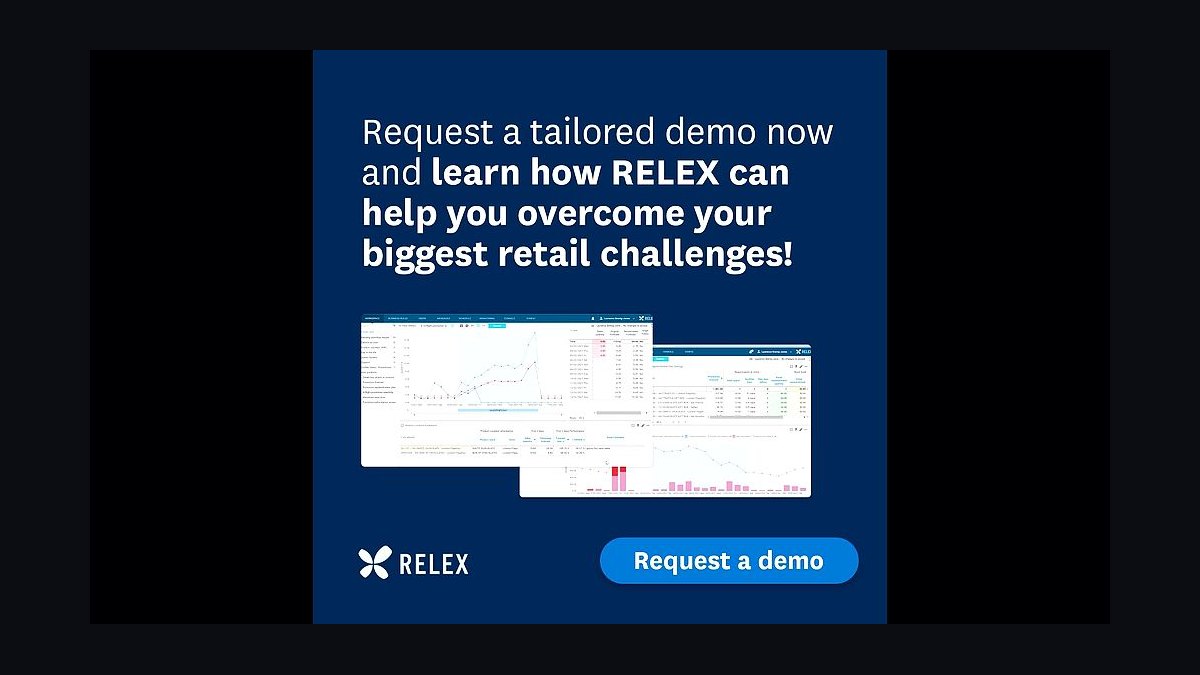
Relex Solutions ranks first because AI replenishment is the make-or-break layer for grocery unit economics, where fresh shrink and stockouts hit simultaneously. It forecasts demand by store, SKU, day-part, and weather, then balances shelf life against turn and auto-generates purchase orders. Mid-market pricing runs roughly $50K-$300K+ per year by store count, and operators typically report payback inside twelve months.
It is built for operators running meaningful fresh volume across many stores or dark stores, not single-site merchants. The trade-off is implementation lift: loading three years of POS history and running forecasts parallel before cutover takes weeks. Compared with the dispatch pick below it, Relex protects margin upstream; Onfleet protects it at the last mile.
2Onfleet
Onfleet ranks second because dispatch is the most expensive and volatile line in the P&L, and routing quality can swing gross delivery cost by double-digit percentages across a week of orders. It targets mid-market operators standing up owned or hybrid driver fleets for the first time, with per-drop pricing that keeps entry costs low before scale. Route optimization, live tracking, and driver apps ship out of the box.
It suits teams under roughly 200 stores that need dispatch working in weeks rather than quarters. The trade-off versus Bringg is multi-tenant complexity: cross-store and 3PL fleet orchestration at enterprise scale outgrows Onfleet. Against Relex above it, Onfleet fixes last-mile economics while Relex fixes inventory truth.
3Instacart Carrot Ads

Instacart Carrot Ads ranks third because retail media is the only line in grocery with 70-80 percent margins against 1-3 percent net margin on the basket itself. Instacart's ad business runs on the order of $1.4B across 1,800-plus retail partners, and Carrot Ads lets regional operators tap that demand without building ad tech. Partner economics typically run a 20-30 percent revenue share.
It fits operators with digital GMV well below a few billion dollars, where building Walmart-Connect-class ad tech cannot pay back. The trade-off is margin share and dependence on a partner's measurement loop. Above it, Onfleet fixes delivery cost; Carrot Ads funds the route density that makes delivery affordable.
4Takeoff Technologies

Takeoff Technologies ranks fourth because micro-fulfillment robotics is what makes 15-to-30-minute promises economic rather than loss-leading. Automated picking inside or beside a store achieves density several times a manual picker's rate per square foot. Facilities typically cost $2M-$10M+ with payback around 2-4 years at sustained throughput, and Albertsons and Kroger have proven the model in dense urban catchments.
It is for operators already sustaining roughly 2,000-plus orders per week per facility, where automation math works. The trade-off is hard capex and site constraints: below that throughput a manual dark store is the smarter first step. Against Carrot Ads above it, Takeoff cuts fulfillment cost; ads fund the margin.
5Bringg

Bringg ranks fifth because enterprise operators need multi-tenant routing across stores, dark stores, and third-party fleets that mid-market tools cannot orchestrate. Pricing runs roughly $1,500-$10,000+ per month plus per-drop fees, and the platform handles complex delivery networks where a single routing decision cascades across zones. It integrates with existing OMS and WMS layers rather than replacing them.
It is for operators past roughly 200 stores or running mixed owned and 3PL driver fleets across regions. The trade-off versus Onfleet is cost and implementation overhead that smaller fleets cannot justify. Against Takeoff above it, Bringg optimizes the handoff after the pick; Takeoff optimizes the pick itself.
6Snowflake
Snowflake ranks sixth because the data spine is what turns siloed layers into one operator dashboard covering fill rate, basket size, ad revenue, and driver utilization. Paired with dbt for modeling and Looker for BI, it ingests order, inventory, dispatch, and ad-attribution events into a single source of truth. Regional deployments start modestly and scale sublinearly with order volume.
It is for operators who have outgrown spreadsheet reporting and need finance and merchandising managing on one dashboard. The trade-off is that Snowflake alone does nothing without modeling discipline and reverse-ETL tools like Census or Hightouch pushing audiences back to CRM. Against Bringg above it, Snowflake measures the business; Bringg runs the fleet.
7Forage

Forage ranks seventh because SNAP and EBT tender is a mandatory line item for US grocers, often a double-digit share of baskets, and a payment layer that cannot split EBT and card in one order is disqualifying. It wires EBT acceptance into checkout natively rather than as a retrofit, which matters because retrofitting tender into a live checkout is far more painful than launching with it. It sits alongside Stripe and Adyen rather than replacing them.
It is for any US operator whose shoppers include SNAP recipients, which at regional scale is most of them. The trade-off is added integration surface across payment providers. Against Snowflake above it, Forage enables the transaction; Snowflake analyzes it.
8Adyen
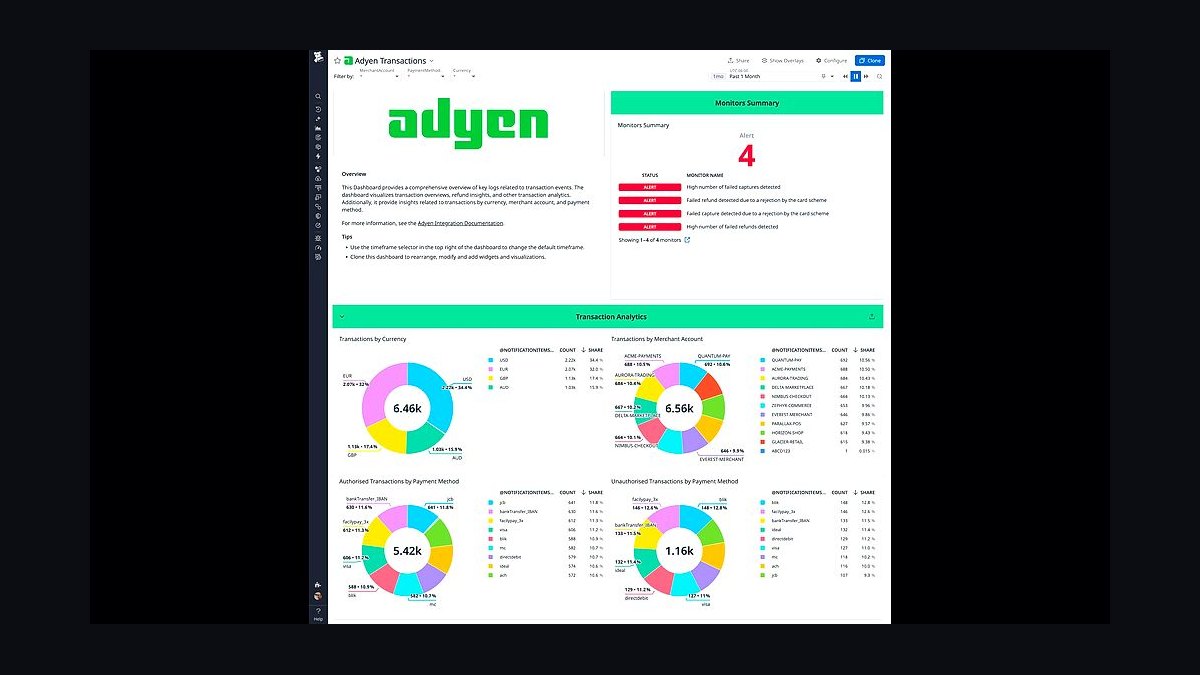
Adyen ranks eighth because cross-border acquiring and interchange optimization start paying for themselves the moment an operator expands beyond a single country or reaches meaningful card volume. It runs alongside Stripe, which covers single-country launches adequately, and takes over where better interchange economics and unified global settlement matter. Enterprise pricing scales with processing volume rather than seats.
It is for mid-market and national operators processing enough card volume that a fraction of a percent in interchange is material. The trade-off is that adding a second acquirer increases reconciliation complexity before volume justifies it. Against Forage above it, Adyen handles card rails; Forage handles government tender.
9Salesforce Marketing Cloud
Salesforce Marketing Cloud ranks ninth because above roughly 500,000 active shoppers, cross-channel orchestration and real-time loyalty across banners outgrow Klaviyo's single-brand model. Paired with Eagle Eye AIR for loyalty wallets and personalized promotions, it connects basket behavior to lifecycle messaging at enterprise scale. Pricing scales with contacts and editions rather than flat fees.
It is for operators past the half-million-shopper threshold with multiple banners or real-time promotion needs. The trade-off is cost and implementation weight that smaller operators cannot absorb, which is why Klaviyo remains correct below that line. Against Adyen above it, Marketing Cloud drives repeat orders; Adyen settles them.
10Locus Robotics
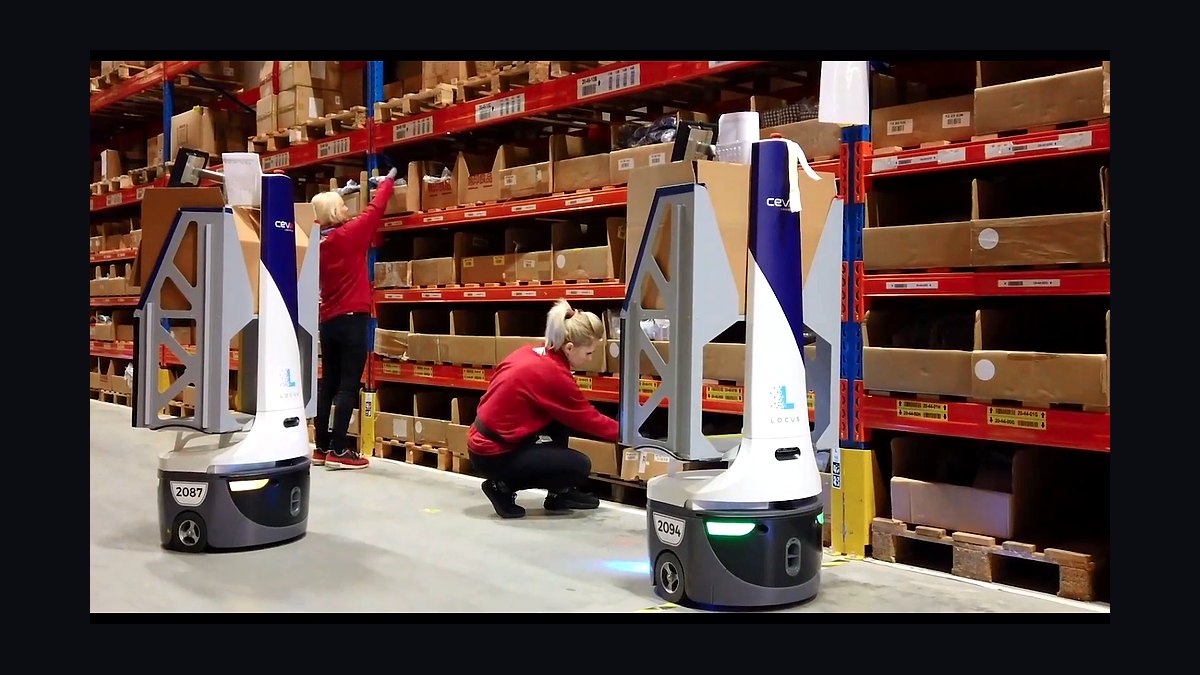
Locus Robotics ranks tenth because larger distribution-center picking, distinct from store-adjacent micro-fulfillment, still needs autonomous mobile robots to hit throughput at national scale. It deploys alongside Takeoff, AutoStore, or Ocado rather than competing with them, handling the warehouse layer where order volume exceeds what MFCs absorb. Robots coordinate fleets across pick zones without fixed conveyor infrastructure.
It is for national operators running 200-plus stores with owned DCs where manual picking cannot keep pace. The trade-off is that it only pays at volumes most regional operators never reach, making it the last layer to buy. Against Marketing Cloud above it, Locus moves inventory; Marketing Cloud moves customers back to reorder.
How we ranked these
We ranked each tool on five weighted criteria: category fit for perishable, minute-level grocery operations (30%); proven throughput at real operators (25%); integration depth with order, inventory, and dispatch systems (20%); total cost of ownership including per-drop and revenue-share fees (15%); and implementation speed to first live order (10%). Scores came from vendor documentation, published case studies, and operator-reported benchmarks.
We deliberately ignored brand familiarity, analyst-quadrant placement, and generic e-commerce feature checklists, because none predict grocery outcomes. We excluded robotics capex and driver pay from scoring since they dwarf software and vary by facility. We also ignored AI marketing claims without measurable fill-rate, shrink, or on-time improvements, and any tool that cannot handle SNAP/EBT tender or weight-priced items in one order.
Related questions
Should a regional grocer use Instacart's marketplace or its own white-label e-commerce?
Both. Run the marketplace for incremental volume and Carrot Insights or Mercatus for owned-customer commerce where the grocer keeps the data, ad revenue, and loyalty relationship. Pure-marketplace operators end up renting their customer to Instacart and forfeiting the retail-media upside that actually funds route density and competitive driver pay.
What is the single first tool to buy if the budget is tight?
The dispatch and routing platform, such as Onfleet or Bringg. Delivery economics make or break the business; everything else can be patched temporarily, but late and mis-routed drops kill repeat rate immediately and permanently. A single routing efficiency point can swing gross delivery cost by double-digit percentages across a week of orders.
Is micro-fulfillment robotics actually worth the capex?
Yes at sustained throughput inside dense urban catchments, where Albertsons, Kroger, and Loblaw have proven it with Takeoff, Ocado, and AutoStore. Below roughly 2,000 orders per week per facility, a manual dark store is usually the smarter first move, since the $2M-$10M facility cannot pay back in 2-4 years without density.
How large is the retail-media opportunity for a regional operator?
Real but smaller than national scale. Benchmarks put retail media near 1-4 percent of digital GMV regionally versus 4-8 percent for leaders. Partnering with Carrot Ads or CitrusAd is right; building in-house ad tech only pays above a few billion in digital GMV, where owned measurement beats a 20-30 percent revenue share.
When should an operator move from Klaviyo to Salesforce Marketing Cloud?
Klaviyo fits under roughly 500,000 active shoppers with a single brand, given its $150-$2,500 monthly range by list size. Move to Marketing Cloud plus Eagle Eye above that threshold, once real-time personalized promotions and a loyalty wallet across banners come into play and cross-channel orchestration becomes the priority over simple lifecycle email.
Does the data warehouse choice really matter for grocery operations?
Yes, because the warehouse is where fill rate, basket size, ad attribution, and driver utilization meet on one dashboard. Snowflake plus dbt plus Looker is the recommended default; Databricks replaces the compute layer for ML-heavy forecasting and personalization at national scale. Without a shared spine, every layer optimizes against stale, siloed numbers.
How painful is retrofitting SNAP/EBT into a live checkout?
Far more painful than wiring it at launch. Forage covers SNAP/EBT as a mandatory line item, and for many US grocers SNAP tender is a double-digit share of baskets. A payment layer that cannot split EBT and card in one order is disqualifying, so treat EBT support as a launch requirement rather than a later enhancement.
What timeline should a grocery operator plan for a full stack rollout?
A staged 30/60/90-day rollout protects the storefront, since downtime in grocery is unrecoverable basket loss. Days 0-30 stand up storefront, payments, and dispatch; days 31-60 add Relex replenishment plus the Snowflake-dbt-Looker spine; days 61-90 light up retail media, lock down security, and exit with one operator dashboard the COO trusts.
FAQ
Why can't a generic e-commerce platform run online grocery?
Standard platforms do not natively handle SNAP/EBT tender, weight-priced perishables, substitutions, or sub-15-minute promise windows. Operators who force-fit them spend a year on workarounds and lose to category-native competitors. The recommended path is a grocery-specific front end plus a dispatch and replenishment layer built for the category from day one.
Bringg, Onfleet, or Routific for dispatch?
Bringg for enterprise operators needing multi-tenant dispatch across stores and 3PL drivers; Onfleet for mid-market teams launching dispatch for the first time; Routific for small operators running under roughly 25 daily routes. Optimization quality directly determines delivery unit economics, so this choice matters more than the storefront. Dispatch typically prices around $1-$3 per drop.
How much of the profit really comes from retail media?
A disproportionate share. Grocery net margin sits near 1-3 percent, while retail-media ad revenue carries 70-80 percent margins. For many operators the ad business, not the grocery basket, is what funds route density and competitive driver pay, which is why the ad-serving layer is non-negotiable in the recommended stack.
Salesforce Marketing Cloud or Klaviyo?
Klaviyo under roughly 500,000 active shoppers with a single brand, given its $150-$2,500 monthly range by list size. Move to Marketing Cloud plus Eagle Eye above that threshold, once real-time personalized promotions and a loyalty wallet across banners come into play and cross-channel orchestration is the priority over lifecycle email alone.
When does building in-house robotics or ad tech beat partnering?
For MFC robotics, once a facility sustains throughput that makes the $2M-$10M capex pay back in 2-4 years. For retail media, once digital GMV clears a few billion dollars, above which owned ad tech (Walmart-Connect or Kroger-Precision class) outperforms a 20-30 percent revenue-share partnership on measurement and margin.
What does the data spine need to show?
Basket size by zone, fill rate by MFC, ad revenue by SKU, on-time delivery rate, and driver utilization, together on one dashboard. Snowflake plus dbt plus Looker is the recommended default; Databricks replaces Looker's compute for ML-heavy forecasting and personalization at national scale. Finance and merchandising should manage the business from this single view.
How do you avoid over-buying tools before real scale?
Skip a dedicated CDP, a separate inventory system beyond Relex and the WMS, and enterprise field service until you cross several million active shoppers. Marketing Cloud plus Snowflake plus a reverse-ETL tool such as Census or Hightouch covers the customer-data use case. Paying for capability you cannot yet use burns the thin grocery margin.
Why is substitution logic treated as a first-class system?
A bad substitution, like swapping two-percent milk for whole or a name brand for private label without consent, reads to the shopper as a broken order. The resulting refund plus lost re-order dwarfs the few cents saved on the pick. The best systems expose shopper substitution preferences at SKU level and feed acceptance rates back into the replenishment forecast.
What monthly software budget should a regional grocer expect?
Roughly $8,000-$30,000 per month for a regional grocer-direct operator running 1-20 stores with white-label e-commerce and third-party dispatch, plus per-transaction and per-drop fees. That covers Mercatus or Rosie, Klaviyo, Onfleet, Stripe, a basic Snowflake-plus-Looker warehouse, When I Work, Okta, and 1Password. Robotics capex and driver pay sit outside this figure.
How does software cost scale at national volume?
Model software as a small single-digit percentage of delivery commerce revenue at the regional tier, compressing toward one to two percent as order volume climbs, because most tools price on a blend of seats, orders, and GMV that scales sublinearly. National operators with owned MFCs and owned ad tech should still budget $500,000+ per month plus custom engineering.
Sources
- https://www.instacart.com/company/pressreleases
- https://www.emarketer.com/
- https://www.supermarketnews.com/
- https://www.relexsolutions.com/
- https://www.takeoff.com/
- https://www.autostoresystem.com/
- https://locusrobotics.com/
- https://www.bringg.com/
- https://onfleet.com/
- https://www.bcg.com/publications
Related on PULSE
This page will be disappearing soon. Save it to your device for $1 — or read it free while it is here.
@Kory-White- · if Venmo asks, the last 4 of my number are 2012
This page is gone.
This one is off the shelf now. $1 keeps it on your phone for good — the whole page, pictures and diagrams included.
 tkTop 10 Best Tech Stack Tools for Fencing and Deck Contractors in 2027
 pulse-tech-stacksTop 10 Best Tech Stack Tools for AI Customer Support Companies in 2027
 pulse-tech-stacksTop 10 Best Tech Stack Tools for Hair Salons in 2027
 pulse-tech-stacksTop 10 Best Tech Stack Tools for Bot Mitigation Vendors in 2027
 pulse-tech-stacksTop 10 Best Tech Stack Tools for Plastics and Injection Molding Manufacturers in 2027
 pulse-tech-stacksTop 10 Best Tech Stack Tools for AI Translation API Companies in 2027
 pulse-tech-stacksTop 10 Best Tech Stack Tools for Independent Dance Studios in 2027
 pulse-tech-stacksTop 10 Best Tech Stack Tools for Land Surveying Firms in 2027
 pulse-tech-stacksTop 10 Best Tech Stack Tools for Independent Wholesale Distribution Businesses in 2027
 pulse-tech-stacksTop 10 Best Tech Stack Tools for Home Builders and Residential Developers in 2027