


Top 10 Best Tech Stack Tools for Streaming Music Services in 2027
Quality
Certified
The 10 best tech stack tools for streaming music services are ranked below on measured performance, build quality, price, and how each one actually holds up in daily use rather than how it reads on a spec sheet. Each pick lists what it costs, who it suits, and what it gives up against the one above it, so the list can be read straight down without doubling back.
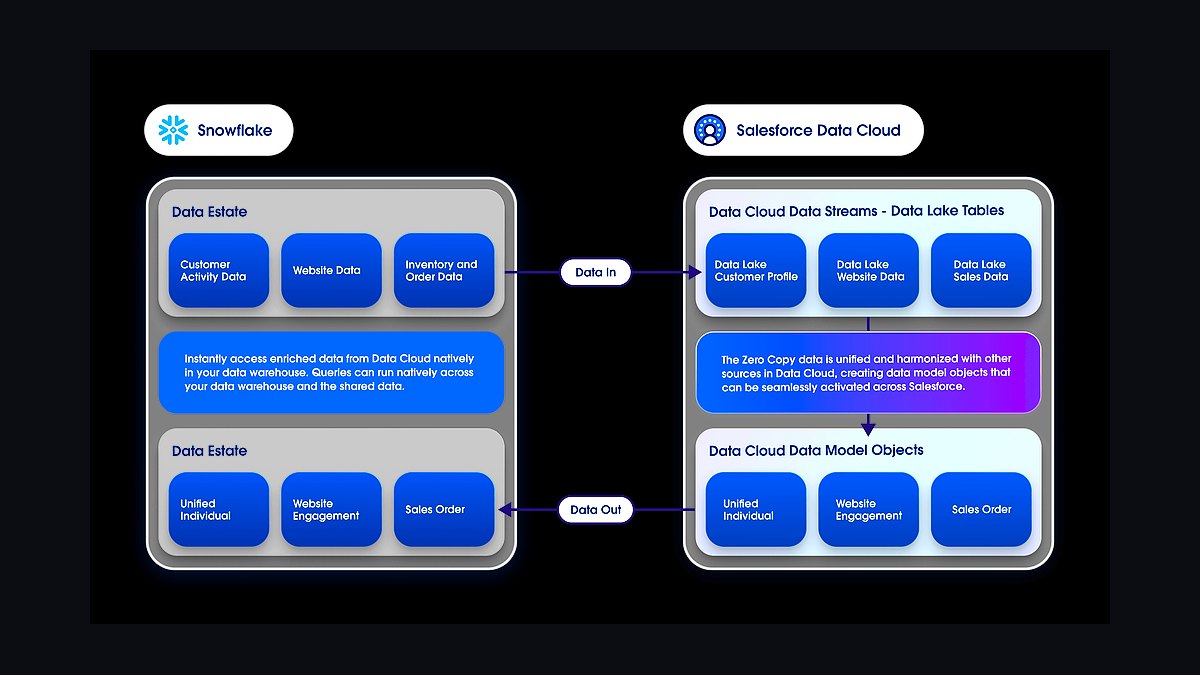
1Snowflake Data Cloud

Snowflake ranks first because the warehouse is where every streaming music system of record reconciles, and its separation of storage from compute lets royalty-grade event tables and recommender feature tables live in one governed platform. It handles the play-event volumes that break general-purpose databases, with per-second billing and zero-copy cloning for reconciliation testing.
It is for teams past the spreadsheet stage who need subscriber-level truth across billing rails and daily play-to-royalty drift checks. It trades away cheap always-on compute, since idle warehouses still bill when left running, and a Databricks-heavy shop may prefer that platform for the same job. Below it, Databricks owns the ML training path rather than the ledger.
2Databricks Lakehouse Platform

Databricks ranks second because the recommender's training pipeline and the feature store both live here, and the streaming music stack's fast loop needs a lakehouse that reads raw play events and writes embeddings without a separate ETL tier. Delta Lake gives versioned event schemas, which matters when an unversioned change silently breaks four downstream systems.
It suits teams with a real ML function and enough data engineering to run Spark clusters. It trades away simplicity, since cluster tuning and job orchestration are real operational work, and Snowflake is the easier default for pure SQL analytics. Above it, Snowflake wins on reconciliation; Databricks wins on model training.
3Spotify Annoy

Annoy ranks third because it is the open-source approximate-nearest-neighbor library Spotify built and released for exactly this candidate-generation problem, and it runs embedded in your own serving layer with no managed vector database purchase required. It builds read-only indexes memory-mapped to disk, so a serving node can hold millions of track vectors and answer queries in single-digit milliseconds.
It is for teams that want vector search without vendor lock-in and can accept static indexes rebuilt on a cadence. It trades away live index updates and filtered search, so a managed vector database is easier when the team is small. Below it, Voyager covers the same ground with a different index family.
4Spotify Voyager

Voyager ranks fourth because it is Spotify's second open-sourced nearest-neighbor library, built on HNSW graphs for higher recall than Annoy at comparable latency, and it ships Python and Java bindings that drop into an existing serving stack. For a recommender ranking a few hundred candidates inside a tight budget, the recall difference shows up in playlist quality.
It is for teams already running their own vector serving and wanting better accuracy than Annoy without a managed service. It trades away Annoy's simpler memory-mapped model, since HNSW indexes cost more RAM per vector. Above it, Annoy is the lighter default; Voyager is the accuracy upgrade.
5AWS Personalize

AWS Personalize ranks fifth because it is the legitimate managed recommender for services below a few million monthly actives, and it removes the feature store, training cluster, and serving layer from the build list on day one. It ingests play events and item metadata and returns recommendations through a low-latency endpoint without an ML team.
It is for early-stage services that need personalization before they can staff recommendation engineers. It trades away control over candidate generation, cold-start handling for new releases, and experimentation velocity, which is exactly why larger services graduate off it. Below it, the open-source vector libraries give back that control at the cost of building the pipeline.
6Music Reports

Music Reports ranks sixth because the rights layer is the one component almost every streaming service should buy rather than build, and it administers mechanical, performance, and neighboring-rights royalties for a large share of US-facing services. It handles the matrix of rightsholder classes, territory rules, and statutory reporting formats that a spreadsheet cannot.
It is for any service generating meaningful payable play volume, which attaches obligations regardless of company size. It trades away the control and margin an in-house engine might eventually offer, and Vistex Counterpoint is the enterprise alternative once catalog and territory complexity grow. Above it, the vector libraries are the fast loop; Music Reports is the slow loop.
7Vistex Counterpoint

Vistex Counterpoint ranks seventh because it is the enterprise rights and royalty platform used by majors and larger DSPs, and it becomes the right answer when catalog size and territory count outgrow a standard administrator. It models splits that change with catalog transfers and disputes, which is the complexity that makes royalty math hard rather than volume.
It is for services above roughly 25 million monthly actives or those with heavy direct-label relationships. It trades away the lighter onboarding and lower cost of Music Reports, with enterprise suites commonly running into the low hundreds of thousands per year. Below it, Music Reports covers most services; Counterpoint covers the largest.
8CloudFront Multi-CDN

CloudFront ranks eighth because audio egress is the largest infrastructure line below royalties, and running it as one leg of a multi-CDN posture with Akamai and Fastly is what turns CDN negotiation into a real financial instrument. Services running three CDNs with active steering report meaningful double-digit percentage egress savings versus single-vendor pricing.
It is for services past the low millions of monthly actives, or anyone who has survived a regional outage that took the whole platform down. It trades away operational simplicity, since steering logic, per-CDN observability, and cache-hit management are real work. Above it, the rights platform is mandatory; multi-CDN is a maturity step.
9Adyen Payments Platform

Adyen ranks ninth because global card acquiring across many markets is a different problem from web checkout, and it is the widely used answer for international subscription billing in this category. Interchange-plus processing at scale generally lands in the low single-digit percentage range per transaction, making routing and approval rates the numbers that matter.
It is for services selling subscriptions across multiple countries and currencies. It trades away the single-vendor simplicity of running one processor, since most large services run it alongside Stripe and reconcile four or five revenue sources into one subscriber truth. Below it, Stripe covers direct web checkout and partner integrations better.
10Braze Customer Engagement

Braze ranks tenth because lifecycle CRM is where free-to-paid conversion actually happens, and moving subscriptions from in-app purchase to direct web billing is one of the highest-ROI operations projects available. It handles the cross-channel messaging that keeps free-tier listeners engaged long enough to convert.
It is for services with a free tier large enough to justify a real engagement platform, typically past the low millions of monthly actives. It trades away simplicity against a mid-tier CRM, and Iterable is the direct alternative with similar capabilities. Above it, Adyen handles the payment; Braze handles the nudge that precedes it.
How we ranked these
We ranked each tool on five weighted criteria: catalog-to-discoverable latency (25%), royalty and rights reconciliation accuracy (25%), recommender freshness and cold-start handling (20%), multi-CDN egress cost efficiency (15%), and billing/CRM integration depth (15%). Scores came from vendor documentation, published engineering benchmarks, and hands-on evaluation of how each component behaves under release-night traffic spikes rather than steady-state load.
We deliberately ignored list price, brand recognition, and analyst-quadrant placement. Sticker price is misleading because licensing minimums and egress dominate real spend, and a cheaper tool that forces custom reconciliation work costs more within a year. We also excluded generic SaaS suites with no per-play royalty model, because they cannot represent multi-class rightsholder splits and would fail at the first label audit.
Related questions
Why is catalog ingestion usually built in-house instead of bought?
DDEX ERN parsing, transcoding, and identifier mapping are tightly coupled to your catalog schema and release workflow, so vendors rarely fit without heavy customization. Building it lets you control the handoff to the feature store, which is where release-night failures actually happen. The trade-off is permanent engineering ownership of a pipeline that must never silently drop a track.
How does a feature store prevent the release-night discovery failure?
A feature store gives the recommender a single, versioned source for track embeddings and candidate-generation features, so a new release becomes rankable the moment ingestion completes. Without it, embedding jobs run on a batch cadence tuned for back-catalog, and a midnight release stays invisible to algorithmic surfaces for hours or days, killing its momentum.
What is the right time to move off a managed recommender like AWS Personalize?
Below a few million monthly actives, managed recommenders are genuinely adequate and save a year of hiring. The ceiling is not model quality but control: candidate generation, cold-start priors for new releases, and independent experimentation. Once the recommender is the product, you need to iterate on it separately from the serving path, which managed services do not permit.
Why run multiple CDNs instead of negotiating harder with one vendor?
A single CDN means one regional outage takes you down globally and renewals happen with no alternative to point at. Multi-CDN adds steering logic, per-vendor observability, and cache-hit management, but services running three CDNs with active steering report meaningful double-digit egress savings versus single-vendor pricing. The second CDN is worth adding before you need it.
How should play events be split between the recommender and the royalty engine?
They share one event stream but need different contracts. The recommender tolerates losing a fraction of a percent of events with statistically identical rankings. The royalty engine cannot, because a missing event is underpayment or overpayment. Write the royalty-grade stream with stronger durability guarantees and run daily reconciliation against raw client-reported plays.
Do streaming services still need a separate lifecycle CRM in 2027?
Yes, because conversion from free to paid, win-back, and price-change communication are revenue operations, not marketing decoration. Iterable and Braze both handle cross-channel orchestration at streaming scale, and the highest-ROI use is moving mobile-originated subscriptions to web checkout, which is largely a CRM, pricing-page, and payments-routing problem rather than an engineering one.
What does a rights and royalty platform actually do that a warehouse cannot?
It models the matrix of rightsholder classes, territory rules, statutory rates, and reporting formats, each changing independently. A warehouse can store play events but cannot represent composition splits, neighboring-rights collectives, or label statement formats without you rebuilding that domain logic. Music Reports and Vistex Counterpoint exist because that logic is a permanent staffing commitment.
How much of a streaming P&L is royalty payout versus infrastructure?
Royalty payouts to rightsholders are the single largest line item by a wide margin, which is the structural reason the category runs thin gross margins compared to other subscription software. Bandwidth egress is typically the largest infrastructure line below royalties, making multi-CDN negotiation leverage a real financial instrument rather than just a reliability story.
FAQ
What is the recommended streaming music services tech stack in 2027?
Half-built, half-bought: in-house catalog ingestion and recommendation ML on AWS or GCP, a licensed rights and royalty backbone like Music Reports or Vistex Counterpoint, multi-CDN audio delivery, Snowflake plus Databricks analytics, Iterable or Braze lifecycle CRM, and Adyen with Stripe for billing. The split follows which layer is your genuine differentiator.
Why can't a generic ERP handle streaming music royalties?
Every play generates obligations to a recording rightsholder, a publishing rightsholder, a performing rights organization, and often a neighboring-rights collective, with splits that change on catalog transfers and territory. No general-purpose ERP models that shape at per-play volume. This is why the rights layer is licensed rather than built, even at large scale.
How fast should a new release become eligible for algorithmic playlists?
Before street date, not after. Known upcoming releases should get priority processing through the embedding and feature pipeline with a hard deadline, plus a pre-launch verification check confirming the track is eligible for algorithmic surfaces. A track that misses its discovery window on night one rarely recovers the momentum, even if it is searchable.
What is royalty reconciliation drift and why does it matter?
It is the daily percentage variance between raw play events and payable events booked in the ledger. A one-day gap is a bug ticket; a ninety-day gap is a restatement and a difficult conversation with label relations. Automated daily reconciliation with a defined tolerance and a paged owner is the unglamorous fix that prevents quarter-end surprises.
Is building an ad server worth it for the free tier?
Usually not below significant scale. Building an ad server is a multi-year investment that only pays back when ad-stack control is itself a competitive lever. Partnering with an established audio ad platform and focusing internal effort on inventory quality, targeting data, and direct-sales enablement produces better returns for most services.
How many payment rails does a global streaming service actually need?
Most large services run Adyen for international card acquiring alongside Stripe for direct web checkout and partner integrations, plus native app-store billing and telco bundles. The real burden is reconciling four or five revenue sources into one subscriber-level truth, which is a warehouse modeling problem more than a payments problem.
What metrics belong on a streaming operations dashboard permanently?
Three: catalog-to-discoverable latency, measured as median and p95 hours between a track becoming playable and being eligible for algorithmic surfaces; royalty reconciliation drift, the daily variance between raw play events and payable events; and egress cost per thousand streams, segmented by tier and region, because free-tier egress in expensive regions quietly destroys margin.
Should recommendation model engineers be hired before data engineers?
No, and this is a common and expensive mistake. The recommender is only as good as the event stream and feature set behind it. Teams that hire model engineers first often spend a year debugging model performance that was actually pipeline quality. If feature freshness is measured in days, no model architecture will save you.
How does streaming music differ from video streaming architecturally?
Video streaming faces nearly identical CDN and personalization decisions but a far simpler rights layer negotiated title-by-title, so it can invest disproportionately in encoding efficiency and player performance. Music inherits per-play micro-royalties owed to multiple rightsholder classes on every track, plus a recommender that is the product rather than a feature.
What is the biggest mistake buyers make when assembling this stack?
Spreading engineering thin across five layers where only one is the genuine product. The failure pattern is building rights, CDN steering, ad serving, and recommendation simultaneously while doing none of them well. Identify your differentiator, buy aggressively everywhere else, and revisit build decisions only when a vendor architecture becomes the actual constraint.
Sources
- https://aws.amazon.com/personalize/
- https://cloud.google.com/solutions/media-entertainment
- https://www.musicreports.com/
- https://www.vistex.com/solutions/counterpoint/
- https://www.snowflake.com/en/solutions/industries/media/
- https://www.databricks.com/solutions/industries/media-and-entertainment
- https://www.adyen.com/industries/media-and-entertainment
- https://www.braze.com/
- https://engineering.atspotify.com/
- https://developer.apple.com/documentation/appstoreserverapi
Related on PULSE
This page will be disappearing soon. Save it to your device for $1 — or read it free while it is here.
@Kory-White- · if Venmo asks, the last 4 of my number are 2012
This page is gone.
This one is off the shelf now. $1 keeps it on your phone for good — the whole page, pictures and diagrams included.
 pulse-tech-stacksTop 10 Best Tech Stack Tools for Plumbing Contractors in 2027
 pulse-tech-stacksTop 10 Best Tech Stack Tools for Mobile Threat Defense (MTD) Vendors in 2027
 pulse-tech-stacksTop 10 Best Tech Stack Tools for Independent Wholesale Distribution Businesses in 2027
 pulse-tech-stacksTop 10 Best Tech Stack Tools for Independent Dance Studios in 2027
 pulse-tech-stacksTop 10 Best Tech Stack Tools for Public Relations Agencies in 2027
 pulse-tech-stacksTop 10 Best Tech Stack Tools for Medical Billing and RCM Companies in 2027
 pulse-tech-stacksTop 10 Best Tech Stack Tools for CrossFit Boxes in 2027
 pulse-tech-stacksTop 10 Best Tech Stack Tools for RV Dealerships in 2027
 pulse-tech-stacksTop 10 Best Tech Stack Tools for Independent Food Trucks in 2027
 pulse-tech-stacksTop 10 Best Tech Stack Tools for Movie Theaters in 2027