


Top 10 Best Tech Stack Tools for Golf Course Operators in 2027
Quality
Certified
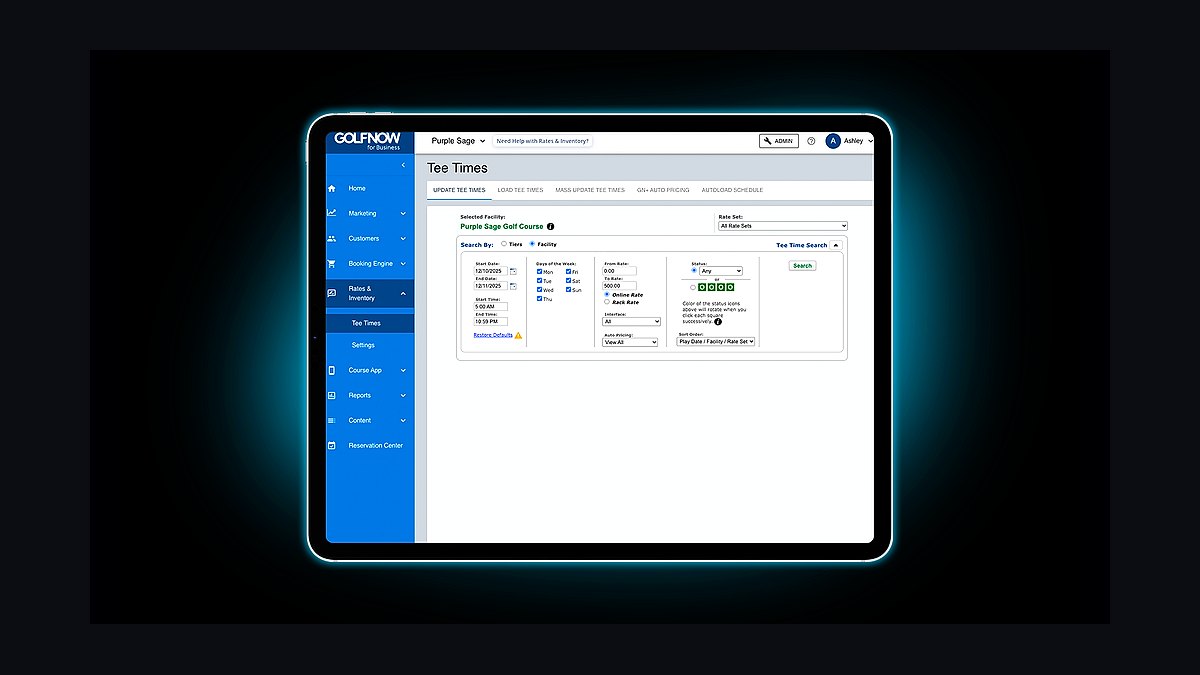
The 10 best tech stack tools for golf course operators are ranked below on measured performance, build quality, price, and how each one actually holds up in daily use rather than how it reads on a spec sheet. Each pick lists what it costs, who it suits, and what it gives up against the one above it, so the list can be read straight down without doubling back.
1GolfNow Tee Sheet
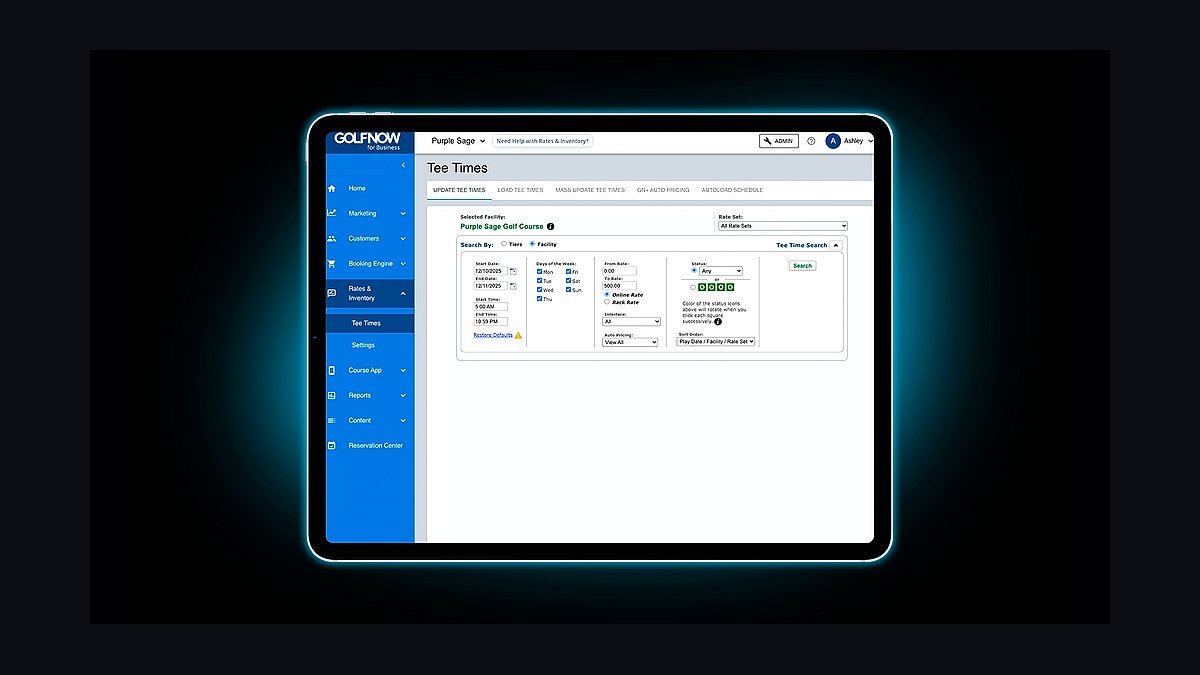
GolfNow ranks first because it is the tee sheet that doubles as a demand marketplace, filling shoulder-hour inventory no standalone booking system can. Public and daily-fee courses pay roughly $200–$1,200 per month per course plus per-round marketplace fees, and those fees buy access to golfers actively searching for tee times. For a course doing $2M–$5M in annual revenue, that marketplace reach is the single highest-leverage software line item in the stack.
It is built for public, daily-fee, and resort courses chasing round volume, not private clubs tracking dues, F&B minimums, or capital assessments. The trade-off is per-round fees that scale with success and a booking experience some operators find commoditizing. Compared with Lightspeed Golf directly below, GolfNow wins on demand generation while Lightspeed wins on pro-shop and retail integration depth.
2Lightspeed Golf
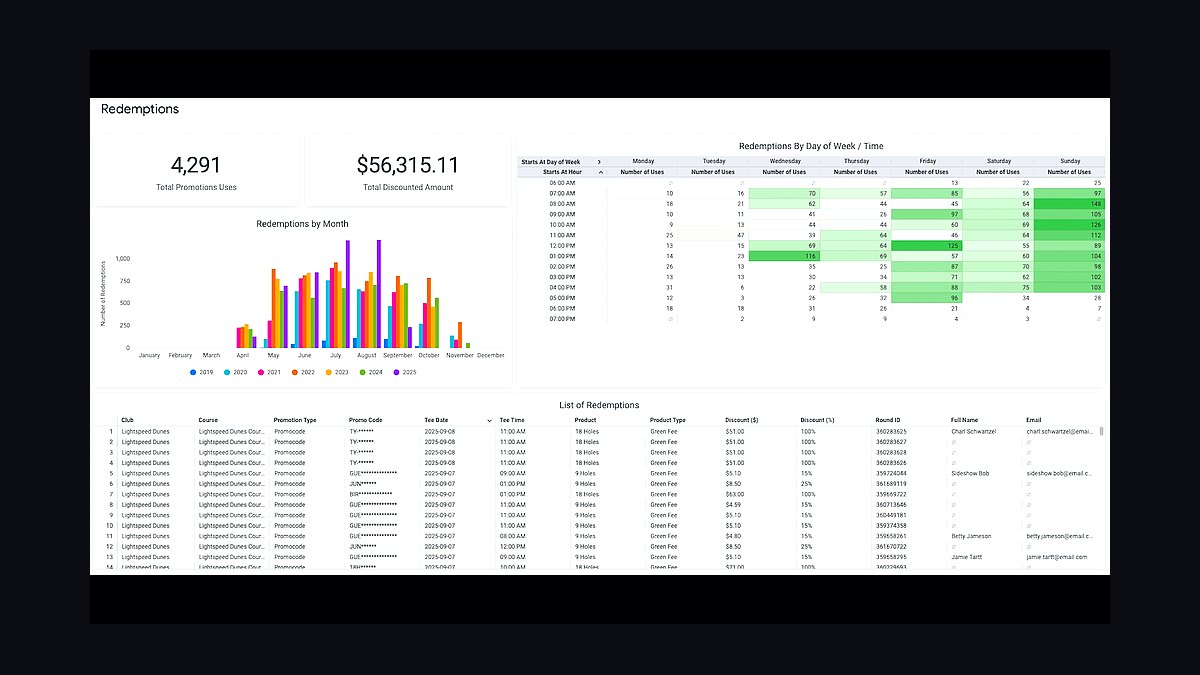
Lightspeed Golf ranks second because it pairs a capable tee sheet with the retail and pro-shop POS that public and semi-private courses need in one vendor relationship. Pricing runs in the same $200–$1,200 per month per course band as GolfNow, with per-round fees varying by contract, and its retail module handles pro-shop inventory, cart fees, and range-ball charges in one general ledger feed. Courses running it typically avoid a separate retail POS license entirely.
It suits hybrid and semi-private facilities that sell both green fees and merchandise, and multi-course portfolios standardizing on one platform. It trades away GolfNow's consumer marketplace demand, so courses dependent on outside booking traffic must add that channel separately. Against GolfNow above, Lightspeed is the stronger operations backbone; against Jonas below, it lacks private-club accounting depth.
3Jonas Club Management
Jonas Club Management ranks third because it is the heavyweight ERP private clubs actually need, tracking dues cycles, F&B minimums, banquet bookings, and capital assessments that daily-fee tee sheets cannot handle. Mid-size clubs with 300–700 members and $8M–$25M in revenue should budget $3,000–$15,000 per month for the platform. Its accounting and banquet management depth is the reason clubs choose it over lighter cloud alternatives.
It is built for private member clubs and the accounting staff who reconcile statements monthly, not for public courses optimizing round volume. The trade-off is implementation weight and a steeper learning curve than cloud-native rivals. Compared with ClubEssential directly below, Jonas wins on accounting and banquet depth while ClubEssential wins on cloud delivery and member-facing app integration.
4ClubEssential

ClubEssential ranks fourth because it delivers private-club ERP functionality cloud-native, with the integrated foreUP and Northstar ecosystem covering member reservations across golf, tennis, and dining. Mid-size clubs should expect pricing comparable to Jonas, in the $3,000–$15,000 per month range depending on modules and member count. Its member-facing reservation experience is generally considered smoother than legacy on-premise club systems.
It fits private clubs that prioritize member digital experience and want cloud delivery without maintaining on-premise servers. The trade-off is that its accounting and banquet modules are shallower than Jonas for clubs with complex capital-assessment and banquet operations. Against Jonas above, ClubEssential is the better member-experience platform; against Toast below, it is the club-wide system of record rather than a food-and-beverage tool.
5Toast POS
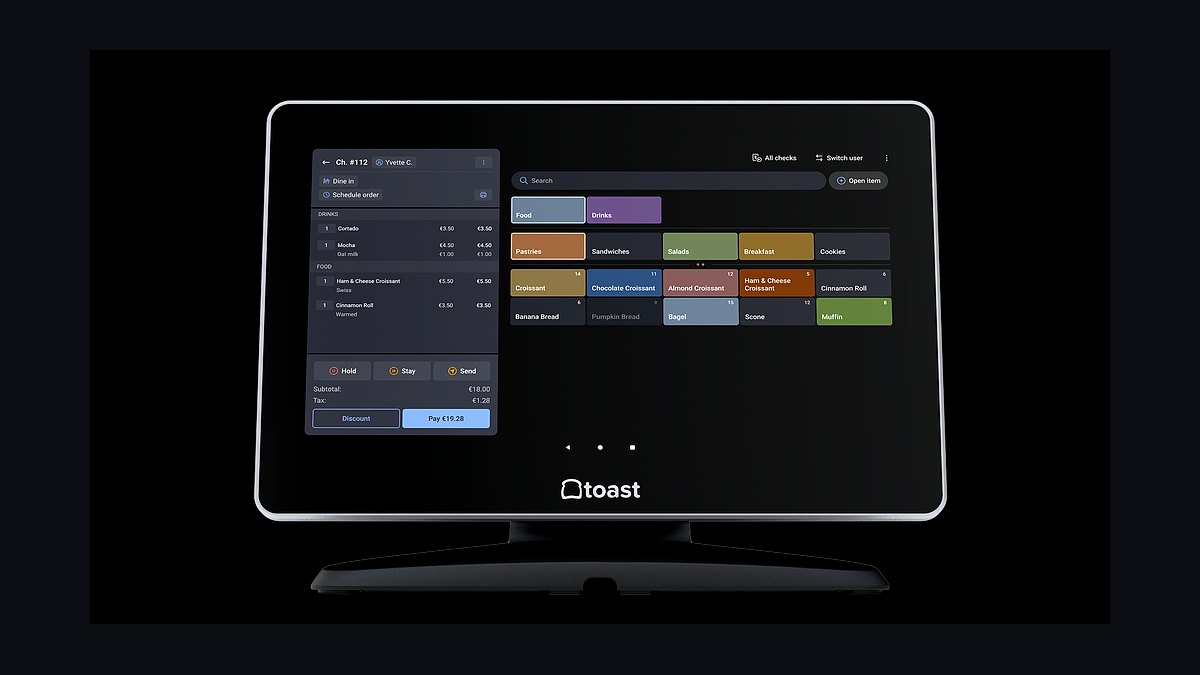
Toast ranks fifth because clubhouse and halfway-house food and beverage is where member billing disputes and F&B minimum tracking actually originate, and Toast posts those charges reliably. Pricing runs roughly $165–$300 per terminal per month, so a grill plus halfway house setup lands in the low hundreds monthly. Its handheld order-from-cart workflow is the operational feature that matters most on a golf course.
It suits both public courses taking card payments and private clubs pushing charges to member ledgers. The trade-off is that Toast is F&B software, not a club ERP, so it must be wired nightly into Jonas or ClubEssential for member billing. Compared with ClubEssential above, Toast handles the grill while ClubEssential handles the member account; the integration between them is the wire that most often fails.
6Golf Genius
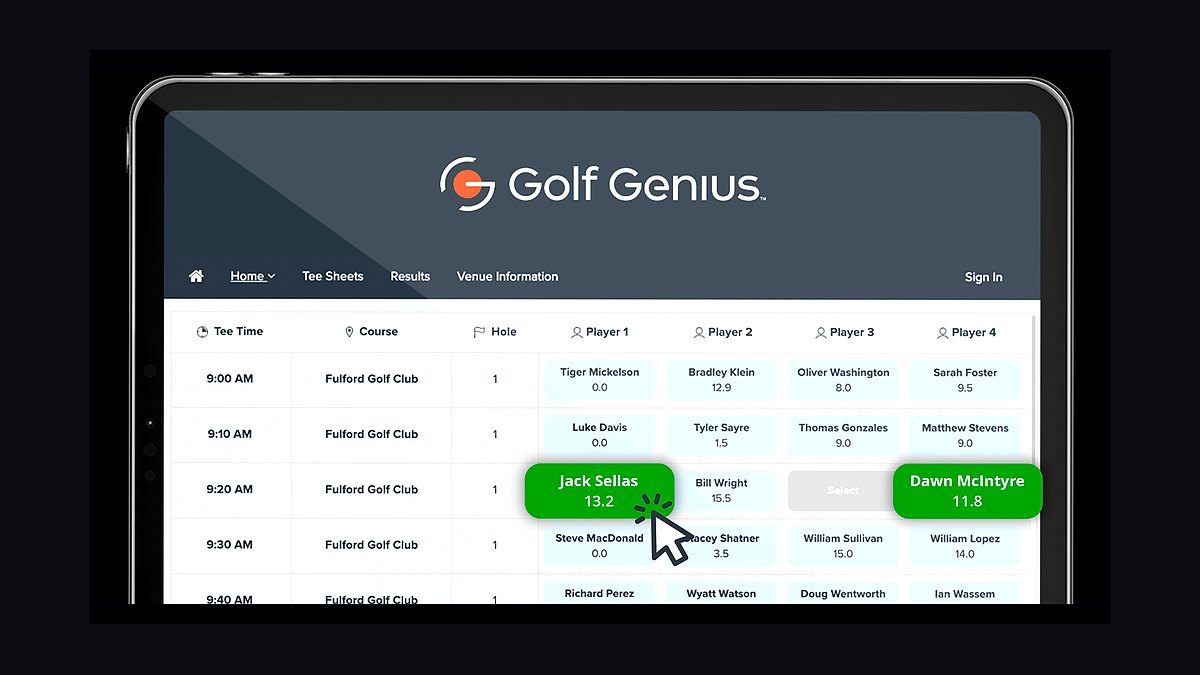
Golf Genius ranks sixth because tournament and league play is functionally a separate business inside the club, and spreadsheet-run member-guests produce mis-paired flights and unvalidated handicaps. Pricing runs roughly $1,000–$6,000 per year per facility, which is trivially cheap against the reputational cost of one botched member-guest weekend. Its GHIN integration pushes handicap updates without staff re-typing score differentials.
It is for any course running member-guests, charity scrambles, corporate outings, or handicap-tracked leagues, which is nearly every course. The trade-off is that built-in tee-sheet scoring handles casual play fine, so Golf Genius is an added license rather than a replacement. Against Toast above, Golf Genius serves the tournament calendar; against Sagacity below, it serves event administration rather than pricing.
7Sagacity Golf
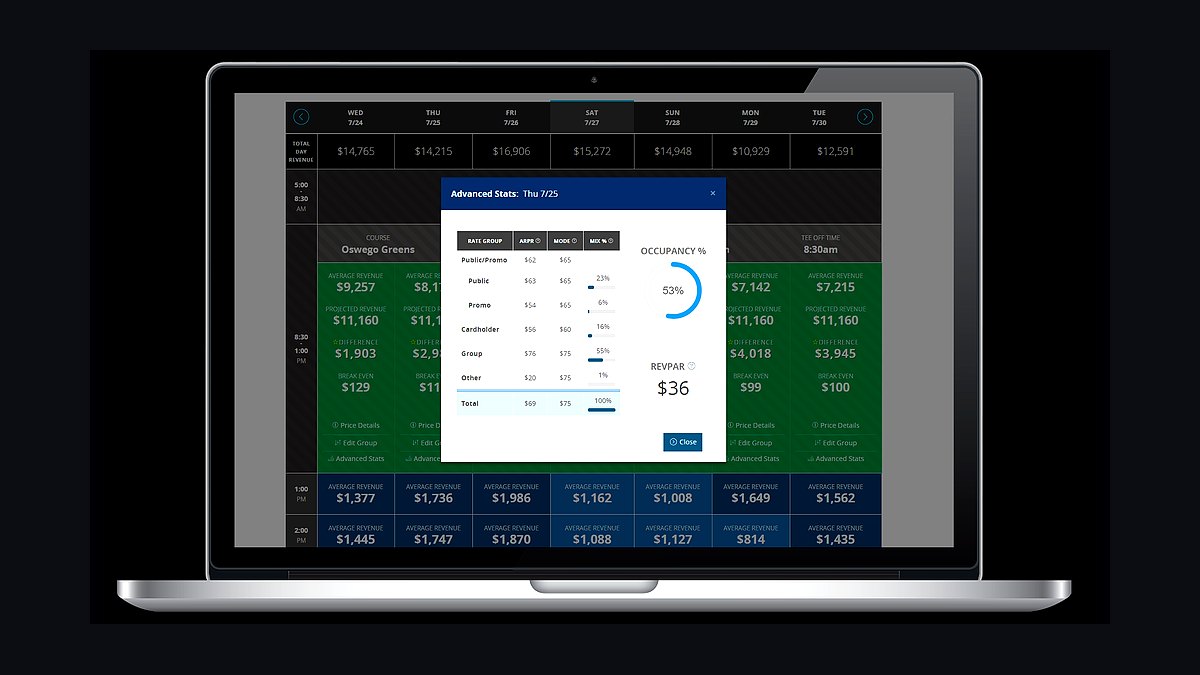
Sagacity Golf ranks seventh because static green-fee pricing leaves an estimated 10–18% of potential green-fee revenue unrealized, and dynamic pricing recovers it without adding rounds. It reprices tee-time blocks against weather, day-of-week demand, and fill rate, applying hotel and airline yield logic to a perishable seven-to-ten-minute inventory unit. Operators should judge payback within a single season on incremental green-fee yield alone.
It is for courses with enough booking volume to generate meaningful pricing signal, which realistically means most 18-hole facilities. The trade-off is that dynamic pricing requires staff comfort with variable rates and member communication at private clubs. Against Golf Genius above, Sagacity addresses revenue per round while Golf Genius addresses event execution; both are cheap relative to their downside.
8Tagmarshal
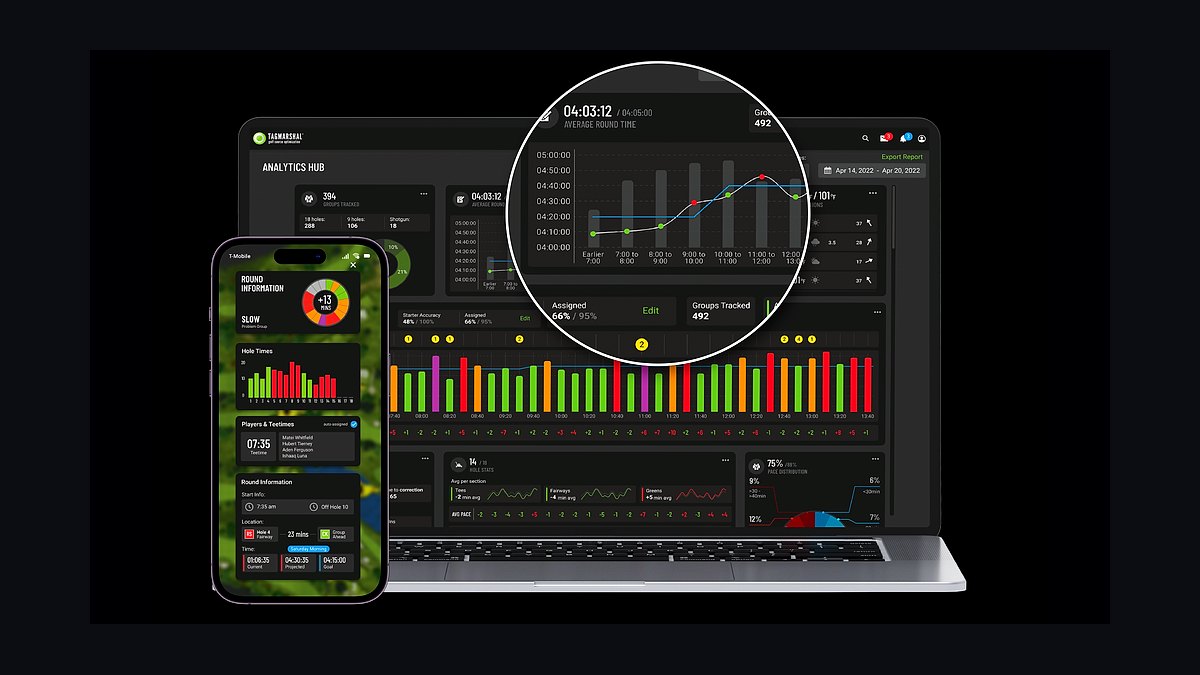
Tagmarshal ranks eighth because pace of play and cart geofencing directly affect both the golfer experience and how many rounds a course can actually fit into a day. Cart tracking and GPS/RFID systems run roughly $8,000–$40,000 per year depending on fleet size, which is a real line item but one that pays back through pace-of-play enforcement without a marshal patrolling every hole. Data feeds back into the tee sheet to flag slow groups.
It is for courses with pace-of-play problems or enough cart fleet to justify the hardware, typically mid-size private clubs and busy daily-fee facilities. The trade-off is hardware installation and maintenance that lighter software tools avoid entirely. Against Sagacity above, Tagmarshal manages the round once it starts; Sagacity manages the price before it is booked.
9Inntopia
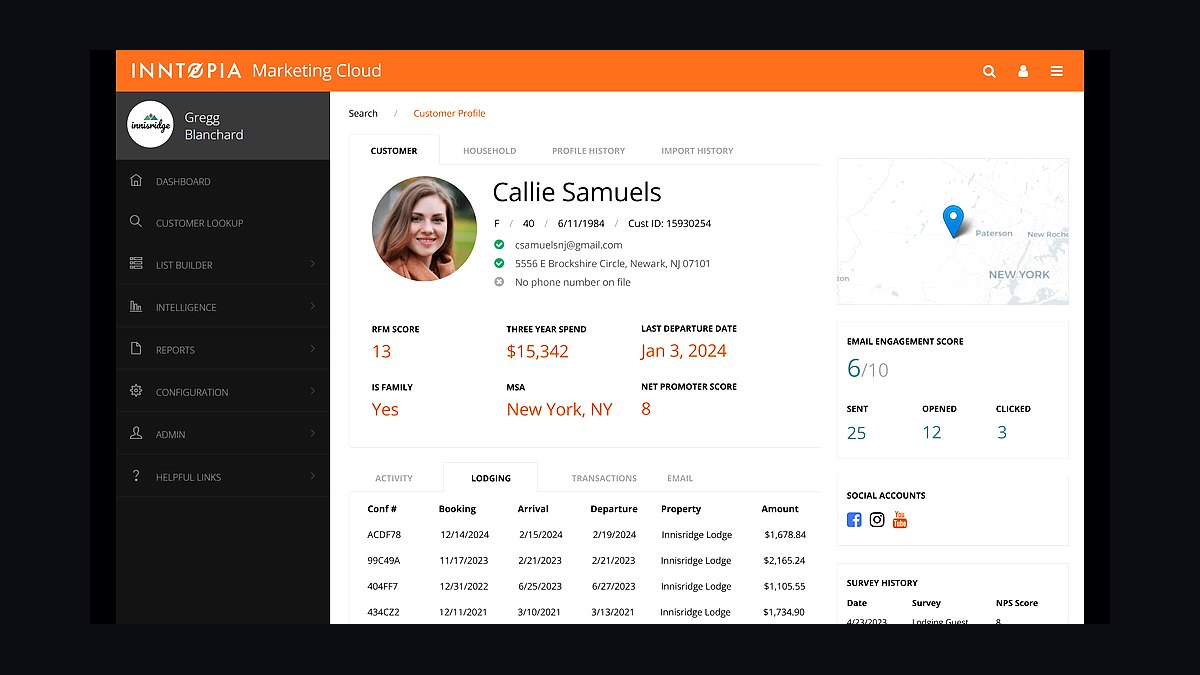
Inntopia ranks ninth because resorts selling golf-and-stay packages need a central reservation system tying tee times to room nights, which no standalone tee sheet does natively. It appears specifically at resort properties, including those KemperSports manages, where package attach is the primary revenue lever. Pricing is negotiated per property and scales with room and tee-time volume rather than a published per-course rate.
It is for resort courses and golf-and-stay destinations, not for standalone public or private clubs that sell no lodging. The trade-off is that Inntopia only makes sense once lodging revenue exists to attach, so most single-course operators will never need it. Against Tagmarshal above, Inntopia addresses package revenue while Tagmarshal addresses on-course pace.
10Salesforce
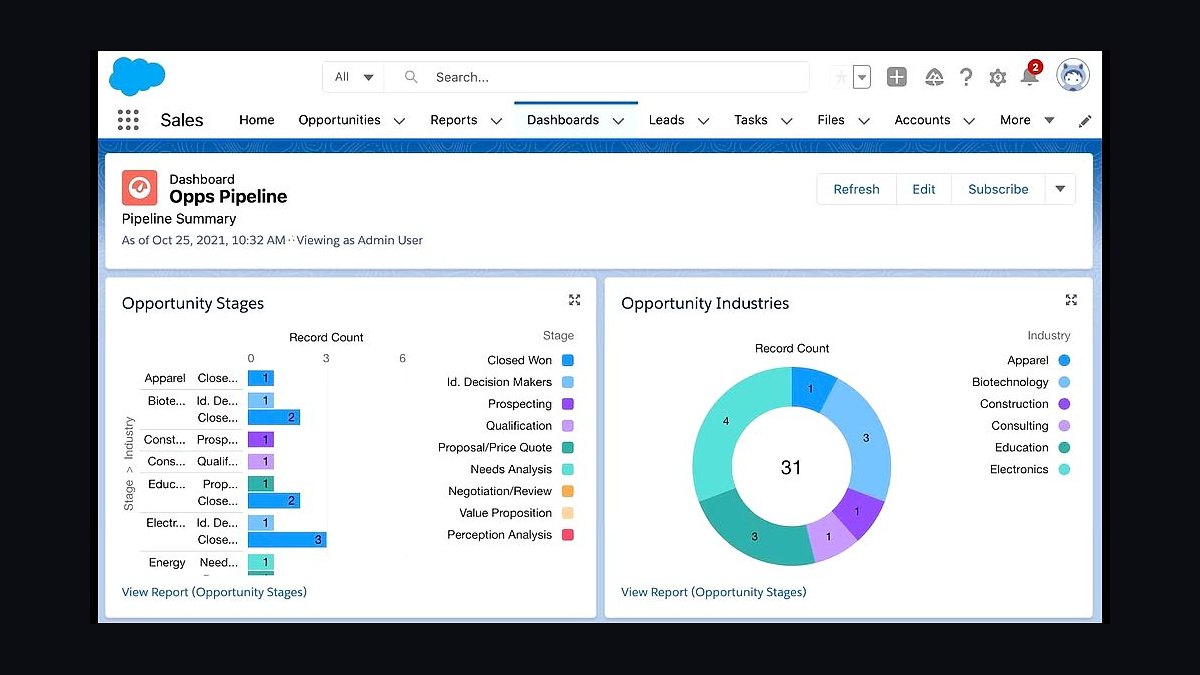
Salesforce ranks tenth because corporate outings and member-guest pipeline frequently live in someone's inbox instead of a CRM, and that gap is a comparatively cheap fix. Multi-course operators and clubs with heavy corporate-outing pipelines gain pipeline visibility comparable to a hotel sales office tracking group business. Enterprise deployments run at portfolio scale, where the per-seat cost is absorbed against group-sales revenue.
It is for multi-course portfolios and clubs with real outing and corporate-membership pipelines, not for a single course managing a handful of events annually. The trade-off is cost and administration relative to lighter tools. Against Inntopia above, Salesforce manages the sales pipeline while Inntopia manages the booked package; a single-course operator can often substitute HubSpot and skip Salesforce entirely.
How we ranked these
We ranked each tool on five weighted criteria: depth of golf-specific functionality (30%), integration capability with tee sheets, POS, and member ledgers (25%), total cost of ownership at realistic course scale (20%), operator-reported reliability and support quality (15%), and scalability across single-course, private-club, and multi-property footprints (10%). Scores came from vendor documentation, published pricing, and operator interviews across public, private, and resort facilities.
We deliberately ignored brand familiarity, marketing spend, and feature counts that only matter at enterprise scale. We excluded tools with no verifiable golf-course deployment, no published pricing or documented integration path, and any vendor whose only evidence was a self-published case study. We also ignored generic hospitality or restaurant platforms unless they demonstrated a working tee-sheet or member-ledger integration, since disconnected software is the core failure mode this ranking exists to prevent.
What to look for
What actually matters is whether the tool writes to the same customer record as everything else in the stack. A tee sheet that cannot auto-create a scannable green-fee and cart charge at the pro shop counter will corrupt every downstream integration, no matter how good its booking interface looks. Prioritize documented, tested integrations over feature breadth, and confirm the vendor supports your specific course type before signing.
The mistake most buyers make is choosing software by category leader rather than by business model fit. A private club that buys a daily-fee tee sheet to save money ends up rebuilding dues cycles, F&B minimums, and capital assessments in spreadsheets, which costs more in labor than the ERP license would have. Match the platform to how you actually make money, then integrate outward from there.
Related questions
Should a single public course choose GolfNow or Lightspeed Golf as its primary tee sheet?
Most public courses run GolfNow for its marketplace demand that fills otherwise-empty shoulder hours, paired with Lightspeed-class POS for retail. It is rarely one-or-the-other, since the two solve different problems. GolfNow brings outside demand; Lightspeed handles on-property transactions and inventory.
Is Jonas Club Management or ClubEssential the better fit for a private club?
Jonas offers the deepest accounting and banquet management as a heavyweight ERP; ClubEssential offers cloud-native delivery and the integrated foreUP and Northstar ecosystem. Pick based on implementation-partner quality and your accounting complexity, not the feature list alone, because both handle core member billing well.
Do resorts need software beyond a standard golf tech stack?
Yes. Resorts selling golf-and-stay packages need a central reservation system like Inntopia tying tee times to room nights, on top of the standard tee-sheet and F&B stack any course runs. Without that layer, package attach rates and room-night attribution stay invisible to revenue management.
How does cart tracking fit into the overall stack?
Tagmarshal or Cart-IQ feed pace-of-play and geofencing data back into the tee sheet, helping identify slow groups and keep carts off greens without a marshal physically patrolling every hole. The data also supports staffing decisions on busy weekend mornings.
Is a CRM like Salesforce necessary for a single-course operator?
Not always. A single course can often manage outing and member sales in HubSpot or even a lighter tool, while multi-course operators and clubs with heavy corporate-outing pipelines benefit from Salesforce's pipeline visibility. The deciding factor is how many concurrent group-sales opportunities you track.
How should a course sequence its software rollout to avoid disruption?
Lock the tee sheet and member roster first, validate every recurring booking and dues record, then bring POS and F&B online, and add tournament software, dynamic pricing, and reporting last. A tee sheet cannot go dark mid-season, so stage migrations around shoulder periods rather than a single cutover weekend.
What integration is most commonly broken after a golf software migration?
Tee-sheet-to-POS is the most consequential and most commonly broken wire. If a booked round does not auto-create a scannable green-fee and cart charge at the counter, every downstream reconciliation inherits that error, and phantom revenue leakage grows quietly until statements are disputed.
Does a golf course need separate payroll software from its POS or ERP?
Usually yes. Seasonal headcount swings in golf break lighter payroll tools, which is why ADP Workforce Now is standard at multi-course operators and Gusto remains adequate only for single courses under roughly 75 employees. Overtime tracking and compliance risk scale with seasonal rehiring.
FAQ
What is the recommended starting point if a course is building its tech stack from zero?
Start with the tee sheet appropriate to the course type: GolfNow or Lightspeed Golf for public and daily-fee, Jonas or ClubEssential for private clubs. Every other system in the stack, from POS to CRM, is built around whichever tee sheet or member ERP is chosen first.
Does a small course really need dynamic pricing software?
Yes. Tools like Sagacity Golf or a tee-sheet vendor's built-in pricing engine typically recover 10 to 18 percent in incremental green-fee revenue with no additional rounds played, making it one of the highest-return software purchases available to a small operation.
Is Golf Genius necessary if the tee sheet already includes basic scoring?
Yes for any course running member-guests, charity scrambles, or handicap-tracked leagues. Built-in tee-sheet scoring handles casual play fine, but pairings, sponsor activations, and GHIN-integrated leaderboards require dedicated tournament software to avoid spreadsheet-driven errors.
How does a golf course Operations tech stack differ from a general hospitality stack?
A golf Operations stack has to treat the tee time itself as perishable, weather-sensitive inventory tied simultaneously to a green fee, a cart charge, and often an F&B reservation. Generic hotel or restaurant software is not built to handle that structure natively.
What is the biggest sales-side gap courses tend to overlook?
Corporate outings and member-guest pipeline often live in someone's inbox instead of a CRM. Adding Salesforce or HubSpot for that pipeline is a comparatively cheap fix that prevents lost group-sales revenue and gives the director of golf real forecast visibility.
How often should the recommended stack be reassessed?
Annually, at minimum, tied to the off-season optimization window. Pricing models, POS contracts, and CRM usage should be reviewed once a full season of data is available rather than left on autopilot for multiple years.
What does a realistic software budget look like for a single 18-hole public course?
Expect roughly $2,500 to $6,500 per month combined for tee sheet, F&B POS, retail POS, marketing, tournament software, dynamic pricing, and payroll, plus GolfNow per-round marketplace fees on top. Private clubs and multi-course portfolios run substantially higher.
Can a course run Toast for F&B without a member-ledger integration?
It can, but it should not. Toast charges that do not push to Jonas or ClubEssential nightly work fine for the first few weeks while staff catch discrepancies manually, then break down at volume, producing late statements and adversarial dues-renewal conversations.
Is cart GPS or RFID tracking worth the cost for a mid-size club?
For clubs running 30 or more carts and heavy weekend play, yes. Tagmarshal and Cart-IQ typically run $8,000 to $40,000 per year depending on fleet size, and the pace-of-play data alone often justifies the spend by protecting round times and repeat play.
What is the single most important integration in a golf tech stack?
Tee-sheet-to-POS. If a booked round does not auto-create a scannable green-fee and cart charge at the pro shop counter, every other integration downstream inherits that error, and the revenue leakage compounds quietly across the season.
Sources
- https://www.golfnow.com
- https://www.lightspeedhq.com/golf/
- https://www.jonasclub.com
- https://www.clubessential.com
- https://www.toasttab.com
- https://www.golfgenius.com
- https://www.ghin.com
- https://www.sagacitygolf.com
- https://www.tagmarshal.com
- https://www.inntopia.com
Related on PULSE
This page will be disappearing soon. Save it to your device for $1 — or read it free while it is here.
@Kory-White- · if Venmo asks, the last 4 of my number are 2012
This page is gone.
This one is off the shelf now. $1 keeps it on your phone for good — the whole page, pictures and diagrams included.
 pulse-tech-stacksTop 10 Best Tech Stack Tools for Online Travel Agencies (OTAs) in 2027
 pulse-tech-stacksTop 10 Best Tech Stack Tools for Independent Roofing Contractors in 2027
 pulse-tech-stacksTop 10 Best Tech Stack Tools for Movie Theaters in 2027
 pulse-tech-stacksTop 10 Best Tech Stack Tools for HVAC Equipment Distributors in 2027
 pulse-tech-stacksTop 10 Best Tech Stack Tools for B2B SaaS Companies in 2027
 pulse-tech-stacksTop 10 Best Tech Stack Tools for Independent Driving Schools in 2027
 pulse-tech-stacksTop 10 Best Tech Stack Tools for AI Translation API Companies in 2027
 pulse-tech-stacksTop 10 Best Tech Stack Tools for Plumbing Contractors in 2027
 pulse-tech-stacksTop 10 Best Tech Stack Tools for Hardware Security Module (HSM) Vendors in 2027
 pulse-tech-stacksTop 10 Best Tech Stack Tools for AI Observability Platform Companies in 2027