


Top 10 Best Tech Stack Tools for Zero Trust Network Access (ZTNA) Vendors in 2027
Quality
Certified
The 10 best tech stack tools for zero trust network access (ztna) vendors are ranked below on measured performance, build quality, price, and how each one actually holds up in daily use rather than how it reads on a spec sheet. Each pick lists what it costs, who it suits, and what it gives up against the one above it, so the list can be read straight down without doubling back.
1Cloudflare Workers

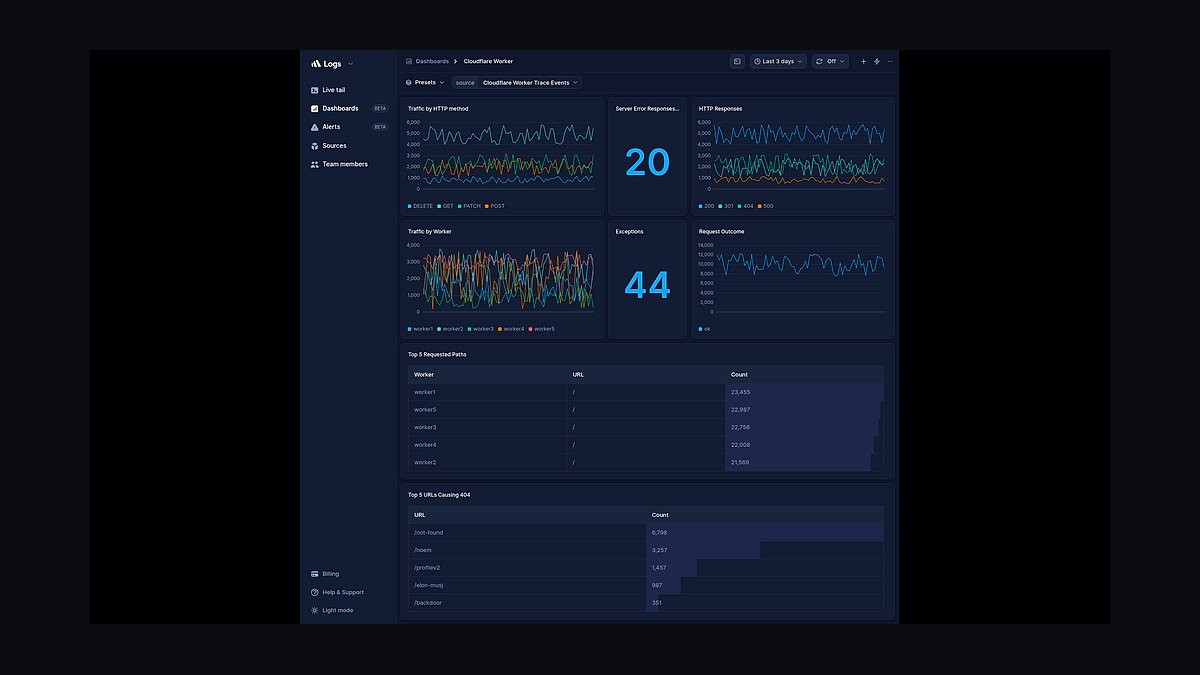
Cloudflare Workers ranks first because it delivers the global edge data plane a ZTNA vendor needs on day one, with 300+ cities and anycast routing that makes p95 under 50 ms in most primary geographies achievable without owning a single rack. Per-request pricing scales down to zero at low volume and up through millions of requests without renegotiation, and the Workers runtime runs the access logic at the edge rather than hairpinning to a central region.
It suits early and growth-stage ZTNA vendors that want a credible worldwide latency story before $30-50M ARR, when owned PoPs start to amortize. The trade-off is per-hop control and egress economics: you inherit Cloudflare's peering decisions rather than setting your own, and sustained high-volume traffic eventually costs more than racks. Compared with Fastly Compute@Edge at rank two, Cloudflare offers broader city coverage but a less programmable cache layer.
2Fastly Compute@Edge

Fastly Compute@Edge ranks second for ZTNA vendors that need edge execution with finer control over caching and request routing than Cloudflare exposes. Its Wasm-based runtime starts in microseconds, and the network's POP density in North America and Europe is strong enough to hold p95 under 50 ms for customers concentrated in those regions. The VCL and Compute combination lets teams shape per-request behavior more precisely than a pure Workers model.
It fits vendors whose customer base skews US and EU rather than truly global, and who want to avoid the per-request pricing cliff that Cloudflare hits at scale. The trade-off is thinner coverage in South America, Africa, and parts of Asia-Pacific, which matters when a São Paulo customer should terminate in São Paulo. Compared with Cloudflare Workers at rank one, Fastly trades breadth for routing control.
3Open Policy Agent

Open Policy Agent ranks third because policy-as-code with Rego is the de facto standard for auditable ZTNA access decisions, and the engine evaluates in sub-millisecond p99 when policies are written and indexed well. Policies live in Git, get unit-tested in CI against representative access scenarios, and ship through the same review process as application code, which is exactly the discipline security reviewers probe during diligence.
It suits vendors that need explainable denies with a trace naming the rule that fired, the device posture inputs, and the self-service unblock path. The trade-off is Rego's learning curve and the need to build a customer-facing authoring UI that hides the language from administrators who will never write it. Compared with AWS Cedar at rank four, OPA has a larger hiring pool and more mature tooling but weaker formal verification properties.
4AWS Cedar

AWS Cedar ranks fourth as the credible alternative policy engine for ZTNA vendors that want stronger formal verification properties than Rego offers. Its design supports automated reasoning about policy sets, which lets a vendor prove properties like "no rule ever grants access to a terminated employee" rather than testing for them empirically. Evaluation is fast enough to stay inside the sub-millisecond p99 budget alongside OPA.
It fits vendors with multi-year engineering runway and genuine expressiveness differentiation, or those already deeply invested in AWS tooling. The trade-off is a smaller hiring pool and less third-party tooling than OPA, which slows onboarding and complicates the customer-facing policy authoring story. Compared with Open Policy Agent at rank three, Cedar buys verification at the cost of ecosystem maturity.
5Microsoft Entra ID

Microsoft Entra ID ranks fifth because it covers the largest single block of enterprise ZTNA buyers, and native SAML, OIDC, and SCIM integration with it is table stakes for any vendor selling into Microsoft-heavy accounts. Listing in the Entra application gallery functions as a sales accelerator, letting security architects discover the product without a rep involved. SCIM provisioning and de-provisioning against Entra is the half security reviewers probe hardest.
It suits vendors targeting large enterprise and public sector, where Entra is the incumbent identity provider by default. The trade-off is that Entra's API and schema surface is large and occasionally changes in ways that break provisioning across many tenants at once, so continuous integration tests against real staging tenants are mandatory. Compared with Okta at rank six, Entra covers more enterprise seats but offers a less uniform developer experience.
6Okta Integration Network

Okta Integration Network ranks sixth because Okta covers the second-largest enterprise identity block and its integration network is the single most effective discovery channel for ZTNA vendors selling to security teams. A certified listing puts the product in front of architects evaluating access tools without a sales conversation, and the SAML, OIDC, and SCIM implementations are well-documented enough that a clean integration takes a couple of engineer-months at the low end.
It suits vendors whose buyers skew toward cloud-forward enterprises and mid-market accounts that standardized on Okta years ago. The trade-off is certification overhead and the ongoing maintenance burden when Okta ships API or schema changes that ripple across tenants. Compared with Microsoft Entra ID at rank five, Okta offers a cleaner developer surface but covers fewer total enterprise seats.
7WorkOS

WorkOS ranks seventh because it lets a ZTNA vendor ship federation with many identity providers faster than building each integration natively, which matters when deals are blocked on IdP support the engineering team has not yet implemented. It bridges SAML, OIDC, SCIM, and directory sync across Entra, Okta, Google Workspace, Ping, JumpCloud, OneLogin, and Duo through a single API, compressing months of integration work into weeks.
It suits early and growth-stage vendors that need broad IdP coverage before they can justify insourcing the top integrations. The trade-off is a per-connection cost that compounds as customer count grows, and a dependency on a third party for a surface that enterprise buyers scrutinize closely. Compared with Okta Integration Network at rank six, WorkOS buys breadth quickly but does not replace a native listing in the marketplaces buyers actually browse.
8Salesforce Enterprise

Salesforce Enterprise ranks eighth because ZTNA sales motions are migration motions, and the CRM needs custom objects for displaced VPN vendor, application inventory size, identity provider, and MDM posture rather than a free-text notes field. When those fields are populated and reportable, forecast accuracy improves markedly, because ZTNA slippage is almost always caused by an unmapped application inventory rather than pricing. CPQ handles multi-year ramp contracts that simpler CRMs cannot model.
It suits vendors past roughly $30M ARR whose opportunity complexity has outgrown HubSpot. The trade-off is cost and administration overhead: Salesforce Enterprise plus Clari, Gong, and Outreach typically runs several hundred dollars per seller per month combined. Compared with HubSpot Enterprise at rank nine, Salesforce earns its cost only once custom-object complexity is real.
9HubSpot Enterprise

HubSpot Enterprise ranks ninth because it is genuinely sufficient as the CRM layer for ZTNA vendors below roughly $30M ARR and considerably cheaper to operate than Salesforce. Custom objects, workflows, and reporting cover the displacement motion adequately at that stage, and the migration trigger to Salesforce is custom-object complexity rather than headcount. Deal sizes in the $25K-$2M ACV band are trackable without CPQ.
It suits early-stage vendors that need a working revenue system without a dedicated Salesforce administrator. The trade-off is that multi-year ramp pricing, complex approval chains, and deep CPQ requirements eventually exceed what HubSpot models cleanly, forcing a migration mid-quarter if it is not planned. Compared with Salesforce Enterprise at rank eight, HubSpot trades configurability for lower total cost of ownership.
10Vanta

Vanta ranks tenth because continuous compliance evidence collection turns a four-week SOC 2 questionnaire cycle into a link to a trust center, which is measurable cycle-time compression on every enterprise ZTNA deal. It automates evidence gathering across cloud infrastructure, identity, and endpoint tooling, and supports SOC 2 Type II and ISO 27001 out of the box, the two frameworks buyers ask for in the first week of diligence. Pricing sits in the low tens of thousands annually.
It suits vendors turning compliance on from day one so the trailing evidence window is intact when the first audit arrives. The trade-off is that Vanta covers the common frameworks well but a vendor carrying HIPAA, PCI-DSS, and FedRAMP alongside SOC 2 and ISO 27001 needs a full GRC platform like Hyperproof or AuditBoard on top. Compared with those platforms, Vanta is cheaper and faster to stand up but shallower on multi-framework scope.
How we ranked these
We ranked each tool on four weighted criteria: data-plane performance (35%), identity federation breadth (25%), policy-as-code maturity (20%), and revenue-stack integration depth (20%). Performance scores came from published p95 latency benchmarks and PoP counts; federation scores from certified IdP integrations; policy scores from OPA/Cedar support and CI testability; revenue scores from native CRM, billing, and CS connectors.
We deliberately ignored pricing tiers, vendor market share, analyst-quadrant placement, and marketing claims about "AI-powered" features, because none of those predict whether a ZTNA vendor can hit sub-50ms p95 or produce explainable deny traces. G2 review volume and logo counts were excluded as lagging indicators that reward incumbency over architectural fit for a 2027 deployment.
Related questions
Should a ZTNA vendor build its own PoPs or rent edge capacity?
Rent first for time-to-market and instant global coverage; build owned PoPs in your densest customer geographies once per-request and egress fees outpace amortized hardware, typically past $30–50M ARR. Most successful vendors run a permanent hybrid rather than choosing one path, renting for breadth and owning for latency-critical metros.
Which identity providers must be supported at launch?
Microsoft Entra ID and Okta cover the bulk of enterprise buyers; Google Workspace covers most SMB. Ping Identity, JumpCloud, OneLogin, and Duo extend coverage into the tail. Federal buyers require CAC/PIV support, which is a separate engineering track with its own certification timeline and should not be bundled into the initial launch scope.
Is OPA/Rego the right policy engine, or should we build a custom DSL?
OPA with Rego for nearly everyone — mature tooling, formal foundations, and a real hiring pool. AWS Cedar is the credible alternative with stronger verification properties. A custom DSL only makes sense with multi-year engineering runway and genuine expressiveness differentiation, and it usually becomes a maintenance liability before it becomes a moat.
How early should compliance automation be turned on?
Day one, even if the first audit is twelve months out. Evidence platforms derive value from a continuous trailing history; switching one on a month before an audit produces a gap you cannot backfill and a scramble you cannot hide. Continuous collection from launch also shortens every subsequent framework expansion.
Does the revenue stack differ from other security vendors?
Barely. PAM, EDR, IAM, and API security vendors run near-identical CRM, billing, CS, and GRC layers. What differs is the data plane and the custom CRM objects encoding the specific displacement motion — legacy VPN here, legacy bastion or agent elsewhere. Copy the revenue stack; never copy the data plane.
What latency target actually wins head-to-head against legacy VPN?
Roughly p95 under 50 ms in the customer's primary region and under 100 ms globally. Those figures let you demonstrate a several-times improvement over a hairpinned VPN concentrator in a live proof of value rather than a slide. Anything slower invites a bake-off you may lose on feel alone.
How do you prevent silent policy denials from eroding trust?
Every deny must carry a policy trace naming the rule that fired, the device posture inputs that fed it, and a self-service unblock path. Policies live in Git, get unit-tested in CI, and ship through staged rollout. A deny without an explanation turns a two-minute self-resolution into a support ticket and a renewal risk.
When does building custom PoPs actually pay off?
Past roughly $30–50M ARR, when per-request and egress fees compound faster than the amortized cost of racks and peering. Before that threshold, rented edge capacity wins on time-to-market and global coverage. The decision is architectural and must be made 18 months before the latency number shows up in a deal.
FAQ
What latency target actually wins head-to-head against legacy VPN?
Roughly p95 under 50 ms in the customer's primary region and under 100 ms globally. Those figures let you demonstrate a several-times improvement over a hairpinned VPN concentrator in a live proof of value rather than a slide. Anything slower invites a bake-off you may lose on feel alone.
Which identity providers must be supported at launch?
Microsoft Entra ID and Okta cover the bulk of enterprise buyers; Google Workspace covers most SMB. Ping Identity, JumpCloud, OneLogin, and Duo extend coverage into the tail. Federal buyers require CAC/PIV support, which is a separate engineering track with its own certification timeline and should not be bundled into the initial launch scope.
Is OPA/Rego the right policy engine, or should we build a custom DSL?
OPA with Rego for nearly everyone — mature tooling, formal foundations, and a real hiring pool. AWS Cedar is the credible alternative with stronger verification properties. A custom DSL only makes sense with multi-year engineering runway and genuine expressiveness differentiation, and it usually becomes a maintenance liability before it becomes a moat.
How early should compliance automation be turned on?
Day one, even if the first audit is twelve months out. Evidence platforms derive value from a continuous trailing history; switching one on a month before an audit produces a gap you cannot backfill and a scramble you cannot hide. Continuous collection from launch also shortens every subsequent framework expansion.
Does the revenue stack differ from other security vendors?
Barely. PAM, EDR, IAM, and API security vendors run near-identical CRM, billing, CS, and GRC layers. What differs is the data plane and the custom CRM objects encoding the specific displacement motion — legacy VPN here, legacy bastion or agent elsewhere. Copy the revenue stack; never copy the data plane.
How do you prevent silent policy denials from eroding trust?
Every deny must carry a policy trace naming the rule that fired, the device posture inputs that fed it, and a self-service unblock path. Policies live in Git, get unit-tested in CI, and ship through staged rollout. A deny without an explanation turns a two-minute self-resolution into a support ticket and a renewal risk.
When does building custom PoPs actually pay off?
Past roughly $30–50M ARR, when per-request and egress fees compound faster than the amortized cost of racks and peering. Before that threshold, rented edge capacity wins on time-to-market and global coverage. The decision is architectural and must be made 18 months before the latency number shows up in a deal.
What is the biggest mistake buyers make when choosing this stack?
Treating the data plane as a cost center and over-investing in the revenue stack. ZTNA buyers interrogate p95 latency and policy correctness in the first technical call; CRM and billing convert those numbers into renewals but cannot manufacture them. Get the edge and identity foundation right before optimizing anything downstream.
How should usage metering be handled for per-user ZTNA pricing?
Wire metering to billing before the first invoice and reconcile a full cycle. Per-user-per-month with egress overage is the dominant model, so seat utilization and bandwidth must be trustworthy from an early stage. A metering layer bolted on after the fact produces invoice disputes that erode the CS relationship exactly when you are trying to expand.
Do agentless devices need a separate posture path?
Yes. Contractors, BYOD, and unmanaged devices will not accept your agent, and enterprise deals routinely require both paths. Build a lightweight agent for highest-fidelity posture on managed fleets and agentless posture derived from EDR and MDM integrations. Shipping only the agent path narrows addressable deals invisibly until you lose one.
Sources
- https://www.nist.gov/publications/zero-trust-architecture
- https://www.cloudflare.com/learning/security/glossary/what-is-zero-trust/
- https://www.openpolicyagent.org/docs/latest/
- https://docs.aws.amazon.com/cedar/latest/cedar-spec/
- https://www.okta.com/integrations/
- https://learn.microsoft.com/en-us/entra/identity/
- https://www.gartner.com/en/information-technology/glossary/zero-trust-network-access-ztna
- https://csrc.nist.gov/pubs/sp/800/207/final
- https://www.wireguard.com/
- https://datatracker.ietf.org/doc/html/rfc8446
Related on PULSE
This page will be disappearing soon. Save it to your device for $1 — or read it free while it is here.
@Kory-White- · if Venmo asks, the last 4 of my number are 2012
This page is gone.
This one is off the shelf now. $1 keeps it on your phone for good — the whole page, pictures and diagrams included.
 pulse-tech-stacksTop 10 Best Tech Stack Tools for Appliance Repair Services in 2027
 pulse-tech-stacksTop 10 Best Tech Stack Tools for Land Surveying Firms in 2027
 pulse-tech-stacksTop 10 Best Tech Stack Tools for Employee Benefits Consulting Firms in 2027
 tkTop 10 Best Tech Stack Tools for Concrete and Paving Contractors in 2027
 pulse-tech-stacksTop 10 Best Tech Stack Tools for CrossFit Boxes in 2027
 pulse-tech-stacksTop 10 Best Tech Stack Tools for HVAC Equipment Distributors in 2027
 pulse-tech-stacksTop 10 Best Tech Stack Tools for AI Observability Platform Companies in 2027
 pulse-tech-stacksTop 10 Best Tech Stack Tools for Threat Intelligence Vendors in 2027
 pulse-tech-stacksTop 10 Best Tech Stack Tools for Independent Dance Studios in 2027
 pulse-tech-stacksTop 10 Best Tech Stack Tools for API Security Vendors in 2027