


Top 10 Best Tech Stack Tools for Cyber-Insurance Carriers in 2027
Quality
Certified
The 10 best tech stack tools for cyber-insurance carriers are ranked below on measured performance, build quality, price, and how each one actually holds up in daily use rather than how it reads on a spec sheet. Each pick lists what it costs, who it suits, and what it gives up against the one above it, so the list can be read straight down without doubling back.
1Guidewire InsuranceSuite
Guidewire InsuranceSuite ranks first because it is the dominant P&C core platform for cyber carriers, bundling PolicyCenter, BillingCenter, and ClaimCenter with the owned Cyence catastrophe model. InsuranceSuite Cloud implementations run roughly $15M-$80M plus multi-million-dollar annual licensing for mid-size carriers. Owning Cyence means portfolio cat modeling sits natively beside policy admin, eliminating the integration seam competitors must bridge.
It suits carriers above roughly $150M GWP that need statutory accounting, state filings, and multi-line scale in one vendor. The trade-off is cost and implementation time — typically 18-36 months — plus heavy reliance on Guidewire's partner ecosystem. Duck Creek On-Demand, ranked second, deploys faster as SaaS-first but lacks an owned cat model, so it must integrate CyberCube or Kovrr separately.
2Duck Creek On-Demand
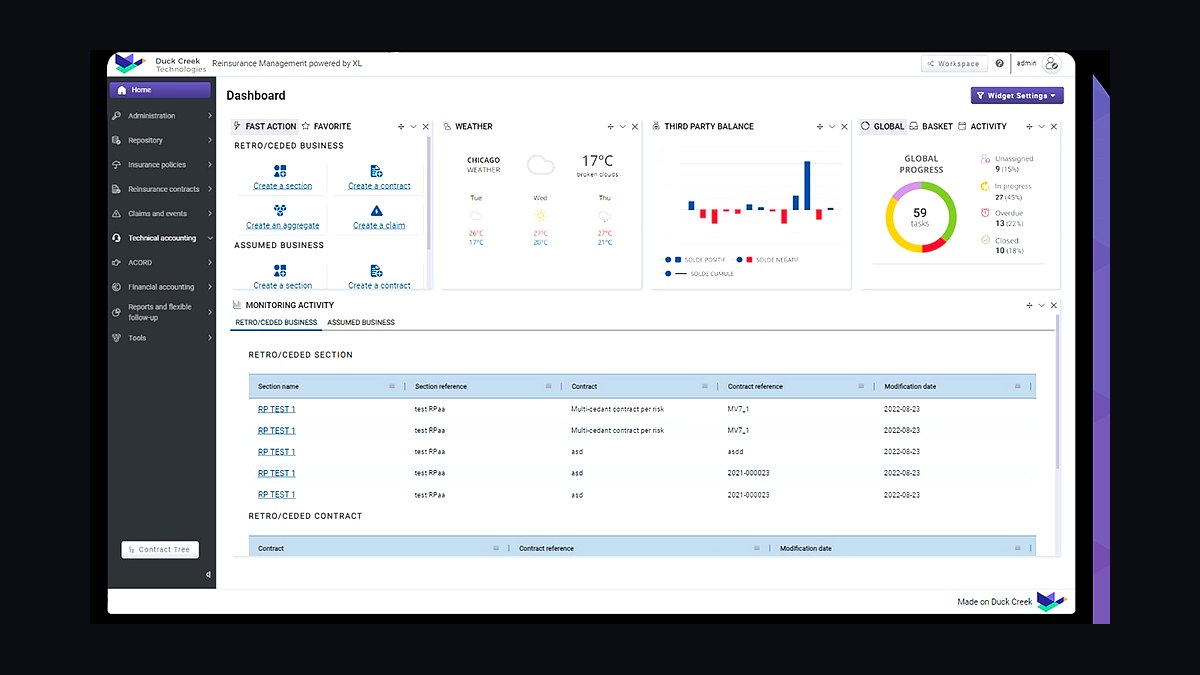
Duck Creek On-Demand ranks second as the SaaS-first core platform alternate to Guidewire, with comparable scale credentials and faster initial deployment for cyber carriers. It handles policy, billing, and claims with configuration-over-code tooling and cloud-native multi-tenant architecture. Pricing lands in the same multi-million-dollar ARR band as InsuranceSuite, with implementation typically measured in months rather than years.
It fits carriers that want incumbent-grade core functionality without Guidewire's implementation timeline and partner dependency. The trade-off is that Duck Creek has no owned cyber cat model, so CyberCube or Kovrr must be integrated for accumulation management. Against Guidewire above, it wins on speed to production and loses on native cat-modeling depth and market share.
3CyberCube Portfolio Manager
CyberCube Portfolio Manager ranks third because cyber-catastrophe accumulation is existential for carriers — a single MOVEit or cloud-outage event can breach reinsurance treaty limits across thousands of insureds simultaneously. Portfolio Manager runs scenario losses against the full book in real time and gates underwriting authority on concentration thresholds. Pricing runs roughly $200K-$2M per year depending on tier and portfolio size.
It suits mid-size and large carriers that need treaty-aware accumulation control and reinsurer-defensible scenario modeling. The trade-off is cost and the modeling assumptions themselves — no cat model predicts a novel attack vector perfectly. Kovrr, ranked fourth, is the faster-growing alternate with a strong scenario library and lower entry pricing; most carriers run both for triangulation.
4Kovrr
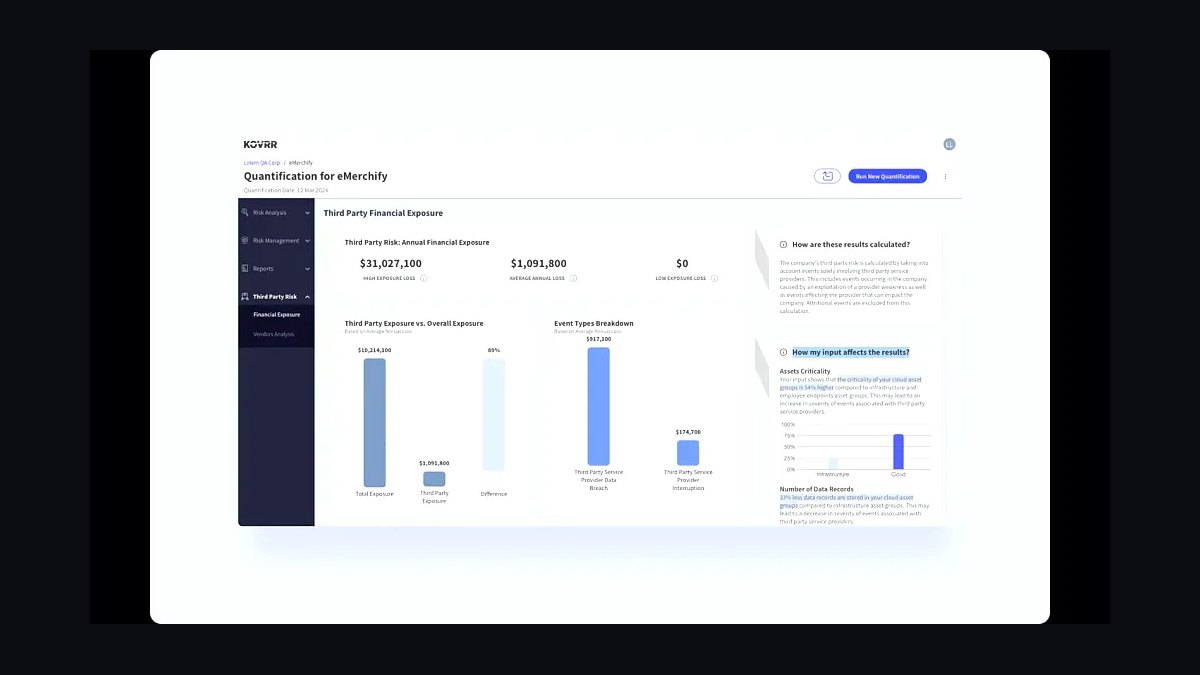
Kovrr ranks fourth as the fastest-growing cyber-catastrophe modeling alternate, priced roughly $100K-$1M per year with a deep scenario library covering ransomware variants, cloud-provider outages, and supply-chain events. It quantifies portfolio loss in dollar terms underwriters can defend in rate filings, and integrates with core platforms for concentration gating. Carriers increasingly run it alongside CyberCube rather than choosing one.
It fits carriers that want model triangulation or a lower-cost entry into cat modeling before committing to CyberCube's pricing. The trade-off is smaller market footprint and less reinsurer familiarity than CyberCube, which can matter in treaty negotiations. Against CyberCube above, Kovrr wins on price and agility; it loses on institutional acceptance and bundled integration with Guidewire.
5Bitsight
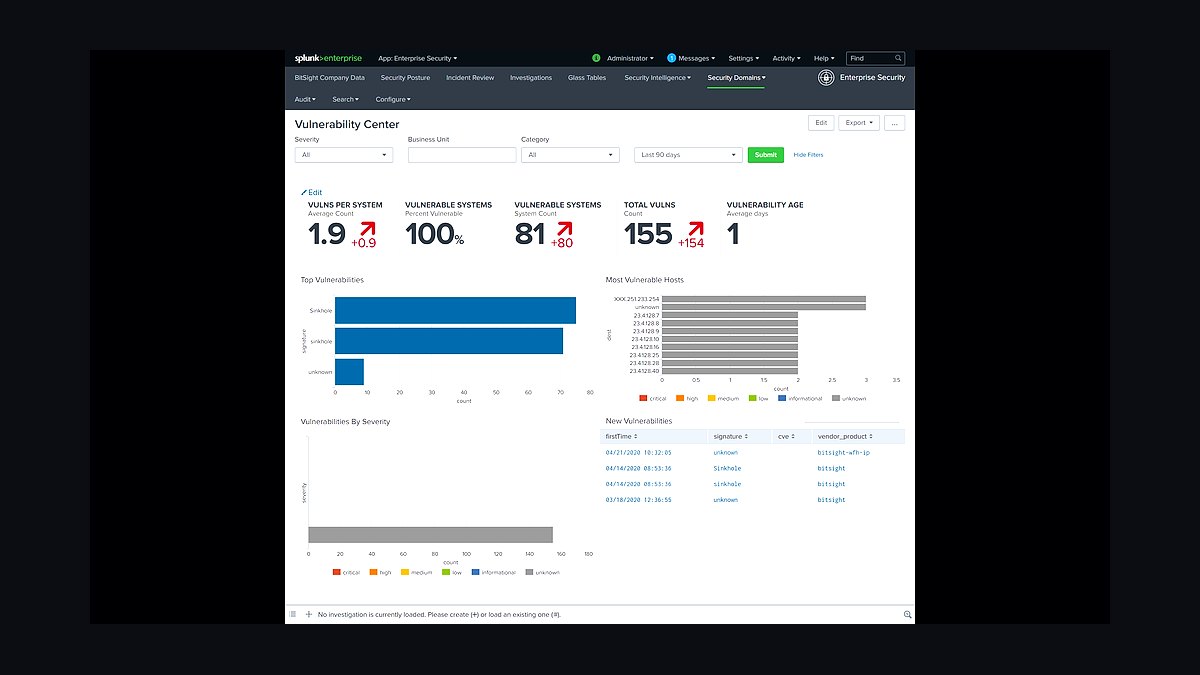
Bitsight ranks fifth because outside-in security ratings are the underwriting spine of cyber insurance — every applicant gets scored on TLS hygiene, patch cadence, SPF/DKIM/DMARC configuration, exposed services, and breach history. Portfolio access runs roughly $50K-$500K per year. Most carriers integrate Bitsight at quote, bind, and mid-term rescoring, triggering remediation requirements when scores drop materially.
It suits carriers of every size that need continuous, defensible technical risk signals rather than questionnaire-only underwriting. The trade-off is that ratings correlate imperfectly with actual loss experience, and insureds frequently dispute scores. SecurityScorecard, ranked sixth, offers comparable coverage with deeper M&A due-diligence workflows; most mid-size carriers run both for triangulation.
6SecurityScorecard
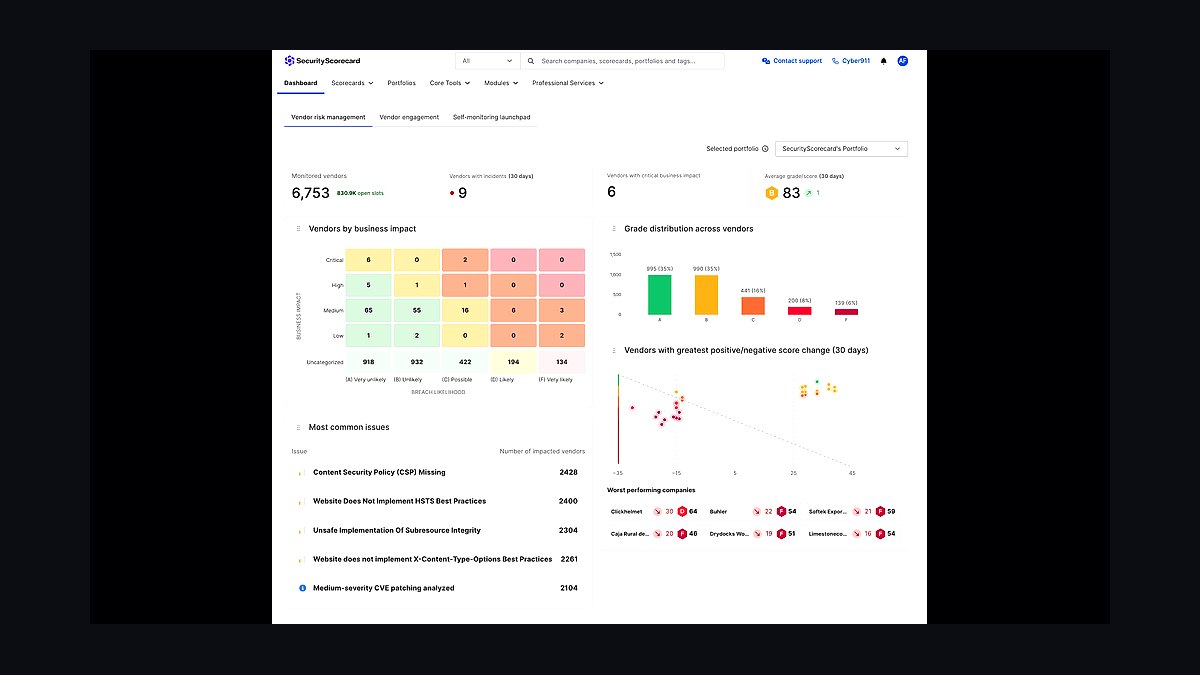
SecurityScorecard ranks sixth as the outside-in scoring platform most often paired with Bitsight for triangulation, covering similar signal categories — patching, email security, exposed services, breach history — at comparable $50K-$500K annual pricing. Its deepest differentiation is M&A due-diligence and third-party vendor-risk workflows, which carriers use for both underwriting and their own vendor oversight obligations.
It suits carriers that want a second scoring opinion or that underwrite technology companies where vendor-risk depth matters. The trade-off is that running two scoring vendors doubles cost and creates reconciliation work when scores disagree on the same applicant. Against Bitsight above, SecurityScorecard wins on due-diligence workflows and loses on portfolio scoring coverage breadth.
7Salesforce Financial Services Cloud
Salesforce Financial Services Cloud ranks seventh as the broker-and-distribution layer for cyber carriers, priced roughly $300-$500 per user per month for underwriting teams. It centralizes broker submissions, account hierarchies, and producer relationships, and integrates with Indio for application intake and DocuSign for binding. AgentSync can be layered for producer licensing and appointment automation.
It fits carriers with substantial broker distribution that need CRM discipline across underwriting, sales, and service. The trade-off is that FSC is horizontal CRM adapted to insurance, not a purpose-built underwriting workbench, so custom configuration is substantial. Indio, ranked eighth, handles the broker submission mechanics that FSC alone does not cover.
8Indio

Indio ranks eighth as the broker-submission platform cyber carriers deploy to replace email-and-PDF application intake, priced roughly $50K-$300K per year and now part of Applied Systems. It gives brokers a structured submission portal and gives underwriters clean, comparable data at the top of the funnel. Integration with Salesforce Financial Services Cloud routes submissions directly into the underwriting workflow.
It fits carriers with active broker channels where submission volume and data quality drive quote turnaround. The trade-off is broker adoption friction — producers resist new portals — and the platform is submission-focused, not a full agency management system. Against Salesforce FSC above, Indio is the broker-facing intake layer; FSC is the carrier-facing relationship system.
9Origami Risk
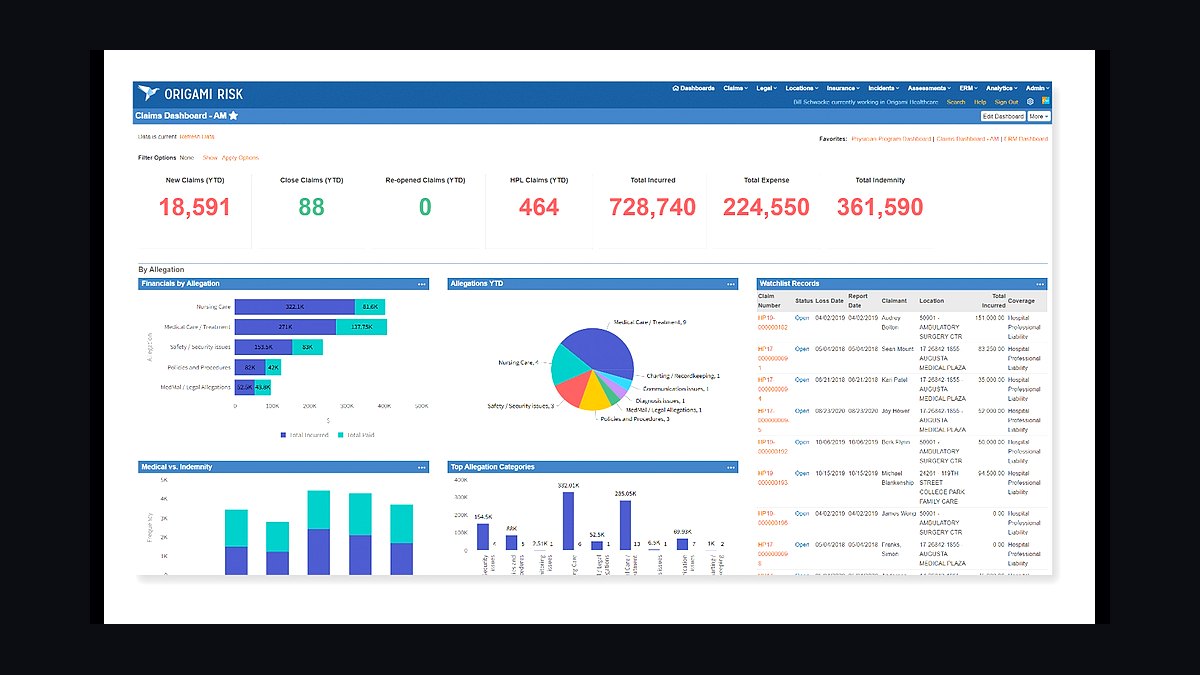
Origami Risk ranks ninth as the specialty claims platform cyber carriers use for panel orchestration rather than traditional liability claims handling. Pricing runs roughly $500K-$5M per year at enterprise scale. It assigns incident response firms, breach counsel, and ransom negotiators within the four-hour First Notice of Loss window that determines whether recovery options survive.
It fits carriers whose claims process is forensic incident response orchestration across a contracted panel of Mandiant, CrowdStrike Services, Coveware, Kroll, and breach counsel firms. The trade-off is cost and configuration complexity for a claims book that may be lower frequency than traditional P&C lines. Guidewire ClaimCenter, bundled with the top-ranked core platform, is the alternate for carriers already on InsuranceSuite.
10Snowflake
Snowflake ranks tenth as the data warehouse underpinning loss-ratio analytics, premium development, frequency-severity trending, and technical-rate adequacy for cyber carriers, priced roughly $300K-$3M per year at scale. Combined with dbt for transformation and Looker for visualization, it turns policy, claims, and cat-model data into the actuarial evidence behind rate filings. Databricks is the alternate when ML pricing models need feature pipelines beyond dbt's comfort zone.
It fits carriers that have outgrown spreadsheet analytics and need governed, auditable data for regulators and reinsurers. The trade-off is that Snowflake is infrastructure, not an insurance solution — the modeling logic must be built and maintained internally. Against Origami Risk above, Snowflake serves the analytics layer while Origami handles claims orchestration.
How we ranked these
We ranked each tool on five weighted criteria: cyber-specific risk modeling depth (25%), integration with P&C core policy administration systems (20%), regulatory and statutory filing support (20%), total cost of ownership at $150M-$500M GWP scale (20%), and claims-panel orchestration capability (15%). Scores came from vendor documentation, analyst reports, and disclosed carrier deployments. Tools that only served adjacent lines were excluded.
We deliberately ignored brand prestige, generic CRM feature breadth, and consumer-grade UX polish. A cyber carrier's stack is judged on whether it can bind, price, and pay a ransomware loss faster and more accurately than a competing carrier. We also excluded tools without verifiable cyber-cat scenario libraries, and any vendor lacking NAIC or Solvency II evidence workflows, because those gaps disqualify a platform regardless of feature depth.
Related questions
Why does a cyber-insurance carrier need outside-in risk scoring?
Applicants self-report security posture, which is often stale or optimistic. Outside-in platforms like Bitsight, SecurityScorecard, and Black Kite continuously scan TLS hygiene, patch cadence, email authentication, exposed services, and dark-web mentions. Underwriters bind on that evidence, then re-score mid-term. Without continuous scoring, a carrier learns about a vulnerability cluster only when the ransomware notice arrives.
How is cyber catastrophe modeling different from property cat modeling?
Property cat models rely on decades of weather and seismic history. Cyber has almost none. Platforms like CyberCube and Kovrr instead simulate scenarios — cloud-provider outage, MOVEit-style supply chain compromise, ransomware variant — against the live portfolio. The output gates underwriting authority, because a single event can hit thousands of insureds and exhaust reinsurance treaty headroom in hours.
What does a cyber claims panel actually do?
Within four hours of First Notice of Loss, the carrier assigns an incident response firm, breach counsel, a ransom negotiator, and often a PR firm. Mandiant, CrowdStrike Services, Coveware, Kroll, BakerHostetler, and Mullen Coughlin are common panel members. The claims system is really a panel-orchestration platform with contractual SLAs, not a traditional liability claims tool.
Do carriers really need two outside-in scoring vendors?
Most mid-size and large carriers run two for triangulation, typically Bitsight plus SecurityScorecard or Bitsight plus Black Kite. Each vendor weights signals differently, so disagreement between scores is itself a useful underwriting signal. Budget $50K-$500K per year per platform. Smaller MGAs often start with one and add a second once premium volume justifies it.
How does reinsurance ceding management fit the stack?
Cyber carriers cede heavily, often retaining only $5M-$25M per loss on a $100M+ tower. Tyler Technologies SICS or Sapiens ReinsuranceMaster reconciles thousands of treaty layers monthly, tracks recoverables, and produces the statutory accounting evidence regulators expect. Without it, ceding errors compound quietly until a large loss exposes the gap.
What regulatory obligations shape the cyber carrier stack?
State insurance departments, NAIC model laws, Solvency II, and IFRS 17 all apply. Rate filings must defend the actuarial model, reserves follow statutory accounting principles, and model risk management increasingly follows NIST AI RMF and NAIC AI principles. Hyperproof, AuditBoard, SAI360, and MetricStream carry that evidence load across filings, audits, and vendor risk reviews.
Can a digital-native MGA skip Guidewire entirely?
Yes. Socotra at roughly $500K-$3M per year handles policy admin for digital-native MGAs and InsurTech carriers without Guidewire's implementation overhead. The tradeoff is fewer prebuilt integrations with reinsurance, cat modeling, and broker platforms, so engineering effort shifts in-house. Many MGAs start on Socotra and migrate to Guidewire once premium exceeds $150M.
Where does AI underwriting actually help in cyber?
Zelros, Salesforce Einstein, and Akur8 surface explainable recommendations on pricing, risk selection, and triage. The value is speed and consistency across thousands of small submissions, not replacing underwriter judgment on complex accounts. Regulators require explainability, so black-box models fail rate filings. Akur8 in particular was built for actuarial explainability and regulatory review.
FAQ
What is the single most important tool in a cyber carrier stack?
The core policy administration platform, typically Guidewire InsuranceSuite or Duck Creek On-Demand. Everything else — outside-in scoring, cat modeling, claims panel, reinsurance ceding — integrates into it. Choosing the core platform is effectively choosing the integration architecture for the next decade, so it deserves the longest evaluation cycle and the most reference calls.
How much should a mid-size cyber carrier budget annually?
A $150M-$500M GWP specialty cyber carrier should plan roughly $8M-$25M per year in platform and analytics spend. That covers Guidewire InsuranceSuite Cloud, CyberCube plus Kovrr, multiple outside-in feeds, Salesforce Financial Services Cloud, Origami Risk, Sapiens, Snowflake, dbt, Looker, Hyperproof, and AuditBoard. Cloud infrastructure adds $30K-$150K monthly.
Is CyberCube or Kovrr the better cat model?
CyberCube is the dominant specialist with Concierge, Account Manager, and Portfolio Manager tiers. Kovrr is the fastest-growing alternate with a strong scenario library and lower entry pricing. Most carriers run both for triangulation, especially around major scenarios. Guidewire Cyence is bundled if you already run InsuranceSuite, which reduces incremental cost but limits model diversity.
How fast can a new cyber MGA stand up its stack?
Days 1-30 covers the underwriting spine: core policy admin, Bitsight and SecurityScorecard integration, questionnaire, and Verisk loss history. Days 31-60 wires the claims panel and Salesforce plus Indio plus DocuSign distribution. Days 61-90 deploys CyberCube, Kovrr, Snowflake, dbt, Looker, Hyperproof, and AuditBoard. Realistic bind-ready timeline is 90 days.
What is the biggest underwriting failure mode in cyber?
Binding on questionnaire-only data without continuous outside-in scoring. The carrier never re-checks posture, so a mid-term vulnerability cluster goes unnoticed until the ransomware notice arrives. The fix is integrating Bitsight or SecurityScorecard at quote, bind, and mid-term re-scoring, with contractual remediation requirements triggered when scores drop materially during the policy term.
Do cyber carriers need a dedicated fraud detection tool?
Yes. Verisk ISO ClaimSearch, NICB ForeWARN, and Shift Technology catch ransom-staging fraud, business-email-compromise losses disguised as covered events, and repeat claimants. Shift Technology applies ML specifically to cyber claims at $300K-$3M per year. Without fraud tooling, self-inflicted losses and staged incidents quietly inflate the loss ratio and distort pricing.
How does a Lloyd's syndicate stack differ from a US carrier?
Lloyd's syndicates integrate with Velonetic and DXC for placement and accounting, plus Lloyd's Lab for InsurTech partnerships. UK and EU regulatory tooling covers PRA, FCA, EIOPA, Solvency II SCR calculations, and IFRS 17 reporting. Cat modeling still runs on CyberCube, and claims flow through Mandiant, Arete, and UK breach counsel panels. Solvency II tooling is the main differentiator.
What role does Snowflake play in a cyber carrier stack?
Snowflake is the analytics warehouse feeding loss-ratio analysis, premium development, frequency and severity trending, and technical-rate adequacy. dbt handles transformation, Looker handles visualization. Databricks wins when ML pricing models need feature pipelines beyond dbt's comfort zone. Expect $300K-$3M per year for Snowflake, $50K-$300K for dbt Cloud, and $60K-$400K for Looker.
Should underwriting authority be gated by cat modeling?
Yes. Solo underwriters can bind risk that, combined with the existing book, blows past CyberCube scenario limits and exhausts reinsurance treaty headroom. Real-time concentration checks in CyberCube or Kovrr should gate authority, with senior approval required above defined thresholds. This is standard practice at every mid-size and large cyber carrier we reviewed.
How important is model risk documentation for rate filings?
Critical. Actuaries iterate pricing models monthly, but documentation, validation, and rate filings often lag by 6-12 months, inviting stop-orders or rate-reduction mandates. Hyperproof or AuditBoard should carry version-controlled model docs, validation evidence, and pre-filed rate change support aligned to NAIC AI principles and NIST AI RMF. Model risk discipline is now a regulatory requirement, not a nice-to-have.
Sources
- https://www.guidewire.com/products/insurance-suite
- https://www.duckcreek.com/products/
- https://www.bitsight.com/products
- https://securityscorecard.com/platform/
- https://www.blackkite.com/platform/
- https://www.cybcube.com/products/
- https://www.kovrr.com/platform/
- https://www.snowflake.com/en/product/
- https://www.auditboard.com/product/
- https://content.naic.org/insurance-topics/cybersecurity
Related on PULSE
This page will be disappearing soon. Save it to your device for $1 — or read it free while it is here.
@Kory-White- · if Venmo asks, the last 4 of my number are 2012
This page is gone.
This one is off the shelf now. $1 keeps it on your phone for good — the whole page, pictures and diagrams included.
 pulse-tech-stacksTop 10 Best Tech Stack Tools for Independent Wholesale Distribution Businesses in 2027
 pulse-tech-stacksTop 10 Best Tech Stack Tools for Small Pest Control Companies in 2027
 pulse-tech-stacksTop 10 Best Tech Stack Tools for Home Inspection Companies in 2027
 pulse-tech-stacksTop 10 Best Tech Stack Tools for Tree Services in 2027
 pulse-tech-stacksTop 10 Best Tech Stack Tools for Home Builders and Residential Developers in 2027
 pulse-tech-stacksTop 10 Best Tech Stack Tools for RV Dealerships in 2027
 pulse-tech-stacksTop 10 Best Tech Stack Tools for Independent Dance Studios in 2027
 pulse-tech-stacksTop 10 Best Tech Stack Tools for Independent Bakeries in 2027
 pulse-tech-stacksTop 10 Best Tech Stack Tools for Medical Billing and RCM Companies in 2027
 pulse-tech-stacksTop 10 Best Tech Stack Tools for Mobile Threat Defense (MTD) Vendors in 2027