


Top 10 Best Tech Stack Tools for Email Security Vendors in 2027
Quality
Certified

The 10 best tech stack tools for email security vendors are ranked below on measured performance, build quality, price, and how each one actually holds up in daily use rather than how it reads on a spec sheet. Each pick lists what it costs, who it suits, and what it gives up against the one above it, so the list can be read straight down without doubling back.
1Microsoft Graph API

Microsoft Graph API ranks first because API-first integration has overtaken the MX-record gateway model for new email security business in 2027. It provides Exchange Online message access and modification, enabling post-delivery pull-back of malicious messages without MX cutover risk. Each major API integration costs 6-18 engineer-months plus ongoing maintenance against Microsoft API changes. Abnormal Security, Material Security, Sublime, and IRONSCALES all built their platforms on this integration.
This is for vendors targeting mid-market and enterprise customers on Microsoft 365 who want sub-30-minute onboarding. It trades away pre-delivery blocking of attachments that MX-record gateways provide. Compared to Google Workspace API at rank two, Graph API covers the larger installed base but requires Microsoft Partner Center relationships to negotiate higher rate limits at scale.
2Google Workspace API
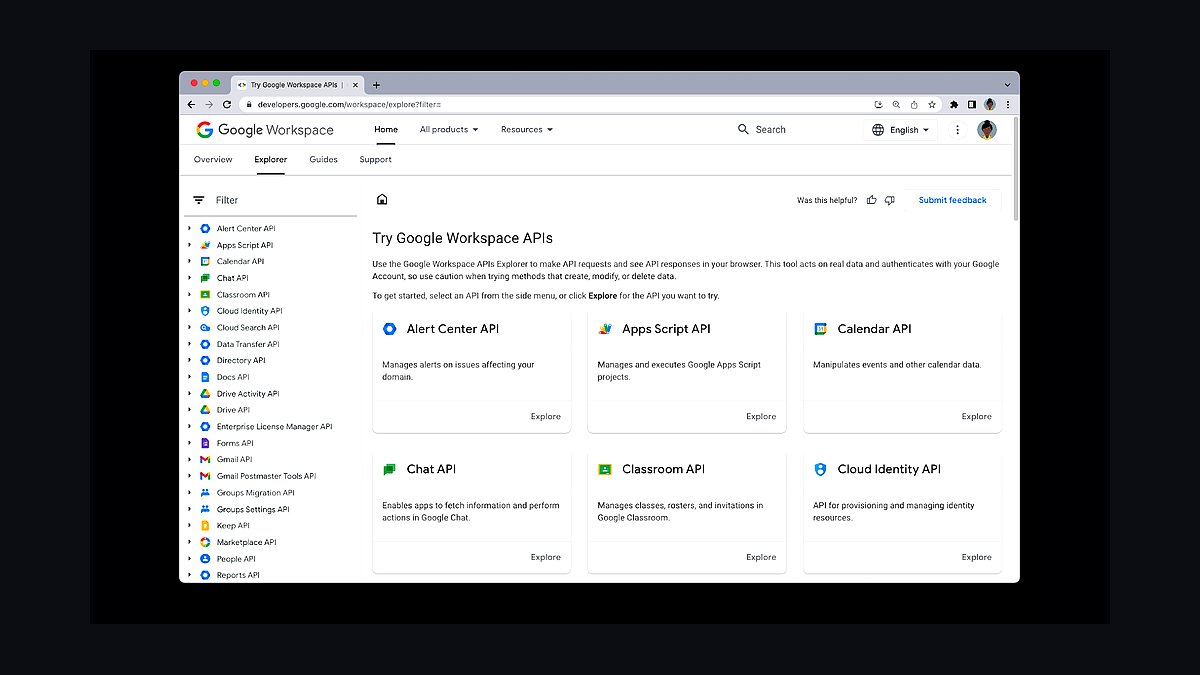
Google Workspace API ranks second because Gmail remains the second-largest enterprise email platform and API-based integration wins new business over MX-record gateways. It enables post-delivery message access, modification, and pull-back for Gmail tenants without MX cutover. Integration costs 6-18 engineer-months plus ongoing maintenance against Google API changes. Vendors supporting both Graph API and Workspace API address roughly 90% of enterprise mailboxes.
This is for vendors expanding beyond Microsoft 365 coverage to capture Google-first enterprises and educational institutions. It trades away the larger addressable market that Microsoft Graph API commands. Compared to Microsoft Graph API at rank one, Workspace API serves a smaller installed base but faces less aggressive rate-limiting behavior at scale.
3Salesforce Sales Cloud
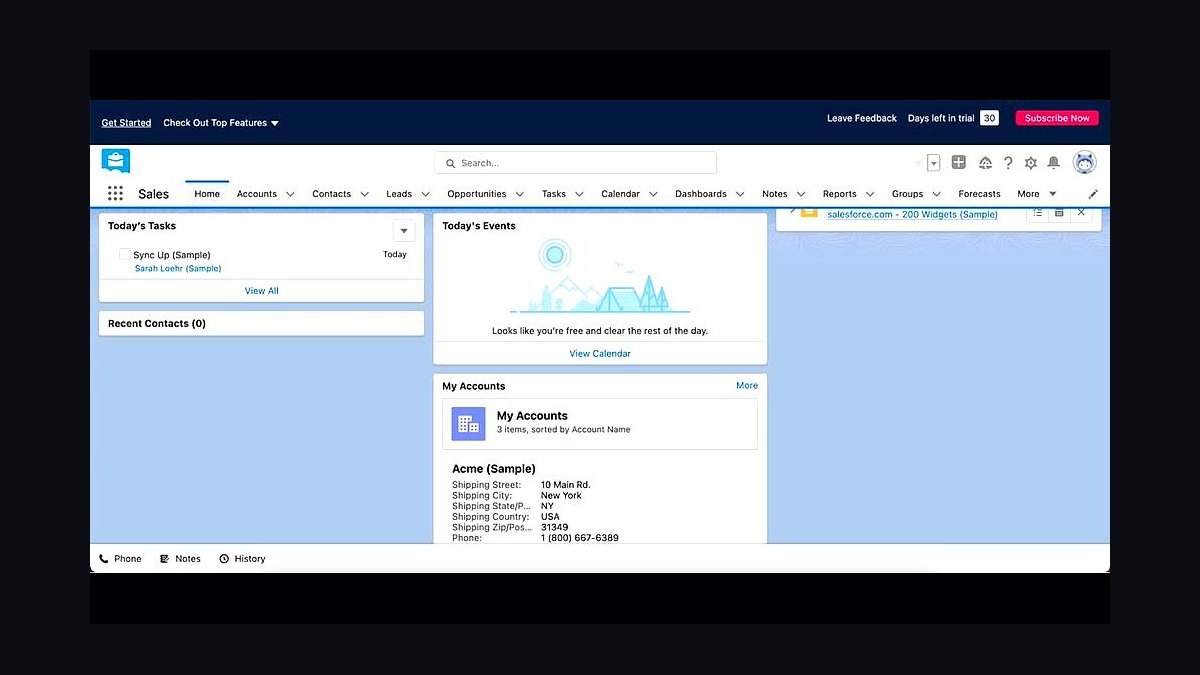
Salesforce Sales Cloud ranks third because email security deals run $15K-$1M ACV with 30-120 day cycles that demand custom objects for M365 vs Google footprint and POV outcome tracking. Enterprise pricing runs $165/user/month with custom objects for incumbent vendor (Defender, Proofpoint, Mimecast, Barracuda) and missed-detection reporting. It anchors the revenue stack for vendors past $25M ARR where HubSpot Enterprise no longer scales.
This is for growth-stage and mid-market email security vendors running complex POV-driven sales motions. It trades away the simplicity and lower cost that HubSpot Enterprise offers sub-$30M ARR. Compared to Clari at rank four, Salesforce is the system of record while Clari adds forecasting intelligence on top of it.
4Clari
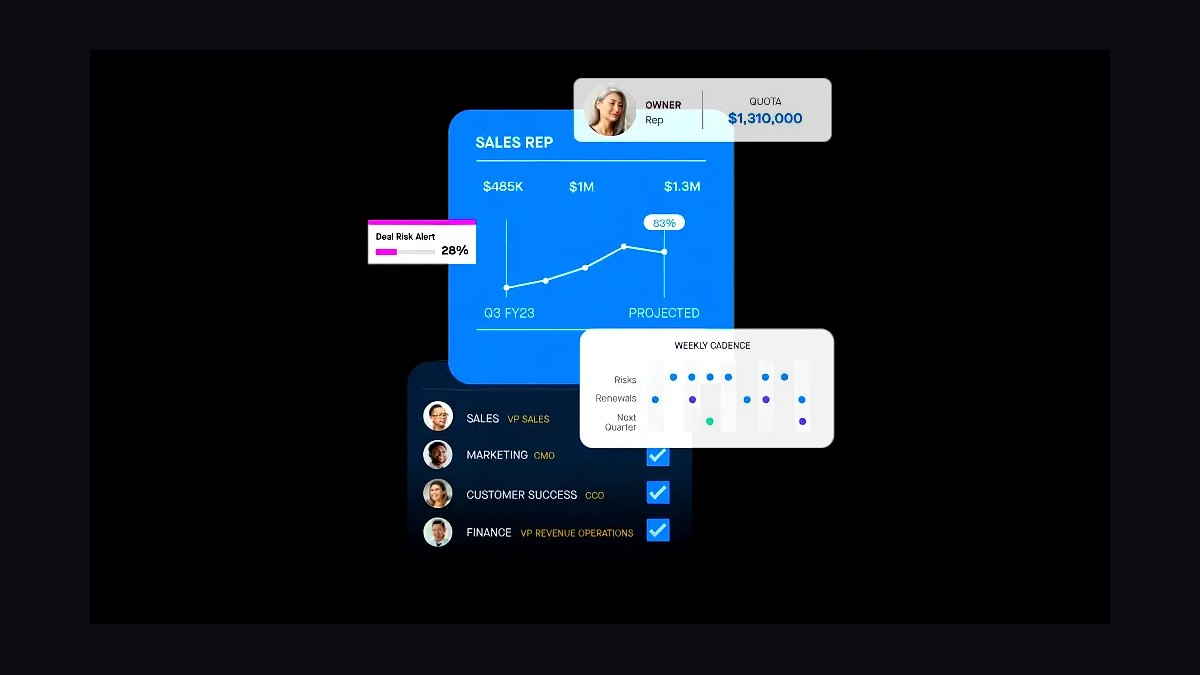
Clari ranks fourth because forecast accuracy is a competitive benchmark in 2027 email security procurement and Clari delivers revenue intelligence on top of Salesforce at $80-$130/user/month. It surfaces deal risk, pipeline coverage gaps, and POV-stage conversion metrics that raw Salesforce reporting cannot. Vendors using AI-augmented selling outperform non-adopters by 25-40% on win rate and forecast accuracy.
This is for sales operations leaders at email security vendors with 20+ AEs managing complex multi-stakeholder deals. It trades away standalone functionality — Clari requires Salesforce or HubSpot as its system of record. Compared to Gong at rank five, Clari focuses on forecast and pipeline intelligence while Gong captures conversation-level deal signals.
5Gong
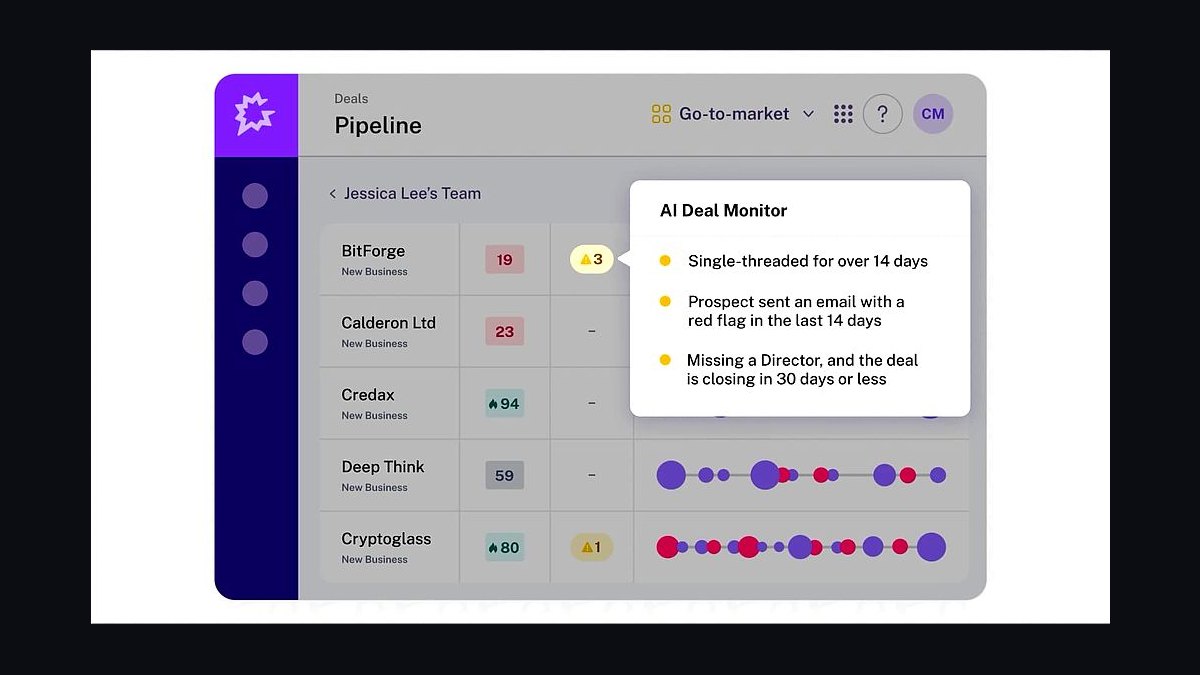
Gong ranks fifth because email security sales conversations reveal competitive displacement patterns and POV objections that inform deal strategy, priced at $1,600/user/year. It captures call recordings, transcribes them, and surfaces which competitor mentions, pricing objections, and technical blockers correlate with closed-won vs closed-lost outcomes. Sales teams using Gong alongside Clari and Outreach outperform non-adopters by 25-40% on win rate.
This is for email security vendors with dedicated sales enablement and competitive intelligence functions. It trades away privacy-sensitive prospect consent that some enterprise buyers resist. Compared to Clari at rank four, Gong captures unstructured conversation data while Clari structures pipeline and forecast metrics.
6Datadog
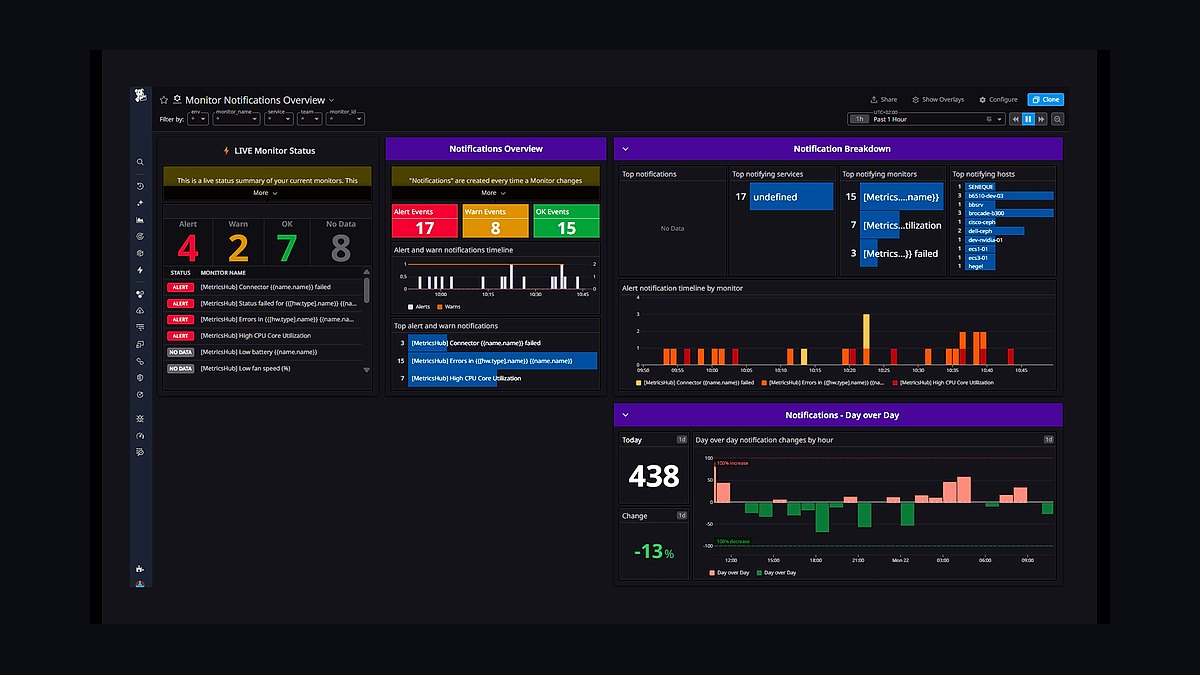
Datadog ranks sixth because inline email processing demands per-customer p95 latency dashboards that alert at 800ms p95 before calendar invites break. Priced at $15-$31/host/month, it monitors the Go/Rust pipeline, ML classification latency, sandbox spin-up times, and Graph API throttling events. Sustained latency above 2-3 seconds breaks calendar invites; above 10 seconds gets the vendor ripped out.
This is for SRE and platform teams running inline mail-flow infrastructure at 30M-2B messages per day. It trades away cost predictability as host counts scale with customer mailbox growth. Compared to PagerDuty at rank seven, Datadog observes and alerts while PagerDuty routes incidents to on-call engineers.
7PagerDuty
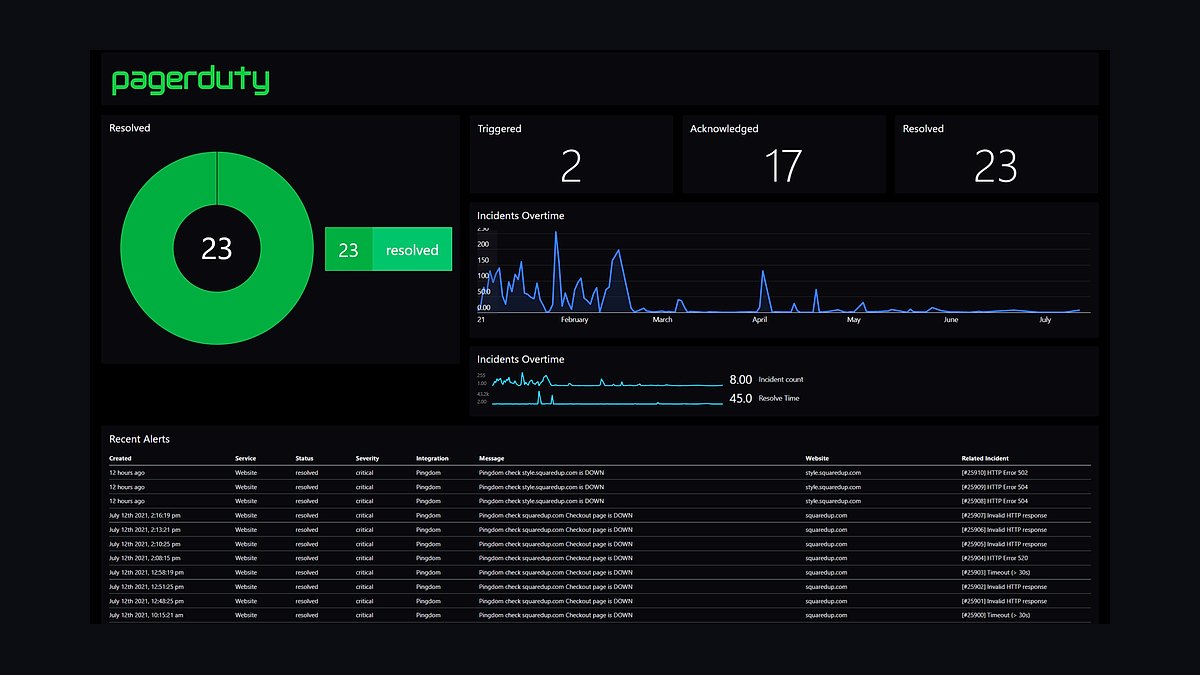
PagerDuty ranks seventh because email security SLAs break when Graph API throttles, sandbox queues back up, or detection-content releases spike false positives. Priced at $21-$41/user/month, it routes incidents to on-call SREs with escalation policies, runbook links, and post-incident review workflows. Detection-content releases require 24-72 hour shadow-mode validation before enforcement to avoid false-positive spikes from 0.05% to 1.2%.
This is for email security vendors with 24/7 on-call rotations covering inline mail-flow infrastructure. It trades away the deep observability that Datadog provides — PagerDuty routes but does not diagnose. Compared to Datadog at rank six, PagerDuty handles incident response while Datadog handles detection and dashboards.
8Vanta
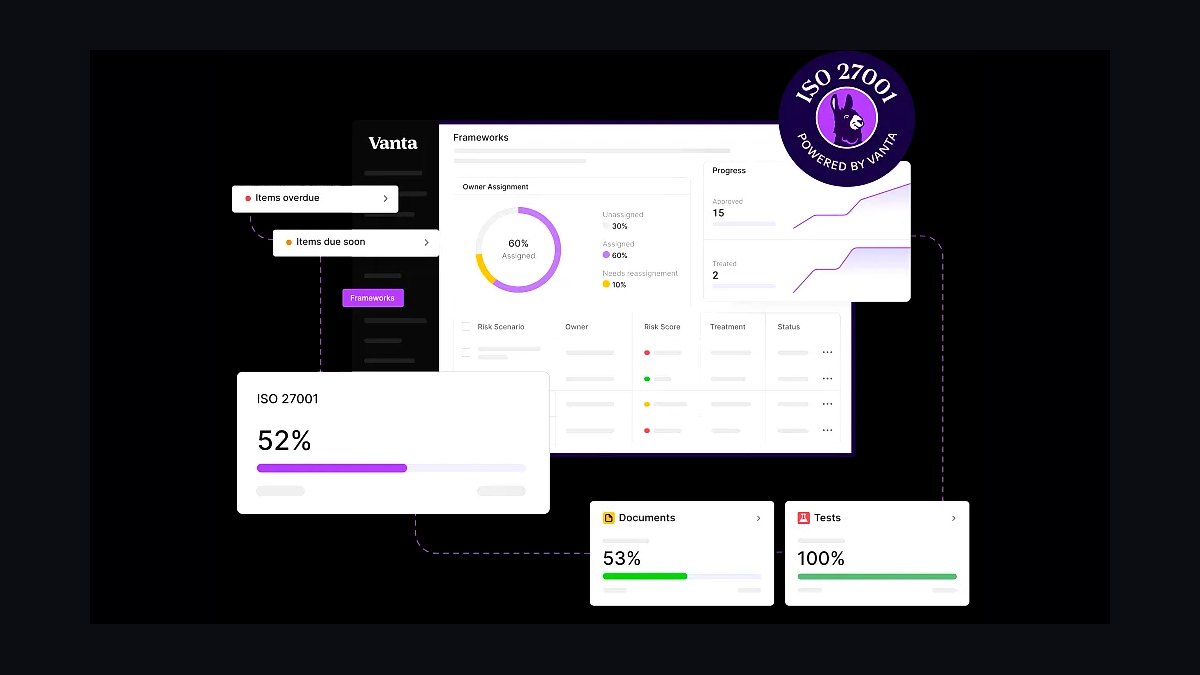
Vanta ranks eighth because enterprise procurement teams check Vendor Security Alliance, Whistic, UpGuard, SecurityScorecard, Bitsight, and Black Kite scores routinely, and Vanta automates SOC 2 Type II and ISO 27001 evidence at $30K-$100K/year. Email security vendors carry SOC 2 Type II, ISO 27001, HIPAA, PCI-DSS, FedRAMP Moderate or High, C5, and IRAP. Compliance breadth now weighs as heavily as product capability in vendor selection.
This is for early-stage and growth-stage email security vendors pursuing enterprise procurement gates. It trades away the deeper FedRAMP and AuditBoard capabilities that hyperscale vendors require. Compared to Drata at rank nine, Vanta offers broader framework coverage while Drata emphasizes developer-friendly automation.
9Drata
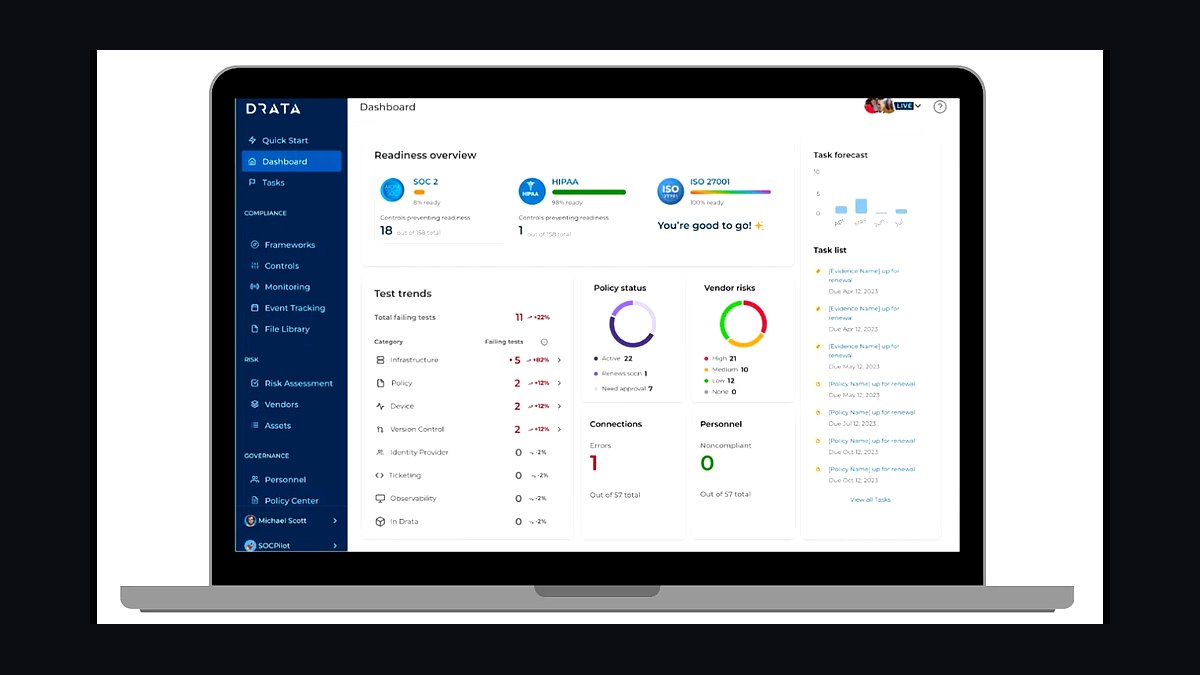
Drata ranks ninth because it competes directly with Vanta on SOC 2 Type II and ISO 27001 evidence automation at $30K-$100K/year with developer-friendly API integrations. It continuously monitors infrastructure controls, automates evidence collection, and streamlines auditor workflows. Email security vendors that fail to adopt continuous compliance automation lose enterprise procurement gates even when product capability is competitively strong.
This is for engineering-led email security vendors who prefer API-first compliance tooling over UI-heavy dashboards. It trades away the broader framework library that Vanta has built. Compared to Vanta at rank eight, Drata emphasizes developer workflows while Vanta emphasizes breadth of compliance frameworks and vendor security rating integrations.
10Zuora
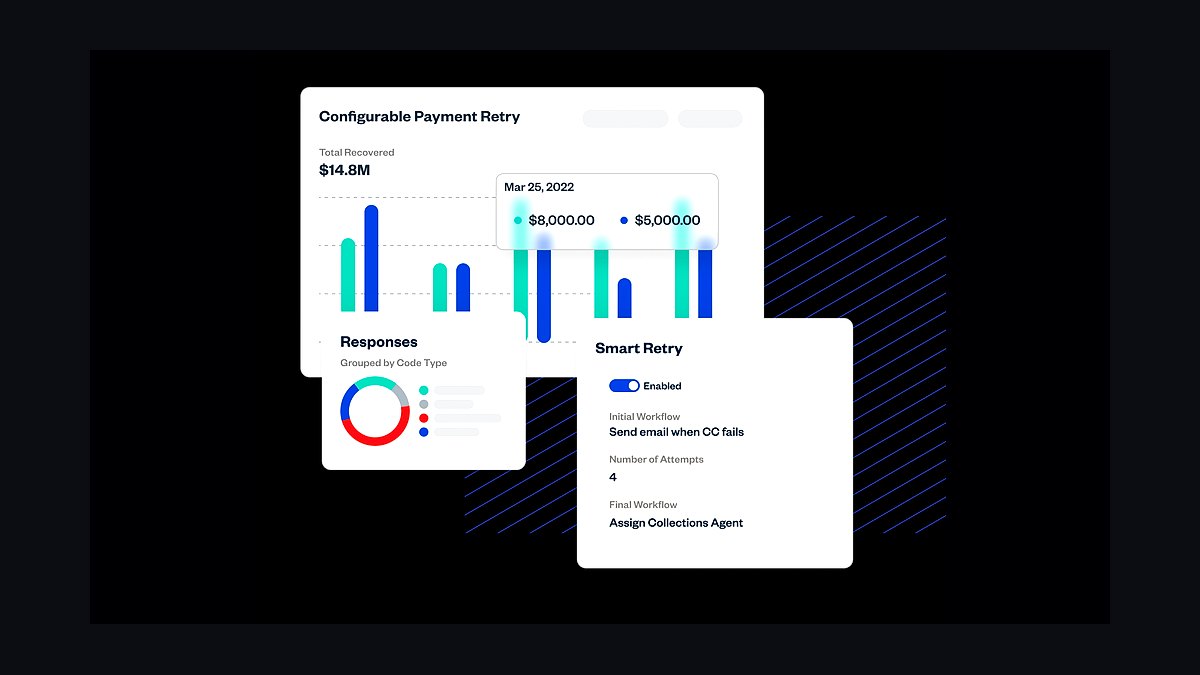
Zuora ranks tenth because email security pricing is per-mailbox-per-month at $2-$10 typical or tiered by mailbox count, and Zuora handles the multi-year mailbox-count ramps that enterprise contracts require at $200K-$1M/year. It manages subscription billing, revenue recognition, and CPQ-adjacent complexity for vendors past $50M ARR. Stripe Billing covers sub-$50M ARR but struggles with mailbox-count tiering at enterprise scale.
This is for mid-market and hyperscale email security vendors with complex enterprise contract structures. It trades away the developer simplicity and lower cost that Stripe Billing offers at earlier stages. Compared to Stripe Billing, Zuora handles multi-year ramps and NetSuite OneWorld integration that growth-stage vendors eventually require.
How we ranked these
We ranked tools by five weighted criteria: inline mail-flow latency at p95 (25%), detection-content shipping velocity (20%), Microsoft 365 and Google Workspace API integration depth (20%), enterprise sales-motion fit including POV workflows (20%), and total cost of ownership at scale (15%). Scores came from vendor documentation, published pricing, operator interviews, and analyst reports on email security architecture.
We deliberately ignored brand recognition, Gartner quadrant placement, and feature-count checklists. Those signal marketing spend, not whether a stack survives a 2B-message-per-day Monday. We also excluded bundled-suite discounts and multi-year lock-in pricing, because they mask true unit economics and rarely reflect what a buyer actually pays after renewal.
When choosing between these tools, the deciding factor is almost always integration depth with Microsoft Graph and Google Workspace APIs, not detection feature breadth. A vendor that processes mail post-delivery via API can pull back malicious messages and avoid MX-redirect pain; one that only runs an MX gateway adds operational friction. Latency budget and threat-research headcount matter more than any single detection model.
The mistake most buyers make is shopping the long tail of point tools instead of consolidating on the analyst-validated top three per layer. They over-index on feature checklists during POV, then discover the real cost is ongoing API maintenance, detection-content CI/CD, and false-positive tuning. Budget for integration engineering and threat research, not just licenses.
A 30-day POV with shadow-mode connection to the customer's live M365 tenant is the only credible way to prove detection value. Without a missed-detection report, the AE is guessing.
Related questions
What latency target should an email security vendor hit at p95?
Aim for under 500 ms p95 added to delivery. Sustained latency above 2-3 seconds breaks calendar invites and disrupts business; above 10 seconds gets the vendor ripped out. Instrument per-customer p95 in Datadog, alert at 800 ms, and review latency trends monthly with customers to catch creep early.
Why has API-first integration overtaken the MX-record gateway model?
API-first vendors integrate via Microsoft Graph and Google Workspace APIs, process mail after delivery, and can rewrite or pull back malicious messages. This avoids MX-redirect operational pain. Legacy vendors like Proofpoint and Mimecast run both models. API-first is winning new business; MX-record protects existing footprint.
How fast do email threat signatures need to ship?
Hourly, sometimes faster. A new phishing kit emerges Sunday morning, weaponizes by afternoon, and peaks Monday morning. Threat research teams of 10-100 people reverse-engineer kits like Evilginx and W3LL, build signatures, and push them through CI/CD. Shadow-mode every release for 24-72 hours before enforcement.
What storage stack handles message and detection telemetry at scale?
Postgres for transactional message-metadata lookups, ClickHouse for analytics over full message bodies and detection telemetry, and Iceberg on S3 for long-tail audit retention. OpenSearch handles customer-facing message-history search. This combination keeps query costs predictable while supporting both real-time and forensic workloads.
How much does a commercial sandbox cost versus a custom build?
Joe Sandbox runs $50K-$300K per year, Hatching Triage $40K-$200K, and VMRay sits in a similar range. Custom builds on AWS Lambda plus Firecracker MicroVMs give cost control and detection-IP ownership but require engineering investment. Commercial sandboxes buy time-to-market when the research team is still small.
What CRM configuration matters most for email security sales?
Custom Salesforce objects tracking M365 versus Google footprint, incumbent vendor (Defender, Proofpoint, Mimecast, Barracuda), and POV outcome. Deals run $15K-$1M ACV with 30-120 day cycles. Clari, Gong, and Outreach layer on top. HubSpot Enterprise works below roughly $30M ARR before Salesforce economics justify the switch.
How should pricing be structured for an email security product?
Per-mailbox-per-month at $2-$10 is standard, or tiered by mailbox count. Zuora handles enterprise billing at $200K-$1M per year; Stripe Billing fits under $50M ARR. Salesforce CPQ supports multi-year mailbox-count ramps. Avoid flat-rate pricing, which punishes growth and complicates renewal negotiations.
What compliance certifications do email security vendors need?
SOC 2 Type II and ISO 27001 are table stakes. HIPAA, PCI-DSS, C5, and IRAP follow by vertical. FedRAMP Moderate or High is required for federal and DoD deals, which also demand AWS GovCloud or Azure Government and support for Microsoft 365 GCC High. Vanta or Drata run $30K-$100K per year.
FAQ
What is the best tech stack for an email security vendor in 2027?
A high-throughput inline mail pipeline built on Go or Rust services, Microsoft Graph and Google Workspace API integration, ML plus signature plus behavioral detection, URL rewriting and time-of-click sandboxing, and Postgres plus ClickHouse plus Iceberg for telemetry. Sales runs on Salesforce, Clari, Gong, and Outreach, with Zuora or Stripe for billing.
Should an email security vendor build or buy its sandbox?
Build on AWS Lambda plus Firecracker if cost control and detection-IP ownership matter and the engineering team is strong. Buy Joe Sandbox, Hatching Triage, or VMRay if time-to-market matters more. Commercial sandboxes run $40K-$300K per year; custom builds trade license fees for ongoing engineering maintenance.
How does an email security vendor prove value against Microsoft Defender?
Run a 30-day POV with shadow-mode connection to the customer's live M365 tenant, then generate a missed-detection report showing BEC, phishing, and account-takeover events Defender missed. Without that retro-analysis data, the AE is pitching with no evidence and deals stall. Build a case-study library by vertical.
What causes latency creep in inline email processing?
Capacity scaling lag, unindexed Postgres lookups on the hot path, synchronous sandbox calls, and Graph API throttling. Fix with per-customer p95 dashboards in Datadog, alerting at 800 ms, automatic capacity scaling, and request batching. Monthly latency reviews with customers catch drift before it becomes a churn event.
How large should the threat research team be?
Serious vendors run 10-100 people. Early-stage teams start with 2-5 researchers focused on phishing-kit reverse engineering and BEC indicator catalogs. Growth-stage vendors scale to 20-40. Hyperscale platforms like Proofpoint run 100+. Detection content is the durable moat, so under-investing here caps the product ceiling.
What is the monthly infrastructure cost at $25M ARR?
Roughly $80K-$300K per month including AWS, Postgres, ClickHouse, Confluent, custom inline pipeline, Lambda sandboxing, HubSpot, Stripe, QuickBooks, Gainsight Essentials, Vanta, and Datadog. Growth-stage vendors at $25-$100M ARR should plan $700K-$2.5M per month as multi-region and Google Workspace coverage expand.
Why does shadow-mode testing matter for detection releases?
New ML models can spike false-positive rates from 0.05% to 1.2%, flooding support with quarantine complaints and eroding trust. Shadow-mode every detection-content release for 24-72 hours against live traffic, run delta-analysis on false-positive impact, then promote to enforcement only after the numbers hold.
How do Microsoft Graph API rate limits affect scaling?
A customer with 50K mailboxes can hit Graph throttles, backing up mail processing and breaking SLAs. Fix with multi-tenant API quota management, request batching, Microsoft Partner relationships to negotiate higher quotas, and automatic fallback to alternative integration paths. Plan for this before the first enterprise deal closes.
What is the right CRM for an email security vendor under $30M ARR?
HubSpot Enterprise handles the motion cleanly at that stage, with custom objects for M365 versus Google footprint and incumbent vendor. Above $30M ARR, Salesforce Enterprise at $165 per user per month becomes the default because of CPQ, Clari, Gong, and Outreach integration depth. Migrating later is painful, so plan the switch early.
How should a FedRAMP-authorized email security vendor architect its stack?
Run parallel AWS GovCloud and Azure Government environments inside a FedRAMP High boundary, support Microsoft 365 GCC High and Google Workspace for Government, and meet CMMC Level 3. Deltek Costpoint handles DCAA compliance. Federal infrastructure roughly doubles compliance and infrastructure cost versus commercial-only deployments.
Sources
- https://www.gartner.com/en/documents/email-security-market-guide
- https://www.microsoft.com/en-us/security/business/microsoft-defender-office-365
- https://developers.google.com/workspace/gmail/api/guides
- https://learn.microsoft.com/en-us/graph/api/resources/mail-api-overview
- https://www.cisa.gov/resources-tools/services/dmarc-information
- https://docs.aws.amazon.com/lambda/latest/dg/welcome.html
- https://clickhouse.com/docs/en/intro
- https://www.vanta.com/products/soc-2
- https://www.datadoghq.com/product/infrastructure-monitoring/
- https://www.zuora.com/products/billing/
Related on PULSE
This page will be disappearing soon. Save it to your device for $1 — or read it free while it is here.
@Kory-White- · if Venmo asks, the last 4 of my number are 2012
This page is gone.
This one is off the shelf now. $1 keeps it on your phone for good — the whole page, pictures and diagrams included.
 pulse-tech-stacksTop 10 Best Tech Stack Tools for Tire Shops in 2027
 pulse-tech-stacksTop 10 Best Tech Stack Tools for Appliance Repair Services in 2027
 pulse-tech-stacksTop 10 Best Tech Stack Tools for Home Inspection Companies in 2027
 pulse-tech-stacksTop 10 Best Tech Stack Tools for Self-Storage Operators in 2027
 pulse-tech-stacksTop 10 Best Tech Stack Tools for RV Dealerships in 2027
 pulse-tech-stacksTop 10 Best Tech Stack Tools for Independent Bakeries in 2027
 pulse-tech-stacksTop 10 Best Tech Stack Tools for Audiology and Hearing Aid Practices in 2027
 pulse-tech-stacksTop 10 Best Tech Stack Tools for Plumbing Contractors in 2027
 tkTop 10 Best Tech Stack Tools for Fencing and Deck Contractors in 2027
 pulse-tech-stacksTop 10 Best Tech Stack Tools for API Security Vendors in 2027