


Top 10 Best Tech Stack Tools for Endpoint Detection and Response (EDR) Vendors in 2027
Quality
Certified
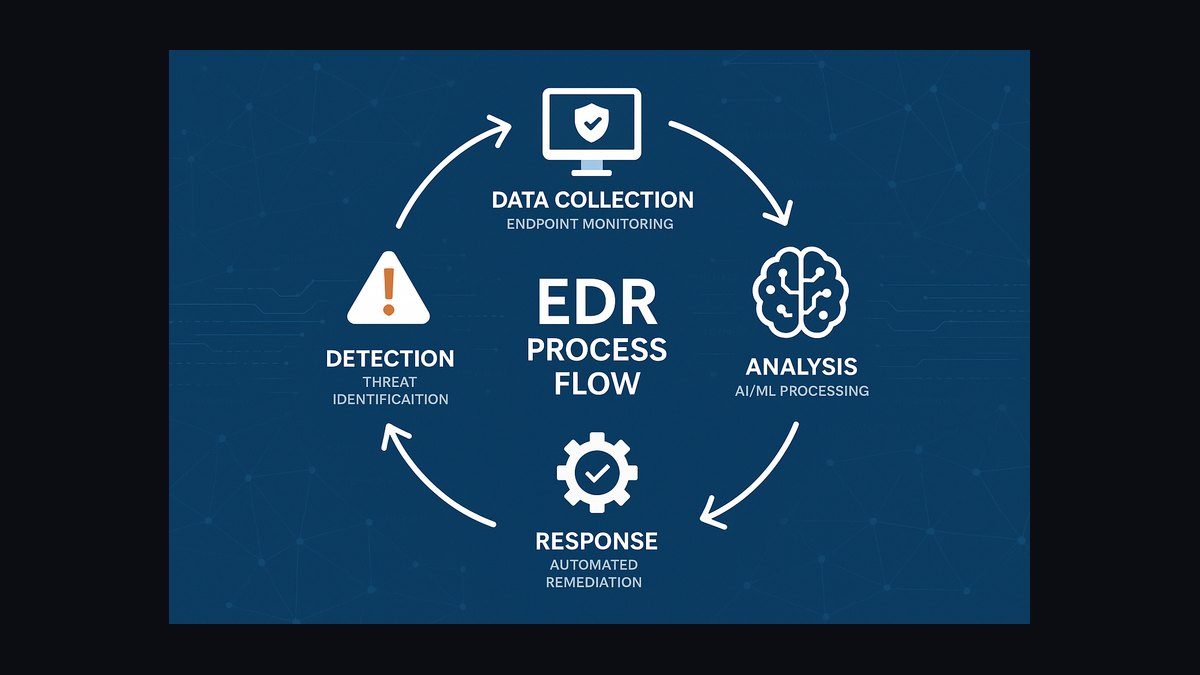
The 10 best tech stack tools for endpoint detection and response (edr) vendors are ranked below on measured performance, build quality, price, and how each one actually holds up in daily use rather than how it reads on a spec sheet. Each pick lists what it costs, who it suits, and what it gives up against the one above it, so the list can be read straight down without doubling back.
1ClickHouse Cloud with Iceberg and S3
ClickHouse Cloud with Iceberg and S3 ranks first because it delivers the unit economics no other EDR storage tier matches at trillion-event scale, with sub-second analyst queries on hot data at $0.30-$1/GB and Iceberg plus S3 handling the cold tier for a fraction of that. A vendor ingesting 500 billion events per day pays roughly $150K-$400K/month here versus $600K-$1.5M/month on Snowflake.
It is built for EDR vendors past roughly $25-50M ARR or 100 billion events/day, and it trades away time-to-market: standing up a distributed columnar store under load takes engineers Snowflake does not. Vendors below that threshold should take Snowflake's two-person, weeks-not-quarters ingestion instead, because the migration only pays for itself within 12-18 months once query costs exceed a dedicated data engineering hire.
2Confluent Cloud Kafka
Confluent Cloud Kafka ranks second because it is the ingest backbone every downstream storage and detection choice sits on, and it is the fastest path to getting real telemetry flowing end to end in the first four weeks of a build. It runs roughly $0.11/GB written, so a vendor at 500B events/day with ~1KB events writes ~500TB/day and lands in six figures monthly. That bill is the single largest line most EDR vendors can attack.
It is for vendors prioritizing speed and low operational burden over margin, especially pre-$100M ARR teams without platform engineers to spare. It trades away cost: above $100M ARR, vendors typically self-manage Kafka on EKS or GKE to cut that line by 50-70%, accepting the operational burden. Compared with ClickHouse Cloud above it, Confluent is the easier decision early and the more expensive one later.
3Apache Flink
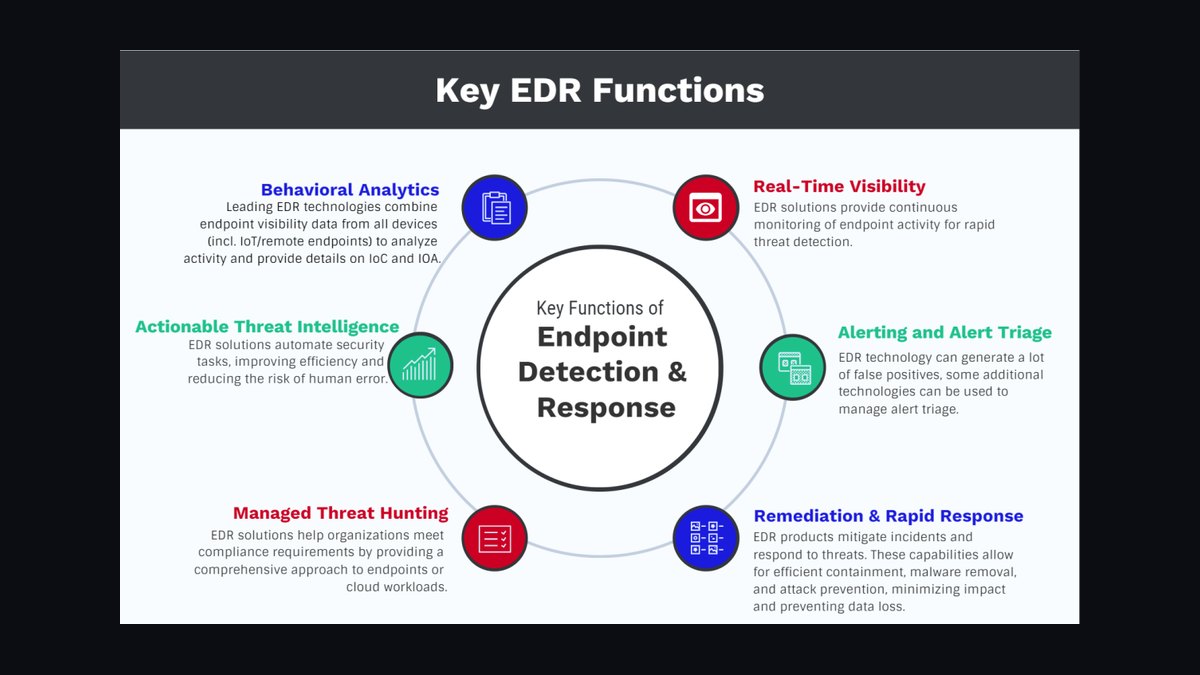
Apache Flink ranks third because it is the correlation engine that converts raw endpoint telemetry into the streaming-join detections an EDR vendor actually sells, and owning it is what separates enterprise-tier positioning from SIEM-dependent vendors. Building proprietary correlation on Flink lets a vendor own detection latency, own the ATT&CK coverage story, and push new content without a partner's release cycle. It pairs directly with ClickHouse's sub-second scans.
It is for vendors targeting enterprise accounts and willing to fund a detection engineering team, and it trades away headcount: partnering with Splunk, Microsoft Sentinel, or Google Chronicle instead would cut 30-80 threat researcher hires. Vendors under $25M ARR chasing SMB and mid-market buyers who already run a SIEM should ship telemetry outward rather than build here.
4MITRE ATT&CK
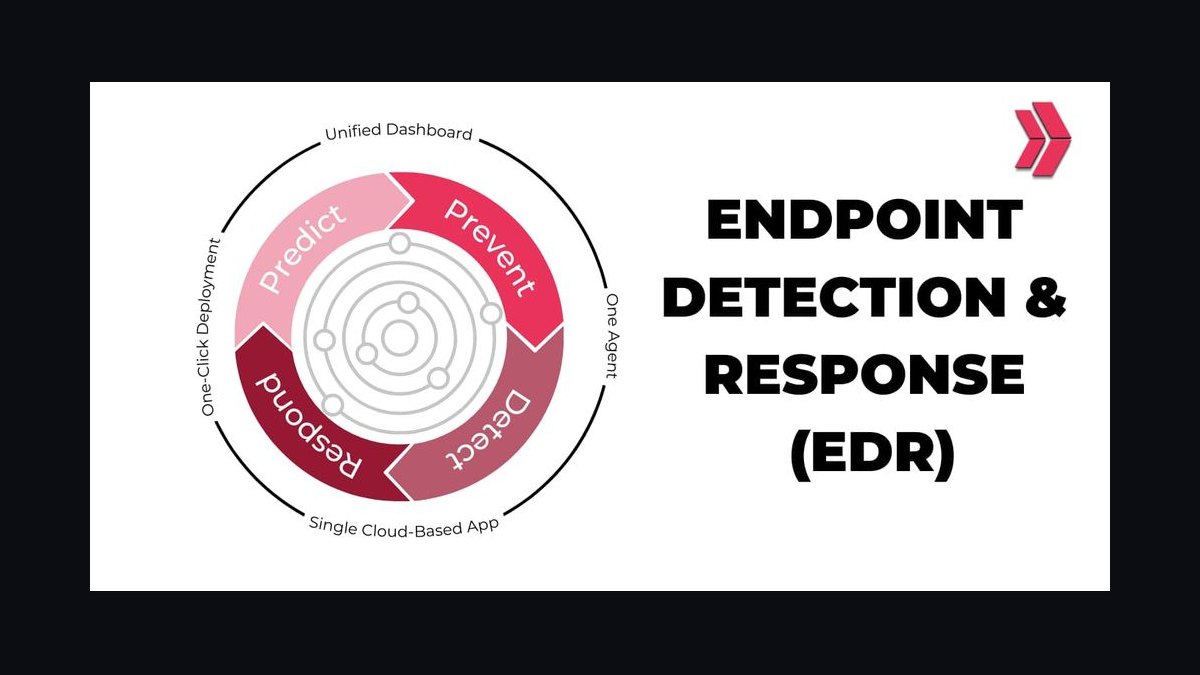
MITRE ATT&CK ranks fourth because it is the detection content framework that makes an EDR vendor's coverage claims verifiable, and testing against its Atomic Red Team corpus in weeks five through eight is what prevents a first enterprise bake-off from failing on false-positive rate. Skipping that validation step is the single most common cause of a failed technical evaluation. It is free and publicly documented.
It is for every EDR vendor building detection engineering, from seed stage through enterprise, and it trades away nothing except the engineering hours required to map coverage honestly. It sits directly beneath Apache Flink because Flink is the engine and ATT&CK is the test suite that proves the engine works. Buyers post-2024 expect ATT&CK-mapped coverage in the demo, not the appendix.
5Cilium Tetragon
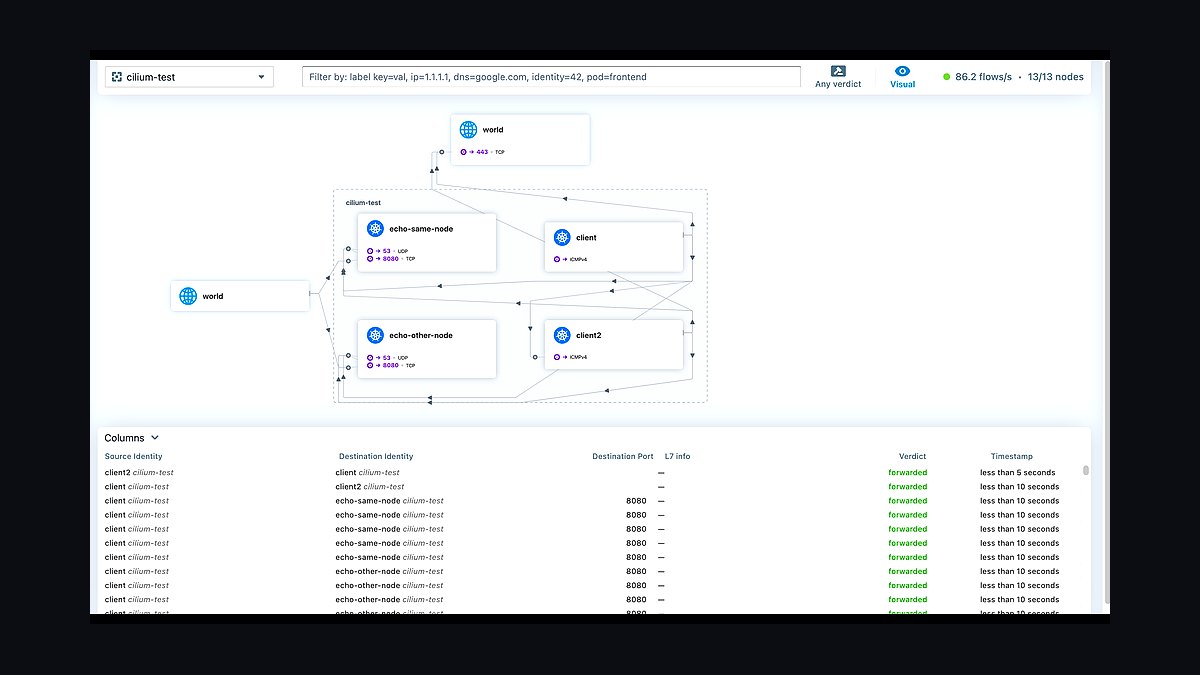
Cilium Tetragon ranks fifth because eBPF runtime security has become a lead talking point in technical evaluations, and licensing an open-source eBPF framework saves 30-100 engineer-years per operating system versus building an agent from scratch. Buyers now explicitly ask about kernel-mode footprint and rollback procedures, so the lighter eBPF footprint matters commercially, not just technically. It is the fastest credible path to a working agent.
It is for vendors still proving product-market fit or targeting mid-market accounts, and it trades away differentiation: licensing caps how much proprietary detection IP the vendor owns, which enterprise buyers increasingly scrutinize. Vendors funded for enterprise typically build their own agent within 18-24 months. It sits below MITRE ATT&CK because content validation matters before agent differentiation does.
6Salesforce Sales Cloud
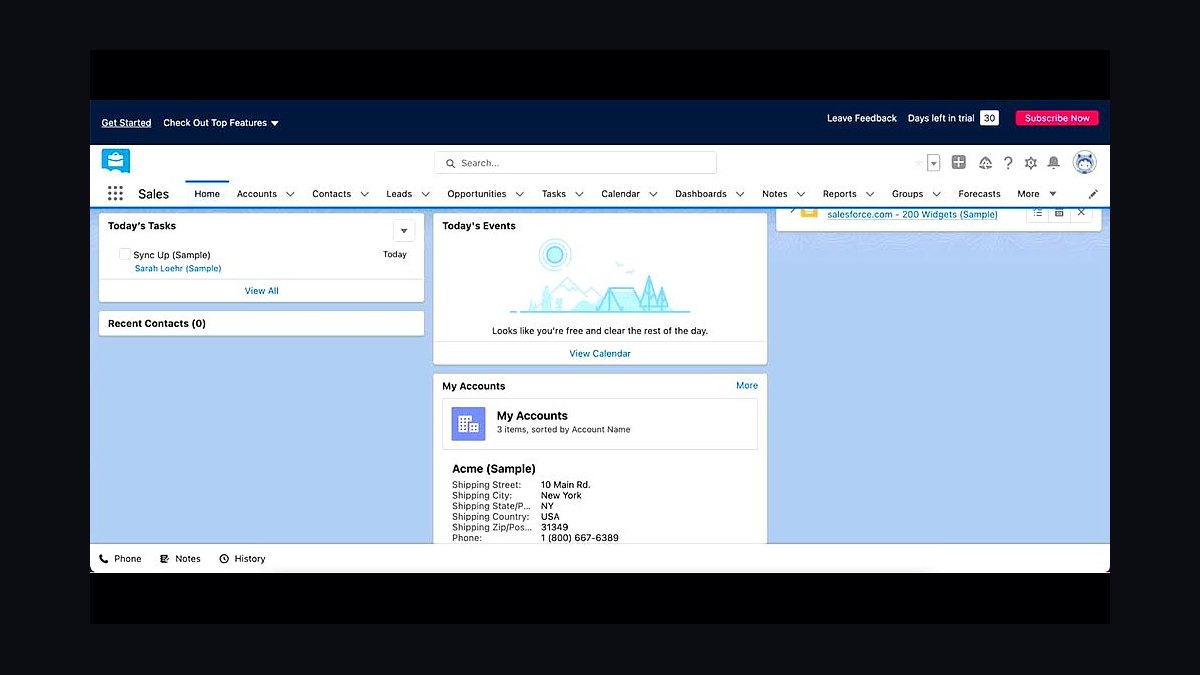
Salesforce Sales Cloud ranks sixth because it is the enterprise-motion default once ACV crosses roughly $30K and sales cycles stretch past 90 days, and running HubSpot against a Fortune 500 security team signals under-investment before the demo starts. Enterprise runs $165/user/month before add-ons, and its custom-object depth supports the fields EDR deals actually turn on: incumbent vendor being displaced, endpoint count, and platform modules under evaluation. Generic CRM fields cannot carry the consolidation pitch.
It is for vendors already closing $1M+ ACV deals with multi-year ramps and channel splits, and it trades away cost and simplicity. HubSpot Enterprise bundles CRM, sequencing, and reporting for roughly $150-200/user/month all-in, a genuine 60-70% discount that remains correct pre-$30M ARR. Below Salesforce sit the sales intelligence layers that make its data actionable.
7Clari
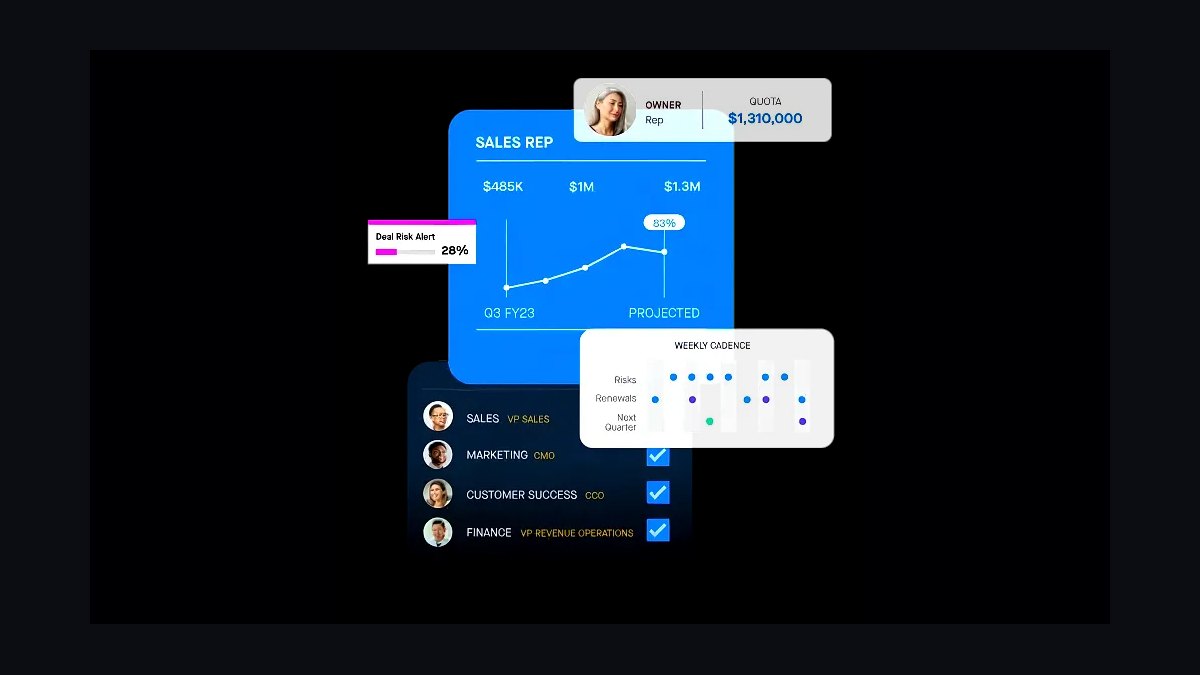
Clari ranks seventh because forecasting accuracy is the operational constraint that binds hardest once an EDR vendor has more than a handful of enterprise AEs, and it costs $80-130/user/month on top of Salesforce. It surfaces deal slippage and pipeline coverage gaps that raw CRM reporting hides, which matters when cycles run past 90 days and quota sits at $1-2M ARR annually. At that quota, the seat cost is under 0.5% of quota.
It is for sales organizations with enough deal volume to make statistical forecasting meaningful, generally past $30M ARR, and it trades away simplicity: smaller teams get more value from HubSpot's bundled reporting than from a dedicated forecasting layer. It sits directly below Salesforce Sales Cloud because it is useless without a CRM rich enough to feed it, and above Gong because forecast data precedes conversation data.
8Gong
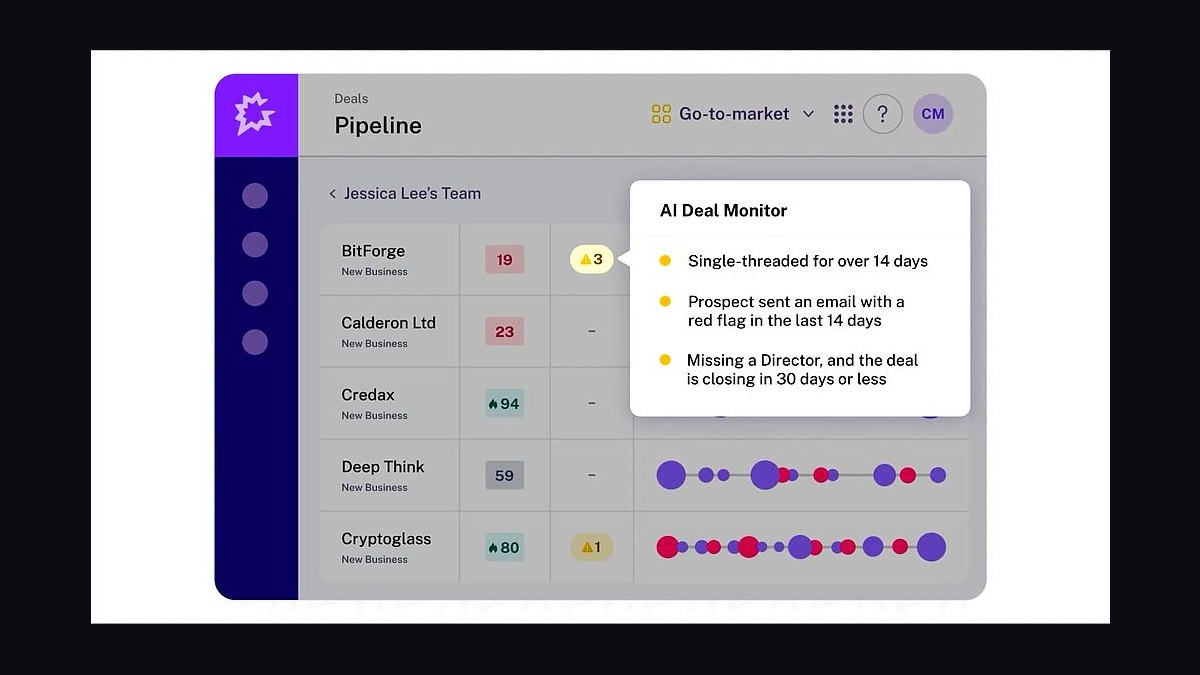
Gong ranks eighth because conversation intelligence is how EDR vendors actually learn which competitive displacement narratives and platform-consolidation pitches land, and it runs about $1,600 per user per year, roughly $133/user/month. In a category where the buyer explicitly asks about kernel-mode footprint and rollback procedures, knowing which technical objections recur across calls is directly monetizable. It pairs with Clari to connect what reps say to what deals do.
It is for sales teams with enough call volume that pattern detection beats anecdote, typically past $30M ARR with a dedicated enablement function, and it trades away budget and privacy overhead: recording every call requires legal review and rep buy-in. It sits below Clari because forecasting tells you a deal is slipping before conversation analysis explains why. Vendors under $30M ARR should skip it.
9Vanta
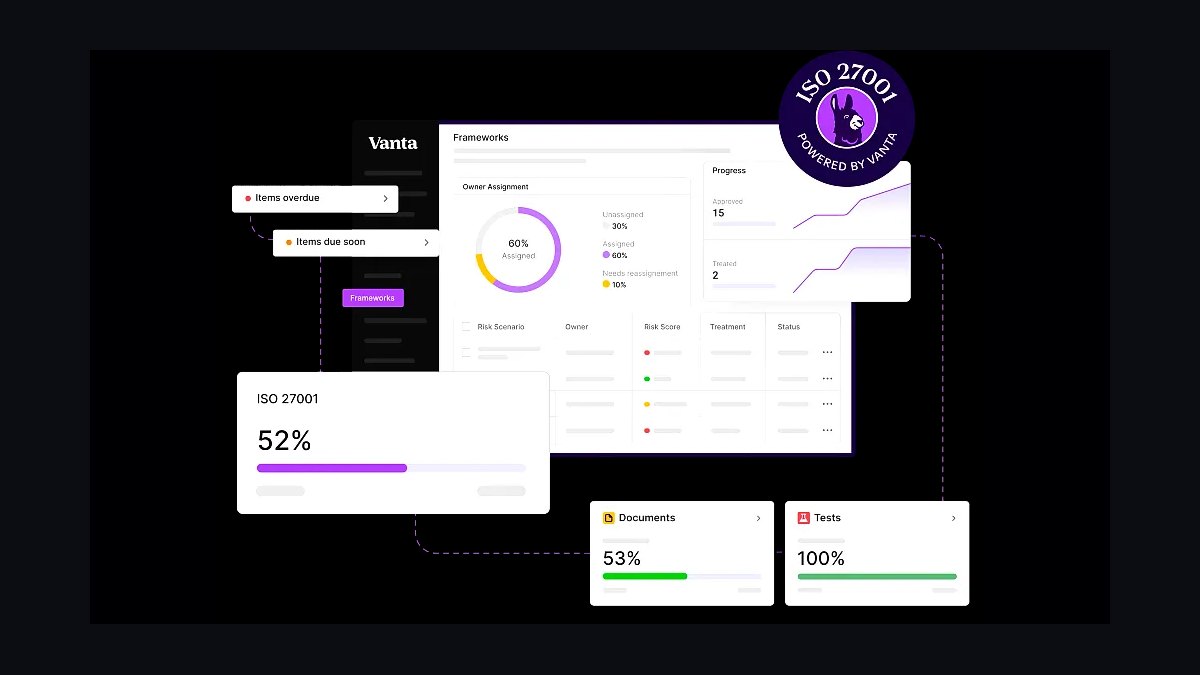
Vanta ranks ninth because SOC 2 Type II and ISO 27001 clear most commercial enterprise procurement gates, and compliance evidence collection must start in the same window as the sales stack build, not after, since Type II requires a minimum observation period before the audit can even begin. It runs $30K-$100K/year for SOC 2 automation. Enterprise procurement increasingly blocks on compliance status before technical evaluation starts at all.
It is for every EDR vendor selling to commercial enterprise, and it trades away nothing at that tier except the annual fee and the engineering hours spent wiring evidence collection. It sits below the sales stack because compliance gates the deal rather than sourcing it. Vendors pursuing FedRAMP High on top should treat that as a separate $3M-$10M commitment reserved for a qualified $50M+ federal pipeline.
10Drata
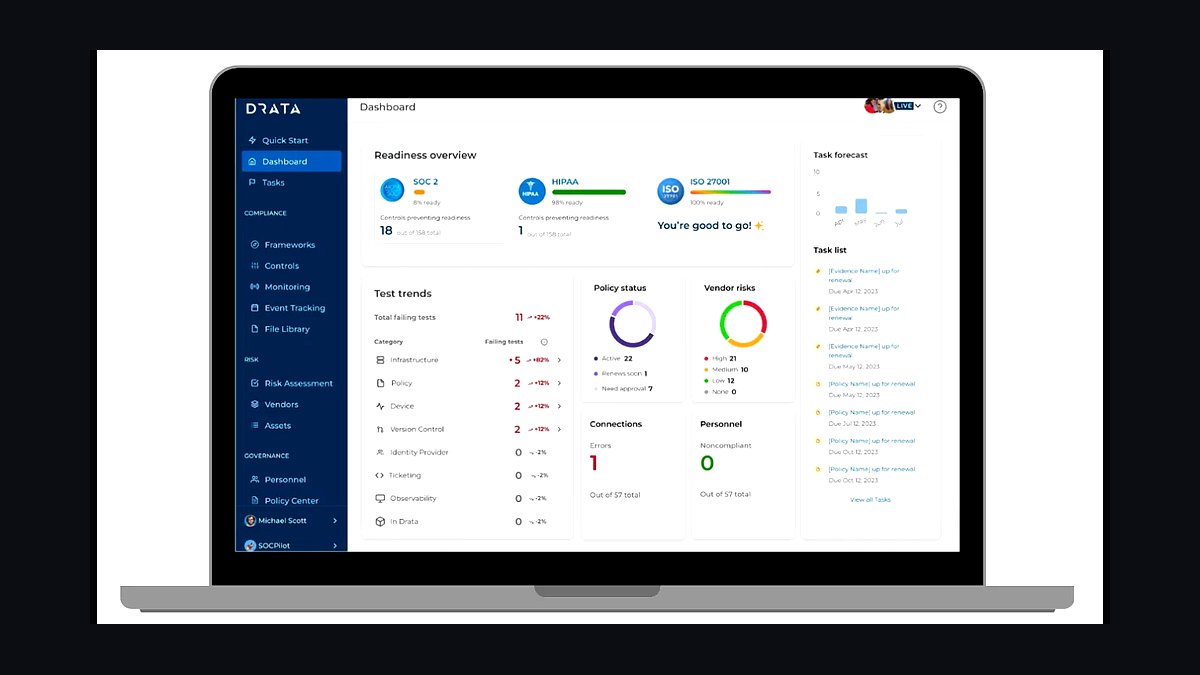
Drata ranks tenth because it is the direct alternative to Vanta for SOC 2 and ISO 27001 automation at a comparable $30K-$100K/year, and running both is unnecessary. It differentiates on auditor network and control-monitoring breadth rather than price, so the choice between them usually comes down to which auditor relationship the vendor already has. Either clears the same commercial enterprise gates.
It is for EDR vendors at the same stage as the Vanta pick, generally past $10M ARR with enterprise pipeline, and it trades away the larger integration marketplace Vanta has built. It sits below Vanta only because Vanta's ecosystem is marginally broader for a category that must evidence endpoint telemetry controls specifically. Vendors with a qualified federal pipeline should look past both toward FedRAMP-authorized tooling.
How we ranked these
We scored each tool on four weighted dimensions: unit economics at trillion-event scale (35%), detection latency and streaming-join capability (25%), operational burden on a lean platform team (20%), and enterprise procurement credibility, including compliance automation and CRM depth (20%). Scores came from published pricing pages, vendor documentation, and operator-reported event volumes at $25M-$100M ARR.
Storage, ingest, correlation, sales, and compliance layers were ranked separately, then combined into a single recommended stack per company stage.
We deliberately ignored analyst quadrant placement, G2 review counts, and conference sponsorship visibility, because none of those correlate with whether a two-person data team can actually run the pipeline under load. We also excluded total-cost-of-ownership projections beyond 24 months, since EDR vendors at this stage change storage tiers and sales motions faster than any three-year model survives. Feature checklists were dropped entirely; every tool here clears the baseline feature bar.
Related questions
Should a new EDR vendor build its own agent or license one?
Licensing via OEM agreements or open-source eBPF frameworks like Cilium Tetragon saves 30-100 engineer-years per operating system but caps differentiation, since competitors can license the same core. Vendors targeting enterprise accounts typically build proprietary agents within 18-24 months once funded, because buyers explicitly probe kernel footprint and rollback behavior during technical evaluation.
How does channel partner revenue affect the sales stack choice?
Channel-heavy vendors selling through CDW, Optiv, or GuidePoint need CRM support for deal registration, partner-sourced pipeline attribution, and margin tracking. That pushes toward Salesforce partner community features over HubSpot even at lower ARR, because HubSpot's partner object model cannot cleanly represent multi-tier channel splits or co-sell attribution without custom development.
What triggers the move from Snowflake to ClickHouse?
Typically crossing $25-50M ARR or roughly 100 billion events per day, whichever pushes monthly query costs above what a dedicated data engineering hire would cost to operate ClickHouse instead. Operators describe an 8-14 month dual-running period, since cutting over a security product's live telemetry pipeline in one weekend risks outages that cost renewals.
Does XDR expansion change the core stack choice?
Yes. Adding identity, cloud workload, and email correlation multiplies ingest volume two to four times, which accelerates the ClickHouse and Iceberg migration timeline regardless of current ARR. It also forces earlier investment in Flink correlation and Sigma content, because cross-domain detections require streaming joins that a warehouse-only architecture handles poorly.
How much does eBPF versus kernel-module design affect enterprise deals?
Directly. Buyers post-2024 explicitly ask about kernel-mode footprint, crash risk, and rollback procedures during technical evaluation, so eBPF's lighter footprint has become a talking point account executives are trained to lead with. Kernel-module vendors must arrive with stability data and a documented uninstall path or the bake-off stalls.
Is partnering with a SIEM a permanent strategy or a stepping stone?
Usually a stepping stone. Vendors that remain SIEM-dependent past $100M ARR tend to lose platform-consolidation deals to CrowdStrike and Microsoft, who own both the endpoint and correlation layers natively. Partnering works while targeting SMB and mid-market accounts that already run Splunk, Sentinel, or Chronicle and refuse a second console.
What is the minimum viable compliance posture for enterprise EDR sales?
SOC 2 Type II plus ISO 27001 covers most commercial enterprise procurement gates. FedRAMP and Common Criteria are additive investments reserved for vendors with a qualified federal or highly regulated pipeline, since FedRAMP High alone runs $3M-$10M over 30-48 months and should never be pursued speculatively.
How long should detection content be tested before customer exposure?
At least four to six weeks against MITRE ATT&CK Atomic Red Team plus internal red-team exercises. Skipping this is the single most common cause of a first enterprise bake-off failing on false-positive rate, and false positives at scale destroy analyst trust faster than missed detections do.
FAQ
Is Snowflake ever the permanent answer, even at scale?
Rarely for pure-play EDR. A few hyperscale vendors keep Snowflake for business intelligence and customer-facing analytics while running ClickHouse or custom storage for the raw telemetry pipeline. The two serve different query patterns: warehouse workloads tolerate seconds of latency, while streaming detection joins cannot.
Can a vendor run HubSpot and still close $1M+ enterprise deals?
It is possible but uncommon past a handful of deals. The lack of CPQ-grade ramp modeling and custom-object depth becomes a visible gap once legal and procurement request complex multi-year terms, platform-module attach tracking, or incumbent-displacement reporting that HubSpot cannot represent without heavy customization.
Does the storage choice affect detection latency directly?
Yes. ClickHouse's columnar design supports the sub-second scans that real-time Flink correlation depends on. Snowflake's query latency, even when fast, is not architected for the streaming-join patterns detection engines need, so teams end up caching hot data elsewhere anyway, duplicating cost and complexity.
How much does the eBPF versus kernel-module choice affect the sales conversation?
Directly. Buyers post-2024 explicitly ask about kernel-mode footprint and rollback procedures during technical evaluation, so eBPF's lighter footprint has become a talking point account executives lead with. Kernel-module vendors must bring stability telemetry and a documented uninstall path or the bake-off stalls early.
Is partnering with a SIEM a permanent strategy or a stepping stone?
Usually a stepping stone. Vendors that stay SIEM-dependent past $100M ARR tend to lose platform-consolidation deals to CrowdStrike and Microsoft, who own both the endpoint and correlation layers natively. Partnering works while targeting SMB and mid-market accounts that already run a SIEM and refuse a second console.
What is the minimum viable compliance posture to start selling to enterprise?
SOC 2 Type II plus ISO 27001 covers most commercial enterprise procurement gates. FedRAMP and Common Criteria are additive investments reserved for vendors with a qualified federal or highly regulated pipeline, since FedRAMP High alone runs $3M-$10M over 30-48 months.
How much does a fully loaded AE seat cost on the enterprise sales stack?
Salesforce Enterprise runs $165 per user monthly before add-ons. Layering Clari at $80-130, Gong near $133, and Outreach at $130 puts a fully loaded seat around $500-550 monthly. Against a $1-2M annual quota, that is under 0.5% of quota, a rounding error next to a slow sales motion.
When should a vendor self-manage Kafka instead of using Confluent Cloud?
Above roughly $100M ARR. Confluent Cloud runs about $0.11 per GB written, and a vendor at 500 billion events daily writes roughly 500TB, pushing a managed bill into six figures monthly. Self-managing on EKS or GKE cuts that line 50-70%, accepting the operational burden in exchange.
What custom CRM objects matter most for EDR sales?
Incumbent vendor being displaced, endpoint count, and which platform modules the prospect is evaluating. Generic CRM fields cannot support the platform-consolidation pitch that wins or loses most EDR deals in 2027, and without displacement tracking, competitive win-rate analysis becomes guesswork rather than a forecast input.
Does compliance evidence collection need to start before the audit?
Yes, and earlier than most vendors plan. SOC 2 Type II requires a minimum observation period before the audit can even begin, and enterprise procurement increasingly gates on compliance status before technical evaluation starts. Starting Vanta or Drata in the same quarter as the first enterprise pilot is the practical minimum.
Sources
- https://attack.mitre.org
- https://mitre-engenuity.org/cybersecurity/attack-evaluations/
- https://clickhouse.com/docs
- https://www.confluent.io/confluent-cloud/
- https://tetragon.io
- https://www.salesforce.com/sales/pricing/
- https://www.vanta.com
- https://www.fedramp.gov
- https://flink.apache.org
- https://docs.snowflake.com
Related on PULSE
This page will be disappearing soon. Save it to your device for $1 — or read it free while it is here.
@Kory-White- · if Venmo asks, the last 4 of my number are 2012
This page is gone.
This one is off the shelf now. $1 keeps it on your phone for good — the whole page, pictures and diagrams included.
 pulse-tech-stacksTop 10 Best Tech Stack Tools for Mobile Threat Defense (MTD) Vendors in 2027
 pulse-tech-stacksTop 10 Best Tech Stack Tools for AI Music Generation Companies in 2027
 pulse-tech-stacksTop 10 Best Tech Stack Tools for Vulnerability Management Software Vendors in 2027
 pulse-tech-stacksTop 10 Best Tech Stack Tools for Staffing Agencies in 2027
 pulse-tech-stacksTop 10 Best Tech Stack Tools for Window Cleaning Services in 2027
 pulse-tech-stacksTop 10 Best Tech Stack Tools for HOA and Community Association Management Companies in 2027
 pulse-tech-stacksTop 10 Best Tech Stack Tools for Pressure Washing Companies in 2027
 pulse-tech-stacksTop 10 Best Tech Stack Tools for Independent Dance Studios in 2027
 pulse-tech-stacksTop 10 Best Tech Stack Tools for AI Document Intelligence Companies in 2027
 pulse-tech-stacksTop 10 Best Tech Stack Tools for Online Travel Agencies (OTAs) in 2027