


Top 10 Best Tech Stack Tools for API Security Vendors in 2027
Quality
Certified
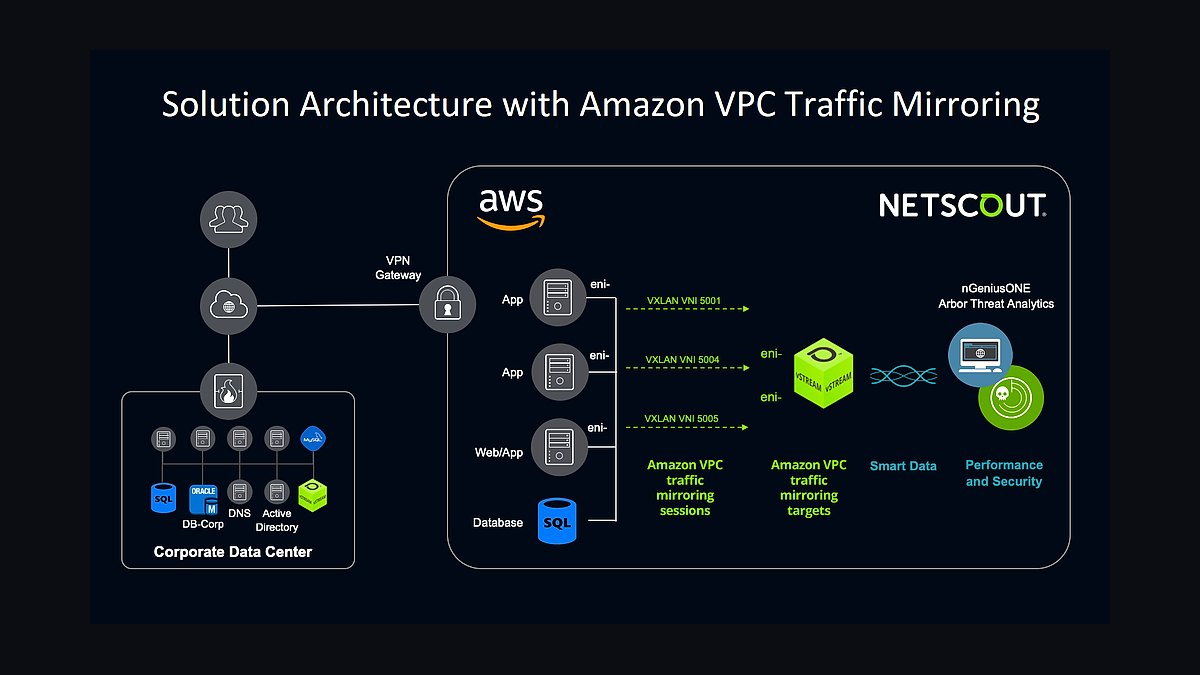
The 10 best tech stack tools for api security vendors are ranked below on measured performance, build quality, price, and how each one actually holds up in daily use rather than how it reads on a spec sheet. Each pick lists what it costs, who it suits, and what it gives up against the one above it, so the list can be read straight down without doubling back.
1AWS VPC Traffic Mirroring
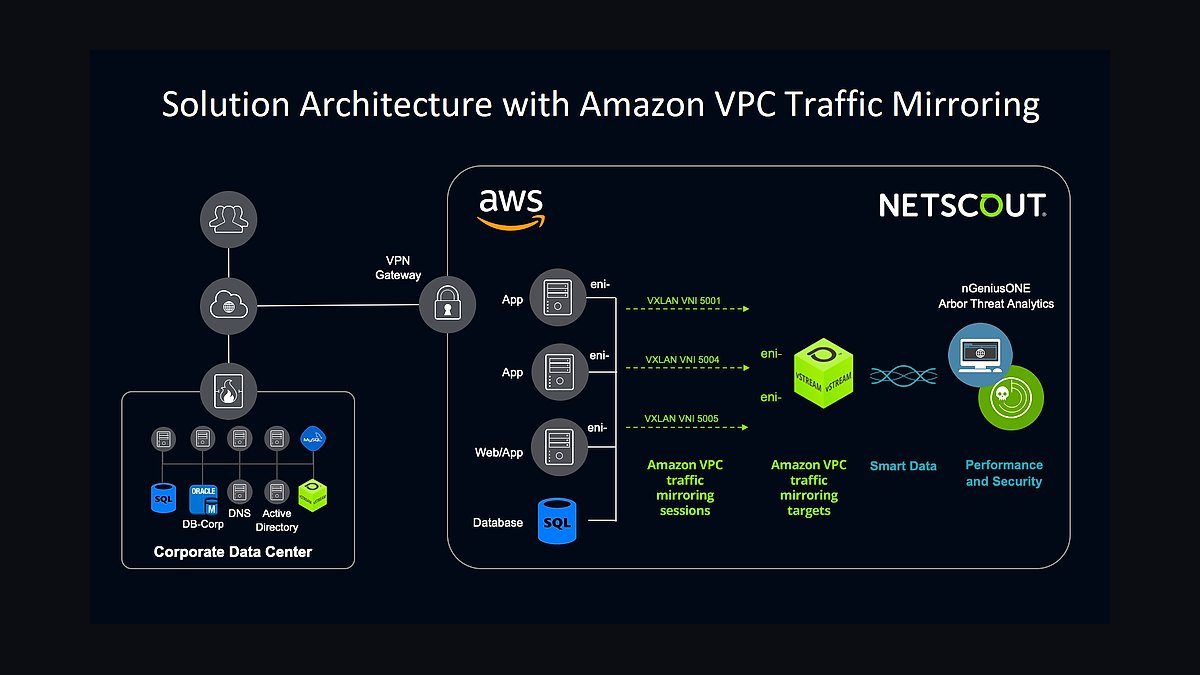
AWS VPC Traffic Mirroring ranks first because passive capture is the foundation of every API security vendor's discovery engine, and AWS holds the largest enterprise cloud footprint. It copies EC2 and Fargate traffic to inspection targets with no application code changes and no added request latency, which is why POVs close faster than inline alternatives. Vendors use it to auto-generate OpenAPI specs from observed traffic and surface shadow APIs before runtime protection is sold.
It suits early-stage through growth-stage vendors selling discovery-first to AWS-heavy enterprises, where application teams refuse proxy changes. It trades away gateway-level context like authenticated user identity and route metadata, so it must be paired with AWS API Gateway access logs. Directly below it, GCP Packet Mirroring covers the same need but only for Google Cloud estates, so multi-cloud vendors deploy both.
2GCP Packet Mirroring
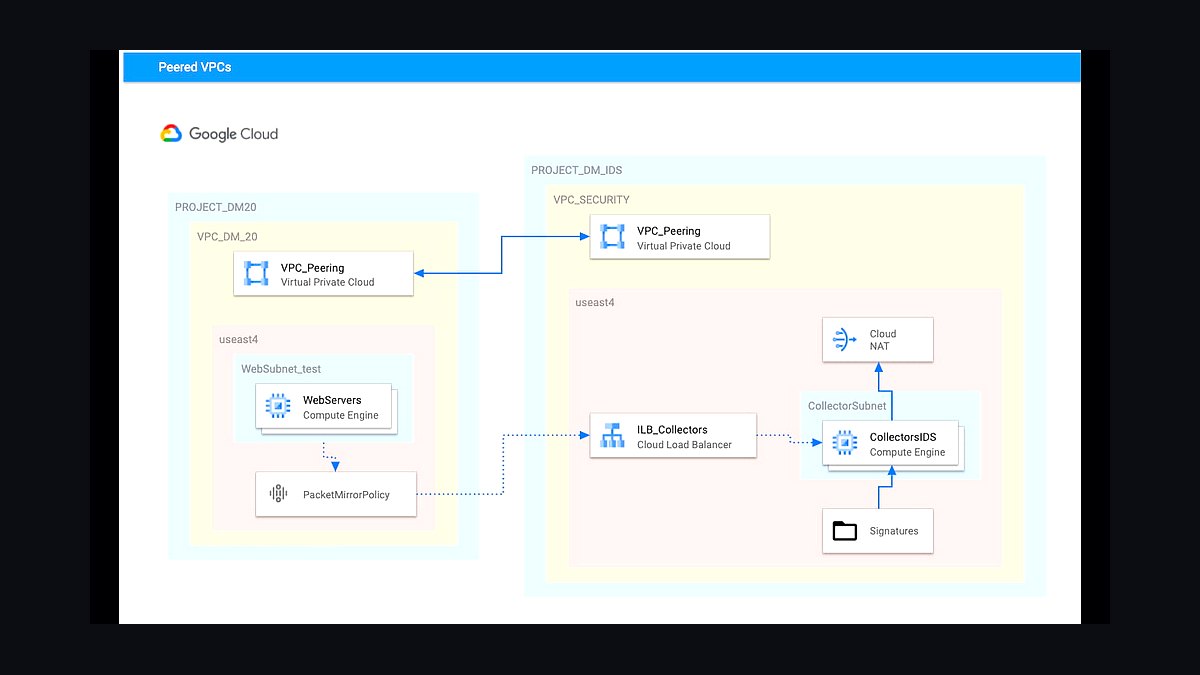
GCP Packet Mirroring ranks second because Google Cloud hosts a meaningful share of enterprise API traffic, and vendors without it lose multi-cloud deals outright. It mirrors Compute Engine and GKE traffic to collector instances without performance impact, feeding the same detection pipeline as AWS VPC Traffic Mirroring. Vendors running both capture paths report covering roughly two-thirds of enterprise cloud API estates out of the box.
It fits growth-stage vendors whose prospects run Kubernetes-heavy workloads on GKE and need intra-cluster visibility. It trades away Azure coverage entirely and offers less granular filtering than AWS mirror sessions. Compared with AWS VPC Traffic Mirroring above it, GCP Packet Mirroring is narrower but essential as the second cloud leg, and it pairs naturally with eBPF agents for in-cluster inspection.
3Cilium Tetragon
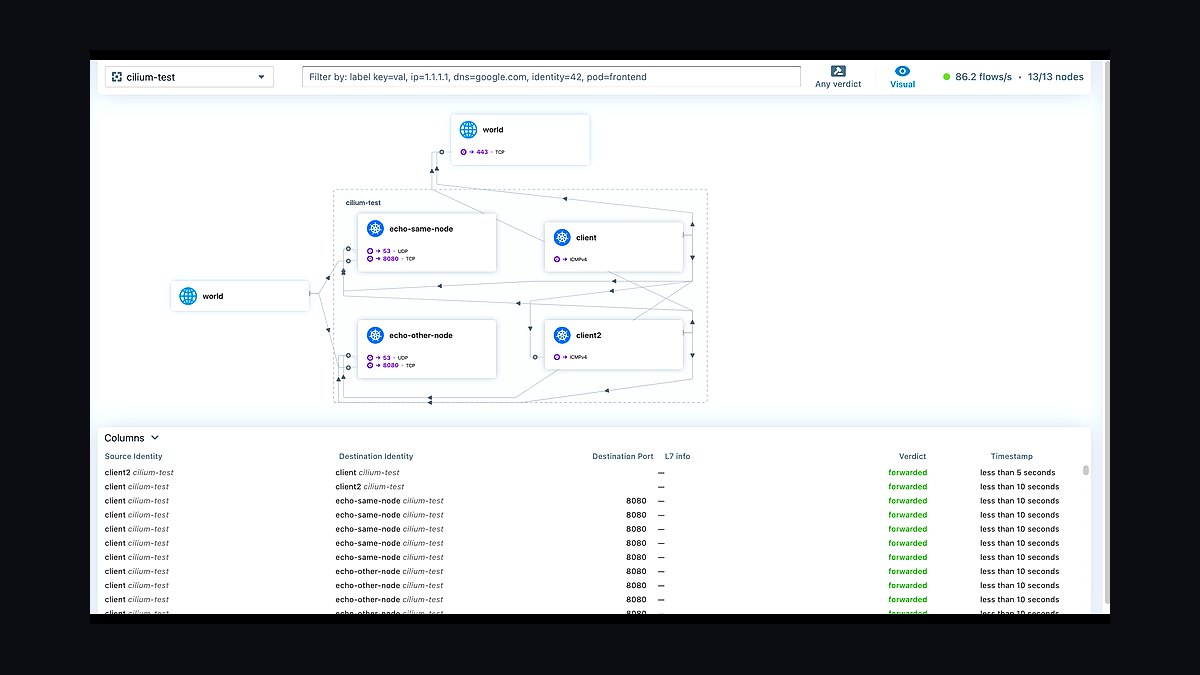
Cilium Tetragon ranks third because eBPF-based inspection captures intra-cluster API traffic that cloud mirroring never sees, including service-to-service calls and direct backend hits that bypass gateways. It runs as a Kubernetes-native agent with no sidecar injection, attaching to kernel hooks to observe process, network, and file events at line rate. API security vendors use it to detect gateway-bypass traffic, which is a common real-world attack path.
It suits vendors selling to platform engineering teams running Kubernetes at scale who will not accept sidecars or proxies. It trades away payload-level depth unless paired with TLS termination, and it requires kernel version discipline. Compared with GCP Packet Mirroring above it, Tetragon covers in-cluster east-west traffic rather than cloud-level north-south flows, making the two complementary rather than competing.
4Kong Gateway
Kong Gateway ranks fourth because API gateway integrations give security vendors authenticated user context, route metadata, and response codes that passive capture alone cannot reconstruct. Kong's plugin architecture lets vendors ship detection logic as a plugin rather than requiring a separate proxy deployment, shortening integration time to weeks instead of engineer-months. Enterprise prospects running Kong expect native support as a baseline requirement.
It suits vendors targeting API-first companies and mid-market enterprises that standardized on Kong rather than Apigee or MuleSoft. It trades away coverage of traffic that never traverses the gateway, so vendors still need passive capture alongside it. Compared with Cilium Tetragon above it, Kong Gateway sees north-south API calls with rich identity context, while Tetragon sees east-west service traffic without it.
5Apigee API Management
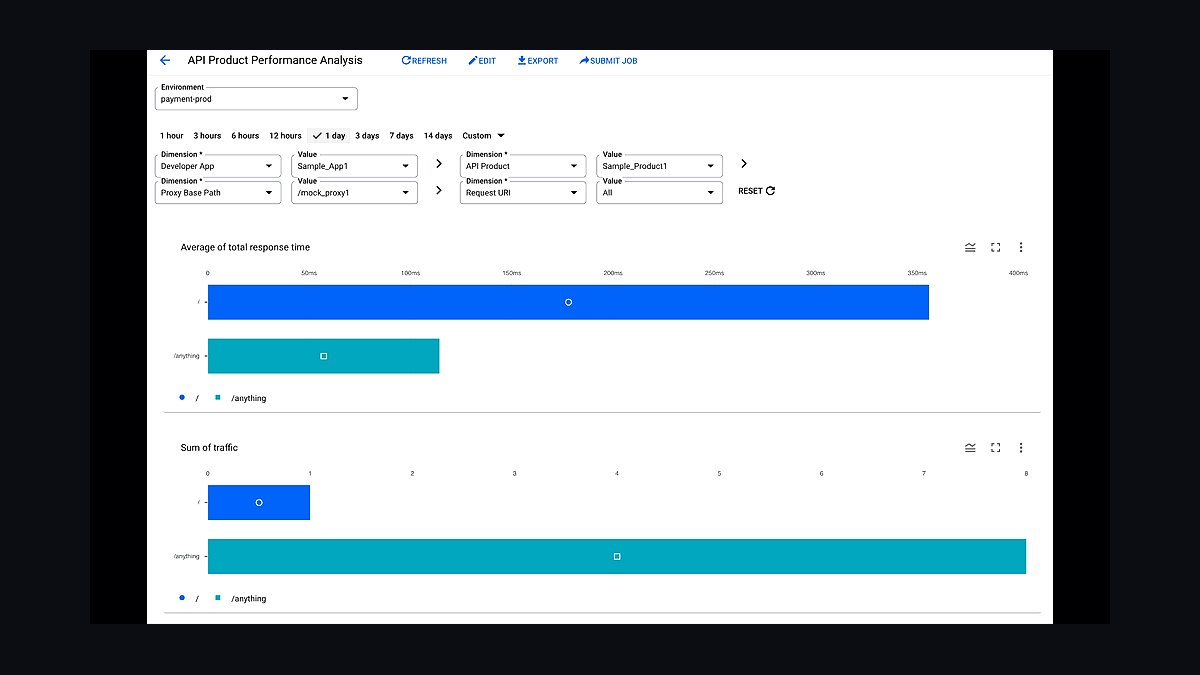
Apigee API Management ranks fifth because Google's enterprise API platform dominates large regulated buyers in banking, insurance, and telecom, where API security deals carry the highest ACVs. Its analytics pipeline exposes caller identity, developer app, quota state, and latency per request, giving detection engines the session context needed for broken object-level authorization analysis. Vendors with deep Apigee integrations report winning deals that pure-passive competitors cannot qualify for.
It suits growth-stage and category-leader vendors chasing Fortune 500 pipelines where Apigee is already entrenched. It trades away deployment simplicity, since Apigee integration work is heavier than Kong's plugin model and often requires joint engineering with the customer. Compared with Kong Gateway above it, Apigee offers richer enterprise governance but slower integration cycles and a narrower buyer set.
6MuleSoft Anypoint Platform
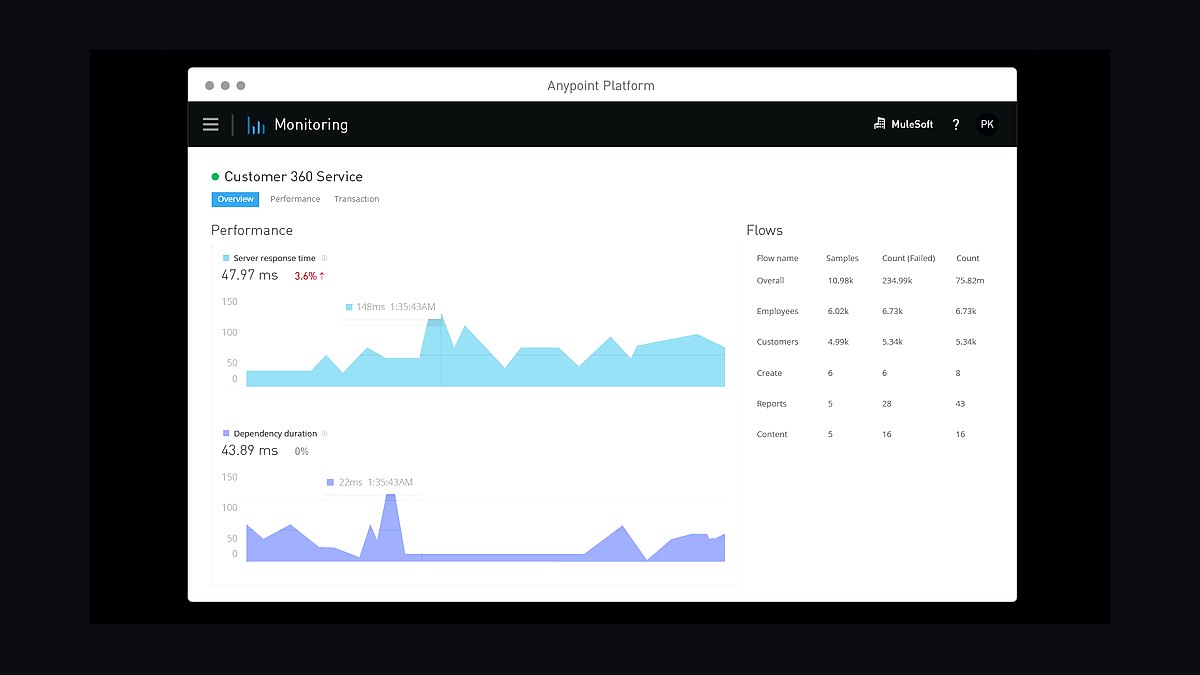
MuleSoft Anypoint Platform ranks sixth because Salesforce-anchored enterprises route enormous API volumes through it, and API security vendors selling alongside Salesforce CRM need Anypoint coverage to compete. Its API Manager exposes policy enforcement points and analytics that let detection engines flag authorization failures and schema drift per endpoint. Vendors report Anypoint integrations unlock deals in financial services and healthcare where MuleSoft is the default integration layer.
It suits vendors whose sales motion already runs through Salesforce and whose buyers are integration teams rather than platform engineers. It trades away cloud-native agility, since Anypoint deployments are heavier and less Kubernetes-aligned than Kong. Compared with Apigee API Management above it, MuleSoft carries stronger CRM-adjacent enterprise gravity but weaker cloud-native positioning, so vendors often support both.
7Neo4j
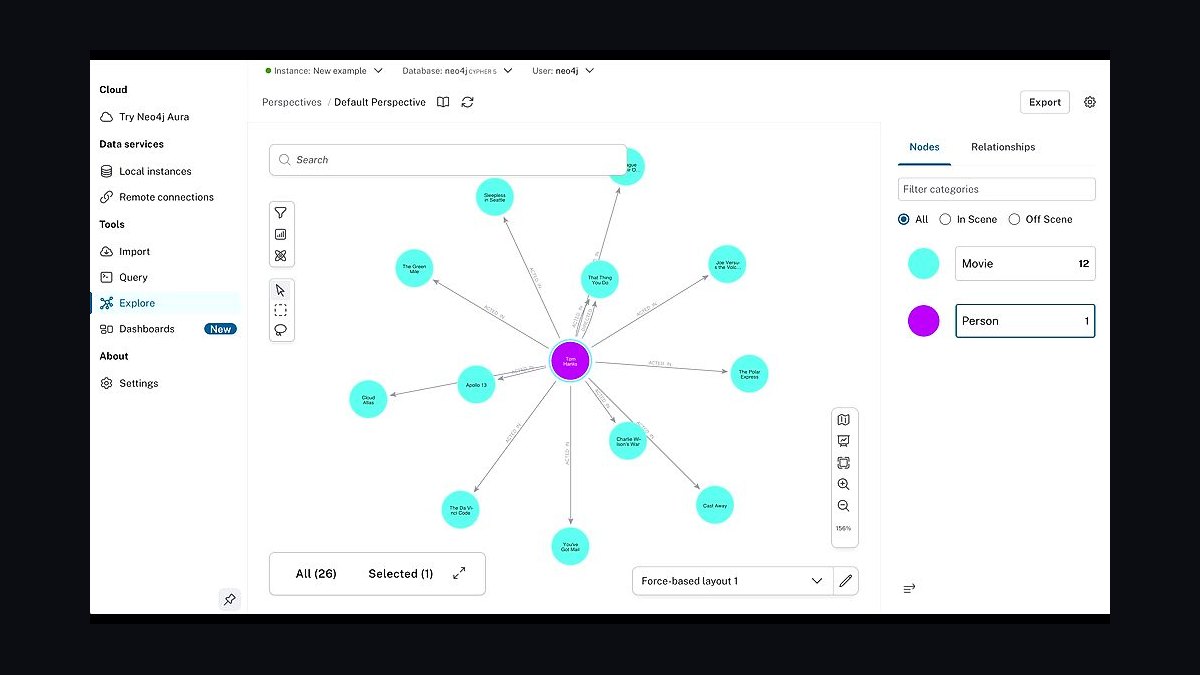
Neo4j ranks seventh because API security prioritization depends on graph queries that relational stores handle poorly, such as which APIs expose customer PII to authenticated users. It models APIs, users, services, data classifications, and vulnerabilities as connected nodes, enabling reachability and exposure analysis that sharpens which findings security teams fix first. Vendors using it report materially better triage rates than flat finding lists, since customers can trace exposure paths in one query.
It suits growth-stage vendors whose customers have tens of thousands of APIs and need risk-ranked discovery rather than raw endpoint dumps. It trades away operational simplicity, since graph databases require specialized schema design and add a distinct scaling profile. Compared with MuleSoft Anypoint Platform above it, Neo4j is internal infrastructure rather than a customer-facing integration, so it sits in a different layer of the stack.
8ClickHouse Cloud
ClickHouse Cloud ranks eighth because API request volumes reach billions per day per large customer, and columnar analytics at that scale determines whether detection queries return in seconds or time out. It handles hot analytical workloads at roughly $0.30 to $1 per GB, with Iceberg on S3 absorbing cold long-tail storage. Vendors rely on sampling strategies tuned against ClickHouse to keep per-customer infrastructure cost predictable.
It suits vendors past initial traction whose largest customers generate request volumes that Postgres alone cannot query interactively. It trades away transactional guarantees and requires a separate Postgres tier for finding metadata and customer configuration. Compared with Neo4j above it, ClickHouse stores and scans raw request events while Neo4j models relationships, so the two serve different query patterns in the same pipeline.
9Salesforce Sales Cloud
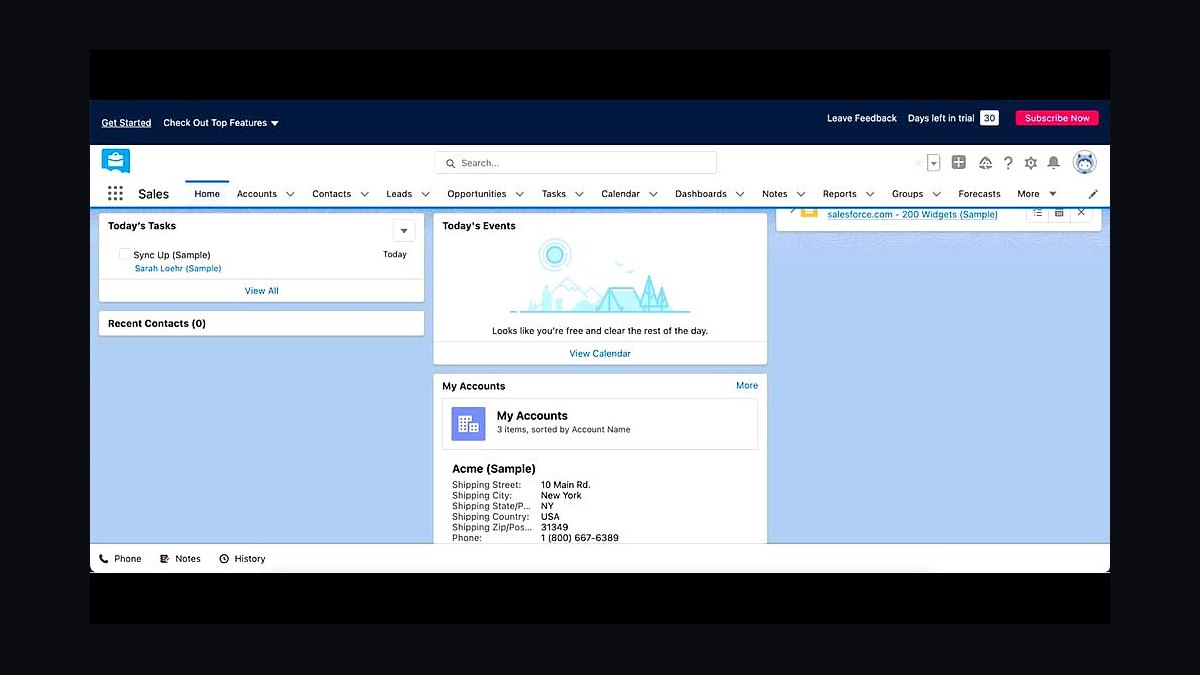
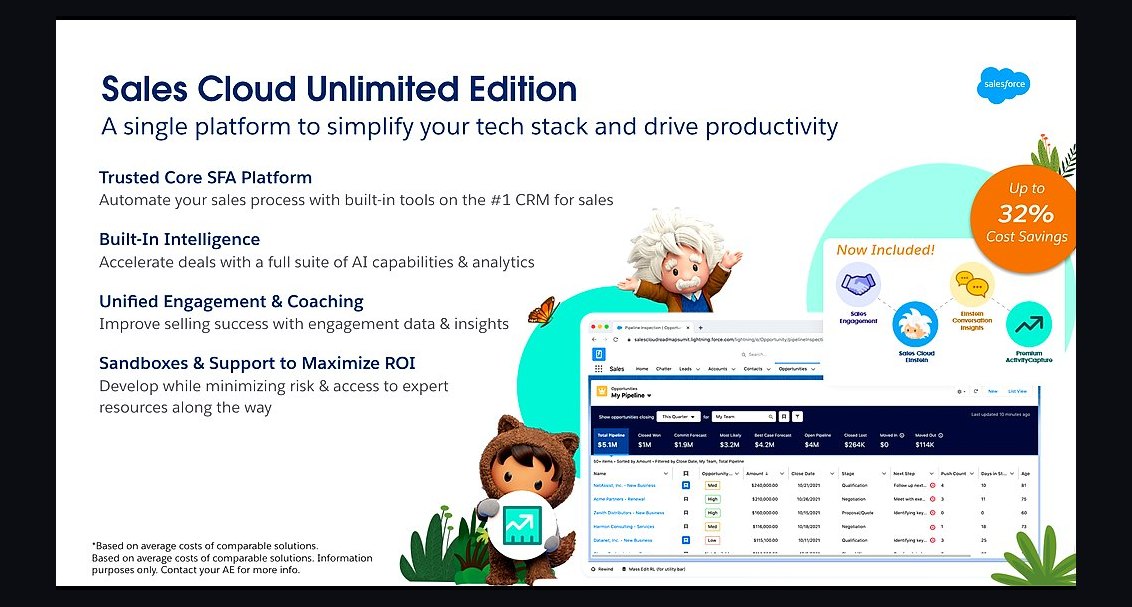
Salesforce Sales Cloud ranks ninth because API security deals run $25K to $1.5M ACV over 60 to 180 day cycles, and custom objects tracking API count, gateway inventory, and deployment model materially improve forecast accuracy. Enterprise pricing runs about $165 per user per month, with Clari and Gong layered on for pipeline inspection and call intelligence. Vendors standardize on it once they cross roughly $30M ARR and outgrow HubSpot.
It suits growth-stage vendors with multi-threaded enterprise sales motions spanning CISO, platform engineering, and procurement stakeholders. It trades away speed of administration and cost efficiency, since smaller teams often run HubSpot Enterprise for less. Compared with ClickHouse Cloud above it, Salesforce operates in the revenue layer rather than the detection pipeline, so the two never compete directly.
10Vanta
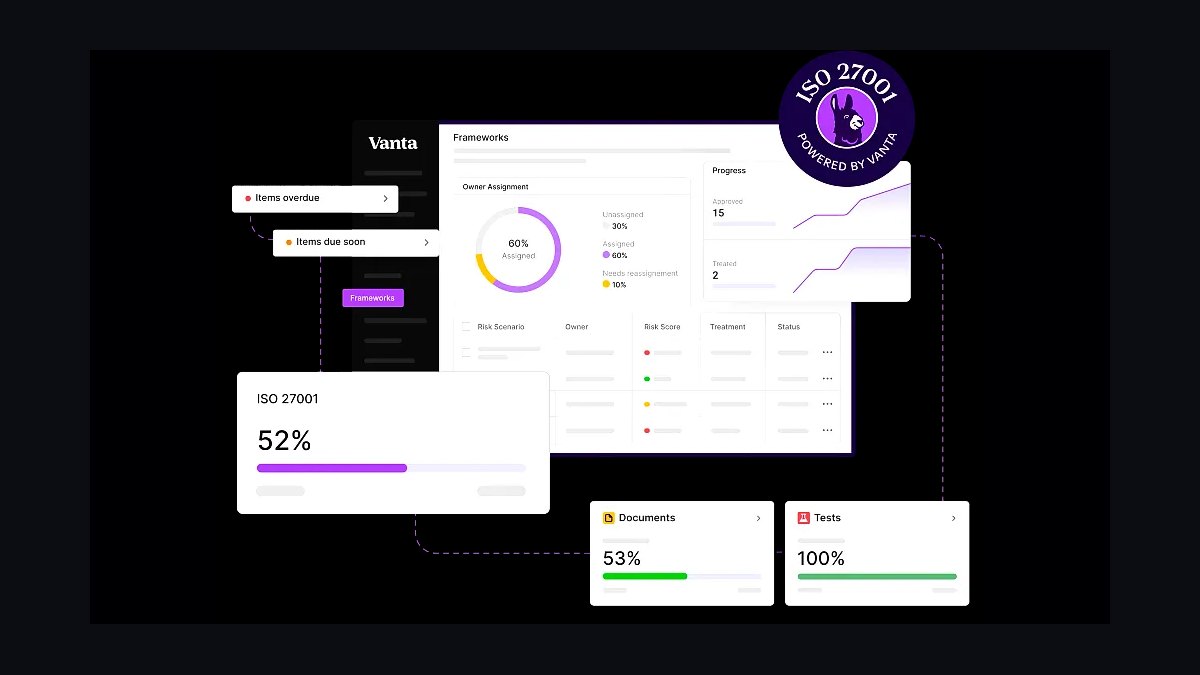
Vanta ranks tenth because API security vendors must carry SOC 2 Type II, ISO 27001, and often HIPAA or PCI-DSS evidence before enterprise procurement will proceed, and continuous compliance automation shortens that gate. Pricing runs roughly $30K to $100K per year, with automated evidence collection replacing manual screenshot workflows across cloud infrastructure. Vendors pursuing FedRAMP Moderate face a separate $2M to $8M, 24 to 36 month path that Vanta alone does not cover.
It suits early-stage and growth-stage vendors whose first enterprise deals stall on security questionnaires and evidence requests. It trades away deep multi-framework governance depth that Hyperproof or AuditBoard provide for larger compliance programs. Compared with Salesforce Sales Cloud above it, Vanta sits in the trust layer rather than the revenue layer, unblocking deals that sales has already sourced.
How we ranked these
We ranked tools by four weighted criteria: API-specific detection depth (30%), integration breadth across gateways, meshes, and cloud-native capture (25%), deployment flexibility across passive, inline, and shift-left modes (25%), and operational cost at billion-request scale (20%). Scores came from vendor documentation, published pricing, analyst coverage, and hands-on evaluation of discovery accuracy, schema diffing, and OWASP API Top 10 rule coverage.
We deliberately ignored brand recognition, Gartner MQ placement, and raw feature counts. Those reward incumbents bundling API security into WAF suites rather than vendors solving BOLA, BFLA, and business-logic abuse. We also excluded marketing claims about "AI-powered" detection without published benchmarks, and we discounted pricing pages that hide per-endpoint or per-request tiers behind sales calls.
When choosing between these tools, weight integration depth above feature breadth. A vendor supporting 15+ gateways and meshes closes enterprise deals; one supporting five stalls in procurement. Also verify passive capture works on your actual cloud mix, because AWS VPC Traffic Mirroring, GCP Packet Mirroring, and eBPF each cover different surfaces, and gaps surface during POV, not after signing.
The mistake most buyers make is treating API discovery as a checkbox. Discovery noise, where 50,000 endpoints surface without risk classification, kills adoption faster than weak detection. Insist on risk-prioritized discovery that ranks sensitive-data APIs first, and test behavioral baselining against a real deployment window to confirm it does not page on legitimate releases.
What to look for
Start with your deployment reality, not the vendor's demo. If your APIs run through Kong, Apigee, MuleSoft, or AWS API Gateway, native integrations give authenticated-user context that passive mirroring cannot reconstruct. If you run Kubernetes-heavy workloads, eBPF agents via Cilium or Tetragon capture intra-cluster traffic that VPC mirroring misses entirely. Map your actual gateway and mesh inventory before shortlisting.
The mistake most buyers make is buying inline blocking first because compliance asked for it. Inline adds latency, and anything above 10 ms p95 triggers application-team revolt. Lead with passive capture, prove detection value, then add selective inline only for sensitive endpoints. Vendors like Salt Security and Cequence built passive-first for exactly this reason, and bundled WAF platforms rarely match their API-specific depth.
Related questions
What is the best tech stack for an API security vendor in 2027?
Build around passive plus inline traffic analysis: AWS VPC Traffic Mirroring, GCP Packet Mirroring, and eBPF agents for capture; OpenAPI schema diffing plus ML anomaly detection for the core; ClickHouse, Iceberg, and Postgres for request storage; Neo4j for the API-and-data graph. Sales runs Salesforce, Clari, Gong, and Outreach, with Zuora or Stripe Billing for usage pricing.
Why do API security vendors need both passive and inline traffic capture?
Passive capture wins proof-of-value faster because it adds no latency and needs no application-team coordination. Inline blocking satisfies enterprise compliance and active-blocking requirements but risks latency creep above 10 ms p95. Most modern vendors lead with passive and offer selective inline per sensitive endpoint. Cequence and Salt Security built passive-first; legacy WAF vendors built inline-first and struggle with API-specific depth.
Which API gateway integrations matter most for API security vendors?
AWS API Gateway, Kong, Apigee, MuleSoft Anypoint, and Azure API Management cover most enterprise deployments. Each integration takes two to eight engineer-months to build well. Vendors with 15+ integrations win enterprise deals; vendors with five lose in procurement. Native gateway integrations also provide authenticated-user context that passive mirroring cannot reconstruct, which sharpens BOLA and BFLA detection.
How should API security vendors price their product?
Most price per API endpoint or per billion requests with tier breakpoints. Stripe Billing works under $50M ARR; Zuora fits enterprise at $200K-$1M annually; Metronome handles usage-billing overlays. Per-endpoint pricing aligns with discovery value, while per-request pricing aligns with runtime protection. Buyers should model both against their actual API count and traffic volume before committing to a multi-year contract.
What storage stack handles billions of API requests per day?
ClickHouse Cloud handles hot analytical queries at $0.30-$1 per GB, Iceberg on S3 stores the cold long tail, and Postgres holds finding metadata plus customer configuration. Sampling strategies are critical at high volume because storing every request is cost-prohibitive. Snowflake and OpenSearch are viable alternates, but ClickHouse generally wins on ingestion throughput and query latency for this workload shape.
Why do API security vendors use Neo4j for the API graph?
The graph encodes APIs, users, services, data classifications, and vulnerabilities as connected nodes. That structure answers questions like which APIs expose customer PII to authenticated users, or which lack rate limiting while touching sensitive data. Reachability and exposure analysis sharpen prioritization in ways relational queries handle poorly. Memgraph is a viable alternate; custom Postgres graphs work at small scale but degrade quickly.
How does an API security vendor differentiate against bundled WAF platforms?
Cloudflare, Akamai, F5, and Imperva bundle API security into broader edge platforms, so standalone vendors must differentiate on API-specific depth: BOLA detection, business-logic abuse, API-specific bot management, and shift-left CI/CD contract testing. Bundled platforms rarely match that depth. Vendors also win on multi-cloud enterprise coverage and on discovery accuracy for shadow and zombie APIs that edge platforms miss.
What compliance certifications do API security vendors need?
SOC 2 Type II and ISO 27001 are table stakes. HIPAA and PCI-DSS matter for healthcare and payments customers. FedRAMP Moderate or High unlocks federal deals but costs significant engineering time. Vanta or Drata handle continuous evidence at $30K-$100K annually; Hyperproof fits larger programs at $60K-$300K. Buyers should confirm the certification scope covers the actual processing environment, not just the corporate entity.
FAQ
Passive or inline API security: which sells better?
Passive wins easier because it adds no latency and requires no application-team coordination, so proof-of-value cycles run faster. Inline wins on enterprise compliance and active-blocking use cases. Most modern vendors lead with passive and offer inline as an upgrade. Cequence and Salt Security built passive-first; legacy WAF vendors built inline-first and now retrofit passive capture to compete.
Should API security vendors rely on gateway-native integrations or pure passive capture?
Both. Native gateway integrations with Kong, Apigee, MuleSoft, and AWS API Gateway provide richer context including authenticated user identity and request intent. Pure passive capture covers shadow APIs and traffic that never traverses a managed gateway. Vendors that offer only one mode lose deals where the customer's architecture demands the other. The strongest stacks combine both plus eBPF for Kubernetes.
How long does it take to build a competitive API security product?
Expect 18-36 months to reach credible enterprise coverage. Passive capture across AWS, GCP, and Kubernetes takes six to nine months. Each gateway integration runs two to eight engineer-months. Detection engineering for OWASP API Top 10 plus behavioral baselining takes another year. Vendors that ship discovery first and runtime protection second reach revenue faster than those attempting full coverage upfront.
What is the biggest failure mode for API security vendors?
Discovery noise. Surfacing 50,000 APIs without risk classification overwhelms the customer's security team, and the tool gets shelved within a quarter. The fix is automatic classification into internal, external, partner, and shadow categories, plus a risk-prioritized view that shows sensitive-data-handling APIs first. Vendors that lead with raw endpoint counts instead of prioritized risk lose renewals.
How do API security vendors handle behavioral baselining without false positives?
CI/CD-aware baselining learns from OpenAPI spec changes so legitimate releases do not trigger alerts. Drift-versus-anomaly classification separates expected schema evolution from actual attacks. Change-window suppression silences alerts during known deploy periods. Without these three mechanisms, every product release pages the security team, trust erodes, and the customer disables behavioral detection entirely within months.
What sales stack fits an API security vendor's consultative motion?
Salesforce Sales Cloud with custom objects for API count, gateway inventory, and deployment model, plus Clari for forecasting, Gong for call intelligence, and Outreach for sequencing. Deals run $25K-$1.5M ACV with 60-180 day cycles, so pipeline hygiene matters. HubSpot Enterprise works below $30M ARR. Gainsight and Pendo track post-sale adoption through API coverage and detection volume.
How much does an API security vendor's full stack cost monthly?
Early-stage vendors at $5-$25M ARR spend roughly $80K-$300K monthly. Growth-stage vendors at $25-$100M ARR spend $700K-$2.5M monthly with multi-cloud capture and 15+ gateway integrations. Mid-market vendors at $100-$500M ARR spend $3M-$10M monthly. Hyperscale vendors above $500M ARR spend $8M-$30M monthly. Infrastructure and detection compute dominate the bill at every stage.
What does a 30/60/90 day implementation plan look like?
Days 1-30: stand up AWS VPC Traffic Mirroring and API Gateway log ingestion, build OpenAPI auto-generation from observed traffic, deploy ClickHouse and Postgres storage. Days 31-60: build OWASP API Top 10 detection, behavioral baselining, and ML classifiers, then wire Salesforce, Clari, Gong, and Stripe or Zuora billing. Days 61-90: add inline blocking, Neo4j graph, Gainsight, Pendo, and Vanta.
How do API security vendors detect BOLA and BFLA attacks?
BOLA and BFLA require understanding the API contract plus user-session context, not static signatures. Vendors compare actual request behavior against the declared OpenAPI spec, track which authenticated user calls which object identifiers, and flag access patterns that cross tenant or role boundaries. ML classifiers add coverage for novel variants. WAFs miss these attacks because they inspect request patterns without object-level authorization context.
What differentiates shift-left API security specialists from runtime vendors?
Shift-left specialists like 42Crunch focus on OpenAPI contract testing in CI/CD, API security linting, and OpenAPI fuzzing, integrating with GitHub Actions, GitLab CI, and developer IDE plugins. Runtime vendors focus on traffic analysis and attack detection. Buyers increasingly want both phases covered, so pure shift-left vendors face pressure to add runtime capture, while runtime vendors add CI/CD integrations to defend ACV.
Sources
- https://owasp.org/API-Security/editions/2023/en/0x11-t10/
- https://docs.aws.amazon.com/vpc/latest/mirroring/what-is-traffic-mirroring.html
- https://cloud.google.com/vpc/docs/packet-mirroring
- https://clickhouse.com/docs/en/intro
- https://neo4j.com/docs/
- https://www.salesforce.com/sales/cloud/
- https://www.zuora.com/products/billing/
- https://www.vanta.com/products/soc-2
- https://www.gainsight.com/product/
- https://istio.io/latest/docs/
Related on PULSE
This page will be disappearing soon. Save it to your device for $1 — or read it free while it is here.
@Kory-White- · if Venmo asks, the last 4 of my number are 2012
This page is gone.
This one is off the shelf now. $1 keeps it on your phone for good — the whole page, pictures and diagrams included.
 pulse-tech-stacksTop 10 Best Tech Stack Tools for Pressure Washing Companies in 2027
 pulse-tech-stacksTop 10 Best Tech Stack Tools for Vulnerability Management Software Vendors in 2027
 pulse-tech-stacksTop 10 Best Tech Stack Tools for Garden Centers and Nurseries in 2027
 pulse-tech-stacksTop 10 Best Tech Stack Tools for B2B SaaS Companies in 2027
 pulse-tech-stacksTop 10 Best Tech Stack Tools for Audiology and Hearing Aid Practices in 2027
 pulse-tech-stacksTop 10 Best Tech Stack Tools for Movie Theaters in 2027
 tkTop 10 Best Tech Stack Tools for Fencing and Deck Contractors in 2027
 pulse-tech-stacksTop 10 Best Tech Stack Tools for AI Customer Support Companies in 2027
 pulse-tech-stacksTop 10 Best Tech Stack Tools for Hair Salons in 2027
 pulse-tech-stacksTop 10 Best Tech Stack Tools for Medical Billing and RCM Companies in 2027