


Top 10 Best Tech Stack Tools for OT/ICS Security Vendors in 2027
Quality
Certified
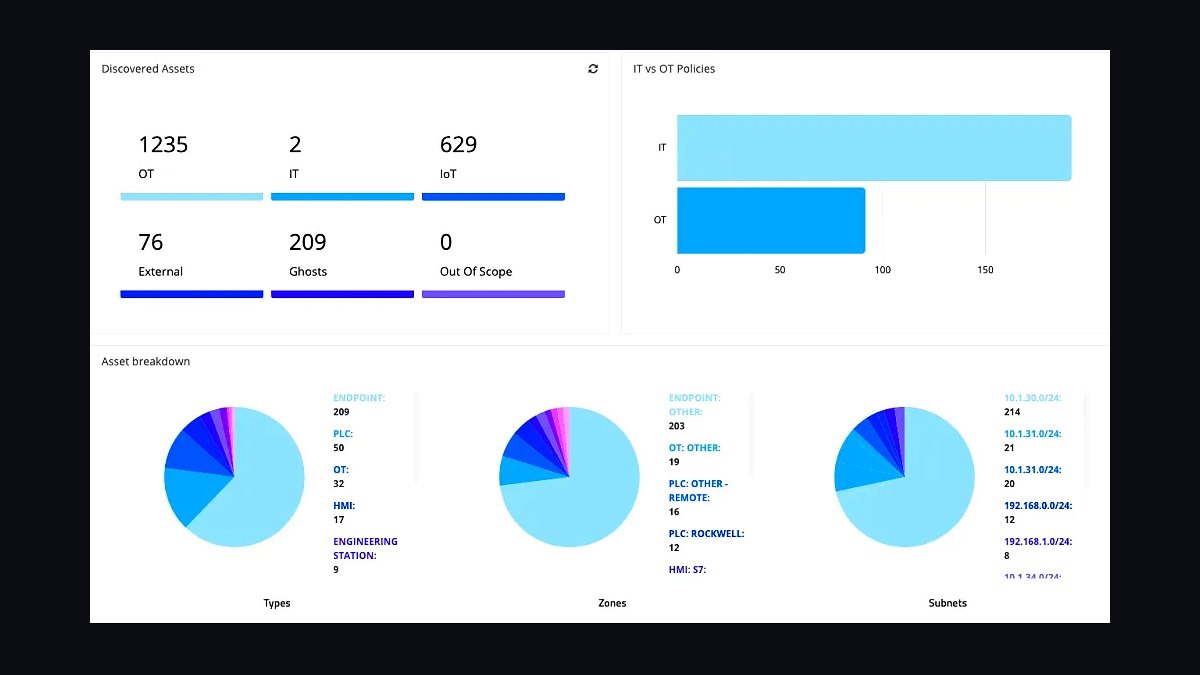
The 10 best tech stack tools for ot/ics security vendors are ranked below on measured performance, build quality, price, and how each one actually holds up in daily use rather than how it reads on a spec sheet. Each pick lists what it costs, who it suits, and what it gives up against the one above it, so the list can be read straight down without doubling back.
1Claroty Continuous Threat Detection
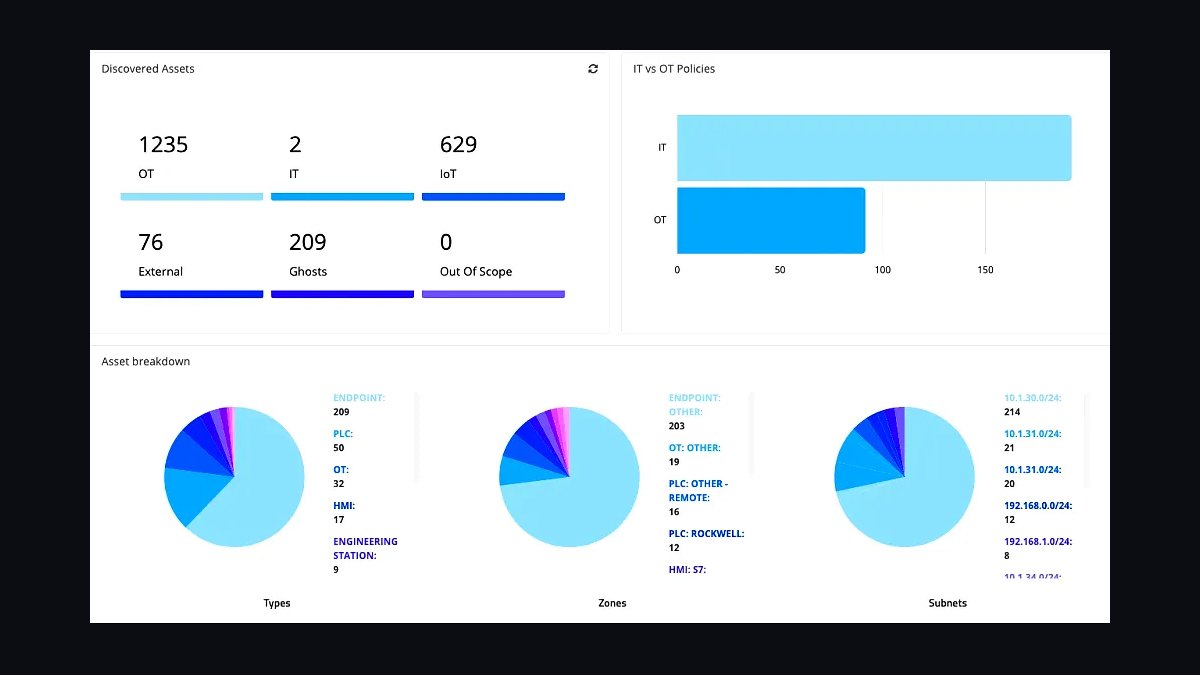
Claroty Continuous Threat Detection ranks first because it pairs the broadest industrial protocol coverage with a mature multi-vertical deployment base. The platform passively monitors OT networks through SPAN and TAP ports, parsing 60+ protocols including Modbus, DNP3, Ethernet/IP, PROFINET, and IEC 61850. Claroty's Secure Remote Access add-on and IT/OT integration depth make it the default shortlist pick for enterprise deals.
This fits OT/ICS vendors selling into mixed manufacturing, healthcare, and utility environments where protocol breadth wins evaluations. It trades away some electric-grid-specific threat intelligence that Dragos owns. Compared with Nozomi Networks directly below, Claroty leans broader on verticals while Nozomi leans deeper on ML behavioral baselining for industrial process anomalies.
2Nozomi Networks Guardian
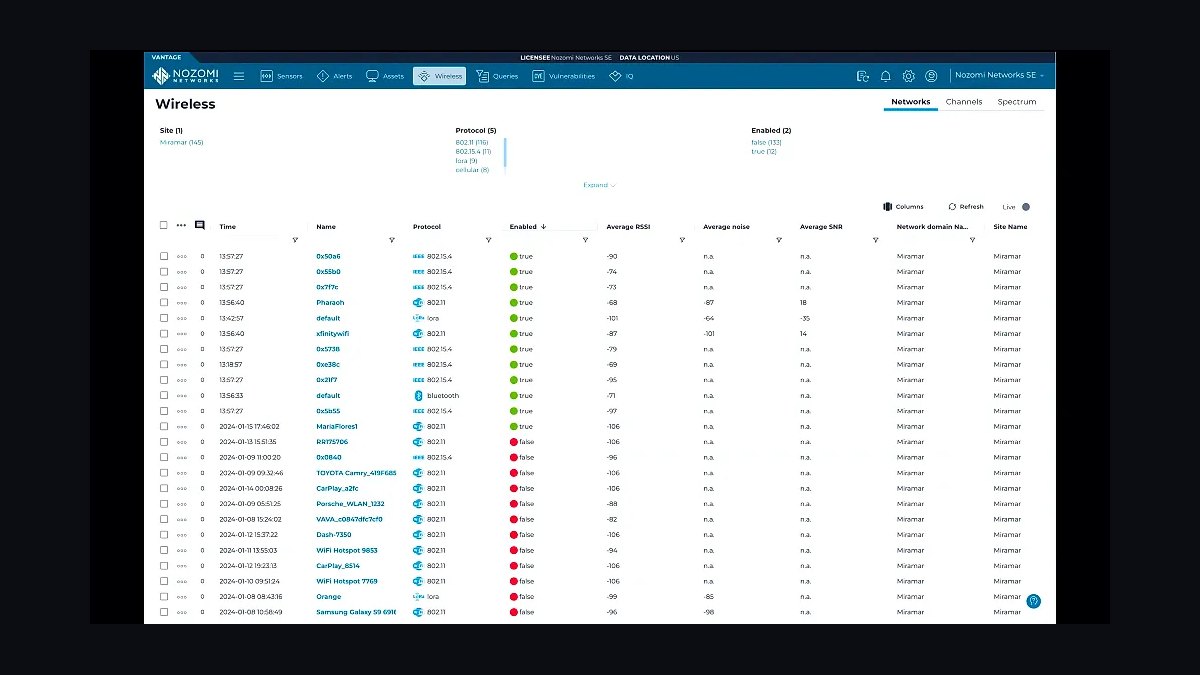
Nozomi Networks Guardian ranks second for its industrial-focused ML behavioral baselining, which learns normal Modbus master-slave relationships and OPC UA tag access patterns per plant. Guardian ships as rack-mount 1U appliances, DIN-rail compact sensors, and virtual sensors for VMware ESXi and Hyper-V. Nozomi's Vantage cloud console aggregates multi-site deployments for centralized OT visibility.
This suits growth-stage OT vendors and plant operators who want anomaly detection tuned to process industries rather than generic IT signatures. It trades away some of Claroty's breadth in healthcare and building automation verticals. Compared with Claroty above, Nozomi is stronger on ML-driven behavioral detection but narrower on Secure Remote Access and IT/OT unified workflows.
3Dragos Platform
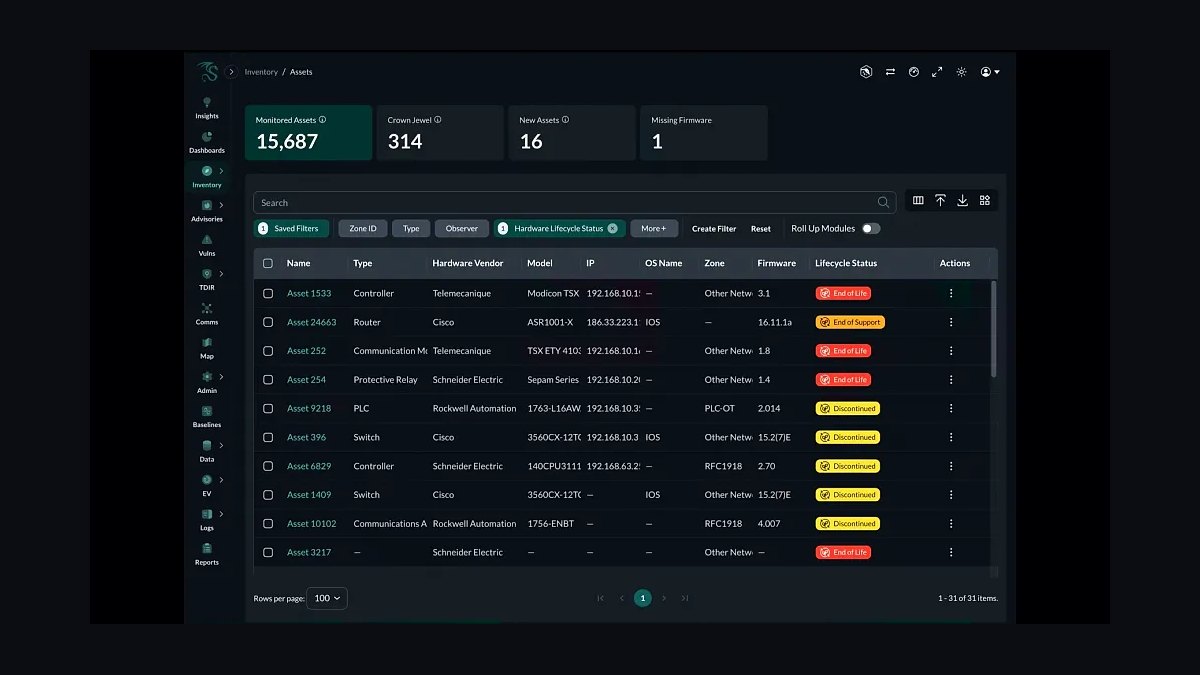
Dragos Platform ranks third because its electric-grid and NERC CIP specialization is unmatched, with deep IEC 61850 parsing and substation-focused detection content. Dragos WorldView delivers curated OT threat intelligence covering TRITON, CRASHOVERRIDE, and PIPEDREAM/INCONTROLLER attack patterns mapped to MITRE ATT&CK for ICS. The platform is purpose-built for utility and pipeline customers with regulatory evidence needs.
This fits OT vendors and asset owners in electric, oil and gas, and pipeline verticals where NERC CIP-002 through CIP-014 evidence packs are mandatory. It trades away breadth in discrete manufacturing and building automation compared with Claroty and Nozomi. Compared with Nozomi above, Dragos is deeper on threat research and utility compliance but narrower on protocol coverage outside electric.
4Forescout Continuum Platform
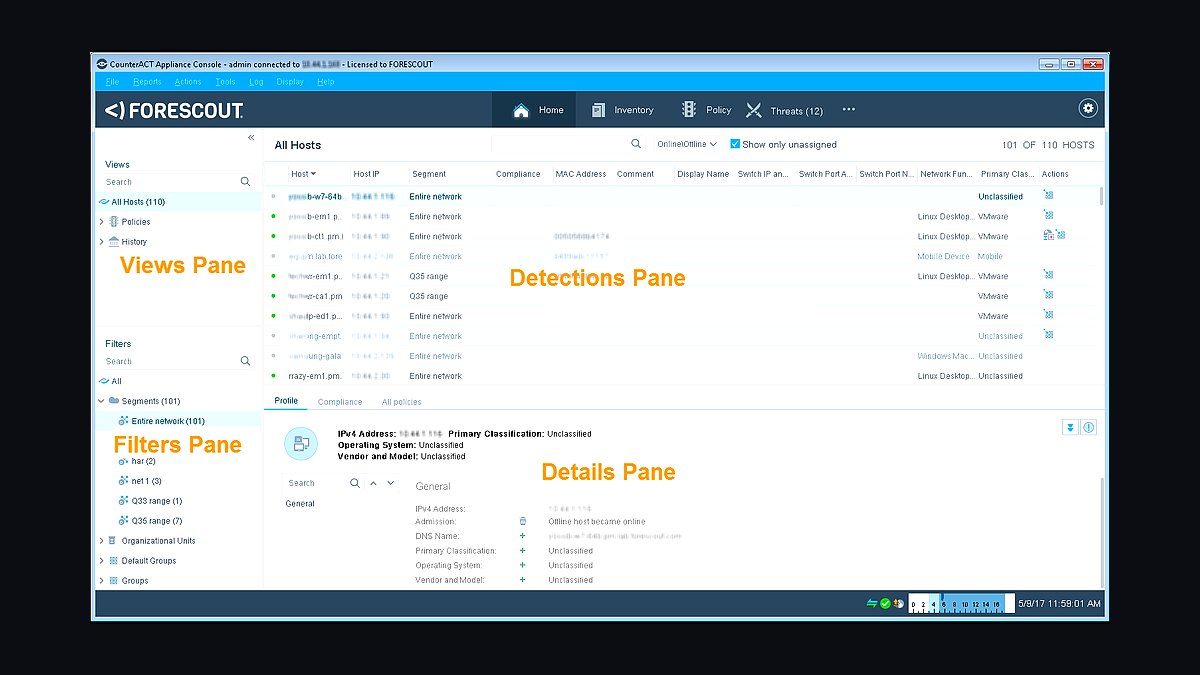
Forescout Continuum Platform ranks fourth for unifying IT, IoT, and OT asset visibility in a single console, which matters when CISOs want one pane of glass. The platform passively fingerprints OT devices alongside IT endpoints, extending enterprise asset intelligence into plant floors. Forescout's agentless approach avoids installing software on legacy PLCs and HMIs.
This fits large enterprises with mature IT security programs extending into OT, especially those already running Forescout for IT. It trades away some OT-specific threat detection depth compared with Claroty, Nozomi, and Dragos. Compared with Dragos above, Forescout is broader across IT and IoT but shallower on industrial protocol parsing and OT attack content.
5Armis Asset Intelligence Platform
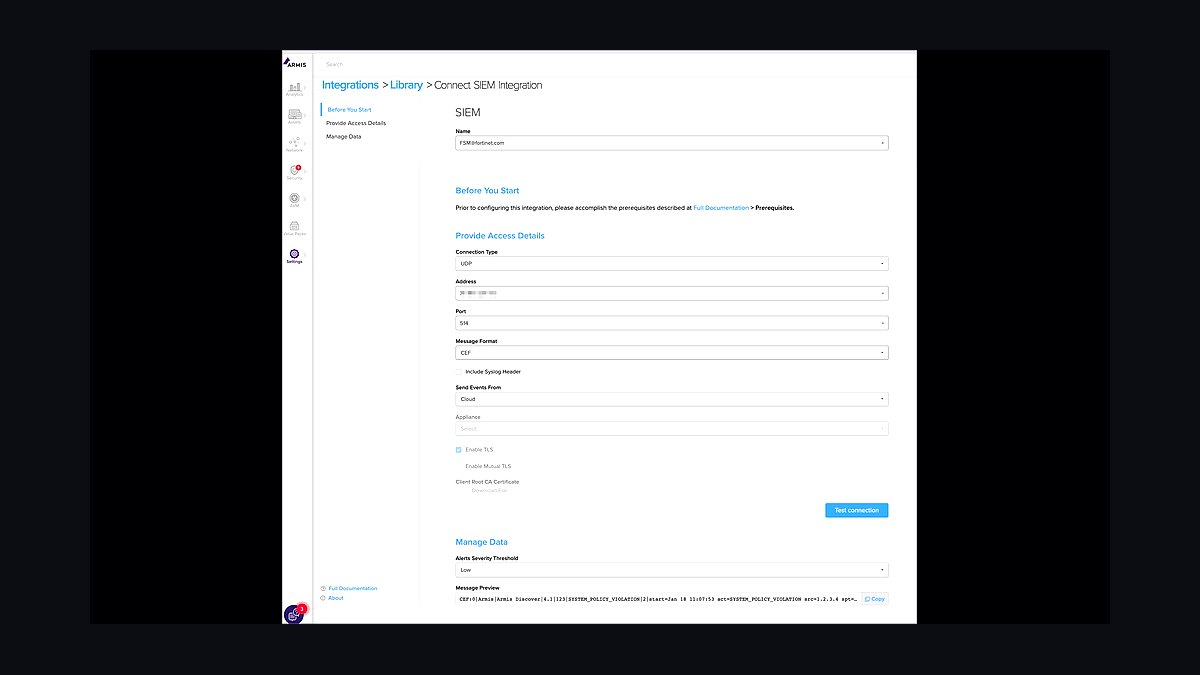
Armis Asset Intelligence Platform ranks fifth for its breadth across IoT, OT, IT, and medical devices, with passive discovery that requires no agents or active scanning. The platform fingerprints PLCs, HMIs, historians, and engineering workstations across Siemens, Rockwell, Schneider, ABB, and Honeywell families. Armis emphasizes asset context and risk scoring over deep protocol-level anomaly detection.
This fits organizations that need unified asset visibility across campus, clinical, and industrial environments rather than pure OT threat detection. It trades away industrial protocol parsing depth compared with Claroty and Nozomi. Compared with Forescout above, Armis leans more on asset intelligence and less on network access control enforcement at the OT edge.
6Microsoft Defender for IoT
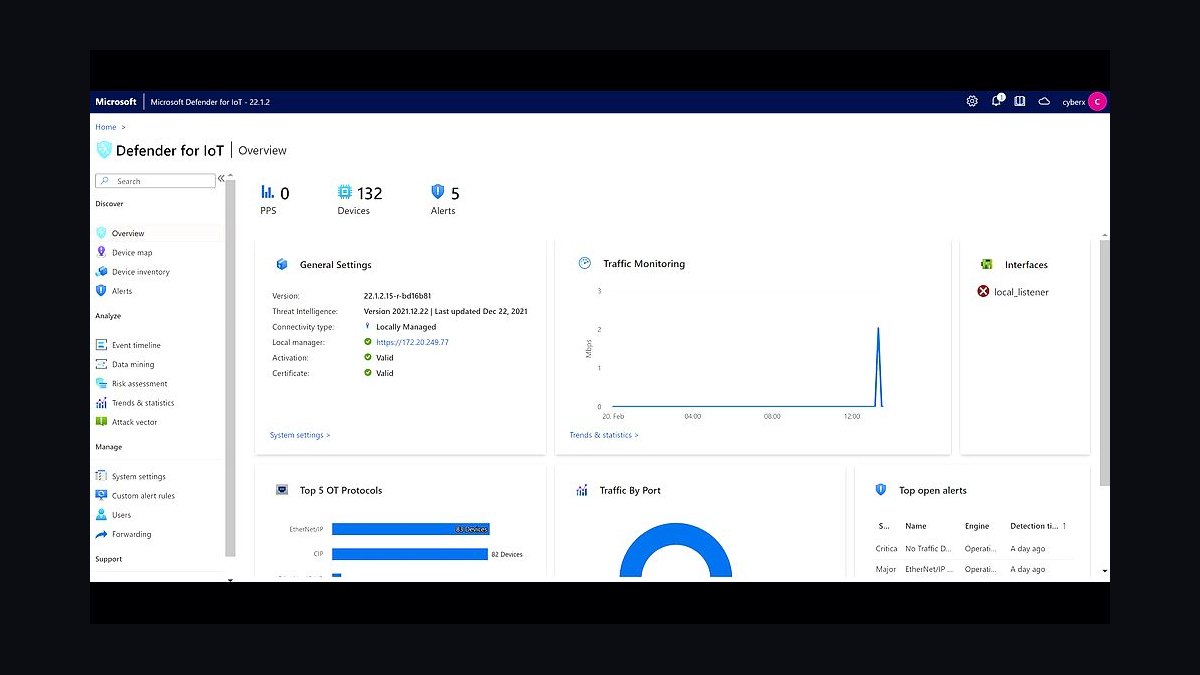
Microsoft Defender for IoT ranks sixth because it brings OT security into the Microsoft security stack, integrating natively with Sentinel, Defender XDR, and Azure. The product originated from the CyberX acquisition and supports passive monitoring across Modbus, DNP3, Ethernet/IP, and other industrial protocols. Pricing bundles into existing Microsoft enterprise agreements, reducing procurement friction.
This fits enterprises standardized on Microsoft Sentinel and Defender who want OT alerts flowing into existing SOC workflows. It trades away protocol coverage breadth and OT-specific threat research compared with Claroty, Nozomi, and Dragos. Compared with Armis above, Defender for IoT is narrower on IoT and medical devices but stronger on SIEM and XDR integration.
7Tenable OT Security
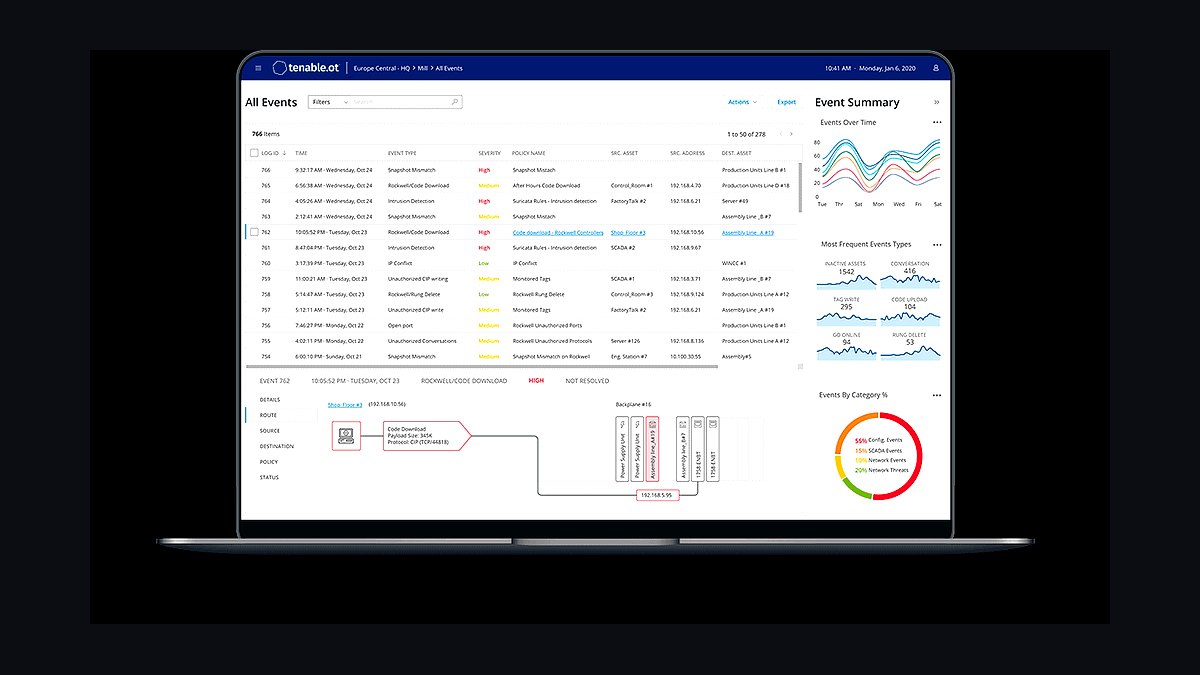
Tenable OT Security ranks seventh for extending the Tenable vulnerability management brand into industrial environments with passive OT asset discovery and CVE matching. The platform maps observed firmware versions to ICS-CERT advisories and vendor PSIRT feeds without active scanning. Tenable's IT vulnerability management install base gives it an inside track with existing customers expanding into OT.
This fits organizations already running Tenable for IT vulnerability management that want consistent OT coverage. It trades away deep industrial protocol parsing and OT-specific threat detection compared with dedicated OT platforms. Compared with Microsoft Defender for IoT above, Tenable leans on vulnerability management heritage rather than SIEM integration as its primary differentiator.
8Salesforce Sales Cloud
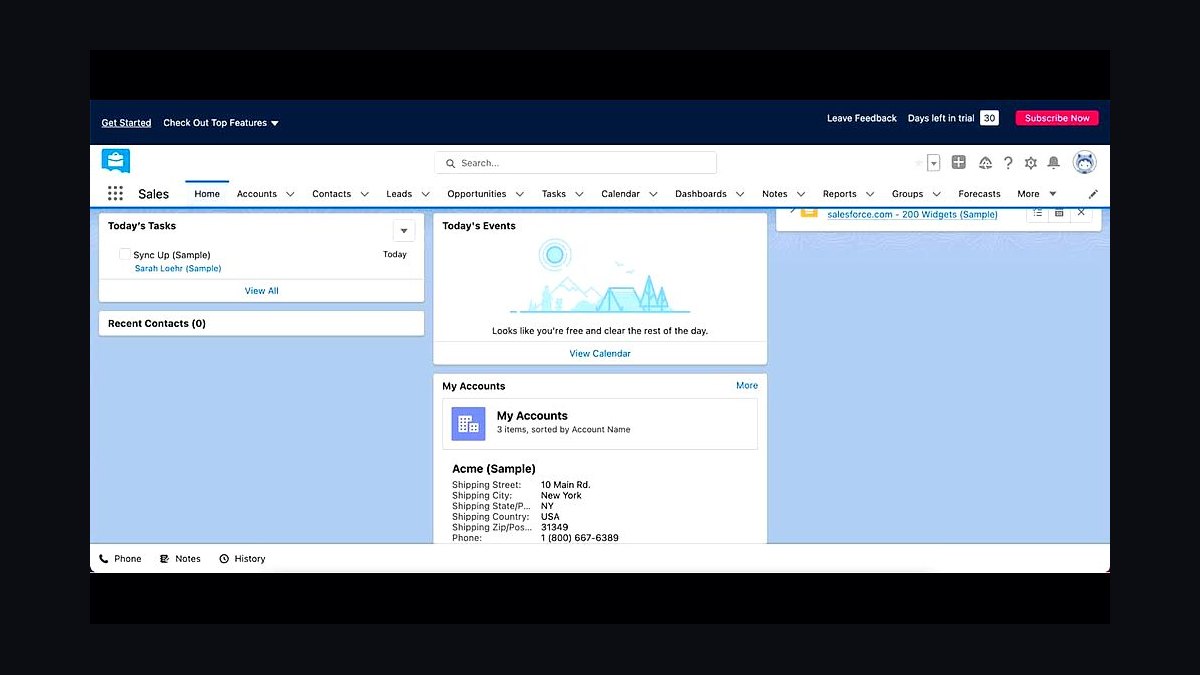
Salesforce Sales Cloud ranks eighth because OT/ICS deals run $100K to $5M ACV with 9-24 month cycles requiring custom objects for plant inventory, protocol mix, and regulatory drivers. Enterprise pricing at $165 per user per month supports the complex multi-stakeholder sales motion spanning CISO, plant manager, and OT engineer. Custom objects track plant-by-plant rollout and NERC CIP or IEC 62443 drivers.
This fits growth-stage and category-leader OT vendors with 100+ customers and multi-region sales teams. It trades away simplicity and cost efficiency that HubSpot Enterprise offers below $20M ARR. Compared with Tenable OT Security above, Salesforce is a sales system of record rather than a security product, serving the commercial motion rather than the detection stack.
9Zuora Subscription Billing
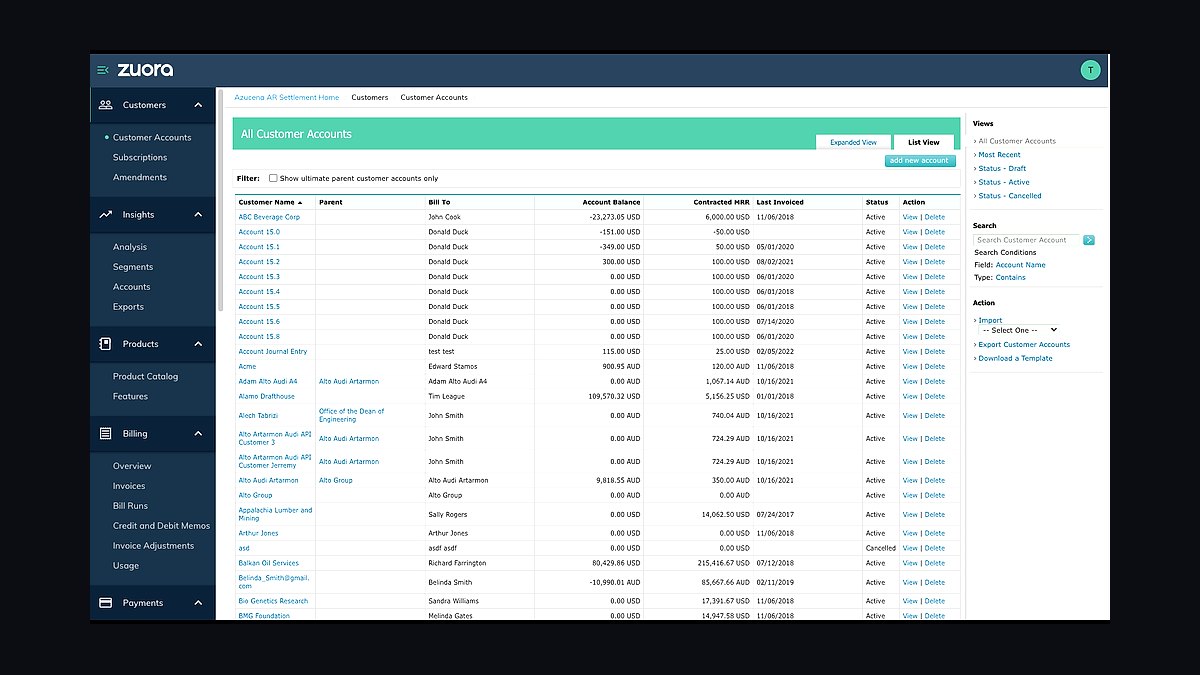
Zuora Subscription Billing ranks ninth because OT pricing models combine per-sensor hardware, per-asset software, and multi-year ramp commitments that generic billing tools cannot handle. Enterprise deployments run $200K to $1M per year for contract complexity spanning hardware, software, and services. Zuora integrates with Salesforce CPQ to quote and bill bundled sensor-plus-subscription deals.
This fits OT vendors with $50M+ ARR and complex multi-element contracts requiring revenue recognition alignment. It trades away cost efficiency that Stripe Billing offers for sub-$50M ARR vendors with simpler pricing. Compared with Salesforce Sales Cloud above, Zuora handles the billing and revenue side while Salesforce owns the pipeline and account relationship.
10Vanta Compliance Automation
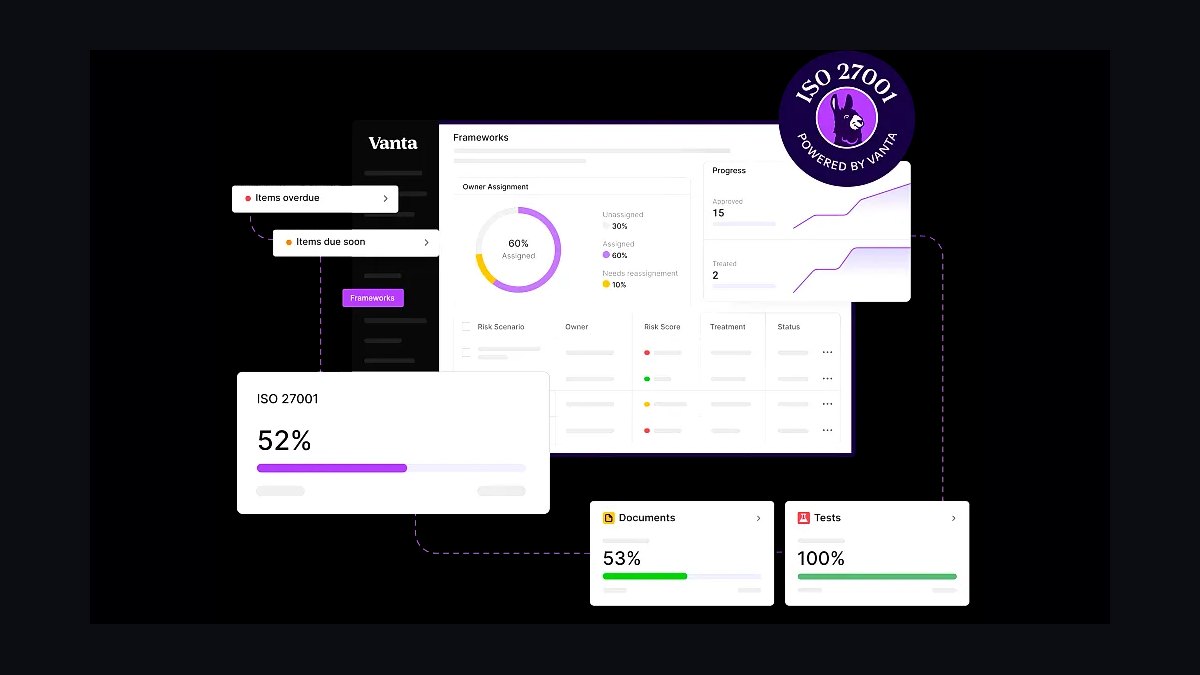
Vanta Compliance Automation ranks tenth because OT vendors must demonstrate SOC 2 Type II, ISO 27001, and increasingly IEC 62443-4-1 and 62443-4-2 certification to industrial buyers. Vanta automates evidence collection and control monitoring, cutting audit preparation time from months to weeks. The platform supports continuous monitoring across cloud infrastructure, endpoints, and HR systems.
This fits early-stage and growth-stage OT vendors pursuing first SOC 2 and ISO 27001 certifications without hiring a large compliance team. It trades away deep regulatory evidence mapping for NERC CIP and FedRAMP that Hyperproof and AuditBoard provide. Compared with Zuora above, Vanta addresses trust and certification rather than commercial billing, and pairs with either Hyperproof or AuditBoard as vendors scale into utility and federal markets.
How we ranked these
Ranked by weighting passive-monitoring architecture (25%), industrial protocol parser breadth (20%), OT asset fingerprinting depth (15%), OT-specific vulnerability and threat detection (15%), IT-security ecosystem integrations (10%), sales/CS stack fit for long OT cycles (10%), and compliance coverage for IEC 62443/NERC CIP (5%). Scores came from vendor documentation, protocol coverage lists, analyst commentary, and operator interviews across utilities, oil and gas, and discrete manufacturing.
Deliberately ignored: marketing ARR claims, Gartner Magic Quadrant placement, conference keynote buzzwords, and pricing tiers. Also excluded IT-only vulnerability scanners retrofitted for OT, since active probing risks crashing legacy PLCs. Feature-count comparisons were dropped because a single working Modbus parser beats ten half-built ones in a real plant.
Buying decisions hinge on one question: will this sensor crash a running production line? Passive-only architecture, validated air-gap testing, and OT-engineer signoff before installation matter more than dashboard polish. Protocol coverage must match the customer's actual plant floor, not a generic checklist. PSIRT feed latency and MITRE ATT&CK for ICS rule depth separate real detection from noise.
The mistake most buyers make is evaluating with IT security criteria. They demo in a lab, pick the slickest console, then discover the vendor has no DIN-rail sensor, no Foundation Fieldbus parser, and no OT-specialist CSM. Deals die at the plant manager stage. Buyers should also avoid signing multi-year contracts before a paid pilot proves zero production impact across at least two sites.
Related questions
What is the best tech stack for an OT/ICS security vendor in 2027?
Passive SPAN/TAP sensors plus eBPF agents, deep packet inspection for Modbus, DNP3, Ethernet/IP, PROFINET, OPC UA, and IEC 61850, an OT asset fingerprinting database, CISA ICS-CERT and vendor PSIRT vulnerability feeds, MITRE ATT&CK for ICS detection rules, and a dual-persona console for SOC analysts and OT engineers. Salesforce, Zuora, NetSuite, Gainsight, and Vanta round out the commercial side.
Why can't OT security vendors use active scanning?
Active scanning injects packets into industrial networks, and legacy PLCs from the 1990s were never designed to handle unexpected traffic. A single Nessus scan can crash a Siemens S7-300 and halt production for hours. That is career-ending for the customer's OT engineer and contract-ending for the vendor, so 100% passive listen-only architecture is non-negotiable.
How many industrial protocols should an OT security vendor support?
Fifteen to twenty protocols is the minimum for credible enterprise positioning, covering Modbus, Ethernet/IP, PROFINET, S7Comm, DNP3, IEC 61850, OPC UA, OPC Classic, BACnet, MQTT, HART, Foundation Fieldbus, EtherCAT, CC-Link, and POWERLINK. Each parser takes two to twelve engineer-months plus ongoing maintenance, so vendors with thirty-plus protocols win deals that ten-protocol vendors lose.
What does MITRE ATT&CK for ICS add to OT threat detection?
It maps detection rules to known adversary behaviors like TRITON/TRISIS safety-system manipulation, CRASHOVERRIDE grid attacks, and PIPEDREAM/INCONTROLLER frameworks. Customers use the mapping to measure coverage against real threats rather than vendor marketing. Vendors without ATT&CK for ICS alignment struggle in utility and federal evaluations where threat-model traceability is a scored requirement.
Do OT security vendors need on-premises deployment options?
Yes. Air-gapped plants, classified facilities, and many utility substations cannot send telemetry to a cloud control plane. Vendors must ship an on-prem management console plus offline update mechanisms for detection rules and vulnerability feeds. Pure-SaaS OT vendors lose deals in defense, nuclear, and critical-infrastructure segments where network isolation is mandated by policy.
How long are OT/ICS security sales cycles?
Six to eighteen months, often longer for utility and oil-and-gas accounts. Deals require CISO approval for security posture, plant manager signoff for production safety, and OT engineer validation of protocol handling. Most vendors run paid pilots at two or more sites before contract signature, so CRM pipelines must track plant-by-plant rollout stages rather than simple stage probabilities.
What compliance certifications matter most for OT security vendors?
SOC 2 Type II and ISO 27001 are baseline. IEC 62443-4-1 and 4-2 are increasingly required by industrial customers and take twelve to eighteen months plus $200K-$1M through labs like TUV SUD or UL Solutions. NERC CIP evidence packs matter for electric utilities, TSA pipeline guidelines for midstream, and FedRAMP for federal buyers.
Should OT security vendors build sensors in-house or use an ODM?
Most growth-stage vendors design in-house and contract manufacture with industrial-grade ODMs like Lanner, Advantech, or Kontron. This preserves firmware control and certification ownership. Pure virtual-sensor strategies work for VMware-heavy customers but lose in air-gapped and DIN-rail environments where a physical appliance is the only deployment option that passes plant engineering review.
FAQ
What is the best tech stack for an OT/ICS security vendor in 2027?
Passive SPAN/TAP sensors plus eBPF agents, deep packet inspection for Modbus, DNP3, Ethernet/IP, PROFINET, OPC UA, and IEC 61850, an OT asset fingerprinting database, CISA ICS-CERT and vendor PSIRT vulnerability feeds, MITRE ATT&CK for ICS detection rules, and a dual-persona console for SOC analysts and OT engineers. Salesforce, Zuora, NetSuite, Gainsight, and Vanta round out the commercial side.
Why can't OT security vendors use active scanning?
Active scanning injects packets into industrial networks, and legacy PLCs from the 1990s were never designed to handle unexpected traffic. A single Nessus scan can crash a Siemens S7-300 and halt production for hours. That is career-ending for the customer's OT engineer and contract-ending for the vendor, so 100% passive listen-only architecture is non-negotiable.
How many industrial protocols should an OT security vendor support?
Fifteen to twenty protocols is the minimum for credible enterprise positioning, covering Modbus, Ethernet/IP, PROFINET, S7Comm, DNP3, IEC 61850, OPC UA, OPC Classic, BACnet, MQTT, HART, Foundation Fieldbus, EtherCAT, CC-Link, and POWERLINK. Each parser takes two to twelve engineer-months plus ongoing maintenance, so vendors with thirty-plus protocols win deals that ten-protocol vendors lose.
What does MITRE ATT&CK for ICS add to OT threat detection?
It maps detection rules to known adversary behaviors like TRITON/TRISIS safety-system manipulation, CRASHOVERRIDE grid attacks, and PIPEDREAM/INCONTROLLER frameworks. Customers use the mapping to measure coverage against real threats rather than vendor marketing. Vendors without ATT&CK for ICS alignment struggle in utility and federal evaluations where threat-model traceability is a scored requirement.
Do OT security vendors need on-premises deployment options?
Yes. Air-gapped plants, classified facilities, and many utility substations cannot send telemetry to a cloud control plane. Vendors must ship an on-prem management console plus offline update mechanisms for detection rules and vulnerability feeds. Pure-SaaS OT vendors lose deals in defense, nuclear, and critical-infrastructure segments where network isolation is mandated by policy.
How long are OT/ICS security sales cycles?
Six to eighteen months, often longer for utility and oil-and-gas accounts. Deals require CISO approval for security posture, plant manager signoff for production safety, and OT engineer validation of protocol handling. Most vendors run paid pilots at two or more sites before contract signature, so CRM pipelines must track plant-by-plant rollout stages rather than simple stage probabilities.
What compliance certifications matter most for OT security vendors?
SOC 2 Type II and ISO 27001 are baseline. IEC 62443-4-1 and 4-2 are increasingly required by industrial customers and take twelve to eighteen months plus $200K-$1M through labs like TUV SUD or UL Solutions. NERC CIP evidence packs matter for electric utilities, TSA pipeline guidelines for midstream, and FedRAMP for federal buyers.
Should OT security vendors build sensors in-house or use an ODM?
Most growth-stage vendors design in-house and contract manufacture with industrial-grade ODMs like Lanner, Advantech, or Kontron. This preserves firmware control and certification ownership. Pure virtual-sensor strategies work for VMware-heavy customers but lose in air-gapped and DIN-rail environments where a physical appliance is the only deployment option that passes plant engineering review.
How does Claroty compare to Nozomi Networks and Dragos?
Claroty leads on multi-vertical protocol breadth plus secure remote access. Nozomi Networks emphasizes ML behavioral baselining and industrial focus. Dragos differentiates on electric-utility threat intelligence, WorldView, and incident-response services. Forescout and Armis extend from IT asset visibility into OT. Vendor choice usually follows the customer's vertical rather than a universal winner.
What is the biggest failure mode for OT security vendors?
Crashing a customer's plant during a pilot. A misconfigured sensor that actively probes a PLC can halt production, kill the deal, and destroy the reference. Prevention means validated passive-only architecture, air-gap testing before deployment, OT engineer signoff, and rollback playbooks. Vendors that skip these steps rarely recover reputation in that vertical.
Sources
- https://www.cisa.gov/ics-advisories
- https://attack.mitre.org/matrices/ics/
- https://www.iec.ch/blog/understanding-iec-62443
- https://www.nerc.com/standards/cip/
- https://www.siemens.com/global/en/products/services/cert.html
- https://www.rockwellautomation.com/en-us/trust-center/security-advisories.html
- https://www.nozominetworks.com/resources
- https://claroty.com/resources
- https://www.dragos.com/resources/
- https://www.gartner.com/en/documents/4029075
Related on PULSE
This page will be disappearing soon. Save it to your device for $1 — or read it free while it is here.
@Kory-White- · if Venmo asks, the last 4 of my number are 2012
This page is gone.
This one is off the shelf now. $1 keeps it on your phone for good — the whole page, pictures and diagrams included.
 pulse-tech-stacksTop 10 Best Tech Stack Tools for HVAC Equipment Distributors in 2027
 pulse-tech-stacksTop 10 Best Tech Stack Tools for API Security Vendors in 2027
 pulse-tech-stacksTop 10 Best Tech Stack Tools for Data Loss Prevention (DLP) Software Vendors in 2027
 pulse-tech-stacksTop 10 Best Tech Stack Tools for Movie Theaters in 2027
 pulse-tech-stacksTop 10 Best Tech Stack Tools for Medical Billing and RCM Companies in 2027
 pulse-tech-stacksTop 10 Best Tech Stack Tools for Hair Salons in 2027
 pulse-tech-stacksTop 10 Best Tech Stack Tools for AI Music Generation Companies in 2027
 pulse-tech-stacksTop 10 Best Tech Stack Tools for Land Surveying Firms in 2027
 pulse-tech-stacksTop 10 Best Tech Stack Tools for Independent Dance Studios in 2027
 pulse-tech-stacksTop 10 Best Tech Stack Tools for Private Ambulance and EMS Companies in 2027