


Top 10 Best Tech Stack Tools for Cybersecurity Channel Partners in 2027
Quality
Certified
The 10 best tech stack tools for cybersecurity channel partners are ranked below on measured performance, build quality, price, and how each one actually holds up in daily use rather than how it reads on a spec sheet. Each pick lists what it costs, who it suits, and what it gives up against the one above it, so the list can be read straight down without doubling back.
1ConnectWise PSA

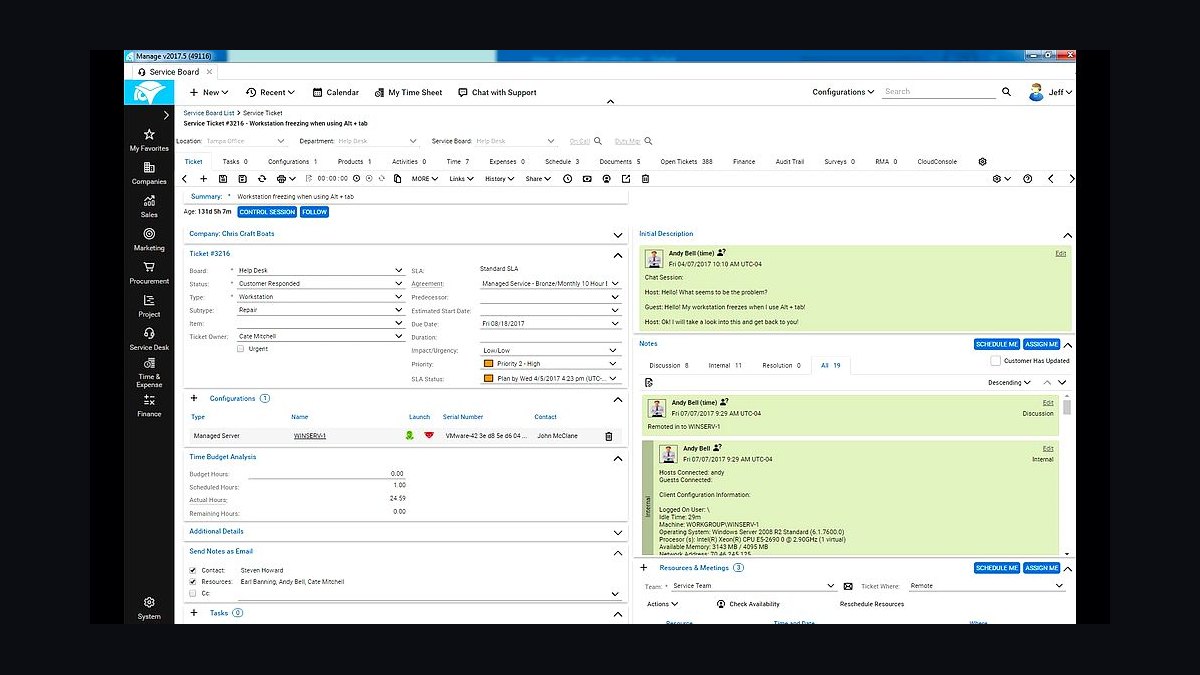
ConnectWise PSA ranks first because it is the operational spine of the unified channel stack, priced at $45-$150 per user per month. It combines ticketing, SLA definitions, multi-tenant routing, and native billing in one system, which removes the middleware most boutiques would otherwise need. For 50-200 customers it keeps software spend at 15-25% of gross revenue.
It suits boutique MSSPs of 10-30 staff that value simplicity over flexibility. The trade-off is vendor lock-in and less freedom to mix best-of-breed security tools. Compared with HaloPSA below, ConnectWise offers deeper out-of-box integrations but weaker customization, so operators with unusual workflows should weigh that gap carefully.
2HaloPSA

HaloPSA ranks second as the most flexible PSA alternative, with per-user licensing that undercuts ConnectWise at the low end. It supports multi-tenant ticket routing, automated SLA escalation, and native recurring billing, and it integrates with Datto RMM and NinjaOne through documented APIs. Regional MSSPs running 500-2,000 customers often standardize on it.
It is built for operators who want to customize workflows without hiring integration engineers. The trade-off is a smaller partner ecosystem and fewer prebuilt connectors than ConnectWise. Against NinjaOne below, HaloPSA owns the service-delivery and billing layer while NinjaOne owns endpoint management, so most stacks run both rather than choosing one.
3NinjaOne

NinjaOne ranks third for endpoint management, charging roughly $2-$10 per endpoint per month with automated agent installation, patch policies, and alert thresholds. It deploys fast across hundreds of tenants and its scripting engine handles onboarding playbooks that complete in under 60 minutes. That speed directly lowers per-customer service cost.
It fits MSSPs standardizing RMM across many small customers at low ACV. The trade-off is that deep security telemetry is thinner than Datto RMM in some configurations, so SOC teams often pair it with a separate EDR. Compared with Datto RMM below, NinjaOne skews toward speed and usability, while Datto skews toward backup and continuity integration.
4Datto RMM

Datto RMM ranks fourth because it bundles endpoint management with Datto Continuity backup, letting one vendor cover monitoring, patching, and restore testing. Backup runs $10-$50 per endpoint per month, and automated restore verification gives MSSPs customer-facing proof of recoverability. That combination supports premium pricing tiers.
It suits MSSPs already inside the Kaseya ecosystem that want fewer vendor relationships. The trade-off is that the security stack remains separate, so Sophos or Huntress licensing still applies on top. Compared with NinjaOne above, Datto RMM trades some deployment speed for tighter backup integration, which matters most for customers with strict recovery-time requirements.
5Sophos Central

Sophos Central ranks fifth as the SMB-friendly security stack, with Intercept X Advanced with EDR at $4-$8 per endpoint per month and MDR at $5-$10. Platinum and Diamond partner tiers unlock 10-30% margin uplift plus co-marketing dollars. It covers firewall, endpoint, and email from one console, which reduces analyst context switching.
It is aimed at MSSPs serving customers who want competent coverage without premium pricing. The trade-off is weaker detection depth than CrowdStrike Falcon for advanced threats. Compared with Huntress below, Sophos Central offers broader platform coverage, while Huntress specializes in managed detection and response at a lower entry price.
6Huntress

Huntress ranks sixth for managed detection and response at $3-$6 per endpoint per month, one of the lowest entry points for a 24/7 human-backed SOC. Its partner program includes deal registration and a dedicated partner portal, and onboarding requires only agent installation plus log source configuration. Analysts handle triage, so L1 workload drops.
It fits MSSPs adding MDR to SMB customers without building follow-the-sun staffing. The trade-off is narrower platform scope than Sophos Central, covering endpoint and identity threats rather than firewall and email. Compared with Microsoft Sentinel below, Huntress delivers detection as a service, while Sentinel gives the MSSP raw SIEM control and data ownership.
7Microsoft Sentinel
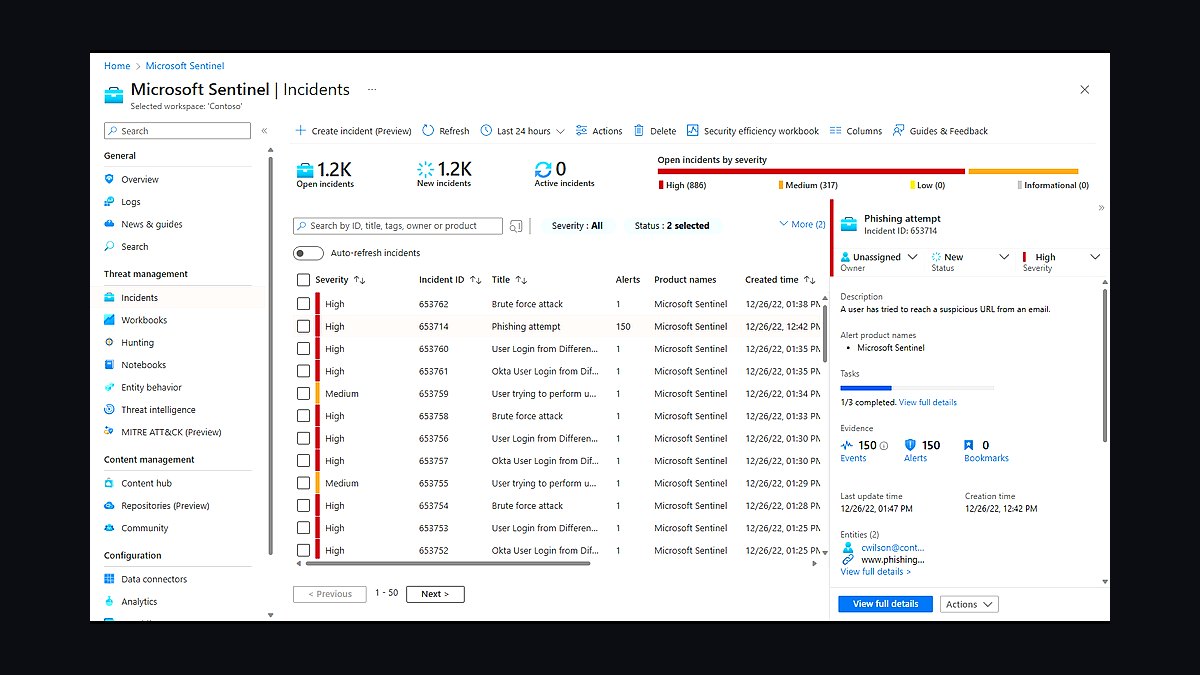
Microsoft Sentinel ranks seventh as the multi-tenant SIEM layer, priced around $100-$500 per GB per day of data ingestion. Azure Lighthouse enables cross-tenant management, so one SOC console can monitor hundreds of customer environments. For M365-heavy customer bases, native Defender telemetry reduces connector work substantially.
It suits regional MSSPs with 500-2,000 customers that need SIEM depth and data ownership. The trade-off is ingestion cost volatility and the engineering time required to tune analytics rules. Compared with Splunk Enterprise Security below, Sentinel is cheaper at moderate volume but less mature for very large, complex detection content libraries.
8CrowdStrike Falcon
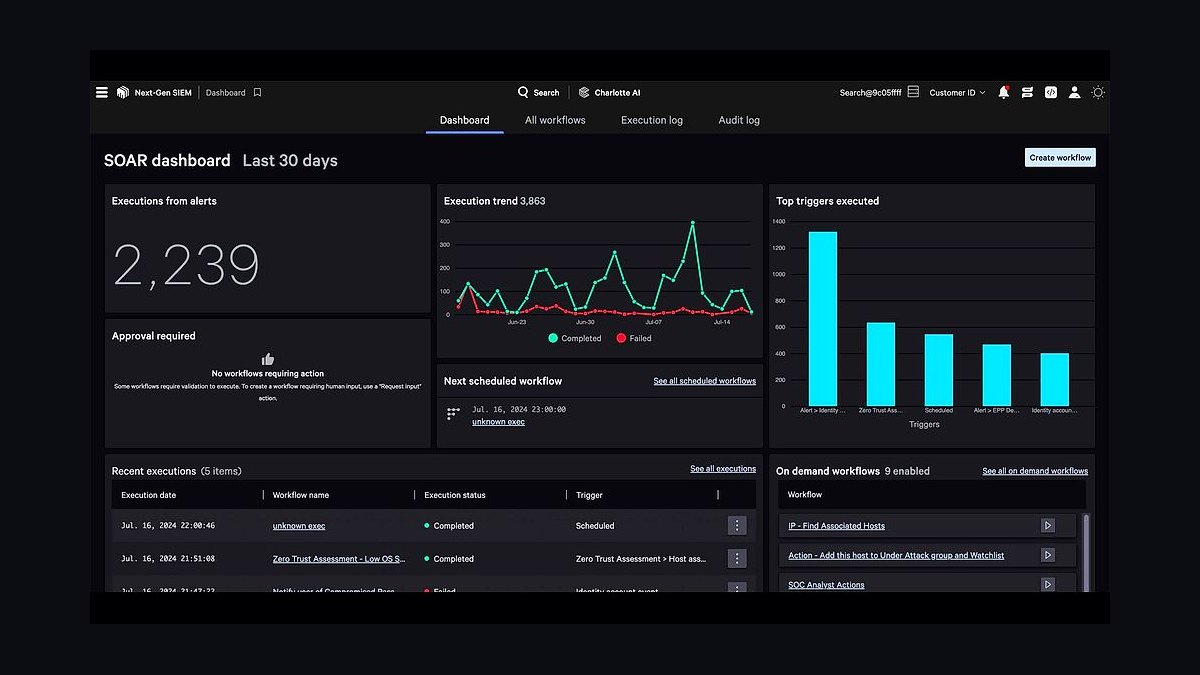
CrowdStrike Falcon ranks eighth as the premium endpoint tier, with Falcon Complete at $8-$15 per endpoint per month. The MSSP partner tier unlocks margin uplift, technical resources, and deal-registration protection. It is the stack MSSPs deploy when customers already run Falcon internally or demand top-tier detection.
It fits MSSPs serving premium and compliance-driven accounts where endpoint detection depth justifies the price. The trade-off is cost: at roughly double Sophos Central, it only pencils out above $60-$100 per user per month service tiers. Compared with Sophos Central above, Falcon wins on detection quality and loses on affordability for small SMB seats.
9Tines
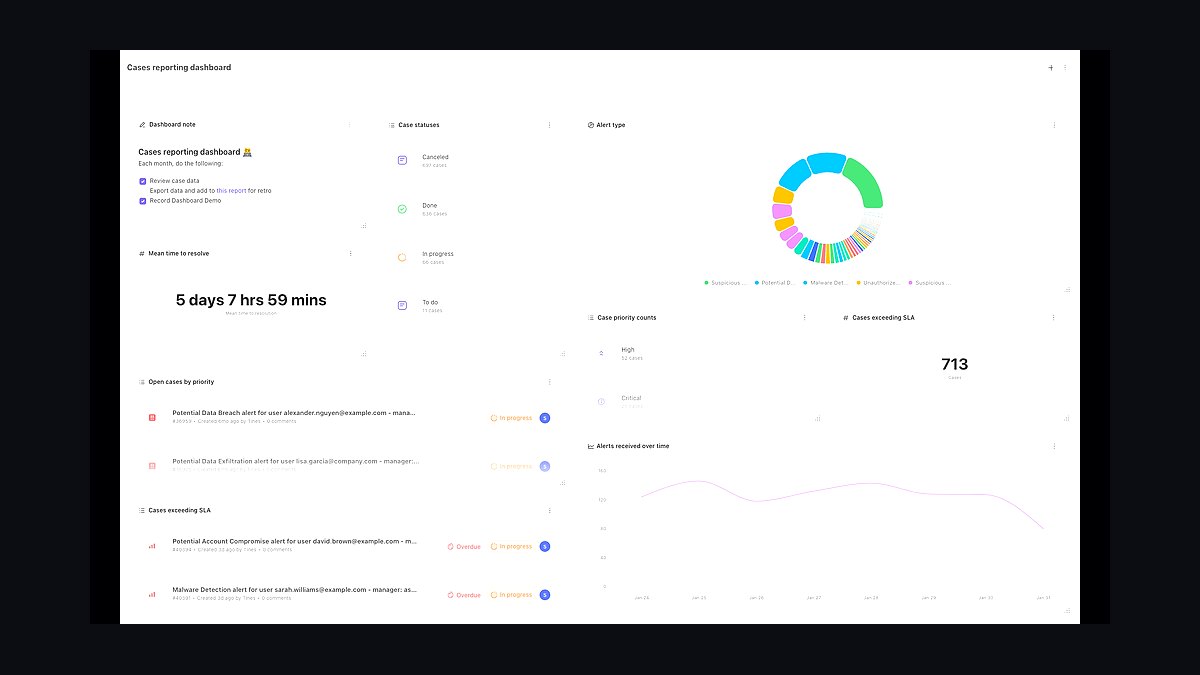
Tines ranks ninth for SOAR automation at $50K-$200K per year, and it typically cuts L1 analyst time by 35-50%. Playbooks for phishing investigation, malware containment, brute force detection, and password reset run without code, so analysts build automations themselves. That directly improves per-customer margin.
It suits MSSPs past 200 customers where manual triage stops scaling with headcount. The trade-off is annual commitment cost that boutiques cannot absorb early. Compared with Torq below, Tines emphasizes no-code workflow building, while Torq leans toward deeper case management and analyst collaboration features in the same automation layer.
10Vanta
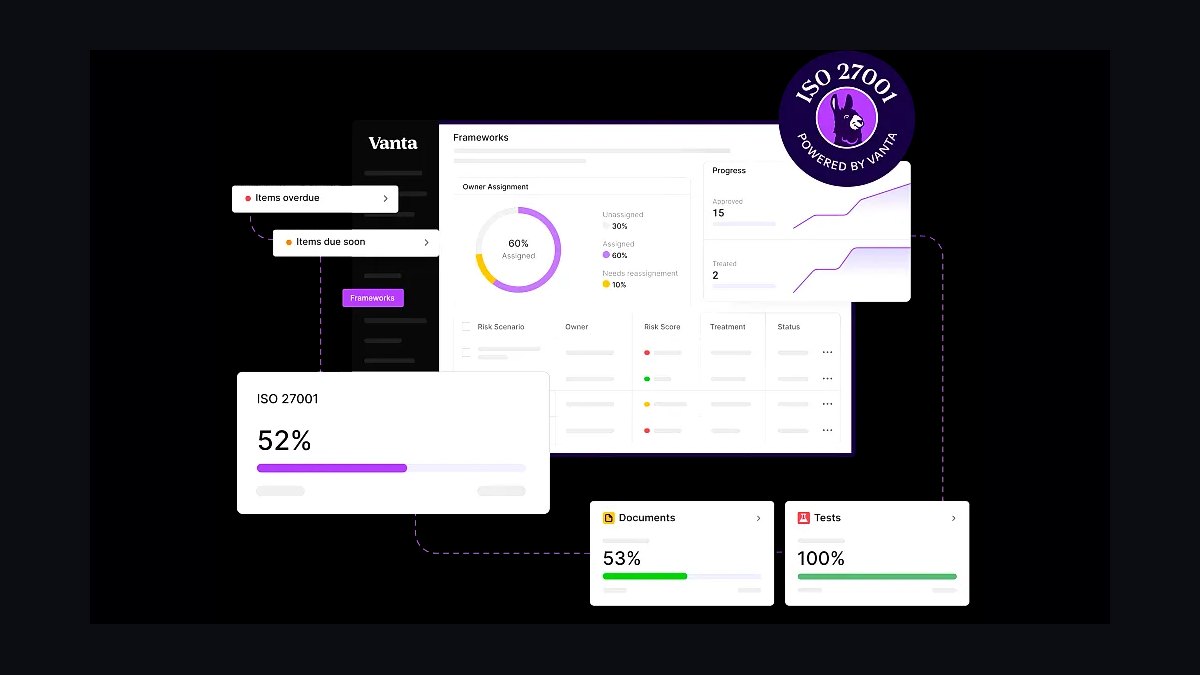
Vanta ranks tenth for compliance automation at $8K-$30K per year, automating SOC 2 Type II evidence collection that enterprise customers require before signing. It continuously monitors controls across cloud and endpoint tools, replacing manual screenshot gathering. For MSSPs, it also supports selling compliance-ready tiers at premium pricing.
It fits MSSPs targeting healthcare, legal, and finance customers with audit obligations. The trade-off is that HIPAA, PCI DSS, and CMMC still require additional assessment work Vanta only partially covers. Compared with Drata, Vanta has broader framework coverage and a larger partner network, while Drata competes closely on pricing and auditor marketplace access.
How we ranked these
We ranked tools by weighting multi-tenant architecture depth, PSA/RMM/SOAR integration breadth, per-endpoint and per-user cost at scale, vendor partner program margin uplift, and compliance automation coverage. Scores drew on published pricing, partner tiers, and documented API surfaces across ConnectWise, Kaseya, HaloPSA, NinjaOne, Sophos, CrowdStrike, Huntress, Sentinel, Tines, and Torq. Weighting favored operational efficiency for 50-2,000 customer MSSPs.
We deliberately ignored analyst quadrant placement, brand recognition among enterprises, and feature counts irrelevant to sub-$100/user/month contracts. Gartner positioning and Fortune 500 logos do not predict margin at 200 SMB customers. We also excluded one-off promotional pricing and unreleased roadmap promises, since channel partners need stable unit economics across three-year contracts, not demo-day discounts that evaporate at renewal.
What to look for
What matters most is fit against your customer concentration and ACV. A partner with hundreds of $2K-$5K/month accounts needs unified PSA-RMM-SOC tooling that one engineer can run. A partner with a few $50K-$100K/month accounts can justify best-of-breed integration engineers. Model software cost as 15-35% of gross revenue before signing anything, and verify multi-tenant isolation claims in writing.
The mistake most buyers make is choosing a stack for the customer they hope to land rather than the book they actually run. They buy CrowdStrike and Sentinel for a 60-customer base, then drown in integration overhead and analyst context-switching. The second mistake is ignoring vendor partner tier economics: the same tool at Platinum versus Registered tier can swing 10-30% margin, which dwarfs licensing discounts.
Related questions
What is the difference between an MSSP and an MSP tech stack?
An MSSP stack layers multi-tenant SOC platforms, SOAR automation, threat intelligence feeds, and security-specific case management on top of the standard MSP stack of PSA, RMM, and backup. That added layer typically costs 2-5x more per customer but unlocks higher ACV, premium pricing tiers, and cyber-insurance-aligned service packages that pure MSPs cannot credibly sell.
How many security stacks should a Cybersecurity Channel Partner support?
Standardize on two or three at real depth. A common pattern is Microsoft Sentinel plus Defender for M365-centric customers, Sophos Central with MDR for SMB-friendly coverage, and CrowdStrike Falcon or SentinelOne for premium tiers. Supporting more than three dilutes analyst expertise, slows onboarding, and multiplies detection-tuning work across every customer environment.
What is the typical monthly software cost for an MSSP tech stack?
Boutique MSSPs with 10-30 staff and 50-200 customers spend roughly $30K-$80K monthly. Regional MSSPs at 50-200 staff and 500-2,000 customers spend $150K-$500K monthly. National MSSPs with 300+ staff and 3,000+ customers spend $1M-$5M monthly on software and tooling, including custom middleware and data lake infrastructure.
How important are vendor partner certifications for an MSSP?
They are critical for margin and growth. Microsoft Solutions Partner with Security designation, CrowdStrike MSSP tier, Sophos Platinum or Diamond, and Datto Blue Diamond unlock 10-30% margin uplift, technical resources, co-marketing dollars, and deal-registration protection. Partners who skip certification tiers routinely leave double-digit margin on the table while competing against better-positioned rivals.
What cyber-insurance partnerships should an MSSP pursue?
Build referral relationships with Coalition, At-Bay, Resilience, and Beazley for SMB cyber-insurance pipeline. Align your security packages to each carrier's control requirements so your customers qualify for better premiums. MSSPs without carrier partnerships lose 30-50% of potential pipeline from insurance-driven referrals, because brokers and carriers route qualified buyers to pre-approved service providers.
What is the recommended Cybersecurity Channel Partner tech stack for a startup MSSP?
Start unified: ConnectWise PSA or Syncro for service delivery, Datto RMM or NinjaOne for endpoints, Sophos Central with MDR or Huntress as the primary security stack, QuickBooks Online for accounting, Stripe Billing for recurring payments, and HubSpot Starter for CRM. That runs $15K-$30K monthly and supports 50-200 customers. Add SOAR and SOC case management around 200 customers.
How do we handle multi-tenant operations across hundreds of customers?
Invest in a multi-tenant SOC platform such as Microsoft Sentinel with Azure Lighthouse or Splunk's multi-tenant architecture. Use PSA platforms with customer self-service portals. Build automated onboarding playbooks that complete in under 60 minutes using Workato or Tray.io. Standardize on two or three security stacks so analyst expertise stays deep rather than spread thin across a dozen tools.
How do we differentiate from channel distributors like Pax8?
Pax8 and ConnectWise are vendor-distribution platforms; MSSPs are service-delivery operations. Differentiate on 24/7 SOC quality with follow-the-sun staffing, vertical specialization in healthcare, legal, or finance, local on-site presence, cyber-insurance alignment through carrier partnerships, and proprietary detection content. Pure distribution resale loses to vertically integrated service delivery on every renewal conversation.
FAQ
What is the recommended Cybersecurity Channel Partner tech stack for a startup MSSP?
Start with a unified platform: ConnectWise PSA or Syncro for service delivery, Datto RMM or NinjaOne for endpoint management, Sophos Central with MDR or Huntress as the primary security stack, QuickBooks Online for accounting, Stripe Billing for recurring payments, and HubSpot Starter for CRM. This runs $15K-$30K monthly and supports 50-200 customers before you add SOAR.
How do we handle multi-tenant operations across hundreds of customers?
Invest in a multi-tenant SOC platform like Microsoft Sentinel with Azure Lighthouse or Splunk's multi-tenant architecture. Use PSA platforms with customer portal capabilities for self-service ticketing. Implement automated onboarding playbooks that complete in under 60 minutes using Workato or Tray.io for integration. Standardize security stacks to two or three options to avoid analyst expertise dilution across your team.
What is the sales motion for a Cybersecurity Channel Partner?
The motion is simpler than enterprise MDR. Target SMB owners and IT directors who want fixed monthly fees. Package services into tiers: Essentials at $15-$30/user/month for M365 plus EDR, Advanced at $30-$60 adding SIEM, backup, and training, and Compliance at $60-$100 adding SOC 2 evidence and cyber-insurance alignment. Use carrier partnerships for referrals and vendor deal registration for protection.
How do we calculate per-customer profitability?
Build per-customer margin dashboards pulling from PSA ticket hours, RMM endpoint counts, SOC analyst time, and accounting revenue. Calculate gross profit per customer as revenue minus direct costs including analyst time, software licensing, and support. Target 10-15% gross profit at maturity. Automate alerts for customers below 5% margin and run annual price-tier rationalization.
What compliance certifications does an MSSP need?
SOC 2 Type II is the baseline for most enterprise customers, achievable through Vanta or Drata at $8K-$30K yearly. HIPAA for healthcare requires business associate agreements with all sub-processors. PCI DSS for payment card customers requires quarterly scanning and annual assessment. CMMC Level 2 for DoD supply chain costs $200K-$500K and takes 12-18 months. Most regional MSSPs skip FedRAMP.
How do we differentiate from channel distributors like Pax8?
Pax8 and ConnectWise are vendor-distribution platforms; MSSPs are service-delivery operations. Differentiate on 24/7 SOC quality with follow-the-sun staffing, vertical specialization in healthcare, legal, or finance, local relationship presence and on-site support, cyber-insurance alignment through carrier partnerships, and proprietary detection content and playbooks. Pure distribution-only resale loses to vertically integrated service delivery.
What is the difference between an MSSP and an MSP tech stack?
An MSSP stack adds multi-tenant SOC platforms, SOAR automation, threat intelligence feeds, and security-specific case management on top of the standard MSP stack of PSA, RMM, and backup tools. The MSSP stack is 2-5x more expensive per customer but enables higher ACV, premium pricing tiers, and cyber-insurance-aligned packages that basic MSPs cannot credibly deliver.
How many security stacks should a Cybersecurity Channel Partner support?
Standardize on two or three at depth: Microsoft Sentinel plus Defender for M365-centric customers, Sophos Central with MDR for SMB-friendly coverage, and CrowdStrike Falcon or SentinelOne for premium tiers. Supporting more than three dilutes analyst expertise, slows onboarding, and multiplies detection-tuning work across every customer environment you manage.
What is the typical monthly software cost for an MSSP tech stack?
Boutique MSSPs with 10-30 staff and 50-200 customers spend $30K-$80K monthly. Regional MSSPs with 50-200 staff and 500-2,000 customers spend $150K-$500K monthly. National MSSPs with 300+ staff and 3,000+ customers spend $1M-$5M monthly on software and tooling, including custom middleware and data lake infrastructure for telemetry aggregation.
How important are vendor partner certifications for an MSSP?
Critical for margin and growth. Microsoft Solutions Partner with Security designation, CrowdStrike MSSP tier, Sophos Platinum or Diamond, and Datto Blue Diamond unlock 10-30% margin uplift, technical resources, co-marketing dollars, and deal-registration protection. Partners without certification tiers routinely leave double-digit margin on the table while competing against better-positioned rivals in the same territory.
Sources
- https://www.connectwise.com/platform/unified-management
- https://www.kaseya.com/products/datto-rmm/
- https://www.halopsa.com/features
- https://www.ninjaone.com/platform/
- https://www.sophos.com/en-us/partners/mssp
- https://www.crowdstrike.com/partners/mssp/
- https://www.huntress.com/partners
- https://www.microsoft.com/en-us/security/business/microsoft-sentinel
- https://www.tines.com/product
- https://www.torq.io/product
Related on PULSE
This page will be disappearing soon. Save it to your device for $1 — or read it free while it is here.
@Kory-White- · if Venmo asks, the last 4 of my number are 2012
This page is gone.
This one is off the shelf now. $1 keeps it on your phone for good — the whole page, pictures and diagrams included.
 pulse-tech-stacksTop 10 Best Tech Stack Tools for Independent Wholesale Distribution Businesses in 2027
 pulse-tech-stacksTop 10 Best Tech Stack Tools for Independent Dance Studios in 2027
 pulse-tech-stacksTop 10 Best Tech Stack Tools for Self-Storage Operators in 2027
 pulse-tech-stacksTop 10 Best Tech Stack Tools for Employee Benefits Consulting Firms in 2027
 pulse-tech-stacksTop 10 Best Tech Stack Tools for HOA and Community Association Management Companies in 2027
 pulse-tech-stacksTop 10 Best Tech Stack Tools for Independent Food Trucks in 2027
 pulse-tech-stacksTop 10 Best Tech Stack Tools for Fine-Tuning Platform Companies in 2027
 pulse-tech-stacksTop 10 Best Tech Stack Tools for AI Customer Support Companies in 2027
 pulse-tech-stacksTop 10 Best Tech Stack Tools for Medical Billing and RCM Companies in 2027
 pulse-tech-stacksTop 10 Best Tech Stack Tools for Software Development Agencies in 2027