


Top 10 Best Tech Stack Tools for Pool Service Companies in 2027
Quality
Certified
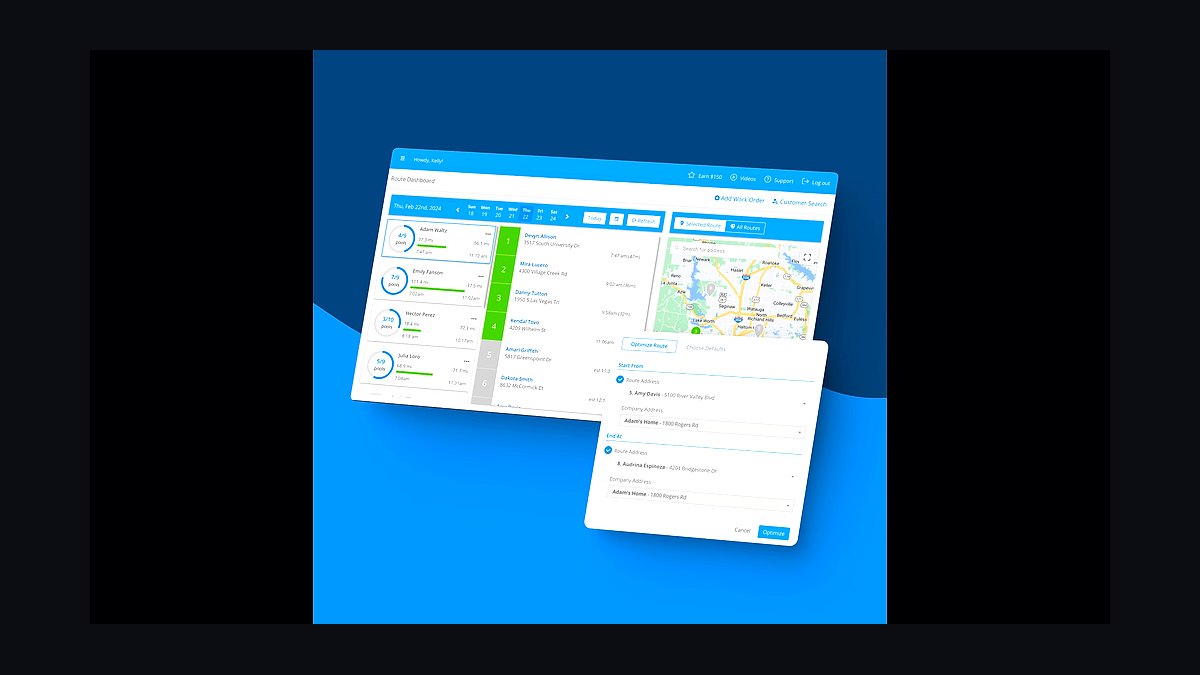
The 10 best tech stack tools for pool service companies are ranked below on measured performance, build quality, price, and how each one actually holds up in daily use rather than how it reads on a spec sheet. Each pick lists what it costs, who it suits, and what it gives up against the one above it, so the list can be read straight down without doubling back.
1Skimmer Pool Service Software

Skimmer ranks first because it is the vertical route-and-chemistry platform most pool operators under 300 pools should build around. Entry pricing runs about $49/month plus roughly $1 per pool, scaling to $98/month base plus $2 per pool; a 200-pool route lands near $498/month all-in. It ships a built-in Orenda-powered LSI calculator, automatic before/after photos, customer email reports, and a route optimizer that trims windshield time.
It is built for solo owner-operators through multi-truck residential service shops, and techs typically learn the mobile app in under an hour, which matters at 35% annual turnover. It trades away deep back-office reporting that Pool Office Manager offers at higher pool counts. Under 300 pools it beats Pool Office Manager on mobile adoption and speed to value; past 400 pools with dedicated office staff, the flat-pricing math shifts the other way.
2Pool Office Manager Software

Pool Office Manager ranks second because its flat pricing and reporting depth win for shops running 400-plus pools with a real back office. Pricing runs roughly $125/month base plus about $25 per user with unlimited pools and every feature included, so a 25-seat multi-location operation pays near $750/month rather than per-pool charges that scale with route size.
It suits established service companies with office staff who need deeper reporting on route profitability and chemistry history. It trades away the polished mobile experience Skimmer delivers, so tech adoption takes more training and discipline. Between 300 and 400 pools the decision comes down to your actual pool count and user seats; below that range, Skimmer's faster tech onboarding usually outweighs the reporting gap.
3QuickBooks Online Plus

QuickBooks Online Online Plus ranks third because it is the accounting system of record that every pool service stack feeds into. At roughly $110/month it handles the chart of accounts, class tracking for Route, Repair, and Retail revenue, and the one-way sync from Skimmer that keeps customer balances accurate. Without class tracking, operators cannot see which side of the business actually pays.
The critical rule is that synced invoices must be edited in Skimmer and re-synced, never edited directly inside QuickBooks, or next month's auto-charge runs against a phantom amount. It is for operators crossing roughly $180K in revenue; below that, cheaper tiers work until the CPA bill for reconstructing books arrives. It pairs directly with Stripe for payment processing and Gusto for payroll journal entries.
4Stripe ACH Billing

Stripe ACH ranks fourth because the processing math on recurring residential invoices is decisive at scale. ACH runs about $5 capped per transaction versus cards at 2.9% plus $0.30; on a $190/month route fee, ACH at $5 flat beats a card at $5.81. Across 400 customers that is roughly $324/month in saved processing fees, which compounds every billing cycle.
The integration law is that the Stripe customer ID lives in Skimmer, and payment methods should never be created inside QuickBooks Payments or you end up with two customer records and two payment vaults. It is for any operator running automated recurring billing, and it trades away the instant settlement cards provide. GoCardless at near 1% capped at $5 is the main alternative for shops wanting a different ACH provider.
5CompanyCam Photo Documentation

CompanyCam ranks fifth because photo evidence is what defends warranty claims and disputed repair invoices. Pro runs about $24/month, scaling to roughly $165 for five users and $660 for 20 users on Premium. A disputed $2,400 salt cell replacement with no before photo is a losing argument; a green-pool restoration documented with 24 photos over four visits is worth $1,200 and the photo set is the proof.
It is for shops doing repair and restoration work alongside routine routes, and it complements rather than replaces Skimmer photos, which live on the route stop and serve chemistry. The trade-off is a second app for techs to learn, so a three-photo minimum per repair must be enforced. It sits directly below Stripe in the stack because billing disputes and warranty denials both resolve on documentation.
6Gusto Payroll

Gusto ranks sixth because payroll must post cleanly to the accounting system for gross margin reporting to mean anything. Simple runs $0–$55/month, Plus runs $128–$176 for four to eight techs, and Premium reaches $260–$840 for 15 to 30 techs. A trained AST/CPO pool tech costs $26–$34/hour fully loaded in Phoenix, Tampa, or Las Vegas, so payroll is a major line item.
The key setup detail is that Gusto posts a single payroll journal entry per pay run, so route labor, repair labor, and office overhead must map to three different GL accounts on day one. It is for any operator past the solo stage who has stopped paying techs by hand. It trades away nothing meaningful at this scale, and it sits below CompanyCam because photo documentation prevents revenue loss while payroll prevents compliance failures.
7Orenda LSI Calculator App

The Orenda app ranks seventh because it is free and it locks the chemistry workflow that defends heater and salt-cell warranty claims. Timestamped, GPS-tagged LSI readings on the day of a loss are what win a $3,200 claim; techs logging "all good" in a note instead of actual numbers is how claims get denied. It covers free chlorine, pH, total alkalinity, calcium hardness, CYA, salt, and the resulting LSI.
It is for every service tech on every route, and it pairs with LSI gates in Skimmer so a stop cannot close without all six readings. The trade-off is that it is a calculator, not a system of record, so readings must flow into the route platform to build a defensible trail. It sits below Gusto because it costs nothing but prevents warranty losses that dwarf payroll savings.
8WaterLink Spin Touch Photometer

The WaterLink Spin Touch ranks eighth because it turns chemistry testing into clean, defensible data at roughly $1,495 in hardware. It delivers ten-parameter in-truck testing and pays back in three to four chemistry rescues at $280–$450 each. For multi-location shops, four amortized units land near $168/month, and a single unit amortizes near $42/month for a mid-size operator.
It is for shops that have outgrown a manual test kit and need cleaner data feeding the LSI trail. The trade-off is upfront hardware cost and reagent consumables, which a basic kit avoids. It sits below the free Orenda app because the app handles the calculation while the photometer handles the measurement; together they close the chemistry loop that generic field-service software cannot model.
9Pooltrackr Route Software
Pooltrackr ranks ninth because it is the budget entry point into vertical pool service software. Pricing runs roughly $66/month on a field plan and $115/month on a pro plan, undercutting Skimmer's entry tier for operators watching every dollar in the first year. It covers the core route and customer workflow that a solo operator needs before revenue justifies a fuller platform.
It is for owner-operators running 75 to 150 pools on $180K–$320K revenue who are not yet ready for Skimmer's per-pool scaling. The trade-off is a smaller feature set and less mature mobile tooling than the category default, which matters as tech count grows. It sits below the Spin Touch because measurement hardware improves service quality directly, while a budget route app mainly replaces spreadsheets.
10Buildertrend Project Management

Buildertrend ranks tenth because shops that also build pools need construction project management that a route app cannot provide. Trying to force new-build project management into Skimmer or Pool Office Manager is a common and expensive mistake, since those platforms model recurring weekly stops, not multi-month construction schedules with draws and change orders.
It is for hybrid companies running both service routes and new construction, where the route platform stays the system of record for service customers only. The trade-off is a second system with its own cost and training burden, which a pure service route never needs. It sits below Pooltrackr because most pool service companies are pure service, and only the construction side of the business justifies the added complexity.
How we ranked these
We scored each tool on five weighted criteria: fit for recurring residential routes (30%), chemistry and LSI workflow depth (20%), mobile adoption and training time (20%), total monthly cost at 200 and 1,000 pools (20%), and integration quality with QuickBooks, Stripe, and payroll (10%). Pricing figures came from published vendor pages and operator-reported all-in spend.
We deliberately ignored brand recognition, analyst rankings, and feature counts that never get used on a route truck. We also excluded construction project management, retail POS, and commercial HOA reporting from scoring, since those sit outside the core service stack. Generic field-service suites were judged only on how badly they fit recurring pool work, not on their own merits.
What to look for
The decisive variables are pool count, back-office headcount, and whether techs will actually open the app. Under 300 pools, mobile adoption and speed to value beat reporting depth. Past 400 pools with dedicated office staff, flat per-user pricing and deeper reporting start to win. Run your real pool count and seat count through both models before signing anything.
The most common mistake is buying a horizontal field-service platform because a sales rep demoed dispatch well. Pool service is recurring by design; these tools ship no LSI calculator, no chemistry log, and no pool-side photo workflow. Operators discover this 90 days into a 36-month contract, then pay twice — once for the platform and once for the vertical tool they should have bought first.
Related questions
Can a pool route run on Jobber or Housecall Pro?
Yes, until roughly 80 pools. Past that, the missing LSI calculator, chemistry logging, and route optimization cost more in heater warranty losses, chemical waste, and windshield time than the small monthly delta to a vertical platform. The vertical tool typically pays for itself somewhere between pool 40 and pool 50.
Is Pool Office Manager better than Skimmer?
Under 300 pools, Skimmer wins on mobile experience and tech adoption, which matters given high turnover. Over 400 pools with strong office staff, Pool Office Manager wins on flat per-user pricing and reporting depth. Between 300 and 400, run the math on your actual pool count and user seats. Most operators land on Skimmer.
Do I need CompanyCam if Skimmer already takes photos?
Run both. Skimmer photos live on the route stop and serve chemistry documentation. CompanyCam photos live on the customer project — a heater install, a green-pool restoration, a multi-visit retrofit — and survive years of service history. Routine versus repair. The split keeps your route app fast and your project evidence durable.
Should I use Square instead of Stripe for pool billing?
Square charges about 2.6% plus $0.10 per swipe and 1% ACH capped at $10. On a $190 monthly residential invoice, Stripe ACH at $5 capped beats Square's $10 capped. Across 400 customers that gap is roughly $2,400 a year. Square only wins if you also run a retail counter.
What about ServiceTitan now that it bought pool features?
ServiceTitan has been folding pool-specific capability into a vertical module, which will likely suit eight-plus-truck multi-location operators by late 2028. For everyone smaller, the $1,500 monthly minimum plus four- or five-figure implementation does not pencil under $2.5M revenue. Watch it, but do not buy it yet.
How much should a pool service company spend on software?
Target 0.4–1.0% of revenue for a single-location shop. Above 1.5% you are over-tooled, usually because a horizontal platform is charging enterprise prices for features a vertical tool includes. A $1.4M operator running a clean six-system stack lands near 0.95%, which is healthy.
Why does pool service break generic field-service software?
The job is recurring weekly, not transactional. The same houses get serviced every week for years, so the CRM must think in routes, not jobs. The deliverable is water chemistry — free chlorine, pH, total alkalinity, calcium hardness, CYA, salt, and LSI — not a completed ticket. Generic apps model neither.
What does a healthy revenue mix look like for a pool operator?
Roughly 55–65% recurring service, 25–35% repairs, and 5–10% retail. The stack must handle all three revenue types in one customer record, which is why class tracking in QuickBooks matters. Without it you cannot see which side of the business actually pays the bills.
FAQ
What is the single most important tool in a 2027 pool service stack?
The route-and-chemistry platform. It is the system of record for customer, route, and water chemistry, and every other tool feeds it or pulls from it. Get that choice right and the rest of the stack is straightforward; get it wrong and every downstream integration fights you for years.
How much should a pool service company spend on software?
Target 0.4–1.0% of revenue for a single-location shop. Above 1.5% you are over-tooled, usually because a horizontal platform is charging enterprise prices for features a vertical tool includes. A $1.4M operator running a clean six-system stack lands near 0.95%, which is healthy.
Why does pool service break generic field-service software?
The job is recurring weekly, not transactional. The same houses get serviced every week for years, so the CRM must think in routes, not jobs. The deliverable is water chemistry — free chlorine, pH, total alkalinity, calcium hardness, CYA, salt, and LSI — not a completed ticket. Generic apps model neither.
What does a healthy revenue mix look like?
Roughly 55–65% recurring service, 25–35% repairs, and 5–10% retail. The stack must handle all three revenue types in one customer record, which is why class tracking in QuickBooks matters. Without it you cannot see which side of the business actually pays.
How do I prevent warranty claim denials?
Lock the chemistry workflow. No readings, no completed stop. Timestamped, GPS-tagged LSI readings on the day of a loss are what defend a heater or salt-cell warranty claim. Techs logging all good in a note instead of actual numbers is how a $3,200 claim gets denied.
Do I need a photometer or is a test kit enough?
A test kit works at low volume. A photometer like the WaterLink Spin Touch, around $1,495 in hardware, delivers ten-parameter in-truck testing and pays back in three to four chemistry rescues at $280–$450 each. It also produces cleaner data for the LSI trail.
Can I run construction and service on one platform?
No. A pure service route maps cleanly onto Skimmer or Pool Office Manager. A shop that also builds pools needs a second system — Buildertrend for new-build project management — while the route platform stays the system of record for service customers only. Forcing construction into a route app is expensive.
What is the biggest integration mistake pool operators make?
Editing a synced invoice inside QuickBooks instead of in the route platform. The next sync overwrites your change, customer balances drift, and next month's auto-charge runs against a phantom amount. Edit in the route platform, re-sync, and let QuickBooks stay the passive cash ledger.
How long does a full stack rollout take?
Plan 90 days. Days 1–30: route platform, customer import, QuickBooks chart of accounts, Stripe connection, first automated invoice run. Days 31–60: payroll migration, CompanyCam deployment, mobile training. Days 61–90: LSI gates, class tracking, and your first real gross margin report by revenue class.
When should a pool operator switch route platforms?
Switch when per-pool pricing exceeds flat per-user pricing at your scale, when reporting cannot answer basic gross margin questions, or when tech adoption stalls. Under 300 pools, switching usually costs more than it saves. Past 400 pools with office staff, the math often flips toward Pool Office Manager.
Sources
- https://www.getskimmer.com/pricing
- https://poolofficemanager.com/pricing
- https://pooltrackr.com/pricing/
- https://www.servicetitan.com/pricing
- https://quickbooks.intuit.com/pricing/
- https://gusto.com/product/pricing
- https://www.housecallpro.com/pricing/
- https://www.getjobber.com/comparison/jobber-vs-housecall-pro/
- https://apps.apple.com/us/app/orenda/id1171005221
Related on PULSE
This page will be disappearing soon. Save it to your device for $1 — or read it free while it is here.
@Kory-White- · if Venmo asks, the last 4 of my number are 2012
This page is gone.
This one is off the shelf now. $1 keeps it on your phone for good — the whole page, pictures and diagrams included.
 pulse-tech-stacksTop 10 Best Tech Stack Tools for Commercial HVAC Contractors in 2027
 pulse-tech-stacksTop 10 Best Tech Stack Tools for Bot Mitigation Vendors in 2027
 pulse-tech-stacksTop 10 Best Tech Stack Tools for Bars and Pubs in 2027
 pulse-tech-stacksTop 10 Best Tech Stack Tools for Independent Landscaping Companies in 2027
 pulse-tech-stacksTop 10 Best Tech Stack Tools for Home Inspection Companies in 2027
 pulse-tech-stacksTop 10 Best Tech Stack Tools for Appliance Repair Services in 2027
 pulse-tech-stacksTop 10 Best Tech Stack Tools for Painting Contractors in 2027
 pulse-tech-stacksTop 10 Best Tech Stack Tools for Software Development Agencies in 2027
 pulse-tech-stacksTop 10 Best Tech Stack Tools for Hair Salons in 2027
 pulse-tech-stacksTop 10 Best Tech Stack Tools for Staffing Agencies in 2027