


Top 10 Best Tech Stack Tools for Staffing Agencies in 2027
Quality
Certified
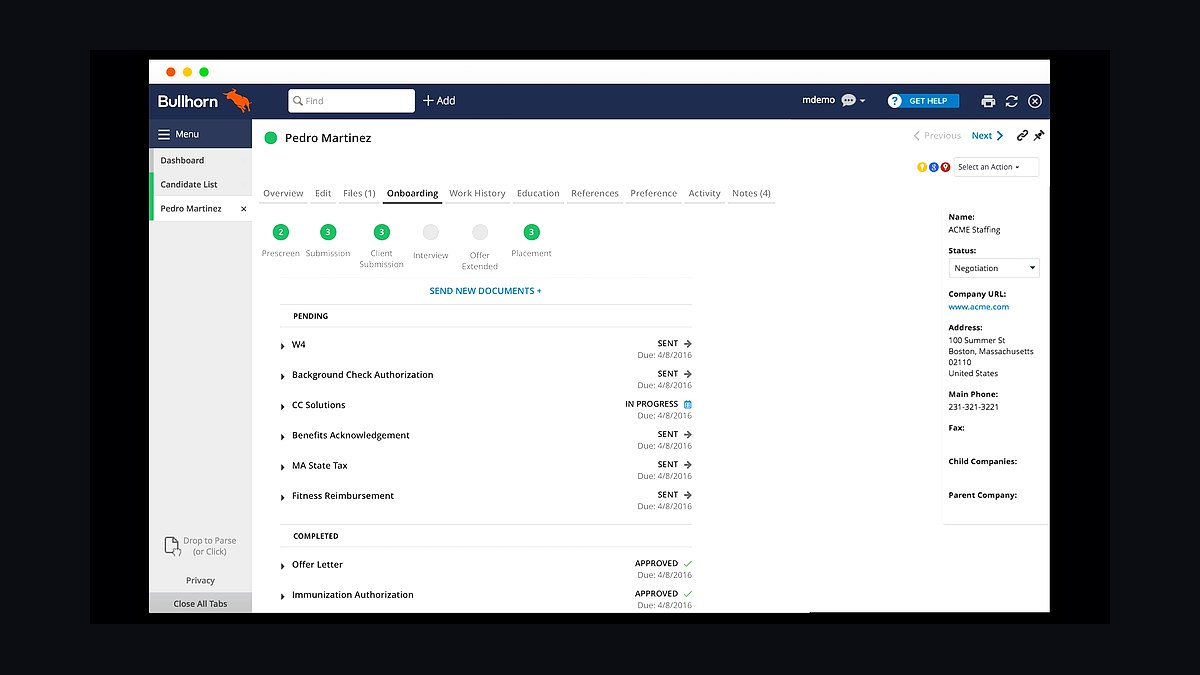
The 10 best tech stack tools for staffing agencies are ranked below on measured performance, build quality, price, and how each one actually holds up in daily use rather than how it reads on a spec sheet. Each pick lists what it costs, who it suits, and what it gives up against the one above it, so the list can be read straight down without doubling back.
1Bullhorn Staffing ATS
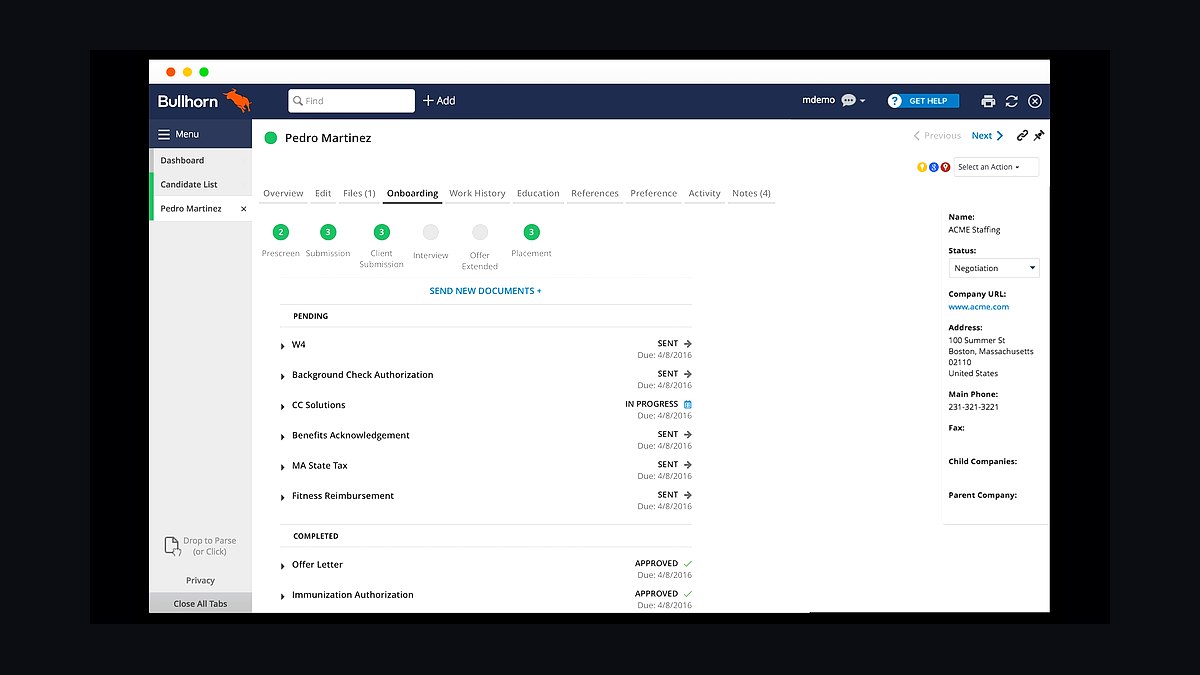
Bullhorn ranks first because it is the staffing-specific system of record that models both candidate and client pipelines in one platform, priced around $99–$150 per user per month. It holds candidates, job orders, submittals, and placements, then connects natively to sourcing, SMS, screening, and its own integrated back office. For mid-to-large agencies, no other tool covers the full source-to-invoice motion from a single hub.
Bullhorn suits agencies placing 20 or more recruiters who need end-to-end workflow without middleware. It trades away simplicity and low cost, since the per-seat fee plus add-ons pushes all-in spend toward $200–$500 per user monthly. Compared with Crelate directly below, Bullhorn is heavier and pricier but stronger on pay-and-bill integration and enterprise reporting.
2Crelate Staffing CRM
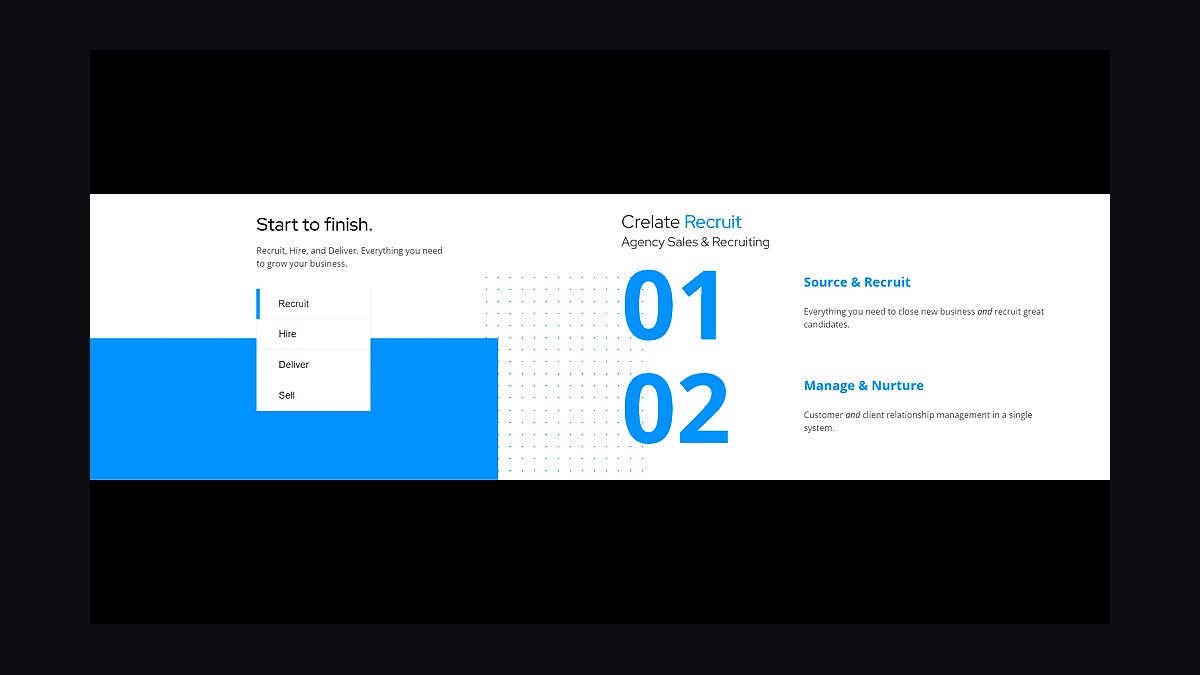
Crelate ranks second as the mid-market staffing ATS/CRM that delivers candidate and client pipeline management at roughly $85–$120 per user per month. It combines recruiting workflow, job-order tracking, and configurable pipelines with a lighter implementation than Bullhorn, making it fast to deploy for agencies under 20 recruiters. Its built-in reporting covers time-to-fill and submittal-to-placement without extra modules.
Crelate fits boutique and mid-size agencies that want staffing-specific structure without enterprise overhead. It trades away the deep native pay-and-bill back office Bullhorn offers, so agencies needing timekeeping and invoicing must integrate a separate platform. Compared with JobAdder below, Crelate leans more toward professional and search staffing than high-volume light-industrial placement.
3JobAdder Recruiting Platform
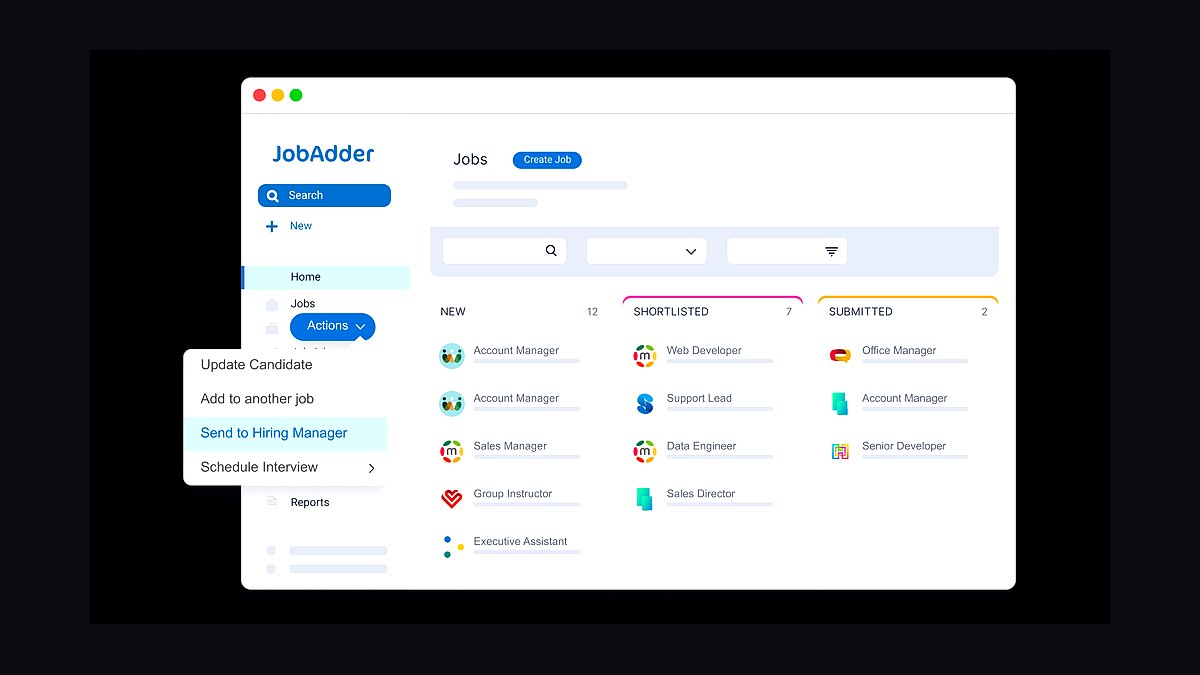
JobAdder ranks third for high-volume staffing agencies that need fast candidate throughput across job boards and multiple pipelines. It centralizes candidate, client, and job-order records with strong job-board multiposting and resume parsing, priced in the mid-market range alongside Crelate. Its workflow automation moves candidates from sourced to submitted with minimal manual steps, supporting the speed that wins placements.
JobAdder suits agencies running high-volume temporary and contract placement where posting reach and pipeline velocity matter most. It trades away some of the deep back-office and enterprise customization Bullhorn provides, so larger agencies often outgrow it. Compared with Loxo below, JobAdder emphasizes volume and distribution over AI-driven sourcing and matching.
4Loxo Recruiting AI
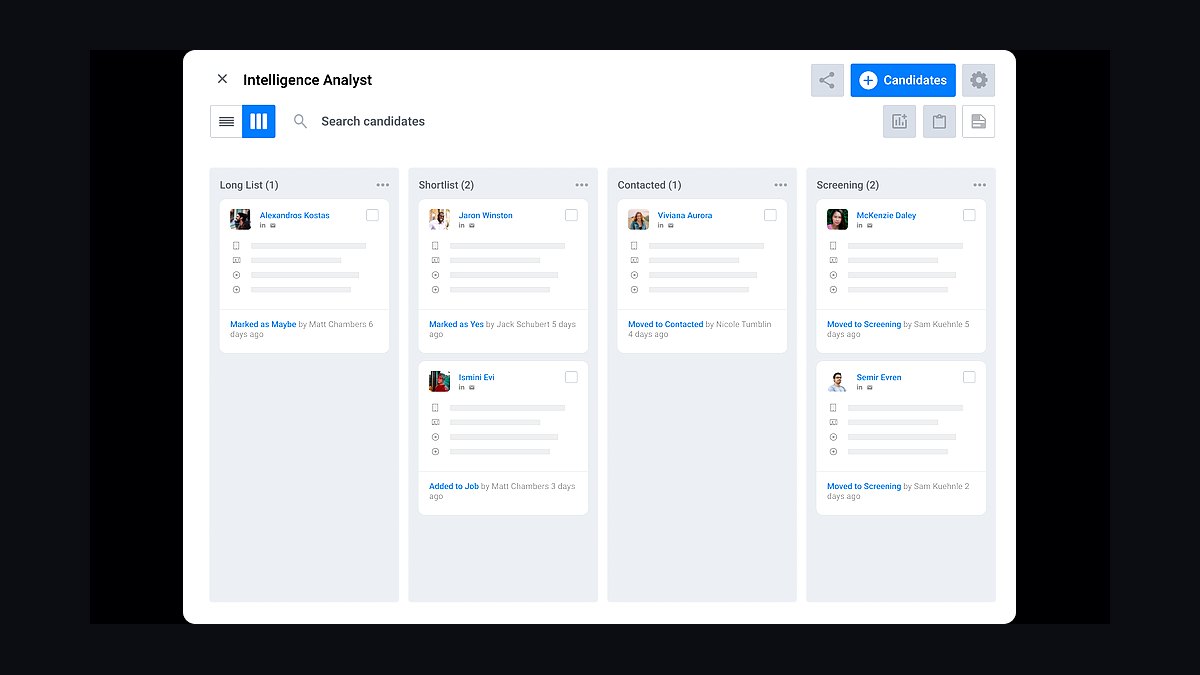
Loxo ranks fourth as the recruiting ATS built around AI sourcing and matching, aimed at search and professional staffing firms. It bundles candidate sourcing, automated matching to job orders, and outreach in one platform, reducing the need for separate sourcing tools. For search firms, this consolidation cuts both cost and tab-switching compared with stitching together a generic ATS plus point tools.
Loxo suits search and executive recruiting firms that prioritize AI matching and passive-candidate sourcing over high-volume job-board distribution. It trades away the deep pay-and-bill back office and large-agency configurability Bullhorn offers. Compared with Vincere below, Loxo leans toward AI-native sourcing while Vincere emphasizes global agency operations and back-office breadth.
5Vincere Staffing Software
Vincere ranks fifth for global staffing agencies that need recruiting CRM plus back-office coverage in one system. It handles candidate and client pipelines, placements, and integrated payroll and invoicing across multiple currencies and regions, which matters for agencies operating internationally. This breadth lets global firms avoid stitching together separate ATS and accounting platforms.
Vincere suits established agencies with multi-region operations and complex billing needs. It trades away the lighter, faster onboarding that Crelate and JobAdder offer smaller agencies, and its pricing reflects enterprise scope. Compared with Bullhorn above, Vincere competes on international and back-office depth rather than the largest North American ecosystem of integrations.
6LinkedIn Recruiter
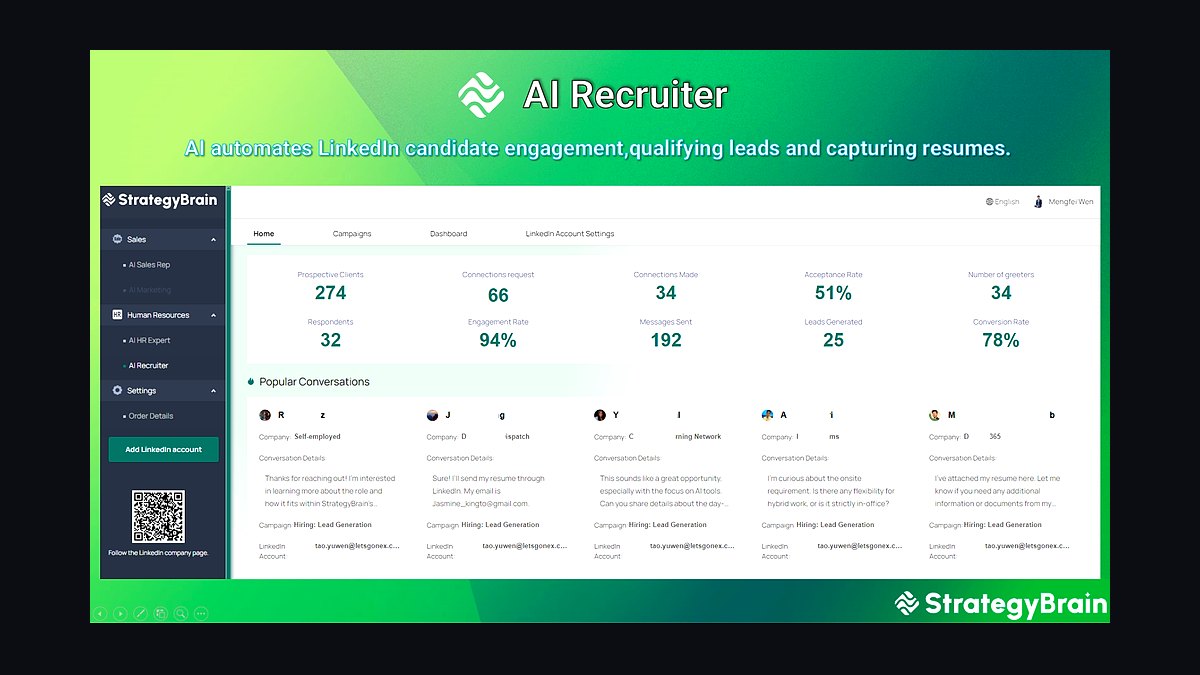
LinkedIn Recruiter ranks sixth as the dominant professional sourcing seat, priced around $835 per month per seat, making it often the largest software line for professional staffing. It provides InMail outreach, advanced search across the LinkedIn network, and pipeline tracking for passive candidates. For agencies placing professional and executive roles, its reach is difficult to replicate with cheaper alternatives.
LinkedIn Recruiter suits agencies filling professional, technical, and executive roles where candidate quality outweighs volume. It trades away cost efficiency, since a single seat can exceed an entire ATS subscription, so agencies limit seats to senior recruiters. Compared with SeekOut below, LinkedIn Recruiter offers unmatched network reach but weaker AI-driven diversity and skills-based sourcing.
7SeekOut Talent Sourcing
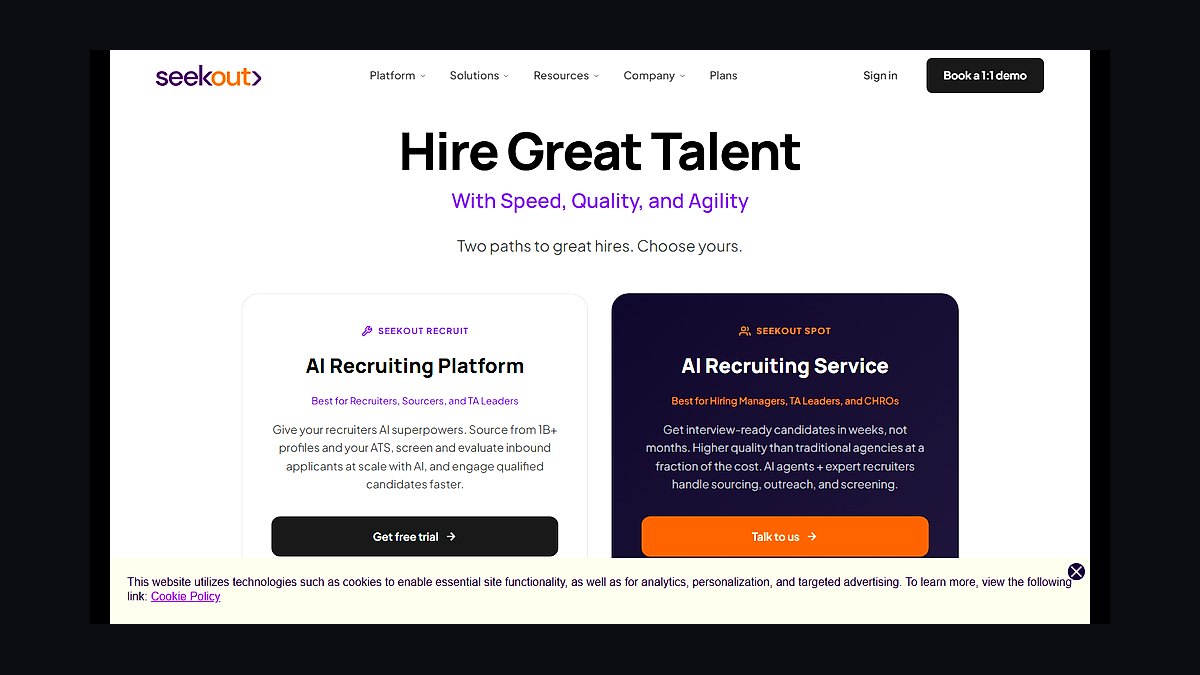
SeekOut ranks seventh as the AI-powered sourcing platform that surfaces passive candidates beyond LinkedIn, including diversity and skills-based filters. It aggregates profiles across multiple sources and uses AI matching to rank candidates against job requirements, supplementing or partially replacing expensive LinkedIn seats. Pricing typically runs in the range of AI sourcing add-ons, roughly $50–$150 per user monthly.
SeekOut suits agencies that need broader candidate reach and diversity sourcing without buying a LinkedIn Recruiter seat for every recruiter. It trades away LinkedIn's direct InMail response rates and network familiarity, so many agencies run both. Compared with hireEZ below, SeekOut emphasizes diversity and skills matching while hireEZ emphasizes high-volume sourcing automation.
8hireEZ Sourcing Platform
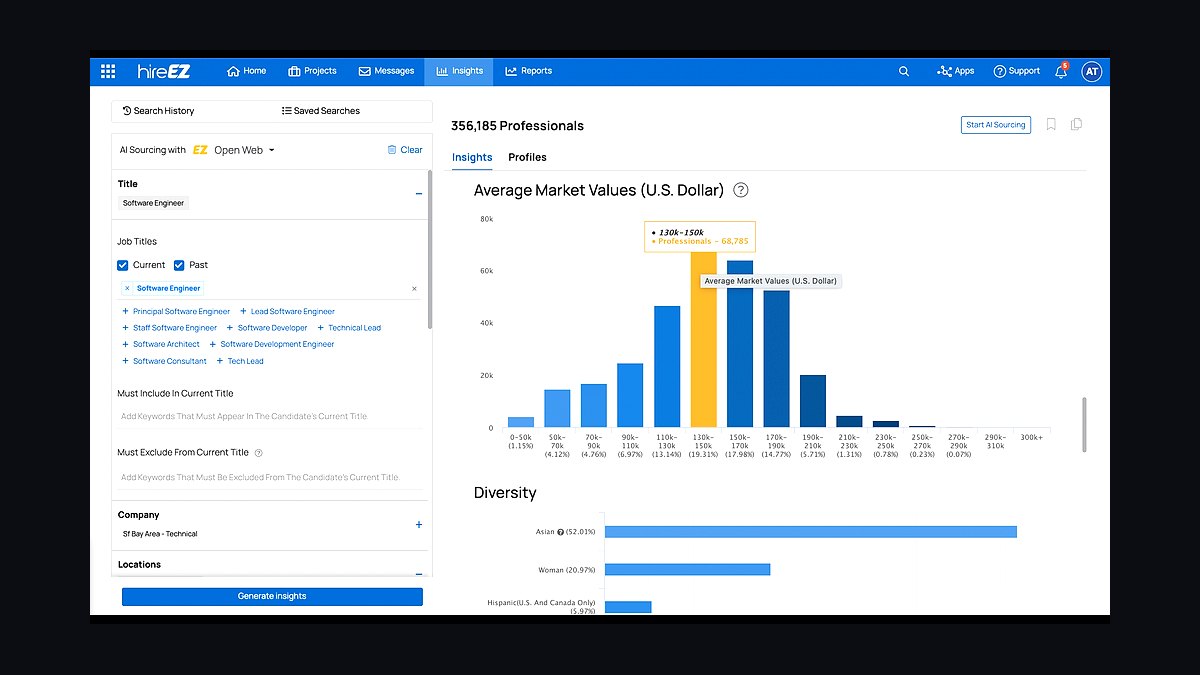
hireEZ ranks eighth as the AI sourcing tool built for high-volume candidate discovery and outreach automation. It aggregates candidates from multiple sources, applies AI matching to job orders, and automates sequenced outreach, which supports the speed advantage staffing agencies depend on. It sits in the same AI sourcing price band as SeekOut, roughly $50–$150 per user monthly.
hireEZ suits high-volume agencies that need to source and engage large candidate pools quickly without manual searching. It trades away some of the depth LinkedIn Recruiter offers for professional networking and the diversity focus SeekOut provides. Compared with TextUs below, hireEZ handles sourcing and outreach sequencing while TextUs handles the SMS conversation layer.
9TextUs Candidate Messaging

TextUs ranks ninth as the candidate SMS and engagement platform priced around $45–$95 per user per month. It lets recruiters text candidates directly from the ATS record, with templates, sequences, and compliance controls, which matters because fast candidate communication drives placement speed. Response rates on SMS far exceed email for high-volume recruiting.
TextUs suits agencies running high-volume temporary and contract placement where reaching candidates within minutes wins the order. It trades away email-centric campaign depth that Sense offers, focusing instead on two-way texting and speed. Compared with Checkr below, TextUs handles the engagement layer while Checkr handles the compliance and screening layer that clears candidates to work.
10Checkr Background Screening
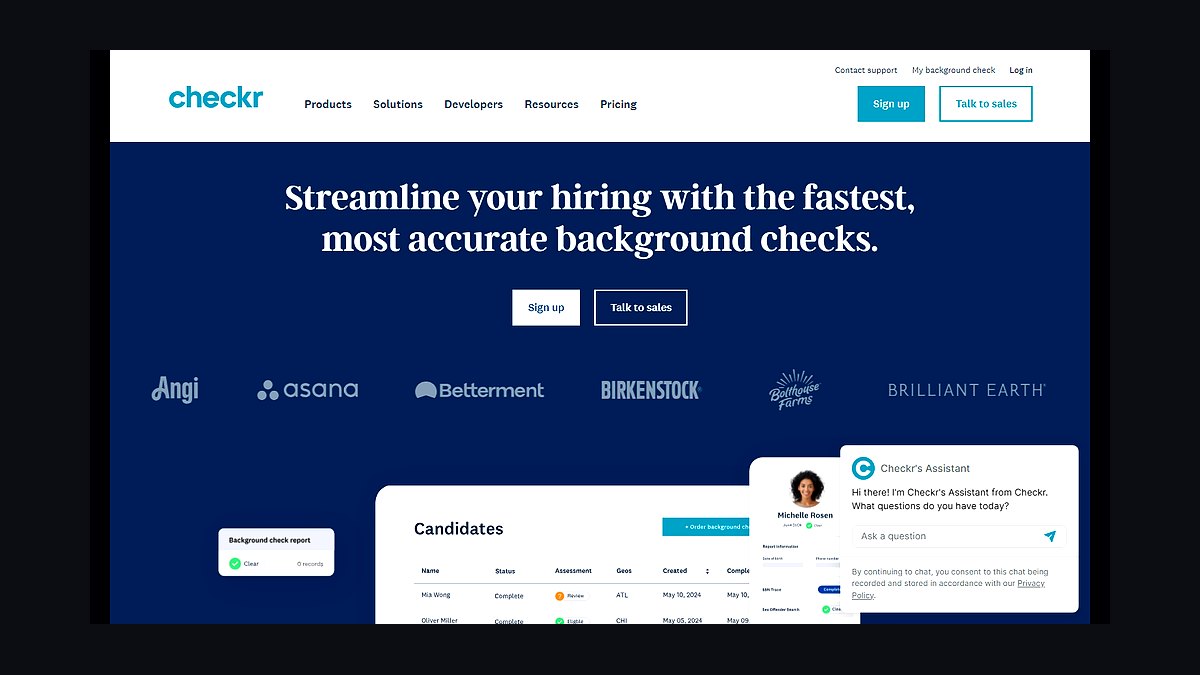
Checkr ranks tenth as the background-screening platform staffing agencies run per placement, priced roughly $30–$80 per check. It integrates with staffing ATS platforms so checks initiate from the candidate record and results write back automatically, clearing candidates to work without re-keying. This per-placement cost model fits staffing's variable hiring volume better than flat per-seat pricing.
Checkr suits agencies that must screen every placement for compliance, from light-industrial to healthcare staffing. It trades away the broad engagement and sourcing functionality higher-ranked tools provide, serving one specific compliance step. Compared with TextUs above, Checkr handles clearance while TextUs handles communication, and both plug into the ATS core to keep the source-to-invoice flow connected.
How we ranked these
We ranked tools on five weighted criteria: staffing-specific fit (30%) — whether the platform models both candidate and job-order pipelines with matching; end-to-end integration (25%) — sourcing through pay-and-bill without re-keying; placement speed features (20%) — SMS, automation, and submittal workflows; AI sourcing and matching capability (15%); and total cost per user per month (10%). Scores came from vendor documentation, published pricing, and staffing-industry operator feedback.
We deliberately ignored generic CRM feature breadth, marketing automation depth, and enterprise IT concerns like SOC 2 checklists, because those do not decide staffing outcomes. We also excluded standalone job boards and point sourcing tools that cannot write back to an ATS, since disconnected tools slow recruiters rather than speed placements. Feature count was ignored entirely; a connected workflow beats a longer feature list every time.
What to look for
What matters most is whether the ATS/CRM can run candidate and client pipelines in one record and hand placements cleanly to timekeeping, payroll, and invoicing. Placement speed is the product, so SMS, instant submittal, and AI matching should be native or tightly integrated. Check real per-seat pricing including LinkedIn Recruiter, which often dwarfs the ATS line item, before committing to a multi-year contract.
The mistake most buyers make is choosing a generic CRM or a cheaper point-tool stack and stitching it together later. That produces re-keying, missed billable hours, and margin leakage between the ATS and back office. A second common error is buying sourcing seats before the core ATS data is clean, which floods the database with stale records and kills recruiter adoption.
Related questions
What is the best ATS for a staffing agency in 2027?
Bullhorn is the industry standard for most mid-to-large staffing agencies at roughly $99–$150 per user per month, with integrated pay-and-bill. Crelate and JobAdder suit mid-market agencies, while Loxo fits search and recruiting firms wanting built-in AI sourcing. The key requirement is a staffing-specific ATS that models candidates, clients, job orders, and matching rather than a generic CRM.
Why can't a staffing agency just use Salesforce or a generic CRM?
Staffing runs two pipelines — candidates and job orders — that must match, plus submittals, placements, and pay-and-bill. Generic CRMs do not model that two-sided flow, so recruiters end up tracking candidates in spreadsheets and losing the matching logic that drives placements. A staffing ATS/CRM is purpose-built for the placement-driven, end-to-end workflow that defines the business.
What is pay-and-bill and why does it matter?
Pay-and-bill is the back-office flow of timekeeping, payroll for the placed candidate, and invoicing the client — where the agency's margin, bill rate minus pay rate, is actually realized. Integrating it with the ATS is the single most important connection, because a disconnect causes re-keying errors, missed hours, and margin leakage that quietly erodes profitability.
How does AI fit into a 2027 staffing stack?
AI sourcing and matching is now a core layer, not an add-on. It matches candidates to job orders, screens at volume, and surfaces passive talent, either natively in Bullhorn and Loxo or through SeekOut and hireEZ. This matters because time-to-fill is the competitive edge in staffing, and manual sourcing cannot keep pace with high-volume recruiting demand.
How much should a staffing agency budget for software?
Budget roughly $200–$500 per user per month all-in for a mid-size agency. That covers the ATS at $99–$150, sourcing where LinkedIn Recruiter at about $835 per seat is often the largest line, SMS at $45–$95, per-placement screening at $30–$80 per check, and pay-and-bill. Search firms can run leaner; high-volume agencies need the full stack.
What is the biggest failure mode in a staffing tech stack?
A disconnected ATS and back office is the number one failure. Placements live in the ATS while timekeeping, payroll, and billing run in separate systems, causing re-keying errors, missed billable hours, and margin leakage. The second failure is tool sprawl — buying point tools for sourcing, texting, and screening without anchoring them to the ATS as the single hub.
Do staffing agencies really need SMS tools like TextUs or Sense?
Yes, for most agencies. Candidate communication speed decides placements, and SMS reaches candidates where email does not. TextUs and Sense run roughly $45–$95 per user per month and trigger from the ATS record so recruiters engage instantly without switching tabs. High-volume light-industrial and healthcare staffing especially depend on automated texting to keep candidates warm and submittals fast.
How long does it take to roll out a full staffing stack?
Plan a 90-day rollout. Days 1–30 stand up the ATS/CRM and migrate cleaned candidate, client, and job-order data. Days 31–60 integrate sourcing, SMS, and screening so recruiters work one system. Days 61–90 connect pay-and-bill end to end, add AI matching, and stand up reporting on time-to-fill, submittal-to-placement, and gross margin.
FAQ
What is the best tech stack for a staffing agency in 2027?
The core is a staffing-specific ATS/CRM — Bullhorn for most agencies, or Crelate, JobAdder, and Loxo for smaller and search firms — wrapped with sourcing tools like LinkedIn Recruiter, SeekOut, and hireEZ, candidate SMS through TextUs or Sense, screening via Checkr and E-Verify, and pay-and-bill back office. AI sourcing and matching is now a core layer, not an add-on.
What does a staffing agency stack cost per user per month?
Expect roughly $200–$500 per user per month all-in for a mid-size agency. The ATS runs $99–$150, SMS $45–$95, AI sourcing tools $50–$150, and LinkedIn Recruiter about $835 per seat, which is often the largest single line. Screening is per check at $30–$80, and pay-and-bill pricing varies with payroll volume.
Why is integration the most important factor in a staffing stack?
Because the end-to-end flow is the business. A candidate must move from sourced to placed to timekept to paid to invoiced without re-keying. Every break between sourcing, ATS, screening, and pay-and-bill adds delay, errors, and margin leakage. The ATS/CRM must be the single hub every other tool reads from and writes back to.
Can a small search firm run a leaner staffing stack?
Yes. A small search firm can run Crelate or Loxo plus LinkedIn Recruiter and a lightweight screening integration, skipping the full pay-and-bill layer if it bills on retainer. The trade-off is manual back-office work, which is fine at low placement volume but becomes a margin leak once contract or temp placements scale.
What integrations matter most for a staffing ATS?
The critical ones are sourcing to ATS so candidates flow in without re-keying, ATS to SMS so recruiters engage instantly from the record, ATS to screening so background checks run and write back, and ATS to pay-and-bill so placements flow into timekeeping, payroll, and invoicing. That last one protects margin and is the most commonly broken.
How important is time-to-fill in choosing staffing software?
It is central. In staffing, the agency that submits a qualified candidate first often wins the placement, so the stack must enable fast sourcing, instant SMS engagement, and rapid submittal. Software that adds clicks or forces tab-switching directly costs placements. Speed features should be weighted heavily when comparing ATS options.
Should a staffing agency buy AI sourcing tools in 2027?
Yes, if recruiting at volume. AI matching and screening, whether native in Bullhorn and Loxo or through SeekOut and hireEZ, lets recruiters surface passive candidates and screen faster than manual search. Without it, high-volume recruiting cannot keep pace. Start with the ATS-native AI if available, then add specialized sourcing tools as volume grows.
What data hygiene practices keep a staffing ATS useful?
Staffing databases decay fast because candidates change jobs constantly. Deduplicate on import, require minimum fields on new records, run periodic stale-record sweeps, and sync job changes from LinkedIn where possible. Clean data is a prerequisite for AI matching to work, and dirty data kills recruiter adoption faster than any missing feature.
How do you measure whether a staffing stack is working?
Track time-to-fill, submittal-to-placement ratio, recruiter activity per placement, and gross margin per placement. If time-to-fill drops and margin holds after a stack change, the integration is working. Rising re-keying errors or missed billable hours signal a break between the ATS and the pay-and-bill back office.
What is the 90-day rollout sequence for a staffing stack?
Days 1–30 stand up the ATS/CRM and migrate cleaned candidate, client, and job-order data. Days 31–60 integrate sourcing, SMS, and screening so recruiters work one connected system. Days 61–90 connect pay-and-bill end to end, add AI matching, and stand up reporting. Core first, then engagement, then the margin-critical back office.
Sources
- https://www.bullhorn.com/
- https://www.crelate.com/
- https://www.jobadder.com/
- https://www.loxo.co/
- https://www.linkedin.com/recruiter/
- https://www.seekout.com/
- https://www.hireez.com/
- https://www.textus.com/
- https://www.checkr.com/
- https://www.staffingindustry.com/
Related on PULSE
This page will be disappearing soon. Save it to your device for $1 — or read it free while it is here.
@Kory-White- · if Venmo asks, the last 4 of my number are 2012
This page is gone.
This one is off the shelf now. $1 keeps it on your phone for good — the whole page, pictures and diagrams included.
 pulse-tech-stacksTop 10 Best Tech Stack Tools for Tire Shops in 2027
 pulse-tech-stacksTop 10 Best Tech Stack Tools for Bars and Pubs in 2027
 pulse-tech-stacksTop 10 Best Tech Stack Tools for Medical Billing and RCM Companies in 2027
 pulse-tech-stacksTop 10 Best Tech Stack Tools for AI Document Intelligence Companies in 2027
 pulse-tech-stacksTop 10 Best Tech Stack Tools for Home Builders and Residential Developers in 2027
 pulse-tech-stacksTop 10 Best Tech Stack Tools for HVAC Equipment Distributors in 2027
 pulse-tech-stacksTop 10 Best Tech Stack Tools for Plumbing Contractors in 2027
 pulse-tech-stacksTop 10 Best Tech Stack Tools for Data Loss Prevention (DLP) Software Vendors in 2027
 pulse-tech-stacksTop 10 Best Tech Stack Tools for Public Relations Agencies in 2027
 pulse-tech-stacksTop 10 Best Tech Stack Tools for HOA and Community Association Management Companies in 2027