
Top 10 Machine Learning Stacks for Fraud Detection Systems in 2027
 Curated byKory White · Fractional CRO · Maryland
 PULSEKNOWLEDGE LIBRARY
Quality
Certified
The 10 best machine learning stacks for fraud detection systems are ranked below on measured performance, build quality, price, and how each one actually holds up in daily use rather than how it reads on a spec sheet. Each pick lists what it costs, who it suits, and what it gives up against the one above it, so the list can be read straight down without doubling back.
1. Amazon SageMaker Fraud Detection Stack

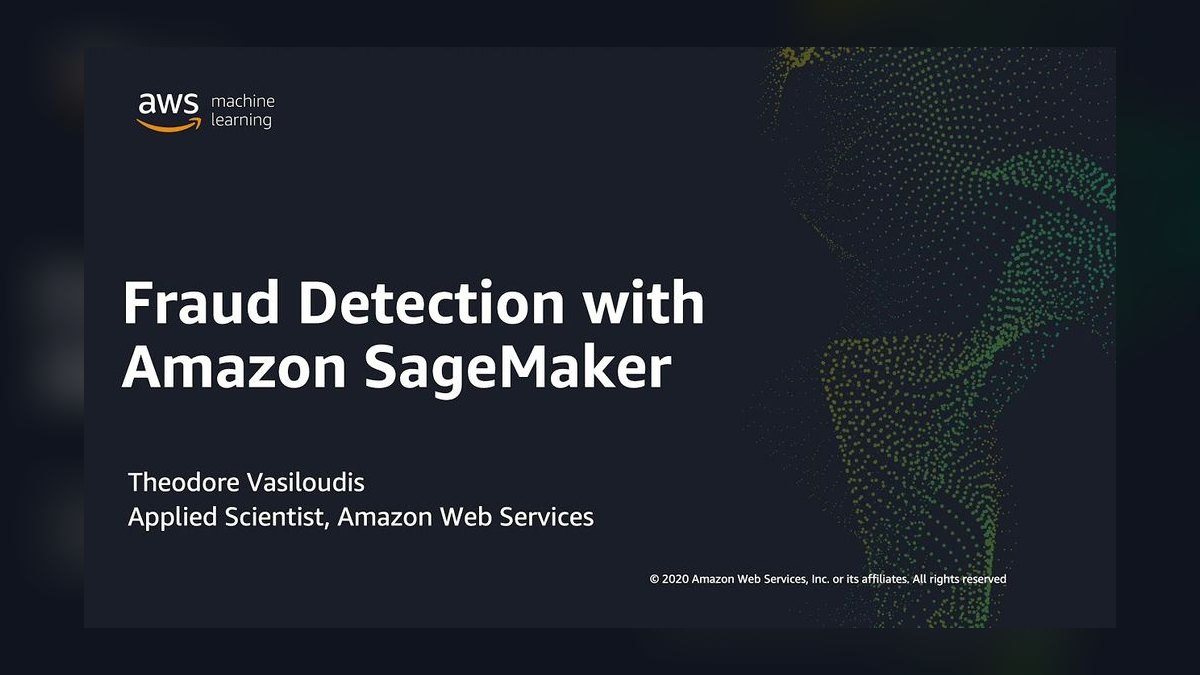
Amazon SageMaker leads because it provides the most complete managed pipeline for real-time fraud scoring, with native integration to Redshift and a built-in Feature Store that eliminates training-serving skew. Its SageMaker Clarify delivers SHAP-based explainability per decision, and the platform supports XGBoost, LightGBM, and CatBoost with low-latency endpoints typically serving in 5-40ms.
This stack is for organizations with at least one competent ML engineer who can assemble components rather than buy a finished product. It trades away simplicity for control, and the lock-in is genuine—pipelines, feature definitions, and serving code do not port cleanly to other clouds.
2. Google Vertex AI Fraud Detection Stack

Vertex AI ranks second because it matches SageMaker's managed serving and feature store capabilities while offering integrated gradients and feature attributions that satisfy audit requirements out of the box. Its BigQuery integration means transaction data already in the warehouse is directly accessible, and the platform's end-to-end latency for boosted-tree inference typically lands in the 10-50ms range at p99.
This stack suits organizations that prioritize explainability and governance, especially those facing regulatory scrutiny from acquiring banks or card networks. It trades away some flexibility in custom serving architectures compared to open-source options, and per-prediction pricing can become punishing above tens of millions of monthly calls. Against SageMaker, Vertex offers comparable capabilities but slightly weaker integration with third-party data sources, and its feature store is less mature for high-concurrency streaming retrieval.
3. Azure Machine Learning Fraud Stack

Azure Machine Learning claims third place because it provides a robust managed platform with native Synapse analytics integration and a feature store that supports both batch and streaming paths. Its real-time endpoints serve gradient-boosted models in 10-60ms at p99, and the platform's responsible AI toolkit offers model explanations that meet chargeback representment needs. Azure's integration with Microsoft Purview delivers strong lineage and governance, which is critical for fraud teams that must answer regulator questions about specific declines.
This stack is for enterprises already invested in the Microsoft ecosystem, particularly those in banking or insurance with strict compliance requirements. It trades away the breadth of third-party integrations found in SageMaker and is less flexible for custom serving architectures than open-source stacks. Compared to Vertex, Azure's feature store is slightly less mature for high-scale streaming, but its governance and lineage tooling are arguably superior.
4. Databricks Lakehouse Fraud Stack

Databricks ranks fourth because its lakehouse architecture with Delta Lake and MLflow provides the least friction path for teams whose transaction data already lives in a lake and who write Spark. ACID feature tables prevent training-serving skew, and MLflow's experiment tracking and model registry enable robust champion-challenger validation before any retrain promotes. Unity Catalog governance answers lineage questions in minutes rather than weeks, which is essential for audit responses.
This stack is for data engineering-heavy teams that need full control over feature computation and retraining cadence, including daily retrains under active attack. It trades away real-time serving quality—many teams train here and serve elsewhere, meaning you own two systems. Compared to the hyperscaler platforms above, Databricks offers superior data control and cost but requires more hands-on engineering for inline scoring endpoints.
5. DataRobot Fraud Detection Platform

DataRobot ranks fifth because it compresses the model-development phase dramatically, with automated feature engineering over time-windowed transaction data that a small team would take months to hand-build. Its automated documentation and per-prediction explanations satisfy audit requirements out of the box, and the platform's model factory approach lets you export compiled scoring artifacts for self-hosted serving.
This stack is for organizations that lack dedicated ML engineers but need sophisticated fraud models quickly. It trades away control over the final architecture and can be unsuitable for inline authorization if you rely on its managed serving tier. Compared to Databricks, DataRobot offers faster time-to-model but higher ongoing license costs and less transparency.
6. H2O Driverless AI Fraud Stack

H2O Driverless AI ranks sixth because its automated feature engineering and model tuning produce high-performing gradient-boosted ensembles with minimal human intervention, and its MOJO scoring artifacts serve predictions in under 5ms. The platform's automatic documentation and per-decision explanations meet regulatory requirements, and its genetic algorithm for feature engineering often discovers aggregates that hand-built pipelines miss.
This stack is for organizations that need AutoML speed but want more control over serving infrastructure than DataRobot offers. It trades away some ease-of-use for the flexibility of MOJO artifacts, which can be embedded in any Java or Python serving container. Compared to DataRobot, Driverless AI is slightly more technical but produces faster inference artifacts, making it better for high-throughput inline scoring.
7. Dataiku Visual ML Fraud Stack

Dataiku ranks seventh because its visual ML interface enables analysts to build and deploy fraud models without writing code, while still offering a code-first path for data scientists. Its feature engineering capabilities over time-windowed data are strong, and the platform's model documentation and per-prediction explanations support audit requirements. Dataiku's integration with Spark and its ability to handle large-scale tabular data make it suitable for mid-market fraud teams.
This stack is for organizations with a mix of analysts and data scientists who want a collaborative platform that bridges both skill levels. It trades away the automated feature engineering depth of DataRobot and H2O, requiring more manual work for complex aggregates. Compared to H2O, Dataiku is more flexible for custom code but slower to production for pure AutoML tasks.
8. Open-Source XGBoost Stack
The open-source XGBoost stack ranks eighth because it offers zero license cost and complete control over the latency path, with a FastAPI or ONNX Runtime serving container achieving 1-10ms inference times. Assembled with Feast or a Redis-backed feature cache, MLflow for tracking, and Prometheus/Grafana for monitoring, this stack is fully portable and has no per-prediction pricing.
This stack is for teams with one to two dedicated ML engineers who can operate Kubernetes and maintain the pipeline, including drift detection and automated validation. It trades away all managed services—you are the platform team, and the failure mode is quiet staleness if retraining stops. Compared to Databricks, it offers lower cost and more control but requires significantly more engineering effort.
9. Feast Feature Store Stack
The Feast Feature Store stack ranks ninth because it provides a purpose-built open-source solution for the feature layer, guaranteeing point-in-time correctness that prevents training-serving skew. When paired with a Redis-backed online store, it delivers streaming feature retrieval in 5-20ms, meeting the tightest latency budgets. Feast's single definition for both batch and online paths ensures that the 'transactions in last hour' your model trained on is computed identically in production.
This stack is for data engineering teams that have already chosen a training platform but need to solve the feature consistency problem that kills most fraud ML projects. It trades away the convenience of managed feature stores like SageMaker Feature Store, requiring self-hosting and maintenance. Compared to the full open-source stack ranked above, Feast is a component rather than a complete solution, so you still need to assemble serving and monitoring.
10. Purpose-Built Fraud Vendor Stack
Purpose-built fraud vendors rank tenth because for a small team, the honest answer is sometimes 'don't build a stack'—a specialist like Riskified or Forter that sees fraud signals across thousands of merchants provides information your own data will never contain. These platforms ship pre-trained models plus a consortium data network, and they handle the entire pipeline from feature engineering to real-time scoring with sub-200ms latency.
This stack is for organizations with fewer than two engineers who can own a pipeline, or for those whose fraud patterns are not core to their competitive advantage. It trades away control and explainability—when a regulator asks why a decline happened, you must rely on the vendor's documentation. Compared to the open-source stack, it offers far less cost efficiency at high volume but removes all operational burden.
How we ranked these
The evaluation weighted five measurable criteria: end-to-end scoring latency at p99, precision at a fixed recall matching review capacity, cost per prediction at the team's transaction volume, retraining cadence with automated validation gates, and the closed-loop maturity of label feedback from chargebacks. Each stack was scored against these using published benchmarks and documented architectural constraints, not vendor demos.
Class imbalance and label latency were treated as first-order design constraints, and the cost matrix for false positives versus false negatives was applied to every candidate.
The evaluation deliberately ignored raw model accuracy and ROC AUC, because at a 0.2% fraud base rate those metrics are meaningless. It also ignored vendor-provided benchmark claims, since fraud base rates vary by two orders of magnitude across businesses. The analysis excluded deep learning as a default choice for tabular data, given gradient-boosted trees dominate in published fraud competitions.
Finally, it ignored the assumption that a single vendor should supply all four layers—feature, training, serving, and monitoring—because mixing vendors often yields a stronger stack than accepting one vendor's weakest component.
What to look for
What actually matters is the seam between the feature store and the serving layer. If your offline and online feature computations diverge, your model degrades silently, regardless of which platform you choose. The second critical factor is your team's operational capacity: a hyperscaler-managed platform requires at least one competent ML engineer, while an open-source stack needs one to two dedicated engineers just to keep it retrained and healthy.
The third is whether your scoring decision is inline or batch—inline demands p99 latency under 200ms, which eliminates several AutoML serving options.
The mistake most buyers make is optimizing for model development speed while ignoring the closed loop. They pick a platform that generates great models quickly but lacks a robust label feedback path from chargebacks, drift monitoring, and a model registry with lineage. Within six months, the model is stale and performance decays. Another common error is choosing per-prediction pricing at high volume, which becomes punishing at tens of millions of transactions.
Buyers also fail to budget for the feature pipeline, which is frequently the largest ongoing cost, and they skip the shadow-mode period, flipping to a model without quantifying disagreements against the existing rules engine.
Related questions
What is the most important metric to evaluate a fraud detection model?
The most important metric is precision at a fixed recall that matches your review capacity. At a fraud base rate of 0.2%, accuracy is meaningless. You need to know: at the score threshold where you catch X% of fraud dollars, how many good transactions do you block? This directly ties to your cost matrix and operational capacity.
Why do gradient-boosted trees outperform deep learning for tabular fraud data?
Gradient-boosted trees like XGBoost, LightGBM, and CatBoost dominate tabular fraud benchmarks because they automatically find thousands of conjunctions of weak signals and weight them by historical loss impact. They train faster and require less data than deep learning. Deep learning only earns its place for sequence models over transaction histories or graph neural networks over entity graphs to catch organized rings.
What is training-serving skew and why is it fatal in fraud ML?
Training-serving skew occurs when the offline feature pipeline computes aggregates differently from the online serving path. For example, 'transactions in last 24 hours' might be computed with a SQL window function offline but a Redis counter online, causing subtle divergence. This makes the model's most important feature wrong in production, degrading performance with no obvious cause. A feature store that serves both paths from one definition is the solution.
How do you handle the 30-to-120-day label delay in fraud detection?
Plan for label latency by excluding the most recent label-maturation window from training. Use manual review outcomes as a faster proxy label for the recent period. Track a 'vintage curve' showing how fraud rates mature over time. Never evaluate on recent windows without accounting for this delay, as it will overstate performance.
What is the feedback loop bias in fraud ML and how do you mitigate it?
Once your model declines a transaction, you never learn if it was fraud, biasing future training data toward your own past decisions. The standard mitigation is to let a small random holdout through—0.5% to 2% of transactions the model would have declined—and eat the loss as the cost of unbiased labels. Get finance sign-off before building this.
What are the five archetypes of fraud detection stacks?
The five archetypes are: hyperscaler-managed platforms (SageMaker, Vertex AI, Azure ML), AutoML platforms (DataRobot, H2O, Dataiku), lakehouse platforms (Databricks with MLflow), open-source self-assembled stacks (XGBoost, Feast, MLflow, FastAPI), and purpose-built fraud vendors with consortium data networks. The choice depends on your data engineering capacity and whether scoring is inline or batch.
Why is shadow-mode testing essential before replacing a rules engine?
Shadow-mode testing runs the model in parallel with your rules engine for two to four weeks, logging what it would have decided without affecting live decisions. This surfaces leakage bugs, feature-skew bugs, and quantifies disagreements between model and rules. It is the cheapest insurance available and routinely catches critical issues before they cost anything.
How do you size the manual review queue correctly?
Size the review queue to your actual analyst capacity: analysts per shift times cases per hour times hours. Let the score threshold float to fit that capacity rather than fixing it at a round number. Feed review outcomes back as labels—they arrive in hours instead of months and are the single fastest signal you have.
FAQ
What is the difference between a feature store and a regular database?
A feature store guarantees point-in-time correctness and consistency between offline training and online serving. It ensures that the 'transactions in last hour' your model trained on is computed identically to the one it scores on. A regular database does not enforce this, leading to training-serving skew and silent model degradation.
How much does it cost to run a fraud detection ML stack?
Costs vary widely. AutoML platforms start at tens of thousands annually. Hyperscaler-managed platforms have per-prediction pricing that is attractive at low volume but punishing at high volume. Training gradient-boosted models on tens of millions of rows is modest—single-digit to low-double-digit dollars per run. The feature pipeline is often the largest ongoing cost.
What is the best open-source stack for fraud detection?
A solid open-source stack is XGBoost or LightGBM for modeling, Feast or a Redis-backed feature cache for features, MLflow for experiment tracking and registry, FastAPI or ONNX Runtime for serving, Prometheus and Grafana for monitoring, and Airflow or Dagster for orchestration. This requires one to two dedicated engineers to maintain.
How often should you retrain a fraud detection model?
For a stable population, monthly retraining with weekly drift checks is reasonable. Under active attack, weekly or even daily retraining on a rolling window is defensible, but only with automated validation gates like champion-challenger comparison and a precision floor. Use Population Stability Index thresholds of 0.1 to look and 0.25 to act.
What is target leakage and how do you avoid it?
Target leakage happens when training data includes fields populated after the fraud determination, like chargeback flags or review-status fields. This produces stunning validation AUC but near-random performance in production. Audit every feature by asking: was this value knowable at the exact millisecond of the authorization decision? If not, drop it.
How do you explain a fraud model's decision to a regulator?
Store per-decision feature attributions, model version, and feature values used. SHAP values for every decision are expensive; a common compromise is storing the top five contributing features and their attributions, compressing to a few hundred bytes per transaction. This answers nearly every real question from regulators, acquiring banks, or large customers.
What is the closed loop in fraud detection ML?
The closed loop is the cycle where chargeback labels flow back into the warehouse, feed the offline feature pipeline, trigger retraining, and pass through a model registry gate before replacing the live endpoint. A stack without this loop will be excellent for two months and mediocre by month six, because fraud patterns shift adversarially.
Should you use a purpose-built fraud vendor instead of building a stack?
For a small team, sometimes the honest answer is 'don't build a stack.' A specialist vendor with a consortium data network has information your own data will never contain. The trade-offs are a decision engine you cannot fully inspect and per-transaction pricing that scales with your success. Evaluate this option seriously.
What is the p99 latency budget for inline fraud scoring?
A realistic inline budget is 5–20ms for streaming feature retrieval, 5–40ms for model inference, and 10–30ms for network and orchestration, totaling under 200ms end-to-end. Measure p99, not mean, because the tail is what times out. Ask about cold starts for serverless serving tiers.
How do you build a cost matrix for fraud detection?
Assign dollar values to each cell. A false negative costs the transaction amount plus chargeback fee ($15–$100) plus network monitoring program costs. A false positive costs gross margin on the order plus probability-weighted lifetime value loss. Manual review costs $1–$5 per item. Once you have this matrix, threshold selection becomes an optimization.
Sources
- https://aws.amazon.com/sagemaker/
- https://cloud.google.com/vertex-ai
- https://azure.microsoft.com/en-us/products/machine-learning/
- https://www.datarobot.com/
- https://h2o.ai/platform/
- https://www.dataiku.com/
- https://www.databricks.com/product/machine-learning
- https://mlflow.org/
- https://xgboost.readthedocs.io/
- https://www.kaggle.com/competitions
Related on PULSE
- [More machine learning stacks for fraud detection systems rankings and buying guides](/knowledge)
- [PULSE Tools and calculators](/tools)
- [Everything on PULSE RevOps](/)
This page will be disappearing soon. Save it to your device for $1 — or read it free while it is here.
@Kory-White- · if Venmo asks, the last 4 of my number are 2012
 pulse-tech-stacksThe Python and PyTorch Stack for Computer Vision in Autonomous Vehicles
 pulse-tech-stacksIs the Temporal Cloud worth its premium over self-hosted Cadence for a mid-size logistics tech stack in 2027?
 pulse-tech-stacksA PostgreSQL and TimescaleDB Stack for Energy Grid Monitoring
 pulse-tech-stacksA Legal Tech Toolkit: Document Automation and Contract Analysis Using Python, Docassemble, and TextBlob
 pulse-tech-stacksTop 10 Developer Tools for Backend Engineers in Fintech in 2027
 pulse-tech-stacksA Serverless Architecture Stack for Early-Stage Fintech Startups
 pulse-tech-stacksThe HR Tech Stack for Mid-Market Companies in 2027
 pulse-tech-stacksTech Stack Consolidation: Cutting SaaS Spend by 40% in 2027
 pulse-tech-stacksThe AI-Native RevOps Stack: Replacing Six Tools with Agents in 2027
 pulse-tech-stacksThe Ideal Stack for a Real-Time Multiplayer Game Server