
The Music Production Tech Stack: DAW Automation, Sample Management, and Collaboration with JUCE and Google Drive API
 Curated byKory White · Fractional CRO · Maryland
 PULSEKNOWLEDGE LIBRARY
Quality
Certified
A modern music Production stack pairs a DAW with automation, structured sample Management, and a shared collaboration layer. JUCE provides the C++ framework for building cross-DAW plugins and audio applications, while the Google Drive API handles cloud file storage, sync, and versioning. Together they let producers, mixers, and labels work across Ableton, Logic, and Pro Tools without losing session data or sample context.
The two architectural paths compared
When a music team outgrows a single DAW and a shared folder of loose audio files, two broad architectures present themselves. The first is the native-first path: keep each producer inside their chosen DAW, use that DAW's built-in browser, tagging, and automation lanes, and handle sharing through exported stems, ZIP archives, and manual file transfers. The second is the interoperability path: standardize on a plugin and sync layer — typically JUCE for the audio-facing code and the Google Drive API for the storage and collaboration backbone — so that sessions, automation curves, and sample metadata travel between tools.
The native-first path is cheap and fast to adopt. Ableton Live, Logic Pro, FL Studio, and Pro Tools all ship with capable sample browsers, warp and flex tools, and automation envelopes. A two-person team can operate this way indefinitely. The friction appears at scale: the moment a third collaborator joins, or the moment a project needs to move from a writing DAW to a mixing DAW, someone is bouncing files, renaming folders, and re-importing automation by hand. Version drift becomes the norm — "final_mix_v7_REAL.aif" is the symptom.
The interoperability path costs more upfront engineering but pays back in reduced manual handoffs. JUCE lets you write one plugin or standalone app that runs as VST3, AU, AAX, and standalone across Windows, macOS, and Linux from a single codebase. The Google Drive API gives you a programmatic file layer: upload, download, list, watch for changes, and manage revisions without asking a human to drag files around. The trade-off is real: you take on build tooling, code signing, and OAuth credential management. For a solo producer, that overhead is hard to justify. For a label or a five-person production collective, it is often the difference between shipping on schedule and missing release windows.
A middle path exists and is worth naming. Many teams adopt a hybrid: they keep native DAWs for creation, but they standardize the *handoff* layer. Sample libraries live in a shared cloud folder with a consistent naming convention, automation is exported as MIDI or as a documented preset, and a lightweight JUCE utility handles the conversion. This captures most of the collaboration benefit without a full custom plugin build. The decision between the pure native path, the hybrid, and the full interoperability path is the single most consequential architecture choice a music Production team makes, and it should be revisited every time the team grows by two or three people.
How to decide between them
The decision hinges on four variables: team size, number of DAWs in play, how often automation must survive a handoff, and whether you need programmatic access to files. If your team is one or two people on one DAW, stay native. If you have three to six people across two DAWs and you hand off sessions weekly, the hybrid path wins. If you have more than six collaborators, three or more DAWs, or any requirement to trigger actions from file changes — for example, notifying a label when a mix is uploaded — the interoperability path is the right call.
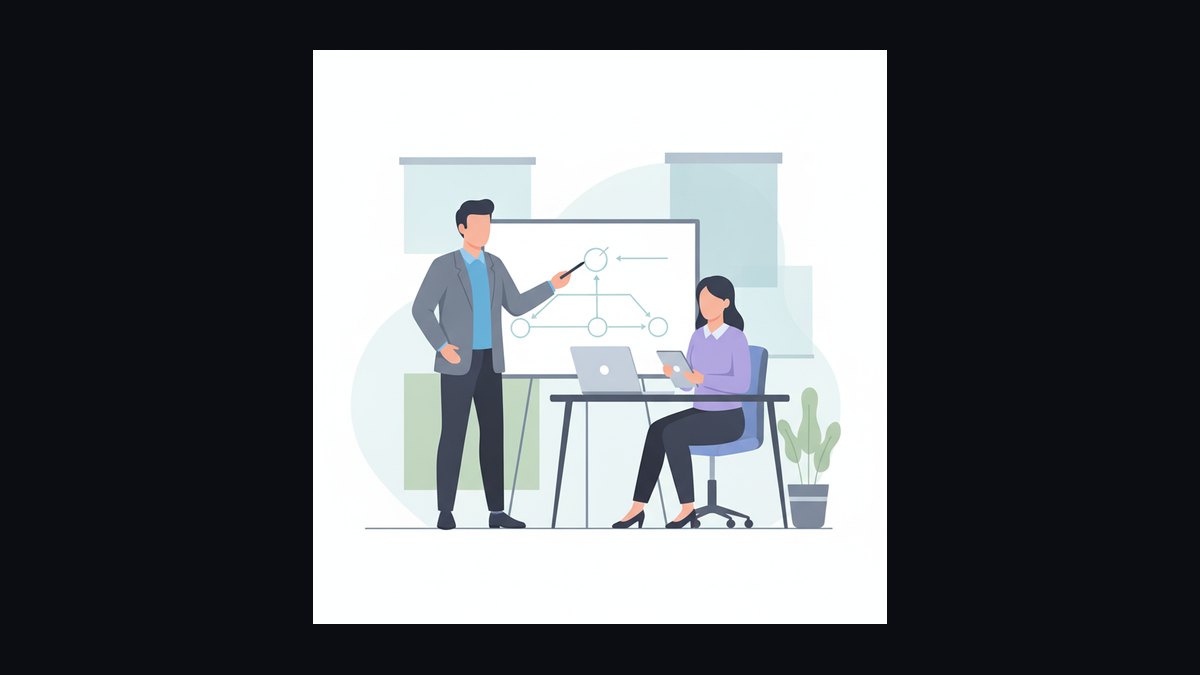
Notice that the diagram routes most teams to the hybrid layer rather than the full build. That is intentional. Full custom development is justified by a specific trigger — programmatic file events, or a plugin that must run identically in three or more hosts — not by ambition alone. Teams that build a custom JUCE plugin before they have a concrete cross-DAW problem usually end up maintaining code nobody uses. Teams that wait too long end up with a folder structure that no one can untangle. The trigger conditions in the diagram are the practical dividing line.

One more factor deserves a place in the decision: who owns the credentials. The Google Drive API requires an OAuth client, scopes, and a service account or user consent flow. In a label setting, that should be an IT or operations responsibility, not a producer's personal Google account. If no one can own credential rotation and access review, the interoperability path will quietly become a security liability. Decide the ownership question before you write the first line of integration code.
Concrete numbers behind each option
Numbers make the trade-off concrete. Consider a five-person collective producing roughly two EPs and one album per year, with sessions moving between a writing DAW and a mixing DAW.

On the native-first path, assume each handoff costs about 45 minutes of manual work: bouncing stems, renaming, uploading, and re-importing automation. If the team does four handoffs per track and twelve tracks per year, that is 48 handoffs, or roughly 36 hours annually. At a conservative internal rate of $60 per hour, that is about $2,160 per year in lost time — plus the harder-to-measure cost of version mistakes. A single lost automation pass that has to be redone can consume an afternoon.
On the hybrid path, you add a naming convention, a shared cloud folder, and a documented export template. Setup might take 8 to 12 hours of one person's time. Ongoing cost drops to perhaps 15 minutes per handoff, because the export template and folder structure do most of the work. That is 12 hours annually instead of 36, saving roughly 24 hours, or about $1,440 at the same rate, against a one-time setup of under $1,000 of internal time. Payback arrives inside the first year.
On the full interoperability path, engineering effort is the dominant cost. A minimal JUCE plugin that reads and writes automation data, plus a Drive API sync service, is realistically 80 to 200 hours of development for a first working version, depending on scope. Add ongoing maintenance: JUCE version upgrades, plugin format re-validation, code signing certificate renewals, and API quota monitoring. Annual maintenance might run 40 to 80 hours. The payoff is that handoffs approach zero marginal cost and file events can trigger downstream actions automatically — for example, a label dashboard updating the moment a mix lands.
The break-even point sits where manual handoff cost exceeds build and maintenance cost. For the five-person collective above, native-first costs about $2,160 per year and interoperability costs roughly $2,400 to $4,800 per year in maintenance alone, before counting the initial build. That math says the hybrid path wins for a team this size. The interoperability path only pays off when the team is larger, when handoffs are more frequent, or when the automation triggers have direct revenue value — such as shortening the time between mix completion and label review.
Scale changes the answer. A label with twenty producers and fifty active projects per year might see thousands of handoffs annually. At that volume, even a modest reduction in per-handoff time translates to tens of thousands of dollars, and the programmatic triggers become genuinely valuable. The lesson is that the right architecture is a function of volume, not of technical sophistication. Measure your handoff count before you decide.
Implementation details and sequencing
If you choose the interoperability path, sequence the work so each stage delivers value on its own. Do not build everything at once; a half-finished sync layer is worse than a disciplined manual process.
Stage one: standardize the file layer. Before writing any code, define folder structure, naming conventions, and file formats. Decide where samples live, where sessions live, and where exports live. Establish that sample libraries use a consistent taxonomy — instrument, tempo range, key, and mood — even if tagging is manual at this stage. This alone removes a large share of collaboration friction and costs nothing but discipline.
Stage two: automate the sync. Use the Google Drive API to move files programmatically rather than by hand. Start with a small script that watches a folder and mirrors new exports to a shared location. The API's changes feed and revision history let you detect new files and roll back mistakes. Keep scopes minimal — request access only to the folders you actually need — and store credentials in a managed secret store, not in a repository.

Stage three: build the audio-facing piece. This is where JUCE enters. A JUCE plugin or standalone app can read session metadata, write automation data to a shared format, and present a consistent browser regardless of which DAW is hosting it. Build for one format first — VST3 on one platform — prove it in real sessions, then expand to AU and AAX. Resist the urge to support every format on day one; each format has its own validation and signing requirements.
Stage four: connect the triggers. Once files and plugins are in place, wire the events. A new mix upload can notify a reviewer, update a status board, or open a review task. Keep triggers idempotent so a repeated file event does not fire duplicate notifications. Log every trigger with a timestamp and the file revision it acted on, so you can audit what happened when a decision was questioned.

Sequencing matters because each stage de-risks the next. If folder standards are weak, the sync layer propagates chaos faster. If the sync layer is unreliable, the plugin will appear broken when the real problem is stale files. If the plugin is unstable, triggers will fire on bad data. Build bottom-up, validate at each stage, and only then automate the downstream actions. A quarterly review keeps the stack from accumulating unused integrations, which is the most common failure mode in long-lived Production tooling.
Two operational details are easy to miss. First, quota and rate limits: cloud APIs impose per-user and per-project limits, so batch operations and back off on errors rather than retrying aggressively. Second, offline behavior: producers work on planes and in studios with poor connectivity. Your plugin and sync layer must degrade gracefully, queuing changes locally and reconciling when the connection returns. Teams that ignore offline behavior discover the problem at the worst possible moment — mid-session, on deadline.
Related questions
What does JUCE actually do in a music Production stack?
JUCE is a C++ framework for building audio applications and plugins. It abstracts platform and plugin-format differences so one codebase produces VST3, AU, AAX, and standalone builds. In a Production stack it is the layer that makes custom tools run identically across DAWs, which is what enables reliable collaboration between producers using different hosts.
Why use the Google Drive API instead of a shared folder?
A shared folder requires humans to move files. The Drive API lets software list, upload, download, watch for changes, and manage revisions programmatically. That means a new mix can trigger a notification or status update automatically. It also provides revision history, so you can see what changed and roll back — something a plain folder does not offer.
How should sample libraries be organized for Automation to work?
Use a consistent taxonomy: instrument, tempo range, key, and mood, plus a stable file naming convention. Store metadata alongside audio so tools can read it without guessing. If tags are inconsistent, automation will select the wrong samples. Consistency matters more than the specific scheme you choose.
Can a small team justify the interoperability path?
Usually not at first. Teams of one or two on a single DAW should stay native. The hybrid path — standard folders, documented export templates, a shared cloud layer — captures most benefits at low cost. Full custom development pays off mainly at higher handoff volume or when programmatic file triggers have direct value.
What is the biggest risk in building this stack?
Scope creep. Teams build plugins and integrations nobody uses, then must maintain them. Mitigate by tying every component to a measured problem, validating each stage in real sessions, and reviewing the stack quarterly to retire unused pieces. Unmaintained code becomes a liability faster than most teams expect.
FAQ
Do I need JUCE if all my collaborators use the same DAW?
No. If everyone uses one DAW and one version, native tools and a shared cloud folder are sufficient. JUCE earns its place when you need a tool that runs across multiple hosts or formats, or when you want a consistent browser and metadata layer independent of any single DAW's ecosystem.
Is the Google Drive API fast enough for real-time collaboration?
It is well suited to file sync, revision history, and event notification, which is what most music collaboration needs. It is not a real-time audio transport. For live, low-latency jamming you need a dedicated real-time audio protocol. Use the Drive API for the file and metadata layer, not for streaming audio between performers.
How do I handle automation data crossing between DAWs?
Export automation as MIDI where possible, since MIDI is broadly supported, and document any parameters that do not translate. A JUCE tool can convert between formats and write a shared representation. Always validate the imported result in the destination DAW before deleting the source, because some hosts interpret curves differently.
What about security and access control?
Use least-privilege scopes, a managed secret store for credentials, and periodic access reviews. Avoid tying production tooling to a personal account. If a collaborator leaves, revoke their access promptly. Log file events with timestamps and revisions so you can audit who changed what and when.
How often should we revisit the architecture?
At least quarterly, and immediately whenever the team grows by two or three people or adds a new DAW. The right architecture is a function of handoff volume and team shape, both of which change. A short review that retires unused integrations prevents the stack from becoming unmaintainable.
Does this stack replace a project management tool?
No. It handles audio, samples, and file synchronization. Scheduling, task tracking, and approval workflows still benefit from a dedicated tool. The value of the interoperability path is that it can feed status events into those tools automatically, reducing manual updates rather than replacing the tools themselves.
Sources
- JUCE official documentation
- Google Drive API guides
- Google Drive API changes and revisions
- VST3 SDK documentation (Steinberg)
- Apple Audio Unit documentation
- Avid AAX plugin documentation
- Ableton Live reference manual
- Logic Pro user guide
- OAuth 2.0 overview (Google Identity)
Related on PULSE
- [Top 10 Collaboration Suites for Distributed Architecture Teams](/knowledge/tk0463)
- [The Podcast and Video Content Production Stack in 2027](/knowledge/tk0523)
- [A Podcast Production Stack: Remote Recording, Audio Processing, and Distribution with Hindenburg and AWS Elemental](/knowledge/tk0432)
- [A Legal Tech Toolkit: Document Automation and Contract Analysis Using Python, Docassemble, and TextBlob](/knowledge/tk0399)
- [Tech Stack for Music Schools in 2027](/knowledge/tk0293)
This page will be disappearing soon. Save it to your device for $1 — or read it free while it is here.
@Kory-White- · if Venmo asks, the last 4 of my number are 2012
 pulse-tech-stacksA PostgreSQL and TimescaleDB Stack for Energy Grid Monitoring
 pulse-tech-stacksThe Supply Chain Visibility Stack: Track-and-Trace with Hyperledger Fabric, IoT, and SAP Integration
 pulse-tech-stacksThe Healthcare RevOps Tech Stack for Multi-Location Clinics in 2027
 pulse-tech-stacksTop 10 Static Site Generators for Portfolio-Building Developers in 2027
 pulse-tech-stacksHow much does Tech Stacks cost in 2027?
 pulse-tech-stacksTop 10 Tech Stack Recommendations for Fintech Startups in 2024
 pulse-tech-stacksA Bioinformatics Pipeline: Genome Assembly and Variant Calling with Nextflow, Conda, and AWS Batch
 pulse-tech-stacksRecommended Hardware and Software Stack for VFX Artists
 pulse-tech-stacksTop 10 DevOps Stacks for CI/CD in Regulated Industries in 2027
 pulse-tech-stacksTop 10 Cybersecurity Suites for Remote-First Legal Firms in 2027