
The Customer Support and Helpdesk Stack in 2027
 Curated byKory White · Fractional CRO · Maryland
 PULSEKNOWLEDGE LIBRARY
Quality
Certified

The 2027 customer support and helpdesk stack has evolved into a revenue operations asset, driven by AI orchestration, unified knowledge, and deep revenue intelligence integration. It is no longer a standalone ticket system but a central nervous system that directly influences MEDDPICC qualification, Challenger sales methodology adoption, and post-sale expansion through tools like Clari and Gainsight. The core stack consists of three layers: an AI-first conversational orchestration layer (e.g., Zendesk AI, Intercom Fin, Salesforce Service Cloud Einstein), a unified knowledge and automation backbone, and a revenue intelligence analytics layer. The key shift is that support data now powers forecasting, customer health scores, and expansion revenue predictions, making the helpdesk a non-negotiable RevOps asset that drives measurable business outcomes.
What are the core components of the customer support and helpdesk stack in 2027?
The 2027 helpdesk stack is architecturally distinct from previous generations, built around three core layers that work in concert to deliver seamless customer experiences and revenue intelligence. The first layer is the AI orchestration layer, which serves as the front door for all customer interactions. This includes platforms like Zendesk AI, Intercom Fin, and Salesforce Service Cloud Einstein, which handle tier-1 and tier-2 queries autonomously through conversational AI agents. These agents are not separate tools bolted onto the helpdesk; they are deeply integrated into every interaction channel—email, chat, voice, social, and in-app messaging—providing real-time triage, deflection, and escalation with complete context summaries.
The second layer is the unified knowledge and automation backbone, which replaces the old static knowledge base with a federated knowledge graph. This graph pulls information from multiple sources—product documentation, engineering wikis, sales playbooks, community forums, and even recorded Gong calls—and organizes it into a dynamic, interconnected network. When a customer asks a question, the AI agent queries this graph in real time, retrieving not just the most relevant article but also related troubleshooting steps, known issues, and workarounds from engineering. Automation tools like Zapier or Workato connect the helpdesk to Salesforce, HubSpot, and Slack for real-time alerts and data sync, ensuring that support data flows seamlessly into revenue operations workflows.

The third layer is the revenue intelligence and analytics layer, where platforms like Clari, Gainsight, and Chorus.ai ingest support ticket data to predict churn probability, identify expansion signals, and feed MEDDPICC metrics. For example, support tickets can validate "Pain" (frequent issues), "Champion" (escalating users), "Competition" (feature comparisons), and "Decision Criteria" (feature requests). This data is pushed directly into CRM and revenue operations workflows, enabling support teams to contribute directly to top-line growth. The diagram below illustrates how these layers interact in a typical customer inquiry flow:
How does the 2027 helpdesk stack integrate with revenue operations frameworks?
The integration of the helpdesk stack with revenue operations frameworks like MEDDPICC and the Challenger sales methodology is one of the most transformative changes for RevOps leaders. Support tickets are a goldmine for MEDDPICC qualification, providing direct evidence of Pain through high-ticket volume on specific features, Champion identification through users who escalate with detailed technical feedback, Competition through tickets referencing competitor features, and Decision Criteria through feature requests that inform product roadmap and buying committee requirements. When a support agent resolves a technical issue, the system automatically updates the customer health score, triggers a renewal risk alert if the interaction was negative, and surfaces a cross-sell recommendation if the conversation revealed an unmet need.

The Challenger methodology (teaching, tailoring, taking control) applies to retention in 2027, with support agents now using Gong-style conversation intelligence to teach customers how to use advanced features (reducing churn), tailor responses based on past ticket history, and take control by proactively scheduling health checks. This requires a shift in hiring and training, with support roles increasingly blending technical expertise with consultative selling skills. The helpdesk stack enables this by providing agents with contextual product knowledge, customer history, and guided selling scripts, all surfaced automatically based on the conversation's intent.
For forecasting, Clari and Gainsight ingest support data to improve forecast accuracy by analyzing ticket sentiment (positive/negative correlation with renewal probability), time-to-resolution metrics (predicting customer satisfaction and expansion readiness), and feature adoption data (identifying upsell triggers like users asking about premium tiers). This data is now a core input for revenue predictions, blending support signals with sales activity, product usage, and financial data to produce accurate revenue predictions. The result: support is no longer a lagging indicator of customer health but a leading indicator of future revenue performance.

What is the decision framework for choosing between Salesforce Service Cloud and Intercom in 2027?
The decision between Salesforce Service Cloud and Intercom (often paired with Zendesk AI) depends on your CRM, scale, and whether you prefer a single-suite or best-of-breed approach. For enterprises with a large number of agents (over 50) and a deep Salesforce CRM investment, Salesforce Service Cloud + Einstein is the natural choice. It provides native integration with Salesforce's sales, marketing, and analytics tools (including Tableau), reducing data silos and providing a unified view of the customer. The Einstein GPT module offers response generation and case summarization directly within the CRM, making it ideal for organizations that prioritize a single source of truth.
For mid-market companies with a moderate number of agents (10-50) that want a standalone, AI-first experience with lower total cost of ownership, Intercom + Zendesk AI is often preferred. Intercom's Fin handles a high volume of inbound chats autonomously, with real-time handoff to human agents, and its conversational interface is designed for modern customer expectations. Zendesk AI adds automated ticket classification, sentiment analysis, and macro suggestions, creating a powerful best-of-breed pair. This combination is particularly effective for companies that prioritize customer experience and want to avoid the complexity of a full CRM suite.
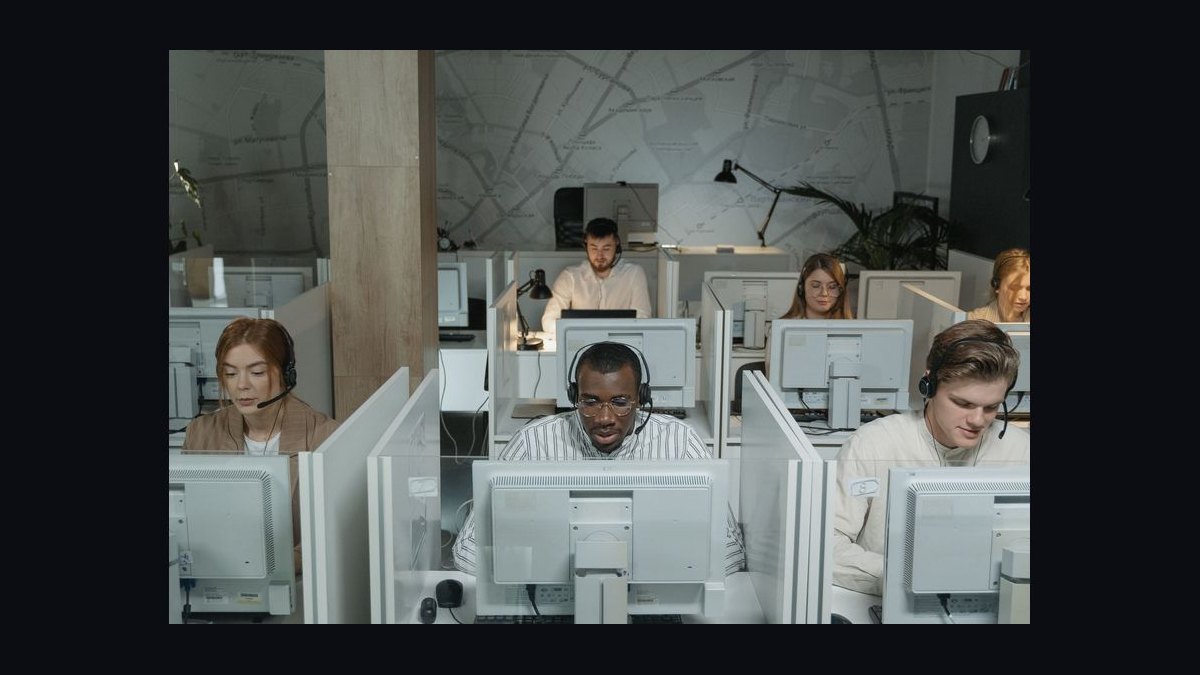
For SMBs with under 10 agents, HubSpot Service Hub + ChatSpot is a lightweight, affordable option that is tightly integrated with HubSpot's marketing and sales tools. The diagram below provides a visual decision tree based on these criteria:
How does the human-AI collaboration model redefine support agent roles in 2027?
The 2027 helpdesk stack does not eliminate human agents—it redefines their roles around high-value, complex, and emotionally sensitive interactions. With AI handling tier-0 and tier-1 queries autonomously (password resets, account status checks, billing inquiries, basic troubleshooting), the volume of tickets reaching human agents drops dramatically, often by a significant majority. This allows teams to operate with smaller, more specialized headcounts focused on complex technical problems, escalations from AI agents, and strategic accounts where relationship building is critical.

Human agents become "experience specialists" rather than ticket processors. Their performance is measured on resolution quality, customer sentiment improvement, and contribution to revenue expansion, not just speed. The helpdesk stack supports this by providing agents with a "co-pilot" interface: the AI suggests possible solutions, summarizes the customer's history, and even drafts responses, which the agent can review, edit, and approve. This reduces cognitive load and allows agents to focus on empathy, judgment, and problem-solving. For example, when a customer mentions a need for advanced analytics, the AI surfaces a prompt like "This customer mentioned a need for advanced analytics—offer a demo of the premium tier," enabling the agent to act on expansion opportunities in real time.
The career path for support agents evolves significantly in 2027. Entry-level support roles are largely automated, so new hires start as "AI trainers" who review and improve the AI agent's responses, or as "experience specialists" who handle escalations. Senior agents move into roles like "customer success engineer" or "revenue support consultant," where they work closely with sales and product teams to identify product improvements and expansion opportunities. The helpdesk stack tracks each agent's contributions to revenue and customer health, creating a clear link between support work and business outcomes. For RevOps leaders, this model reduces labor costs while improving customer experience, but it requires change management: support leaders must retrain existing teams, redefine job descriptions, and adjust compensation models to reward quality and revenue impact rather than ticket volume.

What are the operational KPIs and benchmarks for the 2027 helpdesk stack?
The 2027 helpdesk stack is measured by a combination of traditional customer service metrics and new revenue-focused KPIs that reflect its evolution from a cost center to a revenue engine. Traditional metrics remain important but are recontextualized: First Contact Resolution (FCR) targets a high percentage, with AI-assisted resolution driving improvements; Average Handle Time (AHT) is lower for human agents and much lower for AI; and Customer Satisfaction (CSAT) remains high for both AI-resolved and human-resolved tickets, with AI achieving parity through advances in natural language understanding and sentiment detection.
New revenue-focused KPIs include Deflection Rate (the majority of inbound queries resolved by AI, reducing human workload), Revenue Impact (support-driven expansion revenue contributing a meaningful portion of new ARR), and Net Revenue Retention (NRR) improvement correlated with support interaction quality. The helpdesk stack itself provides analytics dashboards that show AI performance, human handoff rates, and the revenue impact of support interactions, enabling RevOps leaders to measure the direct contribution of support to top-line growth. Industry benchmarks suggest that companies with mature AI orchestration see a significant reduction in human-handled tickets, while those that connect support data to revenue intelligence tools like Clari and Gainsight achieve higher forecast accuracy and lower churn rates.

For RevOps teams, the key is to track both operational efficiency (cost per ticket, resolution time) and revenue outcomes (expansion revenue, churn reduction). The helpdesk stack's analytics layer should provide a unified view of these metrics, linking support interactions to downstream revenue events. This requires integration between the helpdesk, CRM, and revenue intelligence platforms, ensuring that every support interaction is tagged with relevant MEDDPICC criteria and fed into forecasting models. By 2027, companies that have mastered this measurement framework are seeing support contribute directly to quarterly revenue targets, with support teams participating in pipeline generation and account planning meetings.
How does the helpdesk stack support vendor consolidation trends in 2027?
The market for customer support and helpdesk tools has consolidated into three tiers by 2027, driven by the need for integrated AI, knowledge management, and revenue intelligence. The Enterprise Suite tier is dominated by Salesforce Service Cloud + Einstein + Tableau, which provides a fully integrated platform for companies with a large number of agents. Salesforce's acquisitions of Slack (2021) and Tableau (2019) have deepened the helpdesk ecosystem, enabling real-time collaboration and advanced analytics within the CRM. This suite is preferred by organizations that prioritize a single source of truth and have the budget for a comprehensive platform.

The Mid-Market Best-of-Breed tier consists of Intercom + Zendesk AI + Guru, preferred by companies with a moderate number of agents that want a standalone, AI-first experience. Intercom launched Fin in 2023, and by 2027 it handles a significant portion of tier-1 queries autonomously. Zendesk acquired Tymeshift (workforce management) in 2022 to strengthen its offering, and Guru provides the unified knowledge backbone. This tier offers flexibility and lower total cost of ownership compared to enterprise suites, making it attractive for growth-stage companies.
The SMB Native tier is HubSpot Service Hub + ChatSpot, tightly integrated with HubSpot's marketing and sales tools for smaller teams. For very small teams, Intercom with Fin is also viable, though costs scale with volume. The key evaluation criteria for buyers in 2027 is no longer feature lists but the depth of AI agent integration and the breadth of the knowledge graph's reach across the organization. Vendors that offer these capabilities natively are winning over those that require third-party integrations to achieve similar functionality, driving further consolidation toward platforms that can deliver the full stack out of the box.

Related questions
What is the role of Gong in the 2027 customer support stack?
Gong (or Chorus.ai) is used for post-sale conversation intelligence, analyzing support calls for sentiment, objection handling, and upsell opportunities, bridging the gap between support and revenue teams.
How does support data feed into MEDDPICC qualification?
Support tickets provide direct evidence of Pain (frequent issues), Champion (escalating users), Competition (feature comparisons), and Decision Criteria (feature requests), which Clari ingests to update deal scores.
Can a small team with under 10 agents use this stack effectively?
Yes, HubSpot Service Hub + ChatSpot provides a lightweight, affordable stack, while Intercom with Fin is also viable for very small teams, though costs scale with volume.
What is the biggest mistake companies make with the 2027 helpdesk stack?
Treating the helpdesk as a cost center rather than a revenue engine, failing to connect support data to Clari or Gainsight, and missing expansion signals and churn predictors.
How do I measure ROI of the AI-powered helpdesk stack?
Track deflection rate (cost saved per ticket), expansion revenue (upsells from support interactions), and churn reduction (based on ticket sentiment analysis), targeting a strong ROI for AI investments.
FAQ
What is the single most important tool in the 2027 support stack? The AI orchestration layer (e.g., Intercom Fin or Zendesk AI) is the most critical because it determines deflection rates, agent productivity, and data quality for revenue intelligence.
How does support data feed into MEDDPICC? Support tickets provide direct evidence of Pain (frequent issues), Champion (escalating users), Competition (feature comparisons), and Decision Criteria (feature requests), which Clari ingests to update deal scores.
Can a small team (<10 agents) use this stack effectively? Yes, HubSpot Service Hub + ChatSpot (AI assistant) provides a lightweight, affordable stack for smaller teams, while Intercom with Fin is also viable for very small teams.
What is the biggest mistake companies make in 2027? Treating the helpdesk as a cost center rather than a revenue engine, failing to connect support data to Clari or Gainsight, and missing expansion signals and churn predictors.
How do I choose between Salesforce Service Cloud and Intercom? If your CRM is Salesforce and you have a large number of agents, go with Service Cloud + Einstein. If you want a standalone, AI-first experience with lower total cost of ownership, choose Intercom + Zendesk AI.
What role does Gong play in the support stack? Gong (or Chorus.ai) is used for post-sale conversation intelligence: analyzing support calls for sentiment, objection handling, and upsell opportunities, bridging the gap between support and revenue teams.
How do I measure ROI of the support stack? Track deflection rate (cost saved per ticket), expansion revenue (upsells from support interactions), and churn reduction (based on ticket sentiment analysis), targeting a strong ROI for AI investments.
What is the federated knowledge graph and why is it important? A federated knowledge graph replaces the old static knowledge base by pulling information from multiple sources (product docs, engineering wikis, sales playbooks, community forums) into a dynamic, interconnected network that the AI agent queries in real time.
How do support agents become "experience specialists"? Human agents handle complex problems, escalations, and strategic accounts, with the AI providing a co-pilot interface that suggests solutions, summarizes history, and drafts responses, allowing agents to focus on empathy and judgment.
What is the career path for support agents in 2027? Entry-level roles become AI trainers or experience specialists, while senior agents move into customer success engineer or revenue support consultant roles, with tracking of their contributions to revenue and customer health.
Sources
- Gartner: AI in Customer Service 2027
- Forrester: The Future of Customer Service Technology
- McKinsey: The State of AI in Customer Operations
- Gong Labs: Support Conversations and Revenue Impact
- SaaStr: Why Support is the New Sales
- Bessemer: Cloud 100 Benchmarks
- Zendesk: AI and Automation in Customer Service
- Intercom: Fin AI Agent Performance
- Salesforce: Service Cloud Einstein Overview
- Clari: Revenue Intelligence for Support Teams
Related on PULSE
- What is the best tech stack for a virtual healthcare or telemedicine startup in 2027?
- What is the best tech stack for a private equity portfolio company in 2027?
- What is the best tech stack for a cannabis dispensary chain in 2027?
- What is the best tech stack for a property and casualty insurance broker in 2027?
- What is the recommended sales and operations tech stack for a managed IT services provider (MSP) in 2027?
This page will be disappearing soon. Save it to your device for $1 — or read it free while it is here.
@Kory-White- · if Venmo asks, the last 4 of my number are 2012
This page is gone.
This one is off the shelf now. $1 keeps it on your phone for good — the whole page, pictures and diagrams included.
 pulse-tech-stacksFull-Stack JavaScript Tools for Solo Freelance Web Developers
 tkWhat should you know before investing in Tech Stacks in 2027?
 pulse-tech-stacksThe Multimodal Search Stack for Legal Document Discovery in 2027
 pulse-tech-stacksThe K-12 School District EdTech Stack in 2027
 pulse-tech-stacksThe Field Service Management Stack for HVAC and Plumbing in 2027
 pulse-tech-stacksThe Podcast and Video Content Production Stack in 2027
 pulse-tech-stacksThe Open-Weight LLM Stack for Academic Research Labs in 2027
 pulse-tech-stacksIs Tech Stacks worth it in 2027?
 pulse-tech-stacksThe Digital Twin Stack for Pharmaceutical Clean Rooms in 2027
 pulse-tech-stacksThe Identity and Access Management (IAM) Stack in 2027