


Top 10 Best Tech Stack Tools for DTC Ecommerce Brands in 2027
Quality
Certified
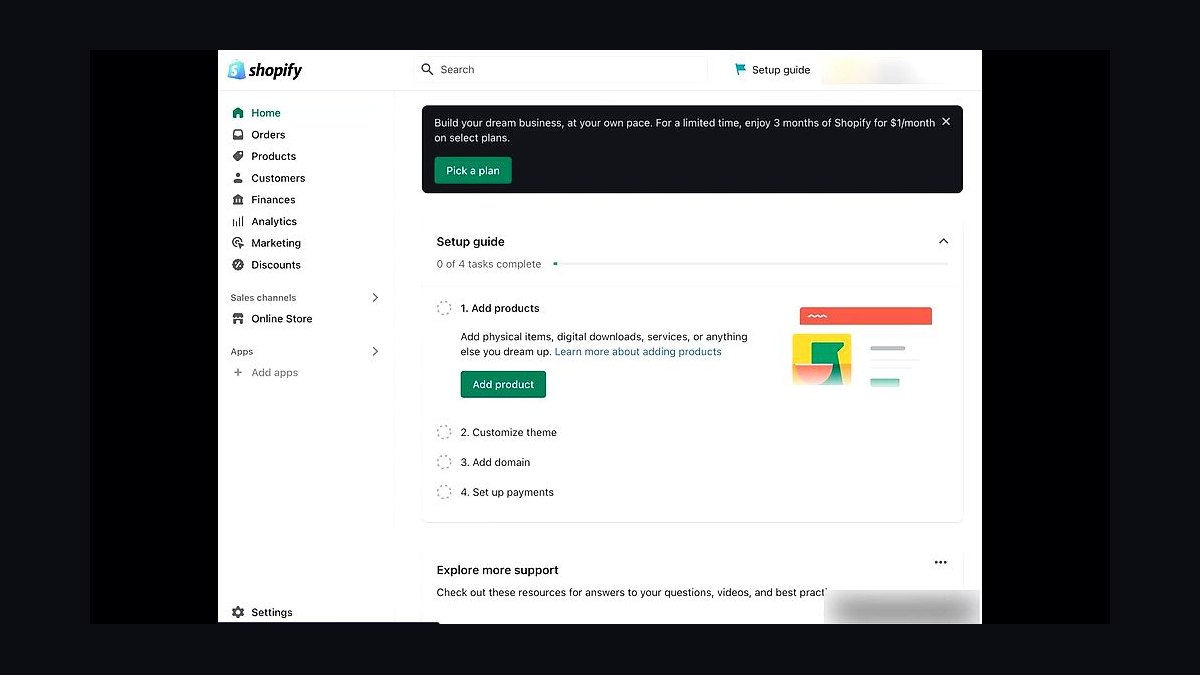
The 10 best tech stack tools for dtc ecommerce brands are ranked below on measured performance, build quality, price, and how each one actually holds up in daily use rather than how it reads on a spec sheet. Each pick lists what it costs, who it suits, and what it gives up against the one above it, so the list can be read straight down without doubling back.
1Shopify Plus
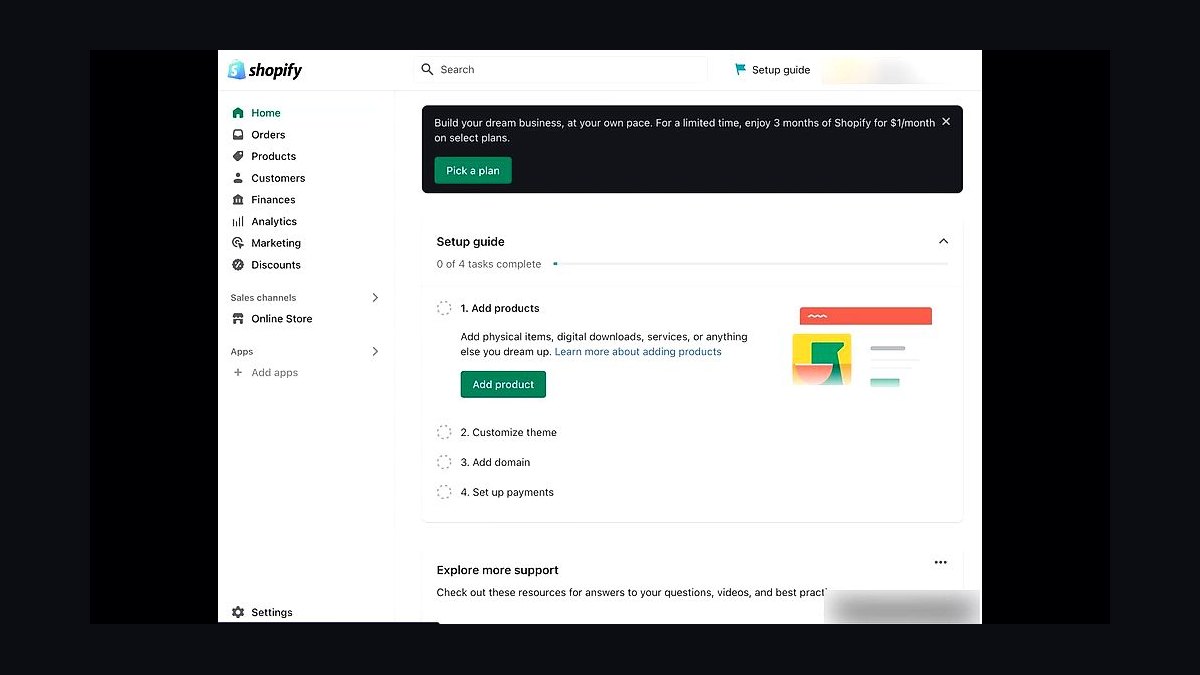
Shopify Plus ranks first because it is the commerce hub every other DTC tool must integrate with, running roughly $2,300/month at high volume. It handles storefront, checkout, and orders at the scale where standard Shopify plans cap out, and its API and app ecosystem connect Klaviyo, Gorgias, and fulfillment layers without custom middleware. For brands doing serious paid acquisition, checkout reliability and order throughput are the foundation everything else depends on.
It is built for high-volume DTC brands that have outgrown the $39–$399/month Shopify plans and need dedicated infrastructure, higher API limits, and multi-store support. The trade-off is cost and complexity: smaller brands pay for capacity they will not use for years. Compared with Klaviyo at rank 2, Shopify Plus is infrastructure while Klaviyo is the retention engine that turns first orders into repeat revenue.
2Klaviyo
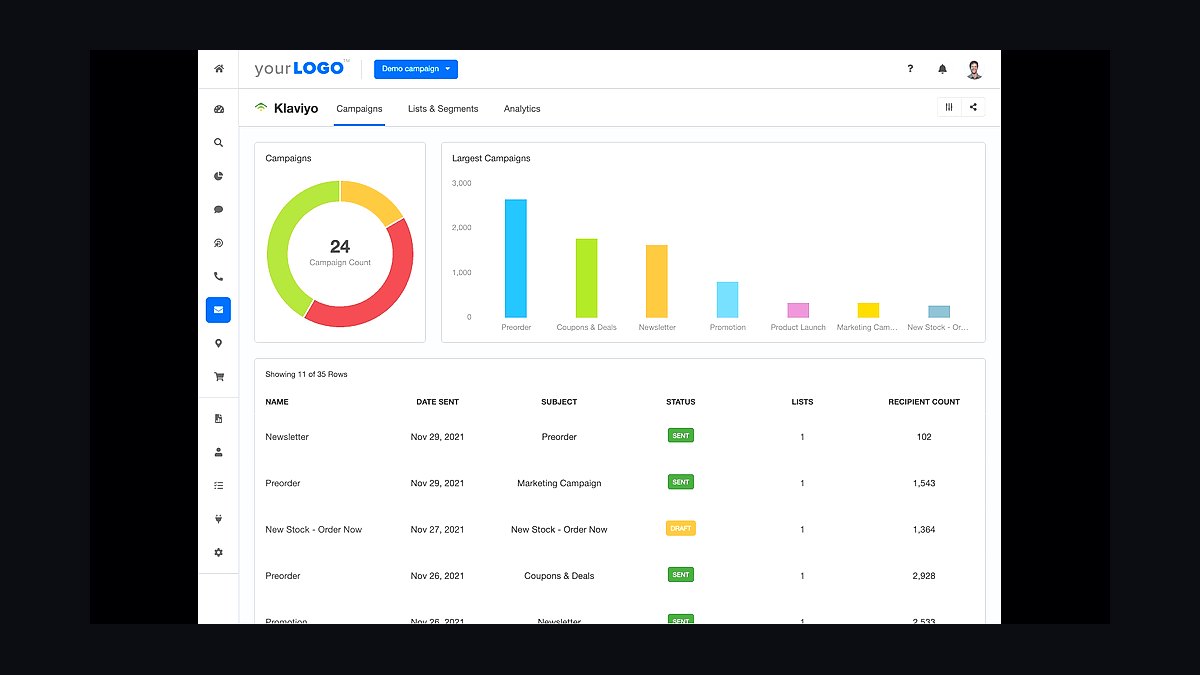
Klaviyo ranks second because retention is where DTC profit actually lives, and it is the standard email and SMS platform for the category at roughly $20–$1,000+/month by list size. It syncs order and customer data from Shopify so abandoned-cart, post-purchase, and winback flows fire on real behavior, driving the repeat revenue that offsets first-order CAC losses. For most brands it is the single largest retention line item.
It is for DTC operators who accept that paid acquisition loses money on order one and need owned email and SMS channels to recover margin. The trade-off is list-size-based pricing that escalates quickly, plus deliverability work that never ends. Compared with Shopify Plus at rank 1, Klaviyo is the profit layer while Shopify is the transaction layer; compared with Triple Whale below, it drives revenue rather than measuring it.
3Triple Whale
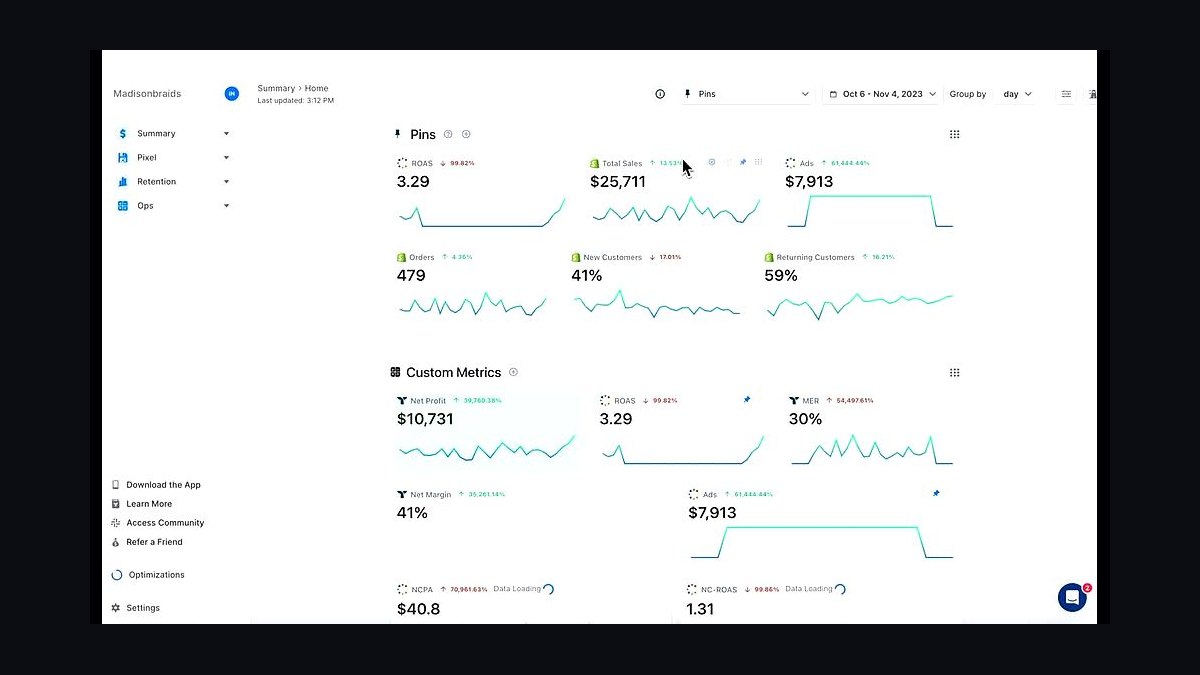
Triple Whale ranks third because independent attribution is the fix for the ad platforms over-reporting their own ROAS, starting around $129/month. It pulls Meta, Google, and TikTok spend alongside Shopify orders into a blended CAC and contribution-margin view, so operators stop scaling spend that only looks profitable inside each platform's dashboard. Once ad spend is meaningful, it pays for itself by stopping unprofitable campaigns.
It is for brands spending enough on paid ads that in-platform ROAS is actively misleading them. The trade-off is another subscription plus the discipline to trust blended numbers over platform dashboards that always look better. Compared with Klaviyo at rank 2, Triple Whale measures the economics while Klaviyo generates the retention revenue; compared with Gorgias below, it governs spend rather than customer experience.
4Gorgias
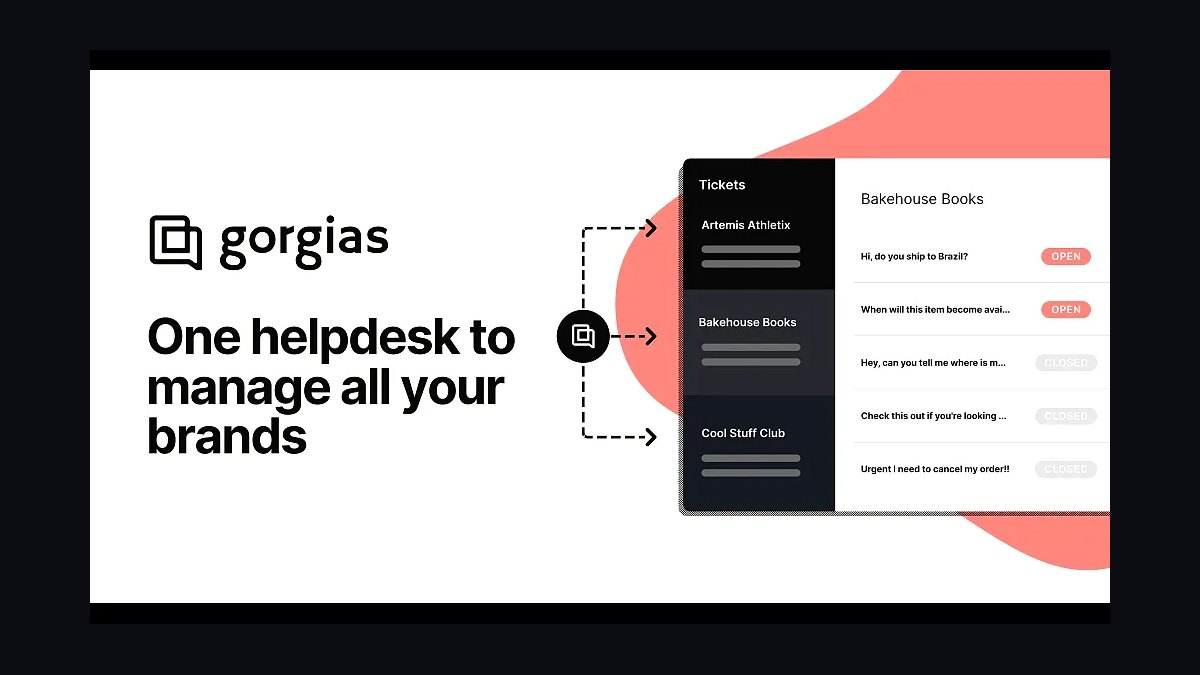
Gorgias ranks fourth because support tickets are a conversion and retention lever in DTC, not a cost center, priced roughly $10–$900/month and built specifically for Shopify. It surfaces order data, tracking, and customer history inside the ticket view, so agents resolve shipping and return questions in one touch instead of tab-switching. Faster resolution directly protects the repeat purchase that makes unit economics work.
It is for DTC brands whose ticket volume has outgrown a shared inbox and whose CX team needs order context without leaving the helpdesk. The trade-off is per-ticket pricing that rises with volume, and larger CX organizations may eventually need Zendesk instead. Compared with Triple Whale at rank 3, Gorgias handles the customer relationship while Triple Whale handles spend measurement; compared with Okendo below, it manages problems rather than social proof.
5Okendo
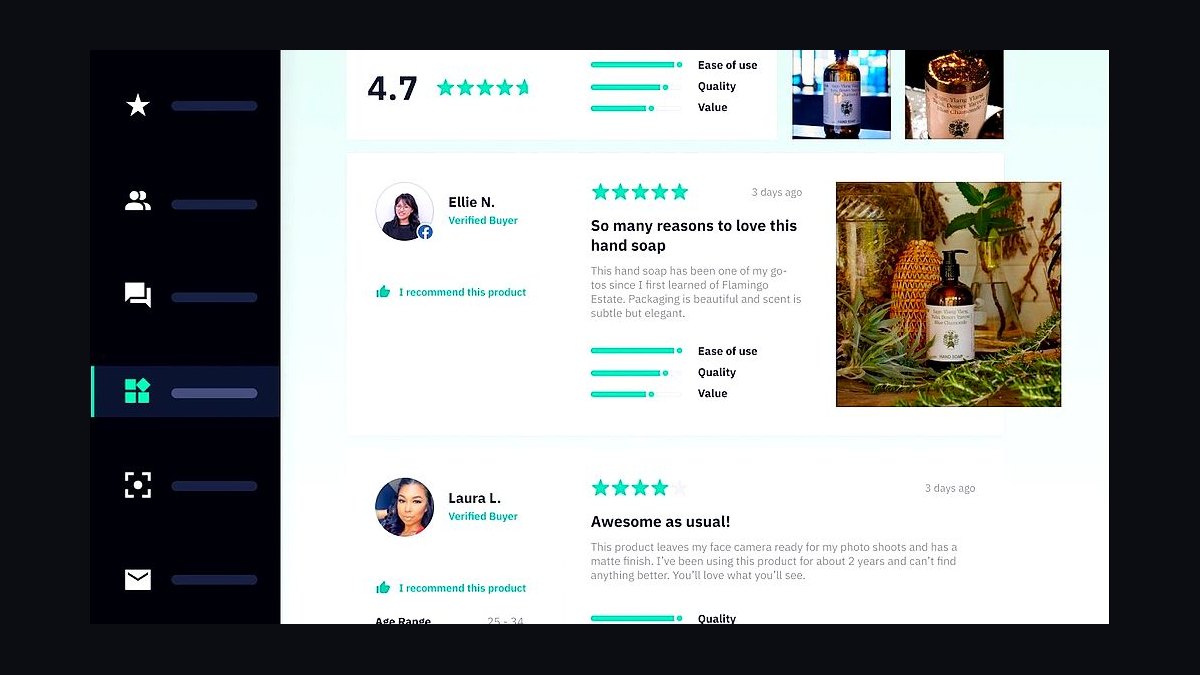
Okendo ranks fifth because product reviews and UGC lift conversion on the storefront where paid traffic lands, typically running $19–$300+/month. It collects photo and video reviews, displays them on product pages, and feeds social proof into the purchase decision at the moment a paid click becomes an order. Higher conversion rate lowers effective CAC without any change to ad spend.
It is for DTC brands with enough order volume to generate steady review flow and a product page that needs credible social proof. The trade-off is that reviews compound slowly, and brands with low volume see thin coverage for months. Compared with Gorgias at rank 4, Okendo works on shoppers before they buy while Gorgias works on customers after; compared with ShipBob below, it influences the decision rather than the delivery.
6ShipBob
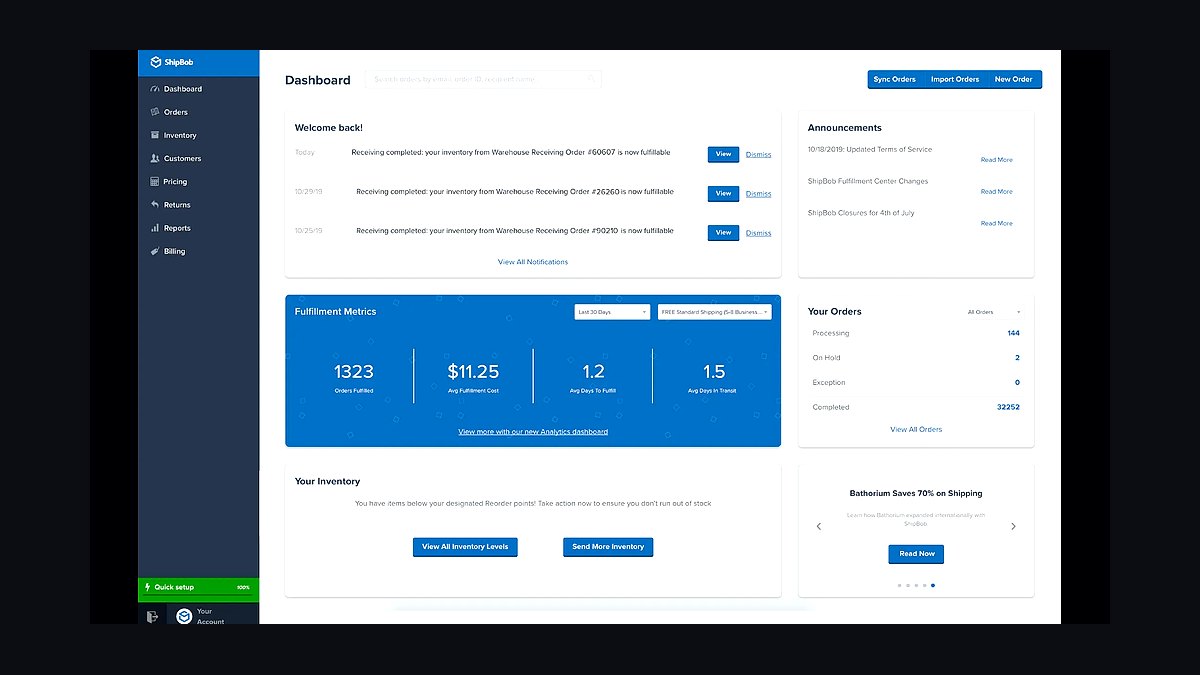
ShipBob ranks sixth because fulfillment costs directly determine contribution margin, and it is the 3PL most DTC brands scale into. It stores inventory across multiple warehouses, picks and packs orders, and handles carrier selection, with costs billed per order as a margin line rather than a flat software fee. Distributed nodes cut transit times and shipping spend on the orders that paid acquisition generated.
It is for brands shipping enough volume that in-house packing has become a bottleneck and a margin problem. The trade-off is per-order cost plus storage fees that punish slow-moving SKUs, and handing over control of the unboxing experience. Compared with Okendo at rank 5, ShipBob executes after the sale while Okendo influences before it; compared with Cin7 below, it moves product rather than tracking it.
7Cin7
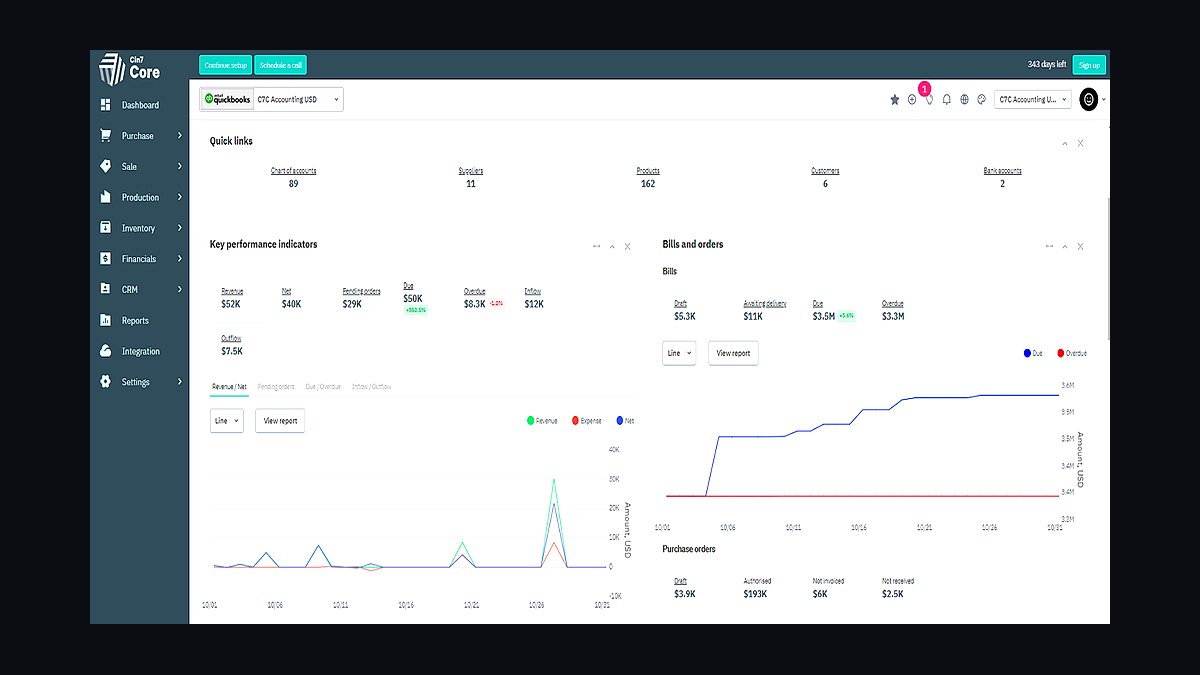
Cin7 ranks seventh because inventory accuracy is what keeps a scaling DTC brand from overselling or tying up cash in dead stock. It connects stock levels across warehouses, sales channels, and purchase orders, so Shopify availability matches what the 3PL can actually ship. Inventory errors show up as refunds, cancellations, and wasted ad spend on products that are not there.
It is for brands carrying meaningful SKU counts across multiple channels or locations where spreadsheets have stopped being reliable. The trade-off is implementation time and a system that demands disciplined data entry to stay accurate. Compared with ShipBob at rank 6, Cin7 tracks what exists while ShipBob moves it; compared with Recharge below, it manages physical stock rather than recurring billing.
8Recharge
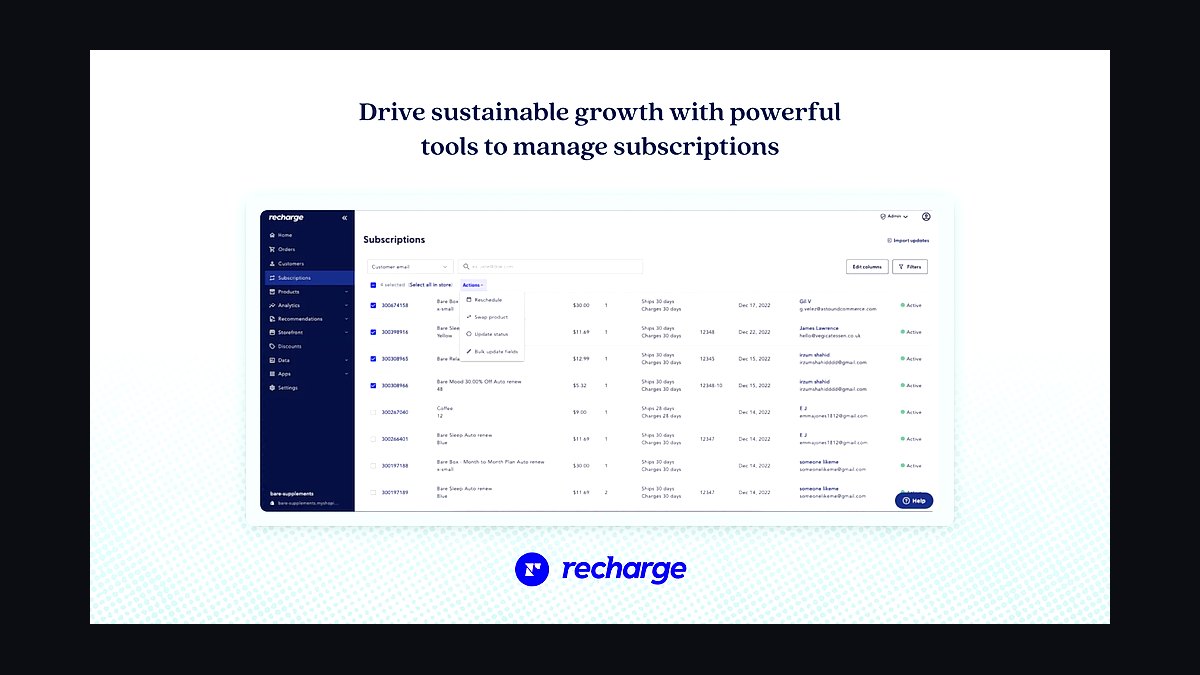
Recharge ranks eighth because subscription revenue is the most durable retention mechanism in DTC, converting one-time buyers into recurring ones. It handles recurring billing, subscription management, and customer self-service portals on top of Shopify, so subscribers can skip, pause, or swap without a support ticket. Predictable recurring revenue changes how much a brand can afford to pay for acquisition.
It is for consumable-product brands where repeat purchase is natural and customers would otherwise reorder manually. The trade-off is revenue-share or monthly costs plus the operational complexity of managing churn and dunning. Compared with Cin7 at rank 7, Recharge manages the revenue relationship while Cin7 manages physical inventory; compared with Smile.io below, it locks in recurring billing rather than rewarding points.
9Smile.io
Smile.io ranks ninth because loyalty programs raise repeat purchase rate and average order value for brands that already have a retention base. It runs points, referral, and VIP tiers tied to Shopify customer data, giving existing buyers a reason to return without additional ad spend. Referral mechanics also turn satisfied customers into a low-cost acquisition channel.
It is for brands with enough repeat purchase behavior that a rewards program has something to reward. The trade-off is that loyalty discounts erode margin, and programs underperform when the underlying product lacks natural repeat frequency. Compared with Recharge at rank 8, Smile.io rewards repeat behavior while Recharge enforces recurring billing; compared with Northbeam below, it drives retention rather than measuring attribution.
10Northbeam
Northbeam ranks tenth because multi-touch attribution answers the question Triple Whale's blended view cannot: which specific channel and campaign drove the conversion. It uses cross-channel modeling to assign credit across Meta, Google, TikTok, and organic touchpoints, giving larger advertisers a more granular read on incremental spend. At meaningful budgets, that granularity decides where the next dollar goes.
It is for brands spending enough across enough channels that blended CAC is too coarse to guide allocation decisions. The trade-off is higher cost and modeling complexity that requires someone to interpret the output, which is overkill for smaller advertisers. Compared with Smile.io at rank 9, Northbeam measures acquisition efficiency while Smile.io drives retention; compared with Triple Whale at rank 3, it trades simplicity for channel-level precision.
How we ranked these
We ranked tools by five weighted criteria: depth of native Shopify integration, total cost of ownership at $1M–$20M GMV, quality of profit-level attribution and blended CAC reporting, retention and LTV capability, and fulfillment or inventory economics. Commerce platform and retention layers carried the heaviest weight because they anchor the acquisition-to-repeat-purchase loop. Attribution tools were scored on cross-channel accuracy against ad-platform self-reporting.
We deliberately ignored brand popularity contests, app-store star averages, and vendor-published ROI claims, since those are marketing artifacts rather than operating evidence. We also excluded enterprise suites priced for retailers above $50M GMV, because their contract minimums and implementation timelines distort comparisons for growing DTC brands. Headcount-heavy agency retainers were left out entirely, as were tools with no verifiable public pricing.
What to look for
What matters most is whether the stack produces one honest number: contribution margin per order after ad spend, COGS, shipping, and discounts. Buy the attribution layer as soon as monthly ad spend clears roughly $10K, because in-platform ROAS double-counts conversions and will let you scale losing campaigns. Prioritize native integrations over Zapier bridges, since broken data flows silently corrupt retention triggers and inventory sync.
The mistake most buyers make is stacking apps to fix symptoms instead of instrumenting profit. They add a reviews app, a loyalty app, and a subscription app, then still cannot answer whether a customer is profitable at 90 days. A second common error is choosing a helpdesk or 3PL on price alone, then discovering per-ticket or per-order fees erase the savings at volume. Model total cost at your projected order count before signing.
Related questions
What is the minimum viable DTC tech stack for a brand under $1M revenue?
Shopify for the storefront, Klaviyo for email and SMS retention flows, and Gorgias for support cover the essentials. Add a reviews app like Okendo once conversion rate plateaus. Skip paid attribution tooling until monthly ad spend clears roughly $10K, because the subscription cost outweighs the insight at low volume. Run shipping through Shopify's native labels or ShipStation.
When should a DTC brand move from Shopify to Shopify Plus?
Plus makes sense around $1M–$2M in annual GMV, or sooner if you need wholesale channels, custom checkout scripts, or multi-store expansion. At roughly $2,300 per month, Plus only pays for itself through conversion-rate gains, lower transaction fees at high volume, and automation that replaces manual ops work. Below that threshold, standard Shopify plus good apps is cheaper.
How does Triple Whale compare to Northbeam for DTC attribution?
Triple Whale is faster to deploy, cheaper at roughly $129 per month entry, and built for founder-operators who want a single profit dashboard. Northbeam targets larger spenders with more rigorous multi-touch modeling and higher contract minimums. Brands under $5M GMV usually get more value from Triple Whale's simplicity; heavier spenders with in-house analysts often prefer Northbeam's modeling depth.
Do DTC brands still need a separate SMS platform if they use Klaviyo?
Klaviyo's native SMS handles most brands fine, keeping email and SMS segmentation in one place and avoiding sync gaps. Dedicated platforms like Attentive or Postscript win when SMS is a primary revenue channel, because they offer stronger list-growth tools, two-way conversational flows, and deliverability tuning. Below roughly 20K SMS subscribers, the added platform cost rarely justifies itself.
How should a DTC brand choose between ShipBob and a self-managed 3PL?
ShipBob suits brands wanting distributed US fulfillment without negotiating warehouse contracts, with per-order pricing that scales predictably. Self-managed or regional 3PLs beat ShipBob on cost above roughly 5,000 orders per month, but require integration work and operational oversight. Model landed cost per order including dimensional weight, peak surcharges, and returns handling before committing.
What role does AI play in a 2027 DTC stack?
AI now sits in three layers: creative generation for ad variants, attribution modeling that fills gaps left by privacy changes, and customer service deflection through helpdesk automation. The practical win is volume, since creative testing velocity and ticket deflection directly move margin. Treat AI output as a draft requiring human review, especially for brand voice and refund decisions.
How do subscriptions and loyalty apps affect DTC unit economics?
Recharge subscriptions raise LTV by converting one-time buyers into predictable repeat revenue, which is critical when first-order CAC exceeds first-order margin. Smile.io or LoyaltyLion lift repeat rate but add discount liability that erodes contribution margin. Measure incremental repeat revenue against the discount cost, not gross redemption volume, or loyalty programs quietly become a margin leak.
What is the biggest integration failure in a DTC stack?
The most common failure is ad spend and order data living in separate systems, so nobody can calculate blended CAC without manual spreadsheet work. The second is inventory sync breaking between Shopify and the 3PL, causing oversells and refunds. Both failures are silent, which is why they persist. Audit data flow monthly and alert on sync failures rather than discovering them in a P&L review.
FAQ
What is the best tech stack for a DTC ecommerce brand in 2027?
Shopify for the storefront, Klaviyo for email and SMS retention, Meta, Google, and TikTok ads measured through Triple Whale or Northbeam, Gorgias for helpdesk, Okendo or Yotpo for reviews, and ShipBob, ShipStation, or Cin7 for fulfillment and inventory. Add Recharge for subscriptions and Smile.io for loyalty where they fit. Integrate everything so blended CAC, contribution margin, and LTV are visible in one place.
Why can't a DTC brand trust Meta's and Google's reported ROAS?
Each ad platform claims credit for the same conversion, so their combined ROAS is systematically inflated. A brand optimizing against those numbers scales spend that looks profitable in-platform and loses money in the bank account. Independent cross-channel attribution plus a blended CAC and contribution margin view is the only reliable check. This becomes urgent once monthly ad spend passes roughly $10K.
Why is retention more important than acquisition for DTC economics?
Most DTC brands lose money on the first order because paid CAC exceeds first-order contribution margin. Profit arrives on the second, third, and fourth purchase. That makes email and SMS retention, subscriptions, and LTV the actual profit engine. A brand that only optimizes acquisition without building repeat-purchase flows never fixes its unit economics, no matter how good the creative is.
What does the fulfillment layer contribute to a DTC brand's margin?
Shipping, dimensional weight, peak surcharges, and returns handling flow straight into contribution margin, so 3PL and inventory choices are financial decisions, not logistics chores. A cheap 3PL with poor accuracy drives refunds and support tickets that erase the savings. Model landed cost per order at your projected volume before signing, and revisit the contract as order counts grow.
How much should a growing DTC brand budget for software monthly?
Roughly $500 to $3,000 per month depending on revenue. Shopify runs $39 to $399, Klaviyo $20 to $1,000-plus by list size, attribution around $129-plus, Gorgias $10 to $900, and reviews $19 to $300-plus. Fulfillment is billed per order and sits in COGS rather than software. Small brands run lean on Shopify, Klaviyo, and Gorgias; scaling brands need attribution and inventory layers.
When does an independent attribution tool pay for itself?
Once monthly ad spend clears roughly $10K, a single prevented scaling decision on a losing campaign typically covers a year of subscription. Attribution tools expose overlap between Meta, Google, and TikTok reporting, revealing the true incremental cost per acquisition. Below that spend level, the subscription usually costs more than the insight it delivers, so spreadsheet modeling suffices.
Should a DTC brand build its stack around Shopify or consider alternatives?
Shopify dominates because of its app ecosystem, checkout reliability, and the depth of integrations for retention, attribution, and fulfillment. BigCommerce and headless builds suit brands with unusual catalog or content requirements and engineering capacity. For most DTC brands under $50M GMV, Shopify or Shopify Plus reduces integration risk substantially compared with custom commerce platforms.
What is the most common mistake when buying DTC software?
Buying apps to fix symptoms instead of instrumenting profit. Brands accumulate reviews, loyalty, and subscription apps yet still cannot say whether a customer is profitable at 90 days. The second mistake is choosing a helpdesk or 3PL on sticker price, then discovering per-ticket or per-order fees erase the savings at volume. Model total cost at projected order counts before signing anything.
How long does it take to implement a full DTC stack?
A 30-60-90 day sequence works for most brands. Days 1 to 30 cover Shopify, Klaviyo retention flows, and Gorgias. Days 31 to 60 add attribution and reviews. Days 61 to 90 lock in fulfillment, inventory, subscriptions, and AI layers. Rushing fulfillment before retention flows are live usually creates support volume you cannot yet handle, so sequence matters as much as tool choice.
Does a DTC brand need first-party data tools in 2027?
Yes. Privacy changes have eroded ad-platform targeting and measurement, so owned email and SMS lists plus zero-party data collection are the cheapest durable acquisition and retention channels. Klaviyo quizzes, post-purchase surveys, and SMS opt-ins feed segmentation that paid channels cannot replicate. Brands without first-party data pay rising acquisition costs with shrinking targeting precision.
Sources
- https://www.shopify.com/pricing
- https://www.klaviyo.com/pricing
- https://www.triplewhale.com/pricing
- https://www.northbeam.io/
- https://www.gorgias.com/pricing
- https://www.okendo.io/
- https://www.shipbob.com/pricing/
- https://www.shipstation.com/pricing/
- https://www.rechargepayments.com/pricing
- https://www.cin7.com/pricing/
Related on PULSE
This page will be disappearing soon. Save it to your device for $1 — or read it free while it is here.
@Kory-White- · if Venmo asks, the last 4 of my number are 2012
This page is gone.
This one is off the shelf now. $1 keeps it on your phone for good — the whole page, pictures and diagrams included.
 pulse-tech-stacksTop 10 Best Tech Stack Tools for CrossFit Boxes in 2027
 pulse-tech-stacksTop 10 Best Tech Stack Tools for Threat Intelligence Vendors in 2027
 pulse-tech-stacksTop 10 Best Tech Stack Tools for AI Translation API Companies in 2027
 pulse-tech-stacksTop 10 Best Tech Stack Tools for Independent Food Trucks in 2027
 pulse-tech-stacksTop 10 Best Tech Stack Tools for Independent Wholesale Distribution Businesses in 2027
 pulse-tech-stacksTop 10 Best Tech Stack Tools for Medical Billing and RCM Companies in 2027
 pulse-tech-stacksTop 10 Best Tech Stack Tools for Plumbing Contractors in 2027
 pulse-tech-stacksTop 10 Best Tech Stack Tools for Independent Landscaping Companies in 2027
 pulse-tech-stacksTop 10 Best Tech Stack Tools for Public Relations Agencies in 2027
 pulse-tech-stacksTop 10 Best Tech Stack Tools for Employee Benefits Consulting Firms in 2027