


Top 10 Best Tech Stack Tools for Microbreweries and Distilleries in 2027
Quality
Certified
The 10 best tech stack tools for microbreweries and distilleries are ranked below on measured performance, build quality, price, and how each one actually holds up in daily use rather than how it reads on a spec sheet. Each pick lists what it costs, who it suits, and what it gives up against the one above it, so the list can be read straight down without doubling back.
1Ekos Brewery ERP

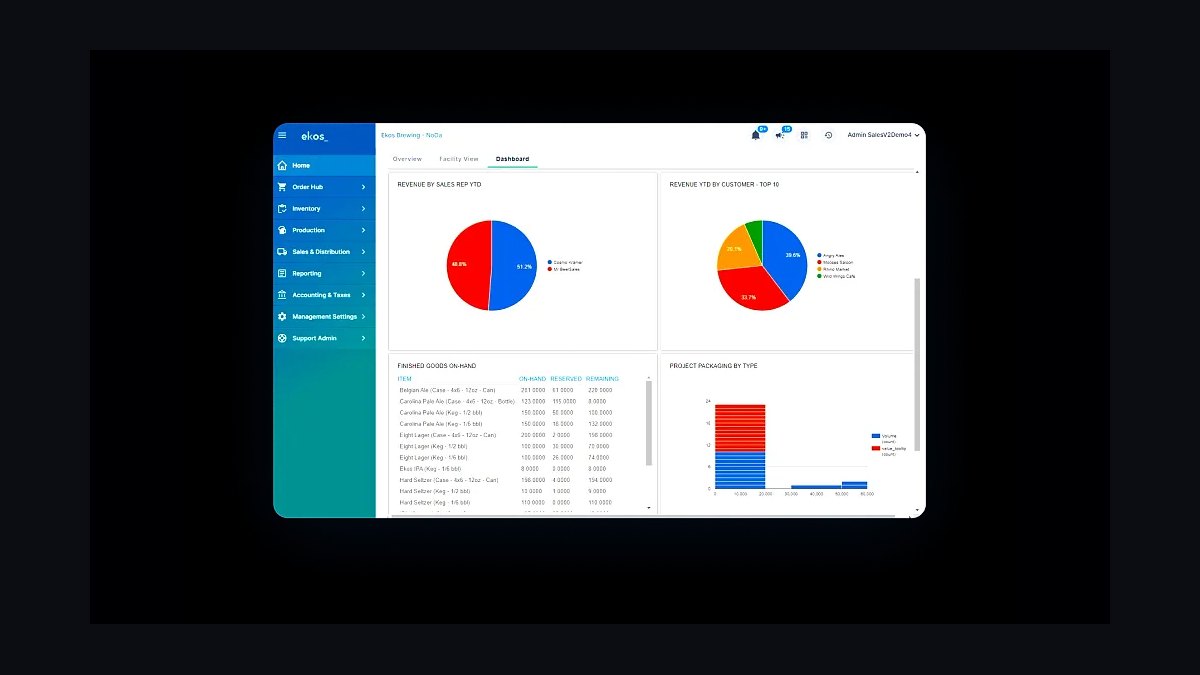
Ekos ranks first because it is the only craft-beverage ERP in this stack that natively handles production, raw-material inventory, finished goods, COGS, and TTB Brewer's Report of Operations from one authoritative record. A logged brew sheet decrements hops and grain automatically rather than relying on a human to subtract them separately. It also carries a spirits configuration for distilleries that need barrel-level tracking and proof-gallon accounting.
It is built for producers past roughly 500 barrels who have outgrown spreadsheets and need one number that every other system reads from. The trade-off is subscription pricing in the low hundreds per month plus a multi-week implementation to build the recipe library and run a physical count. Below 500 barrels, Square for Restaurants plus disciplined spreadsheets covers the same ground for far less.
2BrewNinja Brewery Software

BrewNinja ranks second because it delivers the core production-layer function — batch logging that automatically decrements raw materials — at a price point and setup effort that fits smaller breweries than Ekos targets. Brew sheets capture recipe, actual grain and hop quantities, transfer volumes, and losses, so the whiteboard-in-the-cold-room failure mode disappears. It is the strongest alternative when Ekos feels heavy for a nano or small operation.
It suits breweries that want production discipline without a full ERP commitment, and it trades away the deeper spirits accounting and multi-channel sales integration that Ekos handles. If you are a distillery with multi-year barrel aging and monthly TTB production, storage, and processing reports, Ekos or a spirits-specific tool is the better fit. BrewNinja is the pragmatic middle step.
3Toast Taproom POS

Toast ranks third because taprooms are restaurants, and restaurant POS is a mature, competitive category that a craft-beverage ERP's built-in POS module cannot match on server workflow, tips, coursing, and reporting. Card-present transactions run in the neighborhood of 2.5 to 2.7 percent plus a small fixed per-transaction fee, with hardware for one station in the several-hundred to low-four-figure range. It skews toward full-service kitchens.
It is for taprooms with a real food program and table service where server workflow matters. The trade-off is that Toast knows what was sold and nothing about what exists — it has no concept of a fermenter, a barrel, or grain in a silo, so it must be integrated into the ERP as the system of record. Square for Restaurants is the leaner alternative for counter-service operations.
4Square for Restaurants POS
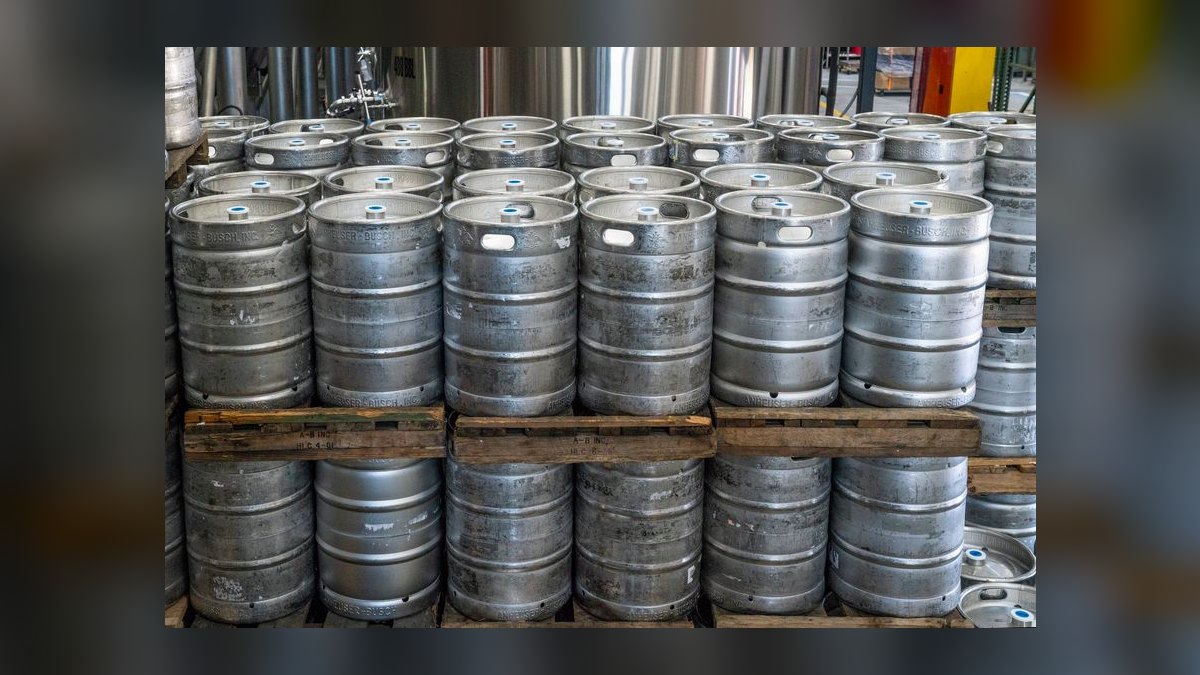
Square for Restaurants ranks fourth because it is the simpler, cheaper taproom POS for counter-service operations where Toast's full-service depth is unused overhead. Flat-rate card processing sits in the same 2.5 to 2.7 percent neighborhood, and a single counter station with terminal, cash drawer, and printer runs several hundred to low four figures. Total software spend can sit under a hundred dollars a month, which matters at nano scale.
It is for nano and small producers with a 60-seat taproom and no coursed dining, where speed of setup beats feature depth. The trade-off versus Toast is weaker table-service workflow and reporting. Like Toast, it must feed sales back into the ERP's finished-goods record — a POS that knows what sold but not what exists is not an inventory system.
5Shopify DTC Storefront
Shopify ranks fifth because direct-to-consumer packaged sales need a storefront that decrements the same finished-goods record as the taproom, and Shopify is the e-commerce platform most commonly used for that in craft beverage. It handles the customer record, order flow, and payment for packaged product, and it is the second sales channel that most often triggers a producer's move off spreadsheets. It integrates with craft-beverage ERPs for inventory sync.
It is for producers shipping cans or bottles direct and running wholesale orders alongside. The trade-off is that its inventory concept is retail SKUs, not fermenters or barrels, so it must read from and write to the ERP rather than own the record. It compares to Toast and Square as the packaged-sales counterpart to their taproom role — three channels, one authoritative count.
6Tilt Wireless Hydrometer
Tilt ranks sixth because it is the cheapest useful layer in the stack — a wireless hydrometer and thermometer on the order of a hundred-plus dollars per unit that sits in the fermenter and reports gravity and temperature over Bluetooth. It replaces pulling a daily sample, which saves labor and reduces contamination risk from repeated sampling. Instrumenting four fermenters is a several-hundred-dollar decision, not a capital project.
It is for breweries whose inventory and costing fundamentals already work and who want to catch a stuck fermentation before it becomes a dumped batch. The trade-off is that sensors solve the problem you have least of — a brewery with accurate fermentation curves and no idea what its grain inventory is has optimized the wrong layer. On larger vessels, inline temperature probes tied to glycol control matter more than gravity.
7Zapier Integration Middleware
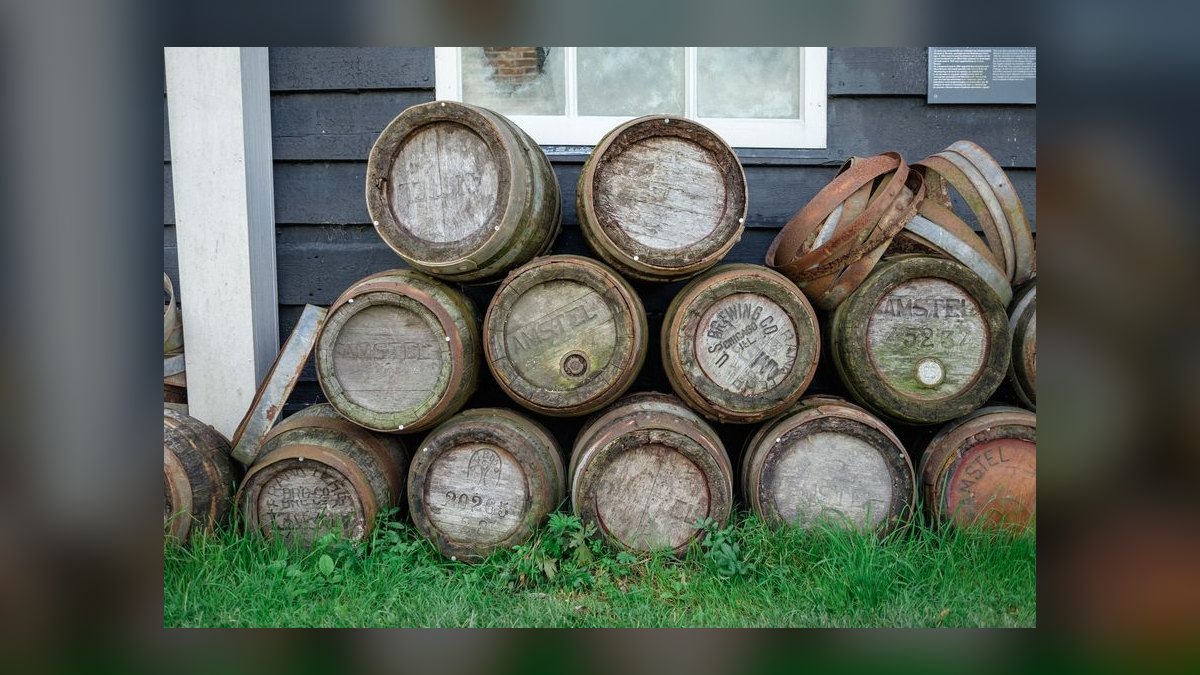
Zapier ranks seventh because it bridges the gaps between POS, storefront, and ERP when a vendor's advertised integration turns out to be a nightly one-way push rather than real-time bidirectional sync. It fires on events and can move a customer record or a sales line between systems without custom code. For a producer patching two tools that do not natively talk, it is faster than waiting on a vendor roadmap.
It is for operations bridging non-critical data paths, not for the sales-to-inventory decrement. The trade-off is that it has no concept of a transaction, it can silently fail, and a broken sync discovered three months later means three months of reconstruction. Using it as the only path by which inventory reaches your books is fragile. Native ERP integration is the right answer for the critical arrow.
8TTB Brewer's Report Operations
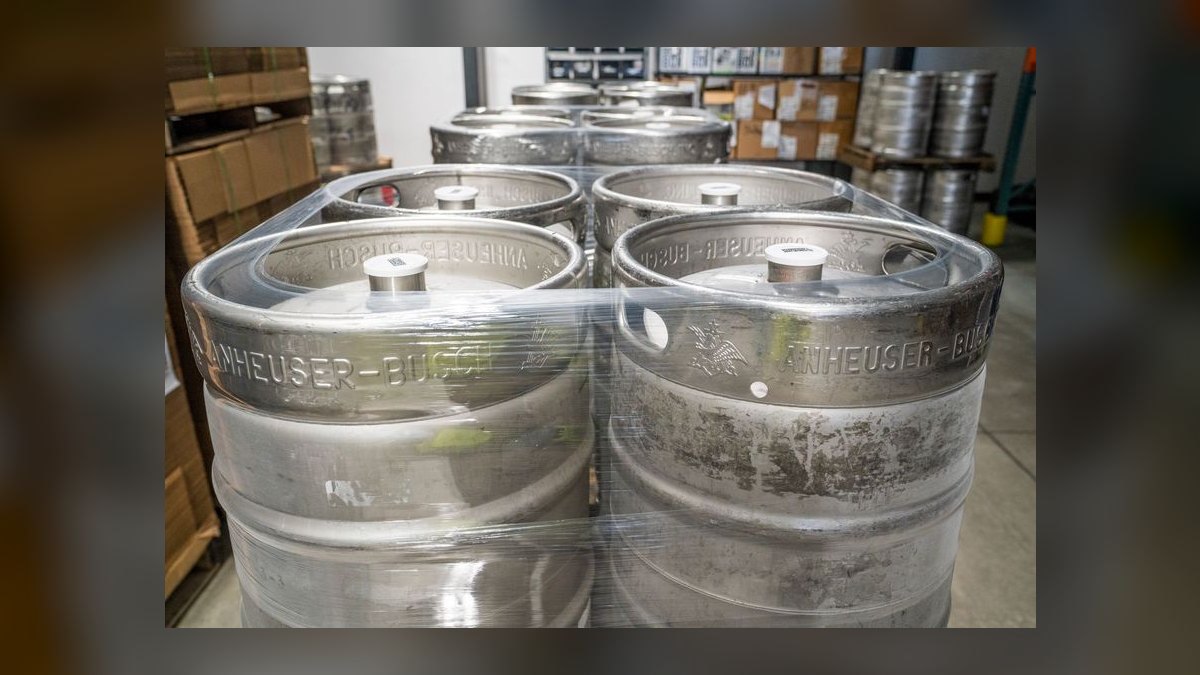
The TTB Brewer's Report of Operations ranks eighth because federal excise and operational reporting is a hard obligation that must pull numbers from the inventory system of record rather than from a human's memory. Assembling it by hand-transcribing production and removal numbers from brew logs takes a day and a half plus the anxiety of a possible amendment. Software that generates it turns that into an hour of review — a dozen-plus days a year recovered.
It is for every brewery filing federally, and the tooling question is whether your ERP produces the form or you export manually. The trade-off is that generated numbers are arithmetic on the data you gave it — if production logs are wrong, the form is confidently wrong, so a human must reconcile against physical reality before filing. You remain responsible for what you file.
9TTB Distilled Spirits Reporting
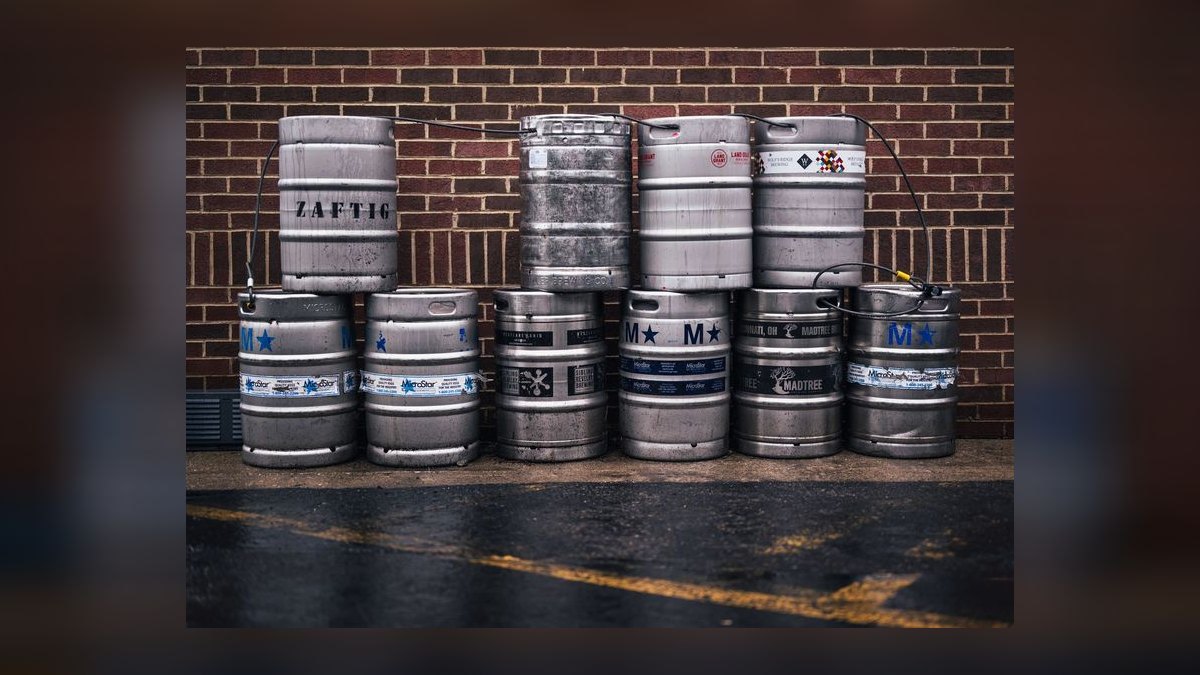
TTB distilled spirits reporting ranks ninth because spirits accounting is a materially heavier lift than beer: proof gallons rather than wine gallons, separate production, storage, and processing accounts, barrel-level tracking through multi-year aging, angel's share losses, and blending or vatting operations combining barrels with different entry dates. A brewery ERP with a spirits checkbox often handles the inventory but not the accounting shape. Monthly reports are mandatory.
It is for distilleries, where losing track of what is in a rickhouse, at what proof, entered in which month, is both a compliance and an asset-valuation problem. The trade-off is that a vendor must demonstrate real monthly report generation against your actual account structure before you sign — not after purchase. It compares to the Brewer's Report as the same obligation at a longer time horizon and worse consequence.
10State ABC Compliance Reporting
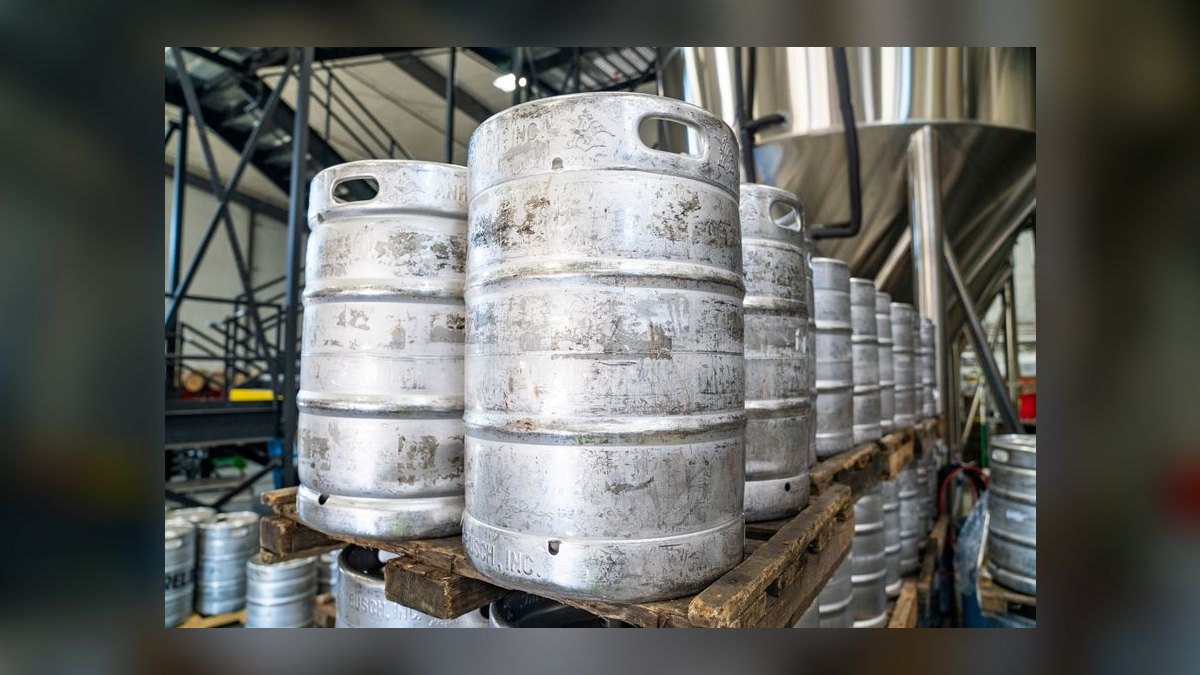
State ABC compliance reporting ranks tenth because state requirements are heterogeneous and much less well covered by software vendors, who focus on uniform federal TTB reporting. Some states want monthly gallonage by county, some want distributor-level reporting, some want almost nothing — and states are frequently more aggressive about enforcement on small producers than the federal side. The honest answer for many stacks is a planned manual export.
It is for any producer selling beyond their own taproom, and the practical step is asking your state's alcohol beverage control agency directly what reports are due and in what format. The trade-off is that this is the layer most likely to be discovered in the last week of a filing period rather than designed. It compares to the federal reports as the obligation vendors cover least and producers underestimate most.
How we ranked these
We ranked tools by weighting four criteria: production-to-inventory integration depth (30%), TTB and state compliance coverage (25%), taproom POS and DTC sales connectivity (25%), and total cost relative to annual revenue (20%). Each tool was scored against a 900-barrel brewery with a 60-seat taproom and self-distribution, plus a distillery variant with proof-gallon accounting.
Integration claims were tested against whether a keg sale actually decrements finished goods in the system of record, not just whether a feature page lists a partner logo.
We deliberately ignored brand recognition, trade-show booth size, and vendor longevity. A tool's age says nothing about whether it models proof gallons correctly or exports your batch history on demand. We also excluded feature-count comparisons and AI marketing claims, because a brewery with accurate grain inventory and no fermentation sensors beats one with beautiful gravity graphs and a wrong hop count every time.
Pricing was treated structurally, not as a quote list, since most vendors negotiate and rates move annually.
What to look for
What matters most is whether the tool makes one number true in one place: how much of a thing exists right now. Ask the vendor to show you, live, what decrements when a keg is tapped and sold in the taproom, and on what interval. Real-time bidirectional sync, nightly batch jobs, and CSV exports all get called integration, but only the first is safe as your inventory backbone.
Second, verify compliance output against your actual account structure, especially for spirits.
The mistake most buyers make is purchasing the ERP before the operational discipline exists to feed it. Software enforces process; it does not create it. A brewery that forgets to log dry-hop additions on paper will forget them in an app, and a paid subscription with stale data produces confident wrong numbers, which is worse than an obviously empty spreadsheet. Fix the logging habit first, then buy software to scale it.
Related questions
Do I need an ERP at all under 500 barrels?
Usually not. A restaurant POS plus a disciplined spreadsheet or an entry-tier production tool covers a nano operation where one person holds the whole picture in their head. The trigger to upgrade is a second production person, a second sales channel, or a distributor relationship — the moment more than one person needs the same number to be true.
Can one system handle both a brewery and a distillery?
Sometimes, but verify the spirits side carefully before signing. Beer and spirits differ in accounting shape: proof gallons rather than wine gallons, separate production, storage and processing accounts, and multi-year barrel aging with angel's share losses. Make any vendor generate a real monthly distillery report against your actual account structure during evaluation, not after purchase.
How much of my revenue should go to software?
For a small producer, roughly one to two percent of revenue across the whole stack is a reasonable sanity check. Meaningfully above that usually means you bought capability ahead of scale. Near zero past a thousand barrels usually means you are paying in shrink, mispricing, and compliance labor instead, just in a form that never shows up as a line item.
What should I set up first if I am opening next year?
POS and an inventory system of record, in that order, with a full physical count on opening day as your baseline. Compliance reporting third, sensors last. Getting the baseline right at launch is far cheaper than reconstructing it two years in, when the whiteboard error has propagated through every downstream number you rely on.
Are fermentation sensors worth it for a small operation?
They are the cheapest useful layer — a wireless hydrometer is a low-hundreds decision per fermenter — and they catch stuck fermentations early while reducing contamination risk from repeated sampling. But they solve the problem you have least of. A brewery with accurate fermentation curves and no idea what its grain inventory is has optimized the wrong layer entirely.
Why is the taproom POS decision separate from the production ERP?
Taprooms are restaurants, and restaurant POS is a mature, competitive category with real depth in server workflow, tips, coursing, and reporting. A production ERP's POS module is usually weaker there. The common resolution — craft-beverage ERP for production and inventory, dedicated restaurant POS for the taproom, connected by an integration — is the right default for most small producers.
What is the biggest hidden cost when switching systems?
Migration without a full physical count. Whatever you import on day one becomes your baseline, and if the baseline is wrong every downstream number inherits the error. Budget a full day, do it when production is idle, and for a distillery that means a proof-gallon accounting of every barrel. It is tedious and non-negotiable.
How do I know if an integration is real or marketing?
Ask the sales rep what exactly decrements when a keg is tapped and sold in the taproom, and on what interval. The honest answers range from real-time API sync to a nightly batch job to a CSV export somebody has to run. Then run an end-to-end test before go-live: log a batch, package it, sell one unit per channel, verify the number moved.
FAQ
What is the best tech stack for a microbrewery in 2027?
Pair a craft-beverage ERP for batch, inventory and TTB reporting with a dedicated taproom POS, a DTC storefront, and optional fermentation sensors — integrated, not all-in-one. Choose by volume: nano operations run lean on POS plus spreadsheets; producers past a few hundred barrels need real ERP. The stack earns its cost only when one inventory number is true everywhere.
What is the best tech stack for a distillery in 2027?
Distilleries need proof-gallon accounting, separate production, storage and processing accounts, and barrel-level tracking through multi-year aging. A brewery ERP with a spirits checkbox often handles inventory but not the accounting shape. Make the vendor demonstrate a real monthly TTB report against your actual account structure before you sign anything, not after.
How does a taproom POS connect to production inventory?
The critical arrow runs from sales back into the inventory record. When a keg is tapped and sold, finished goods should decrement in the system of record automatically. A stack where the POS knows what it sold but the ERP does not is not integrated; it is two systems that happen to be in the same building. Verify the sync interval.
What does a craft-beverage ERP actually cost?
Small-to-mid producers, roughly 500 to 5,000 barrels, should expect subscription pricing in the low hundreds of dollars per month, scaling with volume, user count, and modules. Nano operations can stay under a hundred dollars monthly with POS plus spreadsheets. Above 5,000 barrels or multi-state distribution, the full stack can reach high hundreds to low thousands monthly.
How long does implementation take?
Plan for several weeks of configuration, data migration, and integration testing, plus a full physical count on cutover day. The migration itself is fast; the discipline of getting your baseline right is what takes time. Rushing go-live without an end-to-end test means a broken sync discovered three months later and three months of reconstruction.
Do I need separate tools for DTC and wholesale?
Often yes. DTC runs through a storefront like Shopify, while wholesale orders come from distributors or self-distribution accounts. Both channels need to decrement the same finished-goods record in the system of record. If they write to different places, you will have two versions of the truth and no way to reconcile them at month end.
What compliance reports do breweries and distilleries file?
Breweries file the TTB Brewer's Report of Operations. Distilleries file monthly reports covering production, storage and processing operations, a materially heavier lift. State-level reporting varies enormously and is a separate obligation — some states want monthly gallonage by county, some want distributor-level reporting, some want almost nothing. Plan for state reporting explicitly.
Should I build my own inventory system?
Almost never. The data model looks simple and a technical founder can prototype inventory tracking in a weekend. What you cannot prototype in a weekend is the compliance layer, which changes when regulations change and carries actual penalty exposure. Spend engineering time on things that differentiate your beer or spirits, not on reimplementing excise reporting.
How do I avoid buying software nobody uses?
Fix the logging habit first with whatever tool you already have, then buy software to scale the habit. The most common expensive failure is a fully-paid ERP subscription nobody enters data into, which is strictly worse than a spreadsheet because it produces confident wrong numbers instead of obviously absent ones. Discipline precedes software.
What should I ask before signing a vendor contract?
Confirm you can export your full history — batches, inventory transactions, recipes, customer records — in a usable format, on your own initiative, without a support ticket. Also ask where the free or entry tier caps out and what the upgrade costs. A vendor that hesitates on data export has told you something important about the relationship.
Sources
- https://www.ttb.gov/beer/beer-reporting
- https://www.ttb.gov/spirits/spirits-reporting
- https://www.ekos.com/
- https://www.brew ninja.com/
- https://pos.toasttab.com/
- https://squareup.com/us/en/restaurants
- https://www.shopify.com/
- https://tilthydrometer.com/
- https://www.brewersassociation.org/
- https://www.distilledspirits.org/
Related on PULSE
This page will be disappearing soon. Save it to your device for $1 — or read it free while it is here.
@Kory-White- · if Venmo asks, the last 4 of my number are 2012
This page is gone.
This one is off the shelf now. $1 keeps it on your phone for good — the whole page, pictures and diagrams included.
 pulse-tech-stacksTop 10 Best Tech Stack Tools for Movie Theaters in 2027
 pulse-tech-stacksTop 10 Best Tech Stack Tools for Pilates Studios in 2027
 pulse-tech-stacksTop 10 Best Tech Stack Tools for Pressure Washing Companies in 2027
 pulse-tech-stacksTop 10 Best Tech Stack Tools for Email Security Vendors in 2027
 pulse-tech-stacksTop 10 Best Tech Stack Tools for Software Development Agencies in 2027
 pulse-tech-stacksTop 10 Best Tech Stack Tools for AI Customer Support Companies in 2027
 pulse-tech-stacksTop 10 Best Tech Stack Tools for AI Translation API Companies in 2027
 pulse-tech-stacksTop 10 Best Tech Stack Tools for Plastics and Injection Molding Manufacturers in 2027
 pulse-tech-stacksTop 10 Best Tech Stack Tools for Private Ambulance and EMS Companies in 2027
 pulse-tech-stacksTop 10 Best Tech Stack Tools for MSP and IT Services Companies in 2027