
What Is the Difference Between a Fractional CRO and a Fractional VP of Sales?
 Curated byKory White · Fractional CRO · Maryland
 PULSEKNOWLEDGE LIBRARY
A fractional CRO (Chief Revenue Officer) owns the entire revenue engine — sales, marketing, customer success, RevOps, pricing, and forecasting — on a part-time or interim basis, whereas a fractional VP of Sales owns only the sales function: the pipeline, the quota-carrying reps, and the execution of a defined go-to-market motion. Put simply, the fractional CRO is a cross-functional revenue architect who sets and connects strategy across every team that touches a dollar, while the fractional VP of Sales is a sales-team operator who builds, coaches, and drives a quota-bearing organization toward a number that has already been agreed upon. Choosing between them is less about seniority and more about *scope*: if your bottleneck is misalignment between marketing, sales, and success, you need a CRO; if your bottleneck is that your reps can't consistently close, you need a VP of Sales. The confusion between these two roles is understandable. Both are senior, both are hired part-time by companies that aren't ready for a full-time executive salary, and both promise to "fix revenue." But they solve different problems at different altitudes, and hiring the wrong one is one of the most expensive mistakes an early-stage or scaling company can make. A CRO brought in to do a VP of Sales' job will spend six months building frameworks while your pipeline stalls; a VP of Sales brought in to do a CRO's job will optimize a sales team that keeps handing off to a broken success org. The rest of this page breaks down exactly where the lines fall, when each is the right hire, and how to structure the engagement so you get the outcome you're paying for.
Scope of Ownership: Revenue Engine versus. Sales Engine
The single clearest way to separate these roles is by asking: *what does this person get fired over?* A fractional CRO is accountable for total revenue and the systems that produce it — new business, expansion, retention, and the efficiency of the whole motion. A fractional VP of Sales is accountable for new-business bookings and the performance of the sales team specifically.
What the fractional CRO owns
The CRO sits above the individual go-to-market functions and is responsible for making them work as one system. In practice that means owning the number across the board: pipeline generation targets that marketing is on the hook for, conversion and close rates that sales owns, net revenue retention that customer success owns, and the pricing and packaging decisions that determine how much each closed deal is actually worth. A fractional CRO also typically owns the revenue operations layer — the CRM architecture, the forecast methodology, the reporting stack, and the data hygiene that lets leadership trust the numbers in the first place.

Because the CRO's mandate is cross-functional, a large part of the job is diplomatic and structural rather than tactical. They redesign how leads are scored and handed from marketing to sales, they define the SLA between sales and success at the point of the closed-won handoff, and they build the single source of truth that stops each function from reporting its own flattering version of reality.
What the fractional VP of Sales owns
The VP of Sales operates one layer down and one step narrower. Their world is the sales org: hiring and ramping account executives and SDRs, building the sales process and the stages in the CRM, running the deal reviews, coaching reps on live opportunities, and holding the team to quota. They own the *execution* of a go-to-market motion that has usually already been chosen. If the company has decided it sells to mid-market ops leaders via a two-call demo-and-proposal cycle, the VP of Sales makes that machine run reliably — they don't typically get to re-decide the whole motion, the pricing model, or how success renews the account after the sale.
That narrower scope is a feature, not a limitation. A great fractional VP of Sales can go deep on the mechanics that a broad CRO would never have time to touch: the exact talk track for handling a specific objection, the ramp plan for a new AE's first ninety days, the compensation plan that motivates the right behavior. The trade-off is that they generally won't fix problems that live upstream in marketing or downstream in retention — those are outside their lane by design.
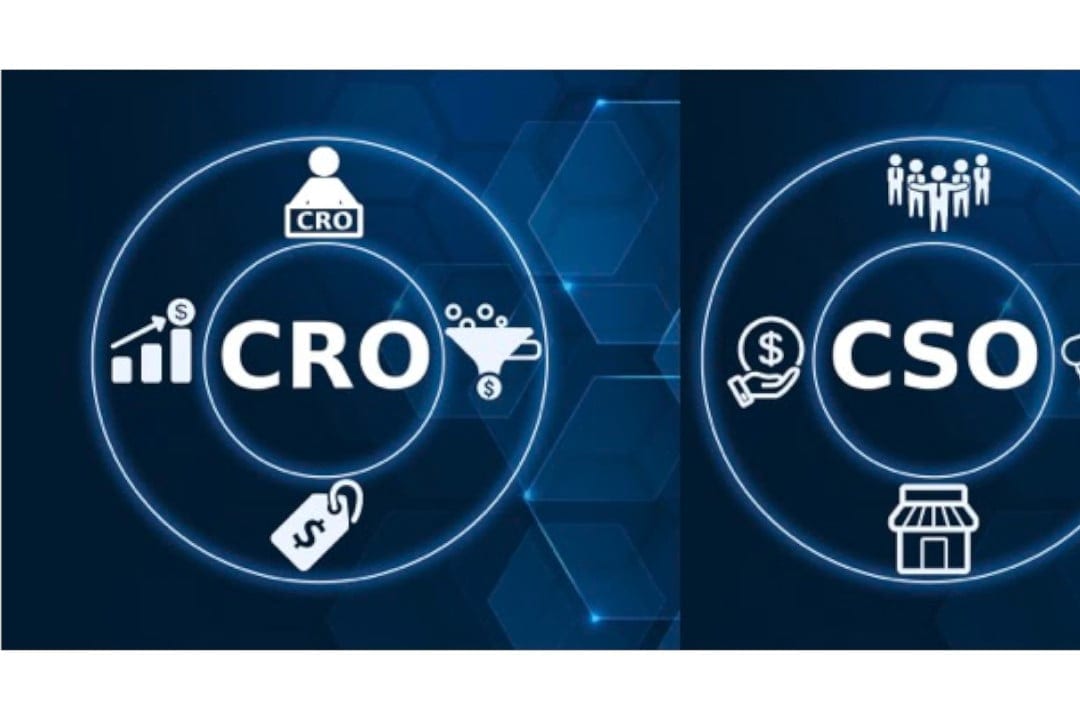
Altitude and Time Horizon
Beyond scope, the two roles differ in the *altitude* at which they work and the *time horizon* they're optimizing for. This is where the "who do I actually need" decision usually gets made.
The CRO thinks in systems and quarters-to-years
A fractional CRO is hired to answer strategic questions: Is our go-to-market motion even right for this market? Should we be product-led or sales-led, or both? Are we pricing to capture the value we create? Where is revenue leaking across the whole funnel, and which fix has the highest leverage? These are systems questions, and answering them well requires the CRO to spend early weeks diagnosing before prescribing. The payoff is longer-horizon: a CRO engagement is often judged over two, three, or four quarters, because the changes they make — repositioning, re-segmenting, rebuilding the forecast — take time to show up in the numbers.

The diagram above shows why the CRO role is inherently horizontal: every arrow the CRO controls crosses a functional boundary. Their value comes from the connections, not from any single function running well in isolation.

The VP of Sales thinks in deals and weeks-to-quarters
A fractional VP of Sales works at a faster, tighter cadence. Their week is structured around pipeline: which deals are slipping, which reps are behind, which stage is leaking, what to coach in tomorrow's one-on-one. Their time horizon is the current quarter's number and the next quarter's ramp. That doesn't make the role less important — most revenue problems are, in the end, execution problems — but it does make it more immediate and more measurable. You can often tell within sixty to ninety days whether a fractional VP of Sales is working, because pipeline velocity and win rates move fast when the fundamentals get fixed.
This altitude difference has a practical hiring consequence. If you bring in a CRO but what you actually needed was execution, you'll feel it as frustration: lots of frameworks, decks, and diagnosis, but the reps still aren't closing this quarter. If you bring in a VP of Sales but what you actually needed was strategy, you'll feel it as a ceiling: the team executes beautifully against a motion that's fundamentally aimed at the wrong buyer.

When to Hire Each One
The scope and altitude differences resolve into a fairly clean decision framework. The question is not "which is more senior?" but "where is my revenue actually breaking?"
Hire a fractional CRO when…
Reach for a CRO when the problem spans functions. Classic signals: marketing generates leads that sales says are garbage while marketing says sales can't close them — a handoff and alignment problem. Or sales closes deals fine but customers churn within a year, so growth leaks out the back — a full-funnel problem. Or the founder has been acting as de facto head of revenue and needs someone to build the whole GTM operating system before the company scales past their personal bandwidth. Or you're preparing for a fundraise or sale and need the revenue story, forecast credibility, and unit economics to hold up under diligence. In all of these, the fix requires authority over more than the sales team.
A fractional CRO is also the right call when you genuinely can't yet justify a full-time revenue executive but you need executive-level *thinking* across the whole engine — common in the seed-to-Series-B range, or in a bootstrapped company that's scaling deliberately.

Hire a fractional VP of Sales when…
Reach for a VP of Sales when the strategy is sound but execution is not. Signals: you have product-market fit and inbound demand, but there's no repeatable sales process and every deal is a one-off. Or you have a few reps but no one is managing, coaching, or holding them accountable, so performance is wildly inconsistent. Or your founder was the best salesperson and now needs to hand the motion to a team without watching win rates collapse. Or you need to hire, onboard, and ramp several AEs quickly and don't have the internal leadership to do it well. These are all *inside the sales function*, and a focused operator will move them faster and cheaper than a broad CRO.
There's also a sequencing pattern worth naming: many companies need the VP of Sales *first* and the CRO *later*. Until you have a repeatable sales motion, a CRO has nothing to connect the other functions to. Once sales is humming and the constraint moves to alignment across marketing and success, the CRO's cross-functional mandate starts to pay off. Hiring them in the wrong order — a CRO before you have a working sales motion — is a common and costly misstep.

How each is typically structured
Both roles are usually engaged on a monthly retainer for a set number of days or hours per week, often one to three days a week, on a three-to-twelve-month term. But the price and shape differ. A fractional CRO generally commands a higher rate because of the breadth of mandate and the seniority required to operate across the C-suite — they're interfacing with the CEO, the board, and the heads of every GTM function. A fractional VP of Sales typically comes in at a lower monthly rate reflecting the narrower scope, and their comp is more likely to carry a performance component tied directly to bookings or ramp milestones.
Reporting lines diverge too. A fractional CRO reports to the CEO or founder and effectively sits on the leadership team, with the heads of sales, marketing, and success either reporting to them or coordinating through them. A fractional VP of Sales reports to the CEO or, in a larger org, to the CRO — and the sales reps report up to the VP. That reporting structure is the cleanest tell of all: if the person you're hiring would have marketing and customer success answering to them, you're hiring a CRO; if only the sales team answers to them, you're hiring a VP of Sales.
The org chart above shows the nesting relationship in a company mature enough to have both. Note that the VP of Sales role exists *within* the CRO's span of control — which is exactly why you rarely need both at the earliest stages, and why the two roles are complementary rather than competing once you scale.

The overlap trap
In small companies the two roles blur, and that's where mistakes happen. A talented fractional VP of Sales will often *want* to reach into marketing and success because they can see the upstream and downstream problems — and a good one will flag them. But flagging is not owning. If you need someone to actually *fix* the marketing handoff and the retention leak, giving that mandate to a VP of Sales without the authority or the title sets them up to fail. Conversely, hiring a CRO and then only letting them touch the sales team wastes most of what you're paying for. Match the mandate to the title, and give the person actual authority over everything they're accountable for.
What Results to Expect and How to Measure Them
Because the two roles solve different problems, you should hold them to different scorecards. Measuring a CRO on this-quarter bookings, or a VP of Sales on net revenue retention, guarantees a frustrated engagement.
Measuring a fractional CRO
Judge a CRO on system-level outcomes over a multi-quarter horizon: improvement in overall funnel conversion, tightening of forecast accuracy, growth in net revenue retention, clarity and adoption of the go-to-market motion, and the quality of the revenue reporting the leadership team now relies on. Early wins are often structural and hard to see on a revenue chart — a rebuilt forecast, a clean CRM, a real SLA between teams — so agree up front on the leading indicators you'll trust before the lagging revenue number moves. A good fractional CRO also leaves behind a *durable operating system*: after they roll off, the connections they built between teams should keep working.

Measuring a fractional VP of Sales
Judge a VP of Sales on faster, sales-specific metrics: pipeline coverage, win rate, sales cycle length, quota attainment across the team, rep ramp time, and forecast accuracy at the deal level. These move quickly, which is the point — within a quarter you should see the sales process tighten and performance become more consistent. The best fractional VP of Sales engagements also produce a durable asset: a documented, repeatable sales process and a hired, ramped team that the company can run without them, or hand to a permanent hire.
In both cases, the fractional model's promise is the same — senior expertise without a full-time executive salary — but the *shape* of the value differs. The CRO's value compounds slowly and broadly; the VP of Sales' value shows up quickly and narrowly. Set expectations, comp, and the scorecard to match, and both roles can be among the highest-ROI hires a scaling company makes.
Related questions
- When should a startup hire its first VP of Sales versus keeping the founder in the seat?
- What does a fractional CRO actually do in the first 90 days of an engagement?
- How much does a fractional CRO cost compared to a full-time CRO?
- Can one person be both a fractional CRO and a fractional VP of Sales, and when does that stop working?
- What's the difference between a CRO and a Chief Sales Officer (CSO)?
- How do you structure comp for a fractional revenue leader so incentives align with company goals?
FAQ
Is a fractional CRO more senior than a fractional VP of Sales? Generally yes, in scope and altitude. The CRO owns the entire revenue engine — marketing, sales, customer success, RevOps, and pricing — and typically sits on the leadership team reporting to the CEO, with GTM function heads coordinating through them. The VP of Sales owns the sales function specifically and, in a company large enough to have both, reports up to the CRO. That said, "more senior" doesn't mean "the better hire" for your situation; the right choice depends on where your revenue is actually breaking.
Can I hire a fractional VP of Sales to also fix my marketing and retention problems? Not effectively. A good fractional VP of Sales will *notice* and flag upstream marketing and downstream retention problems, but fixing them requires authority over teams outside their mandate. If your core problem spans functions — bad handoffs, leaky retention, misaligned pricing — you need a fractional CRO with cross-functional authority, not a sales leader stretched beyond their lane.
Which one should I hire first? Usually the VP of Sales, if you don't yet have a repeatable sales motion. A CRO's job is to connect functions into one engine, and until sales itself works, there's little to connect. Once sales is running reliably and the constraint moves to alignment across marketing, sales, and success, the fractional CRO's broad mandate starts to earn its higher rate.
How much do these roles cost? Both are typically engaged on a monthly retainer for one to three days a week over a three-to-twelve-month term. The fractional CRO commands a higher rate because of the breadth of mandate and C-suite-level seniority required; the fractional VP of Sales comes in lower, often with a performance component tied to bookings or ramp milestones. Exact figures vary widely by market, company stage, and engagement intensity, so treat rate as a function of scope rather than a fixed number.
How do I know if the engagement is working? Measure each against the right scorecard. Hold a CRO to system-level, multi-quarter outcomes: funnel conversion, forecast accuracy, net revenue retention, and GTM-motion clarity. Hold a VP of Sales to faster, sales-specific metrics: win rate, sales cycle length, quota attainment, and rep ramp time. Agree on leading indicators up front, because a CRO's earliest wins (a rebuilt forecast, a clean CRM, a real cross-team SLA) often precede the lagging revenue number.
What happens when the fractional engagement ends? The best engagements leave a durable asset behind. A fractional VP of Sales should hand off a documented, repeatable sales process and a hired, ramped team. A fractional CRO should leave a working revenue operating system — the connections, forecasts, and reporting that keep functioning after they roll off, ready to hand to a permanent executive hire. If the value disappears the moment they leave, the engagement was staffed as a crutch rather than a build.
Do I ever need both at the same time? Rarely at early stages, and only once you've scaled enough that the CRO has a full GTM org to orchestrate and the VP of Sales has a real team to run beneath them. At that point the roles nest cleanly: the CRO sets and connects strategy across marketing, sales, and success, and the VP of Sales executes the sales portion of it. Before that scale, one senior fractional leader — usually matched to your single biggest bottleneck — is the more efficient hire.
Sources
- Harvard Business Review — "The New Science of Sales Force Productivity"
- Pavilion — "The Rise of the Fractional Executive"
- SaaStr — "When to Hire Your First VP of Sales"
- First Round Review — "The Founder's Guide to Building a Sales Team"
- Gartner — "Chief Revenue Officer Role and Responsibilities"
- Winning by Design — "Revenue Architecture Framework"
- The Bridge Group — "SaaS Sales Leadership Benchmarks"
Related on PULSE
- [What Is the Difference Between a Fractional CRO and a Fractional CMO in 2027?](/knowledge/tl0130)
- [What's the difference between a CRO and a VP of Sales for a marketing agency in 2027?](/knowledge/tl21364)
- [What's the difference between a CRO and a VP of Sales for a fintech company in 2027?](/knowledge/tl21349)
- [What's the difference between a CRO and a VP of Sales for a B2B marketplace in 2027?](/knowledge/tl21334)
- [What's the difference between a CRO and a VP of Sales for a healthcare technology company in 2027?](/knowledge/tl21319)
- [What's the difference between a CRO and a VP of Sales for a manufacturing company in 2027?](/knowledge/tl21304)
This page will be disappearing soon. Save it to your device for $1 — or read it free while it is here.
@Kory-White- · if Venmo asks, the last 4 of my number are 2012
 pulse-toolsHow do I hire a fractional COO in Ogden in 2027?
 pulse-toolsShould I Hire a Fractional CRO If My Pricing Has Not Changed in Five Years in 2027?
 pulse-toolsHow do I hire a part-time CRO in Los Angeles in 2027?
 pulse-toolsShould I Hire a Fractional CRO If I Need to Rebuild Trust After a Failed CRO in 2027?
 pulse-toolsDo I Need a Fractional CRO for My Franchise in 2027?
 pulse-toolsHow do I hire a fractional CRO in Delmar in 2027?
 pulse-toolsHow do I hire a fractional CRO in Stanton in 2027?
 pulse-toolsDo I Need a Fractional CRO for My Roofing Company in 2027?
 pulse-toolsHow do I hire a fractional CCO in Melbourne in 2027?
 pulse-toolsShould I hire a fractional CRO in Joppatowne in 2027?