
Should I Hire a Fractional CRO If I Am Consolidating Regional Sales Teams?
 Curated byKory White · Fractional CRO · Maryland
 PULSEKNOWLEDGE LIBRARY
Quality
Certified

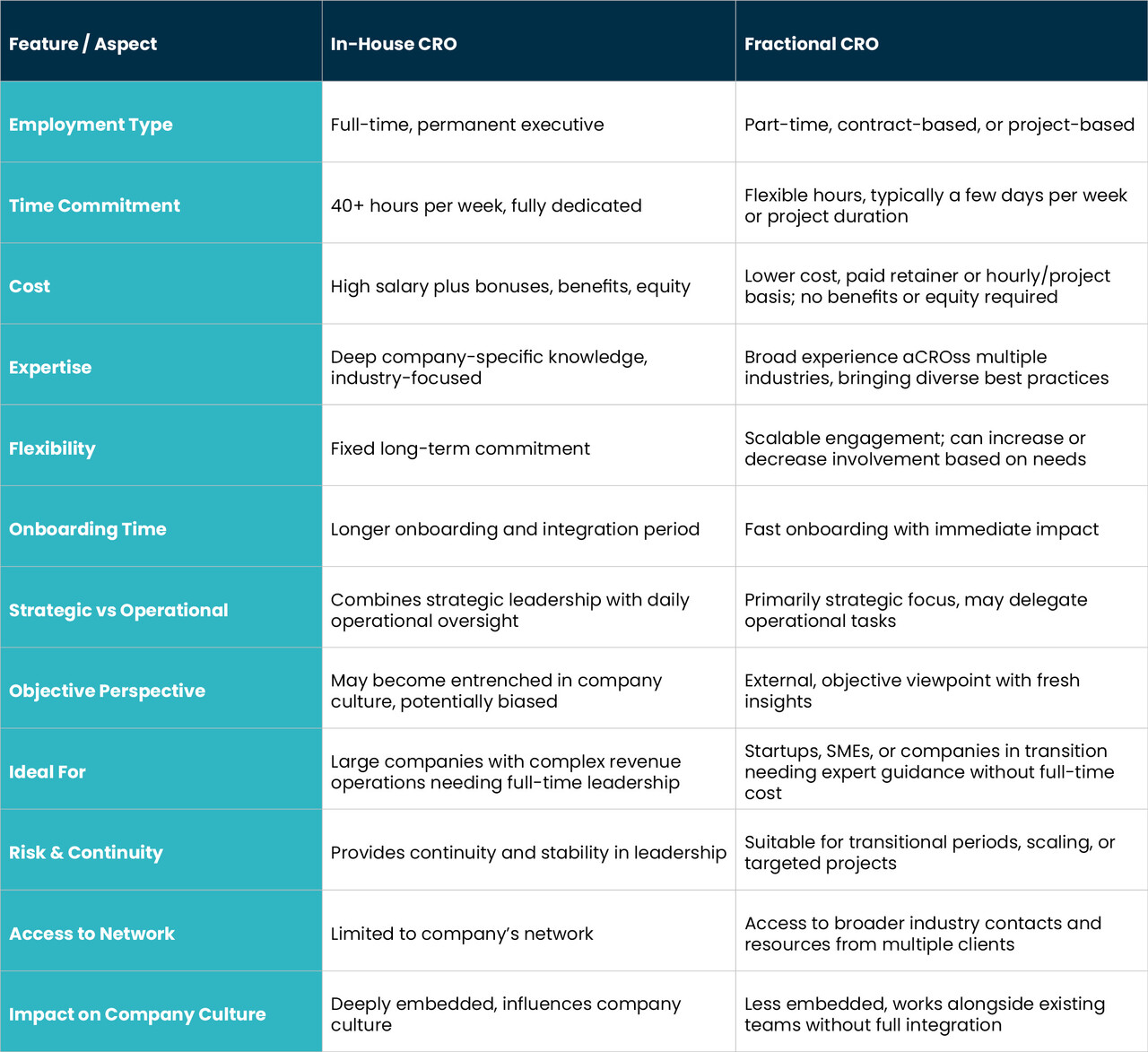
Yes — for most companies between $2M and $20M ARR, a fractional CRO is the right call when consolidating regional sales teams. Consolidation demands neutral judgment on territory, quota, and comp that internal leaders cannot deliver without political cost. Scope it to six to eighteen months with a defined handoff, not indefinitely.
Signals you actually need this
Not every regional merge warrants outside leadership. Some are administrative — two adjacent territories in the same country, same segment, same comp plan, twelve reps total, one manager already respected by both sides. That is a Tuesday afternoon problem, not a mandate. The signals below separate the administrative merge from the one that quietly destroys a quarter of your pipeline.
You have two or more compensation plans that were negotiated, not designed. This is the single loudest signal. Regional plans drift because they were built at different times by different people under different pressures. One region pays 8% flat on new logo. Another pays a 6% base rate with accelerators kicking in at 80% attainment and a multiplier past 110%. A third has legacy carve-outs where two senior reps still get overrides on accounts they closed four years ago. Nobody wrote these down in one place. When you try to merge them, you discover that "harmonizing comp" means telling somebody their W-2 is going down. If you cannot name, from memory, every non-standard comp arrangement in your org, you need someone whose full-time job for six weeks is finding them.
Your regional leaders have already started lobbying. The moment consolidation is rumored, regional managers begin building the case for why their structure should be the surviving one. This is rational self-interest, not bad faith — their headcount, their scope, and their internal standing are all attached to the outcome. But it means every recommendation you receive from inside the org arrives pre-loaded. A fractional CRO has no seat to protect. When they say the East territory model should win, it is because the data says so, not because they run East.
Territory overlap is producing channel conflict you can measure. Pull the last two quarters of closed-won and closed-lost. Count deals where more than one rep touched the account, deals where a prospect got contacted by two reps within thirty days, and accounts that sat in two pipelines simultaneously. If that number is above roughly 5% of your opportunity volume, your territory boundaries have already failed and consolidation is a correction, not an optimization. Below 1%, you may just need better routing rules in the CRM.

You are consolidating because of an acquisition or a funding-driven mandate, not organic growth. Acquisition-driven consolidation carries a deadline that is not yours. The board wants synergy numbers by a specific quarter. The acquired team has retention agreements expiring on a known date. This compresses the change-management window and raises the cost of a misstep considerably. External leadership with prior integration reps is worth substantially more here than in a self-directed reorg you control the clock on.
Your top performers are asking questions you cannot answer. If your best rep asks "what happens to my named accounts" and your honest answer is "we're still working through it," you are already leaking. Top performers do not wait for clarity; they take a recruiter call. The window between the first rumor and the first resignation is short — often under six weeks. A fractional CRO hired before the announcement can compress the uncertainty period from months to days.
Adjacent signal — your RevOps function is one person or zero. Consolidation generates an enormous amount of systems work: CRM territory reassignment, quota loading, forecast hierarchy rebuilds, historical attribution restatement so year-over-year comparisons still mean something. If you have a single RevOps analyst, they will become the bottleneck for the entire consolidation regardless of how good the strategy is. A fractional CRO who has done this before will scope that work realistically and often bring a contract ops resource. A first-timer will discover in week nine that the CRM migration takes eleven weeks.
Counter-signal — you are consolidating primarily to cut headcount. Be honest about this. If the actual objective is reducing sales cost by 30%, that is a finance-led exercise with an HR partner, and a fractional CRO is expensive overhead on a decision that has already been made. They will build you a better surviving organization, but they will not make the cuts faster or cheaper.
What good looks like versus what bad looks like
The difference between a consolidation that lands and one that craters is almost never strategy quality. Both versions usually produce a defensible territory map. The difference is sequence, disclosure, and whether comp modeling happened before or after the announcement.
Good: comp is modeled before anyone hears the word "consolidation." The fractional CRO takes eighteen to twenty-four months of rep-level earnings history and runs every rep through the proposed unified plan retroactively. Who would have made more? Who less? By how much? This produces a concrete list — usually eight to twenty percent of reps land materially worse — and a specific remediation for each: a transition bonus, a guaranteed floor for two quarters, a territory adjustment, or in some cases an honest conversation that their comp was an anomaly. You do this in a spreadsheet before you do it in a town hall.
Bad: comp is announced as a principle and modeled as an afterthought. "We're moving to one unified plan, details to follow" is the sentence that costs you three reps. The gap between announcement and specifics is where people update their LinkedIn.
Good: territory reassignment respects deal-in-flight. Every open opportunity above a stated threshold — often $25K, sometimes deal-count-based instead — stays with the originating rep through close or through a defined grace window of 30 to 90 days, whichever comes first. New pipeline follows the new map from day one. This costs you a quarter of clean reporting and buys you the trust of everyone with a deal on the board.

Bad: hard cutover on a calendar date. Reps who were three weeks from closing a deal they sourced watch it move to someone else's number. You will be told this is "fair" because the new map is fair. It is not perceived as fair, and perception is the only thing that governs whether your team stays.
Good: one owner, named, with decision rights stated in writing. The fractional CRO owns territory and comp design; the CEO owns headcount decisions; the regional leaders own retention conversations with their people. Everyone knows which decisions are theirs and which are not.
Bad: consensus-driven design. Three regional leaders in a room negotiating boundaries produces a map that is the union of everyone's preferences — which means overlap survives, whitespace survives, and nobody is accountable for the result.
Good: the engagement has a stated end. Week 24, a handoff document exists, a permanent leader is identified or in recruiting, and the fractional CRO's involvement steps down to advisory. Bad: month fourteen, the fractional CRO is still running your Monday forecast call and your org has quietly built its structure around someone whose contract renews quarterly.

Real cost, real ROI, and the arithmetic that actually decides it
Fractional CRO engagements are priced on a monthly retainer tied to committed days. The common structure is 10 to 20 days per month over a 6 to 18 month term. Rates vary widely by market, seniority, and whether the operator has done integration work specifically. Rather than quoting numbers that will be wrong for your market, price it against three variables you can measure yourself.
Variable one: number of distinct comp plans being merged. Not number of regions — number of plans. Two regions running the same plan is a light lift. Two regions running four plans between them, because each has legacy carve-outs, is heavier than a four-region merge with one uniform plan. Each additional plan adds roughly a week of modeling and a round of individual conversations.
Variable two: rep count crossed with segment diversity. Forty reps all selling mid-market into one vertical is a simpler consolidation than eighteen reps split across SMB self-serve, mid-market, and enterprise field. Segment diversity means separate quota logic, separate cycle lengths, separate coverage math. You are effectively running three consolidations.
Variable three: whether any region is international. Currency, statutory notice periods, works councils in parts of Europe, different commission-clawback legality — an international leg can add two to three months to a timeline that otherwise runs six.

The comparison that matters is not fractional versus full-time salary. It is fractional versus the cost of a bad consolidation. Model it directly. Take your average fully-ramped rep's annual quota contribution. Multiply by the number of top performers you would lose in a botched consolidation — the practitioner range is 30 to 50 percent attrition among top performers when comp changes land without a retention plan, versus 10 to 20 percent when they land with one. Then add ramp time for replacements: 4 to 6 months for mid-market, 6 to 9 for enterprise, during which the replacement produces a fraction of quota. Then add recruiting cost, typically 20 to 25 percent of first-year OTE if you use search.
For a twenty-rep organization where four are top performers, the delta between a 40% and a 15% top-performer attrition rate is one rep. One enterprise rep, lost and replaced, costs you a partial year of their quota contribution plus recruiting plus six months of a ramping replacement. In most mid-market SaaS organizations that single-rep delta exceeds a full six-month fractional engagement. That is the actual ROI argument, and it is the one to take to a board.
The second ROI line is speed to a functioning single org. Founder-led consolidations routinely take nine to fifteen months because the founder is doing it in the margins — 10 to 15 hours a week between fundraising, product, and customer escalations. A fractional operator running it as their primary engagement compresses that to five or six months. Those extra months are months your forecast is unreliable, your reps are distracted, and your reporting cannot answer basic questions about coverage.
Structure the money to match the risk. Tie 20 to 30 percent of the retainer to milestone completion: unified territory map delivered and accepted, unified comp plan modeled and approved, CRM migration complete with clean forecast hierarchy, retention plan executed for named accounts and named reps, handoff documentation delivered. Some operators will take equity in lieu of a portion of cash — if you go there, be precise about vesting, acceleration, and what happens on early termination. A fractional engagement that ends at month seven with a four-year vest is a cap table problem you did not need.
Adjacent case — the same math applies to fractional RevOps and fractional sales-ops leadership. If your consolidation is mostly systems and process rather than people and politics, a fractional RevOps leader may be the better and cheaper hire. The tell: if the hard part is rebuilding forecast hierarchy, restating historical attribution, and migrating territory assignment logic, that is an ops problem. If the hard part is telling a regional VP their region is not the surviving model, that is a CRO problem.

How it plugs into your existing workflow
A fractional CRO does not replace your management cadence — they occupy a defined seat inside it and then vacate. Getting this wiring right is what separates a catalyst from a dependency.
Weeks 1 through 4 — audit, with access. They need read access to the CRM, historical comp statements, quota-attainment history by rep, the org chart including dotted lines, and an unfiltered list of who is on a PIP and who is on a retention agreement. They will interview every regional leader, every rep above some tenure threshold, and — this is the step most companies skip — a sample of recent losses and churned customers, because territory design should follow where you actually win. Deliverable at week four is a current-state map and a written risk register: named reps at retention risk, named accounts at coverage risk, named systems gaps.
Weeks 3 through 8 — design, run in parallel with audit. Territory model and comp model are built together, never sequentially, because they constrain each other. A territory that looks balanced on account count may be wildly unbalanced on realistic attainment, which breaks the comp plan. Output is a future-state territory map, a unified comp plan with rep-level retroactive modeling, an org chart, and a transition plan with dated milestones.
Weeks 5 through 10 — communication. The fractional CRO drafts the message but should not be its sole deliverer. The CEO or existing sales leader delivers the org-wide announcement; the fractional CRO handles the detailed territory and comp sessions and the individual conversations with reps whose comp changed. This sequencing matters: if the outsider announces the reorg, the org reads it as an outsider's reorg. If the founder announces it and the outsider executes it, the org reads it as the company's decision with expert help.

Weeks 8 through 16 — systems and RevOps execution. CRM territory rules, quota loading, forecast hierarchy, dashboard rebuild, historical restatement so quarter-over-quarter comparisons survive the reorg. This runs longer than anyone expects. Budget for it explicitly.
Weeks 12 through 24 — stabilize and hand off. Weekly pipeline reviews under the new structure, adjustments to boundaries where coverage math proved wrong, and a documented handoff: comp plan rationale, territory logic, open issues, and the recruiting profile for the permanent leader. Many engagements include the fractional CRO participating in interviews for their own replacement, which is a good sign about their intentions.
Where this touches functions outside sales. Finance needs the new quota and comp model early enough to update the plan of record. Marketing needs the new territory map to reroute leads and rebuild routing rules — a common failure is the territory model changing while the lead-routing logic does not, producing weeks of misrouted inbound. Customer Success needs to know which accounts changed owners so QBR scheduling and renewal ownership stay correct. Legal or HR needs lead time on comp plan amendments and any statutory notice requirements.
Adjacent scenarios where the same reasoning applies
The logic that makes fractional leadership right for a regional merge extends to several neighboring situations, and recognizing the pattern helps you decide faster.

Consolidating channel and direct sales into one motion. Same structural problem: two comp philosophies, overlapping account claims, and internal advocates for each model. The neutral-outsider argument holds. The difference is that channel consolidation adds partner-facing communication and often contractual obligations you cannot unilaterally change, which extends the timeline.
Merging inside sales with field sales. Common at $10M to $30M ARR when a company realizes it is paying field-sales cost for mid-market deals. The consolidation work is nearly identical — territory, quota, comp, coverage math — but the retention risk concentrates differently. Field reps whose accounts move to inside sales tend to leave; inside reps promoted into field roles tend to stay and underperform for two quarters. Model both.
Post-acquisition sales integration. The hardest version. You have two CRMs, two comp philosophies, two sales methodologies, and a retention cliff on the acquired side. Fractional operators with specific integration experience are meaningfully more valuable here than generalist revenue leaders, and it is worth screening references specifically for acquisition integration rather than accepting general growth credentials.
Rolling a services or professional-services attach into the sales org. Less about territory, more about comp — how do you pay a rep on services revenue that carries different margin? The comp-design half of the fractional CRO's work is the whole job here.

When the pattern does not extend. Building a first sales team, launching into a new geography from zero, or a straight sales-process redesign without a structural merge. Those are build problems, not merge problems, and they favor either a full-time hire who will live with the result or a specialist consultant rather than a fractional executive.
How to screen and hire the right one
Screening for consolidation work is different from screening for growth work, and most fractional CRO conversations default to growth stories.
Ask for the merge count, specifically. "How many times have you consolidated sales organizations?" Not "have you scaled revenue." You want someone who has done this three or more times, because the failure modes are non-obvious and repeat.
Ask what went wrong in the last one. Anyone who has genuinely run three consolidations has a story about a comp model that produced a perverse incentive nobody caught, or a CRM migration that ran three months long, or a top rep who left despite the retention package. An operator with no failure story has either not done the work or is not being candid.

Require references from the reps, not just the CEO. Ask the prior client whether you can speak to a regional manager who went through it. The CEO will tell you the strategy was sound. The manager will tell you whether the communication landed and whether the fractional CRO showed up for hard conversations or delegated them.
Check for a functioning RevOps partnership pattern. Ask how they work with revenue operations. If they describe RevOps as a downstream execution function that receives the finished design, that is a warning — the systems constraints should shape the design, not receive it. Good operators pull RevOps into week two.
Watch for the pipeline-in-the-first-meeting tell. Some fractional executives lead with their network — "I can bring you three enterprise deals." That is a different service. For a consolidation, you want a builder of structure, not a rainmaker, and someone who leads with their book is telling you where their attention will go.
Run a paid 30-day scoping engagement before the full commitment. Two to four days of work, a written current-state assessment, and a proposed approach. You learn how they think, they learn whether the job is what you described, and either side can walk without a six-month obligation. Almost every serious fractional operator will accept this structure; reluctance to do so is itself informative.
Related questions
How do I align compensation plans across regions with different market rates?
Standardize commission rates and accelerator structure across all regions, then adjust base salary by regional market benchmark rather than varying the variable. Uniform variable prevents reps from gaming territory assignment; differentiated base handles cost-of-living without distorting selling behavior.
What metrics tell me the consolidation is working in the first 90 days?
Track rep retention, pipeline coverage ratio by new territory, average deal cycle length, and quota attainment distribution. A drop greater than 15% in coverage or attainment in any single territory signals the boundary math was wrong and needs correction before the quarter closes.
Should I hire the fractional CRO before or after announcing the consolidation?
Before, without exception. The announcement itself is a deliverable that requires the comp modeling and retention plan to already exist. Announcing first opens an uncertainty window your best reps will use to take recruiter calls you cannot counter.
How do I handle overlapping accounts during the transition?
Protect deals in flight with a 30 to 90 day grace window where the originating rep retains ownership through close. All new pipeline follows the new map immediately. Document the rule in writing before announcement so nobody negotiates exceptions case by case.
Can I promote an internal regional leader instead?
Sometimes — if they can credibly disadvantage their own former region and the other regional leaders will accept their authority. Test this honestly. If either condition fails, the promotion creates a legitimacy problem that outlasts the consolidation itself.
FAQ
How long should a fractional CRO engagement for consolidation actually run?
Six months is the practical floor for a two-region merge with uniform segments; twelve to eighteen months is realistic for three or more regions, international exposure, or acquisition integration. Anything scoped under four months is either a very simple merge or an engagement that will end mid-transition and leave your org half-changed, which is worse than not starting.
Can a fractional CRO really handle the political side as an outsider?
Yes, and outsider status is the asset rather than the liability. They can deliver the unpopular territory decision without carrying it into next year's relationships, and they absorb heat that would otherwise land on regional leaders you need to stay. The limit is authority — the CEO must state publicly and repeatedly that the fractional CRO's design decisions are the company's decisions.
What if my regional teams run entirely different sales methodologies?
Pick one and train to it rather than synthesizing a hybrid. Hybrids satisfy nobody and get abandoned within two quarters. Choose based on which methodology fits the segment you are betting on, then invest in real enablement — budget four to six weeks of ramp for reps switching methodologies and expect a temporary dip in their attainment.
Is a fractional CRO cheaper than a full-time VP of Sales?
For a defined 6 to 18 month project, generally yes on total cost, since you avoid benefits, equity, severance exposure, and search fees. But the comparison is misleading — they are different products. Fractional buys senior judgment for a bounded problem. Full-time buys ongoing ownership. If you need someone running the org three years from now, hire full-time.
What happens when the engagement ends?
The handoff should include documented comp rationale, territory logic and the data behind it, an open-issues list, and a recruiting profile for the permanent leader. Many engagements taper — full days through month six, then two days monthly in an advisory capacity through the first full quarter under new leadership. Build the taper into the contract rather than negotiating it later.
Where do I actually find fractional CROs with consolidation experience?
Revenue-leadership communities such as Pavilion, RevOps-focused professional networks, and referrals from your investors — portfolio companies that have run a consolidation are the highest-signal source. Screen on merge count and integration references specifically, not general revenue-growth credentials, and always ask to speak with a regional manager who reported through the engagement.
Sources
- Harvard Business Review — Research and case studies on organizational restructuring, change management, and sales force design.
- McKinsey & Company — Analysis on go-to-market restructuring, post-merger integration, and commercial excellence.
- Bain & Company — Insights on merger integration and sales-force effectiveness.
- SaaStr — Practitioner content on SaaS sales leadership, org structure, and comp plan design.
- First Round Review — Operator-written guidance on managing sales team transitions and leadership hires.
- Pavilion — Community of revenue leaders; a common sourcing channel for fractional executives.
- Society for Human Resource Management — Reference on compensation plan changes, notice requirements, and restructuring compliance.
- MIT Sloan Management Review — Research on organizational change and management of merged teams.
- Gartner — Research on sales organization design, territory planning, and revenue operations.
Related on PULSE
- [Should I Hire a Fractional CRO If We Are Integrating Two Sales Teams After a Merger in 2027?](/knowledge/tl0364)
- [Should I Hire a Fractional CRO If My Sales and Customer Success Teams Do Not Talk in 2027?](/knowledge/tl0568)
- [Should I Hire a Fractional CRO If My VP of Sales Just Quit in 2027?](/knowledge/tl0357)
- [Should I Hire a Fractional CRO If I Have Great Marketing but Weak Sales in 2027?](/knowledge/tl0552)
- [Should I Hire a Fractional CRO If I Am Hiring My First Sales Manager in 2027?](/knowledge/tl0586)
- [Should I Hire a Fractional CRO If I Have No Sales Enablement Function in 2027?](/knowledge/tl0572)
This page will be disappearing soon. Save it to your device for $1 — or read it free while it is here.
@Kory-White- · if Venmo asks, the last 4 of my number are 2012
 pulse-toolsFractional CRO vs Full-Time CRO: When Do I Make the Switch in 2027?
 pulse-toolsWhere do I find a fractional VP of Sales in Jacksonville in 2027?
 pulse-toolsShould I Hire a Fractional CRO If I Have No Sales Enablement Function in 2027?
 pulse-toolsWhere do I find a fractional head of revenue in Reston in 2027?
 pulse-toolsHow do I hire a fractional VP of Sales in Raleigh in 2027?
 pulse-toolsWhat should an SMB company look for in a fractional CRO in 2027?
 pulse-toolsHow do I find a fractional CRO in Suitland in 2027?
 pulse-toolsWhat should I look for in a fractional CRO in San Diego in 2027?
 pulse-toolsWhere do I find a fractional revenue leader in Santa Monica in 2027?
 pulse-toolsHow much does a part-time CRO cost in Baton Rouge in 2027?