
Should I Hire a Fractional CRO If I Need to Build a Partner Channel?
 Curated byKory White · Fractional CRO · Maryland
 PULSEKNOWLEDGE LIBRARY
Quality
Certified
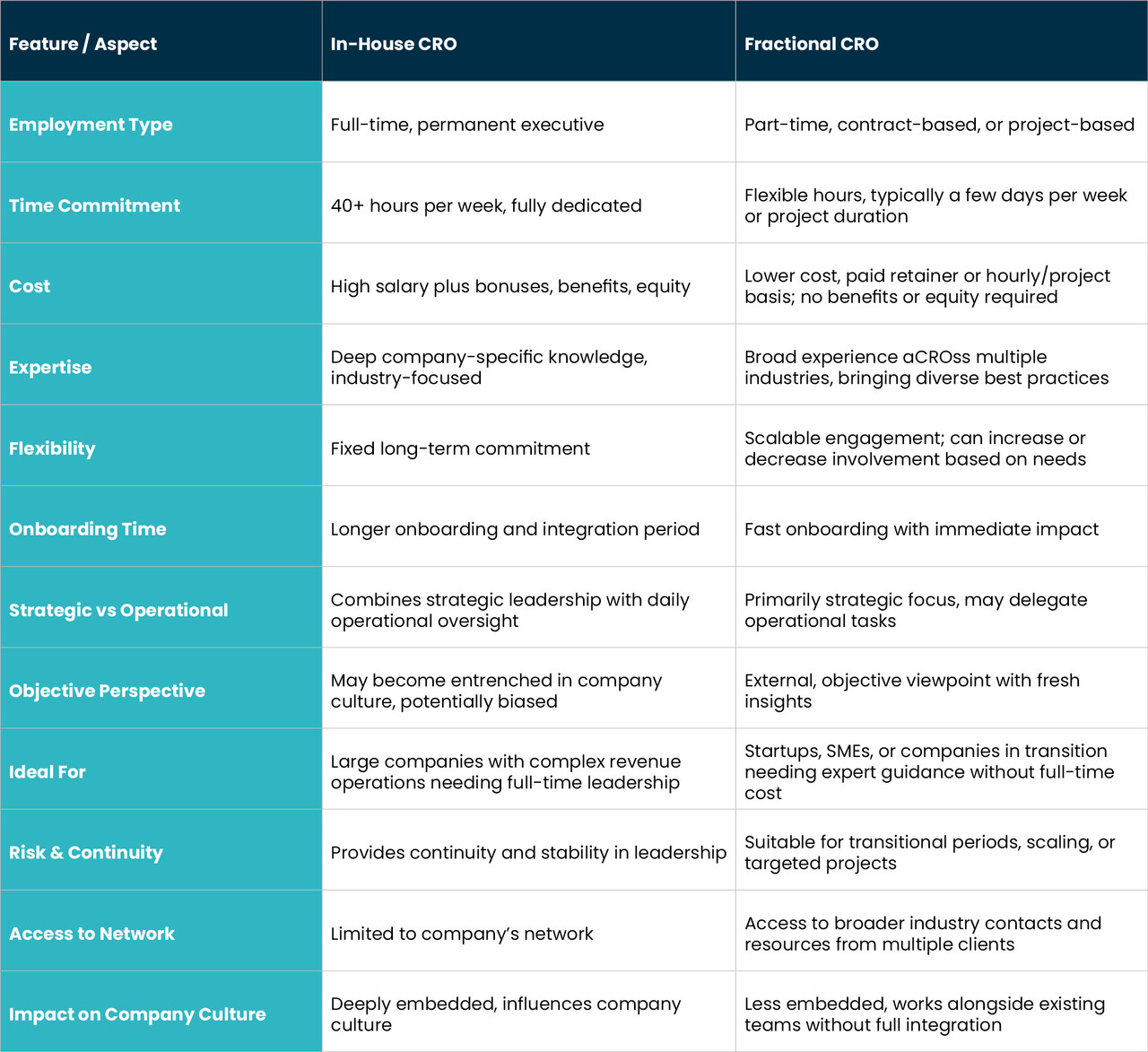
Direct Answer If your primary near-term goal is standing up a partner channel, a fractional CRO can be the right first move — but only when you hire one with genuine channel-building experience, not a direct-sales leader wearing the title. The best fit is a part-time senior operator who designs the partner motion, recruits your first anchor partners, and installs the systems, then hands off to a full-time channel leader once the motion is proven. Hire for the specific motion you need, not the acronym. The instinct to reach for a fractional Chief Revenue Officer when partnerships stall is understandable: you need senior go-to-market judgment, you cannot yet justify a 300K+ base plus equity for a full-time exec, and you want someone who has "done this before." That logic is sound in the abstract. The trap is that "CRO" is one of the least standardized titles in revenue leadership. Some fractional CROs have built three partner ecosystems from zero; others have never signed a reseller agreement in their lives. This essay walks through when a fractional CRO genuinely accelerates channel-building, when a different hire beats them, and how to structure the engagement so you get a durable channel instead of an expensive slide deck. ## What Does a Fractional CRO Actually Do for a Partner Channel? A fractional CRO is a senior revenue executive who works part-time — typically one to three days per week — across one or several companies, usually on a monthly retainer rather than full-time salary and equity. For a company trying to build a partner channel, the value they bring is not headcount; it is compressed pattern recognition. A strong operator has already learned, expensively, which partner types convert, how to structure incentives so partners actually sell instead of just signing, and where channel programs quietly die (usually enablement and attribution). For partner-channel work specifically, the right fractional CRO does five concrete things. First, they diagnose whether you are even ready for a channel — many companies chase partnerships to escape a broken direct motion, which only exports the dysfunction. Second, they design the channel architecture: referral versus reseller versus co-sell versus managed-service partner, and which comes first. Third, they build the economic model — margins, deal registration, MDF (market development funds), and the split that makes a partner choose you over the competing vendor in their bag. Fourth, they recruit and close the first anchor partners personally, because early partnerships are founder-and-executive-led sales, not process. Fifth, they install the operating system — the CRM objects, partner portal, attribution rules, and QBR cadence — so the motion survives their departure. The last point is where fractional engagements most often fail: the operator builds relationships in their own head and leaves nothing transferable. See pulserevops.com/knowledge/partner-channel-readiness for a readiness scorecard. The critical distinction: a fractional CRO builds the *system and the first proof points*, not the steady-state channel. If you expect them to personally manage forty partners for eighteen months, you have misunderstood the role and are overpaying for undercommitted attention. ## Should the Channel Leader Even Be a CRO, or a Different Title? This is the question most founders skip, and it is the one that determines whether the money is well spent. A CRO owns *all* revenue — direct sales, marketing alignment, sometimes customer success and renewals. If your actual, honest need is "I need someone to build one partner channel," you may be reaching for a title three sizes too large. The alternatives are cheaper, more focused, and often more experienced in the exact motion you need. Consider the real candidate set. A fractional VP of Partnerships / Channel Chief lives and breathes channel; they have recruited partners, negotiated margins, and run partner kickoffs their entire career. A fractional CRO is a generalist revenue leader who may or may not have deep channel reps. A channel consultant or agency designs the program but does not carry a number or close partners. A channel-experienced advisor gives you two hours a month of pattern-matching but builds nothing. The decision hinges on two variables: how much of your total revenue motion needs leadership, and how central the partner channel is to your model. ```mermaid
flowchart TD A[Need is stalled partnerships] --> B{Does all revenue need senior leadership} B -->|Yes direct and channel both broken| C[Fractional CRO with channel reps] B -->|No only channel needs building| D{Is channel core to the model} D -->|Yes primary route to market| E[Fractional VP Partnerships] D -->|No a supplement to direct| F[Channel consultant plus advisor] C --> G[Design plus recruit plus systemize] E --> G F --> H[Design only then internal owner executes] `` The honest answer for most sub-10M companies building their first channel: you probably want a fractional VP of Partnerships, not a fractional CRO. You reach for the CRO title only when the *entire* revenue engine — direct reps, marketing, and the new channel — all need senior hands at once, and you cannot afford three separate part-time leaders. When you find a fractional CRO who has genuinely built channels, they can absolutely do the job; just verify the channel reps rather than assuming the title guarantees them. More on scoping the right title at pulserevops.com/knowledge/fractional-revenue-titles. ## How Do I Tell a Real Channel Builder from a Direct-Sales CRO in a Channel Costume? Interview for scars, not slides. A direct-sales leader talks about pipeline, quota attainment, and rep ramp; a channel builder talks about partner economics, deal-registration conflict, and why a partner's fifth-best rep is still better than your best BDR at a warm intro. The vocabulary gives them away in the first twenty minutes. Ask them to whiteboard the partner P&L from the *partner's* side — a real channel builder does this instinctively, because they know a program only works if the partner makes money, and they have watched programs collapse when the vendor optimized only for its own margin. Probe the specific failure modes. Ask: "Walk me through a channel program you built that underperformed, and why." A pretender describes a partner who "didn't execute." A builder describes a structural mistake they made — margins too thin to earn mindshare, enablement that assumed partners would learn the product on their own time, deal registration that created channel conflict with the direct team, or MDF that funded activity nobody could attribute to revenue. Then ask how they'd recruit your first three anchor partners this quarter, by name and by category. A builder will already be sketching a target list from your ICP; a generalist will promise to "develop a partner strategy," which is a euphemism for "figure it out on your dime." Reference-check against outcomes, not titles. The question to a former client is not "was the CRO good" but "how many partners were producing revenue eighteen months after they started, and did the program survive their exit?" Durable channels have a founder's fingerprints in the *system* — the partner agreement templates, the enablement curriculum, the attribution model — not just in the relationships. If everything walked out the door when the fractional leader left, they built a personal network, not a channel. The pulserevops.com/knowledge/channel-interview-questions bank has the full script. ## What Does the Engagement Actually Look Like Month by Month? A well-structured fractional channel engagement is phased, time-boxed, and explicitly designed to make the fractional leader replaceable. The worst engagements are open-ended retainers where the operator is incentivized to stay indispensable. The best ones read like a construction project with a certificate of occupancy at the end. The arc typically runs ninety days to diagnose and design, ninety to recruit and prove, and a final stretch to systemize and hand off — total nine to twelve months, not perpetual. ``mermaid flowchart LR A[Phase 1 Diagnose and Design] --> B[Phase 2 Recruit and Prove] B --> C[Phase 3 Systemize and Hand Off] A --> A1[Readiness audit] A --> A2[Channel architecture] A --> A3[Partner economics model] B --> B1[Sign three anchor partners] B --> B2[First co sell wins] B --> B3[Enablement built] C --> C1[Portal and attribution live] C --> C2[Hire full time owner] C --> C3[Documented playbook]




Fractional CROs typically run roughly a retainer depending on days per week, company stage, and equity. Channel-specialist VPs of Partnerships often sit at the lower end. Budget the program (MDF, enablement, portal) separately and larger. ### Can a fractional CRO also fix my direct sales team? Yes — that is arguably their core strength. A generalist fractional CRO is often a better fit for repairing a broken direct motion than for building a first channel, unless they specifically have channel reps. Match the hire to the motion you most need fixed. ### How long before a partner channel produces revenue? Expect nine to eighteen months to meaningful partner-sourced revenue. Anchor partners can sign in the first quarter, but partners need enablement, a few reference wins, and time to build your product into their motion before pipeline becomes predictable. ### Should I hire the fractional CRO or the full-time channel leader first? Usually the fractional operator first, to design the program and prove it with anchor partners, then hire the full-time owner they recruit and hand off to. Hiring a full-time channel leader before the motion is designed risks paying full freight for on-the-job learning. ### What is the difference between a channel and partnerships? "Partnerships" is broader — it includes tech integrations, co-marketing, and strategic alliances that may never sell anything. A "channel" specifically means partners who sell or resell your product for economic incentive. Building a revenue channel is a narrower, harder discipline than general partnerships. ## FAQ Is a fractional CRO the same as a fractional VP of Sales? No. A VP of Sales owns the direct selling team and quota; a CRO owns the entire revenue engine including marketing alignment, channel, and often retention. For channel-building specifically, a fractional VP of Partnerships is frequently the more precise hire than either. What size company should hire a fractional CRO for channel work? Typically Series A through mid-market, roughly 2M–30M in revenue — large enough to justify a channel and fund the program, small enough that a full-time CRO isn't yet warranted. Below 2M, focus on proving the direct motion first. Can one person build a channel part-time while I run direct sales? For the design-and-prove phase, yes — that is exactly what fractional engagements are for. For steady-state operation of a growing partner base, no; that becomes a full-time job, which is why the fractional leader's final deliverable should be hiring their successor. How do I measure whether the fractional CRO is working? Milestone outputs, not activity: channel architecture delivered, economic model built, anchor partners signed, first partner-sourced pipeline and revenue, playbook documented, and a successor hired. If ninety days pass with only "strategy" and no signed partners or built systems, the engagement is drifting. What if my product isn't ready for partners to sell? Then building a channel now is premature. Partners will not invest their reps' time learning a product that requires heavy hand-holding or has an unclear value proposition. A good fractional CRO will tell you this in Phase 1 and redirect the engagement to product-market readiness first. Do partners expect exclusivity or high margins to join? Strong partners expect enough margin to earn their reps' mindshare — often 20–40% on resale, less on referral — plus deal registration that protects their deals from channel conflict. Exclusivity is rarely wise early; it concentrates risk in one partner before you know who performs. How is a fractional CRO different from a channel consultant? A consultant designs the program and advises but does not carry a number or personally close partners. A fractional CRO (or VP of Partnerships) operates — they recruit and sign anchor partners themselves and own the revenue outcome. For a first channel, you usually want an operator, not just an advisor. What happens when the fractional engagement ends? A well-run engagement ends with a documented playbook, a staffed full-time channel owner, live systems (portal, CRM attribution, enablement), and revenue-producing anchor partners. If the program collapses when the fractional leader leaves, they built a personal network instead of a transferable channel — the single most common failure mode. ## Sources - Harvard Business Review — When to Use a Fractional Executive
- SaaS Alliances & Channel Community (Crossbeam / Partnership Leaders)
- Forrester — Channel & Partner Ecosystem Research
- Gartner — Chief Revenue Officer Role & Structure
- Pavilion — Revenue Leadership Community & Comp Benchmarks
- Winning by Design — Revenue Architecture
- First Round Review — Building Your First Sales Channel
- SaaStr — Fractional Execs and Channel Sales ## Related on PULSE - Partner Channel Readiness Scorecard
- [Should I Hire a Fractional CRO If I Am Adding a Channel and Partner Motion in 2027?](/knowledge/tl0370)
- [Should I Hire a Fractional CRO If I Need to Build My First Sales Playbook in 2027?](/knowledge/tl0384)
- [How do I transition a fractional CRO engagement from partner-channel build to ongoing revenue management in 2027?](/knowledge/tl21811)
- [Should I Hire a Fractional CRO If I Am a PE Operating Partner Standardizing a Portfolio Company in 2027?](/knowledge/tl0590)
- [Should I Hire a Fractional CRO If I Need Interim Coverage During a Medical Leave in 2027?](/knowledge/tl0596)
- [Should I Hire a Fractional CRO If My Revenue Depends on a Single Channel in 2027?](/knowledge/tl0595)
This page will be disappearing soon. Save it to your device for $1 — or read it free while it is here.
@Kory-White- · if Venmo asks, the last 4 of my number are 2012
 pulse-toolsHow do I hire a fractional head of revenue in Plano in 2027?
 pulse-toolsHow do I hire a fractional head of revenue in Charleston in 2027?
 pulse-toolsHow do I hire a fractional head of revenue in Naples in 2027?
 pulse-toolsHow do I hire a fractional VP of Sales in South Bend in 2027?
 pulse-toolsShould I Hire a Fractional CRO If I Am a Technical Founder Who Hates Selling in 2027?
 pulse-toolsShould I hire a fractional CRO in Joppatowne in 2027?
 pulse-toolsHow do I hire a fractional head of revenue in Honolulu in 2027?
 pulse-toolsHow do I hire a fractional CRO in Stanton in 2027?
 pulse-toolsHow do I hire a fractional VP of Sales in Charleston in 2027?
 pulse-toolsShould I Hire a Fractional CRO If My Board Added a New Revenue Target Mid-Year in 2027?