


Where do I find an interim CRO in Ann Arbor in 2027?
Quality
Certified

You find an interim CRO in Ann Arbor by combining three channels at once: the local Pavilion chapter and Ann Arbor SPARK investor network for warm introductions, plus a national fractional marketplace like CRO Syndicate for vetted, reference-checked candidates who can work remotely and visit quarterly. Because Ann Arbor's own pool of experienced revenue executives is thin, plan to hire someone based elsewhere who understands your vertical rather than insisting on someone who lives inside city limits.
Signals you actually need this
Before you start searching, confirm you actually need an interim or fractional CRO rather than a full-time hire, a sales consultant, or simply better management of the team you already have. The clearest signal is a revenue function that has outgrown its current leadership but isn't yet large enough to justify a full-time executive salary and equity package. If you're under 10M ARR in Ann Arbor's university-spinout, healthtech, autonomous-vehicle, or climate-tech corridors, you likely fall into this zone.
A second signal is a leadership gap created by departure or crisis. If your VP of Sales just left and you have no internal successor, you need someone who can run the function day-to-day while you search — this is the classic "interim" use case, distinct from a fractional engagement that runs in parallel with existing leadership. A third signal is investor or board pressure: if your board is asking for a revenue operating rhythm, a documented sales process, or accurate forecasting and nobody on your team has built one before, that's a strategic gap a fractional CRO closes quickly because they've done it multiple times across other clients.

Watch for false signals too. If your real problem is a broken product-market fit, no amount of revenue leadership — interim, fractional, or full-time — will fix it. Similarly, if you have fewer than three sales reps and no repeatable process, you may need a working sales manager more than a strategic CRO. Be honest about which situation you're actually in before you start interviewing, because it changes the scope, the cost, and the type of candidate who will succeed. A fractional CRO who is used to advising a 40-person GTM org will get bored and disengaged managing two SDRs, and a hands-on interim operator hired to do high-level strategy will feel underused if you actually need someone closing deals.
What good looks like vs. bad
A good fractional or interim CRO engagement in Ann Arbor has a few consistent markers: the candidate asks hard diagnostic questions before proposing solutions, they can walk you through a real, anonymized deal they lost at a prior client and explain specifically what they'd do differently, and they're transparent about the limits of remote engagement — including being upfront about how often they can physically be in Ann Arbor for board meetings or customer visits. Good engagements also start with a short paid trial period rather than an immediate long-term retainer, because chemistry and domain fit matter as much as resume strength.
A bad engagement looks different. Red flags include a candidate who provides only hand-picked references, who can't speak specifically about your buyer's industry (university spinouts, healthtech, or automotive/mobility all have different buying committees and sales cycles), or who promises revenue results in the first 90 days rather than process and pipeline-health improvements. Another bad sign is a candidate who won't commit to any in-person cadence at all — for Ann Arbor companies with local investors or a board that meets in person, a purely remote-only relationship often erodes trust over time, even if the person is skilled.
Real cost and ROI ranges

Cost for a fractional CRO scales primarily with days committed per month, not with a flat monthly fee. Moving from roughly eight days a month (about two days a week) to twelve days a month (three days a week) typically increases cost by around 50%, so the first negotiation lever isn't rate — it's scope. Early-stage Ann Arbor startups frequently blend cash and equity to manage burn: a common structure offers 0.5% to 1.5% equity, vesting over two to three years, layered on top of a reduced cash retainer. Most fractional CROs still expect the majority of their compensation — commonly in the 50% to 80% range — paid in cash, with equity as the incentive that aligns them with long-term outcomes rather than the primary payment mechanism.
Industry specialization changes price too. Life sciences and deep-tech fractional CROs, both relevant to Ann Arbor's university-spinout ecosystem, command a premium over SaaS generalists because their buyer knowledge — regulatory cycles, clinical procurement, multi-stakeholder technical evaluations — is scarcer. If your company sells into a generalist SaaS buyer, you'll have a larger and cheaper candidate pool to choose from. If you require weekly in-person presence in Ann Arbor rather than quarterly visits, expect a local travel premium of roughly 10% to 20% on top of the base retainer, since most strong candidates are based in Detroit, Chicago, or further away and will price in travel time.
ROI is harder to quantify honestly than cost, so measure it through leading indicators rather than trailing revenue in the first quarter. A fractional CRO engagement is paying for itself if, within 90 days, you have a cleaned and properly segmented CRM pipeline, a documented sales process with clear stage definitions your team actually follows, and two to three new qualified opportunities sourced through the CRO's own network — introductions you would not have had otherwise. If none of those three things exist after three months, the engagement isn't working regardless of what it's costing you, and that's the point to have a direct conversation about scope or fit rather than waiting for a lagging revenue number to confirm the problem.

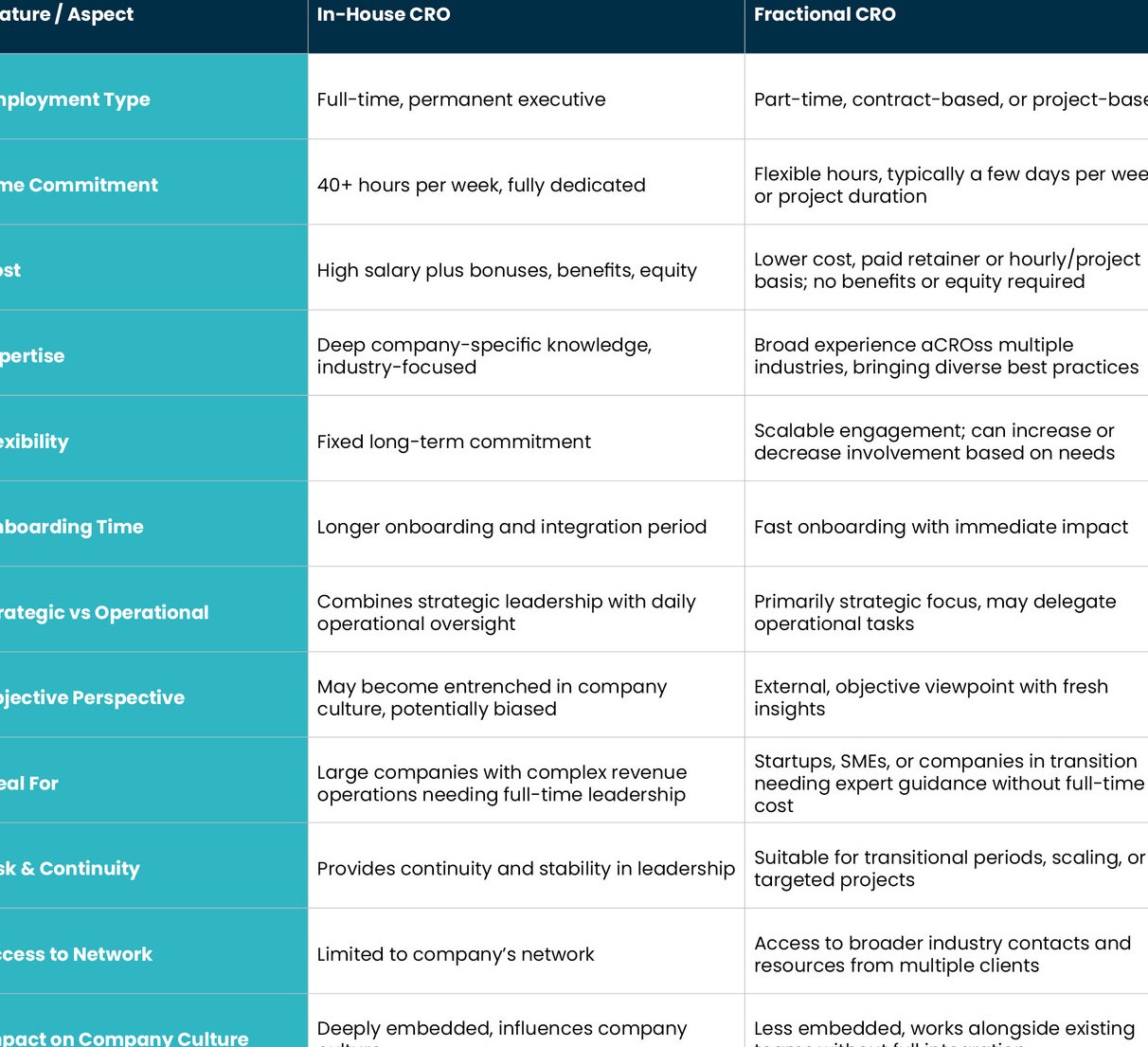
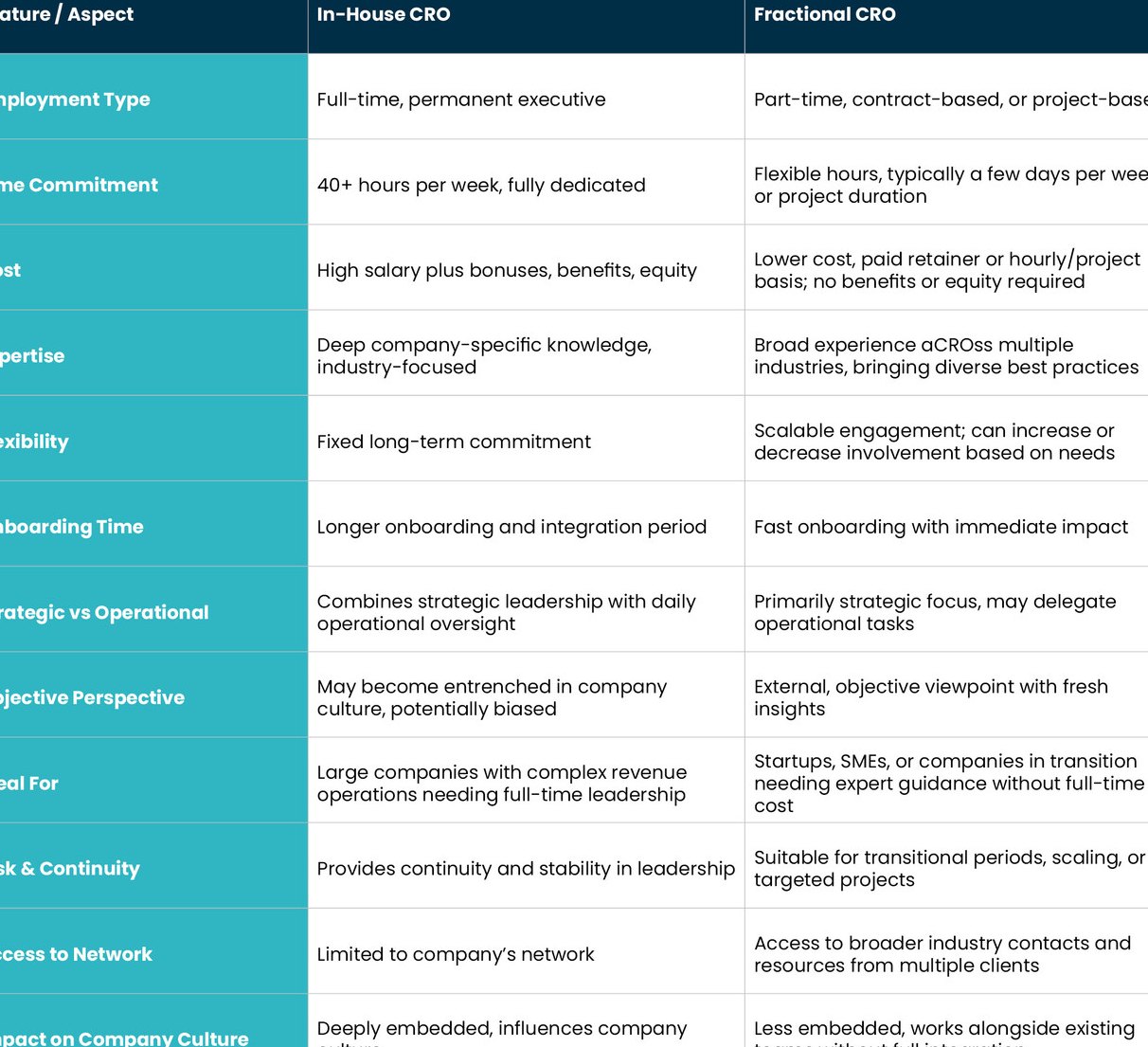
Compare this to the full-time alternative: a full-time VP of Sales in Ann Arbor typically requires a twelve-month minimum commitment, three to six months to build a sales process from scratch versus two to four weeks for a fractional CRO working from an existing playbook, and carries meaningfully higher downside risk if the hire doesn't work out — severance costs and cultural disruption versus a 30-day cancellation clause common to fractional agreements. For companies still validating their go-to-market motion, that asymmetry in risk is often the deciding factor, independent of the raw dollar comparison.
How it plugs into your workflow
Once you've identified candidates through Pavilion, SPARK, or a marketplace like CRO Syndicate, the engagement needs to plug into your existing tools and cadence quickly or you lose the speed advantage a fractional hire is supposed to provide. In the first week, a competent fractional CRO should request direct access to your CRM (Salesforce or HubSpot are the most common in 2027), your forecasting spreadsheet or tool, and any existing sales collateral. Within the first two-hour session in your CRM, they should be able to identify at least five concrete pipeline hygiene issues — stale deals with no next step, misapplied stage definitions, missing close dates — because that diagnostic speed is a real test of whether they're current on modern revenue tooling rather than running an outdated playbook.
From there, the workflow typically moves through three parallel tracks: process (documenting or fixing your sales stages and definitions), people (coaching your existing reps or helping you make your first sales hires), and pipeline (personally opening two to three warm introductions per month from their own network). Board or investor reporting, if relevant, becomes a fourth track — many Ann Arbor startups bring in a fractional CRO specifically because their board wants a operating rhythm and forecast accuracy that didn't previously exist. Set a recurring weekly or biweekly sync, give them a Slack or Teams channel embedded in your existing workspace rather than a separate communication tool, and put the 90-day goals in writing before day one so both sides can evaluate progress against the same criteria.
Related questions

How much does an interim CRO cost in Ann Arbor?
Cost scales with days per month committed, industry specialization, and travel requirements rather than a flat rate. Expect meaningful swings — roughly 50% higher cost moving from eight to twelve days a month, plus a 10-20% local travel premium if weekly in-person presence is required.
Is a fractional CRO the same as an interim CRO?
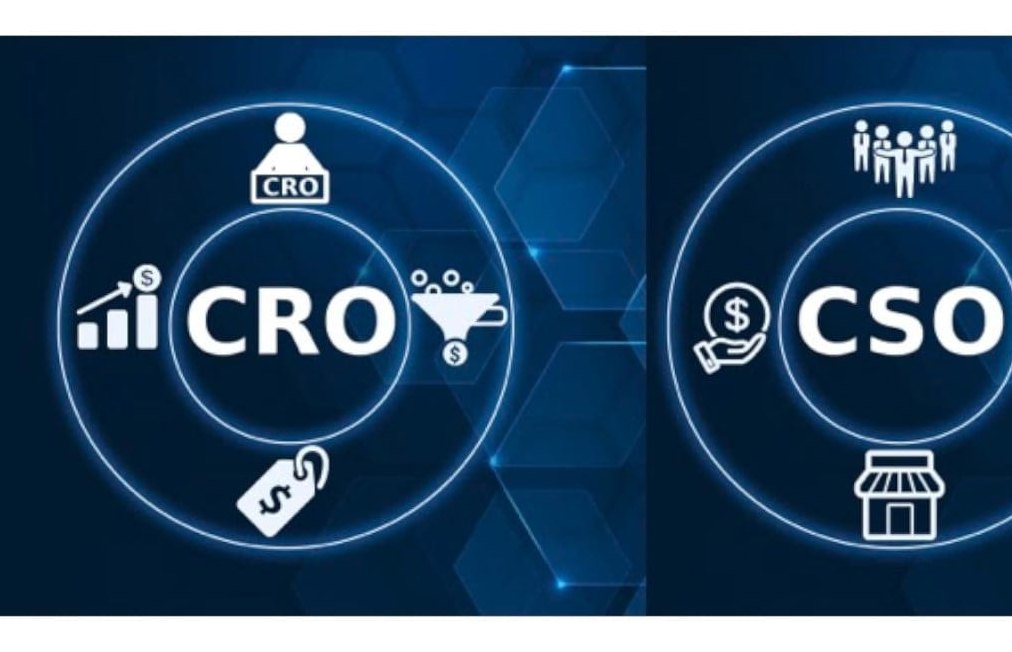
No. An interim CRO typically works full-time for three to six months after a departure, running the function directly. A fractional CRO works part-time, often across multiple clients, focused on strategy, coaching, and process rather than daily execution.
When should I hire a full-time VP of Sales instead?
Once you have more than ten sellers, a predictable inbound motion, and need daily deal management on a pipeline of 200-plus opportunities, a full-time VP of Sales usually outperforms a fractional arrangement, especially if your board wants a named executive on the org chart.
Can a fractional CRO in Ann Arbor also close deals directly?
Yes, but only if you clarify it upfront. Some fractional CROs will carry a bag for the first three to six months, which is common at companies under 3M ARR; others remain strictly strategic and expect your existing team to execute.
Do I need someone physically located in Ann Arbor?
Not necessarily. The strongest available candidates are often based in Detroit, Chicago, or remote hubs and visit quarterly for board meetings and customer visits — domain fit with your buyer typically matters more than local physical presence.
FAQ

What is the typical notice period for a fractional CRO in Ann Arbor? Most agreements use a 30-day termination clause, giving either side an easy exit if the fit isn't right. Engagements involving board-facing responsibilities sometimes extend that to 60 days to allow a clean handoff of reporting and relationships.
How long does it take to find and onboard an interim CRO? Sourcing through Pavilion, SPARK, or a marketplace like CRO Syndicate can surface qualified candidates within one to three weeks. Onboarding itself is fast for a fractional hire — typically two to four weeks if they're working from an established playbook, versus three to six months for a full-time hire building from scratch.
Do fractional CROs in Ann Arbor sign non-competes? Generally no, because they work with multiple clients simultaneously and a non-compete would make that model unworkable. Most will sign a non-solicit agreement protecting your employees and customer relationships, which is the standard, reasonable expectation.
What if my budget doesn't support a senior fractional CRO? A smaller budget typically gets you a junior fractional CRO — someone with strong VP-level experience but fewer full CRO cycles — or a reduced commitment of around four days a month. That can still be valuable for a narrow, well-defined project like building your first sales playbook.
Should I run a paid trial before committing to a longer contract? Yes. A short paid sprint, often two weeks, lets both sides test working chemistry and domain knowledge before either commits to a multi-month retainer, and it's a standard, low-risk step in the fractional hiring process.
How is success measured in the first 90 days? Focus on leading indicators, not trailing revenue: a cleaned and segmented CRM pipeline, a documented sales process with clear stage definitions, and two to three new qualified opportunities sourced from the CRO's own network are the three concrete markers worth tracking.
Sources
- Pavilion - joinpavilion.com
- RevOps Co-op - revops.coop
- Harvard Business Review - hbr.org
- First Round Review - firstround.com
- SaaStr - saastr.com
- Ann Arbor SPARK - annarborspark.org
- LinkedIn - linkedin.com
Related on PULSE
- How much does an interim CRO cost in Ann Arbor in 2027?
- Is there a fractional Chief Revenue Officer available near me in Ann Arbor in 2027?
- How much does an outsourced Chief Revenue Officer cost in Ann Arbor in 2027?
- How much does a part-time CRO cost in Ann Arbor in 2027?
- How do I find a fractional CRO in Millsboro in 2027?
- How do I hire a fractional CRO in Tulsa in 2027?
This page will be disappearing soon. Save it to your device for $1 — or read it free while it is here.
@Kory-White- · if Venmo asks, the last 4 of my number are 2012
This page is gone.
This one is off the shelf now. $1 keeps it on your phone for good — the whole page, pictures and diagrams included.
 pulse-toolsShould I Hire a Fractional CRO If I Need to Build a Partner Channel in 2027?
 pulse-toolsWho is the best fractional CRO in Selbyville in 2027?
 pulse-toolsShould I Hire a Fractional CRO If I Need a 30-60-90 Plan Before a Board Meeting in 2027?
 pulse-toolsHow do I evaluate a fractional Chief Revenue Officer in Irvine in 2027?
 pulse-toolsWhat does a fractional Chief Revenue Officer engagement cost in Utah in 2027?
 pulse-toolsShould I Hire a Fractional CRO If I Need Interim Coverage During a Medical Leave in 2027?
 pulse-toolsShould I Hire a Fractional CRO If I Need to Stand Up RevOps From Scratch in 2027?
 pulse-toolsDo I Need a Fractional CRO for My Franchise in 2027?
 pulse-toolsWhat does a fractional Chief Revenue Officer engagement cost in Arizona in 2027?
 pulse-toolsHow do I hire a fractional CRO in Denver in 2027?