
How Do I Set Up Lead Routing in Clari in 2027?
 Curated byKory White · Fractional CRO · Maryland
 PULSEKNOWLEDGE LIBRARY
Quality
Certified

Setting up lead routing in Clari in 2027 comes down to three moves executed in order: connect your book of record—Salesforce or HubSpot—to the Clari Revenue Platform, turn on the AI scoring layer so it starts reading intent and conversation signals, and then express your assignment logic as a top-to-bottom rule stack in the Clari Admin Console. What makes this build feel unfamiliar if your last routing project was in 2024 is that Clari's router now reasons across three axes at once—account tier, deal-velocity signals, and live rep capacity—and that lead-to-account matching has become a hard prerequisite rather than a nicety.
The deeper reason the recipe changed is that the underlying buyer changed shape. Deals now carry double-digit named stakeholders, evaluation windows have stretched as prospects run their own AI copilots to pre-shortlist vendors, and an inbound lead almost never represents a single person acting alone—it is one visible strand of an account that is already in quiet motion. Old CRM assignment drops a lead into a bucket and prays; Clari's engine instead reconciles fresh intent from 6sense or ZoomInfo against every seller's active pipeline and personal close pattern, then routes to the one rep with the best odds—compressing first response from hours down to minutes. The prerequisite nobody advertises but everyone needs is lead-to-account matching, because automated signal capture routinely mints several duplicate lead records per buyer, and those unresolved duplicates are the single most common reason two reps end up working the same account in the dark. The walkthrough that follows runs from data hygiene to go-live testing, and it uses the 2027 defaults instead of the 2024 recipe most teams copied once and never revisited.
Why Is Lead Routing in Clari Different in 2027?
Throw out the premise that routing is about handing leads out fairly. By 2027 it is a matching problem, and that reframe is exactly what the territory-map and round-robin habits of the last decade cannot handle. The shift traces directly to vendor consolidation: after its 2025 acquisition spree, Clari swallowed Gong's conversation intelligence and Groove's engagement stack, which parked the platform on top of the two data streams routing historically threw away—what a buyer literally *said* on a discovery call and how they *acted* inside an email sequence. A rule that cannot detect "we have budget" inside a Gong transcript, or a collapsing open-rate inside a Groove cadence, is guessing. Stack the committee arithmetic on top—median buying groups now run well into double digits—and the whole concept of one "lead owner" starts to feel like a relic; you are really assigning a *relationship* to a seller, not a contact to a queue.
Clari's Copilot deepens this by triaging inbound before any human lays eyes on it, so a lead arrives at the rule engine already wearing a machine-issued readiness score—the same AI lead-scoring pass you tune upstream. The downstream effect is that account-level intent—a high 6sense reading, say—now carries more weight than the individual lead source that once dictated everything. Meanwhile first-come-first-served has curdled into an anti-pattern: it breeds rep burnout at the top of the board and drags deal velocity across the entire team, because your strongest closer suffocates under raw volume while the lead that would actually have converted languishes two tiers down. Clari's counter is probabilistic—machine learning that forecasts, lead by lead, which seller holds the highest close likelihood given their win history and present workload—turning the routing decision into an expected-value calculation instead of a spin of the wheel.
How Do I Set Up Lead Routing in Clari Step by Step?
1. Prepare Your CRM Data
Nothing downstream can outrun bad input, so begin before Clari touches anything. Your CRM—Salesforce or HubSpot—is the raw material the router consumes, and six fields carry most of the weight: lead status, lead source, company size, industry, geography, and, added for 2027, buying-committee size alongside a normalized intent score piped in from your signal tools. Before writing a single rule, run Clari's Data Health Score from the Admin Console and read it as a pre-flight checklist, not a bragging metric. The failure is painfully concrete: let a big share of your inbound land with a null industry field and every industry-keyed rule quietly shunts those records to the catch-all, leaving you to spend a week puzzling over why enterprise-manufacturing leads keep surfacing in the SDR pool. Collapse duplicates before routing, never after—lean on Salesforce Duplicate Management or HubSpot's Dedup tooling to clear the obvious collisions first, because Clari's lead-to-account matching is genuinely capable but it is a backstop, not an excuse for messy records. Ten minutes of auditing here buys you back a month of routing forensics.
2. Integrate Clari with Your CRM and Data Sources
In the Admin Console under Settings > Integrations, wire the entire signal graph, not just the CRM connector:
- Salesforce or HubSpot (your primary system of record)
- Gong (conversation sentiment and deal-risk scoring)
- Outreach or Salesloft (email engagement and cadence state)
- 6sense or ZoomInfo (intent and firmographic enrichment)
2027 tip: use Clari's Native Connector for Gong—there is no middleware left to nurse—so routing can key directly off positive call sentiment. In practice, the moment Gong tags a "budget approved" beat in a first discovery call, that lead should jump the normal path and reach a senior rep within the hour. Verify the plumbing with a sync preview, which pulls a handful of real lead records and shows the exact fields Clari can actually read; if a field you plan to route on is empty in the preview, it will be empty at runtime, full stop. Respect the throttles as well—Clari publishes a recommended lead-sync ceiling per hour for a steady pipe, and overshooting that during a bulk backfill is a textbook way to make routing look broken when it is merely rate-limited.
3. Define Routing Rules in Clari Admin Console
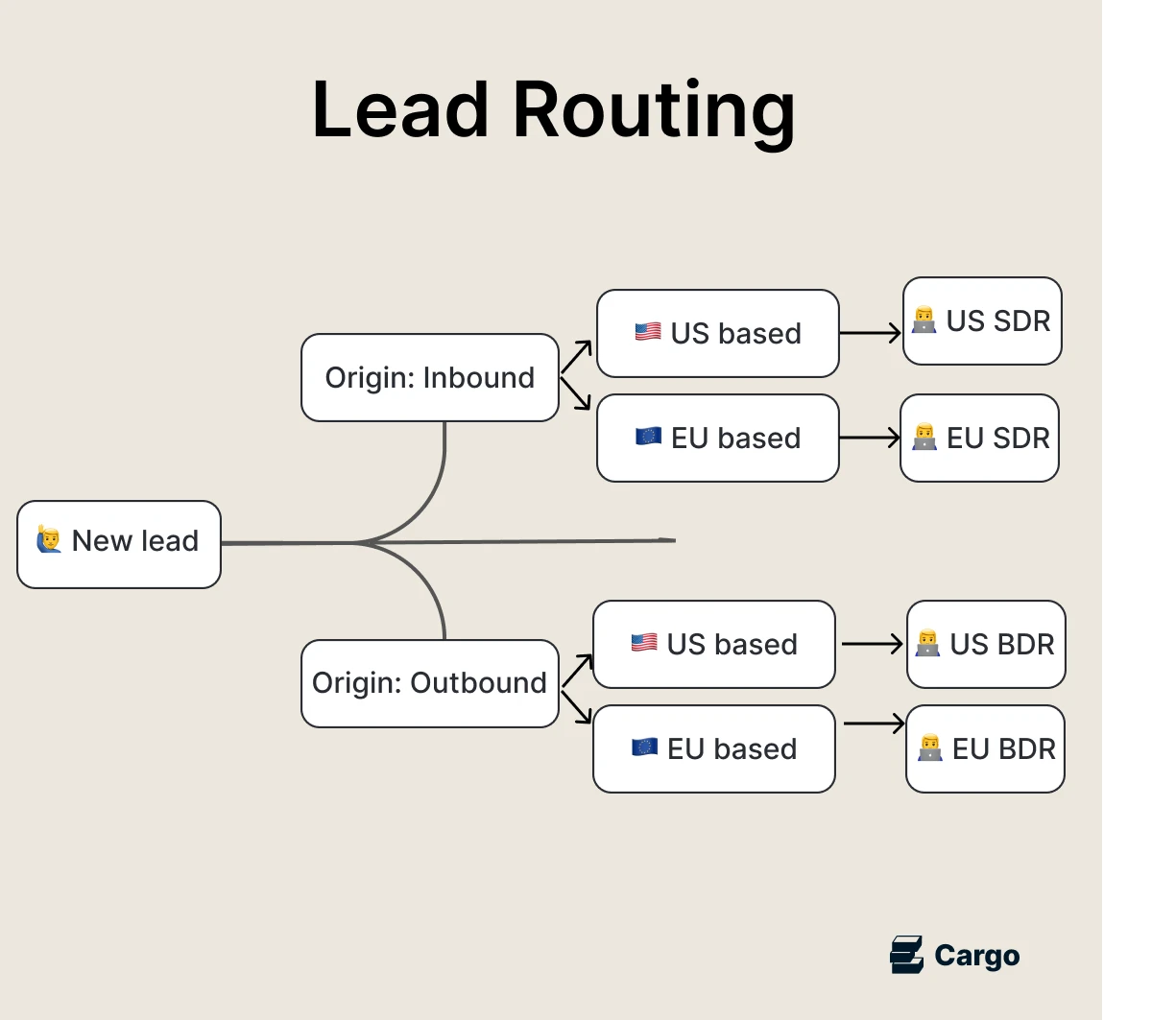
Open Routing > Lead Routing and create a new routing policy. Rules resolve top-down and the first match wins, which means ordering *is* your logic. A 2027-shaped stack looks like this:
Rule 1: Account Tier & Buying Committee Size
- If Account Tier = "Enterprise" AND Buying Committee Size is large
Then route to Enterprise AEs carrying a high Gong sentiment score
- Else If Account Tier = "Mid-Market" AND Intent Score is high
Then route to Mid-Market AEs on a round-robin within the pod

Rule 2: Rep Capacity & Deal Velocity
- If a rep's open pipeline exceeds your capacity ceiling (read live from Clari Forecast)
Then skip that seller and drop to the next available—this is your pressure-release valve
- If the lead's expected close date sits inside the current month (from CRM)
Then route to a top-performing rep ranked on trailing-six-month win rate
Rule 3: Lead Source & Product Interest
- If Lead Source = "Webinar" AND Product Interest = "Clari Copilot"
Then route to a Product Specialist, never a generalist
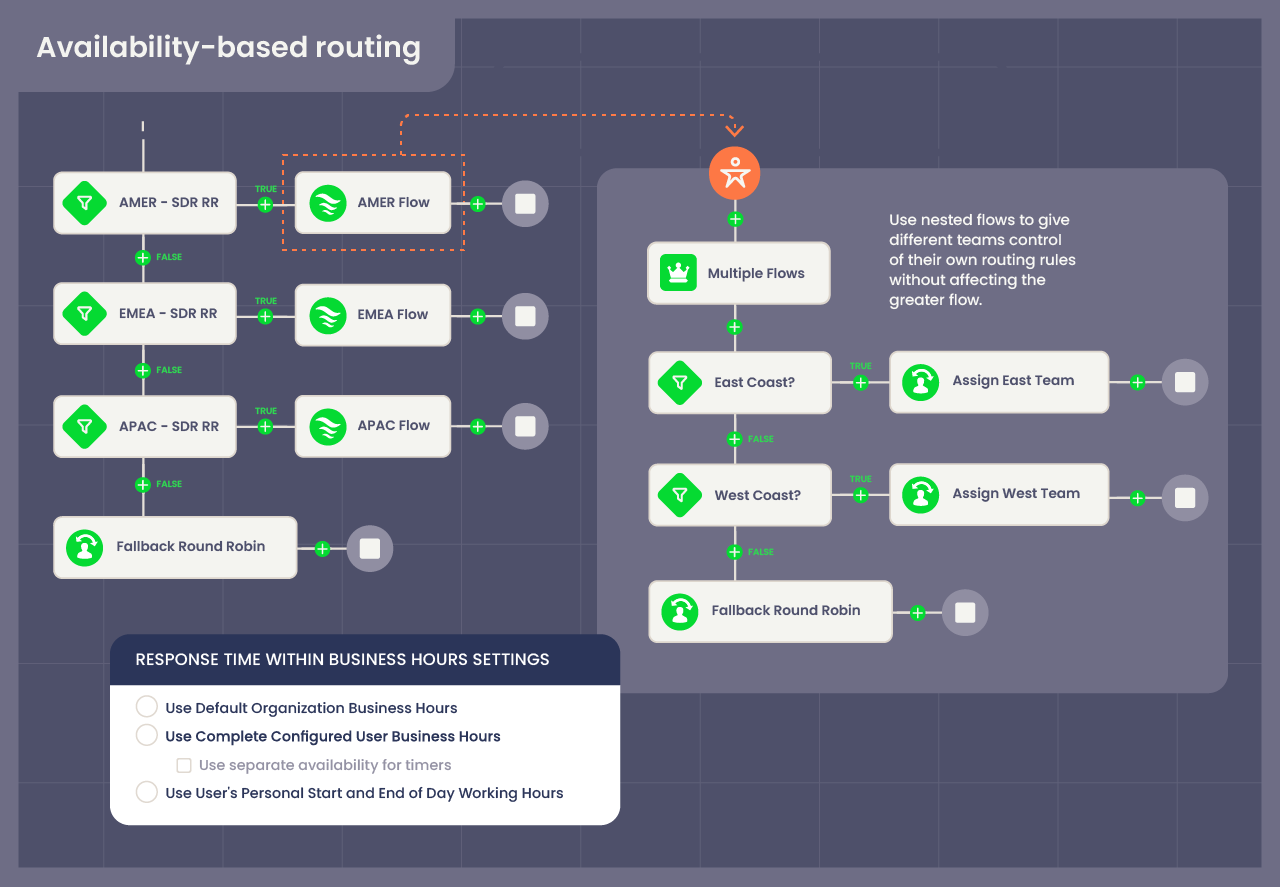
- Else route to an SDR on a time-zone-aware round-robin
2027 nuance: put the AI Suggest button in the rule editor to work. It reads your own closed-won corpus and floats rules you would not have deduced unaided—patterns like "high-intent analyst-review leads convert markedly better when a senior rep gets them first." Treat every suggestion as a hypothesis to accept or tune, not scripture to rubber-stamp.
4. Set Up Round-Robin & Capacity Limits
Under Routing > Distribution, three controls carry the load. Round-Robin distributes leads evenly across a named pod—Clari timestamps each hand-off so no seller collects a second lead while a teammate still waits on their first. Capacity Limits cap daily volume by role, and Clari's Workload AI stretches or shrinks those ceilings live against historical close rate and current Forecast pipeline, so a rep on a heater with room to spare pulls more while an overloaded closer stays shielded—the same live signal you configure when you set rep capacity limits with Clari Forecast. Time Zone Routing aligns each lead's local clock with a seller's working window; with committees now sprawling across continents this stopped being a courtesy, and for any lead missing a time-zone field Clari falls back to IP geolocation instead of dumping it into a default bin.

5. Test and Validate Routing
Never ship a policy you have only argued through on a whiteboard. Open the Routing Test Sandbox at Admin Console > Routing > Test, feed it a CSV of representative leads, and watch the assignments land. You are hunting three specific pathologies: unassigned leads where nothing matched, overloaded reps where one seller hoovers up an outsized share, and duplicate assignments where a single account splinters across two owners. Clari's Routing Audit Log stamps every decision with a timestamp and the exact rule name that fired, so debugging turns into reading a trace rather than divining intent. Repair issues by reordering rules or slotting in a catch-all ("route to SDR Queue for manual review") so nothing ever slips through the floor. Only then flip the policy live—and keep the Routing Dashboard under close watch for the first 48 hours, comparing leads-assigned-per-hour and average response time against your pre-launch baseline.
6. Optimize with AI Feedback Loops
Routing in 2027 is not a fire-and-forget install; the engine learns from outcomes, but only if you actually run the review cadence that feeds it. Thirty days in, pull the Routing Performance Report and mine it for three tells: leads that stalled with zero activity past a week (a signal to revisit the rule that placed them), reps posting low conversion on the leads they were handed (a signal to trim their capacity or fence them off from certain lead types), and intent-score thresholds calibrated too high or too low. Then let evidence settle the debate with A/B Testing—run two policies in parallel, perhaps a pure round-robin against an AI-weighted variant, and after a couple of weeks let Clari report which one nudged lead-to-opportunity conversion. Running experiments rather than staking everything on one hand-tuned policy is now baseline practice.

What Are the Advanced Clari Routing Strategies for 2027?
Buying Committee Routing
Once a committee runs deep, any single "lead" is usually a shard of an account already in flight, and scattering those shards across sellers is precisely how you manufacture internal collisions. The remedy is account-based routing: when an account surfaces multiple open leads, funnel every one of them to a single Account Executive rather than parceling them out to separate SDRs. You encode this under Routing > Account Rules with logic like "if an account holds more than a few open leads, pin them all to the same AE." Clari's Account 360 view then becomes that AE's cockpit—every committee member, their engagement trail, and open threads framed on one screen—so the seller walks into the next call already knowing who champions the deal, who blocks it, and who has gone silent.
AI Copilot Pre-Qualification
The single highest-leverage move available in 2027 is to qualify *before* you route, not after. Clari Copilot can handle first-touch qualification on its own across automated email or chat (bolted to Drift or Intercom): a "budget approved" reply escalates straight to a senior AE, while a "just researching" reply eases into an SDR nurture track without friction. You wire the branch logic under Clari Copilot > Lead Qualification, and the return is real—the machine soaks up the low-yield first pass that used to swallow a large slice of every rep's morning, freeing SDR time for conversations that can actually move.

Multi-Channel Routing
Leads no longer file in through one entrance. They arrive via web forms, live chat, email, and phone through RingCentral or Twilio, and each channel radiates a different intent temperature. Clari's Unified Inbox—new in 2027—pools all of them into one routable stream, which lets you write Channel Priority rules that honor how hot each surface genuinely burns. A phone call running long is a buying signal, so route it to an AE the second it ends; a passive web-form fill is early-stage, so it belongs with an SDR. The whole point is to let truly hot leads cut the line rather than aging inside a first-in-first-out queue that treats a demo request no differently than a whitepaper download.
What Are the Most Common Clari Lead-Routing Mistakes?
- Treating Round-Robin as a strategy. Unweighted rotation in 2027 breeds rep mismatch—a junior SDR inherits a marquee enterprise motion and stalls it in slow motion. Never run round-robin bare; always gate it behind lead-score thresholds so deal complexity and rep seniority stay in step.
- Ignoring live capacity. Clari's Forecast AI broadcasts real-time pipeline load for a reason. Skip capacity limits and your best closers get buried, response times collapse, and your win rate trails right behind. Enforce max leads per day and a pipeline cap as a load-balancer, not a bureaucratic speed bump.
- Trusting the sandbox as production. Synthetic test data is spotless; real inbound is anything but. Paid-social leads convert nowhere near analyst-review leads, and your rules have to feel that gradient. Run a short live pilot on a real subset before you flip the whole org.
- Skipping lead-to-account matching. Two leads from one logo landing on two reps is how you set colleagues competing against each other. Turn on Account Unification (Settings > Matching) so every signal from a company collapses under one account owner before routing ever fires—the same guardrail behind stopping duplicate leads from splitting across reps.

Is Setting Up Lead Routing in Clari Worth the Effort?
Lead routing in Clari in 2027 is a data-first discipline long before it is a rules exercise: clean CRM fields, live intent and conversation feeds, and AI-weighted logic that flexes to real rep capacity and committee reality. The strategic pivot is to walk away from static round-robin and let Clari's AI scoring and real-time workload models make an expected-value assignment—the rep most likely to close *this* lead *right now*.
Prove it out with A/B experiments, keep the routing dashboard in view, and iterate against actual conversion instead of gut feel. Done properly, this build compresses lead response time and lifts lead-to-opportunity conversion—not from one clever rule, but from the compounding of clean data, honest testing, and a feedback loop you genuinely run. The teams that see the biggest lift are the ones that treat go-live as the start of the tuning cycle, not the finish line.

Related questions
If you are standing up routing in Clari, these adjacent build questions tend to land in the same week—each one leans on the same data-hygiene and capacity-modeling backbone described above:
How do I score inbound leads with Clari's AI before routing?
Turn on the Copilot scoring layer so each lead arrives pre-graded on intent and conversation signals, then key your first rule off that score rather than the raw lead source. See Clari lead scoring.
How do I connect Gong sentiment to Clari routing rules?
Use the native Gong connector, confirm sentiment syncs at least hourly, then write a rule that escalates positive, low-risk calls straight to a senior AE. Details at Gong–Clari sentiment routing.
How do I set rep capacity limits using Clari Forecast AI?
Cap daily volume by role under Routing > Distribution and let Workload AI flex those ceilings against live pipeline. Walkthrough at Clari Forecast capacity limits.
How do I build account-based routing for large committees?
Pin every open lead from one account to a single AE via Account Rules, then arm them with the Account 360 view. See account-based routing for committees.
How do I stop duplicate leads from splitting across two reps?
Enable Account Unification so all signals from a company collapse under one owner before routing fires. More at lead-to-account matching.
FAQ
How does Clari's lead routing differ from Salesforce's built-in routing? The dividing line is signal depth. Clari scores on intent, conversation, and engagement data before it assigns anything, whereas Salesforce's native routing is fundamentally rule matching against static field values. Clari also folds Gong sentiment and Outreach activity in at runtime, while reproducing that in Salesforce means custom Apex or a third-party app bolted on. The practical upshot in 2027 is that Clari can make a probability-of-close assignment where native CRM routing can only make a category assignment.
Can I route leads based on Gong conversation sentiment? Yes, and it is among the highest-value conditions you can bolt on. In a rule, phrase it as "if Gong sentiment is positive AND deal risk is low, route to AE." It rides on the Gong-Clari native integration that came with the acquisition, and you should confirm Gong pushes sentiment on at least an hourly sync so the rule fires on today's calls rather than yesterday's.
What happens if a lead doesn't match any rule? It drops to whatever default queue your catch-all rule names—so always define one. The 2027 standard is a dedicated manual-review queue with an SLA attached, and Clari's Routing Dashboard will flag you the moment that queue swells past a threshold, which is your early warning that the rule stack has a coverage gap upstream.
How do I handle leads from buying committees? Route the account, not the person. Set a rule that pins every lead from one account to a single AE, then hand that AE the full committee map through Account 360. For the biggest groups, route to Enterprise AEs carrying formal MEDDIC training, because those deals live or die on qualification rigor rather than speed of first touch.
Does Clari support time-zone-based routing for global teams? It does. Enable Time Zone Routing under Routing > Distribution; Clari reads the lead's CRM time-zone field and falls back to IP geolocation when that field is blank. The catch is that reps must have their working hours set in their Clari user profile—skip that and the feature has nothing to align against. For APAC and EMEA coverage this is effectively mandatory.
Can I A/B test two routing policies in Clari? Yes—open Routing > Experiments, define two policies (for example "Round-Robin" versus "AI-Weighted"), and Clari splits inbound evenly and reports conversion rates after a set window. Running experiments rather than shipping one hand-tuned policy is now the norm among mature teams, because it settles routing debates with evidence instead of opinion.
How do I integrate Clari routing with Outreach or Salesloft? In the Admin Console, head to Integrations > Sales Engagement and connect Outreach or Salesloft. Clari then syncs email opens, click rates, and cadence status, all of which convert into routing conditions—"if Outreach open rate is high over the trailing week, route to AE." Engagement heat is a strong late-stage signal, so this pairs naturally with the intent-score gates in Rule 1.
Sources
- Clari Lead Routing Documentation
- Gartner: The Future of Lead Management
- Forrester: B2B Buying Committees Research
- Gong Labs: Conversation Sentiment and Deal Outcomes
- McKinsey: AI in Sales and Growth Marketing
- SaaStr: Lead Routing Best Practices
- Bessemer Venture Partners: The Cloud Atlas
- Outreach: Integrations Directory
- Winning by Design: MEDDIC in Modern Sales
- 6sense: Intent Data Resources
Related on PULSE
This page will be disappearing soon. Save it to your device for $1 — or read it free while it is here.
@Kory-White- · if Venmo asks, the last 4 of my number are 2012
This page is gone.
This one is off the shelf now. $1 keeps it on your phone for good — the whole page, pictures and diagrams included.
 pulse-toolsWhere do I find a fractional CRO in Connecticut in 2027?
 pulse-toolsHow to use Power BI to visualize fractional CRO ROI from multiple RevOps sources in 2027
 pulse-toolsWhere do I find a fractional CRO in Idaho in 2027?
 pulse-toolsHow Do I Build a Forecast Dashboard in ZoomInfo in 2027?
 pulse-toolsHow to build a closed-loop reporting system between a fractional CRO and your RevOps tools in 2027
 tlHow Many Producers Do I Need to Hire for My Insurance Agency to Grow My Book in 2027?
 pulse-toolsHow Do I Build a Forecast Dashboard in Clari in 2027?
 pulse-toolsHow to choose between HubSpot and Salesforce for a fractional CRO-led RevOps strategy in 2027
 pulse-toolsHow Do I Set Up Lead Routing in Outreach in 2027?
 pulse-toolsHow to configure Salesforce Opportunity Stages for fractional CRO engagement milestones in 2027