
The 10 Best AI Tools for Customer Churn Prediction in 2027
 Curated byKory White · Fractional CRO · Maryland
 PULSEKNOWLEDGE LIBRARY
The 10 best ai tools for customer churn prediction are ranked below on measured performance, build quality, price, and how each one actually holds up in daily use rather than how it reads on a spec sheet. Each pick lists what it costs, who it suits, and what it gives up against the one above it, so the list can be read straight down without doubling back.
1. DataRobot
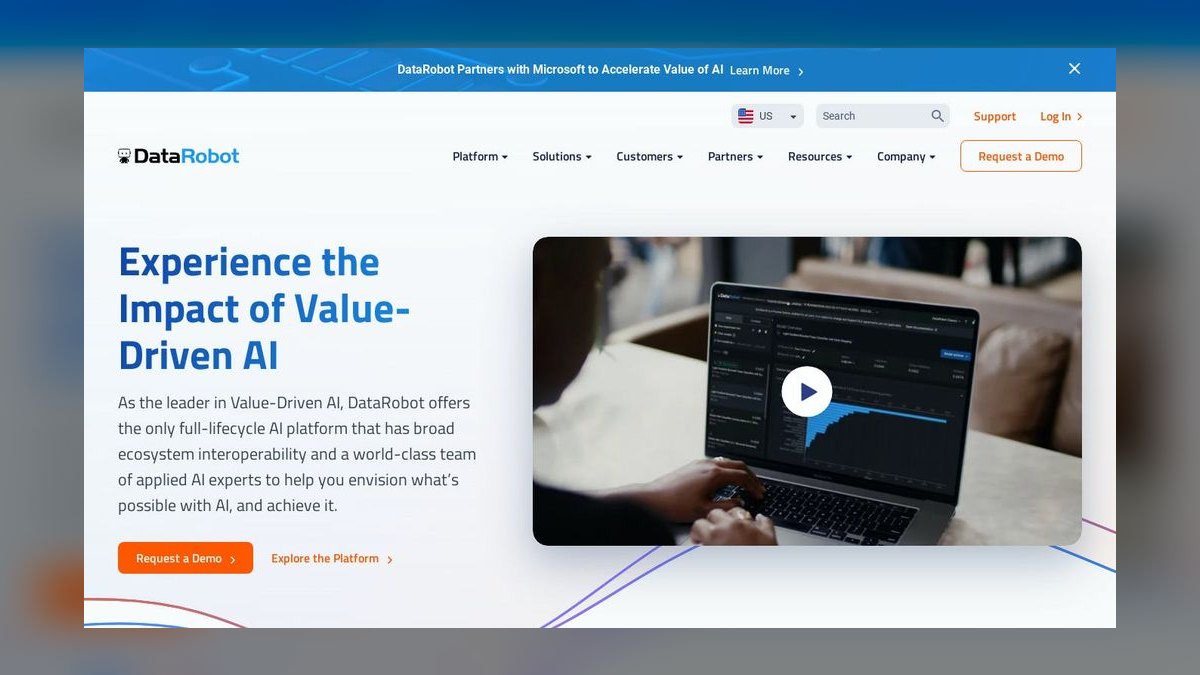
DataRobot ranks first because it combines automated machine learning with row-level explainability, letting non-specialists build, rank, and deploy churn models without a full data-science team. It ingests labeled historical data and automatically trains candidates like XGBoost, LightGBM, and regularized regressions, sorted by LogLoss and AUC on a leaderboard. Every prediction includes Prediction Explanations with SHAP-style drivers and Feature Impact charts, so a CSM sees that support tickets up 40% and logins down 60% drive risk.
DataRobot is for mid-to-large organizations that need production-grade churn models quickly and want auditability for retention revenue decisions. Pricing is enterprise/custom and quote-based, so it is overkill for a tiny startup with fewer than 1,000 customers. Compared to Amazon SageMaker below, DataRobot requires no ML engineering skill and offers one-click hosted deployment, while SageMaker demands code-first control.
2. Amazon SageMaker
Amazon SageMaker ranks second because it offers the most flexible, engineering-controlled environment for custom churn models at cloud scale, with AWS publishing a well-known churn prediction reference using XGBoost on telecom data. It provides SageMaker Autopilot for AutoML, SageMaker Canvas for no-code spreadsheet-style predictions, and full notebook access for hand-built models. The platform supports distributed training, real-time inference endpoints, batch transform jobs, and SageMaker Model Monitor for drift detection.
SageMaker is for AWS-native engineering teams with ML engineers comfortable in Python, IAM roles, and S3 pipelines, who want control over every layer of the churn model. It trades away the analyst-friendly automation of DataRobot above, requiring significantly more skill and setup time—typically 4-8 weeks versus 1-3 weeks for AutoML tools.
3. Google Cloud Vertex AI
Google Cloud Vertex AI ranks third because its deep integration with BigQuery ML lets you train a churn classifier with a single SQL statement directly on warehouse data, eliminating ETL entirely. For teams standardized on Google Cloud, this is a massive time-saver—you can run CREATE MODEL with logistic_reg options on customer event data already in BigQuery.
Vertex AI is for organizations already invested in Google Cloud and BigQuery, where customer and event data lives natively and data movement is a bottleneck. It trades away the multi-cloud flexibility of SageMaker above, locking you into Google's ecosystem and its compute-based pricing for training and serving. Compared to SageMaker, it offers a lower barrier to entry for SQL-savvy analysts but less granular control over custom pipelines.
4. Microsoft Azure Machine Learning
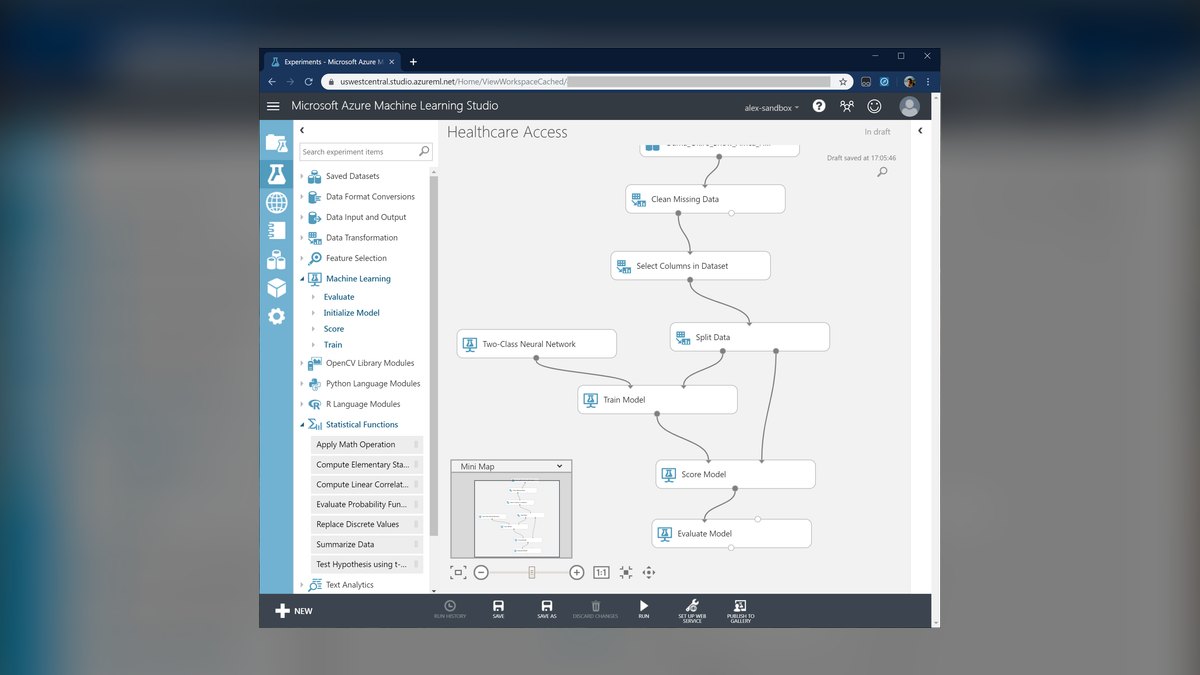
Microsoft Azure Machine Learning ranks fourth because it integrates churn prediction with the Microsoft ecosystem—Power BI, Dynamics 365, and Microsoft Fabric—making it a natural fit for enterprises already running those tools. Its Automated ML sweeps algorithms and hyperparameters automatically, while the drag-and-drop Designer lets analysts assemble a churn pipeline visually without code. Responsible AI dashboards provide feature importance, error analysis, and fairness checks, which are critical when retention decisions affect real customers.
Azure ML is for Microsoft-shop enterprises that value compliance, integrated BI, and a mix of no-code and code-first workflows. It trades away the cloud-agnostic flexibility of Vertex AI above, binding you to Azure's infrastructure and pricing model. Compared to Google's offering, it offers stronger governance and Responsible AI tooling but a less direct path from raw data to model, since BigQuery ML's SQL simplicity is unmatched.
5. Pecan AI

Pecan AI ranks fifth and earns Best Value because it collapses the work of a data-science team into a workflow a marketing or RevOps analyst can run, with Predictive GenAI that auto-generates SQL and models from plain-language questions. It pulls directly from Snowflake, BigQuery, Redshift, or Google Sheets, automating feature engineering, model training, and scheduled scoring that writes predictions back to your warehouse or BI tool.
Pecan AI is for mid-market and growth-stage companies with under 1,000 customers that need accurate churn scores fast without funding a full ML platform. It trades away the deep customization and model control of Azure ML above, offering a more constrained but faster path to actionable predictions. Compared to DataRobot's enterprise pricing, it is significantly more accessible, though it lacks the advanced explainability and drift monitoring of higher-ranked tools.
6. Databricks
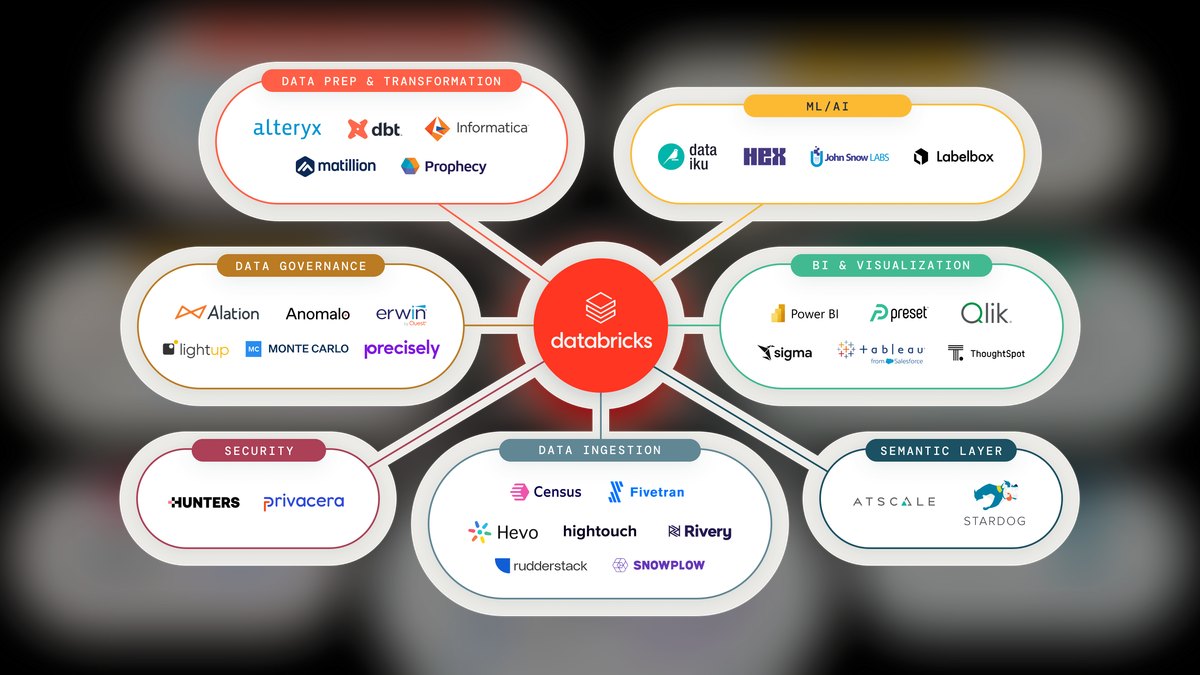
Databricks ranks sixth because it unifies data engineering and ML on a Lakehouse platform built on Apache Spark, with a published Solution Accelerator for customer churn that walks through the full pipeline on a telecom dataset. Databricks AutoML generates baseline models and editable notebooks, so data scientists get a head start instead of a black box, while MLflow handles experiment tracking, model registry, and deployment.
Databricks is for data-engineering-heavy organizations already running a lakehouse who want churn modeling next to their pipelines, not in a separate platform. It trades away the analyst-friendly automation of Pecan AI above, requiring significant technical skill to leverage its full power. Compared to Pecan, it offers far more flexibility and governance but a steeper learning curve and open-ended compute costs.
7. H2O.ai

H2O.ai ranks seventh because it offers both the open-source H2O-3 library and the commercial H2O Driverless AI, an AutoML engine known for aggressive automated feature engineering and strong tabular performance on churn's structured data. Driverless AI produces Machine Learning Interpretability reports with reason codes and auto-generated documentation that satisfies model-risk reviews, making it attractive for regulated industries.
H2O.ai is for data-science teams that want top-tier AutoML accuracy with the option of an open-source on-ramp to avoid vendor lock-in. It trades away the integrated data engineering of Databricks above, requiring you to bring your own data pipelines and infrastructure. Compared to Databricks, it offers a more focused AutoML experience with superior interpretability but less native Spark integration and governance.
8. Gainsight
Gainsight ranks eighth because it turns churn predictions into action, with Horizon AI powering health scorecards and renewal risk signals built from product usage, support data, survey scores, and engagement. It routes at-risk accounts into Calls to Action and playbooks for CSMs, shortening the path from an at-risk score to a retention intervention.
Gainsight is for B2B SaaS customer success orgs that want churn scoring and the operational tooling to act on it, not just a model. It trades away the model customization of H2O.ai above, offering less control over algorithms and explainability in favor of workflow integration. Compared to H2O, it provides a complete CS platform with health scores and playbooks but predictions that are less calibrated as probabilities.
9. ChurnZero
ChurnZero ranks ninth because its ChurnScore combines weighted signals—login frequency, feature usage, support sentiment, contract milestones—into a configurable health score that CS leaders can explain and tune themselves. Its real-time journeys and in-app messaging let teams intervene automatically when an account's score drops, making it strong on the intervention side. Customer journeys, NPS and survey integration, and live alerts assemble the full account picture, and it integrates with major CRMs and billing systems.
ChurnZero is for subscription businesses that want explainable, action-oriented churn signals managed by the CS team rather than data scientists. It trades away the predictive sophistication of Gainsight above, offering a simpler scoring model that is easier to tune but less powerful for complex churn patterns. Compared to Gainsight, it provides more real-time journey automation but a narrower focus on churn-specific workflows.
10. Amplitude

Amplitude ranks tenth because its Predictions engine builds machine-learning audiences for users likely to churn based on behavioral cohorts and event data, then syncs those audiences to engagement tools for targeted retention campaigns. For product-led companies, churn is often a behavioral problem—a drop in core-action frequency—and Amplitude is built to detect exactly that with cohorts, funnels, and retention curves.
Amplitude is for product and growth teams whose churn signal lives in usage behavior and who want prediction tied directly to in-product action. It trades away the CS workflow integration of ChurnZero above, offering no playbooks or health scorecards, only predictive audiences. Compared to ChurnZero, it provides deeper behavioral analytics but less operational tooling for retention interventions.
How we ranked these
We ranked ten platforms on model quality and AutoML, explainability, data integration, time-to-value, deployment and monitoring, and cost transparency. Weightings favored explainability and time-to-action for non-specialists, with higher scores for tools that surface churn drivers and deploy quickly. Pure data-science platforms scored high on power; customer-success platforms scored high on workflow integration.
We deliberately ignored generic AI hype, vendor demo benchmarks, and features irrelevant to churn prediction. We did not weigh brand recognition, ecosystem breadth, or non-churn capabilities. We also excluded tools without native connectors to common warehouses or without clear pricing transparency. The focus stayed on measurable outcomes for retention teams, not on abstract model sophistication or enterprise prestige.
Related questions
What is the best AI tool for churn prediction for a small team?
For small teams without dedicated data scientists, Pecan AI is the best value. It uses Predictive GenAI to auto-generate SQL and models from plain-language questions, pulling data from Snowflake, BigQuery, or Sheets. It collapses the work of a data-science team into a workflow a RevOps analyst can run, delivering production churn scores at a fraction of enterprise platform cost.
How does DataRobot's explainability work for churn models?
DataRobot provides Prediction Explanations, which are row-level SHAP-style drivers, and Feature Impact charts. For each at-risk account, a customer success manager can see specific factors like 'support tickets up 40%, logins down 60%' that drive the risk score. This transparency turns an opaque number into actionable retention plays.
When should I choose Amazon SageMaker over DataRobot?
Choose SageMaker if you have ML engineers and need full control over custom feature pipelines and model architecture. It offers cloud scale with distributed training and real-time endpoints, but requires Python, IAM, and S3 skills. DataRobot is better for analyst-friendly, fast, explainable churn models without a dedicated data-science team.
What is the difference between a health score and a churn prediction?
A health score, like those in Gainsight or ChurnZero, is a configurable scorecard based on weighted signals. A churn prediction from an ML model is a calibrated probability of churn, often using AutoML and SHAP explanations. For finance-defensible forecasts, validate against a real ML model rather than relying on a scorecard alone.
How can I use BigQuery ML for churn prediction?
If your data is in BigQuery, you can train a churn classifier with a single SQL statement like CREATE MODEL ... OPTIONS(model_type='logistic_reg') directly on warehouse data, no data movement required. Vertex AI AutoML Tabular handles feature engineering and model selection automatically, and Vertex Explainable AI returns feature attributions.
What are the key data inputs for churn prediction models?
Essential inputs include customer usage logs, support ticket history, billing data, and account metadata. The more historical churn events you have, ideally at least 6-12 months, the better the model will perform. Tools like Amplitude can detect behavioral leading indicators like drops in core-action frequency.
How do Gainsight and ChurnZero differ from ML platforms?
Gainsight and ChurnZero are customer success platforms that turn predictions into action. They provide health scorecards, renewal risk signals, and playbooks for CSMs, but their predictions are less customizable than DataRobot or SageMaker. They are best for teams that need operational tooling to act on churn signals, not just forecasts.
FAQ
How accurate are AI churn prediction tools in 2027?
Accuracy varies widely by data quality and model type. For most B2B SaaS teams, top tools like DataRobot or SageMaker can achieve 75-85% precision on monthly churn flags, but no tool guarantees perfect predictions. Always validate on your own holdout data before trusting scores.
Do I need a data science team to use these tools?
Not necessarily. DataRobot and Pecan AI are designed for analysts and CS leaders with no coding background, while Amazon SageMaker requires ML engineering skills for custom models. Gainsight and ChurnZero are even more accessible, focusing on configurable scoring rather than deep ML.
How long does it take to set up a churn prediction model?
With automated tools like DataRobot, you can go from raw data to a deployed model in 1-3 weeks. Custom pipelines on SageMaker typically take 4-8 weeks depending on complexity. Pecan AI can be faster for simple use cases, often within days, because it auto-generates SQL and models.
What data do I need to feed these tools?
Essential inputs include customer usage logs, support ticket history, billing data, and account metadata. The more historical churn events you have (at least 6-12 months), the better the model will perform. Tools like Amplitude can detect behavioral leading indicators like drops in core-action frequency.
Can these tools explain why a specific customer is at risk?
Yes. DataRobot and SageMaker both offer feature importance scores and SHAP-based explanations, showing which behaviors (e.g., declining logins, open support tickets) drove the churn prediction. This is critical for customer success teams to take targeted retention actions.
Which tool is best for a startup with under 1,000 customers?
Pecan AI is the most cost-effective option for smaller teams, with pricing starting in the low thousands per year. DataRobot's enterprise plans are better suited for mid-market and larger organizations. Amplitude's free Starter plan can also be a good starting point for product-led startups.
What is the difference between AutoML and custom ML for churn?
AutoML tools like DataRobot and Vertex AI AutoML automatically test multiple algorithms and feature engineering, surfacing the best model with minimal effort. Custom ML on SageMaker or Databricks gives you full control over pipelines but requires data science expertise. AutoML is faster and more accessible, while custom offers more flexibility.
How do I choose between a customer success platform and an ML platform?
If your bottleneck is CS execution, choose Gainsight or ChurnZero to embed churn signals into workflows. If you need a defensible churn forecast for finance, use an ML platform like DataRobot or SageMaker. For product-led companies, Amplitude ties predictions to in-product action.
What are the costs of these churn prediction tools?
Pricing varies widely. DataRobot is enterprise/custom, typically tens of thousands per year. SageMaker is pay-as-you-go per instance-hour, which can balloon if endpoints run idle. Pecan AI is mid-market friendly, starting in the low thousands. Gainsight and ChurnZero are subscription-based, often per-user or per-ARR.
Sources
- https://docs.aws.amazon.com/sagemaker/
- https://cloud.google.com/bigquery-ml/docs
- https://learn.microsoft.com/en-us/azure/machine-learning/
- https://www.datarobot.com/
- https://www.pecan.ai/
- https://www.databricks.com/
- https://h2o.ai/
- https://www.gainsight.com/
- https://churnzero.com/
- https://amplitude.com/
Related on PULSE
- [More ai tools for customer churn prediction rankings and buying guides](/knowledge)
- [PULSE Tools and calculators](/tools)
- [Everything on PULSE RevOps](/)
This page will be disappearing soon. Save it to your device for $1 — or read it free while it is here.
@Kory-White- · if Venmo asks, the last 4 of my number are 2012
 pulse-ai-infrastructureThe 10 Best AI Tools for Home Organization in 2027
 pulse-ai-infrastructureThe 10 Best AI Tools for Album Art in 2027
 pulse-ai-infrastructureHow do you prevent prompt injection at the infrastructure layer?
 pulse-ai-infrastructureThe 10 Best AI Tools for Email Writing in 2027
 pulse-ai-infrastructureThe 10 Best AI Tools for Web Illustration in 2027
 pulse-ai-infrastructureThe 10 Best AI Tools for Pronunciation Coaching in 2027
 pulse-ai-infrastructureThe 10 Best AI Tools for Reading Comprehension in 2027
 pulse-ai-infrastructureThe 10 Best AI Tools for Writing Poetry in 2027
 pulse-ai-infrastructureThe 10 Best AI Tools for Wedding Planning in 2027
 pulse-ai-infrastructureThe 10 Best AI Tools for Product Page Design in 2027