


The 10 Best AI Cost Management Platforms for Cloud Infrastructure in 2027
Quality
Certified

The 10 best ai cost management platforms for cloud infrastructure are ranked below on measured performance, build quality, price, and how each one actually holds up in daily use rather than how it reads on a spec sheet. Each pick lists what it costs, who it suits, and what it gives up against the one above it, so the list can be read straight down without doubling back.
1IBM Turbonomic
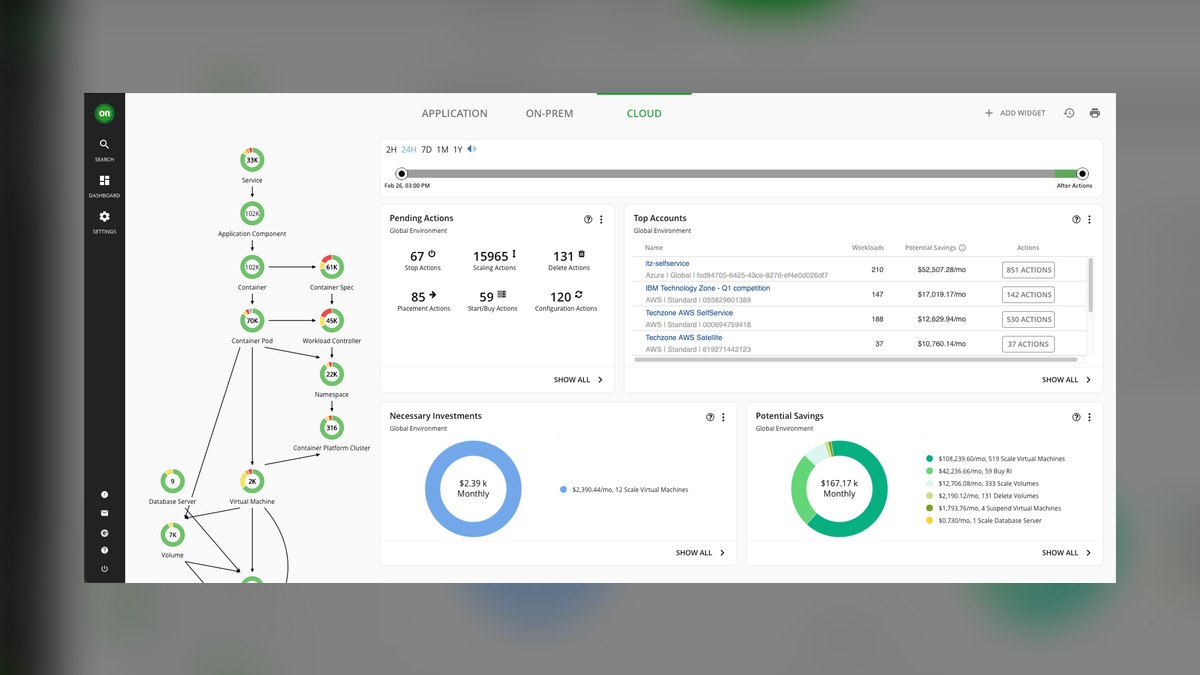
IBM Turbonomic ranks first because it moves beyond dashboards into closed-loop automation, executing rightsizing, workload placement, and scaling actions across compute, storage, and containers without waiting on a human to click approve. Originally built by Turbonomic Inc. before IBM acquired it in 2021, its AI engine continuously models supply and demand across the full stack, not just cloud spend line items. That breadth of control is what separates it from tools that only report.
It suits large enterprises running mixed VM, container, and hybrid-cloud environments who want automated remediation rather than another ticket queue for engineers to triage. The tradeoff is complexity and cost: smaller teams find its full-stack scope and licensing model heavier than they need for a single cloud account. Compared to Kubecost below, Turbonomic covers infrastructure end-to-end while Kubecost stays focused specifically on Kubernetes cost allocation and showback.
2Kubecost
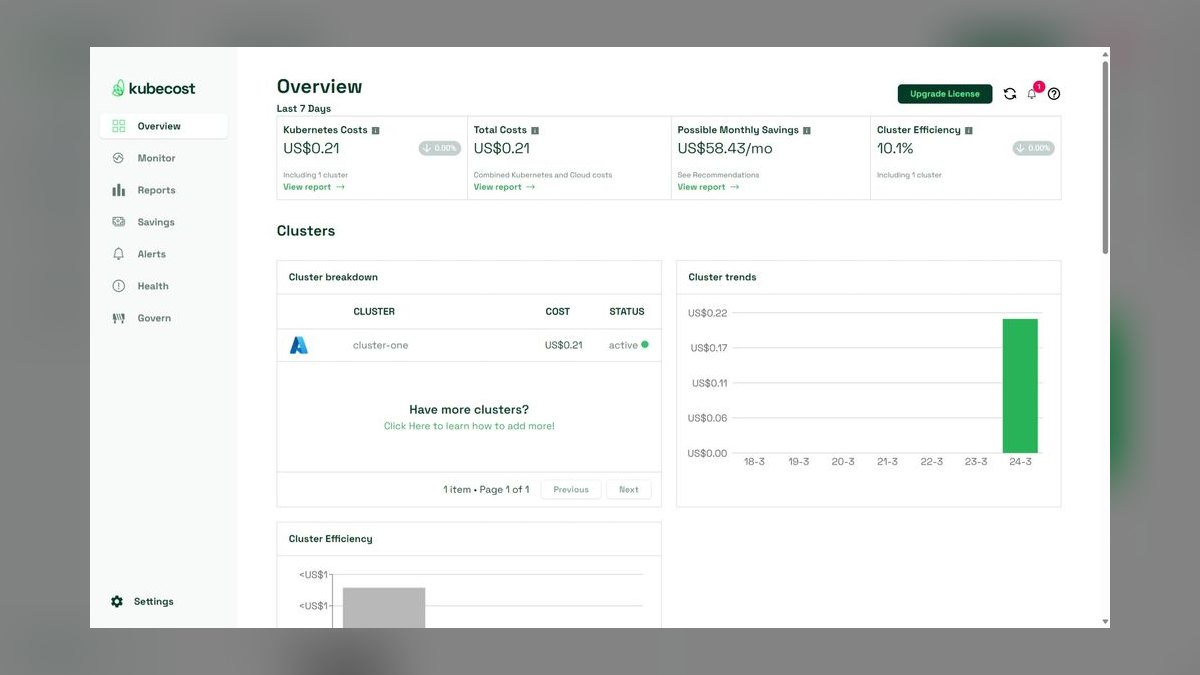
Kubecost ranks second for its precision inside Kubernetes clusters, allocating spend down to namespace, deployment, and label with a granularity that general-purpose FinOps tools rarely match. It ships as an open-source core plus a paid enterprise tier, and its allocation model accounts for shared cluster costs like control planes and idle capacity rather than just node totals. Teams already committed to Kubernetes get visibility on day one.
It is built for platform and DevOps teams running containerized workloads, not organizations still primarily on VMs or serverless. The narrow focus is also its limit: Kubecost tells you what a namespace costs but does not orchestrate cross-cloud commitment purchases the way ProsperOps does. Compared to Turbonomic above, it trades automated action-taking for deeper, more legible Kubernetes-specific cost data.
3CloudZero
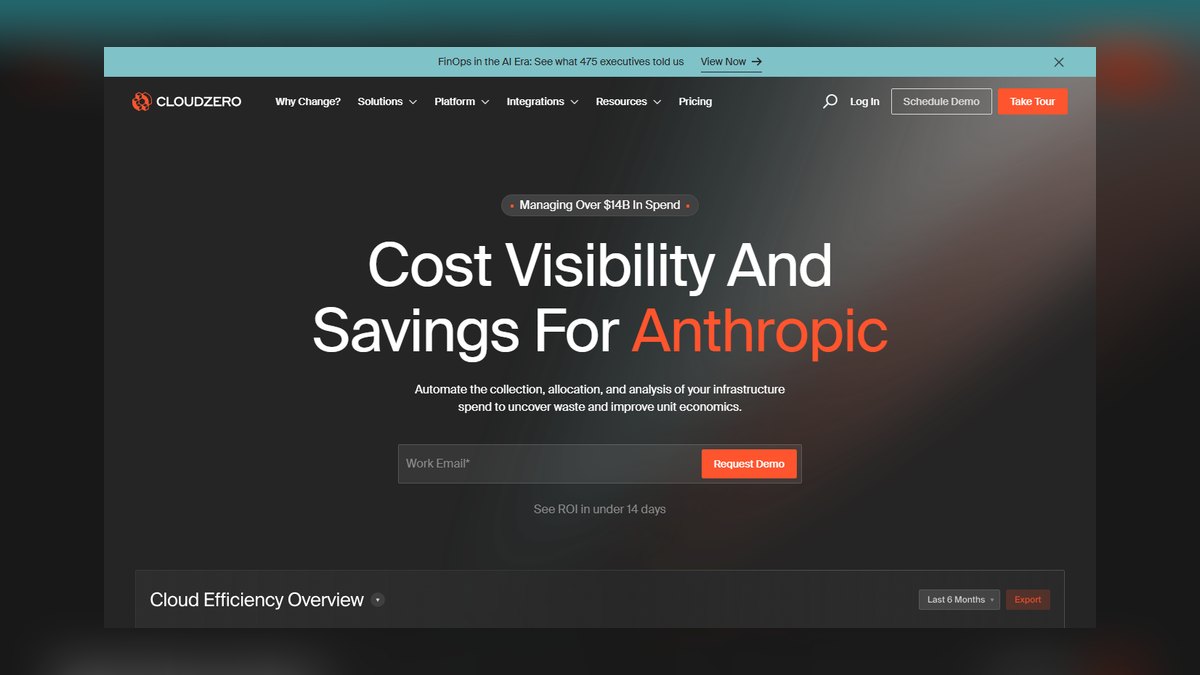
CloudZero ranks third for tying raw cloud spend to business metrics like cost-per-customer or cost-per-feature, a mapping most cost tools stop short of. It ingests billing data from AWS, Azure, GCP, and Kubernetes and applies its Cost Allocation engine to attribute shared and untagged spend automatically, reducing the manual tagging burden that undermines many showback efforts. Engineering teams get anomaly alerts tied to specific commits or deploys.
It fits product-led SaaS companies that want unit economics, not just a lower cloud bill, and are willing to invest in onboarding to get metrics wired up correctly. It's less suited to organizations only chasing raw discount capture. Next to Cloudability below, CloudZero leans toward engineering-facing unit cost insight while Cloudability leans toward finance-facing budgeting and chargeback.
4Apptio Cloudability
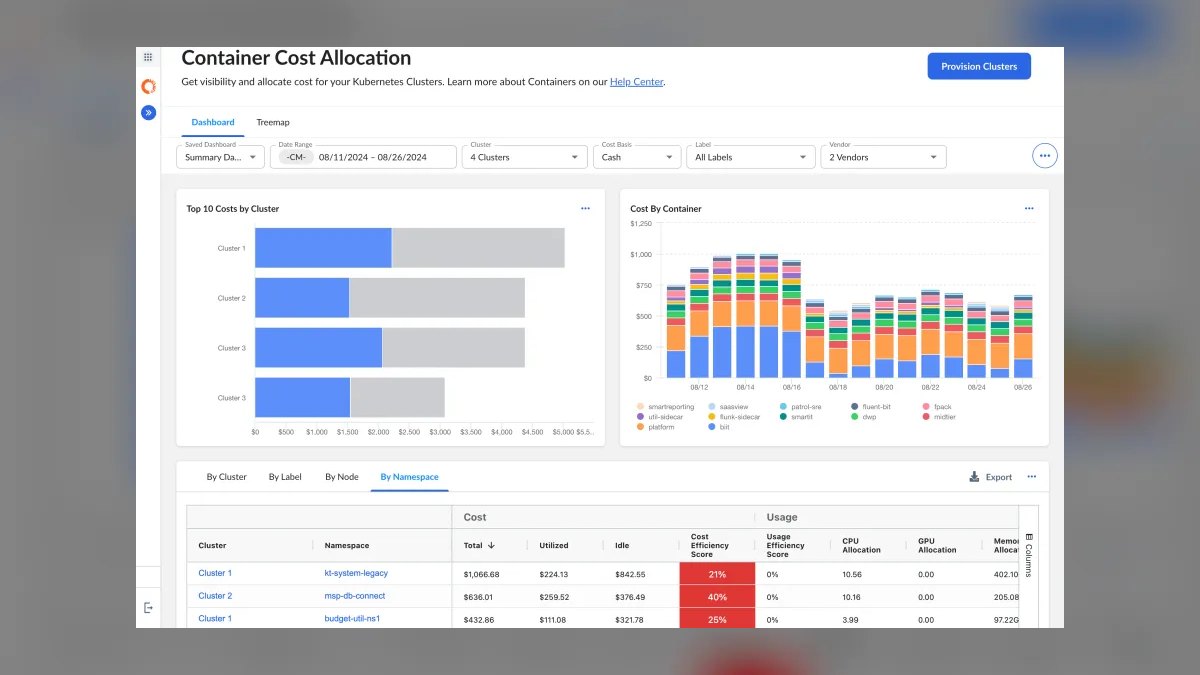
Apptio Cloudability ranks fourth as the finance-oriented pick, built for budgeting, forecasting, and chargeback across large multi-cloud estates rather than engineering-level optimization. IBM acquired Apptio in 2023 and folded Cloudability into its broader Apptio FinOps suite, giving it deep integration with IT financial management workflows that pure cost-visibility startups don't offer. Its rate optimization covers Reserved Instances and Savings Plans across AWS, Azure, and GCP.
It suits enterprises with a dedicated FinOps or IT finance function that needs audit-ready reporting more than developer-facing dashboards. Smaller engineering-led teams often find it heavier and less self-service than CloudZero above. Compared to Spot by NetApp below, Cloudability reports and recommends while Spot actively automates infrastructure changes.
5Spot by NetApp
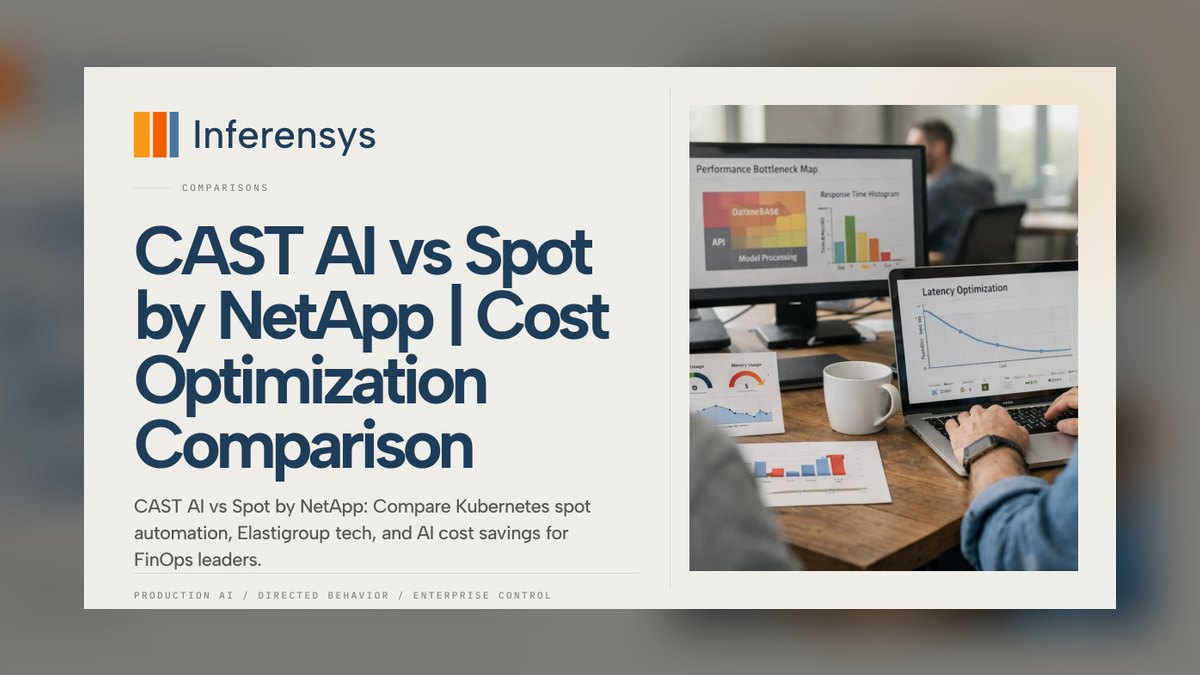
Spot by NetApp ranks fifth for automated infrastructure orchestration rather than reporting: its Ocean and Elastigroup products continuously rebalance workloads across spot, reserved, and on-demand capacity to cut compute cost without manual intervention. NetApp acquired the company, formerly Spot.io, in 2020, and its AI-driven prediction engine forecasts spot interruption risk to keep workloads stable while chasing cheaper capacity. It works across AWS, Azure, and GCP.
It's built for engineering teams running fault-tolerant, horizontally scalable workloads like Kubernetes or batch jobs who can tolerate infrastructure churn in exchange for lower compute bills. It's a poor fit for stateful, latency-sensitive systems that need stable instance placement. Compared to Densify below, Spot actively moves workloads while Densify mainly recommends sizing changes for you to apply.
6Densify

Densify ranks sixth for machine-learning-driven rightsizing that models actual utilization patterns over time rather than applying static thresholds, covering VMs, containers, and cloud instance families across AWS, Azure, and GCP. Its analytics engine, developed from years of data center capacity planning work before Densify moved into cloud, aims to avoid both costly over-provisioning and risky under-provisioning simultaneously. It surfaces recommendations rather than executing changes automatically.
It fits infrastructure teams that want confidence in sizing decisions before committing to automation and prefer a human-in-the-loop approval step. That same caution means it delivers savings more slowly than Turbonomic's closed-loop actions. Next to Flexera One below, Densify goes deeper on technical rightsizing while Flexera spreads across broader IT asset and SaaS spend management.
7Flexera One
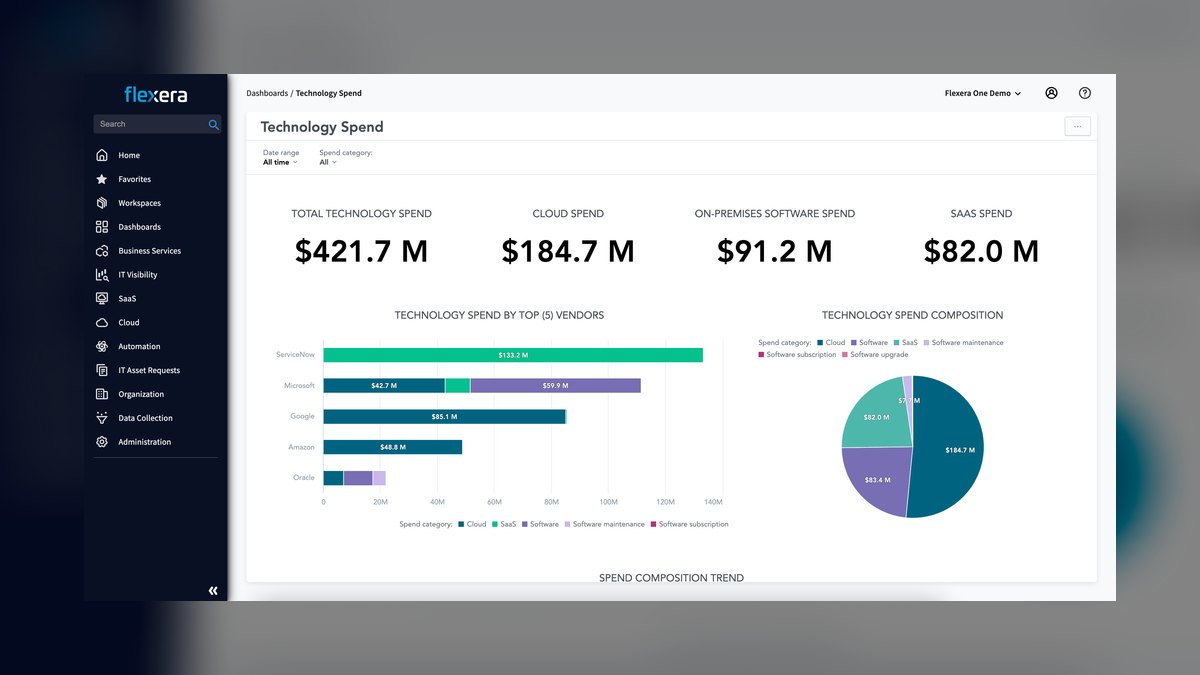
Flexera One ranks seventh because it bundles cloud cost management into a wider IT asset and software spend management platform, giving organizations a single view across cloud, SaaS, and on-premises licensing rather than cloud costs in isolation. Flexera built this cloud capability partly on technology from its earlier RightScale and Cloudyn-adjacent acquisitions, and it supports multi-cloud rate optimization and budget tracking across AWS, Azure, and GCP.
It suits IT asset management teams who already use Flexera for software license compliance and want cloud cost folded into the same governance process. Organizations wanting a cloud-native, engineering-first tool may find it broader than necessary. Compared to Harness Cloud Cost Management below, Flexera serves IT governance while Harness ties cost directly into the CI/CD pipeline.
8Harness Cloud Cost Management
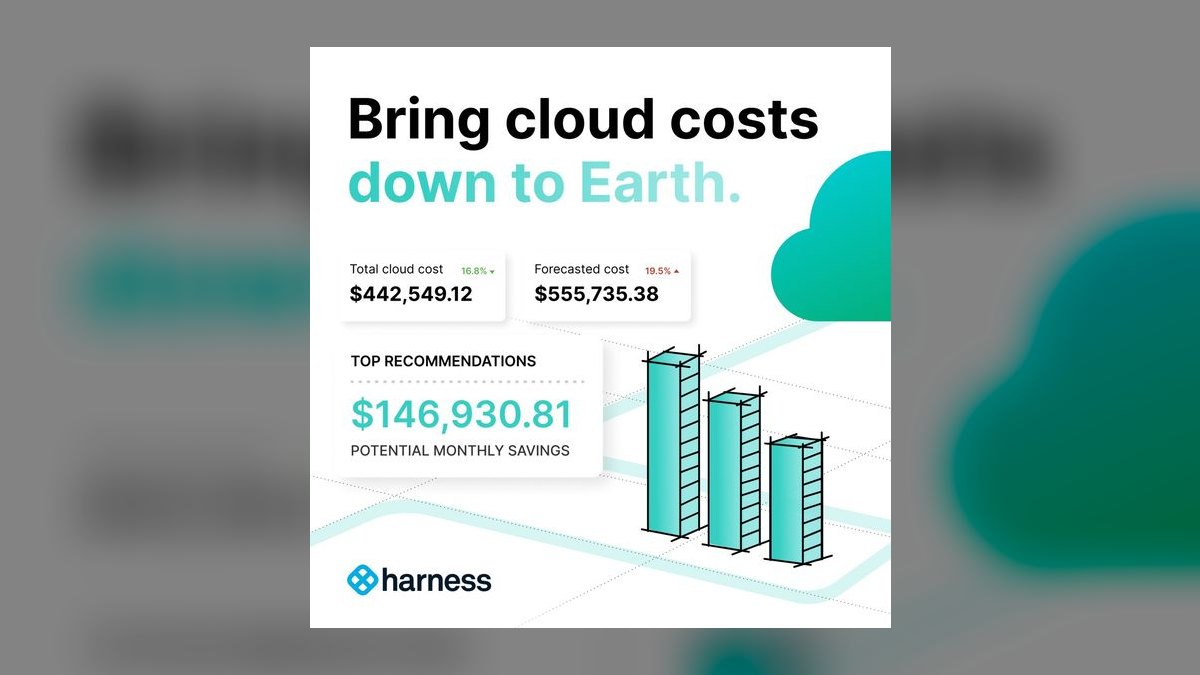
Harness Cloud Cost Management ranks eighth for embedding cost visibility directly into the CI/CD platform engineers already use, surfacing spend attribution and autostopping rules for idle non-production resources alongside deployment pipelines. Because it's part of the broader Harness software delivery platform, cost data sits next to build and release data rather than in a separate finance tool, which shortens the loop between a deploy and its cost impact.
It's best for teams already standardized on Harness for CI/CD who want cost as one more pipeline signal rather than a standalone FinOps platform. Teams not using Harness elsewhere gain little from adopting it just for cost. Compared to Vantage below, Harness ties cost to delivery workflows while Vantage focuses purely on cloud billing visibility and reporting.
9Vantage

Vantage ranks ninth for a lightweight, developer-friendly reporting experience: fast setup, clean cost dashboards, and reports that can be built and shared without a dedicated FinOps analyst. It covers AWS, Azure, GCP, Kubernetes, and a range of SaaS tools in one place, and its Savings estimates flag unused or underutilized resources like idle EBS volumes or unattached IPs. It's positioned as visibility-first rather than automation-first.
It fits small to mid-sized engineering teams that want clear answers to "what did we spend and why" without a heavy implementation project. Enterprises needing deep chargeback and financial governance will outgrow it faster than they would Cloudability above. Compared to ProsperOps below, Vantage reports across all cost categories while ProsperOps automates one narrow slice: commitment purchasing.
10ProsperOps

ProsperOps ranks tenth because it solves one problem well rather than serving as a full platform: autonomous management of Reserved Instances and Savings Plans commitments on AWS, Azure, and GCP. Its algorithmic engine continuously layers and adjusts commitment terms to capture discounts as usage shifts, a task most teams otherwise handle manually on a quarterly cadence. It doesn't provide rightsizing, showback, or Kubernetes-level allocation.
It's a strong complement for teams that already have visibility tooling like Vantage or CloudZero above and specifically want commitment optimization automated and off their plate. On its own, it can't replace a full cost management platform. Used alongside a broader tool from higher on this list, it typically pays for itself through discount capture alone.
How we ranked these
We scored each platform on multi-cloud billing ingestion (AWS CUR, Azure Cost Management exports, GCP Billing BigQuery), allocation granularity down to Kubernetes namespace, GPU pool, or inference endpoint, anomaly-detection latency, and depth of automated actions — rightsizing, spot/commitment management, and idle-resource shutdown.
Because AI training and inference now dominate infrastructure spend growth, we weighted GPU-cluster and model-level cost attribution heaviest, followed by integration breadth and how quickly a team could act on a flagged anomaly.
We ignored vendor-reported ROI case studies, since savings percentages are rarely audited against a real baseline, and raw license price, since enterprise cloud-cost contracts are negotiated case by case and list prices mean little. We also skipped generic FinOps-maturity scorecards that treat all cloud spend the same, because they miss the GPU-specific quirks — spot-instance churn, multi-node training jobs, per-token inference billing — that actually separate these platforms for AI infrastructure teams.
What to look for
What actually matters is allocation granularity: can the tool split a shared Kubernetes cluster or a multi-tenant GPU node down to the individual model, training run, or customer, not just the account level. Second is ingestion method — agentless tools reading CUR/Azure/GCP billing exports update daily without touching production, while agent-based Kubernetes cost tools like Kubecost need in-cluster deployment but see real-time pod-level GPU usage that billing exports report a day late.
The mistake most buyers make is picking a general cloud-cost dashboard and assuming it will automatically cover GPU training clusters, when most were built for EC2/VM rightsizing and treat a GPU node like any other instance. Teams running real ML workloads usually end up layering a Kubernetes-native tool like Kubecost or CAST AI on top of a broader platform like CloudZero or Vantage rather than expecting one tool to do both jobs well.
Related questions
What's the difference between a FinOps platform and a Kubernetes cost tool?
FinOps platforms like CloudZero and Vantage ingest cloud billing exports and give org-wide unit-economics dashboards, while Kubernetes cost tools like Kubecost read in-cluster metrics to allocate cost by namespace, pod, or GPU down to the minute. Most AI teams need both — billing-level tools for finance reporting, cluster-level tools for engineering-team chargebacks and GPU utilization tuning.
Can these platforms track per-model or per-inference-call cost?
A handful can. CloudZero and Finout support custom cost-allocation tags mapping spend to a model ID or API endpoint if your team instruments the tagging, and Kubecost derives GPU-hour cost per namespace automatically. True per-token inference billing usually requires pairing the platform with logs from your LLM gateway or observability layer, since cloud bills alone don't carry that detail.
Do these tools work across AWS, Azure, and GCP at once?
CloudZero, Vantage, Cloudability, and Finout all support multi-cloud ingestion, pulling AWS Cost and Usage Reports, Azure Cost Management exports, and GCP BigQuery billing data into one dashboard. Kubecost and CAST AI focus on cluster-level cost regardless of which cloud hosts it. Single-cloud shops get simpler setup with native tools like AWS Cost Explorer, but lose cross-cloud comparison.
How fast do these tools catch a cost spike from a runaway training job?
Anomaly detection speed varies widely. Cluster-native tools like Kubecost and CAST AI can flag a GPU spend spike within minutes because they read live cluster metrics, while billing-export-based tools like CloudZero or Cloudability are limited by how often the cloud provider refreshes cost data, typically every 24 hours, so a runaway job can run up a full day's spend before it's flagged.
What's the actual cost of running one of these platforms?
Pricing runs from free open-source (Kubecost's community tier) to percentage-of-managed-spend models common among FinOps SaaS vendors, often 1-3% of monitored cloud spend, plus flat per-seat or per-cluster tiers from vendors like Vantage and nOps. Enterprises with large multi-cloud footprints typically negotiate custom contracts, so published pricing pages are a starting point, not the final number.
Do commitment/reserved-instance management tools overlap with these platforms?
Yes — several, including ProsperOps and similar automation inside Cloudability, specifically automate Reserved Instance and Savings Plan purchasing to cut AWS/Azure compute costs without manual analysis. That's a narrower function than full cost observability, so many teams run a commitment-automation tool alongside a broader visibility platform rather than relying on one for both jobs.
Are open-source alternatives viable for smaller teams?
Kubecost's free tier and OpenCost, the CNCF sandbox project Kubecost co-created, give small teams real Kubernetes cost visibility without a subscription, though they lack the multi-cloud billing rollups and anomaly alerting of paid platforms. For a single-cluster startup running AI workloads, that's often enough; multi-account enterprises usually outgrow the free tier's scope quickly.
How do these platforms handle GPU spot-instance cost volatility?
Spot.io (NetApp) and CAST AI both specialize in automating spot-instance selection and fallback for GPU workloads, cutting compute cost while managing interruption risk, and both report the resulting savings back into their cost dashboards. General FinOps platforms show you the spot spend after the fact but don't actively manage the bidding or fallback logic themselves.
FAQ
What is an AI cost management platform?
It's software that tracks, allocates, and optimizes cloud spend tied specifically to AI workloads — GPU compute, model training runs, and inference calls — going beyond generic cloud billing dashboards to show cost per model, per team, or per customer so engineering and finance can see where AI spend actually goes.
Is Kubecost free?
Kubecost offers a free tier for a single cluster with core cost-allocation features, built on the open-source OpenCost project it co-created with the CNCF. Paid tiers add multi-cluster support, longer data retention, and enterprise features like SSO and audit logs, priced per node or per cluster depending on scale.
What is CloudZero used for?
CloudZero ingests AWS, Azure, and GCP billing data and maps it to engineering context like git commits, services, and customers, so teams can see unit cost per feature or per customer rather than just a total cloud bill. It's aimed at engineering-led cost accountability rather than pure finance reporting.
How is GPU cost different from regular cloud compute cost to track?
GPU instances are priced far higher per hour than standard compute, utilization is harder to measure because a single GPU can be shared or fractional, and training jobs span many nodes at once, so a small inefficiency multiplies fast. Standard cloud-cost tools built for CPU-based VMs often can't see GPU utilization at all.
Does AWS have its own cost management tool?
Yes — AWS Cost Explorer and AWS Budgets are built into the AWS console and free to use, covering basic cost visualization, forecasting, and Reserved Instance recommendations. They lack the cross-cloud rollups, Kubernetes-level allocation, and automated anomaly response that third-party platforms like CloudZero or Vantage provide.
What is Finout known for?
Finout is a FinOps platform built around 'MegaBills,' a unified view that merges cloud provider costs with SaaS and Kubernetes spend into one cost model, letting teams query and allocate spend with a spreadsheet-like interface. It's positioned as a lighter-weight alternative to enterprise tools like Cloudability.
Can these platforms prevent a surprise bill from a training run?
Most offer budget alerts and anomaly detection that can notify a team within minutes to hours of unusual spend, and some, like CAST AI, can auto-scale or kill overprovisioned resources. None fully prevent a surprise bill on their own — they reduce detection time, but a team still has to act on the alert.
What's the difference between Cloudability and Vantage?
Cloudability, now part of IBM/Apptio, is an established enterprise FinOps platform with deep governance, chargeback, and forecasting features aimed at large organizations. Vantage is a newer, developer-friendly tool with a simpler UI, faster multi-cloud setup, and a self-serve pricing model, making it a common pick for mid-size engineering teams.
Do these tools integrate with observability platforms like Datadog?
Datadog itself offers Cloud Cost Management as a module inside its main observability platform, correlating cost data with the same infrastructure metrics and traces teams already monitor. Other cost platforms like CloudZero and Kubecost offer integrations or APIs to export cost data into Datadog, Grafana, or a data warehouse for combined dashboards.
Is per-token LLM API cost (OpenAI, Anthropic, etc.) tracked by these platforms?
Generally not natively — these platforms track cloud infrastructure spend like compute, storage, and GPU, not third-party LLM API billing. Tracking per-token API spend from providers like OpenAI or Anthropic typically requires a separate LLM-gateway or observability tool, sometimes fed into the same cost dashboard via API.
Sources
- https://www.cloudzero.com
- https://www.vantage.sh
- https://www.kubecost.com
- https://www.finout.io
- https://www.cast.ai
- https://spot.io
- https://www.apptio.com/products/cloudability/
- https://www.datadoghq.com/product/cloud-cost-management/
- https://aws.amazon.com/aws-cost-management/aws-cost-explorer/
- https://www.prosperops.com
Related on PULSE
This page will be disappearing soon. Save it to your device for $1 — or read it free while it is here.
@Kory-White- · if Venmo asks, the last 4 of my number are 2012
This page is gone.
This one is off the shelf now. $1 keeps it on your phone for good — the whole page, pictures and diagrams included.
 pulse-recentThe 10 Best AI Tools for Estimating GPU Cluster Total Cost of Ownership in 2027
 pulse-recentThe 10 Best AI Infra Cost per Token Benchmarks in 2027
 pulse-recentThe 10 Best Cost-Effective AI Infrastructure Options for Startups in 2027
 pulse-recentThe 10 Best AI Red Teaming Tools for LLM Security in 2027
 pulse-recentHow much does it cost to fine-tune a large language model in 2027?
 pulse-recentThe 10 Best AI Tools for Hyperparameter Tuning in 2027
 pulse-recentThe 10 Best AI Tools for Cloud Cost Optimization in 2027
 pulse-recentThe 10 Best AI Infra Budgeting Software for Enterprises in 2027
 pulse-recentThe 10 Best AI Tools for Reducing Cloud AI Spend in 2027
 pulse-recentThe 10 Best AI Tools for Reserved Capacity Planning in 2027