


What percentage of an AI infrastructure budget should be reserved for unplanned GPU price spikes in 2027?
Quality
Certified

Reserve 10–15% of a 2027 AI infrastructure budget for unplanned GPU price spikes, with 12% as a practical midpoint. Teams with heavy spot or short-term rental exposure should lean toward 15%, while those on multi-year committed contracts can hold 8–10%. Treat this as a contingency line, not idle cash — it absorbs memory, power, and lead-time shocks.
What it is and why it matters
A GPU price-spike reserve is a ring-fenced slice of the AI infrastructure budget set aside to absorb cost increases that were not forecast at planning time. It is not a slush fund and it is not a general contingency for scope creep. It exists for one narrow job: covering the gap between the GPU capacity a team planned to buy and what that same capacity actually costs when the invoice arrives. In 2027 that gap is expected to be unusually wide, because AI infrastructure is being squeezed by forces that move on different clocks — memory supply, power interconnection queues, packaging capacity, and demand from model training runs that can appear in a single quarter.
The reason a specific percentage matters is that AI infrastructure budgets are now large enough that a few points of drift is material. A team spending $20M a year on compute that gets surprised by a 20% effective price increase on half its fleet is looking at a $2M hole. A 12% reserve on that same $20M budget covers $2.4M — enough to close the gap without re-opening the annual plan, begging for emergency approval, or cancelling a workload. Without a named reserve, that money either comes out of another team's allocation or triggers a slow, expensive approval cycle exactly when speed is most valuable.
It also matters because GPU pricing in 2027 is not a single number. It is a bundle: the accelerator itself, the HBM stacks attached to it, the advanced packaging that binds them, the host system, the networking fabric, the power and cooling to run it, and the real estate to house it. Any one of those components can move and drag the effective per-GPU cost with it. A reserve sized only against accelerator list price will under-cover, because the historical pattern is that the constrained component is rarely the one everyone is watching.
There is a second reason the reserve deserves its own line item rather than being folded into a general contingency. When GPU contingency is buried inside a broader "infrastructure" buffer, it competes with every other surprise — a failed storage array, a colocation rent increase, a security remediation. In practice the GPU spike loses that competition because it arrives as a price change rather than an outage, and price changes are easier to defer. Deferring a GPU purchase in the middle of a training cycle is far more expensive than the price increase itself. Naming the reserve protects it from that dynamic.

Finally, the reserve is a negotiating instrument. A team that walks into a vendor conversation knowing it has 12% of budget unallocated can move on a short-window offer, prepay for a discount, or lock a capacity reservation that would otherwise be out of reach. A team with zero slack has to say no to every opportunistic deal and take whatever the spot market offers at the moment it is forced to buy. The reserve is therefore not purely defensive — it is what converts a budget into purchasing power at the moments when purchasing power is scarcest.
The step-by-step process
Sizing the reserve is a sequence, not a guess. The order matters because each step narrows the range that the next step has to consider.
Step 1 — Establish the GPU-attributable base. Take the total AI infrastructure budget for 2027 and strip out everything that is not GPU-linked: software licences, headcount, data engineering, storage that is not GPU-attached, and general networking. What remains is the base the reserve percentage applies to. A common mistake is applying the reserve to the whole budget, which inflates the dollar figure and makes the reserve look unaffordable, so it gets cut to a token amount.

Step 2 — Classify the exposure by contract type. Split the GPU base into three buckets: committed multi-year contracts with fixed or capped pricing, reserved capacity with floating pricing, and spot or short-term rental. Each bucket carries a different spike risk. Committed contracts with genuine caps carry near-zero price risk but real delivery-timing risk. Floating reserved capacity carries moderate price risk. Spot carries the highest price risk and the highest volatility. The reserve percentage is a weighted blend across these buckets.
Step 3 — Assign a spike factor per bucket. For committed contracts, the spike factor covers only the portion of the contract that is indexed or uncapped — often a small fraction. For floating reserved capacity, assume the effective rate can move meaningfully over a twelve-month horizon. For spot, assume the worst realistic twelve-month move, not the average. The spike factor is the multiplier applied to each bucket's spend to estimate the uncovered increase.
Step 4 — Add the second-order costs. GPU price spikes rarely arrive alone. When accelerator prices rise, teams often extend the life of existing hardware, which raises power and cooling cost per unit of useful compute, and increases failure rates on ageing fleets. When memory is the constrained component, the workaround is often to buy more nodes with less memory each, which raises networking and rack-space cost. Add a modest uplift on the non-GPU infrastructure lines that are correlated with GPU scarcity.
Step 5 — Convert to a percentage and sanity-check. Divide the total estimated uncovered increase by the GPU-attributable base. That is the raw reserve percentage. Then sanity-check it against three things: the organisation's tolerance for mid-year approval requests, the size of the largest single purchase the team expects to make, and the cost of a delayed training run. If the reserve is smaller than the largest single purchase, it is probably too small.

Step 6 — Set the drawdown rules before the year starts. Decide in advance who can release the reserve, what evidence is required, and what the reserve cannot be used for. The most common failure is that the reserve is defined at planning time and then raided in Q1 for an unrelated priority, leaving nothing when the spike actually lands.
Step 7 — Revisit quarterly, not annually. A reserve set in January and never touched is a reserve that will be wrong by July. The right cadence is a quarterly review of the three buckets, with the reserve percentage adjusted only if the bucket mix has genuinely shifted — not because a single vendor quote moved. Changing the reserve every month destroys its usefulness as a planning number.
Step 8 — Document the trigger conditions. Write down, in plain language, what constitutes a spike that justifies drawing on the reserve. Examples: a vendor notice of a price increase above a stated threshold on contracted capacity; a memory or packaging shortage that raises the effective per-GPU cost of a planned order by more than a set margin; a spot market move that persists for more than a defined number of weeks. Pre-agreed triggers turn a political conversation into an administrative one.
Costs, timelines, and typical ranges
The headline range is 10–15% of the GPU-attributable base, but the useful detail is in how that range splits by exposure profile and by the size of the organisation.
Low-exposure profile — 8–10%. This fits teams where the majority of 2027 GPU spend sits under multi-year contracts with genuine price caps, and where spot usage is limited to experimentation rather than production training. The reserve here is mostly covering delivery-timing risk and the correlated power and cooling uplift, not headline accelerator price movement. A team with 80% of spend committed and capped, and 20% on floating reserved capacity, typically lands near 9%.

Balanced profile — 11–13%. This is the most common shape: a mix of committed capacity for baseline training and inference, plus meaningful floating reserved capacity for burst, plus a modest spot allocation. The reserve covers real price movement on the floating portion and a smaller movement on the committed portion where indexing applies. This is where the 12% midpoint comes from, and it is the number most teams should start from before adjusting.
High-exposure profile — 14–15%. This fits teams that rely heavily on spot or short-term rental because their workload is genuinely bursty, or because they are deliberately avoiding long commitments while model architecture is still shifting. The reserve is large because the price risk is large. Teams in this profile should also expect to draw on the reserve more than once in the year, and should therefore keep it in a form that can be released quickly rather than locked in a slow approval process.
Small organisation adjustment. Below roughly $5M of annual GPU-attributable spend, the percentage should skew to the top of the range even if the exposure profile looks balanced, because a single spike on a single large purchase can consume the entire reserve. The absolute dollar amount matters more than the percentage at small scale. A 15% reserve on a $3M base is $450K, which may not cover one unexpected premium on a single rack order.
Large organisation adjustment. Above roughly $100M of GPU-attributable spend, the percentage can sit at the lower end of the range because the organisation has more contractual leverage, more ability to shift workloads between regions and providers, and more capacity to absorb a spike by re-phasing rather than re-buying. A 10% reserve on a $150M base is $15M, which is a substantial absolute buffer even at the low end of the percentage range.

Timeline for building the reserve. The reserve is a budget construct, not a fund that must be physically accumulated. It is set at annual planning and released as needed. The practical timeline is: two to three weeks of analysis to size it properly using the eight steps above, a review with finance to confirm it is treated as a contingency rather than a cut, and then quarterly re-checks of roughly half a day each. Teams that try to size it in a single meeting almost always land on a round number that is either too small to matter or too large to survive the first budget cut.
What the reserve does not cover. It does not cover a change in the volume of GPUs the team decides to buy — that is a scope change, not a price spike. It does not cover a new workload that was not in the plan. It does not cover currency movement on contracts denominated in a foreign currency, which belongs in a treasury hedge. Keeping these boundaries clear is what stops the reserve from being consumed by the first adjacent surprise.
Interaction with depreciation and utilisation. A price spike that forces a team to pay more for the same capacity also changes the economics of utilisation. If the effective cost per GPU-hour rises, the threshold at which it makes sense to run a workload at all rises with it. Teams should pair the reserve with a utilisation review so that the reserve is not spent defending workloads that no longer clear their own hurdle rate. In practice, a well-run reserve is drawn on for the workloads that matter and allowed to lapse for the ones that do not.
Where teams get it wrong
Mistake one: applying the percentage to the whole budget. As noted above, this inflates the number and gets it cut. The reserve should apply to the GPU-attributable base only. A team that applies 12% to a $50M total budget and then discovers that only $30M is GPU-linked has effectively set a 20% reserve on the relevant base, which will not survive review.

Mistake two: treating the reserve as a cap on spending. The reserve is not a ceiling on what the team may spend on GPUs. It is a buffer for price movement. Teams that confuse the two end up refusing legitimate purchases because they are protecting the reserve, which defeats its purpose. The reserve exists to be spent when the trigger conditions are met.
Mistake three: burying it in general contingency. Covered above, but it bears repeating because it is the single most common failure. If the GPU reserve is not a named line, it will be spent on something else by Q2. The fix is administrative, not analytical: give it a name, give it an owner, and require the owner's sign-off to release it.
Mistake four: sizing it against last year's volatility. GPU price behaviour in 2024 and 2025 is not a reliable guide to 2027, because the supply chain has changed shape. Memory capacity, advanced packaging, and power availability have all become more binding than they were. A reserve sized on the assumption that prices move a few points a year will be badly under-provisioned if the constrained component moves by more.
Mistake five: ignoring the correlated costs. The reserve is usually sized against the accelerator line and then blown by power, cooling, or networking. A rack of GPUs that draws more power than planned can require a electrical upgrade that costs more than the price increase on the GPUs themselves. Include the correlated lines in the sizing.
Mistake six: no drawdown rules. A reserve with no rules is either never used or used for everything. Both are failures. Write the triggers, name the approver, and document what the reserve cannot be spent on.
Mistake seven: setting it once and forgetting it. The bucket mix changes. A team that signs a large committed contract in Q2 has a different exposure profile in Q3. Re-check quarterly and adjust only when the mix genuinely moves.
Mistake eight: confusing the reserve with a hedge. A financial hedge against GPU price movement is a different instrument with different mechanics and different accounting. The reserve is a budgeting device. Teams that try to make the reserve do the job of a hedge end up with neither done well.
Decision framework: when to choose what

The percentage is not a single answer for every team. The framework below maps the exposure profile to the reserve level and to the mechanism that should govern it.
If more than 70% of GPU spend is under committed contracts with genuine price caps: set the reserve at 8–10%. The dominant risk is delivery timing, not price. Govern the reserve with a simple rule that it can be released for expedited delivery premiums or for bridging capacity if a committed delivery slips.
If the mix is roughly balanced between committed and floating reserved capacity: set the reserve at 11–13%. This is the default. Govern it with quarterly re-checks and a named owner in the infrastructure finance team.
If more than 40% of GPU spend is spot or short-term rental: set the reserve at 14–15%. Govern it with a fast-release mechanism, because spot-driven spikes arrive quickly and a slow approval process converts a manageable price increase into a missed training window.
If the organisation is small (under $5M GPU-attributable): skew to the top of whichever band applies, and consider holding the reserve as unallocated budget rather than a notional line, because small organisations rarely have the process discipline to protect a notional reserve.
If the organisation is large (over $100M GPU-attributable): skew to the bottom of the band, and consider splitting the reserve into a central pool and a per-business-unit pool so that spikes can be absorbed where they occur without a central negotiation.

If the workload is predominantly inference rather than training: the reserve can sit at the lower end of the band, because inference capacity can often be shifted between providers and regions more easily than a large training run, which reduces the cost of a spike. The exception is inference with hard latency or data-residency constraints, which behaves more like training.
Applying the framework in practice. Start with the balanced default of 12%, then move one step in the direction your exposure profile indicates. A team that is 75% committed and capped should move down to 9–10%. A team that is 45% spot should move up to 14%. The framework is a starting position, not a precise calculation, and the quarterly re-check is what keeps it honest.
What to do when the reserve is not enough. If a spike exceeds the reserve, the sequence should be: first, re-phase discretionary purchases to later in the year; second, shift workload to whichever provider or region has the least movement; third, draw on the reserve; fourth, and only then, request an out-of-cycle budget increase. Having this sequence agreed in advance is what makes the reserve credible — it shows finance that the reserve is the third line of defence, not the first.
What to do when the reserve is not used. If the year ends and the reserve is untouched, do not simply return it. Roll a defined portion into the following year's reserve and use the remainder for a specific, pre-agreed purpose such as extending the life of existing hardware or funding a capacity reservation. Returning it entirely teaches the organisation that the reserve was never needed, which makes it harder to defend next year.
Related questions
Should the reserve be a percentage of the whole AI budget or just the GPU line?

Just the GPU-attributable line. Applying it to the whole budget inflates the dollar figure, makes the reserve look unaffordable, and usually results in it being cut to a token amount that cannot absorb a real spike.
Does a multi-year contract remove the need for a reserve?
No. It removes most price risk but leaves delivery-timing risk and correlated power and cooling risk. A team with fully capped contracts still needs a reserve, typically 8–10%, for expedited delivery and bridging capacity.
How often should the reserve percentage change?
Quarterly review, with changes only when the mix of committed, floating, and spot exposure has genuinely shifted. Changing it monthly in response to individual vendor quotes destroys its value as a planning number.
Is 15% ever too low?
Yes, for teams with very high spot exposure and a small absolute base. In that case the percentage matters less than the absolute dollar amount, and the reserve should be sized against the largest single purchase the team expects to make.
Where should the reserve sit in the budget?
As a named, owned contingency line within the AI infrastructure budget, not inside a general contingency. It needs an owner who can release it quickly and a written set of triggers for doing so.
FAQ
What percentage of an AI infrastructure budget should be reserved for unplanned GPU price spikes in 2027? Between 10% and 15% of the GPU-attributable base, with 12% as the default midpoint. Teams with heavy spot or short-term rental exposure should sit at 14–15%; teams with mostly capped multi-year contracts can sit at 8–10%. The percentage applies to GPU-linked spend, not the entire AI budget.

Why is the range so wide instead of a single number? Because the price risk depends almost entirely on how the spend is contracted. Committed capacity with genuine caps carries little price risk, floating reserved capacity carries moderate risk, and spot carries high risk. The blend of those three buckets is what moves the number across the range.
What counts as a GPU price spike worth drawing on the reserve for? Pre-agreed triggers work best: a vendor notice of an increase above a stated threshold on contracted capacity, a memory or packaging shortage that raises the effective per-GPU cost of a planned order beyond a set margin, or a spot market move that persists for more than a defined number of weeks.
Does the reserve cover more GPUs, or only higher prices? Only higher prices for the capacity already planned. Buying more GPUs than planned is a scope change and should go through a separate process. Mixing the two is the fastest way to exhaust the reserve on something it was never meant to cover.
How does organisation size change the answer? Small organisations should skew to the top of the range even with a balanced profile, because one spike on one large purchase can consume the whole reserve. Large organisations can skew to the bottom, because they have more contractual leverage and more ability to shift workloads between regions and providers.
What happens if the reserve is not used by year end? Roll a defined portion into next year's reserve and apply the remainder to a pre-agreed purpose, such as extending hardware life or funding a capacity reservation. Returning it entirely weakens the case for having it next year.
Sources
- Uptime Institute — Global Data Center Survey
- International Energy Agency — Data Centres and Data Transmission Networks
- NVIDIA — Data Center Products and Documentation
- SemiAnalysis — Semiconductor and AI Hardware Analysis
- TrendForce — DRAM and HBM Market Research
- Gartner — AI and Infrastructure Research
- McKinsey — The State of AI
- Lawrence Berkeley National Laboratory — United States Data Center Energy Usage Report
Related on PULSE
- How to build a GPU capacity plan that survives a supply shortage
- Committed versus spot GPU capacity: a cost and risk comparison
- What drives HBM pricing and how it flows into GPU costs
- Sizing an AI infrastructure contingency without inflating the budget
- Power and cooling constraints that change AI infrastructure economics
- When to re-phase GPU purchases instead of paying a spike premium
This page will be disappearing soon. Save it to your device for $1 — or read it free while it is here.
@Kory-White- · if Venmo asks, the last 4 of my number are 2012
This page is gone.
This one is off the shelf now. $1 keeps it on your phone for good — the whole page, pictures and diagrams included.
 pulse-recentThe 10 Best AI Tools for Reserved Capacity Planning in 2027
 pulse-recentThe 10 Best AI Infrastructure Budgeting Tools for Startups in 2027
 pulse-recentThe 10 Best Disaster Recovery Tools for AI Infrastructure in 2027
 pulse-recentThe 10 Best AI Infra Cost Allocation Strategies for Multi-Team Usage in 2027
 pulse-recentThe 10 Best AI Tools for Reducing Cloud AI Spend in 2027
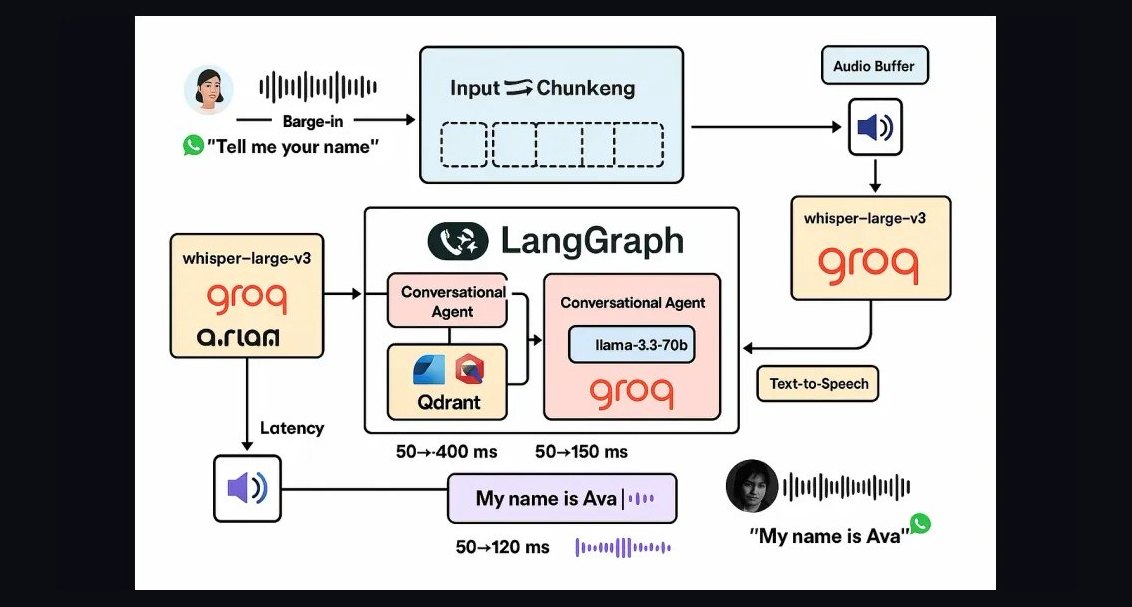 pulse-recentThe 10 Best AI Tools for Multi-Agent Orchestration in 2027
 pulse-recentThe 10 Best Idle GPU Detection Tools for AI Infrastructure in 2027
 pulse-recentThe 10 Best AI Infra Budgeting Tools for Small Teams in 2027
 pulse-recentThe 10 Best AI Tools for Cloud Cost Optimization in 2027
 pulse-recentThe 10 Best AI Tools for Building a RAG Pipeline in 2027