

How do I set up an aquarium air pump for a sponge filter in 2027?
 Curated byKory White · Fractional CRO · Maryland
Quality
Certified
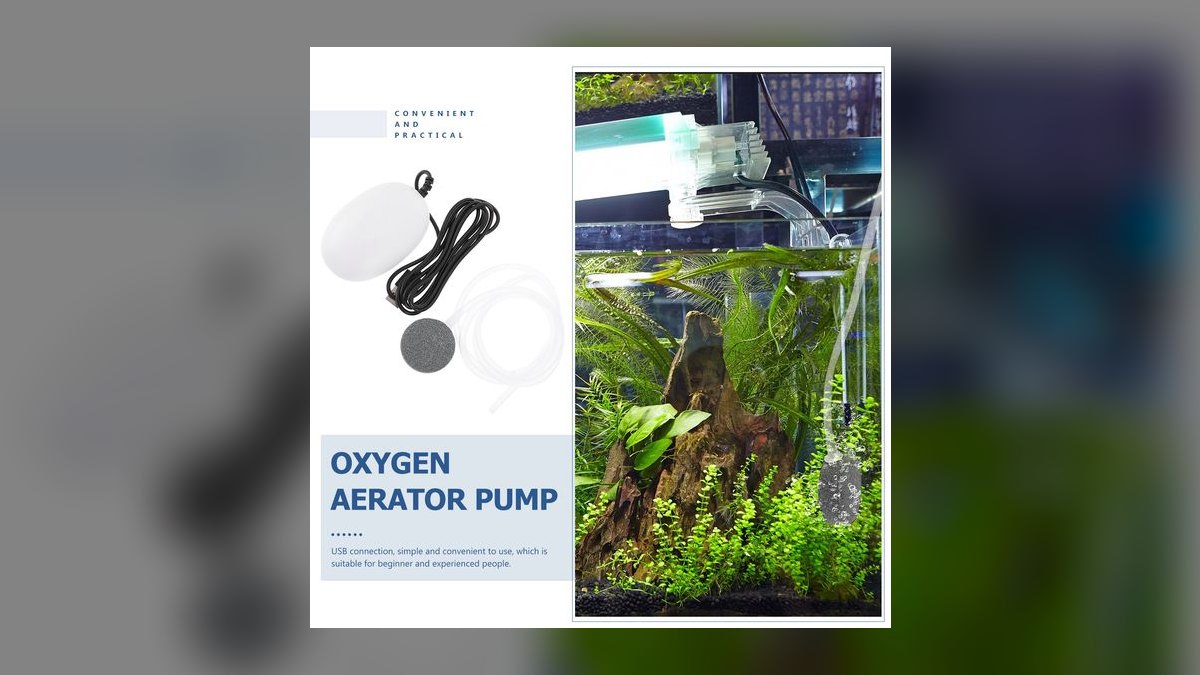
Set the pump above the tank's water line (or fit a check valve), run airline tubing to the sponge filter's uplift tube, and adjust flow until you see a steady stream of medium bubbles — roughly one or two per second per inch of sponge. Cycle the filter for four to six weeks before it does real biological work.
Air-driven versus powered: the two ways to run a sponge filter
A sponge filter is a passive block of foam that only moves water when something pulls water through it. There are exactly two mechanisms that do that job, and choosing between them determines your noise level, your electricity bill, your redundancy story, and how the tank behaves when the power fails. Everything else — brand, tubing color, valve style — is downstream of this one decision.
Option A: an air pump plus an uplift tube. A diaphragm air pump sits outside the tank, pushes air down a length of flexible tubing, and releases that air at the base of a vertical rigid tube attached to the sponge. Rising bubbles displace the water column inside the uplift tube, and the water that leaves the top must be replaced from below — which means it gets pulled through the sponge. This is an airlift, the same physics that moves grain in a pneumatic conveyor or drives a mammoth pump in a wastewater plant. The pump never touches water. It is not, strictly speaking, a water pump at all; it is an air compressor doing water's work indirectly.
Option B: a small submersible powerhead in place of the uplift tube. Instead of bubbles lifting water, an impeller sucks it. You cap the sponge's standpipe with a nano powerhead rated somewhere in the 40–130 gallons-per-hour range and it draws directly through the foam. Flow is higher, quieter in air (no rattling diaphragm on a shelf), and far more consistent, because impeller output does not care about how deep the sponge is submerged.
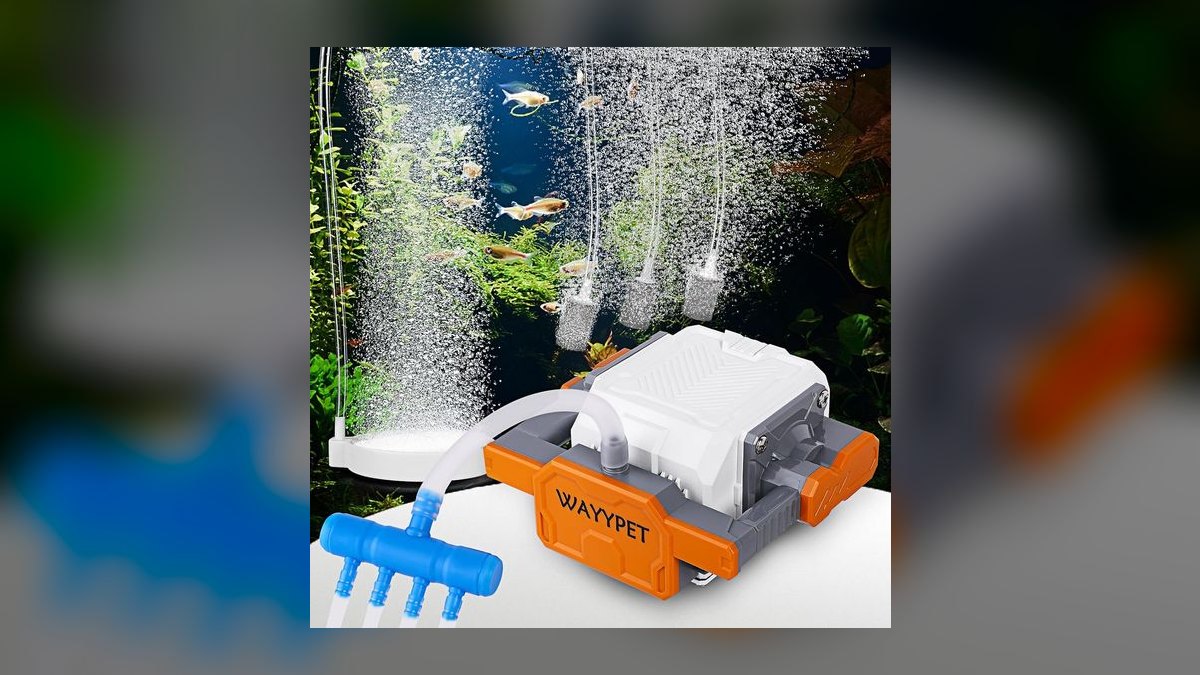
The trade-offs run in predictable directions. Airlift gives you gentle, tunable, fry-safe flow and near-zero risk to livestock — a diaphragm pump has no spinning parts inside the tank, so nothing can shred a shrimplet or trap a betta's fin. It also aerates aggressively at the surface, which is the real oxygen exchange story (bubbles themselves transfer very little gas in the two seconds they spend rising; the surface agitation they cause transfers a great deal). The costs are audible hum, an air stone or diffuser that clogs with mineral scale, and back-pressure sensitivity: sink the sponge deeper and output drops.
The powerhead gives you flow you can actually measure and a filter that keeps working identically at 12 inches or 24 inches of depth. The costs are an in-tank electrical device, an impeller that can injure very small livestock without a pre-filter guard, and — crucially — the loss of the airlift's best property: an air-driven sponge on a battery-backed air pump keeps its bacteria alive through a multi-hour outage, because air pumps draw so little power that a small USB battery bank can run one for a day. A powerhead cannot make that claim.
There is a third arrangement worth naming even though it is not really a separate option: air pump plus multiple sponges on a manifold. One reasonably sized pump with a gang valve can drive three to eight sponge filters across a rack of tanks. This is why fish rooms, breeders, and quarantine shelves standardize on air. The marginal cost of adding a filtered tank becomes a $4 sponge, a few feet of tubing, and one more valve outlet — not another $25 powerhead and another outlet on the power strip.
How to decide between them
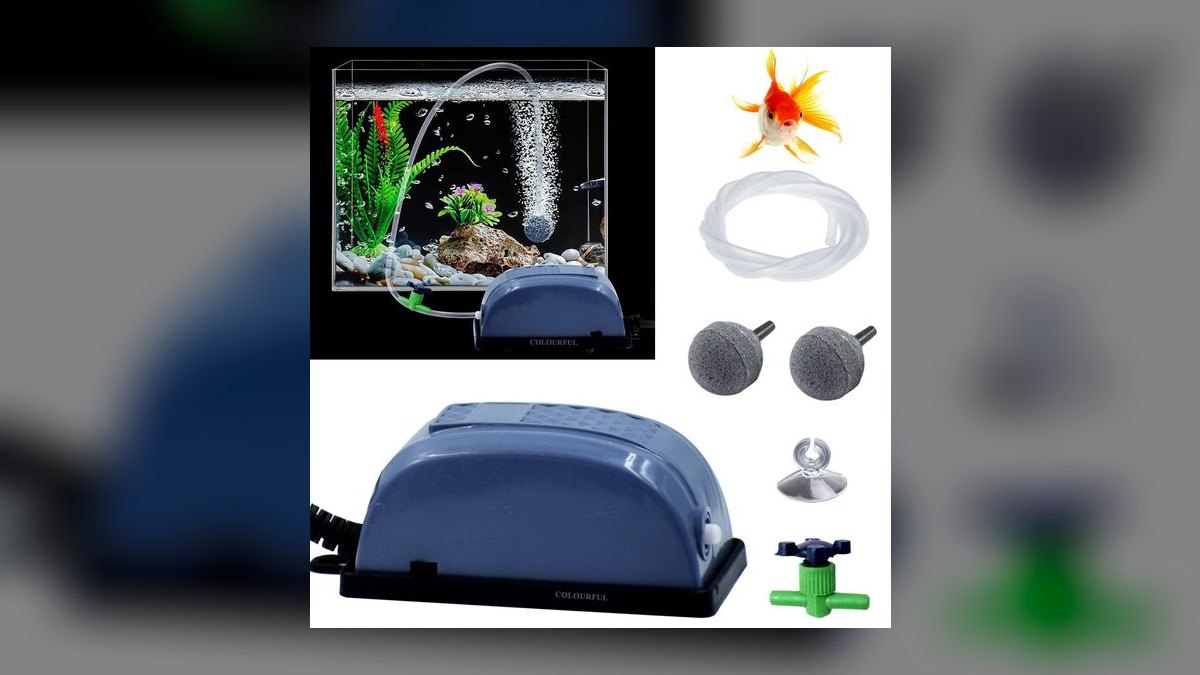
The decision is rarely about filtration quality. Both mechanisms pull water through the same foam, and the foam is where the nitrifying bacteria live. Decide on flow requirement, livestock fragility, tank count, and noise tolerance, in that order.
Start with livestock. If the tank holds fry, shrimp, a long-finned betta, or anything you would describe as delicate, the airlift wins by default and you should stop deliberating. If it holds active mid-water fish in a 20-to-40-gallon tank and you want visible current, a powerhead-driven sponge or a sponge paired with a separate circulation pump is the better answer.
Then count tanks. One tank tips slightly toward whichever is quieter in your room. Three or more tanks tips hard toward a single air pump on a manifold, because the economics and the wiring both collapse in air's favor.
Then consider what happens at 2 a.m. during an outage. A rack of air-driven sponges on one battery-backed pump survives; a rack of powerheads does not. In regions with frequent storm outages, that single consideration has decided the question for a lot of people.
Noise is the wildcard, and it is fixable on both sides. Diaphragm pumps transmit vibration into whatever they sit on. Put one on a folded towel, a mousepad, or a small foam block and hang it from a hook rather than resting it on a hollow cabinet, and a pump that sounded like a wasp becomes background. Cheap pumps are louder mostly because their rubber feet are thin and their housings are thin-walled.
An honest note on hybrid setups: many people run an air-driven sponge as the biological workhorse and a separate small circulation pump purely for water movement, keeping the two jobs separate. This is often the best of both — biology on the redundant, gentle, outage-proof system; flow on a device designed for flow. It costs one extra outlet and about the price of a nano pump.
The numbers that actually matter
Air pump ratings are the most confusing spec in the hobby because pumps are marketed in gallons — "rated for up to 60 gallons" — and that number describes nothing measurable. What matters is volumetric air output (liters per minute or LPM) and the pressure the pump can sustain against depth.
Air output per sponge. A single standard sponge filter in a tank under about 24 inches deep runs comfortably on roughly 0.5 to 1.5 LPM. Small nano pumps in the 1.5–2 LPM range drive one or two sponges. Mid-size pumps around 4–6 LPM handle four to eight outlets on a manifold once you account for valve losses. Commercial linear-piston pumps used in fish rooms start around 15–20 LPM and run dozens of outlets, and they are the only category where the pump itself becomes the quiet part of the system.
Depth and back-pressure. Every foot of water depth costs the pump roughly 0.43 psi of head pressure. That sounds trivial, and in a 12-inch tank it is. In a 24-inch tank it is enough to visibly starve a weak diaphragm pump, and in a 30-inch show tank a nano pump may simply stop bubbling. Standard hobby diaphragm pumps top out somewhere in the 2–4 psi range; linear-piston pumps are usually specified for 4–6 feet of depth and hold their output much better. If your sponge is in a deep tank, buy for pressure, not for the gallon rating on the box.
Tubing. Standard airline is 3/16-inch inner diameter (about 4 mm). Silicone tubing stays flexible for years; vinyl hardens, yellows, and eventually cracks at the barbs, usually within one to three years depending on room temperature and light. Friction loss over ordinary hobby runs — under 10 feet — is negligible. Over 20 or 30 feet in a fish room, it starts to matter, which is why long runs typically use larger-diameter rigid PVC as a trunk line with short 3/16-inch drops to each tank.
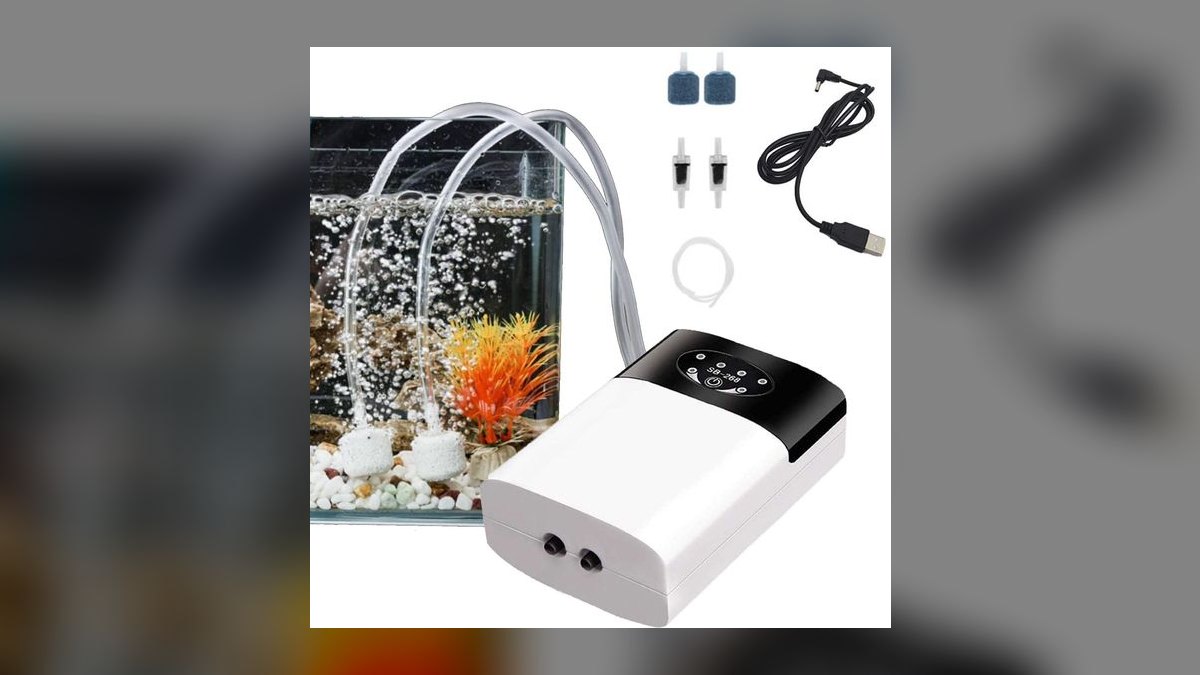
Bubble rate as a proxy. Since almost nobody owns an air flow meter, use the visual: a properly tuned sponge filter produces a steady column of medium bubbles, roughly 1–2 per second per inch of sponge height, with continuous water flow visible at the top of the uplift tube. A furious white froth is wasted air and unnecessary noise; a lazy bubble every few seconds means the sponge is barely moving water and biological performance suffers.
Turnover. A single air-driven sponge moves something in the neighborhood of 15–50 gallons per hour depending on sponge size, uplift diameter, and air rate. That is far below the 4–6× turnover often quoted for canister filtration, and it is fine, because sponge filters are biological filters, not mechanical ones. In a lightly stocked 10-gallon shrimp tank a single sponge is genuinely sufficient. In a 40-gallon tank with a dozen fish, run two sponges — or one sponge plus another filter — rather than trying to force a single unit past its physical limits.
Cycling time. This is the number people ignore and then regret. A brand-new sponge filter has no bacterial colony. Fishless cycling with an ammonia source typically takes four to six weeks at 78°F, and the process is temperature-sensitive: colder water can stretch it past eight weeks. Seeding the new sponge by squeezing an established sponge's water over it, or by running the new sponge alongside a mature one for a few weeks, cuts that dramatically — often to one or two weeks. The pump and tubing are a ten-minute job; the biology is the actual timeline.
Consumables and running cost. A small diaphragm pump draws roughly 2–5 watts, which is a rounding error on a power bill — under a dollar a year at typical residential rates. Diaphragms and the small rubber flapper valves inside wear out; most pumps accept a rebuild kit and a set of diaphragms restores full output for a fraction of a new pump. Air stones scale with calcium and should be replaced or soaked in vinegar when output visibly drops. Check valves are the cheapest insurance in the hobby and should be treated as consumable — the internal flapper stiffens over time and a valve older than a couple of years deserves a bench test.
Building it: order of operations
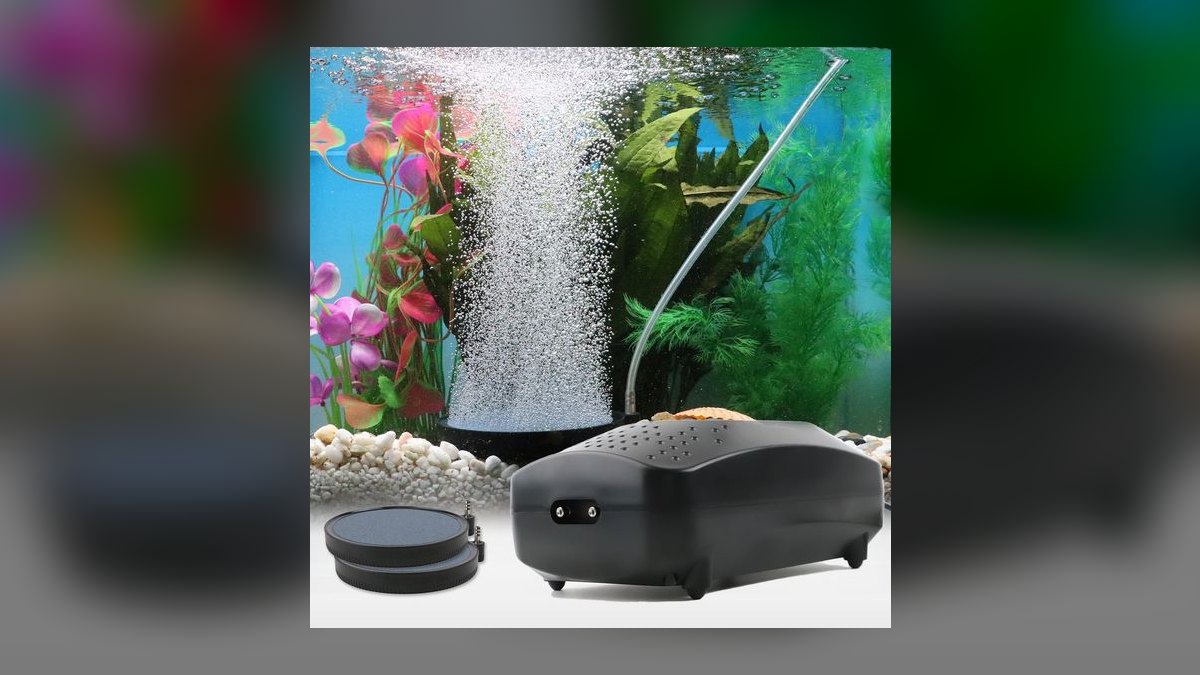
Sequence matters more than most guides admit, because two of the failure modes — siphon backflow and a mis-seated diaphragm — are created at assembly time and only reveal themselves later.
Assemble the sponge dry, on the counter, before it ever sees water. Slide the foam onto the perforated inner core if it shipped separately, seat the weighted base plate, and press the uplift tube firmly into the base. New sponge filters frequently ship with the tube only loosely fitted; if it pops off underwater the airlift stops and you may not notice for a day.
Rinse the sponge in dechlorinated water. New foam carries manufacturing residue and fine particles. Squeeze it several times in a bucket of treated water until the water stops clouding. Never rinse a sponge — new or established — under a tap: chlorine and chloramine kill nitrifying bacteria, which is the entire point of the device.
Place the sponge in the tank and let it saturate. Foam traps air and the whole assembly will float or list until the trapped air escapes. Squeeze it a few times underwater to purge it. Position it toward the back or a corner, base flat on substrate or a small flat stone, uplift tube vertical, with its outlet an inch or so below the surface. Setting the outlet above the water line converts a quiet filter into a splash fountain that throws salt creep and mineral spray onto the hood.
Site the pump above the tank's water line if you possibly can. This is the single most consequential placement decision. When power fails, an air pump below the water line becomes the low end of a siphon, and water can travel back down the tubing and into the pump housing — killing the pump at best, and in a genuinely bad case pumping a meaningful fraction of the tank onto the floor. A shelf above the tank solves it outright.
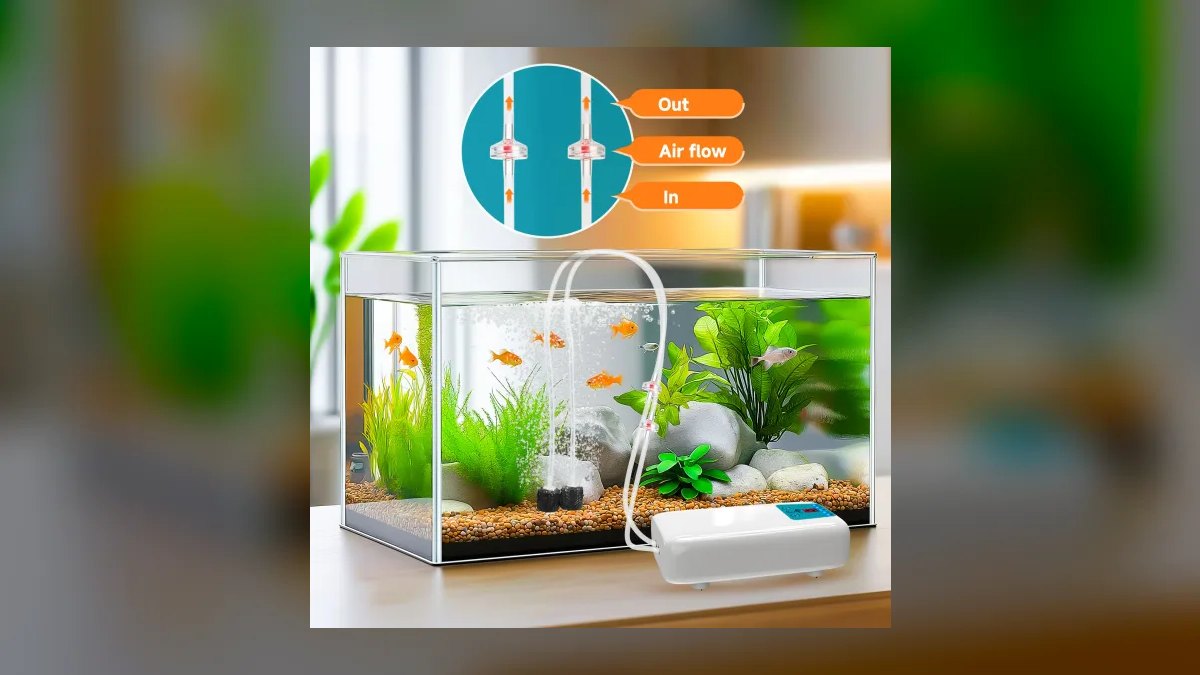
If the pump must sit below the water line, install a check valve — and orient it correctly. Check valves are directional, usually marked with an arrow or a colored end that faces the pump. Install it in the airline a few inches from the pump. Test it before trusting it: blow through it in each direction; air should pass one way and stop cold in the other. Add a drip loop — a low sag in the tubing between tank and pump so any water that does creep along the line drips off at the bottom of the loop rather than continuing to the outlet.
Cut the tubing to length and connect. Push the airline fully onto each barb. If silicone tubing resists, warming the end in hot water for a few seconds softens it enough to slide on and it grips hard when it cools. Avoid tight radius bends; kinked airline is a common and maddening cause of "the pump died" complaints where the pump is perfectly healthy.
Add a control valve if you want tunability. A single inline valve lets you throttle one sponge; a gang valve with two to six outlets lets you run several. One rule for diaphragm pumps: never dead-head a pump by closing every outlet. Blocked outflow drives back-pressure into the diaphragm and destroys it. On multi-outlet manifolds, leave one outlet cracked open to bleed excess air rather than choking all of them down.
Power on and observe for five minutes. You are looking for three things: a steady bubble column, visible water discharging from the top of the uplift tube, and no rattle from the pump body. A rattle usually means the pump is resting on a hard resonant surface — move it onto foam or hang it. Uneven or pulsing bubbles usually mean a partially blocked air stone or a diaphragm that has not seated.
Then wait. Add an ammonia source and test until ammonia and nitrite both read zero within 24 hours of dosing. Only then is the filter doing its job. Running a new sponge for two days and adding fish is the most common way this project fails, and no amount of correct plumbing compensates for it.
Keeping it running, and what goes wrong

Maintenance is deliberately minimal, and the most common mistake is doing too much of it.
Cleaning cadence. Every two to four weeks, pull the sponge — with the tubing still attached if it reaches — and squeeze it out several times in a container of tank water you just removed during a water change. Return it. That is the whole procedure. Do not scrub it, do not replace it because it looks dirty, and do not rinse it in tap water. The dark biofilm is the filter. A sponge that looks pristine is a sponge that has been cleaned to uselessness.
Sponge replacement. Foam lasts years. Replace it when it physically degrades — tearing, crumbling, or compressing permanently so it no longer springs back. When you do, run the new sponge alongside the old one for two to four weeks so the colony transfers, rather than swapping cold.
Declining output. Diagnose in order: kinked or crushed tubing, clogged air stone (pull it and test the bare line; if flow returns, the stone is the culprit), hardened tubing cracked at a barb, then the pump's diaphragm. Rebuild kits are inexpensive and a diaphragm swap is usually a five-minute job with a screwdriver.
Salt creep and spray. If the uplift outlet sits at or above the surface, bursting bubbles throw fine mist that dries into mineral deposits on the hood and lights, and in saltwater tanks it is worse. Lower the outlet slightly below the surface.
Noise. In order of effect: decouple the pump from hard surfaces (foam, towel, or hang it), check the rubber feet, verify the diaphragm cover screws are snug, and consider a larger pump throttled down rather than a small pump running flat out — pumps are quietest well below maximum.

Adjacent context worth knowing. Sponge filters shine in three neighboring use-cases beyond the display tank. In *quarantine tanks*, a spare sponge kept permanently in a running display tank becomes an instantly cycled filter the moment a new fish arrives — this is the single highest-value habit in the hobby. In *breeding and fry tanks*, the sponge is chosen precisely because it cannot inhale fry, and the biofilm on its surface is itself a first food. In *hospital and shipping setups*, the same air pump that runs your sponges runs a battery-backed line into a transport bucket. The air pump, in other words, is not really a filter accessory — it is shared infrastructure, and buying one a size larger than today's need is almost always the right call.
Where sponge filters are a poor fit. They do little mechanical polishing, so a tank with fine suspended particulate still looks hazy; pair with a small hang-on-back if water clarity is the goal. They provide minimal surface skimming. And they occupy visible tank space, which is why they are common in breeding racks and rare in aquascaping competitions. Knowing the limits is part of choosing correctly.
Related questions
Does a sponge filter need an air stone inside it?
No. Larger bubbles from a bare tube actually lift more water per unit of air than the fine bubbles from a stone, because they displace a bigger slug of the water column. Air stones make the setup quieter and finer-looking, but they clog with mineral scale and reduce airlift efficiency. Either works.
Can one air pump run several sponge filters?
Yes — this is the standard fish-room arrangement. Use a gang valve or a manifold, size the pump for total output plus depth pressure, and leave at least one outlet slightly open so the pump is never fully dead-headed. A 4–6 LPM pump comfortably runs four to eight sponges in typical tank depths.
How long before a new sponge filter actually filters anything?
Mechanically, immediately. Biologically, four to six weeks of cycling at around 78°F, or one to two weeks if you seed it by squeezing an established sponge over it or running both filters in the same tank. Test for ammonia and nitrite reaching zero rather than counting days.
Do I need a check valve if the pump sits on the floor?
Yes, and you should also add a drip loop. A pump below the water line is the downhill end of a siphon during any power interruption. A correctly oriented check valve a few inches from the pump plus a sagging loop in the tubing prevents both a ruined pump and a wet floor.
Why did my bubbles get weaker after a few months?
Most often a clogged air stone or hardened, cracked tubing at a barb — check both before blaming the pump. If the line is clear and output is still low, the pump's rubber diaphragm has stretched or torn. Replacement diaphragm kits are cheap and installation takes minutes.
FAQ
Should the air pump sit above or below the aquarium?
Above the water line, whenever the room allows it. Elevation makes backflow physically impossible and removes any dependence on a mechanical part working correctly during a power failure. If the pump must sit lower — on the floor, in a cabinet, on a shelf beneath the stand — a correctly oriented check valve plus a drip loop in the tubing is mandatory, not optional.
What size air pump do I need for one sponge filter?
Ignore the gallon rating printed on the box; it describes nothing measurable. Look for output in liters per minute and the pump's rated depth. Roughly 0.5–1.5 LPM drives a single standard sponge in a tank under about 24 inches deep. For deeper tanks or several filters on a manifold, buy for pressure and output headroom rather than for the advertised tank size.
How often should I clean the sponge, and how?
Every two to four weeks, squeeze it several times in water you just siphoned out during a water change, then put it straight back. Never use tap water — chlorine and chloramine kill the nitrifying colony living in the foam. Do not scrub, bleach, or replace it because it looks dirty; the dark coating is the working part of the filter.
Can I use a powerhead instead of an air pump?
Yes. A nano powerhead in the 40–130 GPH range mounted on the standpipe pulls water through the same foam with higher and more consistent flow, unaffected by tank depth. You lose gentleness — add a pre-filter guard around shrimp or fry — and you lose the outage resilience of an air pump, which can run for hours off a small battery bank.
Is my bubble rate right?
Aim for a steady column of medium bubbles, roughly one to two per second per inch of sponge height, with water visibly flowing out of the top of the uplift tube. Violent white froth is wasted air and extra noise with no filtration benefit. A slow, intermittent bubble means the sponge is barely moving water and biological performance will suffer.
Why is my new pump so loud?
Almost always vibration coupling, not the pump itself. A diaphragm pump resting on a hollow cabinet turns that cabinet into a speaker. Set it on foam, a folded towel, or a mousepad, or hang it from a hook so nothing rigid touches the housing. Confirm the rubber feet are intact and the cover screws are snug before assuming the unit is defective.
Sources
- https://www.epa.gov/ground-water-and-drinking-water/basic-information-about-chloramines-and-drinking-water-disinfection
- https://www.usgs.gov/special-topics/water-science-school/science/dissolved-oxygen-and-water
- https://www.aqua.wiki/
- https://extension.psu.edu/water-quality-in-aquaculture-systems
- https://www.canr.msu.edu/aquaculture/
- https://ag.purdue.edu/department/fnr/extension/aquaculture.html
- https://www.ncbi.nlm.nih.gov/pmc/articles/PMC3280087/
- https://www.engineeringtoolbox.com/hydrostatic-pressure-water-d_1632.html
- https://srac.tamu.edu/
Related on PULSE
- How do I cycle a new aquarium tank before adding fish?
- What size filter do I actually need for my tank volume?
- How do I quarantine a new fish without a second filter?
- Why is my aquarium water cloudy after a water change?
- How do I set up a breeding tank for livebearer fry?
This page will be disappearing soon. Save it to your device for $1 — or read it free while it is here.
@Kory-White- · if Venmo asks, the last 4 of my number are 2012
This page is gone.
This one is off the shelf now. $1 keeps it on your phone for good — the whole page, pictures and diagrams included.
 pulse-recentTop 10 Siamese Algae Eater vs Chinese Algae Eater Comparisons in 2027
 pulse-recentTop 10 Water Conditioners 2027 — Best Overall + Best Value
 pulse-aquariumsTop 10 aquarium decor ideas 2027
 pulse-recentTop 10 Auto Top-Off Systems 2026 — Best Overall + Best Value
 pulse-recentTop 10 Reef Tank Water Change Schedules in 2027
 pulse-recentHow do I introduce fish to a newly cycled reef tank in 2027?
 pulse-aquariumsTop 10 Mbuna Cichlids 2027
 pulse-recentTop 10 Algae Eaters vs. Amano Shrimp for Planted Tanks in 2027
 pulse-aquariumsTop 10 Duncan Coral LPS Picks 2027
 pulse-recentTop 10 Wave Makers 2026 — Best Overall + Best Value