


How do I cycle a reef tank step by step in 2027?
Quality
Certified
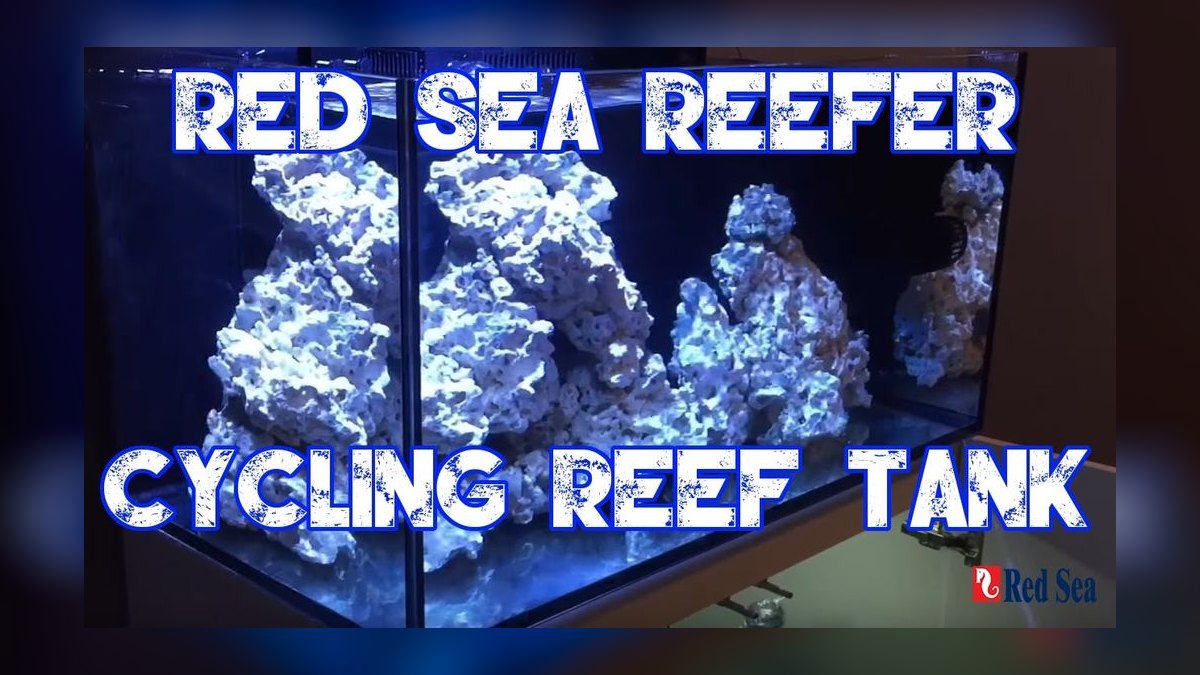
Cycle a reef tank by adding an ammonia source to saltwater at 78°F, then letting nitrifying bacteria convert ammonia to nitrite to nitrate. Dose ammonia to 2 ppm, test daily, and wait until ammonia and nitrite both read zero within 24 hours. Most tanks finish in three to six weeks.
The tank that sat empty for eleven weeks
Picture a 75-gallon mixed reef going up in a spare bedroom. Sump plumbed, return pump humming, 60 pounds of dry rock aquascaped into two islands with real swim-throughs, a decent LED fixture, and a heater holding 78°F. The owner mixed salt to 1.025 specific gravity, let it circulate for two days to clear, then dropped in a bottle of live bacteria and a raw shrimp and started waiting.
Three weeks later ammonia still read 4 ppm and nitrite was pinned at the top of the color chart. The owner did what almost everyone does at that point — added another bottle of bacteria, then a second one, then started a 50% water change "to get the numbers down." Week six, the ammonia finally dropped, but nitrite hung around another month. Eleven weeks after startup the tank finally read zero-zero, and by then the owner had spent more on test kits and bacteria than on the rock.
Nothing was actually broken. The cycle stalled for three reasons that show up constantly, and every one of them is avoidable if you understand what the cycle physically is. First, the shrimp rotted and pushed ammonia far past the point where nitrifying bacteria work efficiently — above roughly 5 ppm total ammonia, the free ammonia fraction at reef pH becomes inhibitory to the very organisms you're trying to grow. Second, the water changes stripped out the nitrite and nitrate the second-stage bacteria were feeding on, and reset the population's food supply repeatedly. Third, nobody was testing pH or alkalinity, and nitrification is an acid-producing process — the tank's alkalinity had crashed to about 4 dKH, which slows the reaction to a crawl.
The comparison case matters here. A second tank started the same month — same dry rock, same salt, same heater — was dosed to 2 ppm ammonia from a bottle of ammonium chloride, tested every other day, topped back up to 2 ppm each time it fell, and got a two-tablespoon dose of sodium bicarbonate when alkalinity dipped under 8 dKH. It read zero ammonia and zero nitrite twenty-three days in. Same biology, radically different timeline, because the second owner was managing conditions instead of just waiting.
That's the frame for everything below: a reef tank cycle is not a waiting period. It's a bacterial culture you are actively feeding and buffering, and the step-by-step process is really a process-control problem that happens to live in your living room.
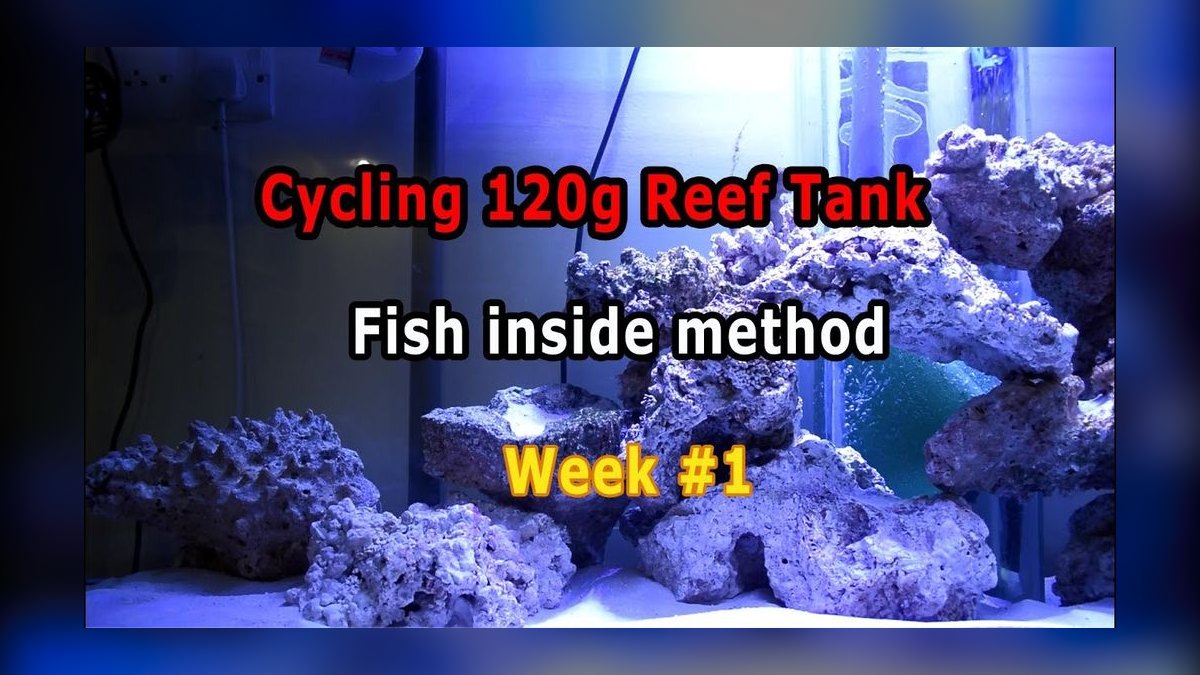
What the nitrogen cycle is actually doing in your rock
The word "cycle" is a bit of a misnomer for what you're doing at startup. You're not cycling anything — you're colonizing surfaces. Every square inch of rock, sand, sump plumbing, and mechanical filtration in the system needs to develop a biofilm of chemolithoautotrophic bacteria and archaea that make their living oxidizing inorganic nitrogen. Until that biofilm exists in sufficient density, any ammonia entering the system just accumulates, and ammonia at reef pH is acutely toxic to fish and invertebrates.
Step one of the biological chain is ammonia oxidation. Ammonia-oxidizing bacteria (historically lumped under *Nitrosomonas*, though marine systems are dominated by other genera and by ammonia-oxidizing archaea) take NH₃ and convert it through hydroxylamine to nitrite, NO₂⁻. This step produces energy for the organism and consumes oxygen and inorganic carbon. It also produces hydrogen ions, which is why nitrification consistently drives pH and alkalinity down over the course of a cycle.
Step two is nitrite oxidation. Nitrite-oxidizing bacteria — *Nitrospira* is the genus that dominates in most marine aquaria, not the *Nitrobacter* that older hobby literature names — convert NO₂⁻ to NO₃⁻. This is the slower half. Nitrite oxidizers reproduce more slowly than ammonia oxidizers and are more sensitive to high ammonia concentrations. That's precisely why the classic cycle graph shows ammonia spiking and falling first, with the nitrite spike lagging behind it and taking longer to resolve. When someone says "my cycle is stuck on nitrite," they are almost always describing a normal, slower second stage that got made worse by an ammonia overdose.
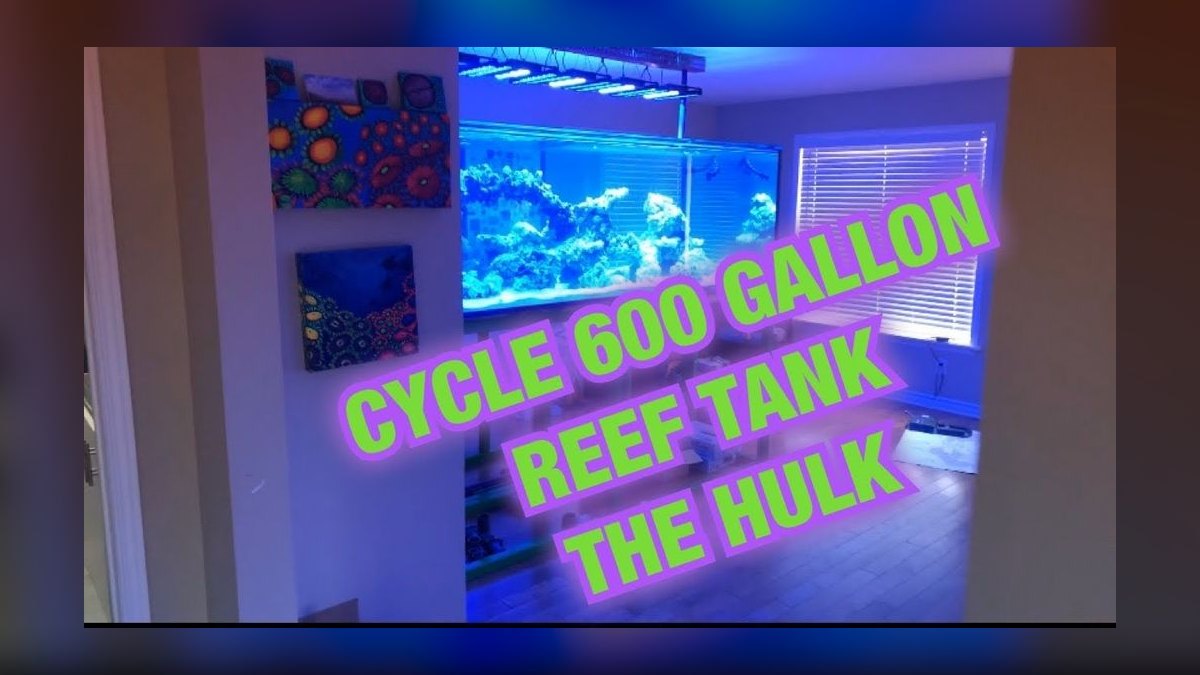
There's a third step that matters for a reef specifically, and it's the one nobody waits for: nitrate reduction. Inside porous rock, in low-oxygen microzones a few millimeters below the surface, facultative anaerobes reduce nitrate to nitrogen gas. That process needs deep, genuinely porous rock and time — months, not weeks — and it's a big part of why an established reef tank handles a nitrate load that would have wrecked it at three months old.
Also running quietly alongside all of this: heterotrophic bacteria. These are the fast-growing organisms that eat dissolved organic carbon, and they're what causes the ugly bacterial bloom — that white or gray haze — a few days after you dose organic ammonia sources like fish food or a rotting shrimp. Heterotrophs multiply in hours where nitrifiers take a day or more to double. They compete for oxygen and can crash dissolved oxygen enough to slow nitrification. This is a strong argument for a clean ammonium chloride source over the shrimp method.
The practical consequence of that diagram is simple: you control four inputs — ammonia concentration, temperature, alkalinity, and oxygen — and the bacteria do the rest on their own schedule. Every "trick" that actually speeds a cycle works through one of those four levers, or by seeding the tank with bacteria that already exist somewhere else.
The step-by-step sequence, start to finish
Here's the actual order of operations. Treat each step as a gate — don't advance until the stated condition is met.
Step one: assemble and leak-test with freshwater. Fill the tank with RO/DI freshwater, run the return pump, powerheads, and heater for 24 hours, and check every joint, bulkhead, and the sump's flood line with the pump off. Doing this in freshwater means a leak costs you water, not a batch of salt. Mark your sump's operating level and your evaporation top-off line now.
Step two: mix saltwater to 1.025 specific gravity (about 35 ppt). Mix in a separate brute can with a powerhead if you can — mixing in the display works but takes longer to dissolve and clear. Give it a minimum of a few hours to fully dissolve; overnight is better. Calibrate your refractometer against a 35 ppt calibration fluid, not tap water. A refractometer that's off by two points will haunt every measurement you make for the next year.
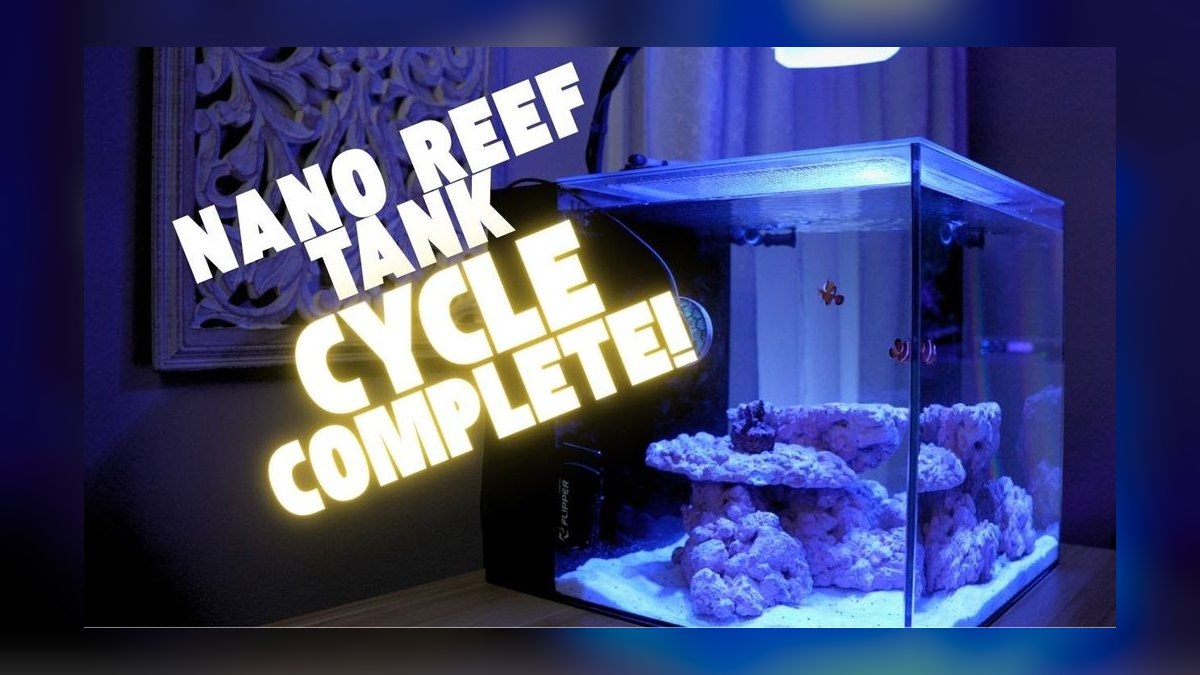
Step three: aquascape with dry or cured live rock and get flow right. Do this before the tank is biologically active, because rearranging rock later releases detritus and disturbs the biofilm you spent weeks growing. Target something in the range of 20–40× tank volume in total turnover for a mixed reef, with flow that's turbulent and random rather than a jet blasting one spot. Leave gaps behind and under the rock so detritus doesn't dead-spot.
Step four: bring the tank to temperature and stabilize. 78°F is a good target. Nitrification rates climb with temperature up into the mid-80s, and some people deliberately run 82–84°F during the cycle to speed it, dropping back to normal before livestock. That works, but it also accelerates heterotroph blooms, so it's a modest gain for a bit more mess.
Step five: dose ammonia to 2 ppm total ammonia nitrogen. Use a pure ammonium chloride solution made for aquarium cycling, or plain household ammonia with no surfactants, dyes, or fragrance — if it foams when you shake the bottle, don't use it. Dose to 2 ppm and confirm with a test kit rather than trusting the dosing chart on the bottle; concentrations vary between products. Two ppm is the sweet spot: high enough to grow a bacterial population that can handle a real fish load, low enough to stay well under the inhibition threshold.
Step six: add a bottled nitrifying bacteria product, optionally. Refrigerated or well-handled bottled bacteria genuinely shortens a cycle, often by a week or two. It is not magic and it does not make a tank instantly safe regardless of what the label claims. Check the bottle for the actual marine species and buy from a retailer with turnover — product that has sat on a hot shelf for a year is largely dead.
Step seven: test every day or two and log it. You need ammonia, nitrite, nitrate, pH, and alkalinity. Write the numbers down with dates. The single most useful diagnostic in a stalled cycle is a written record, because "it's been stuck forever" almost always turns out to be "nitrite has been falling steadily for nine days and I didn't notice."
Step eight: re-dose ammonia back to 2 ppm each time it drops below about 0.5 ppm. This is the step people skip, and skipping it is why tanks pass a cycle test and then crash when three fish go in. If the bacterial population only ever had one dose of food, it only ever grew to handle one dose. Feeding it repeatedly builds a population sized for a real bioload.
Step nine: hold alkalinity above 8 dKH. Test alkalinity every few days during the cycle. Nitrification consumes alkalinity — the rule of thumb chemists use is roughly 7 mg of alkalinity as CaCO₃ consumed per mg of ammonia nitrogen oxidized. In a small tank with repeated ammonia dosing, that's enough to drop you several dKH over a cycle. Dose sodium bicarbonate (plain baking soda works, or a two-part alkalinity supplement) to bring it back up. A tank sitting at 5 dKH with a pH of 7.7 will cycle at a fraction of the speed of the same tank at 9 dKH and 8.2.
Step ten: the completion test. The tank is cycled when you dose ammonia to 2 ppm and, twenty-four hours later, ammonia reads 0 and nitrite reads 0. Not "close to zero." Zero, on both, in twenty-four hours. Nitrate will be somewhere between 20 and 80 ppm and that's expected. Run the test twice on consecutive days if you want confidence.
Step eleven: a large water change, then first livestock. Do a 50–75% water change to bring nitrate down under about 10 ppm and clear out accumulated organics. Then add a small, hardy first fish or a cleanup crew — one or two animals, not a full stocking list. The bacterial population needs a couple of weeks to adjust to the new steady-state input, and adding everything at once produces a small ammonia blip that no amount of cycling prevents.
Step twelve: the maturation period nobody talks about. A cycled tank is not a mature tank. Months two through six bring the ugly stages — diatoms, then often cyanobacteria or dinoflagellates, then eventually a settled microbial community. Corals go in slowly during this period, softies and hardy LPS first, SPS much later once alkalinity and calcium have proven stable over weeks. Rushing this is the most common reason a technically-cycled tank still fails.
Real numbers, ranges, and how long each stage takes
Vague timelines cause more anxiety than they resolve, so here are concrete figures with honest ranges around them.
Total cycle duration. Dry rock with a bottled bacteria product: typically 2–4 weeks. Dry rock with no bacterial seed: 4–8 weeks. Cured live rock from an established system: often under 2 weeks, sometimes days. Live rock that shipped uncured and had die-off in transit: unpredictable, 3–8 weeks, and you should expect a large ammonia spike and heavy skimmate. Adding a used, wet filter sock or a handful of established sand from a trusted tank cuts a couple weeks off almost any of these.
Ammonia targets. Dose to 2 ppm, and never exceed 5 ppm. Above roughly 5 ppm total ammonia at pH 8.2 and 78°F, free ammonia climbs high enough to inhibit nitrite oxidizers specifically, which is the exact mechanism that produces those months-long nitrite stalls. If you overshoot, do a water change to bring it back down — that's the one time a water change genuinely helps during a cycle.
Nitrite readings. Nitrite commonly pegs the top of a hobby test kit's range for one to three weeks. Hobby nitrite kits saturate somewhere around 5 ppm, so "over 5" could mean 6 or 40 and you have no way to tell. Don't panic at a pinned nitrite reading — it's normal mid-cycle. Do panic if it hasn't moved at all in fourteen days with stable alkalinity.
Nitrate at the end. Expect 20–80 ppm at cycle completion, sometimes more if you dosed ammonia many times. It's not dangerous at these levels for the empty tank, and a large water change clears it.
Temperature. 78°F (25.5°C) is standard. Nitrification rate roughly doubles for every 10°C increase within the biologically tolerable band, so 84°F does measurably speed things — but heterotroph blooms accelerate faster than nitrifiers do, and dissolved oxygen falls as temperature rises. If you push temperature, keep flow and surface agitation high.
pH and alkalinity. Hold pH 8.0–8.4 and alkalinity 8–11 dKH. Below pH 7.6 nitrification slows dramatically; below about 7.0 it can nearly stop. This is by far the most common invisible cause of a "stalled" cycle, and it's the cheapest to fix — a box of baking soda.
Salinity. 1.025 specific gravity, or 35 ppt. Some people cycle at slightly lower salinity; there's no meaningful benefit and it just means adjusting later.
Light. Keep the display lights off or very low during the cycle. Nitrifying bacteria are mildly photoinhibited, and more practically, running lights on a nutrient-loaded tank with no consumers is an invitation for an algae outbreak you'll fight for months. Run lights only after livestock go in, starting at short photoperiods.

Cost, roughly. For a mid-size tank you're looking at test kits for ammonia, nitrite, nitrate, alkalinity, and calcium; a refractometer and calibration fluid; salt; RO/DI water or purchased saltwater; and optionally a bacteria bottle. This is not the expensive part of the hobby — the equipment and livestock dwarf it. Buy good test kits. Cheap strips lie, especially on alkalinity, and a wrong number will send you chasing a problem that doesn't exist.
Water volume math. When calculating dosing, use actual water volume, not tank rating. A 75-gallon display with a 20-gallon sump running at half depth, minus displacement from 60 pounds of rock and a few inches of sand, is realistically 75–80 gallons of water, not 95. Rock displaces roughly a third of a gallon per pound. Getting this wrong by 20% throws off every dose you'll ever make.
Method trade-offs: fishless, live rock, and the shortcuts
There are four broad approaches, and they trade time against cost, risk, and mess.
Fishless with ammonium chloride is the default recommendation and for good reason. It's cheap, precise, humane, and it lets you dose to a known concentration and repeat that dose to build population size. The downside is that it introduces no biodiversity — no pods, no sponges, no microfauna — so the tank starts sterile beyond the nitrifiers. Many people pair it with a small piece of live rock or a cup of established sand at the end specifically to seed the rest of the microbial community.
Cured live rock from an established system is the fastest path and brings genuine biodiversity. It's also the highest-risk path for pests: aiptasia, majano, vermetid snails, bubble algae, bristle worms, and occasionally a mantis shrimp or predatory crab. A tank seeded with pest-laden rock can be functionally ruined in a way that no cycle problem ever is. If you go this route, inspect the rock closely, consider a dip, and be honest about the source's tank condition.
The rotting shrimp / fish food method works and costs nothing, but it's the messiest. Organic decomposition produces ammonia unpredictably and slowly, feeds a huge heterotroph bloom, adds phosphate you'll be fighting later, and gives you no dose control. It also introduces a lot of organic carbon that seeds algae problems. If you use it, remove the shrimp once ammonia has clearly risen rather than letting it dissolve entirely.
Bottled bacteria as primary — dose bacteria, add a fish immediately, hope for the best — is the fastest and the riskiest. Even with a good product the bacterial population is small and the tolerance for error is thin. It stresses the animal, and it's a bad habit that gets carried into later stocking decisions.
An adjacent decision that interacts heavily with all of these: dry rock versus live rock as your base structure. Dry rock is pest-free, cheap, easy to scape because it's dry and light, and it lets you build overhangs and caves you'd never manage with wet rock. It's also inert phosphate-wise if it's genuinely clean, though old dry rock harvested from a nutrient-loaded system can leach phosphate for months and cause an algae problem that looks exactly like a husbandry failure. Some people acid-bath or long-soak questionable dry rock before it ever goes in the tank. Live rock brings biology and pests together and you don't get to pick.
Worth noting how this compares to adjacent systems. A freshwater planted tank can effectively skip a visible cycle because fast-growing plants take up ammonium directly — the "silent cycle." A reef has no equivalent unless you run a heavily stocked refugium with macroalgae from day one, and even then you still want the nitrifying bed. A quarantine tank, by contrast, is usually run with a seeded sponge filter kept permanently in the display sump, so it's cycle-ready on demand — a genuinely useful habit to build early, since you'll want a QT for every fish you ever buy.
Where cycles go wrong, and how to unstick them
Ammonia overdose. The single most common self-inflicted wound. Someone dumps in a whole capful of ammonia, or lets a large shrimp fully decompose in a small tank, and lands at 8 ppm. Ammonia oxidizers tolerate this reasonably well; nitrite oxidizers do not, and you get a nitrite plateau that lasts a month. Fix: water change to bring total ammonia to 2 ppm or below, then hold there.
Alkalinity crash. Second most common, and almost invisible because most people cycling a tank aren't testing alkalinity yet. Nitrification acidifies the water, and in a fresh saltwater system with no calcium reactor, kalkwasser, or two-part dosing running, there's nothing replenishing it. If your cycle has stalled, test alkalinity before you do anything else. Under 7 dKH, dose bicarbonate and watch the numbers move within a day or two.

Water changes mid-cycle. Well-intentioned and usually counterproductive. You're removing the substrate your bacteria are eating. The only good reasons to change water mid-cycle are to correct an ammonia overdose or to fix an alkalinity problem you can't buffer your way out of.
Testing the wrong thing, or testing badly. Ammonia test kits read total ammonia nitrogen — both NH₃ and NH₄⁺ — while toxicity depends on the free NH₃ fraction, which rises sharply with pH and temperature. A reading of 0.5 ppm at pH 8.3 is meaningfully worse than the same reading at pH 7.6. Also: if you're using a product that binds ammonia into a non-toxic form, some test chemistries will still show it as present, and you'll chase a phantom. Salicylate-based ammonia kits behave differently from Nessler-based ones in this respect.
Chasing the cloudy water. A bacterial bloom three to seven days in is normal, especially with organic ammonia sources. Don't filter it out aggressively, don't dose clarifiers, don't water-change it away. Increase surface agitation to keep oxygen up and let it resolve. It usually clears in a few days to two weeks on its own.
Chlorine or chloramine in the source water. If you filled with tap water and used a dechlorinator that handles chlorine but not chloramine, you may have residual chloramine actively killing your nitrifiers. This is a genuine cycle-killer and it produces the frustrating pattern where nothing happens at all for weeks. RO/DI water avoids the issue entirely and is worth the investment for a reef regardless.
Running a UV sterilizer or heavy chemical filtration during the cycle. UV kills free-floating bacteria, which slows initial colonization. Carbon and other adsorbents can strip things the bacteria need. Run bare-bones during the cycle: heater, flow, skimmer (optional — a skimmer is fine and helps oxygenation), and nothing else. Add the rest once you're cycled.
Declaring victory too early. A tank that processes 1 ppm ammonia in 48 hours is not cycled for a full fish load. Do the 2 ppm in 24 hours test, do it twice, and then stock slowly anyway. The single biggest difference between reefers who lose their first three fish and those who don't isn't the cycle — it's the stocking pace afterward.
Not planning for the ugly stage. Weeks four through twelve after stocking bring diatoms coating everything brown, then often cyanobacteria in slack-flow areas, sometimes dinoflagellates. These are normal succession, not cycle failures, and the worst response is aggressive intervention — nutrient stripping a young tank is how dinoflagellate outbreaks get established. Keep nitrate detectable (roughly 5–10 ppm) and phosphate detectable (around 0.03–0.1 ppm), keep flow up, and let the microbial community mature.
Related questions

How long does a reef tank cycle take with dry rock?
Typically four to eight weeks with no bacterial seed, or two to four weeks with a good bottled nitrifying bacteria product. Holding alkalinity above 8 dKH and temperature at 78°F, and dosing ammonia to 2 ppm rather than overshooting, matters more than any additive.
Can I add fish before the cycle finishes?
You shouldn't. Ammonia and nitrite damage gill tissue at concentrations well below what kills outright, and the damage is often permanent. If you must, add one very hardy fish, feed sparingly, and be prepared for daily water changes — but a fishless cycle is faster, cheaper, and kinder.
Do I need to dose ammonia more than once?
Yes, if you want a tank that can handle real stocking. Each time ammonia falls below roughly 0.5 ppm, re-dose to 2 ppm. The bacterial population sizes itself to the food supply it has experienced, so repeated dosing over two or three weeks builds real capacity.
Why is my nitrite stuck when ammonia hit zero?
Almost always an ammonia overdose earlier in the cycle inhibiting nitrite oxidizers, or an alkalinity crash. Test alkalinity first; if it's under 7 dKH, buffer to 9. Otherwise, stop dosing ammonia, keep temperature and flow steady, and wait — nitrite oxidizers are simply slow.
Does a refugium or macroalgae help during cycling?
Somewhat. Macroalgae takes up ammonium and nitrate directly, which reduces measured nitrogen but also competes with the bacteria you're trying to grow. Most people add the refugium after the cycle completes, when nutrient export matters more than colonization speed.
FAQ

Do I have to run the skimmer during the cycle?
You can, and it's generally helpful — it improves gas exchange and keeps dissolved oxygen up, which nitrifiers need. It will pull out a lot of gunk during an organic-source cycle. The only reason to leave it off is if you want to break it in later; there's no biological downside to running it.
Is bottled bacteria worth buying?
Usually yes, if it's fresh and from a reputable brand that specifies marine nitrifying species. It reliably shortens a cycle. It does not make a tank safe on day one no matter what the packaging suggests, and it doesn't replace the completion test. Buy from a store with turnover — heat-damaged product on a shelf is worthless.
Can I cycle with the lights on?
Better not to. Nitrifying bacteria are somewhat photoinhibited, and more importantly, running lights over a tank with high nitrate and phosphate and zero grazers seeds an algae problem you'll spend months undoing. Start a short photoperiod after the cycle completes and livestock go in.
What if I already have fish in there and ammonia is climbing?
Water changes, immediately and repeatedly, plus an ammonia-binding conditioner to reduce toxicity while you sort it out. Stop feeding for a day or two. Increase aeration. That's a fish-in cycle and it's a rescue operation — get ammonia and nitrite under 0.25 ppm and keep them there until the tank catches up.
Should I add sand before or after cycling?
Before. Sand is surface area and it colonizes along with the rock. Adding a deep sand bed to a cycled tank later stirs up detritus and can release trapped nutrients. If you're using a bare bottom, that's fine too — you'll just be relying more heavily on rock and sump surface area.
How do I know the tank is really ready for coral, not just fish?
Cycling and coral-readiness are different bars. Coral needs stable alkalinity, calcium, and magnesium held steady over weeks, plus stable lighting and low, non-zero nutrients. Give it a couple of months past the cycle, start with hardy softies, and only move to SPS once you've logged stable parameters for several consecutive weeks.
Sources
- https://www.epa.gov/caddis/ammonia — EPA overview of ammonia toxicity and the pH/temperature dependence of the free ammonia fraction
- https://www.usgs.gov/special-topics/water-science-school/science/nitrogen-and-water — USGS primer on the nitrogen cycle in aquatic systems
- https://oceanservice.noaa.gov/facts/nutpollution.html — NOAA on nitrogen and nutrient dynamics in marine environments
- https://www.ncbi.nlm.nih.gov/pmc/ — PubMed Central, searchable literature on *Nitrospira* and marine nitrification
- https://www.fao.org/fishery/en/topic/13540 — FAO technical material on recirculating aquaculture system biofiltration
- https://www.reef2reef.com/ — Reef2Reef, large hobbyist forum with long-running cycling and water chemistry threads
- https://reefbuilders.com/ — Reef Builders, reef aquarium news and equipment coverage
- https://www.aqua-calc.com/ — Aquarium volume and displacement calculators
- https://www.usgs.gov/special-topics/water-science-school/science/ph-and-water — USGS on pH, useful for understanding the acidification nitrification causes
Related on PULSE
- How do I lower nitrates in a reef tank without constant water changes?
- What is the ugly stage in a new reef tank and how long does it last?
- How do I set up a quarantine tank for new saltwater fish?
- Dry rock vs live rock: which should I start a reef with?
- How do I dial in alkalinity, calcium, and magnesium for a mixed reef?
- What order should I add livestock to a new reef tank?
This page will be disappearing soon. Save it to your device for $1 — or read it free while it is here.
@Kory-White- · if Venmo asks, the last 4 of my number are 2012
This page is gone.
This one is off the shelf now. $1 keeps it on your phone for good — the whole page, pictures and diagrams included.
 pulse-recentHow do I cycle a new reef tank before adding fish in 2027?
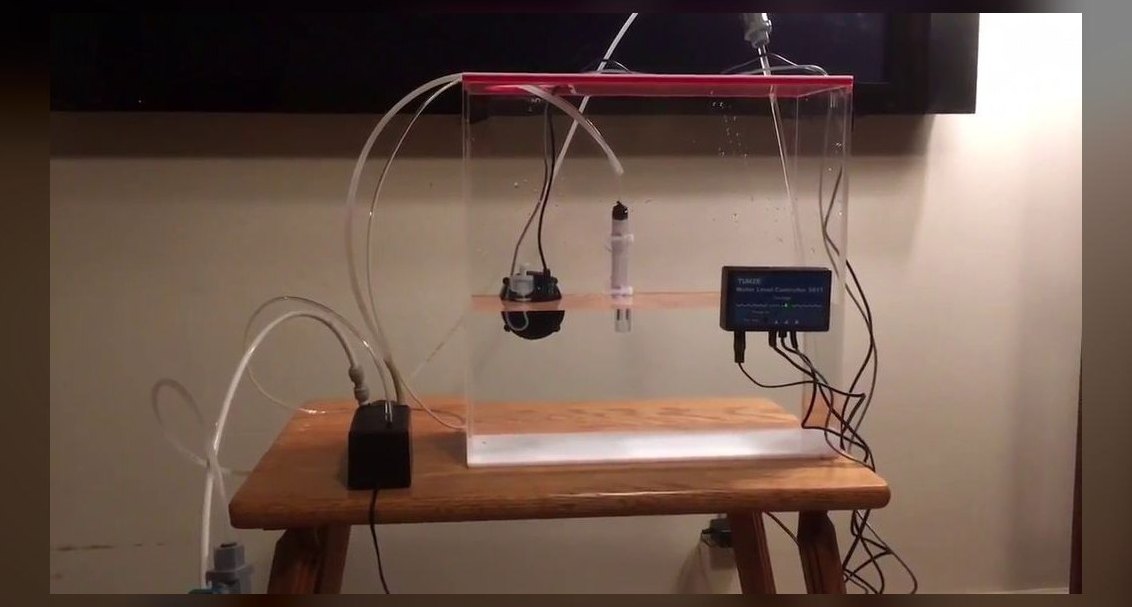 pulse-recentTop 10 Auto Top-Off Systems 2026 — Best Overall + Best Value
 pulse-aquariumsTop 10 Aquascaping Tool Kits 2027
 pulse-recentHow do I cycle a reef tank for the first time in 2027?
 pulse-recentHow do I choose the right lighting schedule for a reef tank in 2027?
 pulse-recentTop 10 Algae Eaters vs. Amano Shrimp for Planted Tanks in 2027
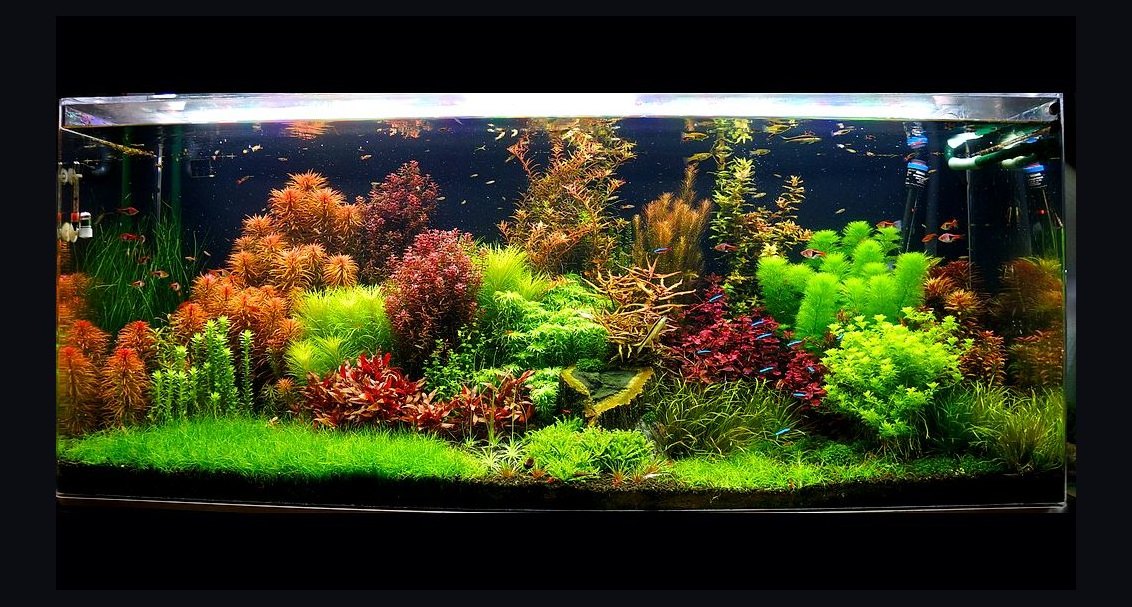 pulse-recentTop 10 Planted Tank CO2 Systems 2026 — Best Overall + Best Value
 pulse-aquariumsTop 10 Aquarium Siphon and Gravel Cleaners for Water Changes in 2027
 pulse-recentTop 10 Wave Makers 2026 — Best Overall + Best Value
 pulse-recentTop 10 Zoanthid Coral Morphs for Reef Tanks in 2027