


Best Used Wake Surf Boats Under $80,000 in 2027
Quality
Certified
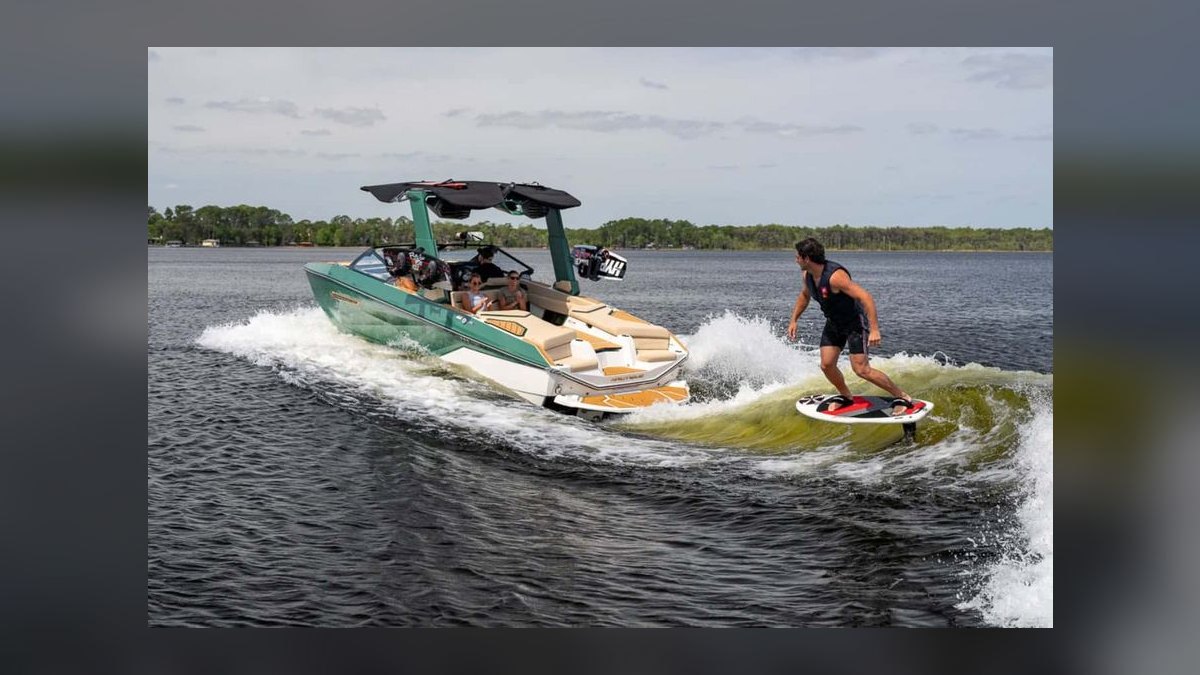
The Best Used Wake Surf Boats under $80,000 in 2027 split into two lanes: 2016–2019 premium surf hulls at $58,000–$79,000, and 2021–2023 value-tier Boats at $65,000–$79,000. Expect 300–600 engine hours, a $650–$1,250 survey, and 10–20% negotiating room off private-party asking prices.
The two paths into an under-$80K surf boat
Almost every buyer at this budget lands in one of two lanes, and they behave very differently over a five-year hold. Understanding which lane fits your riding style and tolerance for maintenance is the single most important decision you'll make before you start shopping.
Lane one: the older premium hull. This is a 2016–2019 boat from a top-tier surf brand — the Boats that stickered at $130,000–$180,000 new. At seven to eleven years old they've absorbed the brutal first-decade depreciation curve and land in the $58,000–$79,000 window. You get the good stuff: a purpose-built Wake surf hull with a hard-tracking running surface, factory ballast plumbed into the stringers rather than aftermarket bags thrown in the walkway, an integrated surf-tab or gate system, and a tower engineered for the boat rather than bolted on. The engine is typically a 5.7L or 6.2L making 400–450 horsepower, and the hull will throw a wave a competent surfer can ride without a rope at 10.5–11.5 mph.
The cost of that lane is systems age. Seven-to-eleven-year-old boats have ballast pumps at or past their service life, actuator motors on the surf tabs that have cycled tens of thousands of times, a stereo amp rack a generation behind, and vinyl that's been UV-cooked. Budget $3,000–$8,000 in the first two seasons on deferred maintenance you inherit rather than cause. The Best examples in this lane come with full service records and a freshwater-only history.
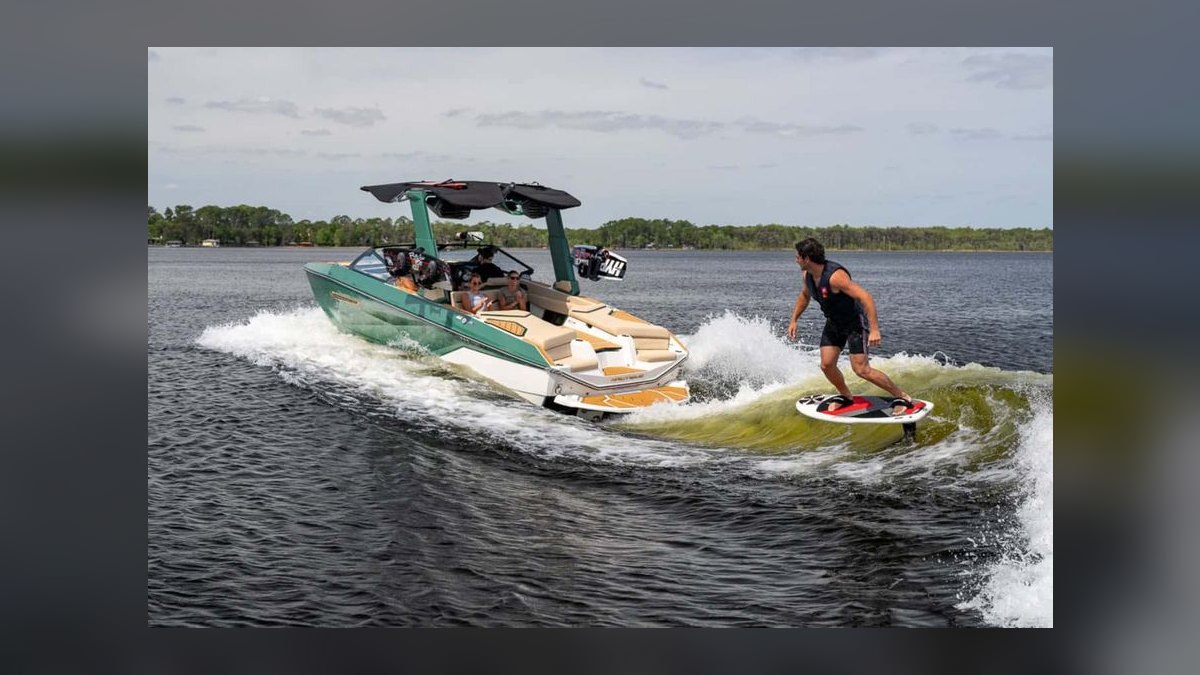
Lane two: the newer entry-tier or crossover hull. This is a 2021–2023 boat from a value-positioned brand or the entry model of a premium line — Boats that stickered at $95,000–$115,000. At two to five years old they land in the $65,000–$79,000 window. You get modern electronics, healthy pumps and actuators, warranty remnants that sometimes transfer, and vinyl that still looks new. The compromise is wave quality: entry hulls generally need more ballast, throw a shorter pocket, and run out of push for heavier riders. A 190-pound surfer will feel the difference immediately between a premium 23-foot hull and a 20-foot value hull, even with both fully ballasted.
There's a third lane worth naming only to dismiss it: the pre-2014 inboard wakeboard boat that someone converted to surf with aftermarket bags and a bolt-on wedge. These show up at $28,000–$45,000 and look like a bargain. They're not. The hull shape wasn't designed to displace water asymmetrically, the wave is short and washy, and you'll spend the savings chasing a ride that never arrives. If surfing is the point, buy a Used boat designed to surf.
How to decide between the older premium hull and the newer value hull
The decision hinges on three variables: rider weight and skill, how many hours you'll actually put on the boat annually, and your tolerance for wrenching versus writing checks. Get these three right and the lane picks itself.

Rider profile is the dominant variable. If your primary surfers are under 150 pounds and learning, a 2022 value hull with 2,200 pounds of ballast throws a perfectly adequate wave and you'll never feel constrained. If you have 180-plus-pound riders trying to land shuvits and 360s, the older premium hull wins outright — the wave face height and pocket length differences are not marketable fluff, they're geometry. Wave shape is determined by hull running surface, ballast placement, and how the surf device redirects flow, and no amount of aftermarket ballast fixes a hull that wasn't designed for it.
Annual hours matter more than people expect. A boat run 30 hours a season punishes you for buying old systems: seals dry out, impellers take a set, fuel goes stale, and the failure rate on infrequently-cycled ballast pumps is higher than on ones run weekly. A boat run 100-plus hours a season punishes you for buying a hull that doesn't satisfy — you'll be shopping again in two years and eating another transaction. Match the boat's system age to your usage pattern, not the other way around.
Wrench tolerance is the tiebreaker. Ballast pump replacement is a $180–$400 part and 90 minutes with a screwdriver if you can reach it. Actuator replacement on a surf tab is $600–$1,400 and often requires haul-out. If you'd rather pay a dealer $125–$165 per hour than do either, the newer hull's fewer failure points is worth real money over a five-year hold.
One nuance worth stating plainly: hour count is not a clean proxy for condition. A 700-hour boat that lived in a heated garage with documented annual service is a better buy than a 220-hour boat that sat on a lift in salt air with no winterization records. Condition beats the odometer every time in this category.
Concrete numbers behind each path

Pricing in this segment moves seasonally and regionally, so treat these as directional ranges rather than quotes. Verify against current listings before you make an offer.
Acquisition, older premium hull (2016–2019, 21–23 ft):
- Purchase: $58,000–$79,000
- Pre-purchase survey: $500–$900
- Compression test and oil analysis: $150–$350
- Immediate deferred maintenance: $3,000–$8,000
- Trailer condition (bearings, brakes, tires): $400–$1,800
- Realistic all-in year one: $63,000–$89,000
Acquisition, newer value hull (2021–2023, 20–22 ft):
- Purchase: $65,000–$79,000
- Survey and mechanical: $650–$1,250
- Immediate deferred maintenance: $500–$2,500
- Trailer condition: $0–$700 (often still original and healthy)
- Additional ballast to reach a rideable wave: $800–$2,600
- Realistic all-in year one: $67,000–$86,000
Annual operating cost, either path:
- Winterization and shrink wrap: $450–$900
- Annual service (oil, impeller, plugs, fluids): $400–$850
- Insurance: $600–$1,400 depending on hull value and state
- Slip or storage: $900–$4,500 depending on market
- Fuel at 6–12 gph and 40–60 hours: $900–$2,800
- Realistic annual carry: $3,250–$10,450
The number most buyers underweight is fuel. Wake surf Boats run heavy — 2,500–4,500 pounds of ballast plus people — and they burn accordingly. Twelve gallons per hour at surf speed is normal on a 23-footer, and at $4.50–$6.00 per gallon at the pump on the water, a four-hour session is $215–$430 in gas alone. Over a 50-hour season that's real money that doesn't appear in any listing.
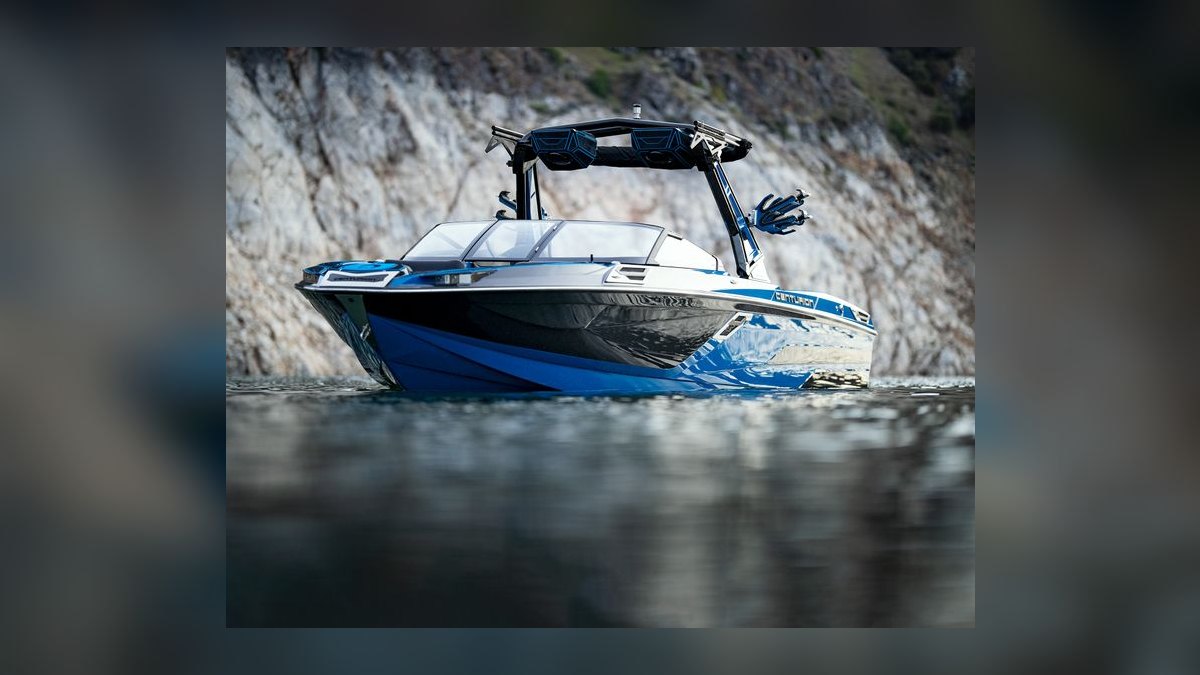
Depreciation, forward-looking. A 2018 premium hull bought at $72,000 in 2027 will likely sit at $52,000–$60,000 in 2032 — roughly 4–6% annually against a shrinking base. A 2022 value hull bought at $74,000 will likely sit at $46,000–$54,000 — steeper in percentage terms because it's still on the front half of the curve. Over a five-year hold the older premium hull often costs less in total depreciation despite the higher maintenance line, which is the counterintuitive finding most buyers miss.
Where the negotiating room actually lives. Private-party listings in this segment carry 10–20% of air. Dealer listings carry 5–12% but often include a limited powertrain warranty worth $1,500–$3,500 in practical terms. Listings that have sat 60-plus days carry the most room; listings posted in March carry the least. Buying in October–December against a seller facing another winterization bill is the single highest-leverage timing move available.
Inspection sequence and what to check in what order
Order matters here because each step gates the next. Do them out of order and you'll spend $900 on a survey for a boat you'd have walked from in the first ten minutes.
Step one — remote screening, before you drive anywhere. Ask for hull identification number, engine hours, service records, and photos of the engine bay, the ballast pump locations, and under the bow cushions. Ask directly whether the boat has ever been in salt water and whether it's been winterized every season by a shop or by the owner. Vague answers here are the answer.
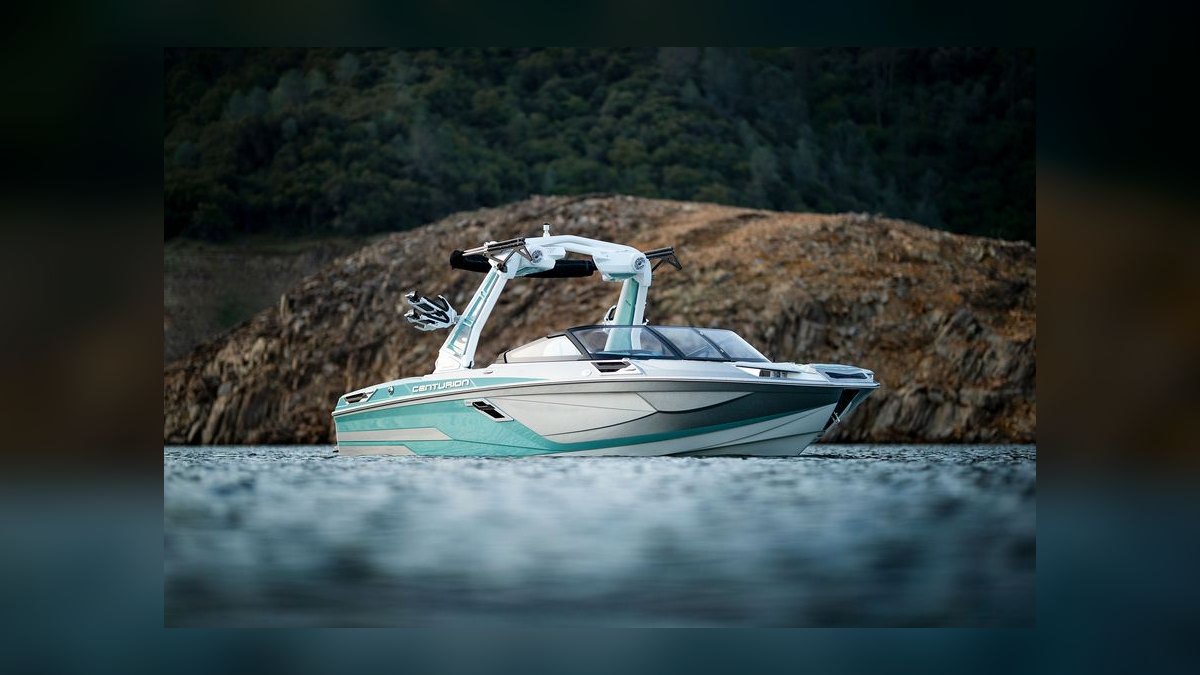
Step two — cold-start observation. Insist the engine be cold when you arrive. A warm engine hides hard-start behavior, and sellers who "just ran it to warm it up for you" are hiding something more often than not. Watch for blue smoke on start, listen for lifter tick, and check that raw water flow at the exhaust is strong within 15 seconds.
Step three — dry systems audit. Cycle every ballast pump individually, timing fill and empty. A healthy pump fills a 750-pound tank in 90–150 seconds; substantially slower means a tired impeller or a partially blocked through-hull. Cycle the surf tabs full-travel both directions ten times and listen for actuator strain. Run the stereo at volume for five minutes and check for amp shutdown. Test every light, every pump, the heater if equipped, and the bilge.
Step four — structural inspection. Tap the stringers through the engine bay access for soft spots. Check the transom for stress cracks around the platform mounts and the tower base plates for crazing in the gelcoat. Pull a bow cushion and look for water staining under the seat bases — that's where leaks show first. Inspect the rudder and prop shaft for play.
Step five — on-water sea trial, non-negotiable. Run the boat to wide-open throttle and confirm it reaches manufacturer-rated RPM. Under-revving points at a damaged prop, a fouled hull, or a tired engine. Then set up a surf wave both sides, fully ballasted, with the weight you'd normally carry. Ride it. A wave that looks good from the driver's seat and feels dead from the water has told you everything.
Step six — professional survey and fluid analysis, only after the sea trial passes. Oil analysis catches coolant intrusion and bearing wear that no visual inspection reveals. Compression across all cylinders should be within 10% cylinder-to-cylinder. This is the $650–$1,250 that saves the $9,000 mistake.
Step seven — the service reset. Whatever the records say, on day one do a full fluid change, new impeller, new plugs, fresh fuel filter, and repack the trailer bearings. That's $400–$900 and it converts an unknown maintenance history into a known baseline you own. Every hour after that is documented by you.
Brand-tier reality check and what the money actually buys. The Used surf boat market sorts into recognizable tiers, and knowing which tier a listing sits in tells you what the price should be before you ever look at hours. The premium surf-specific tier — the brands that built their identity around the surf wave and sell towers, sound systems, and hull tech as an integrated package — runs $130,000–$250,000 new. These hold value best, have the deepest parts availability, and throw the best waves. Under $80,000 you're shopping 2016–2019 in the mid-size hulls, or 2014–2017 in the flagship 24–25 footers if you're willing to take on more age for more boat.
The value surf tier — established manufacturers offering surf-capable hulls at $85,000–$120,000 new — has real surf systems, real ballast, somewhat less refined waves and interiors. Under $80,000 you're shopping 2021–2023, which is a genuinely attractive proposition if wave perfection isn't the goal. The crossover tier — bowriders and general-purpose Boats with a surf package added — are a compromise by design and the wave shows it. Priced $55,000–$85,000 new, they're only worth it if the boat spends more time cruising, tubing, and hosting than surfing.
What the extra money buys, concretely: hull running-surface design that displaces water cleanly on the surf side, ballast capacity and placement that doesn't require a stack of lead bags, an actuator system that shapes the wave rather than just blocking it, and drivetrain components rated for continuous heavy-load operation. That last one is underappreciated — surfing runs an engine at sustained moderate load with maximum weight aboard, which is harder on a drivetrain than running wide open in short bursts.
One economic note relevant to anyone buying a boat for anything other than pure recreation: if the boat is part of a rental, charter, or instruction operation, the revenue side changes the math entirely. A boat generating $250–$450 per half-day charter can pay its annual carry in 15–25 outings, which shifts the buy calculus toward the reliability-first newer hull rather than the wave-first older one. Downtime costs money in that model, and a dead ballast pump on a Saturday is a canceled booking, not just an annoyance.
Timing, geography, and the transaction itself
Season timing. Prices in this segment peak March through June and bottom October through January. The spread between a March asking price and a November closing price on the same boat is routinely 12–18%. If you can tolerate buying a boat you won't use for four months, you're buying at the bottom of the annual cycle and you'll have all winter to do the service reset.
Geography. Freshwater-market boats — Great Lakes, inland reservoirs, river systems — carry a premium over coastal boats for good reason. Salt exposure accelerates corrosion on the exhaust manifolds, risers, and every fastener in the bilge. A salt-history boat should be discounted 10–15% and inspected with specific attention to manifold and riser condition, which are $1,200–$2,800 to replace as a pair.
Transport. Buying out of market is often worth it — the price spread between a saturated market and a thin one can exceed $8,000 on the same model year. Transport runs $1.50–$3.00 per mile for a boat on its own trailer with a driver, or you can tow it yourself if you have a truck rated for 7,000–9,000 pounds. Do not underestimate the tow rating requirement; a fully-equipped 23-foot surf boat on a tandem trailer is a serious load.
Paperwork. Confirm the title is clean and in the seller's name, that the hull identification number on the transom matches the title, and that there's no outstanding lien. A quick lien check through the state's boat registration authority costs almost nothing and catches the problem that kills deals at closing. If there's a loan on the boat, structure the transaction through the lienholder's bank rather than handing over cash and hoping.
Financing. Marine loans on Used boats in the seven-to-eleven-year-old range are harder to get and carry higher rates than on newer hulls — often 1.5–3 percentage points above new-boat rates, with shorter terms. Lenders sometimes cap terms at 10–12 years total boat age. This is a quiet argument for the newer value hull if you're financing rather than paying cash, and it's worth getting pre-approved before you shop so you know which lane your money actually reaches.
Insurance. Get a quote before you buy, not after. Some carriers rate surf boats differently due to the towed-rider exposure, and a few decline older hulls without a current survey on file. A survey you needed anyway for the purchase decision doubles as the document your insurer wants.
Related questions
How many engine hours are too many on a Used surf boat?
Above roughly 800 hours, expect meaningful drivetrain work within a few seasons. But documented service history matters more than the number — a well-maintained 700-hour boat routinely outlasts a neglected 300-hour one. Weight hours at maybe 30% of the condition assessment.
Is a 20-foot surf boat big enough?
For riders under 160 pounds and groups of four to six, yes. Above that, the shorter hull needs more ballast to make a rideable wave and the pocket stays short. Twenty-two to twenty-three feet is the sweet spot for mixed-weight groups.
Should I buy from a dealer or a private seller?

Private sellers price 10–20% lower and negotiate more. Dealers often include limited powertrain coverage, handle the title work, and take trades. If you're confident in your inspection, go private; if you want recourse, pay the dealer premium.
Do aftermarket surf systems work on non-surf boats?
Poorly. A bolt-on wedge or gate can shape a wave on a hull that wasn't designed to displace asymmetrically, but the result is short, washy, and requires far more ballast. The savings evaporate against the disappointment.
What's the single most expensive surprise on a Used surf boat?
Engine or transmission replacement, at $8,000–$18,000 installed. Second is stringer or transom core saturation, which can total the boat economically. Both are catchable with a proper survey and oil analysis, which is why the survey is never optional.
FAQ
What's the realistic sweet spot model year under $80,000 in 2027?
For premium surf-specific brands, 2017–2019 is the intersection where depreciation has done its work but the hull tech is modern — integrated ballast, refined surf systems, and drivetrains still well within service life. For value-tier brands, 2021–2023 lands in the same budget with dramatically lower hours and healthier systems. Which is better depends entirely on rider weight and how much maintenance you're willing to absorb.
How much should I hold back for immediate repairs?
On a 2016–2019 premium hull, reserve $3,000–$8,000 for deferred maintenance in the first two seasons — ballast pumps, actuators, batteries, and vinyl are the usual suspects. On a 2021–2023 value hull, $500–$2,500 is realistic. Either way, budget a $400–$900 service reset on day one so your maintenance baseline starts with you.

Is a survey worth the money on a boat this price?
Yes, without exception. A $650–$1,250 survey plus oil analysis catches the failures that cost $8,000–$18,000 — engine and transmission problems, stringer saturation, transom core issues. It also gives you documented leverage in negotiation and satisfies insurance carriers who require a current survey on older hulls. The math isn't close.
Does salt water history disqualify a boat?
Not automatically, but it changes both the price and the inspection. Discount a salt-history boat 10–15% and inspect exhaust manifolds and risers specifically — they're the first casualties and cost $1,200–$2,800 as a pair. A boat that was flushed after every salt outing with documented proof is a different animal from one that wasn't.
When during the year should I actually buy?
October through January. Sellers facing another winterization and storage bill are motivated, inventory sits longer, and the spread against spring pricing runs 12–18% on comparable boats. You'll wait months to use it, which is exactly why the price is lower — and it gives you the whole off-season to do the service reset properly.
Can I finance a seven-to-eleven-year-old surf boat?
Usually, but on worse terms. Marine lenders typically charge 1.5–3 percentage points more on older hulls, shorten the term, and some cap total boat age at 10–12 years for financed purchases. Get pre-approved before shopping so you know which model years your financing actually reaches — it often narrows the field more than the budget does.
Sources
- https://www.boattrader.com/research/
- https://www.nadaguides.com/Boats
- https://www.boatus.com/expert-advice
- https://www.discoverboating.com/buying/used-boats
- https://www.uscgboating.org/
- https://www.abycinc.org/
- https://www.boats.com/resources/
- https://www.marinesurvey.org/
Related on PULSE
This page will be disappearing soon. Save it to your device for $1 — or read it free while it is here.
@Kory-White- · if Venmo asks, the last 4 of my number are 2012
This page is gone.
This one is off the shelf now. $1 keeps it on your phone for good — the whole page, pictures and diagrams included.
 pulse-recentTop 10 Speed Boats 1997 — Best Overall + Best Value
 pulse-recentWhat is the step-by-step process to inspect a used deck boat before buying it in 2027?
 pulse-recentTop 10 Lowe Boat Models in 2027
 pulse-boatsBest Used Aluminum Fishing Boats Under $50,000 in 2027 (Ranked)
 pulse-recentTop 10 Starcraft Pontoon Models in 2027
 pulse-boatsBest Regal Boat Models (Ranked) in 2027
 pulse-boatsTop 10 Boats for Lake Michigan 2027
 pulse-boatsTop 10 Best Bass Boat Brands 2027
 pulse-boatsBest Used Cuddy Cabin Boats Under $10,000 in 2027 (Ranked)
 pulse-recentTop 10 Catalina Sailboat Models 2019